Swedish Pilot Customer wanted for E-Cat plant

According to a press release on their website, U.K.-based Hydro Fusion is looking for a Swedish Pilot Customer to participate in an E-Cat power production pilot-program.

hydrofusionHydroFusion is the North European Licensee Group Branch for Andrea Rossi‘s E-Cat and has an office in Sweden.

Energy produced by the E-Cat is in the form of steam from a nozzle on the unit. The pilot operator of the 1 MW thermal generator “will only pay for the energy produced by the ECAT, i.e. Hydro Fusion and Leonardo Corporation will take responsibility for all associated costs including: the plant itself, installation and any transportation costs.”

The customer must agree to install the unit by this fall 2013 and allow the showcasing of the plant for other would-be buyers.

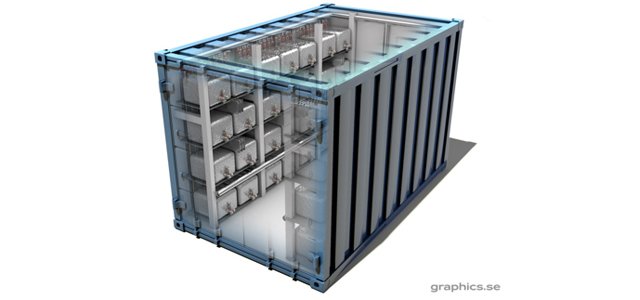
The 1MW plant consists of 106 smaller 10-kilowatt units fitted together in parallel within a 6-meter shipping container. A valve in front of each smaller unit allows re-filling of hydrogen fuel, as well as access to the heater that starts the reaction. These smaller units each contain three core reactors, each 20 cm x 20 cm x 1 cm, holding a specially-treated nickel powder, the heart of the nickel-hydrogen exothermic reaction.

Hydro Fusion claims, “per unit of weight, this process is at least 100,000 more efficient than any known combustion process.” A recent third-party report by scientists who conducted a test on several versions of the core reactor confirmed energy density “off-the-chart”.

The E-Cat technology produces no CO2 emissions and no radioactive waste.

On their website, Hydro Fusion outlines the E-Cat 1MW specifications to which the customer must agree to append all applications:

  • Heat energy is produced according to specs.
    • Heat energy 1 MW thermal at up to 120 C
    • Heat exchanger from ECAT system to customer heat application.
  • Electricity is consumed according to specs.
    • 250 kWe maximum power consumption
    • 166 kWe average power consumption, i.e. COP=6

Hydro Fusion would like to receive quotations from Pilot Customers on both thermal MWh price and electric MWh price, based on an assumption of 7,000+ operating hours per year.

Current estimated delivery time for the E-Cat is four months with functionality warranted for two and years and an expected 30-year life span.

E-Cat World wants your video for LENR/cold fusion movie

A crowdsourced video on new energy needs your 30-second spots.

Frank Acland, proprietor of E-Cat World, will compile video clips from the public on low-energy nuclear reactions (LENR). The purpose? Increase awareness about the current revolution in energy happening now unbeknownst to the majority of people.

After two-and-a-half decades of science, a technology is being engineered that will transform every aspect of our lives. Yet the field is not even acknowledged by policy-makers and energy agencies from most countries around the world.

“I’d like to play a part in helping people understand that there is something important going on that could benefit countless lives all over the world — and I know there are many others who have been following this story who feel the same,” writes Acland.

“What we are dealing with here is not just another cool gadget, or an incremental improvement on an already existing technology. It’s something fundamentally new, which can be used to improve lives everywhere.”

The content of submissions should be facts about the science of LENR and the new technology now emerging. The project is directed towards the general public, so the message should be easy-to-understand.

Ideas can be:

  • Factoids about the science and/or technology
  • Description of historical events
  • Speculations on the effects of LENR technology on society
  • Environmental implications of clean, abundant energy

Those interested in submitting video should put their contribution in a 30-second good-quality video format such as .MOV, .MPEG4, .AVI, .WMV, .MPEGPS, .FLV, 3GPP, or WebM.

Include your first and last name, your physical location and profession.

If you are not speaking in English, please provide the text of your remarks, and sub-titles will be added to your video.

Send all work to Frank Acland at ecatworld@gmail.com.

Acland has “no idea what the response will be” so videos may be edited, and while there is no guarantee that your video will be included, he believes this endeavor “could be an effective way to share information.”

Don’t be shy! Just a few seconds of your time is all it takes, and you’ll be contributing to a global art project that supports a green energy future for all of us!

Cold Fusion Now!

Peter Gluck and Yeong E. Kim on LENR research


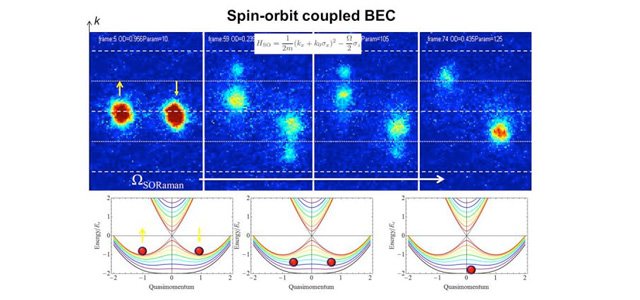
Dr. Yeong E. Kim is a professor at Purdue University specializing in theoretical physics who has speculated that Bose-Einstein Condensates (BEC) are involved in low-energy nuclear reactions (LENR). Cold Fusion Now attended the 2012 NETS conference where he presented his theory.

Chemist and new energy writer Peter Gluck has published a new interview with Dr. Kim discussing the changes in the field over the past two-and-a-half decades and his viewing of Defkalion Green Technology’s Hyperion reactor in Vancouver, Canada.

Original article here.

Gluck Q1 Dear Yeong, can you please tell us about your moments of awakening, illumination, scientific revelations to the truth of cold fusion?

Kim As you know, John Huizenga dismissed the Fleischmann-Pons Effect (FPE) as the scientific fiasco of the century [John R. Huizenga, Cold Fusion: the Scientific Fiasco of the Century, U. Rochester Press (1992)]. He claimed that three miracles were needed to explain the FPE:

(1) suppression of the DD Coulomb repulsion (Gamow factor) (Miracle #1),
(2) no production of nuclear products (D+D → n+ 3He, etc.) (Miracle #2), and
(3) the violation of the momentum conservation in free space (Miracle #3).

The above three violations are known as “three miracles of cold fusion”.

My first moment of awakening happened when Fleischmann and Pons announced their experimental results in news media. Initially, my feeling of disbelief dominated about this discovery as a practicing theoretical nuclear physicist, as most of my professional colleagues did. As I was searching a possible theoretical explanation for the claimed discovery, I realized that the conventional nuclear theory could not be applied to deuteron fusion in metal.

However, at the same time, I did not know how to formulate a theory for deuteron fusion in metal, even though I clearly recognized that the conventional nuclear scattering theory at positive energies cannot directly be applied to nuclear reactions involving deuterons bound in a metal, which is a negative-energy bound-state problem. Quantum scattering theory describing the Coulomb barrier problem is applicable to scattering experiments with nuclear beams.

When they were being criticized at the APS meeting, I was frustrated that I could not rebuke public criticisms by my nuclear theory colleagues, since I did not have an appropriate alternative theory, even though I realized that their theoretical arguments are premature. Furthermore, I did not have slightest ideas for explaining the miracles #2 and #3. However my theoretical curiosity on the miracle #1 did kept my intellectual interests on the subject.

My second awakening happened in 1996-1997 when our theory group at Purdue developed the optical theorem approach for low-energy nuclear reactions. Purdue nuclear theory group at that time consists of four members (Y. E. Kim, group leader; A. L. Zubarev, senior scientist; Y. J. Kim, visiting professor; and J. – H. Yoon, graduate student). Our results were published in a publication entitled “Optical Theorem Formulation of Low Energy Nuclear Reactions” (OTF-LENRs) [Physical Review C 55, 801 (1997)]. http://www.physics.purdue.edu/people/faculty/yekim.shtml

Our optical theorem formulation is rigorous. My second awakening came in 1997 with realization that our theoretical result for the OTF-LENRs can be used to develop a generalized theory which is appropriate for describing deuteron fusion in a metal.

My third awakening and illumination happened when I and Zubarev developed a theory of Bose-Einstein condensation nuclear fusion (BECNF) for deuteron fusion in a metal. The results were published in 2000 [“Nuclear fusion for Bose nuclei confined in ion traps,” Fusion Technology 37, 151 (2000); “Ultra low-energy nuclear fusion of Bose nuclei in nano-scale ion traps,” Italian Physical Society Conference Proceedings 70, 375 (2000)]. http://www.physics.purdue.edu/people/faculty/yekim.shtml My third awakening came in 2000 with realization that the BECNF theory is capable of explaining the F- P effect and all of Huizenga’s three miracles.

My fourth awakening is currently evolving ever since I met John Hadjichristos of Defkalion at the NI Week in August 2012. I was very pleasantly surprised when he told me at the NI Week that he quoted our OTF-LENRs paper in his paper submitted to ICCF-17. This was the first time someone in the LENR community was quoting this paper! My second surprise was to hear from him about the even-isotope effect which he observed in his experiments and which was reported in his ICCF-17 paper. The observed even isotope effect is consistent with the theory of BECNF! More detailed theoretical analysis of reaction mechanisms for his experimental results is currently in progress

Gluck Q2 24 years have elapsed; hundreds of successful experiments were made proofs of the reality of the phenomena. Unfortunately the experiments were not sufficiently successful to provide the necessary understanding of what happens and the conditions to enhance the heat release to useful levels? What were your thoughts re the evolution of the experimental situation in the field?

Kim Experiments with electrolysis and gas loading involve very complex measurements with many parameters. Unfortunately, even when useful positive results were observed, it had been very difficult to reproduce the results. The absence of reproducibility of positive experimental results has been a major road block in the field.
We needed desperately a break-through in experimental procedures and techniques to achieve the reproducibility. Unfortunately lack of research funding prevented intense and concentrated experimental works based on fresh new ideas, especially from younger generation.

Gluck Q3 You have published over 200 papers re Physics http://www.physics.purdue.edu/people/faculty/yekim.shtml and over 50 regarding LENR. (An opportunity to thank you for the many fine papers of you have sent me by classic mail and later electronic mail). As a theorist it is said you do not belong to any school, you “are” a school. I could understand this for LENR from your very first note re Cluster Fusion in 1989 till http://www.physics.purdue.edu/people/faculty/yekim/PhysRevC.55.801.pdf the Kim paper I know; may I ask how your theoretical ideas have evolved?

Kim Peter, this was actually answered – for your first question.
I will ask the nice readers to study these two relevant documents: “Critical Review of Theoretical Models (1994)” and “Message to the Colleagues 2012http://www.physics.purdue.edu/people/faculty/yekim.shtml Many of my papers are also posted in the above web site. I hope to publish very important new ones soon.

Gluck Q4 Why is the way to truth and to value so long; why does LENR still have so many problems? On a scale of 1 to 10, what is your degree of discontent with the global situation of LENR?

Kim This is more a philosophical question and I am a physicist. Perhaps CF was not discovered in the best place; perhaps it is a historical bad chance that two electrochemist geniuses have discovered it. And surely I am highly discontented with the experimental situation – weak signals and poor reproducibility – if and when they come, lack of conceptual unity, vision. The theory part was not much better, however I am happy that now becomes obvious – our theory is a part of a greater vision, and it is a critical part.

Gluck Q5 Recently some non-conformist newcomers, as for example Defkalion Green Technologies Global (DGTG) came with the idea that actually what we call LENR is something much more complex than we have thought and the solution is to radically re-design the components – hydrogen, metal, reaction vessel and environment to make it productive and controllable. What do you think about this New Wave idea? New paradigm?

Kim Recently, I had an opportunity to observe experimental runs of DGTG’s R-5 reactor carried out by their group of scientists in Vancouver. The results were positive. More importantly the results are reproducible, since there had been many positive runs with other observers in addition to my observation.

This is very significant historically since we have now a device which yields reproducible results for the first time. It is a break-through which we have been waiting for.

The break-through is accomplished by new-comers, a new breed of scientists and engineers led by a mathematician who became an excellent scientist. This is a new wave and new paradigm change.

Gluck Q6 Prediction is an intellectual activity superior even to wisdom. Please tell my readers what are your predictions for the future of the field! Are you looking to the present and then great chances are you are pessimist, or do you have the vision of a bright future?

Kim Recently I became very optimistic. At Vancouver I witnessed a protocoled successful test with results leaving no doubt about plenty of excess heat and good control of the device. I am an optimist regarding the principles, but also for discovering and or creating the details which I plan to work on very hard in collaboration with my DGTG friends.

Peter Gluck‘s original interview with Yeong E. Kim is at Ego Out.

Related

Dispatch from Daejon Updates from ICCF-17

Letter to Nature on Martin Fleischmann released

On August 3, 2012 Dr. Martin Fleischmann, co-discoverer of cold fusion, passed away in his home after a long illness.

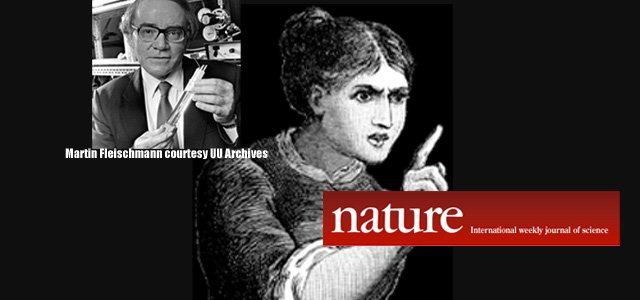
Obituaries produced by mainstream news outlets were nothing more than gross distortions of career that exemplified intellectual honesty and integrity. The science journal Nature was but one publication that mischaracterized Fleischmann’s work where author Philip Ball wrote of cold fusion as a “pathological science”, and the “blot” it left on Fleischmann’s career.

Fortunately, Dr. Brian Josephson, a Cambridge University professor and Nobel laureate, responded to Nature’s portrayal with a letter published in Nature Correspondence. Because of licensing arrangements, the text has only recently become available to non-subscribers, and is reproduced here.

Here is Brian Josephson’s letter to Nature magazine:

Cold fusion: Fleischmann denied due credit
Brian D. Josephson

From Nature 490, 37 (04 October 2012)
doi:10.1038/490037c
Original online publication at nature.com, 03 October 2012
Philip Ball’s obituary of Martin Fleischmann (Nature 489, 34; 2012), like many others, ignores the experimental evidence contradicting the view that cold fusion is ‘pathological science’ (see www.lenr.org). I gave an alternative perspective in my obituary of Fleischmann in The Guardian (see go.nature.com/rzukfz), describing what I believe to be the true nature of what Ball calls a “Shakespearean tragedy”.

The situation at the time of the announcement of cold fusion was confused because of errors in the nuclear measurements (neither Fleischmann nor his co-worker Stanley Pons had expertise in this area) and because of the difficulty researchers had with replication. Such problems are not unusual in materials science. Some were able, I contend, to get the experiment to work (for example, M. C. H. McKubre et al. J. Electroanal. Chem. 368, 55–56; 1994; E. Storms and C. L. Talcott Fusion Technol. 17, 680; 1990) and, in my view, to confirm both excess heat and nuclear products.

Skepticism also arose because the amount of nuclear radiation observed was very low compared with that expected from the claimed levels of excess heat. But it could be argued that the experiments never excluded the possibility that the liberated energy might be taken up directly by the metal lattice within which the hydrogen molecules were absorbed.

In my opinion, none of this would have mattered had journal editors not responded to this skepticism, or to emotive condemnation of the experimenters, by setting an unusually high bar for publication of papers on cold fusion. This meant that most scientists were denied a view of the accumulating positive evidence.

The result? Fleischmann was effectively denied the credit due to him, and doomed to become the tragic figure in Ball’s account.

For more, see Brian Josephson’s Link of the Day archive.

Related Links

New energy solution from Nobel laureate ignored at NY Times April 7, 2013

Brian Josephson safeguards historic contribution of Martin Fleischmann October 6, 2012

Martin Fleischmann leaves brilliant legacy of courage in pursuit of truth August 4, 2012

European Parliament ITRE committee meets over Fleischmann-Pons Effect

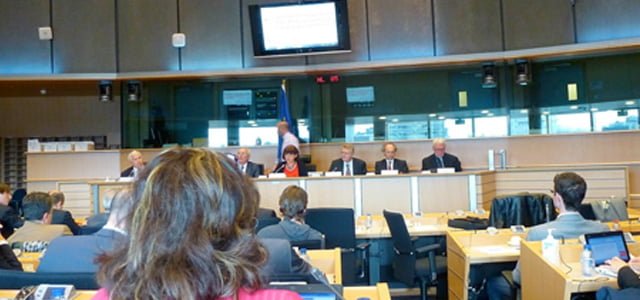
Euro-Parl-logoThe European Parliament’s Industry, Research and Energy (ITRE) committee chaired by Amalia Sartori met yesterday in Brussels with scientists and business leaders from the new energy community to discuss the status of the Fleischmann-Pons Effect (FPE), the generation of anomalous excess heat from a reaction between hydrogen and various transition metals.

Titled “New advancements on the Fleischmann-Pons Effect: paving the way for a potential new clean renewable energy source?“, the meeting was co-organized by the Italian National Agency for New Technologies, Energy and Sustainable Economic Development (ENEA). An announcement on their website read:

3 June 2013, Brussels. New advancements on the Fleischmann-Pons Effect: paving the way for a potential new clean renewable energy source? Event co-organized by ENEA at the European Parliament. Under the patronage of Hon. Amalia Sartori, Chair of the ITRE Committee c / o European Parliament, the event sees participants between the Commissioner ENEA Giovanni Lelli, the Director of the Industrial Technologies Directorate Herbert Von Bose, the Director of the Sidney Kimmel Institute for Nuclear Renaissance (USA) Graham Hubler, and the Vice-Chancellor for Research, University of Missouri (USA) Robert Duncan.

Daniele Passerini at 22Passi first reported the participants listed as:

Robert Duncan , Vice-Chancellor for Research University of Missouri (USA)
Michael McKubre , SRI – Stanford Research International (USA)
Graham Hubler , Director Sidney Kimmel Institute for Nuclear Renaissance (USA)
Stefano Concezzi , Vice President of National Instruments (USA)
PJ King , CEO ReResearch (Ireland))
Konrad Czerski , University of Szczecin (Poland), Technische Universität Berlin (Germany)
Vittorio Violante , Roma2 Tor Vergata University , Research Centre ENEA Frascati
Andrea Aparo , Roma1 Sapienza University , Politecnico di Milano , Ansaldo Energia
Enrico Paganini , ENEL Green Power
Antonio La Gatta , President TSEM Engineering and Electronics
Giovanni Lelli , Commissioner ENEA
Aldo Pizzuto , Head of Technical Unit Merger ENEA
Maximum Busuoli , Head of EU ENEA – Liaison Office
Herbert von Bose , Director of Industrial Technologies Sub-Commission of the European Parliament
Amalia Sartori , President comission ITRE Committee of the European Parliament

Passerini has posted a report of the meeting which includes photos of slides of several presentations.

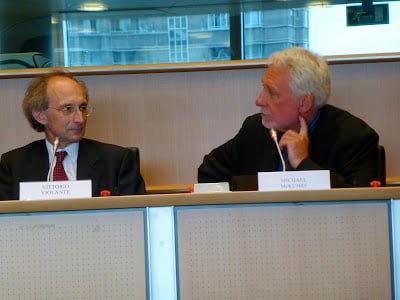
Dr. Vittorio Violante and Dr. Michael McKubre at European Parliament ITRE meeting.
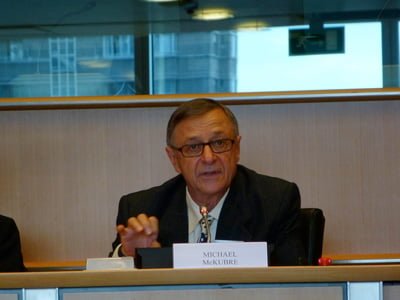
Dr. Michael McKubre presented on New Nuclear Effects in Deuterium-Palladium Electrolysis and Gas Systems under near ambient conditions [visit]

Dr. Vittorio Violante, of whom McKubre said “was once the only man in the world who could make palladium that worked”, presented Material Science for Understanding the Fleischmann and Pons Effect. [visit]

Konrad Czerski New Evidence of the Cold Nuclear Fusion – Accelerator Experiments at Very Low Energies. [visit]

.

Dr. Graham Hubler is Director of Sidney Kimmel Institute for Nuclear Renaissance
Dr. Graham Hubler is Director of Sidney Kimmel Institute for Nuclear Renaissance at University of Missouri.
Dr. Graham Hubler presented Anomalous Heat Results from the Naval Research Lab and the University of Missouri. [visit]

Dr. Robert Duncan presented Discovery of New Nuclear Phenomena in Condensed Matter the State. [visit]

Both Hubler and Duncan will be hosting the 18th International Conference on Cold Fusion ICCF-18 this July from their campus at University of Missouri.

According to Passerini, the meeting in Brussels was held “to convince decision makers of the importance of funding research.”

From their website, the ITRE Committee “will deal with legislative proposals on Research; the EU policy on research is due to be redefined for the years to come and to cope with new challenges.”

Ironically, Passerini cites American research as an impetus for the European community, implying targeted support for new energy in the U.S. – were it only true. He also mentions Italy’s official position on cold fusion, which mirror’s the U.S. federal stance: cold fusion is impossible, so let’s ignore it.

Still, Italy has been the heart of new energy research in Europe beginning with Vittorio Violante‘s lab at ENEA focusing on palladium-deuterium cells, and Francesco Piantelli and Sergio Focardi‘s early work on nickel-hydrogen reactions.

Andrea Rossi presented his first public demonstration of the E-Cat steam generator at the University of Bologna in January 2011 which brought the world’s attention to new energy and galvanized a whole community of supporters. Today, an open source project links citizen scientists around the world with longtime researcher Francesco Celani of the Italian Institute for Nuclear Physics (INFN).

ENEA published a report in 2008 on the History of Cold Fusion in Italy [ .pdf] to commemorate the 20th Anniversary of Drs. Martin Fleischmann and Stanley Pons’ announcement of cold fusion which coincided with the 15th International Conference on Cold Fusion held in Rome in 2009.

No doubt there were discussions of the recent report on Rossi’s progress and redesign of the E-Cat HT. The caliber of research presented by both scientists and entrepreneurs could only have impressed the ITRE committee. Positive recommendations to the full Parliament could produce a funding stream for a coordinated research program to hasten the quickening pace of development.

Jeane Manning on live demo of Defkalion’s Hyperion

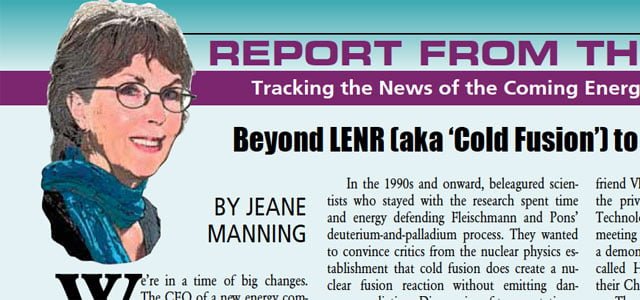
Jeane Manning, author of Breakthrough Power, has published an article in Atlantic Rising on her visit to Defkalion Green Technologies new office in Vancouver, Canada where she viewed a live demonstration of their Hyperion thermal generator.

Beyond LENR (aka ‘cold fusion’) to Useful Energy [.pdf] is available for free on Manning’s Changing Power website and describes a generator capable of producing 5 kilowatts of thermal power, with “several times” energy output.

A planned 45 kilowatt generator will be comprised of nine units in parallel. A test generator in Greece is claimed to run continuously for six months producing power at 45 kilowatts. Preferring to call the reaction Heat Energy Nuclei Interactions (HENI), the thermal energy was generated on just 3 grams of nickel powder and 2 liters of hydrogen.

The company moved to Vancouver “after their government failed to help the start-up company.” Canada “offered a stable environment for research-and-development companies, with a support network and fiscal incentives.” Additional labs in Athens, Milan, Italy as well as Brazil will be developing applications with multiple business partners.

Initially a partner with Andrea Rossi, Defkalion and Rossi split after differences arose over contractual issues. Deciding to develop a generator on their own, the company began with the premise that only after achieving stability and control would they scale up to high heat output.

The article quotes Peter Gluck, a chemist and longtime low-energy nuclear reactions (LENR) researcher. “Cold fusion came before its time. It is too complex, too new, too unexpected, too messy, too multifaceted, too dynamic, too non-linear and too weird to be really understood and controlled at the time of its discovery.”

Defkalion’s Chief Technical Officer John Hadjichristos responded “Science is one, and we have to keep it that way if we want to keep on talking with Mother Nature …We cannot see or listen and understand her stories if we stop talking to and hearing each other.”

Top