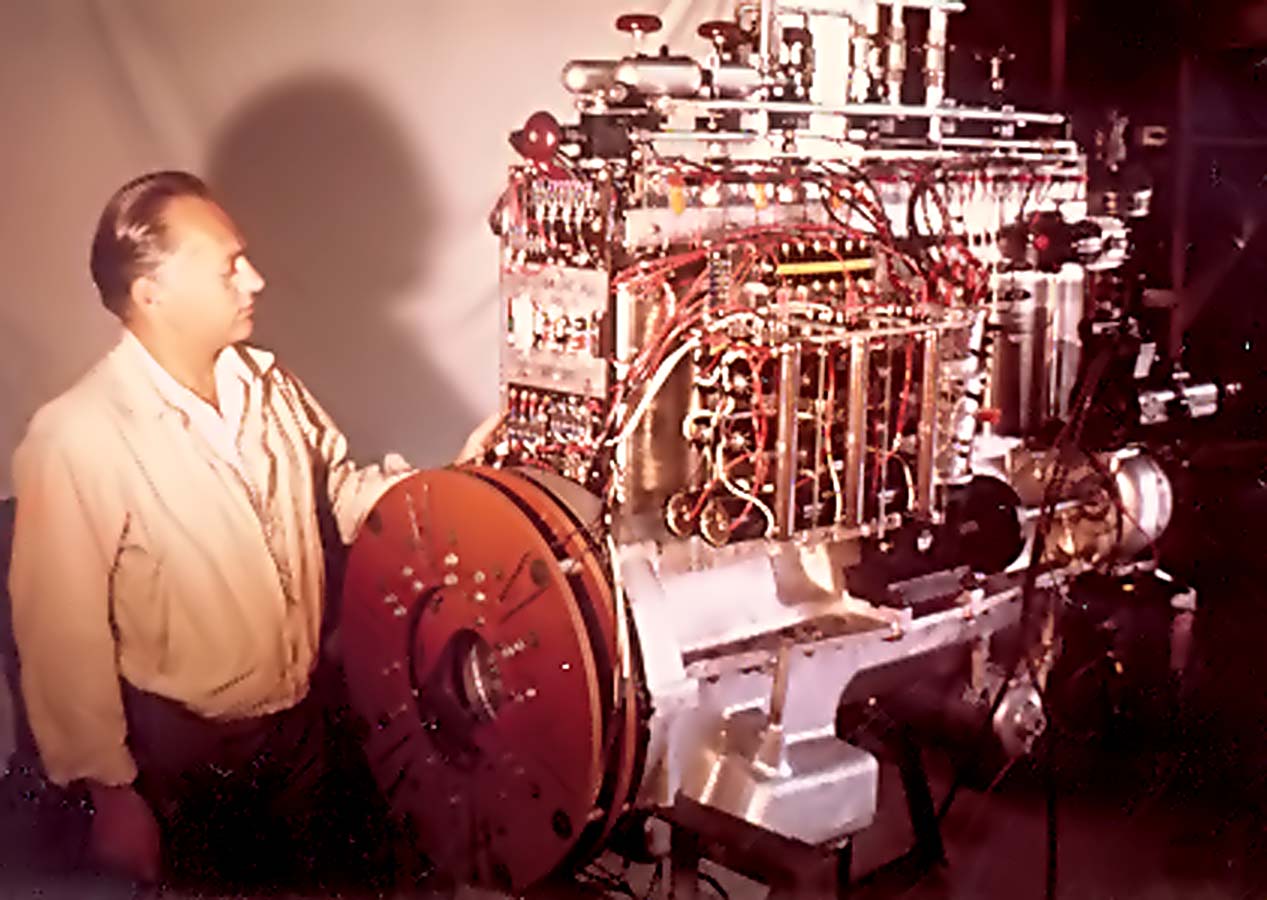
John Varney: Small-scale fusion power is “a matter of absolute urgency”

John W VarneyJohn Varney describes an energy transition plan away from fossil fuels and towards clean, small-scale fusion and shares his designs for a Dense Plasma Focus (DPF) reactor and applications that could radically transform power generation for transportation, solutions impossible with chemical energies, but mandatory for a green technological human future.

DPF is not cold fusion, but a produces power by focusing multiple streams of plasma together in super-high-temperature pulses. Fusing protons with boron nuclei in the concentrated plasma pulse point is aneutronic, a reaction producing no neutrons. Research in small-scale production of this kind was reported here in The Alternate Path to a Cleaner, Brighter Future by zed short.

Emergence from Chaos, a shining new Order
The world cries out for urgent action by governments, industry, academia and yes, the media, to focus with determination, resolve and cohesion, on refining and mass producing equipment incorporating technologies [some of which are already proven in research laboratories] that will provide vehicle propulsion [on land, sea, air and space] and power generation with compact, efficient, safe, clean and low cost units that will replace all fossil fuels and nuclear [fission] fuel within a decade.

The redundant nuclear weapons, nuclear power plants in power stations and in naval ships [both surface and submarine vessels] will be deactivated [decommissioned], dismantled, decontaminated and the fissile material placed in adequately shielded containers for temporary storage.

We can now accept the reality, that a dawn of enlightened progress, can now begin its delivery to the global village.

Various forms of controlled plasma streams, [the Hydrino plasma, LENR and LANR plasmas and the emerging technology of nuclear fusion via the Dense Plasma Focus Device] herald a transformation of global industry toward a non-polluting regime that may not only introduce direct electrical power generation from these plasmas, but also apply them [via direct injection] to turbo-machinery and to the existing furnaces of fossil fired power plant [where the fossil fuel supply systems, the ash collection systems and the flue gas treatment systems, are all deactivated and removed].

This strategy will ensure that recent and ongoing massive worldwide investment in fossil fired power plant can be relatively easily upgraded to plasma power plant [salvaging the major portions of the existing plant and speeding up the conversion down time].

All internal combustion engines presently powering aircraft, ships, yachts, trains and all road vehicles will, within the decade be replaced with alternative electric power plants that do not involve the combustion process and thus do not in any way contribute to global warming and climate change.

IMAGES ON TOMORROW’S RADAR
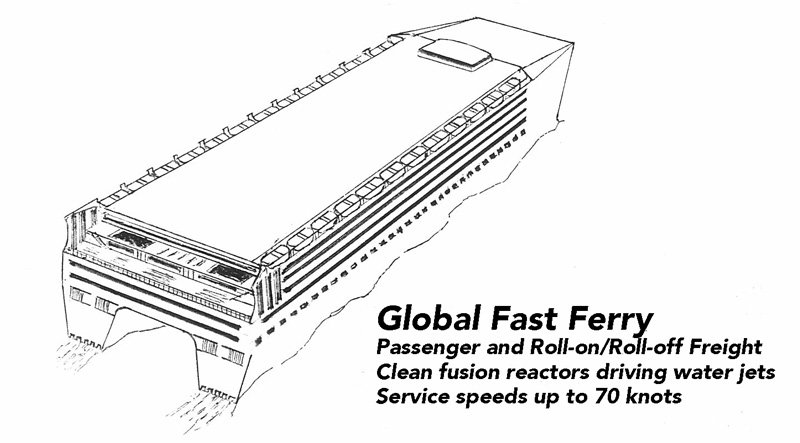
Varney Global Fast Ferry

Varney Supersonic Jet

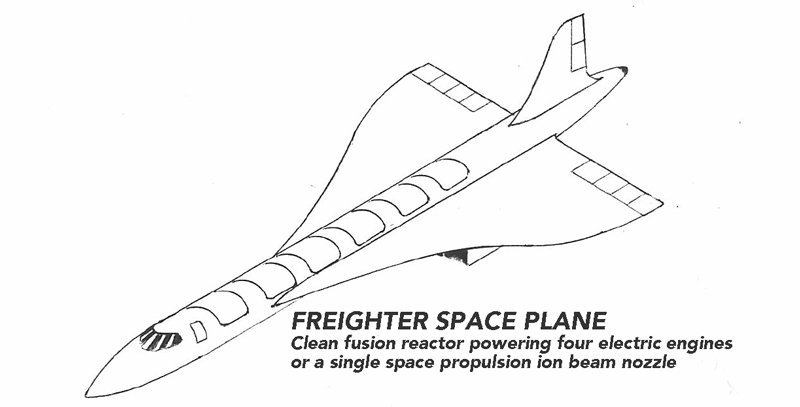
Varney Freighter Space Plane

With the need to have a plan for steady growth, a cleaner environment and time urgent action to control the degree of calamity from climate change, this technology is achievable with a transparent and committed international project that is planned and implemented immediately.

It will not only foster international trust and co-operation, but will trigger an enormous, diverse, healthy and clean industrial revolution that will represent a huge step in global cohesion and enlightenment.

The more recent strategy, embracing nuclear fusion [via the DPF reactor system] reveals the direct conversion of an extreme high temperature plasma to electrical power avoiding the elaborate and expensive thermal system that is traditional in power generation and propulsion. This strategy is called the Varney Protocol and the following associated documents outline the DPF reactor and its application to the market place.

The Varney Protocol – Summary

The Varney Protocol – An illustrated pressurized DPF reactor system

Prime objective, project set-up and funding framework [for first phase of prototype experimentation]

Removal from earth of all nuclear weapons and fissile material

Space-plane details & flight plan analysis

Both national and local governments, all the major corporations [Rolls-Royce, Siemens, General Electric, Airbus, Boeing and NASA] have received the listed documents and refuse to discuss the material, despite the fact that all oil, gas and coal fired power generating plants [in fact all power plants incorporating the combustion process] will be decommissioned, decontaminated and dismantled within the decade.

Why have today’s industrial societies been totally absent in planning and implementing such an all-important, urgent and necessary strategy?

I-40-Arizona-Sunset-on-Fossil-Fuel-PowerThe simple and tragic reason is that these important decisions are not made by politicians, they are made by a secretive, wealthy, powerful and ruthless cabal that represents [what President Eisenhower had originally coined] the military/industrial complex that informs sitting heads of governments, what strategies will be implemented. These strategies will meet with their requirements for widespread weapons production [for global sales] and extensive “Black budgets” that enable development and control of technologies that are perhaps a century in advance of technologies that are available to the rest of civilization.

Should this “cabal” practice transparency, a sincere sense of service to the worlds citizens and true compassion for the billions suffering from starvation, failing health, general poverty and exploitation [by the corporate world], they would ensure that all technologies [energy, transport systems] that would arrest global warming, promote a higher and healthier standard of living for everyone would be made available to every corner of the globe as a matter of absolute urgency.

Sometimes silence is golden.

Sometimes silence can be deadly if it equates to maintaining the status quo in regard to the use of fossil and nuclear fission fuels [and the existence of nuclear weapons with delivery systems].

From Transformation Protocol Canada, “We have a great opportunity, at this moment, to exercise faith in our collective scientific and technological capabilities, to leapfrog the more modest, methodical and comfortable research programs that are now in operation, to secure for our children and grand-children, a real opportunity to thrive in a world that can recover from the devastation that our collective stupidity has brought upon them.”

For this to happen in the short period of time available to us [before global warming and climate change proceeds to the condition that humanity can no longer control the deterioration of the environment from dooming are future existence], we must unite our efforts with the many experts and specialists able to transform this conceptual design into a practical reality.

It can be done and it must be done now, before we fall asleep in comfortable denial of the dire, global predicament.

The previously posted article Transformation Protocol Canada reveals a strategy to harness a variety of cold fusion plasmas by the injection into gas turbine systems, where a plasma-air mix chamber replaces the traditional combustion chamber and thus achieves a transformation from combustion. However this strategy involves the pressurization of the plasma process.


U.S. Schools with Cold Fusion-Friendly Faculty

While there are an increasing number of professors engaged in cold fusion research at schools and colleges, not all departments and schools officially support that activity.

In some cases, research is fully-endorsed and funded, such as at University of Missouri and University of Illinois Urbana-Champaign.

At other schools, faculty is forced to conduct research without official funding. This is the case at one of the premier scientific research institutions in the U.S., the Massachusetts Institute of Technology.

In all cases, funding is small, and because of the hostile environment, many of the professors who would love to teach you about cold fusion, low-energy nuclear reactions (LENR), lattice-assisted nuclear reactions (LANR), quantum fusion, and the Anomalous Heat Effect (AHE), will tell you that the job prospects for research in the field are nil. They may even try to talk you out of pursuing the study of our future energy source.

It is shameful that those who would share their two-decades of experience in cold fusion research cannot take students in good conscience because they cannot guarantee any job opportunities upon graduation.

But we know that will not always be the case.

The increasing interest in cold fusion science and technology parallels the decline in availability of cheap fossil fuels, and the lack of viable solutions from the conventionally-minded scientists who’ve been successful at lobbying for funding without delivering the goods.

Each of the professors listed below will give you an education that draws on their own experience in cold fusion research, ranging from experimentalists, theorists, and policy-making, with LENR as a centerpiece.

Globally, there is friendly faculty on every continent and an inventory of the educational opportunities in cold fusion worldwide is forthcoming in part II. What follows is a partial list of schools in the U.S. with cold fusion-friendly faculty, alphabetical by school.

More schools will be added to make a full directory of places you can go to learn about creating energy solutions from the truly bold and courageous scientists of our time.


David Nagel teaches and conducts workshops on LENR.
George Washington University
Washington, D.C. USA
School of Engineering and Applied Science
Research Professor David J. Nagel

Dr. Nagel’s interests span multi-disciplinary technologies including the development and applications of micro- and nano-technologies, including micro-fluidics and wireless sensor networks, and condensed matter nuclear science, and particularly LENR.

He established NUCAT Energy, Inc to hold workshops for academia, agencies, and industry on LENR and reports regularly on the field for Infinite Energy magazine.

Professor Nagel has been interviewed by Cold Fusion Radio several times. Excerpts from the most recent audio interview are here in “LENR global impact will be historic“. In the interview “A Reasoned Approach to Funding“, he described his plan for a federal effort to bring this science to a usable technology.


George-H-Miley
George Miley and his students spoke to rocket scientists about LENR.
University of Illinois Urbana-Champaign
Urbana-Champaign, Illinois, USA
Nuclear and Electrical Engineering Department
Professor Emeritus Dr. George H. Miley

Dr. Miley researches unique cold fusion cells using thin-films and nano-particles. He has presented a LENR-based General Purpose Heat Source for spacecraft power needs and established the company LENUCO to commercially-develop some of their nano-technology discoveries producing transmutation elements.

Cold Fusion Now highlighted his work in the interview “Let’s Find Out What’s There” conducted at the Nuclear and Emerging Technology for Space (NETS) conference.

His students get the opportunity for hand-on experience in the lab constructing and testing LENR cells in the Fusion Studies Lab and in particular, at the LENRs Lab.


Iraj Parchamazad creates anomalous heat with crystal zeolites.
University of LaVerne
LaVerne, California, USA
Chemistry Department
Chairman of Chemistry Professor Dr. Iraj Parchamazad

Dr. Parchamazad investigates deuterium gas-loaded nano-palladium in zeolites. He is now collaborating with Dr. Melvin Miles, a former professor at the college and long-time Navy researcher with expertise in electrolytic co-deposition techniques.

Cold Fusion Now highlighted his research in the video “Low-Energy Nuclear Reactions (LENR) with Zeolites“.

Enrolled chemistry students have the opportunity for direct experience in conducting laboratory research using a full-spectrum of diagnostic equipment.


Peter Hagelstein co-teaches Cold Fusion 101.
Massachusetts Institute of Technology
Boston, Massachusetts, USA
Electrical Engineering Lab
Professor Dr. Peter Hagelstein

Professor Hagelstein engages in theoretical work on cold fusion and collaborates with Dr. Mitchel Swartz of JET Energy, builder of the NANOR cell.

Together, they team-teach the MIT IAP short course Cold Fusion 101 held in the end of January. Enrollment in the course is open and includes demonstrations of a live NANOR cell.


Robert Duncan organized Sidney Kimmel Institute for Nuclear Renaissance to study LENR.
University of Missouri
Columbia, Missouri, USA
Institute for Nuclear Renaissance
Vice Chancellor of Research Dr. Robert Duncan

Dr. Duncan has spearheaded the research into the Anomalous Heat Effect (AHE) at University of Missouri by bringing Energetics Technologies to the University business park and helping to create the Sidney Kimmel Institute for Nuclear Renaissance.

He has marshaled many departments in the research effort, and there are multiple opportunities for a student of cold fusion to learn.

Dr. Duncan and University of Missouri will be hosting ICCF-18 in July 2013, along with Purdue University and University of Illinois at Urbana-Champaign.


John Dash guided high school students in successful cold fusion experiments.
Portland State University Portland
Portland, Oregon, USA
Physics Department
Professor Emeritus Dr. John Dash

Professor Dash has been training students in the art of electrochemical cells since the mid 1990s in from the Portland, Oregon area.

He has conducted summer workshops for high-school students and they have held public demonstration of cold fusion cells and presented lab results at conferences and colloquia.


Yeong Kim is a cold fusion theorist.
Purdue University
Lafayette, Indiana, USA
Physics Department
Professor Dr. Yeong E. Kim

Dr. Kim is a nuclear physicist and Director of the Center for Sensing Science and Technology at Purdue University, where the detection of radioactive and hazardous materials are developed as a technology.

He is also a theorist in condensed matter nuclear science and has modeled the reaction using Bose-Einstein Condensates. He has presented at many conferences, including NETS 2011 attended by Cold Fusion Now and summarized in Session 462 Advanced Concepts.


Thomas Grimshaw shapes energy policy with LENR.
University of Texas Austin
Austin, Texas, USA
Lyndon B. Johnson School of Public Policy and the Energy Institute
Professor Dr. Thomas Grimshaw

This school researches and prepares policy reports for government officials and legislators and Dr. Grimshaw always includes LENR in their energy surveys.

A policy report by the Johnson School of Public Policy from 2009 “Shaping the Energy Technology Transition” is available online for free as a .pdf.

Their most recent report includes cold fusion and is available from the school as a hard copy.


Part II will list high schools, colleges and universities with cold fusion-friendly faculty globally.

2013 starts right with Cold Fusion 101 at MIT for second year

Watch Cold Fusion 101 lectures in order here.

Massachusetts Institute of Technology (MIT) Professor Peter Hagelstein and Dr. Mitchell Swartz of JET Energy are offering an IAP short course Cold Fusion 101: Introduction to Excess Power in Fleischmann-Pons Experiments for a second consecutive year.

The course runs from Tuesday, January 22 through Wednesday, January 30, 2013 from 11AM-1PM in Room 4-153 and 66-144 on the MIT campus.

Cold Fusion 101 Lectures
courtesy Jeremy Rys

Peter Hagelstein
Peter Hagelstein Cold Fusion 101 in 2012
Participants in the course will learn about cold fusion from a top theorist in the field, as well as one of the industry’s leading technologists.

In January of last year, a successful demonstration of the NANOR energy generator attracted the attention of state lawmakers.

The cold fusion energy cell built by Dr. Mitchell Swartz of JET Energy produced excess heat continuously for months on the MIT campus. Described as a zirconium-oxide nanostructured quantum electronic device, the phenomenon was observed by both students and the condensed matter nuclear science (CMNS) community as well as members of the general public.

From "Demonstration of Excess Power from the JET Energy NANOR at MIT
From “Demonstration of Excess Power from the JET Energy NANOR at MIT” by M.Swartz and P Hagelstein
Mitchell Swartz and Peter Hagelstein released Demonstration of Excess Heat from a JET Energy NANOR at MIT [.pdf], a report summarizing their excess heat results from the cell.

Patent lawyer David J. French attended the 2012 Cold Fusion 101 course and filed a report Conclusively Demonstrating the New Energy Effect of Cold Fusion describing the NANOR capabilities in detail.

Cold Fusion Times released links to this year’s Cold Fusion 101 course content which included:

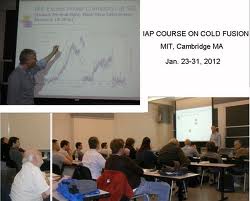
IAP 2012 Cold Fusion 101
IAP 2012 Cold Fusion 101 course collage
Excess power production in the Fleischmann-Pons experiment; lack of confirmation in early negative experiments; theoretical problems and Huizenga’s three miracles; physical chemistry of PdD; electrochemistry of PdD; loading requirements on excess power production; the nuclear ash problem and He-4 observations; approaches to theory; screening in PdD; PdD as an energetic particle detector; constraints on the alpha energy from experiment; overview of theoretical approaches; coherent energy exchange between mismatched quantum systems; coherent x-rays in the Karabut experiment and interpretation; excess power in the NiH system; Piantelli experiment;observed excess power in PdD and in NiH LANR systems; techniques of calibration; problems with flow calorimetry and other detection systems; importance of verification by calorimetry, heat flow, noise measurement, and thermal waveform reconstruction; Q-1-D model of loading, optimal operating manifold lessons; high impedance, codeposition, and PHUSOR aqueous LANR systems; introduction to LANR emissions, pathway control, and coupling to the electrical and propulsion systems; overview of nanomaterial and NANOR LANR systems; Prospects for a new small scale clean nuclear energy technology.

Cold Fusion 101: Introduction to Excess Power in Fleischmann-Pons Experiments with Professor Peter Hagelstein and Dr. Mitchell Swartz January 22-30, 2013 at MIT


Related Links

Starting 2012 with Cold Fusion 101 by Ruby Carat

Massachusetts State Sen Bruce Tarr Visits Still Operating JET Energy NANOR demo/ by Ruby Carat

Heinz Klostermann on the Papp engine: “There should be a Marshall Plan to support this”

Infinite Energy #51 September/October 2003Infinite Energy Magazine issue #51 Joseph Papp’s Noble Gas Engine Rises from September/October 2003 reports comprehensively on the events surrounding the Hungarian-born Josef Papp‘s creation of an engine powered by plasma sparked from small amounts of noble gases.

Many credible witnesses to the demonstrations, including aerospace engineers, defense contractors, and Navy researchers, were skeptical of the claims about this “wonder engine”, at first.

They came to be convinced the claims were true by the indisputable experimental facts before them: a lot of energy was being created, with no heat, no toxic emissions, and no understanding of how it was operating.

Joseph Papp with Noble Gas Engine courtesy Rohner Group
But mainstream interest vaporized after an explosion at one demonstration attended by Nobel Laureate physicist Richard Feynman, who apparently went to the event in order to disprove the technology.

According to Papp, it was Feynman’s pulling of a plug that caused the deadly explosion, though Feynman speculated it might have been conventional explosives planted in the device.

Feynman was represented with his employer in the ensuing litigation and science institutional giant Caltech settled, never finding any evidence of any explosive material, chemical or otherwise. Caltech claims to no longer have records on the tragedy.

For a full story on the noble gas engine and its controversial inventor, read The Mystery and Legacy of Joseph Papp’s Noble Gas Engine by Eugene Mallove from IE issue #51.

Heinz Klostermann in plasma pulse lab in Palo Alto, California
Today, Heinz Klostermann is one of an increasing number of individuals around the world pursuing the secret of Papp’s engine in an attempt to bring a revolutionary clean energy technology to commercial potential. Klostermann, who originally designed and sold x-ray imaging equipment, first heard about the engine in 1999 and has been involved in developing a plasma-driven piston-generator based on Papp’s principles ever since.

The German-born engineer now lives in California and works with inventor Tamerlane Sanchez developing a line of multi-cylinder engines based on the pulsing of plasma generated from plain air. They call their core technology the Pulser.

Lightning Harnessed by Heinz Klostermann from IE #51 describes his engine design and how it differs from Papp’s.

The reaction begins when air molecules are momentarily ionized into a plasma and then hypothesized to collapse back to air molecules. A small 12Volt battery charges a capacitor providing 500 Volts across a pair of electrodes. When the air between the electrodes is ionized, the plasma allows current to pass through the electrodes, discharging the capacitor with each pulse.

Klostermann and Sanchez maintain that high-frequency cycling of this process up to the Megaherz range causes “plasma shockwaves” that translate into kinetic energy to move a piston. A moving piston can produce power for transportation or electricity.

“Controlling the plasma shockwave is the key, because then you have the ‘push’”, says Klostermann.

Heinz Klostermann's Flying piston diagram
Heinz Klostermann’s Flying piston diagram
Patent US7076950 Internal explosion engine and generator using non-combustible gases was granted for one version of the Pulser engine in 2006.

One afternoon in the end of August, I visited their lab in Palo Alto, California. Klostermann and Sanchez demonstrated a plasma engine core test unit, shooting a free piston outwards.

Flying alongside a board with squares, the speed of the piston could be computed, giving an estimate of its energy out of the chamber.

Klostermann believes the Pulser is over-unity, but admits that “more instrumentation is needed” before he “can definitely show it”.

Opening the door to new energy possibilities beyond cold fusion reveals an array of exotic technologies designed to extract energy from our surroundings. Some utilize magnets and gravity, some work to capture virtual photons from the quantum vacuum, and some use circuits and plasma sparks. Harvesting this always-available energy located in our ambient environment is the focus of “free energy” research.

While cold fusion may be the closest to becoming a usable product by the public-at-large, plasma pulse generators based on the work of Joseph Papp are closely paralleling development.

Like cold fusion, the lack of funding hampers efforts needed to both scale up and control the Papp reaction into a commercial product.

The lack of innovative and usable energy solutions from the current hardware monopolies are driving interest elsewhere, and the handful of companies currently working to make new energy generators a commercial reality are finding renewed interest and support.

The grassroots public is slowly awakening to aid the field with buzz and crowd-funding, replacing what should have been a Marshall Plan with a decentralized but spreading meme: There are an array of solutions to our energy problems, and we choose them now.

Related Links

The Dream Machine by David Ansley San Jose Mercury News August 1989 courtesy Rohner Group

Cold Fusion Now UPdate by Ruby Carat September 13, 2012

Conclusively Demonstrating the “New Energy Effect” of Cold Fusion

The following is a further posting in a series of articles by David French, a patent attorney with 35 years experience, which will review patents of interest and other matters touching on the field of Cold Fusion.

This is a report of the technology presented at ICCF-17 but released in the spring of 2012 following demonstrations held at MIT over January 30-31, 2012. I personally attended those demonstrations and can confirm that the graphic outputs referenced below and in the ICCF-17 presentation of Dr Peter Hagelstein were in fact generated on that occasion. This may be the technology that demonstrates Cold Fusion in a way that can be observed by anyone around the world.

Breaking the Dam of Disbelief

The year 2013 will be the year in which the dam of disbelief respecting the Fleischmann & Pons phenomena will finally break. This will start with the recent successful showing of the film “The Believers” in Chicago on October 16 and its follow-up presentations. The press will gradually notice the issue. Enough courageous journalists will demand from their editors page-space to expose the shabby treatment of this phenomenon that has occurred over the past 22 years.

Sufficient demonstrations of unexplained excess energy have been repeated in laboratories around the world to shatter the paradigm that Cold Fusion is a pathological science. The result will be a demand for experiments that can be reliably duplicated by persons, agencies, laboratories and businesses around the world interested in re-examining this New Energy Effect.

Need for a Commercially Vendible demonstration of Cold Fusion

An opportunity exists to sell and distribute widely electronic data acquisition and presentation equipment in conjunction with a practical set-up that demonstrates Cold Fusion. Such an arrangement should:

• not rely on the presence of pressurized hydrogen or electrolyte fluids
• operate at moderate temperatures
• provide ready access to the reactor center for easy experimentation
• allow ready substitution of reactive elements for repair and alternate testing procedures
• impose minimum power requirements
• clearly demonstrate a Cold Fusion/LENR effect
• allow a variety of experiments to be conducted by users.

All of these experiments should both serve to demonstrate the Cold Fusion effect and allow researchers to better understand and advance the exploitation of this phenomenon

Opportunity presented by the JET Energy Inc’s “Nanor”

JET Energy Inc. is a company established just outside Boston, Massachusetts by Dr Mitchell Swartz. Mitchell Swartz was one of the original experimenters in the field of Cold Fusion; he became involved directly after the Fleischmann & Pons effect was demonstrated in 1989. Mitchell Swartz has been working with Dr Peter Hagelstein, a professor at MIT and one of the eminent theoreticians in this field. The following information is taken from a paper presented by Dr Peter Hagelstein on behalf of Dr Mitchell Swartz and Jet Energy Inc at ICCF-17. The paper for this presentation will form part of the final report of the ICCF-17 proceedings.

The reactor

JET Energy has developed a demonstration Cold Fusion reactor that relies on a simple core element that is essentially the size of an ohmic resistor. This “Nanor” ™ contains nanostructured pellets of Palladium embedded in zirconium oxide insulation that are pre-loaded with high pressure deuterium and sealed into a small cylinder with electrical connections at the respective ends. The similarity in outward appearance to an ohmic resistor is exact.

For purposes of demonstrating the Cold Fusion effect and quantifying the excess heat being generated, this small cylindrical element, the “NANOR™”, is utilized in conjunction with a “control resistor” bonded along side. The bonding agent is a thermally conductive but electrically insulative glue. Both elements provide easily accessible independent electrical leads at their respective ends.

These components are contained in a thermally isolated environment. Optionally the assembly can be placed inside a traditional calorimeter, but this is not essential. Temperature sensors are bonded to the system which, in conjunction with the control resistor can function equivalently to a calorimeter.

To achieve a Cold Fusion/New Energy effect Dr Swartz passes a low-level current through the Nanor, e.g. 10 milliwatts. Perhaps there are other features included in the control circuit and wave form applied. Whatever special tricks are used, the result is to produce more than a minimal amount of excess energy that conclusively demonstrates this new energy effect. To quantify the results, the following arrangement is employed.

Before activating the Nanor, a small current is first passed through the control resistor adjacent to the Nanor. Due to the ohmic resistance in the control resistor the temperature in this resistor, along with that of the Nanor which is glued close by, rises by a small amount, e.g. 1-2 Centigrade degrees. The amount of current and voltage across the resistor are noted, giving the amount of power needed to create this rise in temperature. After the temperature rise generated by the control resistor has relaxed to its starting value, power is applied in turn to the Nanor.

Sufficient current is fed through the Nanor to produce an approximate rise in temperature equivalent to that just achieved in the control resistor. Remarkably, far less power need be applied to the Nanor to achieve this effect, i.e. less power is required to reach a similar temperature to that established using the control resistor. Put alternately, when comparable energies are applied to the Nanor, a greater temperature rise occurs in the Nanor than occurs in the control resistor. These experiments demonstrate the unequivocal generation of unexplained excess energy.

The display

The power circuitry incorporates a control system that alternates between first heating the control resistor with a known amount of electrical power and then applying a lower level of electrical power to the Nanor. The temperature rise generated first in the control resistor and then in the Nanor as detected by the temperature sensor is shown graphically on the screen of a computer. Using this arrangement the Nanor has demonstrated gains on the order of 800 to 1600%, i.e. a coefficient of performance – COP of 8-16. The graphic display showing this effect can be seen here.

The gain is represented by the ratio of the respective heights for the normalized temperature of the Nanor, indicated by “delta-T/pin” curve, with respect the height of the stepped trace for “input power”, both on the right-side of the display. Here, it is important to note that “normalizing” the delta-T (dividing the measured delta-T by the measured applied power) has the effect of removing the step-like response of the delta-T to the step-like application of input power, resulting in a “flat” response of the control resistor, and a “flatter” response of the NANOR. Note that this normalized gain falls off somewhat with increasing power for the Nanor.

From the graph it is demonstrated that providing lower power to the Nanor will achieve the same temperature excursion as that demonstrated by the control resistor using higher power. While the effect is not being monitored at a constant temperature, the temperature excursions are very small, e.g. 1-2 centigrade degrees. Therefore results nearly equivalent to having a complex constant-temperature calorimeter are achieved. Essentially, the energy output of the Nanor is inferred by comparing the temperature change achieved to that produced by the control resistor. With the high COP’s being achieved, the result is unmistakable.

The temperature rise of the Nanor-control resistor combination is conveniently presented on a computer display in which the temperature traces are arranged graphically directly following each other. The cycle is carried-out repeatedly, with a relaxation delay in between, to provide interlaced graphic demonstrations of the generation of unexplained excess heat next to a calibration curve. As this effect continues for many days, the only possible conclusion is that the excess energy is arising from some form of nuclear effect. Hence this apparatus demonstrates the reality of “Cold Fusion” or some nuclear process the mechanism of which is not yet conclusively established.

Stepped power increases

In order to produce more information in the computer display, the electrical circuitry supporting the demonstration applies power to both the control resistor and the Nanor in steps of regularly increasing applied power. Each time the power rises by a step, the temperature of the system rises by a related step. The correlation is not precisely even. Further this feature demonstrates that the Nanor exhibits differing gains when driven at different power levels. Importantly, the Nanor can be over-driven, providing a COP which is reduced from the maximum possible once the optimum power input is exceeded. This is readily apparent from the display.

Packaging the kit

The Nanor demonstration apparatus is very compact. The Nanor and control resistor pair would, by themselves, fit in a very small insulated box if the decision were made to dispense with the standard surrounding calorimeter apparatus. A surrounding calorimeter apparatus could be employed as a back-up to demonstrate that, over time, you can measure the accumulating excess heat that is being generated. In fact, only a small insulated box is required if it is accepted that the temperature excursion demonstrated by the control resistor can serve to calibrate the amount of heat envolving when the Nanor is operating.

Dispensing with the traditional calorimeter allows the reactor box to be hardly larger than a package of cigarettes. Coupled to the wires leading out of this box are a power supply and a data acquisition device. The data acquisition device provides an output that generates the display on the screen of a personal computer. The device so presented would fit, together with its data acquisition device and cables for linking to a PC, into a standard briefcase. Indeed, the briefcase could also include the PC since there would be enough room to fit it in!

Since the reactor can be contained in a relatively small volume it would be easily accessible to install substitute replacements or alternate arrangements which are instrumented according to the desires of a researcher. By providing pre-instrumented variations in the Nanor a variety of experiments could be carrying my users. In every case, the object would be to determine the ways in which it is possible to modulate the Cold Fusion effect. Anyone purchasing the kit would have the advantage of a quick-learning tool to get up-to-speed on the principles of this new and extremely important phenomenon. Universities could buy multiple units for their undergraduate students.

Possible experiments

Some of the experiments that could be conducted include:

• varying the applied DC field to determine the effect on gain or COP. This means identifying the “sweet spot”, also known as the “Optimal Operating Point”
• varying the “relaxation” time between initiating a repetition of excess heat events to determine the effect
• carrying-out the various processes at differing ambient temperatures for the Nanor
• applying an AC component of varying frequencies and strength to the applied DC field
• encircling the Nanor with an insulated wire and applying a co-axial magnetic field while carrying-out the repertoire of other manipulations
• placing a pair of collateral electrostatic plate electrodes on either side of the Nanor and applying varying electrostatic fields, both DC and AC to determine the effect on the excess heat event
• attaching ultrasound transducers to the side of the Nanor to determine the effect of ultrasound on the excess heat effect
• carrying-out experiments with the Nanor having various levels of loading
• carrying out the experiments with twin or triple Nanors surrounding the control resistor, each instrumented with temperature sensors to establish the relative consistency of behavior of the respective Nanors.

Opportunity for Commercialization

JET Energy’s Nanor represents a demonstrated, operational system for researchers to explore the Cold Fusion effect. It is ideally adapted to being integrated into a unit suitable for sale to universities and laboratories, indeed to high schools, as a demonstration device confirming the existence of the Cold Fusion/LENR/New Energy Effect phenomena. Indeed, this demonstration can operate with a normal home PC on the kitchen table top.

This is an ideal system for introducing this new science to the world. JET Energy Inc. is presently working to improve the Nanor and develop a vendible package. Who is going to be the first to step forward and boost JET Energy’s innovation to the forefront of the coming wave of commercial applications that will rely on this wonderful new discovery for humanity?

Publication of a further, 3rd, International Patent Application by Francisco Piantelli – Part II

The following is a further posting in a series of articles by David French, a patent attorney with 35 years experience, which will review patents of interest touching on the field of Cold Fusion.

This is the second of a two-part outline of a recently published patent application originating from Francesco Piantelli. The first part addressed the content of the disclosure of the application. The second part addresses the scope of patent coverage apparently being sought.

Key patent coverage of the third PCT application claims

Every patent has to end with one or more “Claims” which stipulate the scope of control that the patent applicant aspires to achieve. These claims, appearing at the end of every patent document take the form of numbered sentences. Actually, each numbered passage is a phrase which completes a preamble such as: “I claim” or simply “Claims”. The first of the numbered claims always stands alone. Other claims may refer-back to an earlier claim and adopt the features and limitations included in the earlier claim. Accordingly, such dependent claims are “narrower” in scope than the earlier claims to which they refer. This makes the first claim more important.

An initial impression of the scope of coverage of a patent can be obtained by examining simply Claim 1 . In this case, Claim 1 reads as follows:

1. A method to obtain energy by nuclear reactions between hydrogen (31) and a transition metal (19 18 that go), said method including the steps of:

prearranging (1 10) a primary material (19) comprising a predetermined amount of cluster nanostructures (21) having a number of atoms (38) of said transition metal (19) lower than a predetermined number of atoms;

keeping said hydrogen (31) in contact with said clusters (21);

heating (130) said primary material (19) at an initial process temperature (T-i) higher than a predetermined critical temperature;

dissociation of H2 molecules of said hydrogen (31) and formation of H- ions (35) as a consequence of said step of heating;

impulsively acting (140) on said primary material (19);

orbital capture (150) of said H- ions (35) by said cluster nanostructures (21) as a consequence of said step (140) of impulsively acting;

capture (151) of said H- ions (35) by said atoms (38) of said clusters (21 ), generating a thermal power as a primary reaction heat (Qi);

removing (160) said thermal power, maintaining the temperature of the primary material (19) above said critical temperature,

characterised in that

it provides a step (1 15) of prearranging an amount of a secondary material (28) that faces said primary material (19) and within a predetermined maximum distance (L) from said primary material (19),

said secondary material (28) arranged to interact with protons (35″‘) emitted from said primary material (19) by energy-releasing proton-dependent nuclear reactions that occur with a release of further thermal power in the form of a secondary reaction heat (Q2),

such that said step of removing (160) comprises said generated thermal power as said primary reaction heat (Qi) and said secondary reaction heat (Q2).

[End of claim 1

The numbers shown in parentheses in the above claim are those used in the written description to explain the parts shown in the drawings. Further details of the invention are specified in the subsequent claims, most of which are in dependent form. These are all worth reading.

Claim 1 is written in a European style by which it is assumed that, generally, the description preceding the words “characterized in that” covers things or arrangement which were previously known. The claim as a whole must not describe anything that was previously known in order to meet the novelty requirement. This suggests that the very last paragraph following “characterized in that” provides the claim with its required degree of novelty. It would do so by ensuring that the overall wording of the entire claim does not describe anything that was previously available to the public. Effectively, this patent application is directed to the feature of producing energy by the secondary reaction.

Claim 1 is not in the final form that the applicant may choose to present to individual patent offices around the world, once the application exits the PCT system as of October 26, 2013. But it represents the thinking of the patent attorney presently managing this filing. Claim 1 may or may not describe a process that works. However, this claim can be analyzed for certain technical defects that may cause problems for the eventual owner of any patent that may issue.

Challenge of enforcing such a claim

In order for this claim to be infringed, the patent owner must demonstrate that other parties are contravening the wording of the claim. This means demonstrating that an alleged infringer is carrying out each and every step of the method listed in Claim 1. Unfortunately, this claim includes a number of limitations that might be very hard to prove. Examples are:

– the clusters must have a number of atoms of a transition metal e.g. nickel, that is lower than a predetermined number of atoms (This predetermined number, according to the disclosure, is established by the requirement that this is a number “above which the crystals lose the cluster features”. Nothing more is said as to the critical number of atoms per cluster. Accordingly, this stipulation may be inadequately defined in the patent and in the claim.)

– causing dissociation of H2 molecules to form H- ions as a consequence of heating (Note: nickel can cause the spontaneous dissociation of H2 molecules to form H- ions without heating) e.g.:

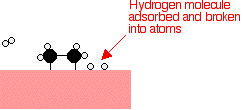
” Hydrogen molecules are also adsorbed on to the surface of the nickel. When this happens, the hydrogen molecules are broken into atoms. These can move around on the surface of the nickel.

Source.

– orbital capture of H- ions by the cluster nanostructures as a consequence of the step of “impulsively acting” on the clusters (“Impulsively acting” as defined in the disclosure means applying a voltage impulsively but not otherwise defined. This may be another instance of inadequate disclosure);

– capture (presumably nuclear) of the H- ions (presumably those that have already been orbitally captured) by the atoms of said clusters to thereby generate a primary reaction heat (How do you prove that this is occurring?)

– providing an amount of a secondary material, e.g. lithium or boron or a variety of alloys, that faces the primary material and is positioned within a predetermined maximum distance (L) (- defined in the disclosure as corresponding to the average free path that such protons can travel before decaying into atomic hydrogen, e.g between 7 and 8 cm) from said primary material,

– the above steps resulting in the secondary material interacting with protons emitted from said primary material by energy-releasing proton-dependent nuclear reactions that occur with a release of further secondary heat (How do you prove that heat is coming from two different sources?)

It should be apparent that proving that all of these events are occurring in an infringer’s accused energy-generation process may be difficult. This is quite apart from whether or not the above claim describes a process that will work.

This claim is equivalent to defining a recipe for baking cookies in terms of what happens in the oven. This is a very undesirable claim format.

Requirement for invention operability and sufficiency of disclosure

It is an essential requirement of any patent that the invention must work. Furthermore, the description accompanying the patent application must be sufficient to enable knowledgeable workmen to reproduce the invention and produce the promised useful result.

Within the confines of this posting, it is not practical to assess whether the disclosure in this application meets all of these requirements. But as an opening exercise, it will be seen that the premise behind this asserted invention is that proton capture followed by proton emission is at the heart of Low Energy Nuclear Reaction – LENR processes according to Francesco Piantelli.

Future processing of the application

This filing does not have to be presented to an Examiner at a national patent office until after exiting the PCT system. This must occur by month 30 or 31 from the original Italian priority filing date, e.g. by April-May 26, 2013. It is highly likely, and virtually certain before the USPTO, that the applicant will be required to demonstrate that the disclosure in this application delivers what it promises, i.e. heat generated through the process characterized by the above claim.

Apart from Claim 1, Claim 8 represents a separate, independent, characterization of the invention in terms of an apparatus that carries out the process of claim 1. That claim should be reviewed as well. Before national patent offices, the applicant will be entitled to amend these claims further, on the condition that the amended claims are still based upon the original “story” included in the disclosure that became frozen at the time that the PCT filing was made, i.e. April 26, 2011. Accordingly, there will be further interesting developments as this application progresses through the patent system in various countries around the world.

Top