
Investing in LENR/Cold Fusion

With the LENR/Cold Fusion field advancing every day smart money is watching carefully.  There will be countless opportunities to benefit from this revolutionary technology.  Here are a few ways to invest:


Mitsubishi Heavy Industries (TYO:7011) has been investigating LENR for a long time.  Their recent presentation at ICCF-18 showed concept LENR system which would generate heat by transmutatating elements, including nuclear wastes and co-producing heat.  Recently, they were granted an international patent for this work.  MHI’s involvement in the traditional nuclear industry and their involvement with industrial power equipment puts them in an excellent position to develop large scale reactors.  Their investigation of exotic turbines and nuclear based technology could be easily applied to LENR.  Even with their strategic position and intense LENR involvement they are a large company, the stock price may not be influenced in the short term, this would be a good long term investment.

Toyota (NYSE:TM) has had its eye on LENR from day 1.  Technova, a Toyota affiliated lab, actually hired Fleischmann and Pons and essentially gave them a new life in France away from the media circuis in the US.  They were hired for a secret research program in LENR, continuing their work in private.  While they may have not created a commercially relevant reactor system, they did spark the interest of Toyota, whos work in LENR continues to this day.  Recently Toyota replicated a key experiment of Mitsubishi, showing the massive opportunities in LENR energy as well as LENR transmutation.  Toyota is a huge company and would be best for a long term invesment.

STMicroelectronics (NYSE:STM) is worth mentioning because they are a publically traded company interested in LENR.  One of their scientists has been collaborating with Celani, attempting replications.  They have a patent application for a LENR device, more specifically a control system for a LENR device.  It does not seem likely that STM actually has any LENR devices other than a celanie replication.  The patent seems to be very forward looking and specific and it is yet to be determined if it will hold any value if it is granted.  STMicroelectronics is a huge company with a questionable foothold in LENR, this may be a stable long term investment.

National Instruments (NASDAQ:NATI) has a serious interest in LENR from the highest levels.  The president Dr. Truchard, gave the keynote speach at ICCF-18, voicing his support for the researchers in this field.  NI has been known to sponsor LENR research groups by donating high dollar data aquistion systems and other equipment.  It is rumored that NI has been collaborating with Andrea Rossi and has helped design the control and monitoring systems for the systems based on arrays of smaller units.  NI week 2012 had a large LENR presence with very open endorsement of the technology, many LENR researchers and advocates were present. NI week 2013 was focused on smart grid technology and had less of a LENR presence, although Dennis Cravens provided a very intuitive public demonstration of LENR excess heat.  Regardless, NI is a large company and initial media frenzy of LENR should not drive up the price excessivly.  This is a very safe medium to long term investment.

Cyclone Power Technologies (CYPW:OTC) is a small company which researches and produces engines operating from thermal energy.  CYPW is a penny stock listed on OTC:Pink stock exchange, the wild west of the stock world.  The stock price is currently at an all time low due to delays in the R+D process.  Regardless, they are looking toward LENR technologies, even adding Dr. Kim from Purdue to their consulting board.  Dr. Kim is heavily affiliated with Defkalion and even with his academic background he is very entrepreneurial, there is no doubt he will do all he can to combine Dekflaion LENR technology and CYPW’s engines.  Due to the low volume and price, as well as the highly speculative nature of penny stocks, CYPW is expected to explode during widespread LENR media attention.  This is an ideal short term investment.

Nickel/Palladium
Nickel and Palladium come to mind when thinking of long term cold fusion investments.  Unfortunately, Nickel is the fifth most abundant material in the earth, a change in the demand of nickel would not affect the price drastically.
Compared with Nickel, Palladium has a much higher hydrogen reactivity and much lower Debye temperature, allowing for palladium based LENR systems to be triggered at lower temperatures.  Even if commercial LENR systems use Nickel/Hydrogen, Palladium will always have a use in the LENR world.
Palladium is currently worth 725$ an ounce, compared to its all time high of 1100$ in 2000, its nowhere near overpriced.  Keep in mind the price of Palladium is currently heavily tied to the projections of worldwide car production.
Palladium Exchange Traded Funds (ETF’s) i.e. palladium stocks are a convenient way to get in the game, but whats the point of investing in a precious metal if you can’t gawk at it?
Buying physical palladium online and having it mailed prevents you from having to pay state sales tax on your investment. APMEX.com is a prefered vendor and sells a variety of palladium coins and bullion.  Palladium would be a good short and medium term investment.

LENR Startup companies may provide the largest return on investment, of course with high risk.  LENR will not be dominated by one company, there will be so many niche uses of LENR and various embodiments that thousands of companies could be successful without saturating the market.  Think Dotcom boom on steroids.  Traditionally, startup companies only want to attract “professional investors” or investors putting in more than about 30k$.  A recent article pointed out that LENR is the perfect use of crowd-funding and with recent legislation it has become much easier for startup companies to receive small investment from private individuals.  If you are reading this now, you are in the perfect position to get in early with the next Elon Musk of LENR.  While most currently active LENR companies are seeking investment, very few would accept non professional investors.  LENRinvest was recently set up and would be worth contacting if you had some cash on hand.  My advice is to keep your eyes peeled for brand new LENR companies, perform due diligence and approach them directly.  Keep in mind that the US patent office likes to block cold fusion patents, so be cautious about the value of any pending intellectual property, it may become a money drain due to office actions, appeals and litigation down the line.
Brillouin Energy Lab Tour

Video: Brillouin Energy Lab Tour conducted by Sterling Allan of PESN.

A visit to California took Sterling Allan of PESN to the labs of SRI International and Brillouin Energy to tour the facilities and get the latest on their research on low-energy nuclear reaction (LENR) energy cells in development for commercial use.

An interview with SRI International’s Dr. Michael McKubre was previously posted. Now, video interviews have been posted of SRI International’s Dr. Francis Tanzella and Brillouin Energy’s Chief Technical Office Robert Godes as well as Brillouin CFO David Firshein and CEO Bob George.

Original article on PESN here.

Video: Francis L Tanzella tour of Brillouin’s SRI International set up

Video: Brillouin’s Finance Opportunities: Car Ride with David N. Firshein, CFO

Video: Brillouin Roundtable Discussion at SRI

PESN interview with Michael McKubre on Brillouin

Sterling Allan of PESN visited the labs of SRI International to tour the facility and chat with Dr. Michael McKubre, lead investigator for cold fusion technology at SRI.

In the interview, McKubre discusses the high level of control that Chief Technology Officer Robert Godes achieved with their Brillouin Energy Corp electro-chemical wet boiler design, effecting the level of excess heat with their Q-wave electromagnetic pulses, with an energy output of 4x. There is a new gas-loaded system that is being engineered to produce that same level of control with a higher output.

Original PESN post is here.

Related Links

Brillouin Energy Corporation

Brillouin Energy and SRI advancing together

A Closer Look at Brillouin

Brillouin Energy Patent Granted in China

More news on Brillouin Energy Corp Patent Filing

New Kid on the Block? – Brillouin Energy Corp

Brillouin Energy interview on Ca$h Flow: “We can re-power coal plants with LENR”

Industry and academic partnerships report from JCF-14 meeting

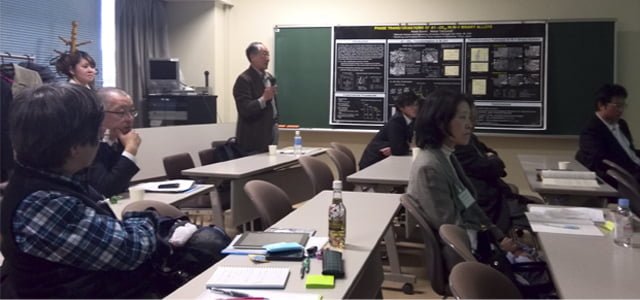
The Japanese Cold Fusion Research Society (JCF) held their fourteenth meeting on December 7-8, 2013 at the Tokyo Institute of Technology in Tokyo, Japan where teams from academia and industry reported on their research.

Japanese business was an early supporter of cold fusion, also called Condensed-matter Fusion (CF), with giants like Toyota Corporation funding research that supported Drs. Martin Fleischmann and Stanley Pons in their French laboratory.

Over the twenty-five years since, official support waned for the notoriously difficult-to-reproduce reaction. The Japanese Cold Fusion Society (JCF) was formed in 1999 to bring scientists still working in the field together to share data. Since then, annual meetings have hosted live demonstrations of energy-producing cells, along with reports on multiple reproductions of key experiments.

Today, momentum is stronger than ever as industry involvement grows rapidly with corporations like Technova, Toyota, and Mitsubishi engaging in partnership with independent scientists and academics to pursue a commercial product.

Clean Planet is a new capital firm now working to advance the field with funding and resources. Founder and Chair Hideki Yoshino attended the recent meeting in Tokyo and described what triggered his involvement.

“On March 11, 2011, Japan was struck by a tsunami which devastated and created havoc throughout this island nation,” writes Yoshino. “The Fukushima meltdown triggered by the tsunami highlighted our vulnerability, even when we have the best back up systems in place. The failure of backup systems has left this country and parts of the world dealing with the threats of radioactive fallout. It became apparent that nuclear fission simply isn’t a safe and clean form of energy. This event was the catalyst for Clean Planet.”

“Clean Planet was created out of the need to better understand how we as a society can grow and prosper while protecting and providing peace and security for our future generations because we believe that a clean, safe and abundant source of energy is the key for the future of our global community.”

Yoshino and his team at Clean Planet have extensive experience in education, business, and law, and they’ve launched strong into CF. Two of the first recipients of support are Dr. Tadahiko Mizuno‘s group at Hydrogen Engineering Application & Development Company (HEAD) and Dr. Yoshiaki Arata‘s team at Arata Research Lab.

“Our direct and transparent approach allows us to 1, fund, and 2, bring human resources to the table which in turn allows us to optimize these resources to their full potential,” says Yoshino.

“Also, by bringing the community of researches and scientist together we are able to share in each others experiences which brings efficiencies both financially and academically to this exciting field of research.”

To what purpose? Yoshino is clear.

“We will initiate, create and distribute clean energy technologies that will enhance the well-being of all mankind to the global community.”

Clean Planet and HEAD will host JCF-15 scheduled for next year in Hokkaido, Japan.

Until then, Dr. X.F. Wang of the Hydrogen Eng. A&D Co. (HEAD) and the Arata R&D Center has filed this report on JCF-14.

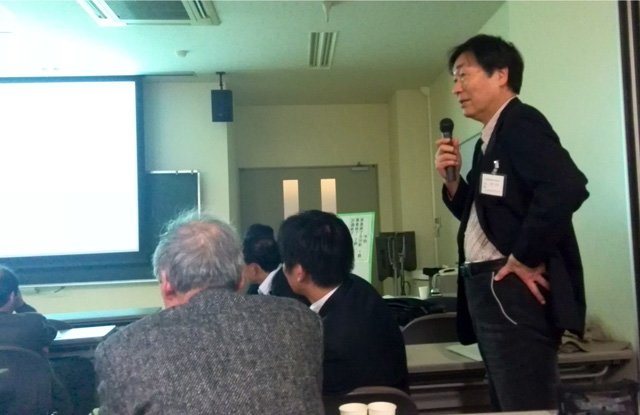
JCF-14-Heavyweights

14th Japanese Cold Fusion Research Society Meeting Report by Dr. X.F. Wang

The program: http://jcfrs.org/JCF14/jcf14-program.pdf

The abstracts: http://jcfrs.org/JCF14/jcf14-abstracts.pdf

Paper presentation: Oral presentation 20 min.
(Review: 25min) + Discussion 5 min.
Oral report language: Japanese

Please see the following abstract of JCF14 about the brief content of theoretical analysis, which is not involved in this report. (The abstracts: http://jcfrs.org/JCF14/jcf14-abstracts.pdf)

It is summarized by the speech sequence.

Day 1 Saturday, December 7, 2013

13:00-13:10 Opening Address H. Numata (Tokyo Institute of Tech.)

Experiment-1 Chairman; T. Mizuno (Hydrogen Eng. A&D Co.)

JCF-14-1

13:10-13:35 JCF14-1 A. Kitamura (Technova Inc., Kobe U.)
Title: Study on Anomalous Heat Evolution from H-Ni Nanoparticle System at Elevated Temperature with Mass-Flow Calorimetry

① A new scaled-up (ten-times-larger volume: from 50cc to 500cc) absorption system with oil(boiling point: 390 deg-C)-mass-flow calorimetry (Fig.1) is calibrated using a dummy Al2O3 powder:

Conclusions:
a. The coolant oil reached almost 300 deg.C at heater input of 231W.
b. Long-term stability, or fluctuation in terms of standard deviation, is better than 0.5deg.C.
c. Conversion factor, dW/dT=(0.970.08)W/deg with an oil-flow rate of 20 cc/min.
d. Heat recovery efficiency is (0.880.03) with heat removal time constant of (301.2) min.

②The first trial run with a 50g CNS sample (silica-included Cu・Ni nano-compound containing 4g of Ni) mixed with 200g Al2O3:

Conclusions:
a. Both TC2 at the oil outlet and RTD’s inside the reaction chamber show higher temperatures than for the blank sample, which implies a long-lasting excess power of ~20W(i.e., 5W/g-Ni).
b. The assumed excess heat appears to be on the same order as that of the CNZ(Cu・Ni/ZrO2) sample yielding 2 W/g-Ni excess power.
c. Further measurements with more precise comparison are necessary to confirm the excess.

③ The runs with a 294-g CNZ4 sample (ZrO2-supproted Cu・Ni nano-composite containing 61-g of Ni) with an axial heater added:

Conclusions:
a. TC2 at the oil outlet and RTD’s inside the reaction chamber showed higher temperatures than for the blank sample, which implies an excess power and energy of ca. 10W (i.e., 0.2W/g-Ni) and 30 eV/atom-Ni, respectively.
b. The excess power is hardly explained only by atomic/molecular processes, although no hard radiations have been observed.
c. Further investigations with a variety of run parameters is necessary to enhance the excess.

13:35-14:00 JCF14-2 S. Tsuruga (Mitsubishi H. I.)
Title: Recent Advances in Deuterium Permeation Induced Transmutation Experiments using Nano-Structured Pd/CaO/Pd Multilayer Thin Film

Concluding Remarks:
1. Low energy nuclear transmutations from Cs into Pr, Sr into Mo, Ba into Sm and Ca into Ti have been observed in the Pd complexes, which are composed of Pd and CaO thin film and Pd substrate, induced by D2 gas permeation (Fig.4).
2. An electrochemical method was applied to increase the local deuteron density near the surface of the nano-structured Pd multilayer film. Transmutation products were increased up to ~1μg/cm2 by this approach (Fig.5).
3. Statistically significant gamma-rays were detected. These emissions were supposed to be caused by the increase of transmutation products (Fig.6).

14:00-14:25 JCF14-3 T. Takahashi (Iwate U.)
Title: Deuterium permeation experiment using Pd/Ni multi-layered sample
Deuterium permeation experiment using Pd/Pd/Ni/Pd Multi-layered sample was carried out(Fig.7a).

Experiment process:
1. Sample was sealed inside the stage (shown in Fig. 7c), and then vacuumed (10-4Pa) at temperature 120℃, kept for 48~72h.
2. The temperature of sample was set up to 70℃, and then D2 gas was loaded into the chamber (Fig.7b) until 0.2MPa. D2 gas flow rate was measured by the Mass flow meter. This process was kept for 7 days.
3. After the D2 gas loading process , the chamber was exhausted at temperature 120℃ for 48~72 hours.
4. The sample was analyzed by TOF-SIMS (Time-of-Flight Secondary Ion Mass Spectrometry).
Conclusions:
1. Transmutation products from Element 133Cs were not identified (Fig.8).
2. For other transmutation products (Fig.9), it is necessary to proceed carefully assess from the impurity.
3. It is necessary to investigate about increasing the permeate flow rate, and the optimization of conditions for forming the film (Fig.10).
The flow rate is about 0.1~0.3[ccm/cm2] (Fig.10). Higher flow rate applying the sample immediately after preparation is observed. That is to say that the impurities on the surface is related to the flow rate.

Theory-1 Chairman; N. D. Cook (Kansai U.)

14:40-15:05 JCF14-4 T. Sawada (Nihon U.)
Title: Relation between the magnetic monopole and NAE of the nuclear cold fusion

15:05-15:30 JCF14-5 H. Kozima et al. (CF Res. Lab.)
Title: Atomic Nucleus and Neutron Nuclear Physics Revisited with the Viewpoint of the Cold Fusion Phenomenon

15:30-15:55 JCF14-6 H. Kozima (CF Res. Lab.)
Title: Nuclear Transmutation in Actinoid Hydrides and Deuterides

16:00-17:30 JCF Annual Meeting

18:00-20:00 Reception

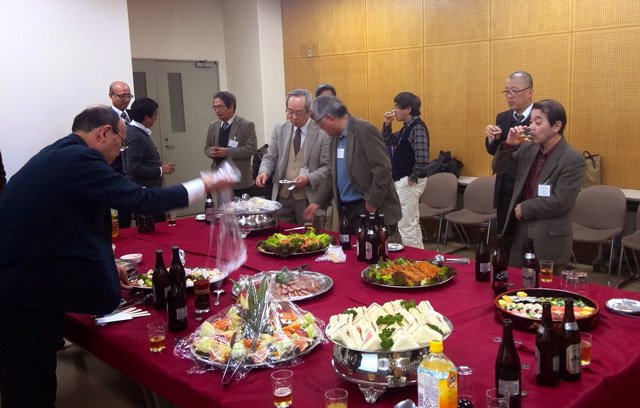
JCF-14-reception

Day 2 Sunday, December 8, 2013

Experiment-2 Chairman; Y. Iwamura (Mitsubishi H. I.)
*This section was chaired by S. Narita (Iwate U.) because Y. Iwamura (Mitsubishi H. I.) called in sick.

10:00-10:25 JCF14-7 X.F. Wang (Arata R&D Center and Hydrogen Eng. A&D Co.)
Title: Synthesis of nano-Pd particles in Y-Zeolite pores by ultrasonic irradiation

0.8nm nano-Pd particles can be synthesized in Y-Zeolite pores by ultrasonic irradiation as shown in Fig.12. Since the synthesis process is not complicated, nano-Pd particles in Y-Zeolite pores can be expected to be applied to Cold Fusion. The Hydrogen/deuterium absorption features of nano-Pd particles in Y-Zeolite pores should be investigated as follows:
1. The effect of species, pores ​​diameter of Y-Zeolite.
2. The effect of average particle size, particle size distribution of Nano Pd particles.
3. The effect of temperature, pressure.

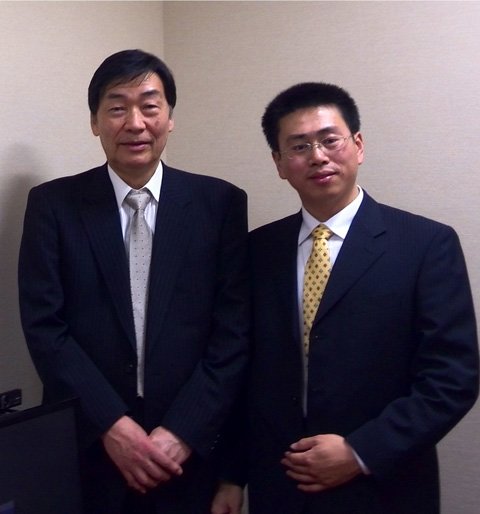
JCF-14-Mizuno-Wang

10:25-10:50 JCF14-8 H. Yamada et al. (Iwate U.)
Title: Impressive Increase in Number of Etch Pit occasionally Produced on CR-39 in Light and Heavy Water Electrolysis Using Ni Film Cathode

Conclusions:
1. The reaction does not always take place in every electrolysis experiment but occasionally does under the same experimental condition.
2. Impressive increase in number of etch pit has been observed in 4 out of 16 for H2O and 1 out of 6 for D2O electrolysis conditions.
3. The common factors to increase number of the etch pit in the CR-39 chip might be
 ①Ni film cathode
②The long electrolysis time
③Li in the electrolyte solution

Theory-2 Chairman; K.Tsuchiya (Tokyo National College of Tech.)

10:50-11:20 JCF14-9 A. Takahashi et al. (Technova Inc.)
Title: D(H)-Cluster Langevin Code and Some Calculated Results

*The source of BASIC EXE applied by Prof. Takahashi can be downloaded from here:
http://hp.vector.co.jp/authors/VA008683/basicw32.htm

11:20-11:45 JCF14-10 H. Miura
Title: Computer Simulation of Hydrogen States near T site in Ni and Pt Metals

11:45-12:10 JCF14-11 H. Numata (Tokyo Institute of Tech.)
Title: Numerical simulation of vortex appeared on electrode surface under long term evolution of deuterium in 0.1M LiOD

Vortex formation locally, triggered by cylindrical pillar current initiation.

12:10-13:30 Lunch

Theory-3 Chairman; E. Yamaguchi (Doshisya U.)

13:30-13:55 JCF14-12 K. Tsuchiya (Tokyo National College of Tech.)
Title: The quantum states of the system including two species of charged bosons in ion traps Ⅲ

13:55-14:25 JCF14-13 E. Igari (Hydrogen Eng. A&D Co.)
Title: Discussion about the quality of the experiments in cold fusion

Conclusions:
When we experiment in cold fusion, we must think about both theoretical and technical issues. The theory of cold fusion continues to evolve. But, the technology of experiment has not caught up with the theory. The Problems remains in the nanostructure and gas control. However, these problems will be solved by technological innovations.

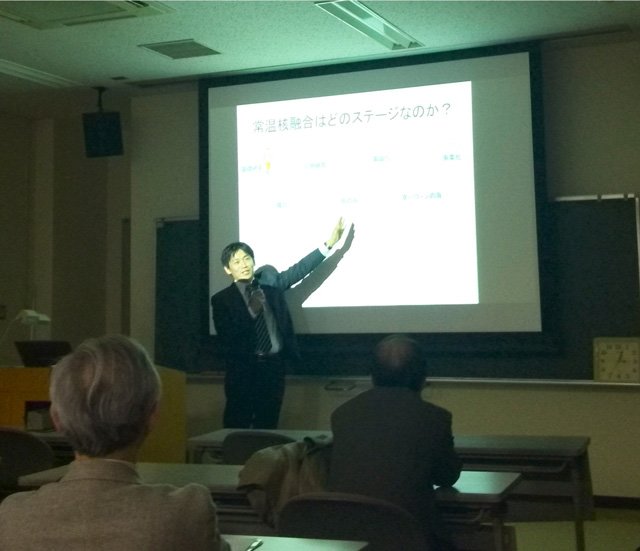
JCF-14-Igari

14:25-14:50 JCF14-14 N. D. Cook (Kansai U.)
Title: Transmutation of Palladium and Nickel Isotopes

14:50-15:15 JCF14-15 H. Kozima (CF Res. Lab.)
Title: Nuclear Transmutations (NTs) in Cold Fusion Phenomenon (CFP) and Nuclear Physics

15:15-15:40 JCF14-16 H. Kozima (CF Res. Lab.)
Title: The Cold Fusion Phenomenon What is It?

**********************************************************************************************

Cold Fusion NOW!

Related Links

Clean Planet [in English]

Japanese Cold Fusion Research Society [in English]

Dr. Yasuhiro Iwamura
at ICCF-18 “Recent Advances in Deuterium Permeation Induced Transmutation Experiments Using Nano-Structured Pd/CaO/Pd Multilayer Thin Film” [slides]

Akira Kitamura at ICCF-18 “A Mass-Flow-Calorimetry System for Scaled-up Experiments on Anomalous Heat Evolution at Elevated Temperatures” [slides]

Akito Takahashi at ICCF-18 “Nuclear Products of Cold Fusion by TSC Theory” [slides]

Decontamination of radioactive ashes by nano-silver by Toshiro Sengaku

No active nuke power in Japan in Toshiro Sengaku

Brillouin Energy and SRI advancing together

Video: Robert Godes speaking at ICCF-18 in the Entrepreneurs session.

Brillouin Energy Corporation and SRI International continue their association cooperatively on experiments towards a commercial quantum fusion energy generator.

“We are solving engineering problems with the Hydrogen Hot Tube (HHT&#8482) and expect to have a solid system by the end of 2014,” says President and Chief Technical Officer Robert Godes. “We also bounce ideas about the next-gen WET™ system. They [SRI] are great to work with.”

A relationship with investment firm Sunrise Securities is ongoing, but Godes says, “I don’t see Brillouin Energy going public. We may start a subsidiary corp with Sunrise for power plant operations with the HHT&#8482 system at some point.”

Most importantly, Brillouin’s cell test equipment is dressed for success with a message that properly focuses the effort:

An active quantum fusion experiment from Brillouin Energy Corporation
Brillouin Energy test equipment at SRI International

Cold Fusion Now!

Related Links

A Closer Look at Brillouin

Brillouin Energy patent granted in China

New kid on the block? – Brillouin Energy Corporation

Brillouin Energy interview on Ca$h Flow: “We can re-power coal plants with LENR”

Vote for LENR-Cars now!

VIDEO: Nicolas Chauvin presenting LENR Cars as part of Entrepreneurial Efforts at the 18th International Conference on Cold Fusion (ICCF-18).

future-energyNicolas Chauvin, research scientist, innovator and entrepreneur, is up for the Future Energy Startup Investment opportunity with his LENR Cars, and he needs your vote now.

Say YES to LENR here with your vote:
http://futureenergy.ultralightstartups.com/campaign/detail/1864

Chauvin is an EPFL engineer licensed in business school and co-founder of two other start-ups before LENR Cars. He has worked for NASA, Nestlé and Logitech.

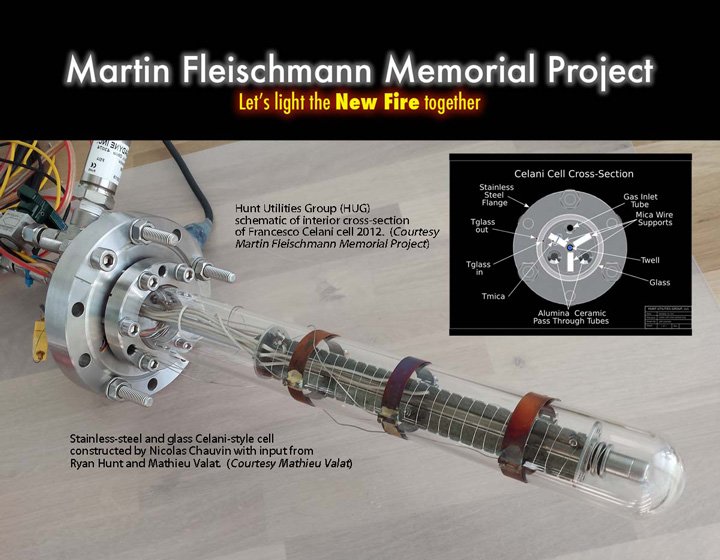
Steel-glass Celani-style cell is MFMP's newest by Nicolas Chauvin, together with Mathieu Valat and Ryan Hunt.
Steel-glass Celani-style cell is MFMP’s newest by Nicolas Chauvin, together with Mathieu Valat and Ryan Hunt. (From the 2014 History of Cold Fusion Calendar)
He is currently working with the Martin Fleischmann Memorial Project (MFMP), an open-source science group collaborating across continents to reproduce LENR experiments. Chauvin recently completed a steel-glass cell design derived from the Francesco Celani-style reactor, a picture of which is the December photo for the 2014 History of Cold Fusion Calendar.

LENR cars might be an early entry into this nascent technology, but engineering applications will drive the science forward, too.

From the LENR Cars entry page:

LENR Cars is developing two technologies to reduce carbon emission: – Waste heat recovery system producing electricity from heat based on Rankine microturbines – Condensed matter hydrogen fuel cell that can consume 4000 times less hydrogen than conventional fuel cells for the same electrical output power thanks to LENR process LENR Cars is currently focusing on the transportation market with high tech collaborations in motor racing. Rankine microturbines are expected to reduce the fuel consumption of vehicles (cars, trucks and boats) by 15% while being affordable for mass production. On a long term, condensed matter hydrogen fuel cells are expected to be able to power electric vehicles for over 20’000 km per hydrogen charge with a lower cost of ownership compared to fossil fuel vehicles.

Vote LENR Cars here:
http://futureenergy.ultralightstartups.com/campaign/detail/1864

The clock is ticking!

Top