“LENR: The Promise of clean and affordable Energy” at University of Northern Iowa

Electrical engineer Thomas A. Wind spoke at the University of Northern Iowa March 10, 2014 presenting LENR The Promise of clean and affordable Energy.

Frank Acland of E-Cat World attended the event. He wrote:

The event was held at the Center for Energy and Environmental Education (CEEE) at UNI, and sponsored by the Recycling and Reuse Technology Transfer Center. Catherine Zeman, Director of the Recycling and Reuse Technology Transfer Center and Pat Higby, Energy Education Outreach Coordinator made introductions at the lecture, and both expressed enthusiasm about hosting a lecture about ‘cold fusion.’

Tom said he became enamored with the subject of LENR after attending last summer’s ICCF-18 conference at the University of Missouri. He said that he was in awe meeting who he described some of the smartest people in the world there, and felt that this was a field of research that is very important. He mentioned talking to representative of Statoil, Norway’s giant oil company at ICCF, and Tom was surprised to hear that instead of having a negative take on LENR, his attitude was ‘this is great, we need this!’

Video of the hour-and-a-half lecture has been made available and is linked below.

NOTE: Original videos were removed and transferred to the
Recycling & Reuse Technology Transfer Center YouTube Channel. Links below have been updated.

Introduction 3:34
https://www.youtube.com/watch?v=eeCvW1H4014

Part 1 Origins of LENR 22:54
https://www.youtube.com/watch?v=4n09kNQ3GoA

Part 2 Rossi’s LENR Technology 15:38
https://www.youtube.com/watch?v=vN_wJ4Hg0io

Part 3 Descriptions and Affirmations of LENR 7:52
https://www.youtube.com/watch?v=ZiwINU2_KvY

Part 4 Other LENR Examples and Comparison to Hot Fusion 18:35
https://www.youtube.com/watch?v=t7qBv-9awYQ

Part 5 Challenges and Future Uses of LENR 10:59
https://www.youtube.com/watch?v=L6FjkwIYN2s

Related Links

2014 Cold Fusion CF/LANR Lattice Assisted Nuclear Reactions Colloquium at MIT Video

18th International Conference on Cold Fusion (ICCF-18) at University of Missouri Video

Rossi E-Cat HT energy density “off-the-chart”

2014 CF/LANR Colloquium at MIT video files

What’s the biggest secret today?

That the world is on the verge of receiving a next-generation nuclear power technology that offers human civilization a clean, green technological future for all of Earth.

As media theorist Marshall McLuhan wrote, “The biggest secrets are kept by public incredulity.”

Oh the reward for opening your mind.

Watch these videos of the 2014 Cold Fusion/LANR Colloquium at MIT held Friday through Sunday, March 21-23, and get ahead of the meme about to break out viral: there is a new energy science that’s now forming into a technology, and it’s called cold fusion.

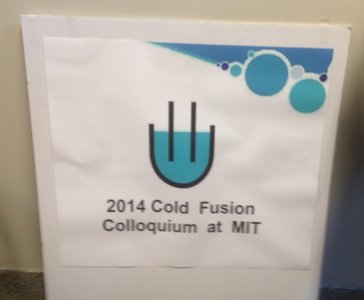
cf-lanr-bannerThe Cold Fusion / LANR Colloquium at MIT was organized by Mitchell Swartz and Gayle Verner of JET Energy and held on the campus of Massachusetts Institute of Technology (MIT) March 21-23, 2014 on the 25th anniversary of the announcement of the discovery. LANR stands for Lattice-assisted nuclear reactions, and researchers from several countries met to brief each other on their latest results on generating excess heat and transmutations.

See all recent uploads of the event on the Cold Fusion Now Youtube Channel

Videos will be added as they are edited.


Find All 2014 CF/LANR Colloquium at MIT Audio, Video, and Full Coverage Here


[watch] Peter Hagelstein Landscapes in cold fusion research

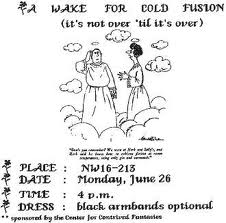
wake for cold fusion at MIT PFC MIT Professor Peter Hagelstein remembers the Wake for Cold Fusion held on June 26, 1989 at 4PM by the Plasma Fusion Center for the “death and demise” of the field.

“What’s your guys opinion about the Wake business?” he grins.

“Premature!” “Woke up!” shouts the audience.

On the 2014 CF/LANR Colloquium presentations, Hagelstein says “This has been one of the strongest and most interesting conferences in the field. I’m stunned at what’s gone on here at this meeting.”

“This was well beyond my wildest dreams; this was an astonishingly strong meeting, but the field is hanging on by a thread.”

“The current situation with respect to the scientific progress in the field, given the abysmal status … of an incredibly small number of resources, the progress has been fantastic under the most adverse conditions imaginable.”

According to Hagelstein, the Sidney Kimmel Institute of Nuclear Renaissance at the University of Missouri is the one “glimmer of light on the radar screen”. SKINR has full funding for staff and resources over a multi-year period.

On the closing day of the Colloquium, Hagelstein expressed thanks and appreciation to the scientists who’ve stayed in the field all these 25 years, and in an emotional tribute, honors the friends they’ve lost along the way.

Video of this event is courtesy Jeremy Rys of AlienScientist.com. You can show your appreciation to Jeremy by donating to acgravity@gmail.com on Paypal.


Find All 2014 CF/LANR Colloquium at MIT Audio, Video, and Full Coverage Here


Related Links

Science Journal Rejections Suppress Clean Energy Research

The Streetlight Effect and Cold Fusion

Stanley Pons‘ Preface to J.P. Biberian‘s Fusion in All Its Forms (La Fusion dans Tous ses États translated)

Marvin Hawkins in The Believers: “I will defend them at every turn”

Remove Institutional blocks at MIT and Caltech: Fund Cold Fusion Programs Now

“The Cold Fusion Revolution is Here – Time to Change the World”

The MIT IAP Cold Fusion 101 course taught by Dr. Peter Hagelstein and Dr. Mitchell Swartz was attended by Cold Fusion Now’s Jeremy Rys of Alien Scientist and all five days of science lectures are posted on the Cold Fusion Now Youtube channel.

Now, Jeremy has put together a video summarizing the state of the field with a historical background for the non-scientist to enjoy.

Watch: “The Cold Fusion Revolution is Here at MIT 2014 – Time To Change the Worldhere!

2014 Cold Fusion 101 video lectures

Cold Fusion 101: Introduction to Excess Power in Fleischmann-Pons Experiments began Monday, January 27, 2014 for a week of classes led by Dr. Peter Hagelstein of Massachusetts Institute of Technology (MIT) and Dr. Mitchell Swartz of JET Energy.

Cold Fusion Now’s Jeremy Rys of AlienScientist.com is attending and filming the lectures for a second year in a row. Jeremy will be uploading video on the Cold Fusion Now Youtube channel for your pleasure throughout the week.

Here is the video link for Monday, January 27, 2014 Day 1 lectures for Cold Fusion 101 featuring Dr. Peter Hagelstein and Dr. Mitchell Swartz.

Tuesday, January 28 Day 2 FULL lectures

Wednesday, January 29 Day 3 FULL lecture

Thursday, January 30 Day 4 FULL lecture

Friday, January 31 Day 5 FULL lecture


Brillouin Energy Lab Tour

Video: Brillouin Energy Lab Tour conducted by Sterling Allan of PESN.

A visit to California took Sterling Allan of PESN to the labs of SRI International and Brillouin Energy to tour the facilities and get the latest on their research on low-energy nuclear reaction (LENR) energy cells in development for commercial use.

An interview with SRI International’s Dr. Michael McKubre was previously posted. Now, video interviews have been posted of SRI International’s Dr. Francis Tanzella and Brillouin Energy’s Chief Technical Office Robert Godes as well as Brillouin CFO David Firshein and CEO Bob George.

Original article on PESN here.

Video: Francis L Tanzella tour of Brillouin’s SRI International set up

Video: Brillouin’s Finance Opportunities: Car Ride with David N. Firshein, CFO

Video: Brillouin Roundtable Discussion at SRI

Peter Hagelstein on the Fleischmann-Pons Experiment


SeriousScience.org has posted a video of Dr. Peter Hagelstein of the Massachusetts Institute of Technology discussing the Pons & Fleischmann Experiment and its implications for nuclear physics.

Hagelstein will be conducting an IAP course Cold Fusion 101 on the MIT campus beginning January 27-31 with collaborator Dr. Mitchell Swartz of JET Energy, developer of the NANOR technology. More information here.

From the original article (transcript):

What was the main problem of nuclear physics for the last 25 years? How did the scientific community split into two broad camps? Associate Professor of Electrical Engineering at Massachusetts Institute of Technology Peter Hagelstein explains his view on the cold fusion experiments.

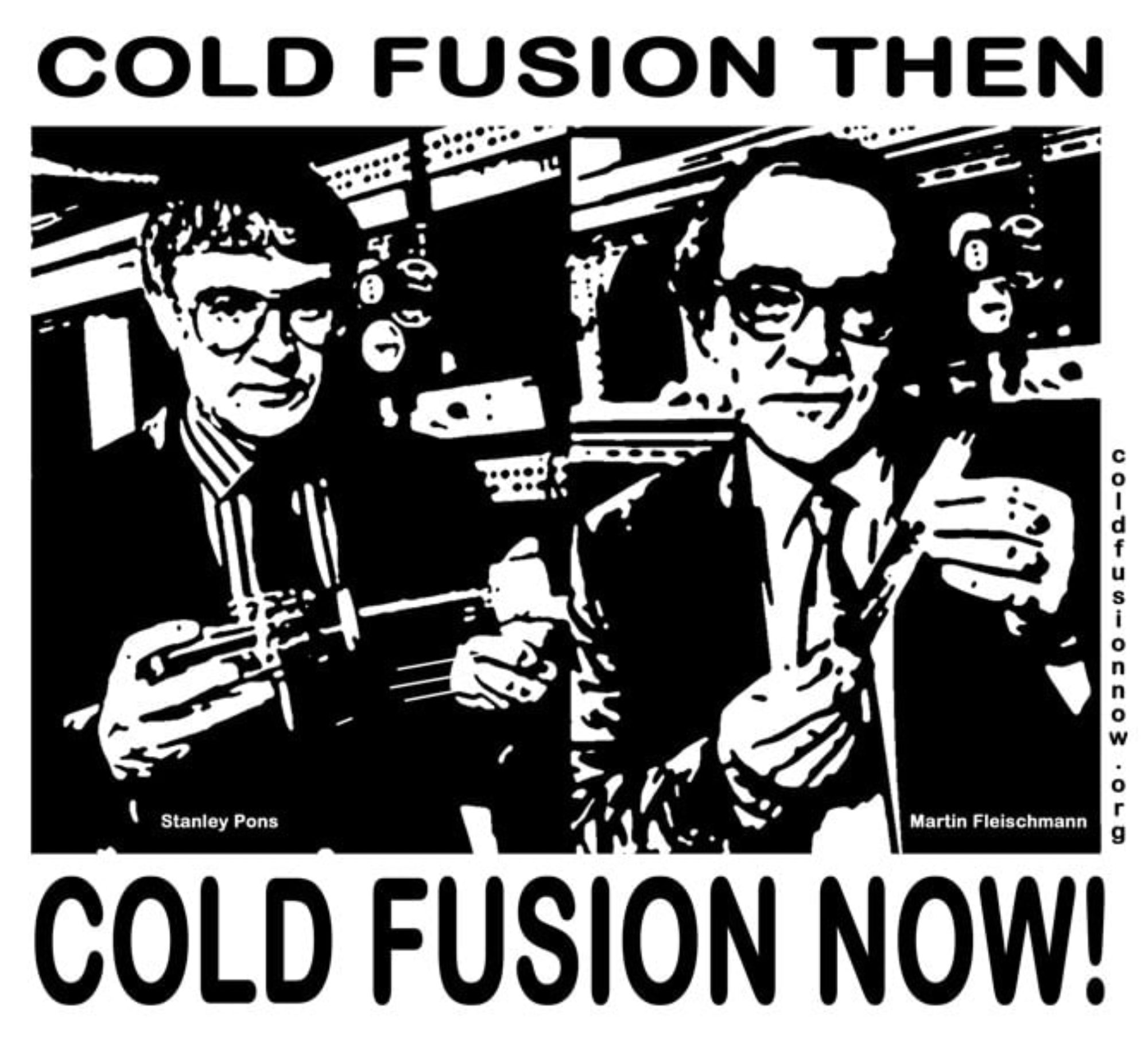
“Cold fusion started in March of 1989 with the announcement of the observational facts by Fleischmann and Pons. The claim was stunning. Energy of nuclear origin, a lot of it, in a test tube, palladium electrode, heavy water: simple current, and there you have it. If true — it’s a big deal. It’s unlocking source of clean nuclear energy. All you have to do is doing some electrochemistry, and you can get clean nuclear energy. That’s magic at that time I was interested surely in. What happened next was not much fun. People tried to replicate it, and more than a hundred laboratories reported negative results. People scratched their head and they thought about how the science could work. And came to the conclusion that based on a lots of physics, and nuclear physics there was no basis for the existence of such an effect.”

“I was interested in why it’s impossible, and the role of experiment in terms of trying to sort out what’s real and what’s not real. The basic issue is that in nuclear physics people have studied nuclear reactions for many years. If you make energy in a nuclear reaction, the energy is made and the energy is carried away. That’s a consequence of fundamental laws of conservation of energy in momentum on a microscopic scale. In Fleischmann and Pons experiment the thing that was amazing is energy was being produced was nuclear, but there was no energetic nuclear emission coming off. That’s hard to understand.”

“Now we have experiments confirming the basic effect, we have experiments showing that energy is produced, that the energetic reaction products aren’t there, and the question is what to do about it. Actually, we should be very interested in these experiments. We should be interested, because we have experimental results which by now have been confirmed a great number of times. We learned about nature from doing experiments. So, here are experimental results. Can we, should we pay attention to them? Follow them up, see, where they lead? Today, sadly, the experiments in the cold fusion business are nor considered to be part of science. And that’s the resolution that we have come to as the scientific community. From my perspective, having been in labs, having seen the results, having talked to experimentalists, having looked at the data, having spent great time on it, it looks like pretty much these experiments are real. They need to be taken seriously.”

Watch the 13-minute video on Youtube here.

Top