“Sit back, relax and prepare yourselves for the great news that the world’s been told.”
Cold Fusion Radio’sJames Martinez devotes a special broadcast to the recent third-party report on Andrea Rossi‘s E-Cat HT technology which confirms big anomalous heat from hydrogen-infused nickel powder.
Martinez rails against politicians for ignoring this, but offers avenues for people to get involved. He is particularly critical of US leadership, which has consciously turned away from cold fusion, also called low-energy nuclear reactions (LENR), lattice-assisted nuclear reactions (LANR), and quantum fusion.
“This technology will be coming out, and those who have been in control for all these years, their days are numbered,” says Martinez. “You the public are now in a position to take back your power. It is time to now assert yourselves onto your local officials who have failed us – for not talking about it, not supporting it.”
“There are cold fusion companies still looking for financing. That tells you how far and gone we are in terms of our priorities.
“Our leaders have failed us in informing the public on what is possible, and where our R&D money should be going.”
“There is massive amounts of money being wasted on nothing.”
Martinez walks listeners through Marshall McLuhan‘s Tetrad applied to cold fusion, to better understand the tectonic effects of this technology on our society, so that we do not become its slave.
This October he intimates the release of a huge news story on this subject matter, and that a well-known figure will publicly support the science and technology.
He also discusses the movie The Believers, a documentary on the early controversy of cold fusion, and its relevancy now that the Fleischmann-Pons Effect (FPE) is real. Martinez is featured in the film, soon to be released on DVD.
Heuristic: relating to the general strategies or methods for solving problems
Recently an experimental investigation of possible anomalous heat production in a special type of reactor tube named E-Cat HT was carried out and published (“Indication of anomalous heat production in a reactor device containing hydrogen loaded nickel powder,” http://arxiv.org/abs/1305.3913 ).
Data was collected in two experimental runs lasting 96 and 116 hours respectively, and anomalous heat production was indicated in both experiments. Computed volumetric and gravimetric energy densities were found to be far above those of known any chemical source. Even by the most conservative assumptions as to the errors in the measurements, the result is still one order of magnitude greater than conventional energy sources.
Pretty strong words, this “sanity test” seems to have pretty conclusively proven that the E-Cat HT is everything Rossi has claimed. On the other hand, looking at the comments on various web articles on the subject, it hasn’t seemed to convince the “skeptics.” Why?
Apparently, the strongest criticism is that the tests were not independent, that the reactor was built by, controlled, and was ran in Rossi’s lab. Furthermore, since Rossi has told lies in the past, according to some critics, he can’t be trusted now. Finally, big claims need overwhelming evidence, which this investigation didn’t provide.
In the first of the two runs, a energy density of around 5 orders of magnitude was calculated, as well as a COP of nearly 6, which would make this tested device revolutionary. Many well respected scientists participated in this investigation. The methodology was straightforward, and even the second run demonstrated results far above those of any chemical reaction. Again, why aren’t the “skeptics” convinced?
A heuristic is a mental shortcut that allows people to solve problems and make judgments quickly and efficiently. These rule-of-thumb strategies shorten decision-making time and allow people to function without constantly stopping to think about the next course of action. While heuristics are helpful in many situations, they can also lead to biases.
Examples of faulty heuristics are “mental filter” (focusing on the negative detail and ignoring the big picture), “confirmation bias” (accepting only information that agrees with our conclusion), “emotional reasoning” (believing something because it feels true, ignoring contradictory evidence),“disqualifying the positive” (looking at only the negative information we have), “over-generalization” (drawing huge conclusions that don’t fit the evidence), “all-or-nothing” (seeing only the extremes in a situation), and “tunnel vision” (failing to see any positives in a situation).
Distorted thinking is recognized by its characteristics: narrow, resistant to change, biased toward negativity, and often irrational.
It is my premise that those “skeptics” that continue to believe that Rossi is a fraud, and discount the above investigative report, suffer from distorted thinking caused by faulty heuristics. I referred earlier to the investigative report as a “sanity test.” What I mean is that the experimental investigation was aimed at only confirming or denying if anomalous heat was produced by the E-Cat HT.
When “skeptics” claim that the tests weren’t independent, I believe they were using the mental filter faulty heuristic by focusing on the negative detail, and ignoring the big picture. No doubt the experimental investigation could have been more independent, but short of outright blatant fraud, the results prove that anomalous heat could not be explained by simply a chemical exothermic reaction.
Furthermore, if the “skeptics” are claiming outright fraud, especially given the credibility of the scientists participating in the experimental investigation, then I believe they are using the confirmation bias, and emotional reasoning faulty heuristics of accepting only information that agrees with their conclusion, and believing something is false because it feels false and ignoring the contradictory evidence.
When some “skeptics” say that Rossi has told lies in the past and therefore can’t be trusted now, so we ought not trust the experimental investigation, I believe they are using the disqualifying the positive, and over generalization faulty heuristics of looking only at the negative information that we have, and drawing huge conclusions that aren’t justified by the evidence.
Finally, when some “skeptics” say that big claims need overwhelming evidence which this investigation didn’t provide, I believe that they are using the all-or-nothing, and tunnel vision faulty heuristics of seeing only the extremes, and failing to see any positives in the situation.
In other words, I see those “skeptics” as having distorted thinking. In other words, their demonstrated skepticism is irrational. That is not to say that skepticism in general is irrational, quite the contrary. Skepticism is healthy, but is often cited to justify undue skepticism, which is distorted, narrow, and biased toward negativity.
To summarize, the recent experimental investigation of the E-Cat HT pretty conclusively proved that anomalous heat was produced that can’t be explained by any conventional energy source. Furthermore, this report didn’t satisfy the “skeptics.” My belief is that the reason those “skeptics” were swayed is that they are using faulty heuristics resulting in bias against the clearly logical conclusion that the E-Cat HT is everything that Rossi said it was. It is certainly true that those “skeptics” will view my paper as indulging in name calling, and my criticism of their heuristics as faulty. We’ll just have to agree to disagree. As Rossi has said, the time for talk is over, and the market will be the final arbitrator.
That is why this experimental investigation is so significant: it wasn’t conducted on some experimental device, it was validating a product that Leonardo Corporation will be selling in the very near future.
Chapters play a crucial role in fulfilling the Society’s mission. Led by dedicated volunteers, SER Chapters focus on local issues and give our members the opportunity to mobilize and engage in regions around the world. We are proud to partner with our chapters in Australasia, Asia, Europe and North America to advance our common goals.
AsiaSER Nepal Chapter: Established in 2011 and serving members in Nepal
AustralasiaSER Australasia Chapter: Established in 1999 and serving members in 17 countries throughout Australasia
EuropeSER Europe Chapter: Established in 2001 and serving members in Europe and the British Isles
SER Great Basin Chapter: Established in 2011 to serve members in Utah, Nevada, southern Idaho, southeastern Oregon and eastern California
SER Mid-Atlantic Chapter: Established in 2004 and serving members in Maryland, New Jersey, New York, Pennsylvania, Delaware, Virginia, West Virginia and the District of Columbia
SER Midwest-Great Lakes Chapter: Established in 2008 and serving members in Indiana, Illinois, Ohio, Michigan, Minnesota and Wisconsin
SER New England Chapter: Established in 2005 and serving members in Maine, New Hampshire, Vermont, Massachusetts, Rhode Island and Connecticut
SER Northwest Chapter: Established in 1992 and serving members in the Cascadia Bioregion, including Alaska, Idaho, Northern California, Montana, Oregon and Washington
SER Ontario Chapter: Established in 1994 and serving members in Ontario, Canada
SER Southeast Chapter: Established in 1995 and serving members in Alabama, Florida, Georgia, Kentucky, Louisiana, Mississippi, North Carolina, South Carolina and Tennessee
SER Southwest Chapter: Established in 2011 and serving members in Arizona, New Mexico, Utah, southern Nevada and southern California
As cold fusion LENR technology matures with market applications, I can not help but reach out to those who I hope most to succeed. Environmental Remediation (removal of toxins or radio-actives) and Environmental Restoration (ecology revival) are fairly new industries with an impressive growth rate.
The science of LENT – low energy nuclear transmutations, for the first time, allows us to advance beyond the contain or bury “solution” for nuclear waste; supplying a method to transmute these from harmful to benign elements.
Almost as a side benefit, (considering the boon of the aforementioned LENT technology) LENR energy will benefit the peoples of the Society for Ecological Restoration, as it will all of us, with reduced energy expenses. (restoration/remediation projects have high energy costs)
Ecological restoration and environmental remediation will be empowered and enabled by the recent validation of marketable LENR energy and emerging LENT (transmutation science). These folks deserve it, their hearts are in the right place as well as their brains.
Become a member, attend their 25th anniversary celebration, and watch this fast growing industry.
As the oil, coal, and U238 energy industry and infrastructure collapses there will be lots of more clean-up projects going on. Cold fusioneers seeking employment should attend. Exciting opportunities can be found. We will be creating them. Cold Fusion Now.
“Reflections on the Past, Directions for the Future”
Thanks be – gbgoble – 2013
The SER2013 World Conference on Ecological Restoration and 25th Anniversary
Reflections on the Past…
Directions for the Future
The SER2013 World Conference on Ecological Restoration: Reflections on the Past, Directions for the Future will bring together more than 1,200 delegates from around the world interested in the science and practice of ecological restoration as it relates to natural resource management, climate change responses, biodiversity conservation, local and indigenous communities, environmental policy and sustainable livelihoods.
It is no secret that today’s world is struggling with the challenges of climate change, biodiversity loss, sustainable resource extraction and human poverty. Here at SER, we stand firm in our belief that ecological restoration plays a crucial role in mitigating and adapting to these challenges. We envision a future where ecological restoration is widely and effectively implemented to re-establish and enhance biodiversity, ecosystem services, and human well-being. Since our incorporation in 1988, we have made it our mission to advance the field of ecological restoration.
Global Network
SER has grown into one of the world’s leading global networks dedicated solely to the science and practice of ecological restoration.
-Established chapters to advance our mission in fourteen regions around the world
-Expanded our network to include members in over 70 countries around the world, solidifying a global voice behind ecological restoration
-Hosted world conferences in Spain, Australia, Mexico, Canada, England and the United States to allowed academics, practitioners, and students come together to exchange ideas, showcase their work, forge new alliances and participate in workshops, field trips and other educational activities
Policy and International Collaboration
SER participates in international fora that engage the public, private and NGO sectors at global, regional, national and local levels, to advocate for the use of appropriate, participatory, and knowledge-based restoration activities. Click here for detailed information on all of SER’s global partnerships.
– Entered agreement with the Ramsar Convention on Wetlands and participated with the preparation of proposals for updating and expanding existing Ramsar guidance on the restoration and rehabilitation of lost or degraded wetlands
– Contributed to various IUCN ‘Internional Union for the Conservation of Nature’ commissions and initiatives over the past decade
– Launched initiative with the Wildlands Network to bridge the gap between the science and practice of ecological restoration and the practice of conservation biology and landscape ecology within the context of connecting regionally significant fragmented wildlands in North America.
Publications and Resources
SER distributes a variety of publications and resources aimed at education, practical application and awareness.
-Launched the Global Restoration Network, an online database that links research, projects, and practitioners around the world
-Established book series on ecological restoration in collaboration with Island Press to create a forum devoted to advancing restoration science and practice through an interdisciplinary approach
-Produced Restoration Ecology, a peer-reviewed journal that highlights the results of restoration projects worldwide as well as scientific advances, practical implications, lessons learned and new perspectives
-Developed the SER Primer on Ecological Restoration (pdf), a concise statement of restoration principles and includes a clear definition of what restoration is, how it is planned, conducted, and evaluated, and how it coordinates with related disciplines
-Released Investing in our Ecological Infrastructure (pdf), a timely and relevant brochure, to highlight the economic benefits inherent in ecological restoration projects
Introduced conversation on the role of ecological restoration in mitigating climate change and ongoing biodiversity loss through Opportunities and Challenges for Ecological Restoration within REDD+ (pdf)
Cold Fusion Now Acivist Letter Sent
To The Society for Ecological Restoration
Dr. Dhanajay Regmi, Professor Kingsley Dixon, Vern Newton, Norbert Hölzel, Tamara Bonnemaison, Wendy Horan, Professor Eric Higgs, Professor Mark Paschke, Nancy Shaw, Michael Leff, Nancy Sherman, Bruce Pluta, Dennis Burton, Professor Roger Anderson, Professor Young D. Choi, Mickey Marcus, Denise Burchsted MD, Jules Opton-Himmel, Allison Warner, Dr. W. Barry Southerland, Rolf Gersonde, Ray Entz, Sal Spitale, Professor Stephen Murphy, Jennifer Franklin, Charlotte Reemts, Kelly Lyons, Marissa Sipo
Respectfully to each of you…
and your colleagues,
I would like to discuss Cold Fusion / LENR Energy and LENT Science.
My hope is that you will make this a highlight at your upcoming international conference (SER 2013).
These three articles will show you the importance of this emerging clean energy technology.
Please call and discuss the possibilities.
Nearly Free and Unlimited – Totally Nonpolluting
Benign Transmutation of Radioactive Elements
Energy and Science to Empower and Enable Ecological Restoration and Environmental Remediation
On a Scale Never Seen Before
This century will be known as…
The Century of Ecological Restoration and Environmental Remediation
A third-party report on tests performed by European scientists has confirmed anomalous excess heat from Andrea Rossi‘s E-Cat HT, a thermal energy generator based on nickel-hydrogen exothermic reactions developed by Leonardo Technologies.
The Energy Catalyzer first came to public attention in January 2011 when the unit was demonstrated at the University of Bologna in Italy. Since then, in a drive for control, stability and certification, the E-Cat has gone through multiple design changes with the latest version, the E-Cat HT operating at high-temperature.
The tests were performed by scientists from Italy and Sweden who had access to the unit and conducted their investigation independently. The team included:
Giuseppe Levi, Bologna University, Bologna, Italy Evelyn Foschi, Bologna, Italy Torbjorn Hartman, Uppsala University, Uppsala, Sweden Bo Hoistad, Uppsala University, Uppsala, Sweden Roland Pettersson, Uppsala University, Uppsala, Sweden Lars Tegner, Uppsala University, Uppsala, Sweden Hanno Essen, Royal Institute of Technology, Stockholm, Sweden
Data was gathered over two four-day tests, one in December 2012 and another in March of this year. For each test, the E-Cat HTs performed continuously while measurements were taken.
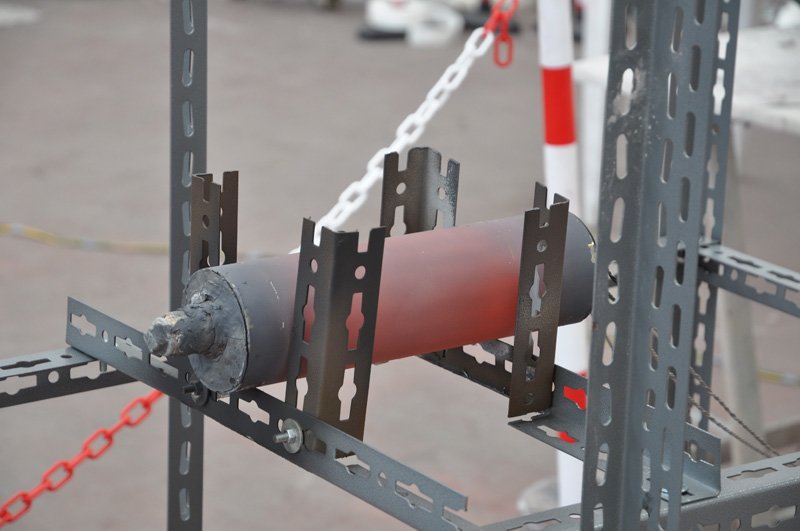
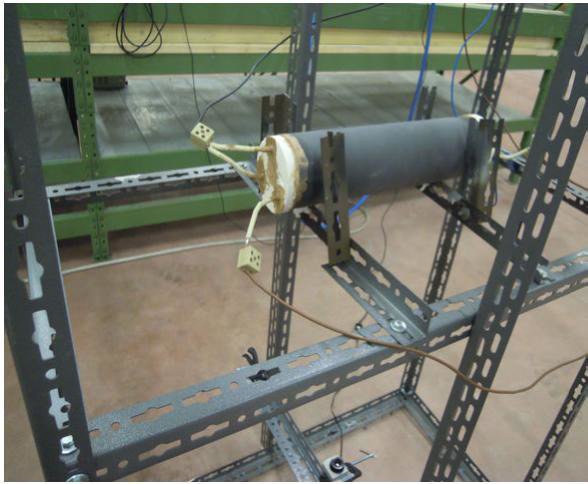
The E-Cat HT operates from an “as yet unknown reaction” in a chamber of hydrogen-infused nickel powder containing some additional catalyst. The nickel powder is enclosed by a hermetically-sealed steel cylinder 3 centimeters in diameter and 33 centimeters long. Surrounding this inner cylinder are resistor coils that heat up the core, initiating the reaction.
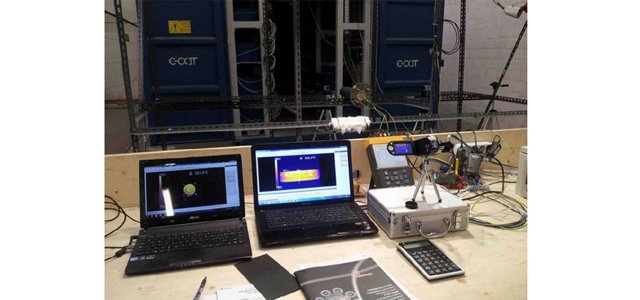
All of this is housed in an outer cylinder made of steel and ceramic that varies depending on the experiment. A thermal camera imaged the surface of the reactor over time, determining the temperature of the outer steel casing.
A first test occurred in November 2012, but that unit overheated, melting the stainless-steel inner chamber. While the data was incomplete, it was clear the reactor made significant heat beyond any chemical reaction. After re-designing the experiments for the second and third tests, computations of Coefficient of Performance (COP) and thermal energy density were strong and impressive.
“The procedures followed in order to obtain these results were extremely conservative, in all phases…. it is therefore reasonable to assume that the thermal power released by the device during the trial was higher than the values given by our calculations”, the report states.
December test gives COP of ~5.6
For the December test, the E-Cat HT ran for 96 hours.
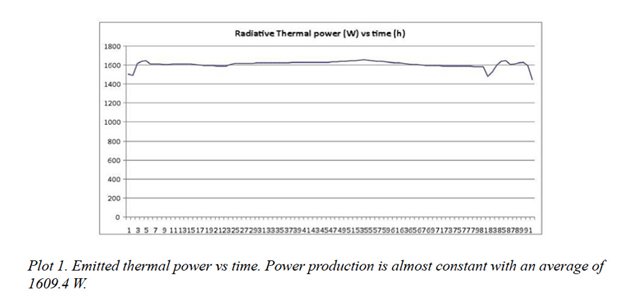
Input power to the heating coils was modulated “with an industrial trade secret waveform”, with the average hourly power consumption used by the heating coils at 360 Watts.
The average thermal Output Power of ~ 2034 +/- 203 Watts assumed a 10% error.
E-Cat HT on support frame from DecemberA simple ratio of thermal output power/ input power gives a COP of
COP
= 2034 Watts / 360 Watts
~ 5.6 +/- 0.8.
Power density, defined as watts per kilogram of fuel, is the ratio of thermal excess power generated in watts to the mass of nickel powder fuel in kilograms.
Excess power is the thermal output power minus the input power. The amount of fuel used for the calculation was 0.236 kilograms, an overweight value that included the mass of the caps of the inner chamber. This over-value for fuel gives a lower limit for power density, so we can assume that the power produced by the E-Cat HT was even greater than that computed in the report.
Thermal Power Density
= (2034 – 360) / 0.236
= 7093 +/- 709 Watts/kilogram, again assuming a 10% error.
Thus, power density is about 7 kilowatts per kilogram of nickel powder fuel.
To get the thermal energy density, the power density is multiplied by the total number of hours the E-Cat HT ran, giving:
Thermal Energy Density
=7093 * 96
~ 681,000 Watt-hours/kilogram
= 681 kilowatt-hours/kilogram
After 96 hours, this unit was shut down to end the experiment.
E-Cat HT2 is self-sustaining
A new generator was employed in the March test, one with a slightly different design called the E-Cat HT2.
The inner reactor core was the same size as the previous one, but an added control system for the E-Cat HT2 allowed this experiment to run in self-sustained mode, whereby the input power is turned off, while the reaction continues to provide output power.
This unusual feature commences with an ON/OFF phase, as described in the report “where the resistor coils were powered up and powered down by the control system at regular intervals of about two minutes for the ON state and four minutes for the OFF state.”
Most of the four-day March test was conducted in this mode where it was shown that the reactor continued to increase heat output “for a limited amount of time” when switched OFF.
Input power to the resistor coils was increased steadily over the first two hours of the test until the ON/OFF mode was reached. After that, input power to the coils then averaged within a range of 910-930 Watts when ON. Subsequent data analysis showed that the resistor coils were on approximately 35% of the time, and off 65% of time over the duration of the test.
Since the control box was estimated to consume 110 Watts, the Instantaneous Power Consumption, the power input when ON, was computed as
But since the input power to the coils was only on 35% of the time, an Effective Power Consumption is computed by
Effective Power Consumption
= 0.35 * 810
= 283.5 Watts
where the authors again assume a 10% error, to take into consideration any unknown uncertainties.
For this experiment, the average thermal output power was approximately 816 +/- 16 Watts, using a computed 2% error.
Thus, total energy produced over the 116-hours March test is then
Produced Energy
= (816 -283.5) * 116
~ 62,000 Watt-hours
= 62 kilowatt-hours
Energy density is off-the-chart
In this experiment the amount of nickel powder fuel mixture was determined by first weighing the inner reactor core cylinder loaded with fuel. Then, the proprietary nickel mixture was extracted from the inner reactor core “by the manufacturer”, and the empty cylinder returned and weighed. From the difference, the fuel amount was computed as 0.3 grams. To compensate for any uncertainties, the authors of the report used a value of 1 gram to compute the power and energy density.
Ragone Plot of energy densities for various sources; E-Cat HT2 is off-the-scale here.Thermal Power Density
= (816 -283.5) Watts / 0.001 kilograms
= 532,500 W/kg
~ 532 kilowatts/kilogram
Over the full 116-hours March test, the thermal energy density is then computed as
Thermal Energy Density
= (532,500 W/kg)(116 hrs.)
= 61,770,000 Watt-hours/kg
~ 62,000 kilowatt-hours/kg
The energy density of the E-Cat HT2 places it
“about three orders of magnitude beyond any other conventional chemical energy source.”
This thermal energy density for the HT2 is larger than that computed for the December HT test by a factor of three. According to the authors, this this is due to the overestimation of the amount of fuel in the December test, where the steel cylinder caps were included. Still, both E-Cats performed off-the-chart.
For this experiment, the COP is computed as
COP
= 816 Watts / 283 Watts
= 2.9 +/- 0.3 again assuming a generous 10% error
This COP is noticeably different from the COP of the E-Cat HT in the December test of 5.6. This difference is attributed to the fact that the COP tends to increase as the temperature increases.
The average temperature of the E-Cat HT was 438 C while the average temperature of the E-Cat HT2 was 302 C, leading the HT to have a higher COP.
But the authors note that as they did not inspect the nickel powder fuel in either case, so perhaps the disparity in COP may be the result of differences in the two samples.
After 116 hours, the March HT2 test was shut-down and the experiment ended. It is made clear in the report that the fuel was not exhausted, and the tests could have gone on longer, increasing the value of thermal energy production and density.
To quote the report, “… energy densities were found to be far above those of any known chemical source. Even by the most conservative assumptions as to the errors in the measurements, the result is still one order of magnitude greater than conventional energy sources.”
In addition, both tests were monitored for radiation by David Bianchini, and no dangerous emissions were found. Again, from the report:
“The measurements performed did not detect any significant differences in exposure and CPM (Counts per Minute), with respect to instrument and ambient background, which may be imputed to the operation of the E-Cat prototypes”.
This summer, a new test will be conducted for a six-month period. Together with this report, a data set is emerging that proves without a doubt the E-Cat is leading the race for ultra-clean energy-dense power for the people. When global energy policy will catch up with the reality of new energy, no one knows. Congratulations to Mr. Rossi for bringing us one step closer to that free, green, technological future we imagine.
“3rd party report shows anomalous heat production – The Rossi Effect”
“Indication of anomalous heat energy production in a reactor device containing hydrogen loaded nickel powder”
The long awaited “3rd Party Verification Report” on Andrea Rossi‘s E-Cat has been released. The .pdf can be downloaded from ecat.com HERE or arxiv.org
The announcement, which provides the abstract and the conclusion is posted here on Rossi’s E-Cat website.
The conclusion reads positive, yet also reads that much more testing is in the works, the next of which is slated to start this summer, and last 6 months.
This is just a breaking news post, thoughts or further commentary will be added here, or in a new post. Or better yet, share your own thoughts in the comments section.
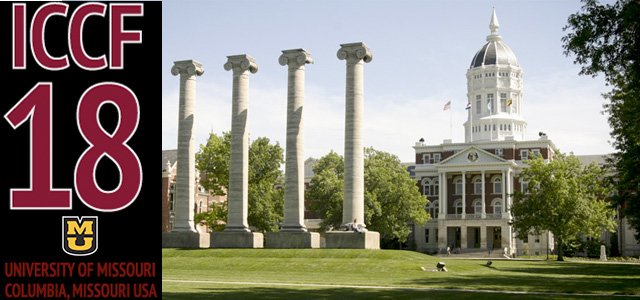
The 18th International Conference on Cold Fusion (ICCF-18) will be held at the University of Missouri in Columbia, Missouri, U.S. July 21-27 where Vice Chancellor of Research Dr. Robert Duncan has led the creation of a world-class research program based on low-energy nuclear reactions (LENR).
Since his appearance on the CBS network’s 60 minutes program in 2009, Duncan has brought international researchers to the university’s business incubator park and helped to establish a new facility specifically devoted to the science.
The Sidney Kimmel Institute for Nuclear Renaissance (SKNIR) is named after philanthropist Sidney Kimmel who funded the project. An overview of the facility will be presented by Director of the Institute and Former Navy Research Lab (NRL) nuclear physicist Dr. Graham Hubler on the first day of the week-long conference. Fellow NRL scientist Dr. David Kidwell will give the Keynote speech.
ICCF-18 brings together some of the top scientists in the world to report on their research. This year’s program “Applying the Scientific Method to Understanding Anomalous Heat Effects: Opportunities and Challenges” has been published and is accessible here.
Researchers will speak on multiple types of systems, both palladium-deuterium Pd-D and nickel-hydrogen Ni-H. Most talks will focus on experimental results regarding excess heat and transmutations, but theorists will present several models of the reaction as well.
Included are panel discussions on diverse topics of Tritium, and Emerging Career Opportunities.
A panel on Entrepreneurship and Innovation chaired by Mr. Matt Trevithick features former-Navy SEAL and new-energy entrepreneur Douglas Moorhead along with materials scientist and ARPA-E GRIDS program director Mark Johnson.
Dr. Mahadeva Srinivasan, head of the Organizing Committee for ICCF-16, will chair Condensed Matter Nuclear Science – The Way Forward Panel that includes researchers from multiple countries.
A workshop held by Italian National Agency for New Technologies, Energy and Sustainable Economic Development (ENEA) will be led by Dr. Vittorio Violante, and include Dr. Michael McKubre of SRI International, Dr. Robert Duncan of University of Missouri, Dr. Graham Hubler of SKINR, and Dr. Emanuele Castagna of ENEA.
A Transmutations in Biological and Chemical Systems Panel chaired by Dr. Jean-Paul Biberian will include Dr. Mahadeva Srinivasan and Dr. Vladimir Vysotskii, whose research has reportedly revealed transmutations by biological systems that have turned radioactive isotopes into benign material, a process which may lead to the ability to rid the planet of radioactive waste.
Cold Fusion Now author and patent expert David J. French will also present time TBD. Ruby Carat will attend to conduct video interviews and provide news updates throughout the week.

 Cold Fusion Radio’s James Martinez devotes a special broadcast to the recent third-party report on Andrea Rossi‘s E-Cat HT technology which confirms big anomalous heat from hydrogen-infused nickel powder.