Vicky Harvey, a grand-daughter of Martin Fleischmann, runs in the Virgin London Marathon to raise money for the Brain Research Trust to help neurological conditions that afflicted Martin and many others around the world.
32-year veteran of Los Alamos National Lab and long-time cold fusion researcher now with Kiva Labs, Dr. Edmund Storms joined Dr. David Livingston on the The Space Show, an Internet audio program that focuses on issues relating to space exploration.
Their conversation held January 18 can be accessed here: [download .mp3] [49M]
Storms gives an update on LENR, and what developments we might expect in the field this year.
In lieu of that, please check out David J. Nagel‘s video of his presentation at ICCF-17 here.
Credit Lenrnews.eu for finding and posting the new David J. Nagel preview video of his talk at the Global Breakthrough Energy Movement Conference entitled “A New Workforce Will Be Needed For LENR”.
David J. Nagel is a Research Professor at George Washington University in Washington, D.C. and former Navy scientist who has championed low-energy nuclear reactions (LENR) through both experimental research and education. He started NUCAT Energy to hold workshops for industry, academia, and agencies interested in learning about the history and science of LENR, as well as the imminent technology that is now being engineered by a handful of independent small-labs that will utilize the hydrogen in water to make ultra-clean, next-generation nuclear power.
While there are an increasing number of professors engaged in cold fusion research at schools and colleges, not all departments and schools officially support that activity.
In some cases, research is fully-endorsed and funded, such as at University of Missouri and University of Illinois Urbana-Champaign.
At other schools, faculty is forced to conduct research without official funding. This is the case at one of the premier scientific research institutions in the U.S., the Massachusetts Institute of Technology.
In all cases, funding is small, and because of the hostile environment, many of the professors who would love to teach you about cold fusion, low-energy nuclear reactions (LENR), lattice-assisted nuclear reactions (LANR), quantum fusion, and the Anomalous Heat Effect (AHE), will tell you that the job prospects for research in the field are nil. They may even try to talk you out of pursuing the study of our future energy source.
It is shameful that those who would share their two-decades of experience in cold fusion research cannot take students in good conscience because they cannot guarantee any job opportunities upon graduation.
But we know that will not always be the case.
The increasing interest in cold fusion science and technology parallels the decline in availability of cheap fossil fuels, and the lack of viable solutions from the conventionally-minded scientists who’ve been successful at lobbying for funding without delivering the goods.
Each of the professors listed below will give you an education that draws on their own experience in cold fusion research, ranging from experimentalists, theorists, and policy-making, with LENR as a centerpiece.
Globally, there is friendly faculty on every continent and an inventory of the educational opportunities in cold fusion worldwide is forthcoming in part II. What follows is a partial list of schools in the U.S. with cold fusion-friendly faculty, alphabetical by school.
More schools will be added to make a full directory of places you can go to learn about creating energy solutions from the truly bold and courageous scientists of our time.
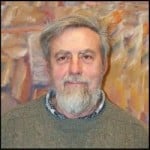
David Nagel teaches and conducts workshops on LENR.George Washington University
Washington, D.C. USA
School of Engineering and Applied Science
Research Professor David J. Nagel
Dr. Nagel’s interests span multi-disciplinary technologies including the development and applications of micro- and nano-technologies, including micro-fluidics and wireless sensor networks, and condensed matter nuclear science, and particularly LENR.
He established NUCAT Energy, Inc to hold workshops for academia, agencies, and industry on LENR and reports regularly on the field for Infinite Energy magazine.
Professor Nagel has been interviewed by Cold Fusion Radio several times. Excerpts from the most recent audio interview are here in “LENR global impact will be historic“. In the interview “A Reasoned Approach to Funding“, he described his plan for a federal effort to bring this science to a usable technology.
George Miley and his students spoke to rocket scientists about LENR.University of Illinois Urbana-Champaign
Urbana-Champaign, Illinois, USA
Nuclear and Electrical Engineering Department Professor Emeritus Dr. George H. Miley
Dr. Miley researches unique cold fusion cells using thin-films and nano-particles. He has presented a LENR-based General Purpose Heat Source for spacecraft power needs and established the company LENUCO to commercially-develop some of their nano-technology discoveries producing transmutation elements.
Cold Fusion Now highlighted his work in the interview “Let’s Find Out What’s There” conducted at the Nuclear and Emerging Technology for Space (NETS) conference.
His students get the opportunity for hand-on experience in the lab constructing and testing LENR cells in the Fusion Studies Lab and in particular, at the LENRs Lab.
Iraj Parchamazad creates anomalous heat with crystal zeolites.University of LaVerne
LaVerne, California, USA
Chemistry Department Chairman of Chemistry Professor Dr. Iraj Parchamazad
Dr. Parchamazad investigates deuterium gas-loaded nano-palladium in zeolites. He is now collaborating with Dr. Melvin Miles, a former professor at the college and long-time Navy researcher with expertise in electrolytic co-deposition techniques.
Enrolled chemistry students have the opportunity for direct experience in conducting laboratory research using a full-spectrum of diagnostic equipment.
Peter Hagelstein co-teaches Cold Fusion 101.Massachusetts Institute of Technology
Boston, Massachusetts, USA
Electrical Engineering Lab Professor Dr. Peter Hagelstein
Professor Hagelstein engages in theoretical work on cold fusion and collaborates with Dr. Mitchel Swartz of JET Energy, builder of the NANOR cell.
Together, they team-teach the MIT IAP short course Cold Fusion 101 held in the end of January. Enrollment in the course is open and includes demonstrations of a live NANOR cell.
Robert Duncan organized Sidney Kimmel Institute for Nuclear Renaissance to study LENR.University of Missouri
Columbia, Missouri, USA
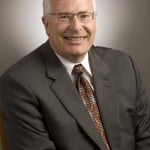
Institute for Nuclear Renaissance Vice Chancellor of Research Dr. Robert Duncan
Dr. Duncan has spearheaded the research into the Anomalous Heat Effect (AHE) at University of Missouri by bringing Energetics Technologies to the University business park and helping to create the Sidney Kimmel Institute for Nuclear Renaissance.
He has marshaled many departments in the research effort, and there are multiple opportunities for a student of cold fusion to learn.
Dr. Duncan and University of Missouri will be hosting ICCF-18 in July 2013, along with Purdue University and University of Illinois at Urbana-Champaign.
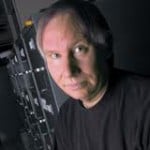
John Dash guided high school students in successful cold fusion experiments.Portland State University Portland
Portland, Oregon, USA
Physics Department Professor Emeritus Dr. John Dash
Professor Dash has been training students in the art of electrochemical cells since the mid 1990s in from the Portland, Oregon area.
He has conducted summer workshops for high-school students and they have held public demonstration of cold fusion cells and presented lab results at conferences and colloquia.
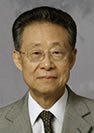
Yeong Kim is a cold fusion theorist.Purdue University
Lafayette, Indiana, USA
Physics Department Professor Dr. Yeong E. Kim
Dr. Kim is a nuclear physicist and Director of the Center for Sensing Science and Technology at Purdue University, where the detection of radioactive and hazardous materials are developed as a technology.
He is also a theorist in condensed matter nuclear science and has modeled the reaction using Bose-Einstein Condensates. He has presented at many conferences, including NETS 2011 attended by Cold Fusion Now and summarized in Session 462 Advanced Concepts.
Thomas Grimshaw shapes energy policy with LENR.University of Texas Austin
Austin, Texas, USA
Lyndon B. Johnson School of Public Policy and the Energy Institute Professor Dr. Thomas Grimshaw
This school researches and prepares policy reports for government officials and legislators and Dr. Grimshaw always includes LENR in their energy surveys.
For over half-a-century, hot fusion labs have received about a hundred billion dollars research funding under the auspice of producing clean abundant energy “in the future”. The joke is that the future always seems to be ‘thirty years away’. To date, hot fusion projects have not generated any useful energy.
However in the article, the author repeats the same myths about cold fusion that have long ago been dispatched by condensed matter nuclear scientists around the world. Scientists working out of U.S. Navy labs, national labs, nuclear agencies, and universities have confirmed the very reproducible reaction’s effects of excess heat and transmutations repeatedly.
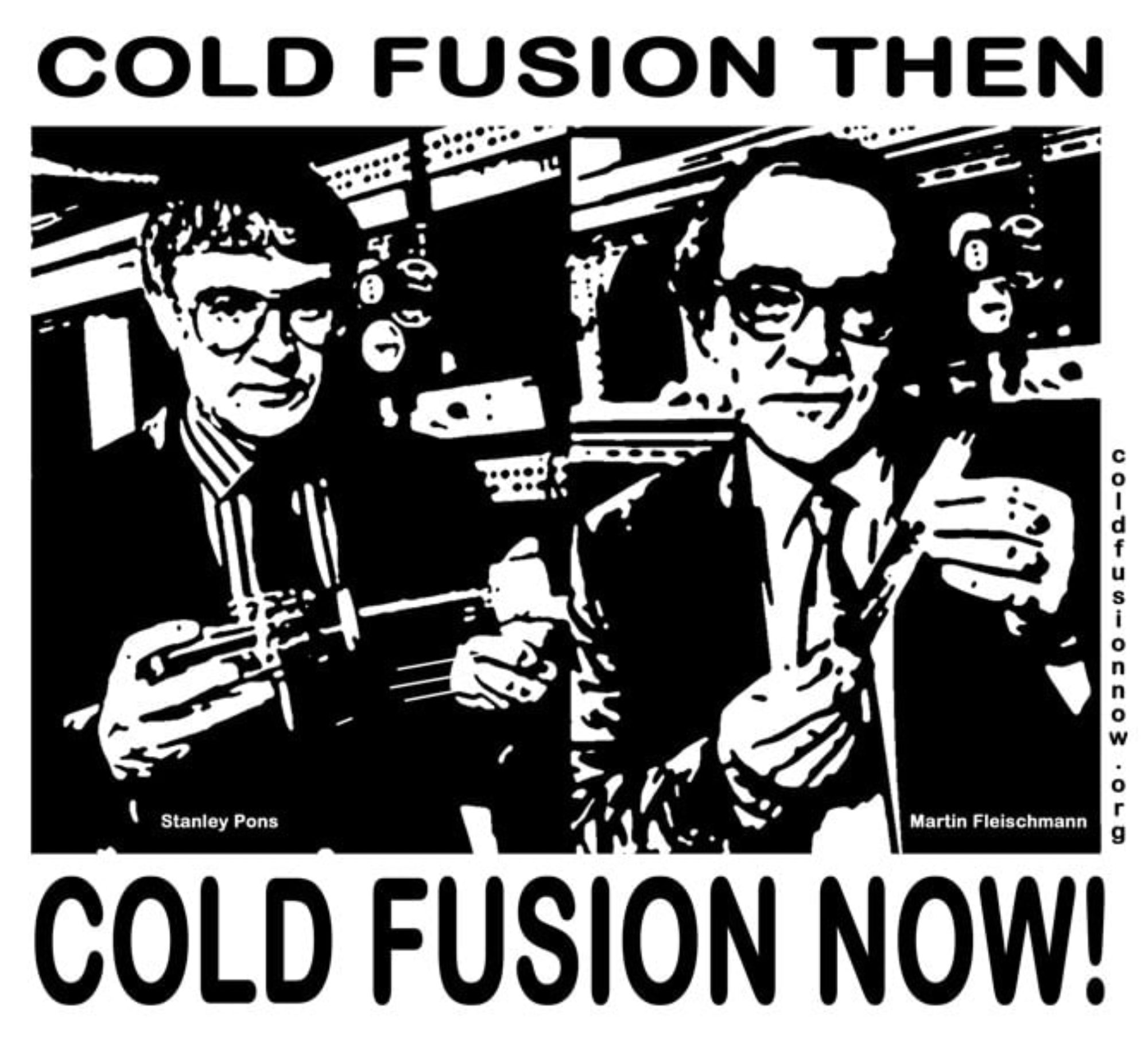
Unfortunately, the Professor gets a D for not taking the time to review the facts, confusing the enormous energy gains in cold fusion with the lack of hot fusion success. He fails further by insulting two of the discoverers of cold fusion Martin Fleischmann and Stanley Pons, implying a criminal intent by equating them with the actions of Richard Richter.
Seife writes in his article:
“For one thing, the history of fusion energy is filled with crazies, hucksters, and starry-eyed naifs chasing after dreams of solving the world’s energy problems. One of the most famous of all, Martin Fleischmann, died earlier this year. Along with a colleague, Stanley Pons, Fleischmann thought that he had converted hydrogen into helium in a beaker in his laboratory, never mind that if he had been correct he would have released so much energy that he and his labmates would have been fricasseed by the radiation coming out of the device. Fleischmann wasn’t the first—Ronald Richter, a German expat who managed to entangle himself in the palace intrigues of Juan Peron, beat Fleischmann by nearly four decades—and the latest schemer, Andrea Rossi, won’t be the last.”
Seife is confusing the 100-year-old conventional theory of nuclear reactions with today’s low-energy nuclear reaction (LENR), lattice-assisted nuclear reaction (LANR), and quantum fusion, names used to describe the variants of cold fusion research taking place today.
As Nobel laureate Julian Schwinger said many years ago, “The circumstances of hot fusion are not those of cold fusion.”
Cold fusion reactions take place inside small spaces of solid material, like the metals nickel and palladium. Cold fusion also can be generated in the crystalline porous structures of zeolites, as well as other alloys and materials, including biological systems.
Reactions use a fuel of both plain hydrogen called protium (the H in H2O) as well as hydrogen isotope deuterium, a hydrogen atom with an extra neutron at the center, and found in seawater.
Cold fusion does not take place in a plasma and does not make the kind of radiation that hot fusion does.
In the conventional nuclear theory from one-hundred years ago, fusion can only occur in high-temperature plasmas, when the nucleons gain high-speeds to impact with enough force to stick together, overcoming the very powerful Coulomb barrier, the force that keeps the positively-charged nucleons apart. The collision, and subsequent fusion of nucleons, produces a burst of heat energy and deadly radiation, all at once.
While cold fusion has no definitive theory at this time, the experimental results point to a slower type of reaction that radiates heat over time with little to no dangerous radiation. Scientists in the field are healthy, and clearly not dead from radiation poisoning, though they have measured heat on nuclear levels.
Consistently documented are thermal energy returns of 3, 6 and 25, depending on the cell design and material. Unofficial energy returns of 400 were witnessed by credible European scientists at demonstrations of Andrea Rossi‘s Ecat, who Seife calls a “schemer”. As the technology develops, cold fusion may show energy returns of 3000 and more.
In some cells the only by-product is helium, while other cells produce products like tritium and neutrons on the order of thousands and millions of times less than hot fusion.
The article Seife has written is once again drawing on the twenty-year-old myths created by unimaginative drones who felt threatened their funding would be cut were cold fusion to be heralded.
And it probably would have, for the ultra-clean energy from cold fusion, packaged in a safe, portable unit, with no need for an electrical grid will wholly change the face of our society.
The now confirmed experimental science has transferred to the commercial sector as numerous independent labs and small companies race to develop a new energy technology for the public. The challenges are two-fold, and vary between companies.
Some cells have a high-enough excess heat needed to produce useful power, but lack the control and sustained operation needed to make a commercially-viable product.
Other companies have the control, but need to increase the excess heat return.
Despite public unawareness and MSM myth, the development continues. At this point, only a commercial product will bring the much-needed funding that these new energy labs require to engineer the next-generation nuclear power, and inaugurate a renaissance of human creativity and freedom based on green living.
The inability of conventional scientific minds to venture beyond the comfort and familiarity of the old theories they know so well is a recurring historical fact. But in this age, when innovative energy solutions are so desperately needed, the continuing suppression of new energy options endangers our species and our planet.
Let’s respond to Charles Seife and invite him to the open enrollment in Cold Fusion 101 to be held on the MIT campus January 22-30 where he can get an update from two of the top researchers in the field.
The course runs from Tuesday, January 22 through Wednesday, January 30, 2013 from 11AM-1PM in Room 4-153 and 66-144 on the MIT campus.
Cold Fusion 101 Lectures courtesy Jeremy Rys
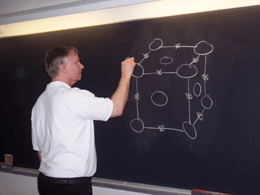
Peter Hagelstein Cold Fusion 101 in 2012Participants in the course will learn about cold fusion from a top theorist in the field, as well as one of the industry’s leading technologists.
The cold fusion energy cell built by Dr. Mitchell Swartz of JET Energy produced excess heat continuously for months on the MIT campus. Described as a zirconium-oxide nanostructured quantum electronic device, the phenomenon was observed by both students and the condensed matter nuclear science (CMNS) community as well as members of the general public.
From “Demonstration of Excess Power from the JET Energy NANOR at MIT” by M.Swartz and P HagelsteinMitchell Swartz and Peter Hagelstein released Demonstration of Excess Heat from a JET Energy NANOR at MIT[.pdf], a report summarizing their excess heat results from the cell.
Cold Fusion Times released links to this year’s Cold Fusion 101 course content which included:
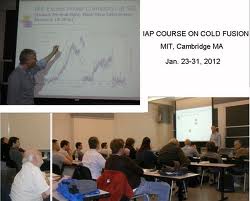
IAP 2012 Cold Fusion 101 course collageExcess power production in the Fleischmann-Pons experiment; lack of confirmation in early negative experiments; theoretical problems and Huizenga’s three miracles; physical chemistry of PdD; electrochemistry of PdD; loading requirements on excess power production; the nuclear ash problem and He-4 observations; approaches to theory; screening in PdD; PdD as an energetic particle detector; constraints on the alpha energy from experiment; overview of theoretical approaches; coherent energy exchange between mismatched quantum systems; coherent x-rays in the Karabut experiment and interpretation; excess power in the NiH system; Piantelli experiment;observed excess power in PdD and in NiH LANR systems; techniques of calibration; problems with flow calorimetry and other detection systems; importance of verification by calorimetry, heat flow, noise measurement, and thermal waveform reconstruction; Q-1-D model of loading, optimal operating manifold lessons; high impedance, codeposition, and PHUSOR aqueous LANR systems; introduction to LANR emissions, pathway control, and coupling to the electrical and propulsion systems; overview of nanomaterial and NANOR LANR systems; Prospects for a new small scale clean nuclear energy technology.