
LENR NASA Google Cafe Foundation and Asphalt

“They paved paradise and put up a parking lot.” – Joni Mitchell

Ultimately we will want to do away with most pavement; considering that the fresh asphalt gassing off into our atmosphere is like millions of miles of tar sands being spread out yearly. Some even say asphalt is a rectal disorder and that roadways are a very primitive and destructive technology; it is thought to be an overly complicated and expensive travel infrastructure that is best done away with altogether. The first paving stones, so to speak, laid towards this end, were set in place in 2008 by the NASA contract envisioned within the Google CAFE Flight Foundation and the Cafe Flight Challenge. This may be as important as the NASA LENR Boeing 747 or the NASA SpaceWorks LENR Spaceplane contracts, which were initiated in 2007.

Imagine a world of personal transport and package delivery without roads, gridlock, or rush hour long traffic delays, no need for parking lots.

Tear up the pavement, create greenways which replace highways, paradise returned.

The folks bringing this dream to reality meet at the 8th Annual CAFE Electric Aircraft Symposium, held April 25th and 26th, 2014, in Santa Rosa, California, an incredible gathering of experts and thought-leaders in the areas of electric- and sustainable-aviation. Highly educated impassioned volunteers and industry leaders power the Café Foundation. Google and NASA provide key technical and financial assistance.

Enabling concepts, which they are working with, have long included the energetics of low energy nuclear reactions, improved thermo/peizo electric conversion technology, advanced nano-tube “structural/airframe” energy storage, and supercomputer navigation capabilities. Dennis Bushnell helped forge the CAFE Flight Foundation NASA contract and has presented important technical information to them over the years.

From the Cafe Foundation

Dr. Shin to Keynote Electric Aircraft Symposium by Dean Sigler

Dr. Jaiwon Shin, NASA Associate Administrator for Aeronautics, will close the Friday, April 25th session of the eighth annual Electric Aircraft Symposium with his keynote address, “The NASA Aeronautics Vision and Strategy – How It Relates to Electric Aircraft.”

Cafe History

5th Annual CAFE Electric Aircraft Symposium – 2011

Dennis Bushnell: Envisioning a Plausible, Positive Future by Dean Sigler

Consider that Nobel Peace Prize winner Dr. Benjamin Santer of the Intergovernmental Panel on Climate Change (IPCC) kicked off the first day of the 2011 Electric Aircraft Symposium with a highly-detailed examination of the issues surrounding climate change. That required an equally adept presenter to expound on possible solutions for worldwide problems, and EAS 5 delivered with Dennis Bushnell, NASA’s Chief Scientist at Langley Research Center.

His presentation, “Frontier[s] of Electric Aircraft Propulsion [The Responsibly Imaginable],” was far-ranging and wonderfully challenging, encompassing energy, aeronautics, and technologies from information technology (IT), bio, nano, energetics, and quantum mechanics, to societal technological systems.

Quoting Arthur C. Clark, “The roads to support autos cost as much as a small war and the casualties are on the same scale”, Bushnell looked at the 80-year dream of flying automobiles, and posited adaptations and alternatives such as robotic package delivery, 300 mile commutes, and flying shuttles for “the aged, the infirm, the young, and the inebriated.” Such personal air vehicle use, along with rail traffic, could constitute “a complete [physical] domestic transportation system,” according to Bushnell.

This approach would have enormous infrastructure and sociological implications, reducing the need for roads and bridges, built-up core cities, and allowing self-sufficiency in electronic cottages on their own large plots of land. Obviously, from this writer’s perspective, this would require a big change from the current 99-percent/one-percent economic dichotomy, because such alterations would require a greater prosperity for everyone, or a more layered society much like those in utopian fiction (or dystopian, as some might fear).

This will come about because navigation and control breakthroughs currently are being developed by the Department of Defense and package delivery companies; and ultralight, motorcycle-like flying machines will enable most to have a safe means of traversing space while avoiding downtowns and malls. These small machines would expand in size to include “Cadillac” level transportation and service delivery.

Bushnell thinks this is possible because the hardware and software Infrastructure involved would be “vastly less expensive than the current ground alternative.” He also foresees a demand for this based on “the HUGE markets [and] economic benefits,” and “because the People want the associated freedom/convenience/time savings/cost reductions” that could come from this visionary breakthrough.

He listed a promising number of ways to harvest energy, including wind, solar, wave power, geothermal, and biomass, but took them to the next level with suggestions for the extraction of atmospheric CO2, and using engineered microbes to convert the gas to fuel; low energy nuclear reactions (LENR and sometimes erroneously referred to as “cold fusion”); exploitation of energy potential in chemical bonds; and the use of positrons – the “affordable anti-matter.”


7th Annual CAFE Electric Aircraft Symposium – 2013

Beyond Chemical – Exotic Energetics/Propulsion

Presented by Dennis Bushnell, Chief Scientist, NASA

LENR [Low Energy Nuclear Reactions]

  • Originally dubbed “Cold Fusion”, an experimental discovery with replication issues and no acceptable theory
  • Now, Almost 2 decades of massive world-wide data collection/experiments indicate is “real”
  • Now, a viable Theory [ Widom/Larsen]
  • Not “Hot Fusion”, is electroweak interactions explicable via the “Standard Model” of Quantum Theory on Surfaces
  • Theory being used to increase heat “quality” and practicality, no radioactivity safety issues
  • Economics/Utility TBD…..

Frontier Energy Storage/ Release Options

  • Atomic Fuels, 20X Chem
  • SBER – Mechanical, up to 100X Chem Release rates
  • LENR – No radiation, up to E4-E6 X Chem
  • Fast Compression – E3-E4 X Chem
  • Isomers – Triggering?, E5 X Chem
  • P-B11 or D-He3 Aneutronic IECF – E7 X Chem
  • Positrons – Storage?, E9 X Chem
  • ZPE – ? [ E108 X Chem?]
  • SMES with CNT Magnets
  • Metal-Air Batteries
  • Nano tube energy storage [ H2, E-M] in skins/ structures
  • The “Exotic Exotics” – Theories relating E-M & Gravity

 LENR Utilization Approaches

  • LENR produces Heat, Depending upon design a great deal of heat
  • Can utilize the Heat directly as in open propulsion systems etc. or via such as Sterling cycles, Thermoelectrics, Pyroelectrics, T-PV etc. convert the heat into electricity
  • Heat produced at energy densities, depending upon design, of E3 to E6 times Chemical, high power density should be possible. All with essentially negligible radiation issues/ problems/ weights and inexpensive fuels/ systems

Alternative Heat Storage Options

  • Fulvalene Diruthenium, Via Molecular Rearrangements
  • Zeolite Pellets, Requires water to extract heat, “Infinite” heat storage life, 4X H2O heat storage [‘Sorptive Heat Storage]


2011 Green Flight Challenge Sponsored by Google

The 2011 Green Flight Challenge sponsored by Google marks an historic achievement in aviation—the first demonstration of practical, cross-country emission-free flight. Final results.

Years from now, these first Green Flight Challenge team members will be recognized as the pioneers of the Age of Electric Flight. CAFE is already discussing plans for GFC II and will publish more on that at their website soon.

CAFE Mission Statement

CAFE Foundation creates and advances the understanding of personal aircraft technologies through research, analysis, and education.

Aircraft are submarines that swim in a sea of air

—Lyle S. Powell Jr.

Besides overcoming the force of Earth’s gravity, aircraft must maneuver against the friction and pressures of a surprisingly viscous and powerfully turbulent medium—Earth’s atmosphere. By comparing how aircraft move through this ‘sea of air’, the enthusiast members of CAFE have pioneered valuable new ways to study aerodynamics and improve personal aircraft.

CAFE developed award-winning flight test equipment and software that records extremely accurate speeds, temperatures, weights, pressures, frequencies and sound levels. These suites of CAFE flight test tools have turned the skies above Santa Rosa into a kind of “Nature’s Wind Tunnel”. (See “Order From Chaos“). CAFE’s flight test expertise has become a national asset recognized by many of those prominent in the world of aviation, including NASA, AOPA and EAA. (See Sponsors)

The diverse members of the CAFE team each contribute a special talent and expertise to the organization. But it is the magic of enthusiasm that has turned these airplane hobbyists into respected aeronautical scientists. The CAFE team arose mainly from members of Experimental Aircraft Association Chapter (EAA) 124, where the passion for personal aviation is strong. Volunteers from EAA 124 have formed the backbone of CAFE’s success.

As we enter the Second Century of Flight, the non-profit, tax-exempt CAFE Foundation looks forward to enhancing its key role in advancing the science, education and growth of personal aviation for everyone. Learn how you can help.

EAS 2014 Registration

Members of the media, enrolled students or other special cases, please email a ‘request for special registration’ to: eas2014reg@cafefoundation.org

Cold Fusion Now

Educates and advocates new energy technologies based on cold fusion science and lobby to make cold fusion research a part of our alternative energy portfolio.

Safe and ultra-clean, from a water-fuel, cold fusion is the viable alternative energy that has the energy density to power a green technological future for all of planet Earth.

Cold fusion makes it economically-viable to recycle all waste. We can remove hydro-electric dams and restore the wilderness, saving species from extinction. No CO2 emissions puts a halt to further degradation of the atmosphere.

And no more dirty and dangerous radioactive nuclear power plants!

Low-energy nuclear reactions, another name for cold fusion, also show the ability to transmute elements, offering a path to clean-up the thousands of tons of radioactive waste that imperils our environment and health.
Commercial Developments presented at 2014 MIT Cold Fusion Conference

The recent 2014 Cold Fusion/LENR/LANR conference from March 21st to March 23rd at Massachusetts Institute of Technology happened to overlap with the 25th anniversary of the announcement of the discovery of cold fusion at the university of Utah. Against all odds, huge strides in understanding the phenomenon were made in the last 25 years. Recently, groups have shown that this is more than a lab curiosity, it can be engineered and harnessed to safely solve the worlds energy problems. This is an overview of some commercial groups which presented at the 2014 MIT conference.


Jet Energy operated by Dr. Mitchel Swartz was the organizer of the conference and also presented some very interesting findings. They have been working with very small devices which can be used as a demonstration unit or operated in a huge array to produce commercial levels of heat. Dr. Swartz has been active in the field since the very start and is constantly improving on his device, the newest generation being called the Nanor. Dr. Swartz’s devices are unique because the loading and operation stages of the device are separated, allowing for simple plug-and-play operation which greatly simplifies use by groups trying to study the effect. Jet Energy has published cold fusion research since the late 1980s, Jet Energy’s recent developments involve using a magnetic effect to boost the output of his devices, which have seen COP’s of 100. This reinforces the recent developments in understanding the effect, magnetism is seems to play a role in both the cause and effect aspects of cold fusion. Dr Hagelstein of MIT made an interesting comment during one of Dr. Swartz presentations, “I can’t for the life of me understand why graphs showing gains of over 100 are being rushed through”. This is a symbol of how much things have improved in the last 25 years. We are moving from just trying to prove the effect really exists to starting to understand the cause of the phenomenon and develop commercial units from the technology.

MIT Conference video: http://www.youtube.com/watch?v=RBDImkDZ4h8


Clean Planet, a Japanese group with Dr. Tadahiko Mizuno as the lead scientist made their debute at the MIT conference, represented by Hideki Yoshino. Mizuno is a household name in the Cold Fusion field and has developed many well referenced experiments. It appears he has found the financial backing required to attempt to bring a commercial reactor to market. At the conference, Clean Planet showed off their proof of concept reactor which operates at a COP of 1.9 as well as some other reactors being built which are made to operate at the 1kw and 10kw power level. Their reactor is simple and an amazing spectacle to watch. Using normal nickel mesh, they create a brilliant plasma to sputter the surface of the metal, cleaning it and creating surface nanostructures which kick off the Cold Fusion effect. Preparing their material inside of the reactor may solve some of the material consistency issues other commercial groups are struggling with. They have a well equipped lab with gamma and neutron radiation detection, although they have not seen any consistent hard radiation outside their reactor during excess heat, they have some some occasional bursts. Clean Planet also presented mass spectroscopy results which confused many scientists and has started a wave of speculation regarding theory. In the mass spectroscopy results, higher masses decreased during excess heat at the expense of lower masses, opposite to what would be expected of fusion events. Clean Planet was quick to point out that these results should be seen as preliminary, their equipment can not separate deuterium and helium so until their outside gas analysis comes back they don’t have solid information. Japan is in dire need of this technology and has historically been supportive of cold fusion research, we can expect Japan to have a serious presence in the Cold Fusion commercialization race. While Mizuno skyped in, his group was represented at the conference by multiple businessmen, they look to have all the resources they need and attracting funding and talent should not be an issue. This is a company to keep an eye on, they could quickly develop a foothold at the head of this field.

MIT Conference video: http://www.youtube.com/watch?v=DB_MRUX4mo0


Mitsubishi Heavy Industries research program, headed by Dr. Yasuhiro Iwamura had some big developments since their last presentation 8 months ago at ICCF18. They are focusing on technology which maximizes transmutation using a gas permeation process, previously reporting that they were able to use the cold fusion effect to transmutate cesium to praseodymium, essentially producing a valuable material from a radioactive waste. While transmutation in this field has been a proven reality, a well funded drive to engineer this effect could lead to enormous advances in many fields of technology. Transmutation could solve both issues with nuclear contamination as well as material scarcity, including exotic isotopes. A research program at NRL failed to replicate these results, at ICCF18 Dr. David Kidwell spoke the same day as Dr. Imawura about NRLs failure to replicate the results, he was overly aggressive and had a very mocking tone, accused them of improper use of equipment, sloppy work and accidentally spiking samples after apparently finding praseodymium contamination in their lab. While the motives behind the NRL bullying were foggy, they ate crow pie a few months later when Toyoto affiliated labs published results showing that they had replicated the transmutation effects in this experiment. MHI originally they used gas permeation through a palladium film ion-implanted with cesium to trigger the effect and transmutate the cesium to praseodymium. At MIT, Dr. Imawura showed new developments in their transmutation research, they started developing modular experiments so they can scale up the device to commercial levels. Dr. Imawura revealed that they had began hybrid electrochemical experiments where they are using cesium in a liquid solution. This may not only be more effective due to the known electrochemical methods of triggering the effect, but it will also have engineering benefits such as cooling and scalability. This is an enormous breakthrough if it can transmutate Cesium in a liquid solution at high yields. Considering water contaminated with cesium is the main contamination at Fukushima, this technology could not only clean up the radiation but also generate heat as a side product. The potential here is enormous, not only for Japan, but for the world, and Mitsubishi Heavy Industries is quickly moving forward.

MIT Conference video: http://www.youtube.com/watch?v=OzZl9l8nn1c


Permanetix Corporation is a new startup which was announced at the conference, President Nikita Alexandrov, in his mid twenties, is one of the youngest researchers involved in this field. Permanetix Corporation is developing tools and experiment techniques to better study the cold fusion effect. He explained how low cost tools and new scientific instruments can help solve the cold fusion problem in the same way that they revolutionized the human genome project. He presented a robust radiation sensor which can be placed in a gas loading experiment, detecting all the low energy radiation that does not pass through the reactor walls. They detected alpha radiation testing the device, meaning that they should also be able to use this as an internal tritium detector, since tritium also emits soft radiation. Nikita Alexandrov also spoke about the challenges of real time helium detection technology and how to design a low cost helium isotope analysis system. While they have prototypes of new tools, they also presented their long term research plan, involving the mass testing of precisely created materials for the cold fusion effect using advanced versions of their tools. Both companies developing reactors as well as researchers interested in the basic science could benefit from the discovery of new materials. But since Permanetix is not making reactors, it is a challenge to fund until cold fusion is a household word. Brian Ahern, who funded many research projects during his time at DARPA, spoke up after the presentation, “You are obviously leading, or ahead of the field so funding will be a challenge”. Permanetix technology could lower the barrier to entry for research companies starting in this field. If they prove themselves and can attract the large amount of funding required for a mass materials screening project, there is no doubt their approach could pay off tremendously.

MIT Conference video: http://www.youtube.com/watch?v=RsR4rrP22Uc


The LENR Industry Association was represented by Steve Katinsky and presented their plan forward at the MIT conference. This trade group will position itself as a facilitator of cold fusion technologies, involved in the education and adoption of cold fusion technology worldwide. This is an important step because it shows that even in such a highly competitive field, groups are willing to work together to do what it takes in making this technology a reality. Already over two dozen groups have pledged membership to this association, involving entities such as Naval Research Lab, two branches of NASA, as well as SKINR, commercial groups and other international research entities.

MIT Conference video: http://www.youtube.com/watch?v=TMNSl-nrFXQ


SKINR is one last non-commercial group is worth mentioning. Sidney Kimmel Institute for Nuclear Renaissance at University of Missouri was formed by a large private investment, absorbing one of the most successful cold fusion companies at the time (Energetics) into the university. Even though they are not a commercial entity, they are possibly the most well funded and equipped research group operating today. SKINR had an excellent presentation summarizing their work in the field, available here. They are currently running many experiments in collaboration with other groups, recently adding industry giant Aerospace Corporation, a move which shows that industry leaders are biting off on Cold Fusion. SKINR is funded for the next 4 years and have constantly been innovating and learning more and more about the science behind the cold fusion effect. Recent developments include a method of surface analysis which can predict if a material will be active as well as new experiments to detect low energy radiation. Their parting message was that if low energy radiation is used as an indicator of cold fusion, it is possible to detect events down to the femto-watt level of excess heat! With multiple groups developing new experiments and techniques for studying the effect, it is expected that huge strides will be made in understanding the cold fusion effect in the coming months and years.

MIT Conference video: http://www.youtube.com/watch?v=iWL6VUPSqKQ


Many groups were not represented at the conference, with some of the largest commercial players absent. Defkalion was registered but pulled out last minute, which is unfortunate because researchers were very curious about the huge magnetic anomalies present in their reactor which they mentioned briefly at ICCF-18.

Leonardo corporation, the company formed by Andrea Rossi which is leading the field in terms of commercialization was of course absent. They have not presented at any recent conferences and are more focused on rapid commercialization. Recently partnering with some powerful American backers, it is rumored that they will release third party test long duration test results in the next few weeks, if the results are anywhere near as positive as the previous published tests, this field may see an explosion of interest and may finally get the recognition it deserves.

“LENR: The Promise of clean and affordable Energy” at University of Northern Iowa

Electrical engineer Thomas A. Wind spoke at the University of Northern Iowa March 10, 2014 presenting LENR The Promise of clean and affordable Energy.

Frank Acland of E-Cat World attended the event. He wrote:

The event was held at the Center for Energy and Environmental Education (CEEE) at UNI, and sponsored by the Recycling and Reuse Technology Transfer Center. Catherine Zeman, Director of the Recycling and Reuse Technology Transfer Center and Pat Higby, Energy Education Outreach Coordinator made introductions at the lecture, and both expressed enthusiasm about hosting a lecture about ‘cold fusion.’

Tom said he became enamored with the subject of LENR after attending last summer’s ICCF-18 conference at the University of Missouri. He said that he was in awe meeting who he described some of the smartest people in the world there, and felt that this was a field of research that is very important. He mentioned talking to representative of Statoil, Norway’s giant oil company at ICCF, and Tom was surprised to hear that instead of having a negative take on LENR, his attitude was ‘this is great, we need this!’

Video of the hour-and-a-half lecture has been made available and is linked below.

NOTE: Original videos were removed and transferred to the
Recycling & Reuse Technology Transfer Center YouTube Channel. Links below have been updated.

Introduction 3:34
https://www.youtube.com/watch?v=eeCvW1H4014

Part 1 Origins of LENR 22:54
https://www.youtube.com/watch?v=4n09kNQ3GoA

Part 2 Rossi’s LENR Technology 15:38
https://www.youtube.com/watch?v=vN_wJ4Hg0io

Part 3 Descriptions and Affirmations of LENR 7:52
https://www.youtube.com/watch?v=ZiwINU2_KvY

Part 4 Other LENR Examples and Comparison to Hot Fusion 18:35
https://www.youtube.com/watch?v=t7qBv-9awYQ

Part 5 Challenges and Future Uses of LENR 10:59
https://www.youtube.com/watch?v=L6FjkwIYN2s

Related Links

2014 Cold Fusion CF/LANR Lattice Assisted Nuclear Reactions Colloquium at MIT Video

18th International Conference on Cold Fusion (ICCF-18) at University of Missouri Video

Rossi E-Cat HT energy density “off-the-chart”

2014 CF/LANR Colloquium at MIT video files

What’s the biggest secret today?

That the world is on the verge of receiving a next-generation nuclear power technology that offers human civilization a clean, green technological future for all of Earth.

As media theorist Marshall McLuhan wrote, “The biggest secrets are kept by public incredulity.”

Oh the reward for opening your mind.

Watch these videos of the 2014 Cold Fusion/LANR Colloquium at MIT held Friday through Sunday, March 21-23, and get ahead of the meme about to break out viral: there is a new energy science that’s now forming into a technology, and it’s called cold fusion.

cf-lanr-bannerThe Cold Fusion / LANR Colloquium at MIT was organized by Mitchell Swartz and Gayle Verner of JET Energy and held on the campus of Massachusetts Institute of Technology (MIT) March 21-23, 2014 on the 25th anniversary of the announcement of the discovery. LANR stands for Lattice-assisted nuclear reactions, and researchers from several countries met to brief each other on their latest results on generating excess heat and transmutations.

See all recent uploads of the event on the Cold Fusion Now Youtube Channel

Videos will be added as they are edited.


Find All 2014 CF/LANR Colloquium at MIT Audio, Video, and Full Coverage Here


[watch] Peter Hagelstein Landscapes in cold fusion research

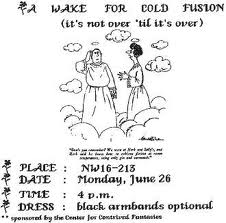
wake for cold fusion at MIT PFC MIT Professor Peter Hagelstein remembers the Wake for Cold Fusion held on June 26, 1989 at 4PM by the Plasma Fusion Center for the “death and demise” of the field.

“What’s your guys opinion about the Wake business?” he grins.

“Premature!” “Woke up!” shouts the audience.

On the 2014 CF/LANR Colloquium presentations, Hagelstein says “This has been one of the strongest and most interesting conferences in the field. I’m stunned at what’s gone on here at this meeting.”

“This was well beyond my wildest dreams; this was an astonishingly strong meeting, but the field is hanging on by a thread.”

“The current situation with respect to the scientific progress in the field, given the abysmal status … of an incredibly small number of resources, the progress has been fantastic under the most adverse conditions imaginable.”

According to Hagelstein, the Sidney Kimmel Institute of Nuclear Renaissance at the University of Missouri is the one “glimmer of light on the radar screen”. SKINR has full funding for staff and resources over a multi-year period.

On the closing day of the Colloquium, Hagelstein expressed thanks and appreciation to the scientists who’ve stayed in the field all these 25 years, and in an emotional tribute, honors the friends they’ve lost along the way.

Video of this event is courtesy Jeremy Rys of AlienScientist.com. You can show your appreciation to Jeremy by donating to acgravity@gmail.com on Paypal.


Find All 2014 CF/LANR Colloquium at MIT Audio, Video, and Full Coverage Here


Related Links

Science Journal Rejections Suppress Clean Energy Research

The Streetlight Effect and Cold Fusion

Stanley Pons‘ Preface to J.P. Biberian‘s Fusion in All Its Forms (La Fusion dans Tous ses États translated)

Marvin Hawkins in The Believers: “I will defend them at every turn”

Remove Institutional blocks at MIT and Caltech: Fund Cold Fusion Programs Now

2014 CF/LANR Colloquium at MIT audio files

The water in one cup of coffee could make a cold fusion battery that would last 18 years.
Dr. Mitchell Swartz at the 2014 CF/LANR Colloquium

The 2014 LANR/CF Colloquium brought international scientists to the MIT campus March 21-23, 2014 to share the most up-to-date and innovative research on cold fusion, also called lattice-assisted nuclear reactions (LANR). It was the sixth such event organized by Mitchell Swartz and Gayle Verner of JET Energy, and the atmosphere was electric as one speaker after another reported on research with world-changing implications.

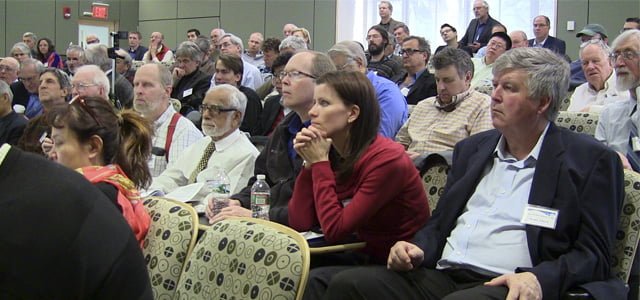
The intimate gathering began in one room, but then had to move to another room as the audience grew within the first hour. Investors, entrepreneurs, and a few more students rounded out the scientists in attendance.


Find 2014 CF/LANR Colloquium at MIT updated Audio, Video and Full Coverage Here


Jeremy Rys captured video that will be available on the Cold Fusion Now Youtube channel as they are edited. I took photos and recorded audio. As usual, the mainstream press was absent, and I am unaware of any reporters at all showing up to cover the event.

frisbee-in-classBut Cold Fusion Now represented with complimentary calendars and Infinite Energy provided free magazines. Colloquium organizers made frisbees! – here displayed on the wall of my Prealgebra classroom at 8AM the following morning.

This was one fun event, and the whole crowd was buzzing with positivity. Two days later, I still feel charged-up about the accelerated pace of discovery, and interest in the field. It’s been a difficult couple of decades for breakthrough energy researchers, but on this 25th Anniversary of the Announcement of Cold Fusion, there’s a real feeling of hope that glues everybody together and strengthens the commitment and dedication to find a solution to our energy problems.

Even as environmental disasters mount, listen to these lectures, and you might feel it too! The science results are tremendous, and show a path to a peaceful, green, technological future for all of Earth.

Thus it is, Francesco Celani reported that the Martin Fleischmann Memorial Project was nominated for a Nobel Peace Prize!


Find 2014 CF/LANR Colloquium at MIT updated Audio, Video and Full Coverage Here


Related Links

Past Colloquium
2011: Part 1 – http://www.infinite-energy.com/images/pdfs/LANR2011Colloq.pdf
Part 2 – http://www.infinite-energy.com/images/pdfs/SwartzColloqPart2.pdf
2010: http://www.infinite-energy.com/images/pdfs/Colloquium2010.pdf
2009: http://world.std.com/~mica/colloq09.html
2007: http://www.infinite-energy.com/iemagazine/issue75/colloquium.html
2005: http://world.std.com/~mica/colloq.html

Read and rate: “Cold Fusion May Have Revolutionary Potential” by Jed Rothwell


Rate this essay on cold fusion submitted to the Foundational Questions Institute, and give new energy your vote!

Cold Fusion May Have Revolutionary Potential by Jed Rothwell of LENR-CANR.org was submitted to the FQXi How Should Humanity Steer the Future? 2014 Essay Contest. Open to entries until April 18, 2014.

Go to http://fqxi.org/community/forum/topic/2000 to read the essay and comment.

Essay Abstract

Cold fusion is a form of nuclear energy produced in metals saturated with hydrogen or heavy hydrogen (deuterium). It has been replicated in hundreds of major laboratories, and these replications have been published in mainstream, peer-reviewed journals. This literature shows that cold fusion can generate heat at temperatures and power density equivalent to a fission reactor core. It has sometimes produced high power, 20 to 100 watts, in reactions that produced roughly 100,000 times more energy than any chemical fuel.

Download Cold Fusion May Have Revolutionary Potential [.pdf]

Author Bio

BA Cornell U. 1976 in Japanese language and literature Programmer and technical writer. Librarian at lenr-canr.org, an on-line library of 1,200 full text documents and a bibliography 3,500 items. Rothwell edited many cold fusion papers, especially for several ICCF conference proceedings. He translated several papers and one book from Japanese into English.

Top