“Science Inspired by Martin Fleischmann”

cover-1A new book Developments in Electrochemistry: Science Inspired by Martin Fleischmann has been published by John Wiley.

From the description:

Martin Fleischmann was truly one of the ‘fathers’ of modern electrochemistry having made major contributions to diverse topics within electrochemical science and technology. These include the theory and practice of voltammetry and in situ spectroscopic techniques, instrumentation, electrochemical phase formation, corrosion, electrochemical engineering, electrosynthesis and cold fusion.

While intended to honour the memory of Martin Fleischmann, Developments in Electrochemistry is neither a biography nor a history of his contributions. Rather, the book is a series of critical reviews of topics in electrochemical science associated with Martin Fleischmann but remaining important today. The authors are all scientists with outstanding international reputations who have made their own contribution to their topic; most have also worked with Martin Fleischmann and benefitted from his guidance.

Each of the 19 chapters within this volume begin with an outline of Martin Fleischmann’s contribution to the topic, followed by examples of research, established applications and prospects for future developments.

The book is of interest to both students and experienced workers in universities and industry who are active in developing electrochemical science.

Nineteen chapters survey a host of topics in Electrochemistry, a field Fleischmann dominated with skills that put him at the top of a talented group. Chapter 13 looks at his work in cold fusion and is written by electrochemists Dr. Melvin Miles, a now-retired Navy scientist, and Dr. Michael McKubre of SRI International, both of whom collaborated with Fleischmann for over a decade.

The chapter’s contents focus on heat measurements, a seemingly simple operation that proves to be much more difficult in practice.

13 Cold Fusion After A Quarter-Century: The Pd/D System 245
by Melvin H. Miles and Michael C.H. McKubre

13.1 The Reproducibility Issue 247
13.2 Palladium–Deuterium Loading 247
13.3 Electrochemical Calorimetry 249
13.4 Isoperibolic Calorimetric Equations and Modeling 250
13.5 Calorimetric Approximations 251
13.6 Numerical Integration of Calorimetric Data 252
13.7 Examples of Fleischmann’s Calorimetric Applications 254
13.8 Reported Reaction Products for the Pd/D System 256
13.8.1 Helium-4 256
13.8.2 Tritium 256
13.8.3 Neutrons, X-Rays, and Transmutations 257
13.9 Present Status of Cold Fusion 257
Acknowledgments 258
References 258

“No one knew calorimetry better than Martin Fleischmann,” says Miles. “He could do things that no one else could do, no one in the world.”

“I believe the chapters in this book will also show Martin’s unusual skill with mathematics. This skill is also shown in the calorimetric equations that he developed for cold fusion and his unmatched ability for the analysis of the calorimetric data,” adds Miles. “I hope the cold fusion chapter in this book will help others to appreciate that Martin’s greatness as a scientist carried over into his work on the palladium/ deuterium system.”

McKubre agrees. “Martin Fleischmann’s name is associated with more innovation in Electrochemistry than any other individual – in the schools where I was trained he was worshiped as a founding father.”

That assessment is a far cry from former-American Physical Society Information Officer/Spokesman Robert Park who derided Fleischmann’s contribution, along with that of his University of Utah research partner Dr. Stanley Pons, saying in the documentary film The Believers, “this was not their field”, and claiming Fleischmann‘s career was based “on one experiment and not much else.”

Science Inspired reveals the wide and influential scope of Fleischmann’s work before the scientific question of the century eclipsed all other research, and after. Read Chapter 1 Martin Fleischmann: The Scientist and the Person compliments of google books here.

Table of Contents

List of Contributors xiii

1 Martin Fleischmann – The Scientist and the Person 1

2 A Critical Review of the Methods Available for Quantitative Evaluation of Electrode Kinetics at Stationary Macrodisk Electrodes 21
Alan M. Bond, Elena A. Mashkina and Alexandr N. Simonov

2.1 DC Cyclic Voltammetry 23

2.1.1 Principles 23

2.1.2 Processing DC Cyclic Voltammetric Data 26

2.1.3 Semiintegration 29

2.2 AC Voltammetry 32

2.2.1 Advanced Methods of Theory–Experiment Comparison 35

2.3 Experimental Studies 36

2.3.1 Reduction of [Ru(NH3)6]3+ in an Aqueous Medium 36

2.3.2 Oxidation of FeII(C5H5)2 in an Aprotic Solvent 40

2.3.3 Reduction of [Fe(CN)6]3− in an Aqueous Electrolyte 42

2.4 Conclusions and Outlook 43

References 45

3 Electrocrystallization: Modeling and Its Application 49
Morteza Y. Abyaneh

3.1 Modeling Electrocrystallization Processes 53

3.2 Applications of Models 56

3.2.1 The Deposition of Lead Dioxide 58

3.2.2 The Electrocrystallization of Cobalt 60

3.3 Summary and Conclusions 61

References 63

4 Nucleation and Growth of New Phases on Electrode Surfaces 65
Benjamin R. Scharifker and Jorge Mostany

4.1 An Overview of Martin Fleischmann’s Contributions to Electrochemical Nucleation Studies 66

4.2 Electrochemical Nucleation with Diffusion-Controlled Growth 67

4.3 Mathematical Modeling of Nucleation and Growth Processes 68

4.4 The Nature of Active Sites 69

4.5 Induction Times and the Onset of Electrochemical Phase Formation Processes 71

4.6 Conclusion 72

References 72

5 Organic Electrosynthesis 77
Derek Pletcher

5.1 Indirect Electrolysis 79

5.2 Intermediates for Families of Reactions 80

5.3 Selective Fluorination 84

5.4 Two-Phase Electrolysis 85

5.5 Electrode Materials 87

5.6 Towards Pharmaceutical Products 88

5.7 Future Prospects 90

References 91

6 Electrochemical Engineering and Cell Design 95
Frank C. Walsh and Derek Pletcher

6.1 Principles of Electrochemical Reactor Design 96

6.1.1 Cell Potential 96

6.1.2 The Rate of Chemical Change 97

6.2 Decisions During the Process of Cell Design 98

6.2.1 Strategic Decisions 98

6.2.2 Divided and Undivided Cells 98

6.2.3 Monopolar and Bipolar Electrical Connections to Electrodes 99

6.2.4 Scaling the Cell Current 100

6.2.5 Porous 3D Electrode Structures 100

6.2.6 Interelectrode Gap 101

6.3 The Influence of Electrochemical Engineering on the Chlor-Alkali Industry 102

6.4 Parallel Plate Cells 105

6.5 Redox Flow Batteries 106

6.6 Rotating Cylinder Electrode Cells 107

6.7 Conclusions 108

References 109

7 Electrochemical Surface-Enhanced Raman Spectroscopy (EC-SERS): Early History, Principles, Methods, and Experiments 113
Zhong-Qun Tian and Xue-Min Zhang

7.1 Early History of Electrochemical Surface-Enhanced Raman Spectroscopy 116

7.2 Principles and Methods of SERS 117

7.2.1 Electromagnetic Enhancement of SERS 118

7.2.2 Key Factors Influencing SERS 119

7.2.3 “Borrowing SERS Activity” Methods 121

7.2.4 Shell-Isolated Nanoparticle-Enhanced Raman Spectroscopy 123

7.3 Features of EC-SERS 124

7.3.1 Electrochemical Double Layer of EC-SERS Systems 124

7.3.2 Electrolyte Solutions and Solvent Dependency 125

7.4 EC-SERS Experiments 125

7.4.1 Measurement Procedures for EC-SERS 125

7.4.2 Experimental Set-Up for EC-SERS 127

7.4.3 Preparation of SERS Substrates 128

Acknowledgments 131

References 131

8 Applications of Electrochemical Surface-Enhanced Raman Spectroscopy (EC-SERS) 137
Marco Musiani, Jun-Yang Liu and Zhong-Qun Tian

8.1 Pyridine Adsorption on Different Metal Surfaces 138

8.2 Interfacial Water on Different Metals 141

8.3 Coadsorption of Thiourea with Inorganic Anions 143

8.4 Electroplating Additives 146

8.5 Inhibition of Copper Corrosion 147

8.6 Extension of SERS to the Corrosion of Fe and Its Alloys: Passivity 149

8.6.1 Fe-on-Ag 150

8.6.2 Ag-on-Fe 150

8.7 SERS of Corrosion Inhibitors on Bare Transition Metal Electrodes 150

8.8 Lithium Batteries 152

8.9 Intermediates of Electrocatalysis 154

Acknowledgments 156

References 156

9 In-Situ Scanning Probe Microscopies: Imaging and Beyond 163
Bing-Wei Mao

9.1 Principle of In-Situ STM and In-Situ AFM 164

9.1.1 Principle of In-Situ STM 164

9.1.2 Principle of In-Situ AFM 166

9.2 In-Situ STM Characterization of Surface Electrochemical Processes 167

9.2.1 In-Situ STM Study of Electrode–Aqueous Solution Interfaces 167

9.2.2 In-Situ STM Study of Electrode–Ionic Liquid Interface 167

9.3 In-Situ AFM Probing of Electric Double Layer 170

9.4 Electrochemical STM Break-Junction for Surface Nanostructuring and Nanoelectronics and Molecular Electronics 173

9.5 Outlook 176

References 177

10 In-Situ Infrared Spectroelectrochemical Studies of the Hydrogen Evolution Reaction 183
Richard J. Nichols

10.1 The H+/H2 Couple 183

10.2 Single-Crystal Surfaces 184

10.3 Subtractively Normalized Interfacial Fourier Transform Infrared Spectroscopy 186

10.4 Surface-Enhanced Raman Spectroscopy 189

10.5 Surface-Enhanced IR Absorption Spectroscopy 190

10.6 In-Situ Sum Frequency Generation Spectroscopy 193

10.7 Spectroscopy at Single-Crystal Surfaces 194

10.8 Overall Conclusions 197

References 198

11 Electrochemical Noise: A Powerful General Tool 201
Claude Gabrielli and David E. Williams

11.1 Instrumentation 202

11.2 Applications 204

11.2.1 Elementary Phenomena 204

11.2.2 Bioelectrochemistry 205

11.2.3 Electrocrystallization 207

11.2.4 Corrosion 209

11.2.5 Other Systems 215

11.3 Conclusions 217

References 217

12 From Microelectrodes to Scanning Electrochemical Microscopy 223
Salvatore Daniele and Guy Denuault

12.1 The Contribution of Microelectrodes to Electroanalytical Chemistry 224

12.1.1 Advantages of Microelectrodes in Electroanalysis 224

12.1.2 Microelectrodes and Electrode Materials 226

12.1.3 New Applications of Microelectrodes in Electroanalysis 227

12.2 Scanning Electrochemical Microscopy (SECM) 230

12.2.1 A Brief History of SECM 230

12.2.2 SECM with Other Techniques 231

12.2.3 Tip Geometries and the Need for Numerical Modeling 233

12.2.4 Applications of SECM 234

12.3 Conclusions 235

References 235

13 Cold Fusion After A Quarter-Century: The Pd/D System 245
Melvin H. Miles and Michael C.H. McKubre

13.1 The Reproducibility Issue 247

13.2 Palladium–Deuterium Loading 247

13.3 Electrochemical Calorimetry 249

13.4 Isoperibolic Calorimetric Equations and Modeling 250

13.5 Calorimetric Approximations 251

13.6 Numerical Integration of Calorimetric Data 252

13.7 Examples of Fleischmann’s Calorimetric Applications 254

13.8 Reported Reaction Products for the Pd/D System 256

13.8.1 Helium-4 256

13.8.2 Tritium 256

13.8.3 Neutrons, X-Rays, and Transmutations 257

13.9 Present Status of Cold Fusion 257

Acknowledgments 258

References 258

14 In-Situ X-Ray Diffraction of Electrode Surface Structure 261
Andrea E. Russell, Stephen W.T. Price and Stephen J. Thompson

14.1 Early Work 262

14.2 Synchrotron-Based In-Situ XRD 264

14.3 Studies Inspired by Martin Fleischmann’s Work 266

14.3.1 Structure of Water at the Interface 266

14.3.2 Adsorption of Ions 268

14.3.3 Oxide/Hydroxide Formation 268

14.3.4 Underpotential Deposition (upd) of Monolayers 270

14.3.5 Reconstructions of Single-Crystal Surfaces 275

14.3.6 High-Surface-Area Electrode Structures 275

14.4 Conclusions 277

References 277

15 Tribocorrosion 281
Robert J.K. Wood

15.1 Introduction and Definitions 281

15.1.1 Tribocorrosion 282

15.1.2 Erosion 282

15.2 Particle–Surface Interactions 283

15.3 Depassivation and Repassivation Kinetics 283

15.3.1 Depassivation 284

15.3.2 Repassivation Rate 286

15.4 Models and Mapping 287

15.5 Electrochemical Monitoring of Erosion–Corrosion 290

15.6 Tribocorrosion within the Body: Metal-on-Metal Hip Joints 291

15.7 Conclusions 293

Acknowledgments 293

References 293

16 Hard Science at Soft Interfaces 295
Hubert H. Girault

16.1 Charge Transfer Reactions at Soft Interfaces 295

16.1.1 Ion Transfer Reactions 296

16.1.2 Assisted Ion Transfer Reactions 298

16.1.3 Electron Transfer Reactions 299

16.2 Electrocatalysis at Soft Interfaces 300

16.2.1 Oxygen Reduction Reaction (ORR) 301

16.2.2 Hydrogen Evolution Reaction (HER) 302

16.3 Micro- and Nano-Soft Interfaces 304

16.4 Plasmonics at Soft Interfaces 305

16.5 Conclusions and Future Developments 305

References 307

17 Electrochemistry in Unusual Fluids 309
Philip N. Bartlett

17.1 Electrochemistry in Plasmas 310

17.2 Electrochemistry in Supercritical Fluids 314

17.2.1 Applications of SCF Electrochemistry 321

17.3 Conclusions 325

Acknowledgments 325

References 325

18 Aspects of Light-Driven Water Splitting 331
Laurence Peter

18.1 A Very Brief History of Semiconductor Electrochemistry 332

18.2 Thermodynamic and Kinetic Criteria for Light-Driven Water Splitting 334

18.3 Kinetics of Minority Carrier Reactions at Semiconductor Electrodes 336

18.4 The Importance of Electron–Hole Recombination 338

18.5 Fermi Level Splitting in the Semiconductor–Electrolyte Junction 339

18.6 A Simple Model for Light-Driven Water-Splitting Reaction 341

18.7 Evidence for Slow Electron Transfer During Light-Driven Water Splitting 343

18.8 Conclusions 345

Acknowledgments 345

References 346

19 Electrochemical Impedance Spectroscopy 349
Samin Sharifi-Asl and Digby D. Macdonald

19.1 Theory 350

19.2 The Point Defect Model 350

19.2.1 Calculation of Y0F 355

19.2.2 Calculation of ΔC0 i ΔU 355

19.2.3 Calculation of ΔCL v ΔU 356

19.3 The Passivation of Copper in Sulfide-Containing Brine 357

19.4 Summary and Conclusions 363

Acknowledgments 363

References 363

Index 367

Open Power Association Newsletter #11: New Office in London Opens

Newsletter #11 for the Open Power Association at Hydrobetatron.org has been released. A google-translate of selected excerpts follows.

The full issue in Italian is here.

Newsletter No. 011 – June 2014
**********************************
Dear Friends,
Also there are many news this month!

CONTENTS:
page. 2 “OPEN POWER” has opened an office in London
page. 3 “Survey of the occurrence of species of symbiotic algae subjected to weak electric stress (microvoltaggi)”
page. 4 “OPEN POWER” START OF AN EXPERIMENT ON ‘SYSTEM’ ROTOVERTER ”
page. 5 “Historic 25th Anniversary Meeting at MIT Cold Fusion”
page. 6 “Cold fusion: the E-cat greek has come to an end”
page. 7 we indicate the website: circolotodeschini.com
page. 8 Please note the website: centrolakhovsky.com
Page 9 Please note a wonderful website!
Page 10 There segnialimo’s website: “Foundation Homa”
Page 11 There segnialimo the website: “GasPiro”
Page 12 Please note with pleasure the Blog: Marco Giai-Levra
page. 15 “Energy Festival 2014”: interviews with protagonists
Page 16 “Unidentified Flying Objects Crashes in a small Village in China!”
Page 17 “Siam three small tubicin …”
Page 18 “Archeology, Anthropology, and interstellar communication”
Page 20 “The animals are born libei!” 1

1-View-from-London1
We are pleased to announce that Our Association “OPEN POWER” has opened an office in London with these references:

Ugo Abundo Communications, an Open Power facility
3rd Floor
207 Regent Street
London
W1B3HH

2-Puppies-cell2
“Detection of occurrence of species of symbiotic algae subjected to weak electric stress (microvoltaggi).”
Experiments conducted by researcher Quirino Puppies, a member of the Open Power.
The system under study is composed of three elements:
a) A cell containing biological substance, which acts similarly to a stack;
b) a system for the transmission of electrical signals;
c) a culture of algae, and in electrical connection with the system), by means of the system b).
TO READ THE FULL DOCUMENT:
http://www.hydrobetatron.org/files/Rilevazione-di-comparsa-di-speci-simbiontiche.pdf

 
3-Rotoverter3
THE MANAGEMENT OF OUR OPEN POWER ASSOCIATION BEGINNING OF AN EXPERIMENT: “ROTOVERTER”
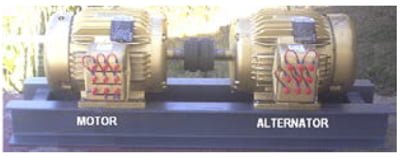
The device Rotoverter (RV) + Alternator is a device consisting of two identical three-phase electric motors connected to each other by a joint where the first (PM) serves as the main motor and the second from the alternator. It is a technology that modifies an electric motor making it capable of producing much more power, using less energy than normal.
In addition, modifications can be applied to “rotoverter generators,” in an attempt to obtain overunity …

4-Mitchell-Swartz-CF-LANR-MIT4
“Historic 25th Anniversary Meeting at MIT Cold Fusion” by Christy L. Frazier
Sincere appreciation is extended to the speakers for reviewing summaries of Their Work. Photos are courtesy of Ruby Carat at Cold Fusion Now.
TO READ THE FULL DOCUMENT:
http://www.hydrobetatron.org/files/MIT2014Colloq.pdf
 

5
“Cold fusion: the E-cat greek has come to an end”
Interview by Roberta De Carolis (NextMe) Franco Cappiello (Mose Ltd)
TO READ THE FULL INTERVIEW:
CLICK HERE

Final technical report on calorimetric measurements used in the demo Defkalion GT
Luke Gamberale – CTO Mose Ltd.
TO READ THE FULL REPORT:
http://www.hydrobetatron.org/files/DGT-faulty-demo-131115.pdf

6
VI SEGNALIMO WEBSITE: circolotodeschini.com
particularly in the materials section, you can read: “Space full or empty space” by Marco Todeschini, Edited by Fiorenzo Zampieri.
READ THE ESSAY:
http://www.circolotodeschini.com/materiali/

7
We inform you with pleasure: “Bioenergy Research Centre Georges Lakhovsky”
http://www.centrolakhovsky.com/ Directed by: Gianfranco Galvani
You can also download free of charge from the center of interesting notebooks in PDF format:
http://www.centrolakhovsky.com/pubblicazioni.php

9
The Foundation Homa
The foundation Homa was born in Novara May 4, 2009, from ‘initiative of a group of friends, united by gratitude for the infinite potential and wealth that nature provides to humans every day. Its purpose, therefore, is to endeavor to facilitate the spread of a lifestyle distinguishing trait of the coexistence between humans and nature on the basis of mutual respect.
The activities that pursues Homa, in Italy and abroad, aiming to raise awareness and education of individuals to environmental issues. To work to raise awareness, Homa combines an active part of research that aims to design simple purificazionedell’acqua technologies for the production of renewable energy and the promotion of natural farming.
http://www.homafoundation.org/index.php?option=com_content&view=frontpage&Itemid=1&lang=it

10
GasPiro
GasPiro is a “green idea” where they merge together innovation, ecology, economy, issues more relevant than ever, especially in this period, themes, this, that a more careful observer have always been the pillars of our “modern civilization”, which should co-exist in harmony, but often we do prevail one over the other.

GasPiro, in about a year, has evolved since its prototype base for cooking / pitched to his older brother for use on energy requirements, demonstrating that the road taken, even if uphill is the right one. The research done in recent years has absorbed times and charges; Research is expensive, even the failures they are, but they can always go back to their mistakes, which if accepted humbly open to new solutions.
http://www.gaspiro.com/home-it.html

14
energy-festival“Energy Festival 2014”: interviews with protagonists
TO VIEW VIDEO:
http://www.greenstyle.it/festival-dellenergia-2014-le-interviste-ai-protagonisti-88700.html?utm_source=newsletter&utm_medium=email&utm_campaign=Newsletter:+Greenstyle&utm_content=20-05-2014+festival-dellenergia-2014-le-interviste-ai-protagonisti

18
Help support Our research and experimentation on LENR. We remind you that you can join the ‘Association “Open Power” by connecting to hydrobetatron.org at:
http://www.hydrobetatron.org/domanda-di–adesione.html

or please make a simple donation:
https://www.paypal.com/it/cgi-bin/webscr?cmd=_flow&SESSION=0q132hSEMx74NkMXi2l1rCYmFbG9RbYmBfRVqUSOVXdeFBiqGpaUY-FT3T0&dispatch=5885d80a13c0db1f8e263663d3faee8d8cdcf517b037b4502f6cc98f1ee6e5fbI

This section of the site accessible from the main menu is published interesting news:
http://www.hydrobetatron.org/blog/index.php

“Articles” are accessible from the main menu here:
http://www.hydrobetatron.org/articoli.html

19
HEADING: “Pills of Wisdom”
PILL 008
“THE ANIMALS WERE BORN FREE”!
PETS ARE NOT BORN TO DO SHOWS AT THE CIRCUS! ENOUGH animals in circuses!
DO NOT HURT TO ANIMALS! PROTECT ANIMALS, AND THE LIFE OF ALL LIVING BEINGS.
Animals as living beings have the right to be respected and loved. Their freedom must be defended! Animals should not be used, enslaved. Also the respect for human life passes through respect of life of all other living beings. The ‘Man will make an evolutionary leap and realize true peace only when also learn how to protect the lives of animals. We are not owners of the lives of animals. Our animals are often also friends, and they give us so much love and joy … You do not need to eat animals! There are alternatives: cereals, legumes, various seeds, fruits and vegetables. We live very well from vegetarian to http://www.centrolakhovsky.com/ … C ‘is then the milk and its derivatives, and then there are also eggs, which give us the cows and chickens, both animals can be raised with love and respect, in the wild … What need c ‘is therefore to inflict suffering and death on animals? In slaughterhouses, with hunting (hunting would be a sport?) … Not to mention that the so-called “scientific research”, which is just business, and that involves practices of real torture against so-called “animal Laboratory “(guinea pigs?). There are no laboratory animals! There are only living beings, in this case animals, which have their own sensitivity, which are born free and on earth! A “science” that inflicts pain is not worthy of the name, but only a tool in the hands of ignorant people, poor and often sadistic …
L. S.

Gregory Chaitin on cold fusion research: Japan and Sweden are the “only two countries with the political will”

Gregory Chaitin is a Professor of Computer Science and Philosophy of Computing at the Federal University of Rio de Janeiro, Brazil. Here he discusses the landscape of LENR with Tom O’Brien posting on podomatic. Chaitin gives Andrea Rossi credit for bringing cold fusion to a wider consciousness and mentions Mats Lewan‘s new book An Impossible Invention, which he finds to be an excellent look at the unveiling of the E-Cat.

Go to Tom O’Brien‘s interview with Gregory Chaitin on Podomatic here.

He also touches on the 2014 CF/LANR Colloquium at MIT held on the 25th Anniversary of the announcement of cold fusion, a bit of the science and politics behind LENR, the current lack of an accepted theory, and Japanese and Swedish research.

Chaitin is particularly impressed with Clean Planet, Inc., and newly formed group dedicated to bringing LENR technology forward through funding and support. Listen to Clean Planet’s Hideki Yoshino present some of this research work [.pdf][.mp3] performed by Tadahiko Mizuno and his team at the recent Colloquium at MIT, or watch the video here.

Related Links

Mats Lewan Interview: E-Cat, Andrea Rossi, and An Impossible Invention

2014 CF/LANR Colloquium at MIT presentation archive

Industry and academic partnerships report from JCF-14 meeting

Rossi E-Cat energy “off the chart”

Mats Lewan Interview: E-Cat, Andrea Rossi, & An Impossible Invention

Journalist Mats Lewan requires little introduction for most people familiar with the Andrea Rossi story, but just in case here is a quick summary for the uninitiated:

Mats holds a masters degree in physics, and is recognized as a world-renowned science & technology reporter. He writes for the Swedish newspaper NyTeknik, where he has been covering both cold fusion generally, and Andrea Rossi’s Energy-Catalyzer technology specifically, since 2011. He has recently published a book titled An Impossible Invention in which he recounts his first-hand experiences with Andrea Rossi and LENR over the past three years. More information can be found at http://animpossibleinvention.com/. Mats’ more conventional articles can be found at http://www.nyteknik.se/.

Mats is a model of integrity, and his book has been receiving rave reviews. It is available in both paperback and E-book format through his website. If anyone rather download our dialogue in audio format Download MP3 Here . Also, visit my site Q-Niverse for more of my content if interested. Thanks for taking an interest.

Revolution-Green’s Mark Dansie On Transition Technology & LENR

Interview with Revolution-Green’s Mark Dansie. Mark is recognized as a world-renowned evaluator of energy technologies and is currently helping develop several new energy concepts himself. Over the last seven years, Mark has traveled the world evaluating many new and free technology claims. He specializes in magnetic motor and HHO gas evaluations, but has reviewed many other technologies as well. He has been featured as a speaker at several energy conferences, and his catch cry is “show me the data” as he is a believer in scientific methodology when evaluating claims. More information can be found at http://revolution-green.com/.

We discuss various topics including “free” energy, stepping-stone technologies such as thorium-power, as well as what Mark expects from Cold Fusion-LENR in both the immediate future and the long-term.

If so desired a downloadable MP3 version can be found here, and on iTunes. Thanks for taking an interest.

“An Impossible Invention” review by Brian Josephson

Nobel laureate Dr. Brian Josephson commented on Nature with a review of Mats Lewan‘s new book An Impossible Invention, chronicling the early work of Andrea Rossi, engineer and inventor of the Energy Catalyzer, or Ecat. The Ecat is a commercial steam generator based on nickel-hydrogen exothermic reactions that is now in development. Lewan had a front row seat for several of the public and private demonstrations that Rossi performed since January 2011, and has interviewed Rossi extensively on his work.

We reproduce what Josephson wrote here:

The highlight of the week was the publication of Mats Lewan’s book ‘An Impossible Invention’, subtitled The true story of the energy source that could change the world. The author, a science and technology writer, has been investigating the controversial Rossi reactor or E-cat in depth in the 3 years since its initial presentation in Bologna in January 2011.

The first part of the book covers Andrea Rossi’s previous inventions, showing how life is not easy for an inventor whose inventions pose a threat to other enterprises. This is followed by what Lewan has been able to glean about the invention since the initial demonstration, purportedly of a fusion device creating some kW of heat.

Besides following the course of developments in detail, Lewan gives much attention to the question of whether the device is genuine, or whether fraud is involved. One important event was a long-period investigation, published at arXiv:1305.3913, providing strong evidence of the production of anomalous heat. Particularly interesting to me, in the light of my past dealings with arxiv, was the text of an accidentally leaked exchange between two moderators, wondering if they could find a rationale for blocking that report.

In the course of his attempts to bring his device to a commercial conclusion, Rossi had problems with collaborators, being suspicious of their motives, but it seems he has found an (undisclosed) American firm that he trusts, who have been licensed to develop the device. This fascinating book provides the answers to many questions about the E-cat, and should be read by all skeptics.Brian Josephson

Top