“An Impossible Invention” review by Brian Josephson

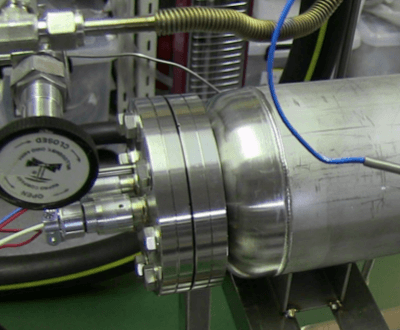
Nobel laureate Dr. Brian Josephson commented on Nature with a review of Mats Lewan‘s new book An Impossible Invention, chronicling the early work of Andrea Rossi, engineer and inventor of the Energy Catalyzer, or Ecat. The Ecat is a commercial steam generator based on nickel-hydrogen exothermic reactions that is now in development. Lewan had a front row seat for several of the public and private demonstrations that Rossi performed since January 2011, and has interviewed Rossi extensively on his work.

We reproduce what Josephson wrote here:

The highlight of the week was the publication of Mats Lewan’s book ‘An Impossible Invention’, subtitled The true story of the energy source that could change the world. The author, a science and technology writer, has been investigating the controversial Rossi reactor or E-cat in depth in the 3 years since its initial presentation in Bologna in January 2011.

The first part of the book covers Andrea Rossi’s previous inventions, showing how life is not easy for an inventor whose inventions pose a threat to other enterprises. This is followed by what Lewan has been able to glean about the invention since the initial demonstration, purportedly of a fusion device creating some kW of heat.

Besides following the course of developments in detail, Lewan gives much attention to the question of whether the device is genuine, or whether fraud is involved. One important event was a long-period investigation, published at arXiv:1305.3913, providing strong evidence of the production of anomalous heat. Particularly interesting to me, in the light of my past dealings with arxiv, was the text of an accidentally leaked exchange between two moderators, wondering if they could find a rationale for blocking that report.

In the course of his attempts to bring his device to a commercial conclusion, Rossi had problems with collaborators, being suspicious of their motives, but it seems he has found an (undisclosed) American firm that he trusts, who have been licensed to develop the device. This fascinating book provides the answers to many questions about the E-cat, and should be read by all skeptics.Brian Josephson

Baby With the Bathwater: The Wrongful Rejection of Cold Fusion — Part I

BabyandBathWater2014 is upon us, and progress in the field of Cold Fusion (aka LENR) marches steadily on. Brillouin Energy Corporation (BEC), currently operating out of California and working in collaboration with Stanford Research Institute (SRI), recently signed a multi-million dollar deal with an undisclosed South Korean company who intend to manufacture their LENR boiler technologies and outfit obsolete power plants with them.

It has recently been confirmed through an official press release that inventor Andrea Rossi’s American distribution partner is none other than North Carolina-based Cherokee Investment Partnership (CIP). CIP has spawned a business-subsidiary, Industrial Heat LLC (IHC), apparently as a vehicle to further develop and market Rossi’s E-Cat (Energy Catalyzer) technology. IHC is also engaged in a prolonged diagnostic of Rossi’s E-Cat, the results of which will be released in an official report later this year. Even more interesting is that CIP-CEO, Thomas Darden, has been in close contact with Chinese government officials who have announced their intentions to establish a “Nickel Reactor New Energy Project”.

cherokeelogo

Also noteworthy, Defkalion Green Technologies (DGT), with bases of operation in both Vancouver and Greece, are in the process of real-time mass spectrometer measurements of their Hyperion Reactor. While not particularly important at first glance, these tests should yield very important data concerning the nuclear ash that results from reactions in Nickel-Hydrogen systems. With this data in hand, experts in the field will be better equipped to develop a comprehensive, predictive, and engineerable CF-LENR theory. In a recent press release they have also announced that: Several third party independent tests from international organizations, universities and teams are expected to present their results thus verifying our recent technological and scientific breakthroughs. Accordingly we expect the commercialization of our technologies in the 3rd quarter of 2014.”

Defkalion1

Maybe these commercial ventures will pan out; maybe they won’t. That is the boom-and-bust nature of business in our society (love it or hate it). But as we approach the fulfillment of a 25-year struggle to validate Cold Fusion, the question remains, why it was ever written off in the first place? If Cold Fusion was such a glaring example of “pathological science” and if it’s self-sacrificing adherents were nothing more than deluded “true believers” (as the Skeptical community often proselytizes), how is it that this “discredited” science is on the precipice of totally altering the landscape of energy, sustainability, and how we believe Science operates?

PonsFleischmanColor1When Martin Fleischmann and Stanley Pons made their first announcement in 1989, beside just claims of nuclear-level excess heat, they also claimed to have detected nuclear products; specifically neutrons. Beyond the ire that side-stepping the peer-review process instilled in many scientists, the claim that their discovery was a room-temperature “fusion” reaction is what really sparked off the skeptical circus.

The problem was that their neutron measurements were found to be in error. Accusations of bad science and outright fraud soon followed; most notably from nuclear physicists like MIT’s Ronald Parker and CERN’s Frank Close. Parker was the first to lob public accusations of fraud. And Close, to this day, still paints the entire incident as a clear-cut case of “fraud”, based on his interpretation of events originally put forward in his 1991 book Too Hot to Handle.

ColdFusionGraphicThe truth, a rather benign one, is that Fleischmann and Pons weren’t attempting to defraud anyone. Firstly, the duo’s preliminary research into heavily loaded palladium spanning from 1984-1989 was A) personally financed, and B) inspired by the work of their scientific forerunners. Interestingly enough, their predecessors (some from as early as the 1920’s) thought they might have witnessed fusion-like reactions occurring in room-temperature, electrolytic hydride systems. As curious scientists first and foremost, the two colleagues could not resist the allure of exploring such a provocative possibility. Fleischmann and Pons had already achieved more than enough prestige in their lifetimes; they had absolutely no reason or motive to risk their reputations and indulge themselves in some self-aggrandizing publicity stunt.

When the duo arrived at their lab one morning to discover that a small cube of palladium had partially vaporized, melted through its electrolytic cell, burned through a blacktop lab-bench, and melted a 4-inch deep hole into their solid concrete floor, they finally started to believe there was something genuine about such far-out claims from the past. Based off this result, they went about trying to detect nuclear products, because they knew of no other reaction that could produce such absurd amounts of excess heat. Skeptics who attacked the “nuclear-reaction” label were not properly considering that such beliefs were motivated by the unusually high levels of excess heat sometimes witnessed.

fleischmann5Because their research had been up to that point secretive, highly unorthodox, and was being conducted on university grounds, for political reasons Fleischmann and Pons could not simply approach a colleague in the nuclear physics department to assist them with measuring neutrons. They would have likely been ridiculed, reprimanded, and/or had their research shut down. However, they did eventually succeed in obtaining a neutron detector from a colleague on campus without arousing much suspicion, and soon after went about conducting measurements.

Because they were not full-blown experts in the area of detecting nuclear products, and because the 89’ press conference was rushed months ahead of what either man was comfortable with, the neutron data was exposed to the light of day prematurely. It was a far way from fraud, but it could be labeled perhaps as “bad science” (as long as one is being non-derogatory, sensitive to context, and/or non-judgmental in regards to their overall process/results). The detection of nuclear products was quickly discredited as artifact, and skeptical detractors hung their argumentative-hats on that point for the remainder of the controversy. Fleischmann and Pons would now be unfairly chastised as operating “outside their area of their expertise” in regards to all their results just because their neutron data turned out to be inaccurate.

BadScience2

Blatantly discounting and/or ignoring the discovery of excess heat was (and continues to be) the major blunder of status-quo skeptics. The fact is Fleischmann and Pons were well within their area of expertise when it came to conducting electrolytic chemistry and calorimetry; which meant they knew how to account for, as well as measure, excess heat. At the time, a number of unfounded criticisms were lobbied against their excess heat results; such as not controlling for all possible experimental artifacts that could account for the abnormal findings. However, unlike their neutron measurements, their measurements of excess heat have never been properly discredited.

For example, electrochemist Nathan Lewis of California Institute of Technology conducted weeks of research on Cold Fusion following the announcement. Ultimately he and his colleagues turned up negative results. However, when electrochemist Dr. Melvin Miles evaluated their procedure over a decade later, he found their lack of results to be a product of procedural error caused by ignorance of particular experimental parameters. This is not terribly surprising because most labs attempting to replicate the Fleischmann-Pons Effect had very little operative information to go on.
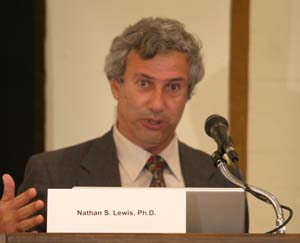
NateLewisRegardless, at the time Lewis and others seemed satisfied and emboldened by their alleged null-results and seized the moment to indemnify Cold Fusion further. Lewis even went as far as to publically declare at an 89’ American Physical Society (APS) meeting in Baltimore that the excess heat was an artifact of insufficient cell mixing; an elementary protocol controlled for by most electrochemists. Lewis’ claim was simply untrue; he was basing his unfounded judgments off his own faulty experiments.

Fleischmann and Pons’ cells were properly stirred. There were no identifiable anisotropies that could possibly account for the production of nuclear-level excess heat. This fact was clearly documented in their peer-reviewed article published in Fusion Technology. Also, Fleischmann’s presentation at an American Chemical Society (ACS) meeting soon after clearly proved the integrity of their cell-mixing; a meeting where Nathan Lewis raised no objections to the demonstration he witnessed from Fleischmann.

Calorimeter1

Another popular criticism (that is still sometimes evoked) has to do with what’s known as recombination. Recombination is the rejoining of negative ions with positive ions (in this case Hydrogen, Deuterium, and Oxygen) to form neutral molecules inside electrolytic cells. When this occurs modest amounts of chemical heat are generated and/or carried away. Perhaps this could explain Fleischmann and Pons’ results? Here is a leading expert in the field describing the process in more detail:

“When the gases created by electrolysis are allowed to leave the cell, they carry with them chemical energy that has to be taken into account. This chemical energy can be calculated using what is called the ‘neutral potential’, if no partial recombination takes place in the cell before the remaining gas leaves. The error comes from not knowing what fraction of the generated gas recombines back to D2O in the cell and what fraction leaves as D2 and O2.

 If all gas recombines in the cell (which can be [initiated] using an internal catalyst) then no energy needs to be added and the results are accurate as measured. This is called a closed cell and is now used extensively. If all generated gas leaves, the calculated corrections are accurate. This is called an ‘open cell’. [Fleischmann and Pons] used open cells. Nevertheless, they determined the fraction of recombination that occurred in their cell.”

This was expounded upon by another well-respected expert in the field:

“I [agree]…any question of ‘recombination’ (or electrode depolarization) is eliminated absolutely by the use of thermodynamically closed cells (as many did), and the extent to which it occurs is very easily quantified by measuring the amount of make-up water, as [Fleischmann and Pons] did.”

To restate, recombination is an elementary consideration, easily controlled for, that most serious scientists working in this field take into account. In fact, University of Minnesota’s Professor Robert Oriani definitively answered this question as early as 1990. He had achieved positive excess heat results in his experiments, and his peer-reviewed paper published in Fusion Technology clearly demonstrated that questions surrounding experimental artifacts like recombination were most definitely controlled for.

NatureCoverWorth noting is this particular paper’s back story. It had been submitted to Nature magazine prior. It was approved by both of the peer-reviewers Nature themselves selected. Then, inexplicably, the editor vetoed their decision and rejected the paper. Oriani’s results were unimpeachable; politics and bias was clearly at play. This should not be surprising, as most “premier” science journals nowadays are underwritten by huge, status-quo multinationals.

While there is much more to say on the topic overall (which I will save for Part II), this preliminary analysis suggests that widespread claims of excess heat have been wrongfully ignored for over 25-years based on a set of totally fallacious arguments. Thus far, dogma has won out over the scientific method. Simply put, skeptics wrongfully threw out the baby, excess heat, along with the bathwater, the nuclear-reaction hypothesis. Ultimately, what does it really matter if it’s nuclear fusion or not?


Michio Kaku informed on new developments in cold fusion

Jeremy Rys of AlienScientist.com asks Dr. Michio Kaku his thoughts on cold fusion science, and alerts him to the accelerating development of the field since the first announcement of the discovery 25 years ago.

Dr. Kaku is a teacher and author of numerous popular science books as well as textbooks on high-level theoretical physics.

He held a Q&A for the public on April 7, and Jeremy seized the opportunity to inquire about cold fusion energy. Initially ignored, Jeremy was able to persist and solicit a few answers from Kaku that showed an unfamiliarity with the recent advances.

A link to the 2014 CF/LANR Colloquium at MIT presentations was provided to him, and hopefully, Dr. Kaku will take the opportunity to see that the future is truly green and bright – if we have the clean energy to fuel it.

Watch the story unfold here.

It’s activism like this that will bring ultra-clean energy from the hydrogen in water to a usable technology ASAP.

Talking about cold fusion with your friends, family, teachers, legislators, and media is the most important thing anyone of us can do to bring awareness and support for a green technological future on Earth.

Commercial Developments presented at 2014 MIT Cold Fusion Conference

The recent 2014 Cold Fusion/LENR/LANR conference from March 21st to March 23rd at Massachusetts Institute of Technology happened to overlap with the 25th anniversary of the announcement of the discovery of cold fusion at the university of Utah. Against all odds, huge strides in understanding the phenomenon were made in the last 25 years. Recently, groups have shown that this is more than a lab curiosity, it can be engineered and harnessed to safely solve the worlds energy problems. This is an overview of some commercial groups which presented at the 2014 MIT conference.


Jet Energy operated by Dr. Mitchel Swartz was the organizer of the conference and also presented some very interesting findings. They have been working with very small devices which can be used as a demonstration unit or operated in a huge array to produce commercial levels of heat. Dr. Swartz has been active in the field since the very start and is constantly improving on his device, the newest generation being called the Nanor. Dr. Swartz’s devices are unique because the loading and operation stages of the device are separated, allowing for simple plug-and-play operation which greatly simplifies use by groups trying to study the effect. Jet Energy has published cold fusion research since the late 1980s, Jet Energy’s recent developments involve using a magnetic effect to boost the output of his devices, which have seen COP’s of 100. This reinforces the recent developments in understanding the effect, magnetism is seems to play a role in both the cause and effect aspects of cold fusion. Dr Hagelstein of MIT made an interesting comment during one of Dr. Swartz presentations, “I can’t for the life of me understand why graphs showing gains of over 100 are being rushed through”. This is a symbol of how much things have improved in the last 25 years. We are moving from just trying to prove the effect really exists to starting to understand the cause of the phenomenon and develop commercial units from the technology.

MIT Conference video: http://www.youtube.com/watch?v=RBDImkDZ4h8


Clean Planet, a Japanese group with Dr. Tadahiko Mizuno as the lead scientist made their debute at the MIT conference, represented by Hideki Yoshino. Mizuno is a household name in the Cold Fusion field and has developed many well referenced experiments. It appears he has found the financial backing required to attempt to bring a commercial reactor to market. At the conference, Clean Planet showed off their proof of concept reactor which operates at a COP of 1.9 as well as some other reactors being built which are made to operate at the 1kw and 10kw power level. Their reactor is simple and an amazing spectacle to watch. Using normal nickel mesh, they create a brilliant plasma to sputter the surface of the metal, cleaning it and creating surface nanostructures which kick off the Cold Fusion effect. Preparing their material inside of the reactor may solve some of the material consistency issues other commercial groups are struggling with. They have a well equipped lab with gamma and neutron radiation detection, although they have not seen any consistent hard radiation outside their reactor during excess heat, they have some some occasional bursts. Clean Planet also presented mass spectroscopy results which confused many scientists and has started a wave of speculation regarding theory. In the mass spectroscopy results, higher masses decreased during excess heat at the expense of lower masses, opposite to what would be expected of fusion events. Clean Planet was quick to point out that these results should be seen as preliminary, their equipment can not separate deuterium and helium so until their outside gas analysis comes back they don’t have solid information. Japan is in dire need of this technology and has historically been supportive of cold fusion research, we can expect Japan to have a serious presence in the Cold Fusion commercialization race. While Mizuno skyped in, his group was represented at the conference by multiple businessmen, they look to have all the resources they need and attracting funding and talent should not be an issue. This is a company to keep an eye on, they could quickly develop a foothold at the head of this field.

MIT Conference video: http://www.youtube.com/watch?v=DB_MRUX4mo0


Mitsubishi Heavy Industries research program, headed by Dr. Yasuhiro Iwamura had some big developments since their last presentation 8 months ago at ICCF18. They are focusing on technology which maximizes transmutation using a gas permeation process, previously reporting that they were able to use the cold fusion effect to transmutate cesium to praseodymium, essentially producing a valuable material from a radioactive waste. While transmutation in this field has been a proven reality, a well funded drive to engineer this effect could lead to enormous advances in many fields of technology. Transmutation could solve both issues with nuclear contamination as well as material scarcity, including exotic isotopes. A research program at NRL failed to replicate these results, at ICCF18 Dr. David Kidwell spoke the same day as Dr. Imawura about NRLs failure to replicate the results, he was overly aggressive and had a very mocking tone, accused them of improper use of equipment, sloppy work and accidentally spiking samples after apparently finding praseodymium contamination in their lab. While the motives behind the NRL bullying were foggy, they ate crow pie a few months later when Toyoto affiliated labs published results showing that they had replicated the transmutation effects in this experiment. MHI originally they used gas permeation through a palladium film ion-implanted with cesium to trigger the effect and transmutate the cesium to praseodymium. At MIT, Dr. Imawura showed new developments in their transmutation research, they started developing modular experiments so they can scale up the device to commercial levels. Dr. Imawura revealed that they had began hybrid electrochemical experiments where they are using cesium in a liquid solution. This may not only be more effective due to the known electrochemical methods of triggering the effect, but it will also have engineering benefits such as cooling and scalability. This is an enormous breakthrough if it can transmutate Cesium in a liquid solution at high yields. Considering water contaminated with cesium is the main contamination at Fukushima, this technology could not only clean up the radiation but also generate heat as a side product. The potential here is enormous, not only for Japan, but for the world, and Mitsubishi Heavy Industries is quickly moving forward.

MIT Conference video: http://www.youtube.com/watch?v=OzZl9l8nn1c


Permanetix Corporation is a new startup which was announced at the conference, President Nikita Alexandrov, in his mid twenties, is one of the youngest researchers involved in this field. Permanetix Corporation is developing tools and experiment techniques to better study the cold fusion effect. He explained how low cost tools and new scientific instruments can help solve the cold fusion problem in the same way that they revolutionized the human genome project. He presented a robust radiation sensor which can be placed in a gas loading experiment, detecting all the low energy radiation that does not pass through the reactor walls. They detected alpha radiation testing the device, meaning that they should also be able to use this as an internal tritium detector, since tritium also emits soft radiation. Nikita Alexandrov also spoke about the challenges of real time helium detection technology and how to design a low cost helium isotope analysis system. While they have prototypes of new tools, they also presented their long term research plan, involving the mass testing of precisely created materials for the cold fusion effect using advanced versions of their tools. Both companies developing reactors as well as researchers interested in the basic science could benefit from the discovery of new materials. But since Permanetix is not making reactors, it is a challenge to fund until cold fusion is a household word. Brian Ahern, who funded many research projects during his time at DARPA, spoke up after the presentation, “You are obviously leading, or ahead of the field so funding will be a challenge”. Permanetix technology could lower the barrier to entry for research companies starting in this field. If they prove themselves and can attract the large amount of funding required for a mass materials screening project, there is no doubt their approach could pay off tremendously.

MIT Conference video: http://www.youtube.com/watch?v=RsR4rrP22Uc


The LENR Industry Association was represented by Steve Katinsky and presented their plan forward at the MIT conference. This trade group will position itself as a facilitator of cold fusion technologies, involved in the education and adoption of cold fusion technology worldwide. This is an important step because it shows that even in such a highly competitive field, groups are willing to work together to do what it takes in making this technology a reality. Already over two dozen groups have pledged membership to this association, involving entities such as Naval Research Lab, two branches of NASA, as well as SKINR, commercial groups and other international research entities.

MIT Conference video: http://www.youtube.com/watch?v=TMNSl-nrFXQ


SKINR is one last non-commercial group is worth mentioning. Sidney Kimmel Institute for Nuclear Renaissance at University of Missouri was formed by a large private investment, absorbing one of the most successful cold fusion companies at the time (Energetics) into the university. Even though they are not a commercial entity, they are possibly the most well funded and equipped research group operating today. SKINR had an excellent presentation summarizing their work in the field, available here. They are currently running many experiments in collaboration with other groups, recently adding industry giant Aerospace Corporation, a move which shows that industry leaders are biting off on Cold Fusion. SKINR is funded for the next 4 years and have constantly been innovating and learning more and more about the science behind the cold fusion effect. Recent developments include a method of surface analysis which can predict if a material will be active as well as new experiments to detect low energy radiation. Their parting message was that if low energy radiation is used as an indicator of cold fusion, it is possible to detect events down to the femto-watt level of excess heat! With multiple groups developing new experiments and techniques for studying the effect, it is expected that huge strides will be made in understanding the cold fusion effect in the coming months and years.

MIT Conference video: http://www.youtube.com/watch?v=iWL6VUPSqKQ


Many groups were not represented at the conference, with some of the largest commercial players absent. Defkalion was registered but pulled out last minute, which is unfortunate because researchers were very curious about the huge magnetic anomalies present in their reactor which they mentioned briefly at ICCF-18.

Leonardo corporation, the company formed by Andrea Rossi which is leading the field in terms of commercialization was of course absent. They have not presented at any recent conferences and are more focused on rapid commercialization. Recently partnering with some powerful American backers, it is rumored that they will release third party test long duration test results in the next few weeks, if the results are anywhere near as positive as the previous published tests, this field may see an explosion of interest and may finally get the recognition it deserves.

Appeal to Putin on cold fusion countered with ‘nothing new’

A message from Dr. Edward Tsyganov:

Dear colleagues!

In early February 2014, I sent an appeal to the President of the Russian Federation on the so-called “cold fusion.” The realization that, in this case, we have encountered a completely new and epoch-making event in nuclear physics prompted me to do so. Cold fusion is an unusual phenomenon, which does not contradict any of the fundamental laws of nature, which inevitably will change the entire course of human history in the near future. The transition from oil and gas to safe, cold nuclear fusion energy with its truly inexhaustible opportunities will give to the hands of mankind a fantastic jump in energy, by seven orders of magnitude. We must be ready for the radical transformation of our entire way of life and try to avoid undesirable social turbulences associated with this transition.

The phenomenon of cold fusion was discovered by chemists Fleischmann and Pons about 25 years ago. It happened quite by accident. Currently, this phenomenon is reliably confirmed by experimentation, but each group of researchers interprets the nature of it in their own way. Cold fusion is at the junction of atomic and nuclear physics, elementary particle physics, chemistry, catalysis, and solid state physics. Quantum mechanics, quantum electrodynamics, and the Standard Model of elementary particles and their interactions are the necessary components for this symbiosis of natural sciences. A specialization in science has currently gone so far, and quite a few scientists hold the required multidisciplinary scientific apparatus. It turns out that in such a well-studied area as modern nuclear physics, there are still areas that do not fit into traditional recipes and phenomenological rules. I am lucky that in the course of my academic career I have gained some experience in virtually all of these divergent fields.

Ministry-Science-Education-Russian-FederationMy appeal to the President of the Russian Federation on cold fusion was sent for review to the Ministry of Education and Science of the Russian Federation, who forwarded it for response to the Scientific Research Center “Kurchatov Institute.” My appeal to the President of the Russian Federation was also transmitted to the Russian Academy of Sciences.

In the attached web page

http://www.coldfusion-power.com/

contains the information I gathered on the problems of cold fusion, under the Russia section, where I present copies of the documents that I have received from the reception of the President of the Russian Federation, the Ministry of Education and Science of the Russian Federation, and the Kurchatov Institute in Section Blog R.

Kurchatov Institute
Kurchatov Institute
My answer to the review of Dr. Yu.V. Martynenko of the Kurchatov Institute is also provided, where I point out of the weaknesses of his negative conclusion.

I look forward to the continuation of this scientific debate with supporters of traditional thermonuclear fusion. I still know nothing about my appeal that was sent for the review to the Russian Academy of Sciences.

It is interesting that in the Communications of International Thermonuclear ITER Project a reference to the memories of current Dean of the University of Utah Prof. David Kieda appears recently about those times when Fleischmann and Pons have claimed the discovery of cold fusion. ”I believe they really wanted it to be true. It would have been fantastic if it was. But the universe is what it is. You have to bend to the rules of the universe. And just because you want something to happen doesn’t mean it’s going to happen”. The reference to these memories and on the authority of Prof. D. Kieda, it seems to me, is designed to strengthen the weakening determination of the ITER physicists that they have selected the correct directions. Interesting details about the memories of Prof. D. Kieda are here:

http://www.ksl.com/?nid=1012&sid=29184874#drLaRhs2IjOiMmgh.99

We have a long way to go in the near future.

Truly yours,

E.N. Tsyganov

Cold Fusion Now here reproduces a google translate of the Ministry’s response to the appeal:

Response from Kurchatov Institute google translate:
MINISTRY EDUCATION AND SCIENCE
RUSSIAN FEDERATION
( Ministry of Education RUSSIA )
Department of Science and Technology
Tverskaya st. , 11, Moscow, 125993
Tel. (495) 629-03-64 . Fax (495) 629-50-75
E – TAP : < 114 ( a) top.2OU.gi EN TSYGANOVA Dear Edward N. The Department of Science and Technology considered your appeal, received from the Office of President of the Russian Federation to work with appeals of citizens and organizations to the Russian Ministry of Education on the so-called cold fusion, and reports. From the response of the National Research Center "Kurchatov Institute " (hereinafter - the NRC "Kurchatov Institute") at the request of the Russian Ministry that your message does not contain any new information, in addition to published in the press ( Nuclear Physics ) and accessible the scientific community. Department directs you to review the scientific work on "Cold nuclear synthesis". Appendix: 1 l . Deputy Director of the AM Poles VG Drozhenko 8 (495) Read Tsyganov's letter to the Kurchatov Institute here.

Related Links

Deformation of electron outer shells important for Hyperion too, says Tsyganov

‘Cold Nuclear Fusion’ at RASA

A Physicist’s Formula

Kurchatov Institute Wikipedia

Kurchatov Institute Home

Russian Academy of Sciences Home

“LENR: The Promise of clean and affordable Energy” at University of Northern Iowa

Electrical engineer Thomas A. Wind spoke at the University of Northern Iowa March 10, 2014 presenting LENR The Promise of clean and affordable Energy.

Frank Acland of E-Cat World attended the event. He wrote:

The event was held at the Center for Energy and Environmental Education (CEEE) at UNI, and sponsored by the Recycling and Reuse Technology Transfer Center. Catherine Zeman, Director of the Recycling and Reuse Technology Transfer Center and Pat Higby, Energy Education Outreach Coordinator made introductions at the lecture, and both expressed enthusiasm about hosting a lecture about ‘cold fusion.’

Tom said he became enamored with the subject of LENR after attending last summer’s ICCF-18 conference at the University of Missouri. He said that he was in awe meeting who he described some of the smartest people in the world there, and felt that this was a field of research that is very important. He mentioned talking to representative of Statoil, Norway’s giant oil company at ICCF, and Tom was surprised to hear that instead of having a negative take on LENR, his attitude was ‘this is great, we need this!’

Video of the hour-and-a-half lecture has been made available and is linked below.

NOTE: Original videos were removed and transferred to the
Recycling & Reuse Technology Transfer Center YouTube Channel. Links below have been updated.

Introduction 3:34
https://www.youtube.com/watch?v=eeCvW1H4014

Part 1 Origins of LENR 22:54
https://www.youtube.com/watch?v=4n09kNQ3GoA

Part 2 Rossi’s LENR Technology 15:38
https://www.youtube.com/watch?v=vN_wJ4Hg0io

Part 3 Descriptions and Affirmations of LENR 7:52
https://www.youtube.com/watch?v=ZiwINU2_KvY

Part 4 Other LENR Examples and Comparison to Hot Fusion 18:35
https://www.youtube.com/watch?v=t7qBv-9awYQ

Part 5 Challenges and Future Uses of LENR 10:59
https://www.youtube.com/watch?v=L6FjkwIYN2s

Related Links

2014 Cold Fusion CF/LANR Lattice Assisted Nuclear Reactions Colloquium at MIT Video

18th International Conference on Cold Fusion (ICCF-18) at University of Missouri Video

Rossi E-Cat HT energy density “off-the-chart”

Top