A Crack in the Code

There is much speculation on the nature of the cold fusion reaction.

What starts a nuclear reaction when hydrogen meets a tiny piece of metal?

Low-energy nuclear reactions LENRs do not occur often in Nature. We generally do not see spontaneous heat energy erupt before our eyes in ordinary material. It is a rare phenomenon and historically difficult to reproduce in the lab.

This is what has led Edmund Storms, a twenty-three year veteran of cold fusion research and formerly of Los Alamos National Laboratory, to speculate that the reaction cannot occur in ordinary material, but requires some special environment that operates independently of the larger metallic structure. He calls this special environment the Nuclear Active Environment NAE.

According to Storms, the NAE must be present for the energy-producing reaction to occur. His fullest survey of the field yet was summarized in the recently updated A Student’s Guide to Cold Fusion May 2012. [visit] In it, Storms has pushed the idea of the NAE further by proposing a model.

To reproduce the excess heat effect between hydrogen and various metals maximally and efficiently, the recipe on how to perform the steps must be clearly stated. What elements must we put together to initiate the power-producing reaction on demand?

This recipe exists experimentally for a few lucky leaders in the race to commercialize a technology. Labs like Blacklight Power, Brillouin Energy, JET Energy, LENUCO, Leonardo Corporation and Praxen-Defkalion Green Technologies all have recipes to initiate LENR with a particular key element which also happens to be a trade secret. Ironically, each of these successful laboratory breakthroughs uses a different theoretical model as a guide.

If there is no one definitive theory that tells us how to make cold fusion work for all the varied forms of energy cells and transmutation generators that have been discovered, why not go back to basics and look at the source of all that’s known about these systems, the experimental data?

And that’s exactly what Edmund Storms did, deciding that “Identification of the NAE can start by finding a single condition that is present during all successful LENR studies.”

So what environmental factor appears in all successful experiments?

All successful experiments have some kind of rough, broken topology in common. Cracks, crevices, or microscopic mountains of material built-up on a surface that create tiny canyons at their feet are all present in some form or another.

Cracks can form through repeated stress. Most metals used in cold fusion show cracks, if not until after repeated loading and de-loading of hydrogen. Thus, Storms’ idea of the NAE is absence of material, like a crack.

The material deposited on the surface electrodes from the original style palladium-deuterium Pd-D electrolytic systems came from contaminants both in the Pyrex container and the heavy water salt solution. The stacking of contaminant particles makes ‘hollows’ where hydrogen (deuterium) could be become trapped.

Slide from Navy SPAWAR Twenty Year History of LENR Research Using Pd-D Co-deposition showing bumpy surface where hydrogen can hang.
Co-deposition techniques, whereby palladium and deuterium are purposefully deposited on a planar substrate have measured many transmutation elements. Upon examination, they are found to have many crooks and crannies, tiny caverns where hydrogen could have been trapped.

Thin-film electrodes have measured transmutation effects between the interfaces of the different layers, places that may enjoy a thin space for hydrogen to collect.

Nano-particle powders may be generating just the right-sized spaces between the tiny spheres to create the NAE.

Slide from Navy SPAWAR Twenty Years of LENR Research Using Pd-D Co-deposition showing mottled surface of electrodes.
Storms visualizes the cracks as, perhaps, long thin spaces where hydrogen can stack up on one another with an electron shielding the positive-charges of the proton nuclei. [see top]

With the electron screening the positive-charge, the protons can migrate closer than they normally would. Of this arrangement, Storms says “This is obviously not a conventional relationship.”

Given the NAE of a crack, Storms is proposing a three-step framework to describe the reaction.

Storms 3-Step Model
1. The nuclear active environment NAE is formed.
2. The NAE is populated with hydrogen and electrons.
3. Resonance initiates the nuclear mechanisms that cause fusion.

Through some endothermic process, meaning it requires energy to perform, the NAE of a crack or space is created first. Then, hydrogen is introduced to the space, perhaps through pressure. After the hydrogen is introduced to the NAE and it’s all stacked up, an energy is applied.

Superwave pulses
Irving Dardik's Superwave pulse activates Energetics Technologies generator.
The energy may be introduced as a Brillouin Q-wave or an Energetics Superwave, or perhaps, as a Letts laser-light. Simply heating the cell can add enough energy too.

Whatever the source, the added energy makes the hydrogen dance back and forth in step with the frequency of the applied pulse.

When the energy applied is at the resonant frequency of the hydrogen/NAE combination, then the nuclear mechanism initiates. The resonant frequency is determined by the size, shape and mass of the H-stack. But like Ella Fitzgerald singing just the right note to make the glass shatter, the resonant frequency applied to the crack and its contents will increase the response exponentially.

But what is the nuclear mechanism that ensues? Storms leaves the nature of that open at this time, though he considers the idea of some special type of matter forming, like a Bose-Einstein Condensate BEC, a Lochon, hydrinos, or Rydberg matter.

Whatever mechanism occurs in the third step to set-off the mass-to-energy conversion, he believes it is initiated by resonance. Further, as the resonance process turns mass into energy following Einstein’s E=MC2 equivalence, the energy dissipates not explosively, but by a emitting series of photons, light-energy, that over a period of time, both disperse in the atomic lattice and are focused and emitted along the axis of the crack.

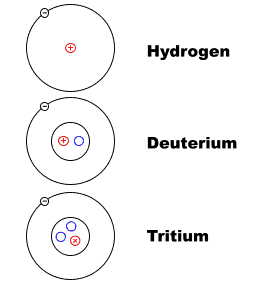
Hydrogen isotopes
Hydrogen has one positively-charged proton at the center. Deuterium has an extra neutron, tritium has two extra neutrons at the center. All have a negatively-charged electron orbiting the nucleus to make an atom.
The energies of the photons will depend on the type of fusion reaction, which is itself dependent upon the ratio of hydrogen H and deuterium D in the NAE.

The electron which shielded the positive-charge of the protons in the stack performs double-duty as it is sucked into the fusion process, and occasionally, emitted back out as a Beta decay during the process in which tritium is formed.

Hydrogen, deuterium or tritium present at the ends of the stack would be available to interact with other elements, producing the observed transmutations.

JET Energy diagram of palladium atomic matrix when filled with hydrogen. The palladium atoms are bonded together through their outer electrons in what's called a lattice.
In this model, energy can accumulate in the NAE through resonance without affecting the atomic bonds of the crystal lattice. It allows the nuclear mechanism to operate in an environment independently of the larger metallic matrix. There is no violation of the Laws of Thermodynamics.

Storms’ model gives testable claims along with a proposal on how to create the NAE and he’ll be working with colleagues in the coming months to test this hypothesis. Only experimental confirmation of a model will determine its usefulness in engineering energy-producing cells.

If Edmund Storms is right, and creating cold fusion is a matter of resonance, then the possibility exists that the transition metals need not be the only host to the reaction; any material could create cold fusion. All we need do is create the little space, add hydrogen, and apply the proper frequency, and there is clean, dense, portable, and next-generation energy technology that leaps above the hard-won trial-and-error achievements thus far, and the energy revolution we seek will be delivered.

Cold Fusion Now!

For more from Edmund Storms, go here.

JET Energy NANOR device at MIT continuing to operate months later

Big thanks to E-Cat World [visit] for posting this video by musician Barry Simon of the JET Energy NANOR device running since January 2012. The video has Professor Peter Hagelstein explaining the lattice-assisted nuclear reaction LANR/cold fusion energy device.

The revolutionary energy producing device was first turned on earlier this year in January for a short course on the science Cold Fusion 101 co-taught by Peter Hagelstein of the Massachusetts Institute of Technology Electrical Engineering and Mitchell Swartz of JET Energy, who built the NANOR cell.

There is a beautiful soundtrack, too!

Related Links

Demonstration of Excess Heat from the JET Energy NANOR at MIT by Peter Hagelstein MIT and Mitchell Swartz JET Energy download .pdf

Successful Cold Fusion/LANR Demonstration at MIT – again by Ruby Carat February 1, 2012

Policy Points for Clean Energy


Easy to remember facts about cold fusion science and technology can go just about anywhere. Message the chip body, or print and post up where your chemical body goes. Snail mail your legislative representatives and local decision-makers.

Three elements are colliding together, the degradation of the environment, the plummeting economy, and the energy crisis. I think its been called a clusterf**k. There is no way out for seven billion people, unless we have an energy dense clean form of next-generation power.

Energy is a currency. Choose the best value for now and for to come.

Choose cold fusion.

Download the fullsize Top-Five-Benefits

I’ve updated so that white space in the image contains address for snail mail when you just fold paper and staple together.

Download the fullsize Top-Five-Benefits .pdf

Dowload Top-Five-Benefits .doc

Major Peak Oil figure leaves Collapse-mind to help “birth new paradigm”; is cold fusion next?

Former Los Angeles, California police officer turned Uber-Doomer Michael C. Ruppert is leaving Collapsenet, the organization he helmed that was developed as a response to Peak Oil. [visit]

Collapse by Michael C. Ruppert
Named after his book Confronting Collapse and the documentary movie Collapse that he starred in, Collapsenet gathered resources where one could connect with others preparing “lifeboats” for a post-petroleum world.

In a video farewell posted on the site, he said, “My usefulness is at an end here……There’s a major evolution occurring right here, right now.” [watch]

Citing major cyber-attacks that almost took them down, the drying up of cash-flow, and serious illness in the core leadership, he ultimately realized, “I don’t think it does you, or me, or anybody, any good, anymore, to have me reading all these stories everyday to tell us things we already know: multiple systemic failures are occurring everywhere.”

“Fukushima is the single greatest threat to human existence, it’s uncontrolled, it can’t be fixed by the Japanese; climate change is out of control; the Gulf of Mexico is destroyed; economic collapse is absolutely irreversible; Peak Oil is here; and I now live in a country that’s an open fascist dictatorship.”

“I don’t need to talk anymore about that.”

“I know what’s coming after these next few absolutely amazing months that lie before us, is going to be upheaval, like none of us have ever imagined, or ever experienced.”

Crossing the Rubicon by Michael C. Ruppert
Mike Ruppert has written several books including Crossing the Rubicon, the meticulously researched and referenced account of how oil, power, and politics connected events surrounding 9/11. He published a newsletter From the Wilderness for many years and posed the Nine Critical Questions to Ask About Any Alternative Energy, which we asked cold fusion researcher Jed Rothwell to answer. [read]

Now, Ruppert will be traveling alone to focus on writing a new book. He says, “I get to go and live in my spiritual world…. That’s where I’m being called right now.”

“I see no need to fight in this world or to live in it anymore from the material standpoint. There are other types of consciousness that are equally, or more, effective in helping to change or accelerate this change of consciousness that I see taking place on this planet.”

In exiting the Collapse mind-set, Ruppert is following former Life After the Oil Crash‘s Matt Savinar, who left curating gloom headlines to focus on more positive pursuits of sustainable living. Tom Whipple, the Falls Church News-Press writer who regularly assessed collapse action, also diverged from the message of doom by writing about the recent developments in the low energy nuclear reactions LENR field.

Even Gerald Celente had broken from painting the maddening portrait of a corrupt marketplace to highlight the one bright spot by stating how cold fusion and new energy “is the greatest investment opportunity of the 21rst century.” [read]

However, few Peak Oilers have abandoned the focus on surviving the coming crash to even consider a future with abundant energy. Cold Fusion Now has contacted several senior members of the collapse and post-carbon community to alert them to new developments in the cold fusion sector, to no avail.

Many still do not know the phenomenon is real. Many remain skeptical of any “technological fix” that claims clean, dense energy. Also, a lack of understanding of the word ‘nuclear’ frightens many, unaware that ‘nuclear’ does not equate to ‘radioactive’.

It was in 2004 that I myself learned about Peak Oil at a movie screening of The End of Suburbia at which Michael Ruppert spoke afterwards. I remember the audience response: stunned to a stupor at the consequences. Many people had their world changed that evening, including myself. It wasn’t until later that year when Media Ecologist Bob Neveritt told me that cold fusion was real did I then see the possible future ahead.

“How can it be that we have this imminent doom and gloom, as well as what I feel in my heart is the coming of a golden age?”, Ruppert asks. “Well that’s a mystery that we’ll have to find out. But we all have to find out in our own ways.”

Now, Ruppert is correctly identifying the current Mystery Landscape, the ground from which the figure of cold fusion is emerging. But do humans really have a second chance at a “golden age”?

Media ecology reveals the feedback loop between technology and human behavior. “We shape our tools, and our tools shape us”, said Canadian media theorist Marshall McLuhan.

Cold fusion will not ‘save’ Petroleum Man. The set of services and disservices of fossil fuel technology will rust away, as will the Mind of Man who built it.

Instead, like wildflowers through the sidewalk cracks, a new set of services and disservices will emerge, composed by a new technology that sets a different mental imprint on humans.

The consciousness of a new paradigm is intimately connected with an ethical energy source, free, and democratic, with access for all: ultra-clean energy from cold fusion.

The rest is up to each and every one of us, to evolve in kind.

C’mon over to our house, Mike! Welcome!

Cold Fusion Now!

Senate Energy Committee member “wants to get it right” on nuclear power; fails to mention cold fusion

The disaster that engulfed Japan continues a year later as fears that the former nuclear power plant, now radioactive-pile, Fukushima-Daichi could produce additional plumes of material that spread radiation throughout the northern hemisphere “altering civilization as we know it”.

Oregon Senator Ron Wyden visited the hot zone last month wearing a protective suit and assessed the situation on April 17 by saying “… things were worse than reported”. [read]

Interviewed days later on MSNBC [top of page] about his concerns and what he saw on the ground, Senator Wyden responded:

They obviously have a long, long way to go. When you go in there you see hundreds of tons of debris; you have huge trucks, storage tankers thrown about like they were my four-year-old twin’s toys. It’s very clear that there are substantial health questions that have to be addressed now.”

“I’m particularly concerned about Unit 4, there are these six reactors. If for example you had an earthquake or tsunami hit those particular pools, those pools could rupture. That could mean that the fuel rods catch fire and melt down. You’d have radiation in the air that would be a huge challenge to control.

[Tokyo Electric Power Company] TEPCO has a 10-year plan for moving the spent fuel rods to dry-casks, to dry storage. That in my view must be sped up because if another earthquake or tsunami hits, it could be very damaging, with possibly more radiation than earlier.” [TEPCO release here]

Responding to a question about Japanese food safety, he didn’t want to make “scientific judgments”, saying,

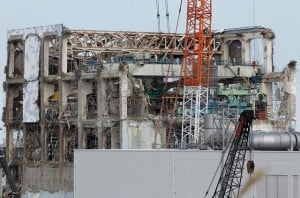
Fukushima-Daichi Reactor 4 building. Photo: cryptome.org
I think they made it clear that they have been able to handle much of the radiation because it’s stayed within the vessels. That’s one of the reasons I’m so concerned about unit 4. That is essentially outside the containment process. That’s why an earthquake or tsunami could be so serious.

I will tell you when I was visiting, and we were getting on the bus to go to the airport, people said to Oh, Pretty amazing Ron that you didn’t have an earthquake or a tremor while you were there. This is not an abstract question. This happens very frequently there.

Senator Wyden would not speculate on the issue of radiation hitting the west coast of the US, but he did say that “… certainly these reactors are very close to the ocean. In my home state, we’ve long been concerned about tsunamis and earthquakes.”

I think its time to get this right. We need to focus on what kind of design there ought to be for nuclear plants, where they ought to be located; certainly the question of putting them right next to oceans ought to be problematic to anyone. Those are the kind of issues that can’t be ducked any longer.

Senator Wyden sits on the US Senate Energy Committee, and so has received numerous mailings from Cold Fusion Now about the importance of funding cold fusion, or low-energy nuclear reactions LENR. LENR is a type of fusion-power based on a fuel of hydrogen from water, with no radioactive materials used at all.

Still the Senator speaks to the rear-view mirror.

Energy from LENR can be produced from just a few grams each of hydrogen and nickel, a common metal used industrially throughout the world. The science has been developing over two decades, yet only in the last year is a technology emerging. Lack of funding has hampered advancement due to legislators and agencies that mistakenly believe that “there is no such thing” as cold fusion.

However, several independent new energy companies beg to differ as they develop commercial products that bring next-generation nuclear energy to market. The first demonstrated prototypes are small and portable and will not need to be connected to an electrical grid. These technologies will be able to operate anywhere, be it coastal or inland.

There is virtually no chance of a meltdown with cold fusion generators based on a reaction described as a nickel-hydrogen exothermic reaction. The hydrogen-infused nickel metal powder that hosts the reaction will melt at 1453 C, thereby stopping the reaction. There’s no radiation danger from melted nickel.

Though initially in the form of steam generators and hot-water boilers, adding micro-turbines can turn that thermal energy to off-grid electricity. Using a fuel of hydrogen, access to water means access to fuel for a safe and clean energy source.

Akio Matsumura has reported devastating news about the reactor 4, saying that it could release radiation 10x what the Chernobyl explosion did. If all the radioactive fuel at the Daichi site were to melt-down, it could release 85x what Chernobyl did. [read]

Here, Mr. Matsumura gives some details about the possible dangers and calls for an “independent assessment team, independent of TEPCO, to see what will be the best way to improve the situation …. which is critical now …

Conventional nuclear power provided 30% of the electricity for Japan, and the plan was to increase that share to 50% by the year 2050. Now, the decision has been implemented to dramatically reduce Japan’s dependence on this form of nuclear power which uses a highly radioactive and dangerous fuel, and embark on an all-out program of alternatives. It’s a hasty move, but seemingly inevitable.

Humans pretend to plan for the worst, but never imagine it really happening. Rising sea levels can cause greater storm surge making coastal nuclear power plants even more vulnerable.

Let’s remind Mr. Wyden, and all the Energy committee members that mitigation begins with funding LENR.

Senator Ron Wyden Home

Letters to Senate request hearings on DoE and USPTO by Ruby Carat November 10, 2011 contains the addresses of all Senate Energy sub-committee members.

Political Support for Cold Fusion in an Election Year


Political support would have been crucial two decades ago in developing the basic science of cold fusion energy by procuring funding for a coordinated plan of research.

In Peaking of World Oil Production: Impact, Mitigation, & Risk Management, Robert Hirsch and others for the Department of Energy determined that twenty years was the smallest time at which mitigation for the effects of peak oil would allow for a smoother transition to a non-fossil fuel based economy. Less than that, and the gap between the end of easy access to fossil-fuels and a new energy technology would guarantee alot of pain.

Well Peak Oil is here, and our society has collectively decided to ignore the reality of Hubbert’s Curve. As a new technology is being born in the workshops of independent scientists, what can political support do?

Legislators will provide the means for new energy companies to operate easily, and deliver revolutionary new energy products to an eager public as quickly as is technically and safely possible, or, they can make it difficult for these companies to operate and delay product distributions through excessive regulation.

Who in politics is supportive of cold fusion?

In Italy, where the first commercial cold fusion technology was demonstrated just last year, there is also a long history of parliamentary support for cold fusion. In 1989, after Drs. Fleischmann and Pons‘ announcement, “Dr. Francesco Scaramuzzi, a mathematician and physicist at the National Agency for Nuclear and Alternative Energy said he and a team of eight other scientists had forced deuterium, a heavy isotope of hydrogen, in the form of gas to fuse at extremely low to room temperatures”, confirming low-energy nuclear reactions LENR. [read Italian Researchers Report Achieving Nuclear Fusion NY Times 1989/04/19]

“They were accompanied by a large number of colleagues and two cabinet ministers” when they made their announcement at the Nuclear Agency’s headquarters in Rome.”, the report quoted. Since then, ENEA, the Italian National Agency for New Technologies, Energy and the Environment has continued research, collaborating with labs around the world.

But right after the initial flurry of activity in March 1989, many politicians all over the world spoke about this new form of energy, only to be muzzled in the ensuing months. For two decades, political support lay dormant, until Andrea Rossi demonstrated his prototype Energy Catalyzer in at the University of Bologna in January 2011, igniting public interest and a renewed, though timid, political class.
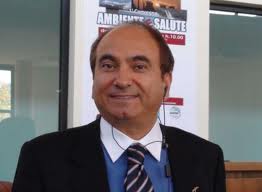
More recently in Italy, Parliamentarian Domenico Scilipoti addressed a letter to Italian ministers asking “WHETHER The prime minister and the other ministries to whom my questioning is directed do not intend to adopt suitable measures, even laws, aiming at an effective and quick opening towards these researches” according to a translation on lenrforum.eu. [original][gootrans] [lenrforum.eu]

Why are Italians so keen on the Energy Catalyzer?

“If verified, [this] could quickly resolve all issues relating to the production of electricity at low cost without damage to the environment, allowing the country to become an energy exporter of electricity at very low cost, and with the further possible advantage in developing the engineering unit patented by engineer Rossi or other scientists, to free Italy from dependence on supplies of oil, coal and other energy purchases of electricity, with huge environmental and budget benefits.” –Domenico Scilipoti, translation

Greece is the home of Defkalion Green Technologies, licensors of the Hyperion steam generator, a product which will compete with the Ecat. The technology itself is owned by Praxen Defkalion Green Technologies based in Cyprus.

Last year Defkalion Board member and University of Bologna, Italia Professor Christos Stremmenos spoke of “… mediation with the Greek government to make an industrial plant possible”. The result was Defkalion Green Technologies.

Then Prime Minister George Papandreou was himself a supporter of cold fusion technology. Since resigning last year after turmoil over proposed extreme government budget cuts, officials there are still behind the technology, and this week’s elections will most likely not change that sponsorship.

Stremmenos was quoted as saying, “Even the opposition has now asked to be informed on this issue. Therefore in Greece this matter is treated without prejudice, no one is uncommitted.” [read]

The government of Japan had formal commitment to cold fusion research in the nineties. In 1993, a New Hydrogen Energy Laboratory had been set up in Japan with $25 million from the Ministry of International Trade and Industry MITI, to be distributed over 5-years. That was accomplished, but the lab closed after that first five years.

The final report on the project summarized the reason. “No apparent excess heat was observed over instrumentation limits after about 500 of electrolysis experiments by some kinds of well-developed cells”. The conclusion was that New Hydrogen Energy was not ready to be commercialized and still within the realm of scientific research. But no other ministry picked up the check.

Ironically, it is just such research that needs federal support. Private industry looking for a return on investment eschews basic scientific research, and will only step in when a commercial product is imminent. Had cold fusion benefited from federal funding over the past two decades, labs could have passed to private enterprise a fully-developed science that might be producing usable commercial technologies based on clean, portable, and safe energy right now.

There is a long list of official government sponsorship by other countries around the world. But here in the US, the striking emotional backlash that has left cold fusion, and a whole host of new energy technologies, out of the energy portfolio continues institutionally as it has for more than two decades.

Who in the parochial US government is willing to speak out for cold fusion?

Just about zero.

But there are some candidates beginning to bring this issue out in the open again.

Randy Hekman is a candidate for US Senate from Michigan, looking to unseat heavily-funded Debbie Stabenow. There are many differences between the two candidates, the biggest difference being Randy Hekman supports LENR low-energy nuclear reaction research. [visit]

He was a member of the 2004 team including Michael McKubre, Peter Hagelstein, David J. Nagel, and Talbot Chubb that prepared a report in 2004 for the Department of Energy Review. Ultimately, the panel claimed that clearly-defined experiments should be funded, but since then, this field has received $0. [read 2004 DoE Review History]

Though still a candidate, Hekman’s strong commitment to LENR would be expected to continue should he win.

Mitt Romney is running for President of the United States against incumbent Barack Obama. As a candidate, he has mentioned cold fusion in an interview with the Washington Examiner. He did not show any in-depth knowledge, but just mentioning the words was a clue that he’s been informed by someone about recent news. [read]

In the interview, Romney also connected funding basic science and economic development:
But basic science, in my view, is a way that research can encourage our entire economy. And so, for instance, in Michigan, some years ago — I think it was in 2007 — I spoke there and said, you know, I think we ought to embark upon an effort to do analysis on energy research, transportation research, materials research. But again, basic research which could then be either purchased by or licensed by companies foreign and domestic.”

Bruce Tarr is a Massachusetts State Senator and the first serving US legislator listed so far. He has visited MIT Massachusetts Institute of Technology’s live demonstration of JET Energy’s NANOR device and spoken with researchers Mitchell Swartz, Peter Hagelstein, and Brian Ahern about the current research there. [read]

Tarr has also hosted inventor Andrea Rossi to discuss energy, and opportunities. As a State Senator, Tarr’s responsibility to economic development follows him closely. With state budgets shrinking amid an ongoing financial crisis, Tarr appears to be looking ahead at the opportunities for a renewed economy based on cold fusion technology. [read]

Bob Kerrey serves in the US Senate representing Nebraska. There is no record of him publicly speaking out for cold fusion, but he was recently outed in an article by the Washington Examiner highlighting his large consulting fees, one of which was “$800,000 in consulting fees in 2011 from the Sidney Kimmel Revocable Trust to help an Israeli company research cold fusion.” [read Kerrey the wealthiest Senate candidate in Nebraska Examiner 2012/04/27]

The information that Kerrey has worked with Energetics Technologies on behalf of Sidney Kimmel, the billionaire funding the University of Missouri’s LENR program, is an important indication of the behind-the-scenes activity just starting to percolate among those with financial power.

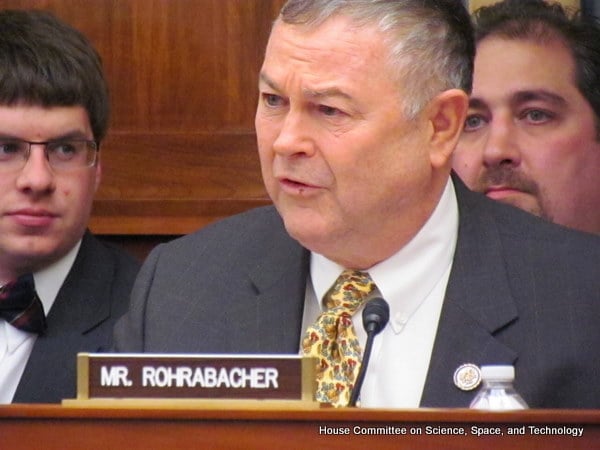
Dana-RohrabacherSitting on the Congressional Committee on Space, Science and Technology is also Dana Rohrabacher, a long-time representative who was serving in 1989 when Drs. Fleischmann and Pons were under fire. Back then, Representative Rohrabacher was not sure whether or not the claims were true, but felt that it should be pursued and sorted out.

In an editorial for the Los Angeles Times on June 18, 1989, he wrote how wrong it was to attack Drs. Fleischmann and Pons for a discovery, that if confirmed, “would usher not only science but all aspects of modern life into an era of growth and improvement that mankind has not experienced since the Industrial Revolution”. [read Turkey Today, Genius Tomorrow: Cold Fusion Attempt Has Noble Lineage in Science LA Times 1989/06/17]

Rohrabacher has since been silent on cold fusion. Cold Fusion Now has sent several mailings of letters, along with Cold Fusion Now stickers, to his Energy sub-committees, with no response.

However, our last mailing requesting hearings on the funding practices of Advance Research Projects – Energy ARPA-E may have helped to spark the subsequent hearings held in January 2012 which brought heads of DoE and ARPA-E to the chamber for questioning. [read]

ARPA-E then released funding for ‘Transformative Energy Technologies’. It is not known if any projects relating to cold fusion or LENR were funded. [read]

In 1992, researcher, author and Infinite Energy magazine founder Eugene Mallove had questioned then-Presidential-candidate Bill Clinton in Concord, New Hampshire about cold fusion. Candidate Clinton admitted “knowing that scientists in Arkansas were ‘stonewalled’ by the US Department of Energy” and “promised to do something about investigating cold fusion if elected”.

He never did.

Arthur C. Clarke asked the Clinton President’s Office to contact Infinite Energy requesting a brief on the matter, near the end of President Clinton’s eight-year reign in 2000. Mallove responded with a comprehensive memo which included this quote:

“… If we only had a way to tap this fusion energy safely and cheaply, the world’s energy problems would be over; most if not all environmental problems would be well on their way to solution. If we could find a way to release this fusion energy benignly without deadly radiation, and on a small scale, rather than in the stadium-like tokamak thermonuclear fusion reactors–smaller, dysfunctional prototypes of which are being tested at fantastic cost at Princeton, MIT, and elsewhere–a millennial revolution in energy technology would break out.

It would mean an age in which the recurring cost of energy production would approach zero, since the heavy hydrogen is virtually free. The scope of that revolution would dwarf today’s Internet-World Wide Web upheaval. The age of “free information” would have a partner: the age of virtually free energy! It may surprise you to learn that the energy discovery described above was made in the United States in the early 1980s, announced in 1989, and subsequently confirmed by solid published scientific research–some of that by Federal laboratories. …” –Eugene Mallove

Read the full text of President Clinton’s Cold Fusion Memo here.

The same memo was copied to President George W. Bush as well.

A new energy technology is being developed by independent scientists and inventors without the benefit of federal funding. Ignorance of this from our political class is detrimental to the future of our species as we are in the throes of an irreversible decline in easy access to fossil fuels.

We need explicit plans to move this research and technology quickly into use.

If you call yourself an environmentalist or if you call yourself a free-enterprise entrepreneur, a social activist or a parent; for anyone who desires a free and peaceful future, we ask you to start talking about what’s going down on the new energy front with your representatives, and stay informed, so you can demand of your politicians the actions necessary to bring this technology forward.

“Forward”.

President Obama’s new campaign slogan.

Yes. Let’s move forward for

Cold Fusion Now!

Related Links

Cold fusion economy supported by Greek government by Ruby Carat May 7, 2011

US Senate candidate Randy Hekman puts LENR first by Ruby Carat December 20, 2011

Republican candidate Mitt Romney speaks out for cold fusion by Ruby Carat December 9, 2011

Masachusetts state Senator Bruce Tarr visits Still-Operating JET Energy NANOR Demo by Ruby Carat April 19, 2012

Letters to Congressional Energy Sub-committees repeat hearing request by Ruby Carat November 13, 2011

PEAKING OF WORLD OIL PRODUCTION: IMPACTS, MITIGATION, & RISK MANAGEMENT by Robert L. Hirsch, SAIC, Project Leader, Roger Bezdek, MISI, Robert Wendling, MISI February 2005

Energy Catalyzer Home

Defkalion Green Technologies Home

Top