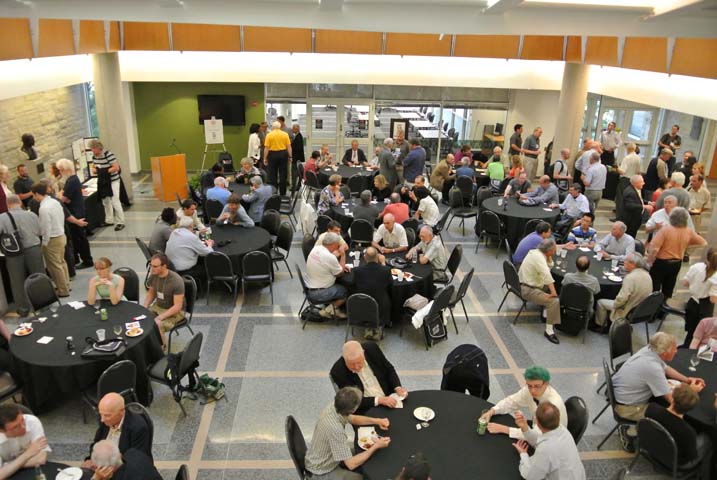
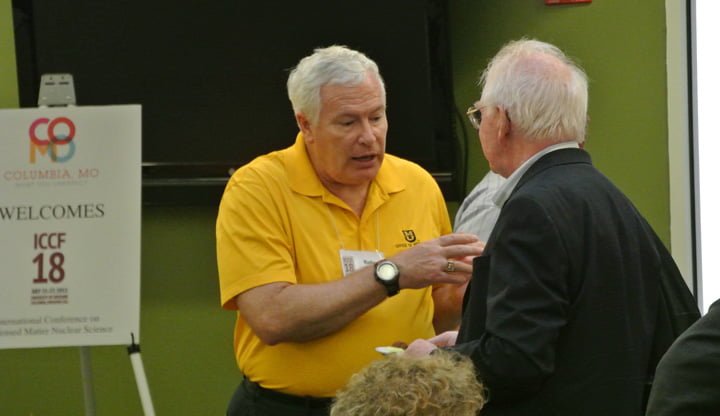
The 18th International Conference on Cold Fusion (ICCF-18) started today with a special meet-and-greet reception. Robert Duncan, Physics Professor and Vice-Chancellor for Research at the University of Missouri began the event with just a few welcoming remarks. He then introduced a local Columbia City Councilman from the 2nd Ward Michael Trapp who was attending the event and spoke in support of the school’s research in this area of condensed matter nuclear science (CMNS).
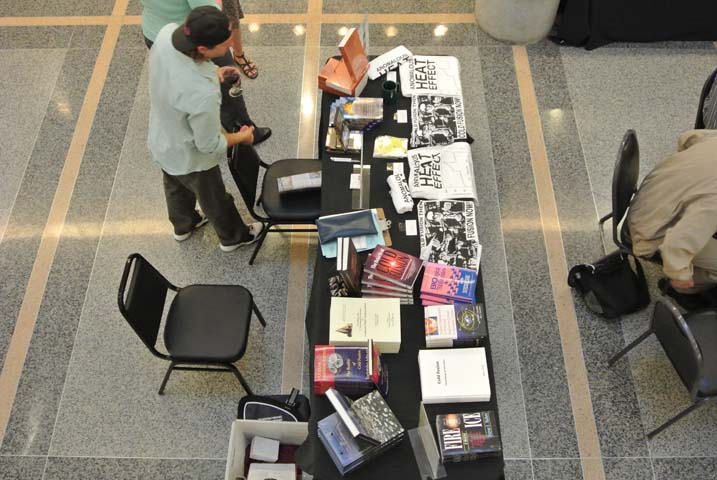
Opening reception at ICCF-18Christy Frazier of Infinite Energy Magazine has a table with lots of stuff.
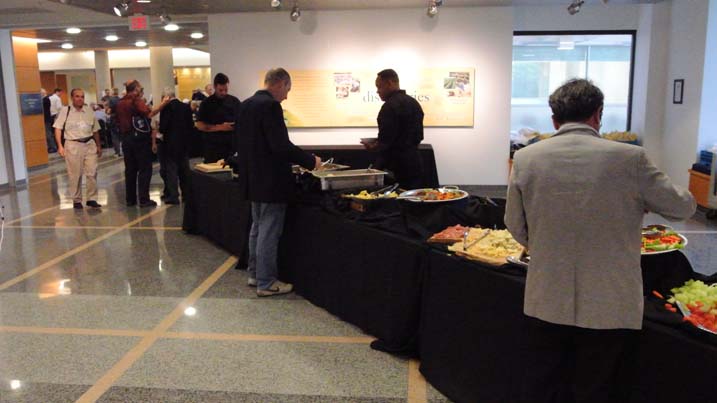
It seemed like less than 10 minutes, and then, everybody was free to get a plate of food and mingle.
ICCF-18 Opening Reception had delicious buffet.
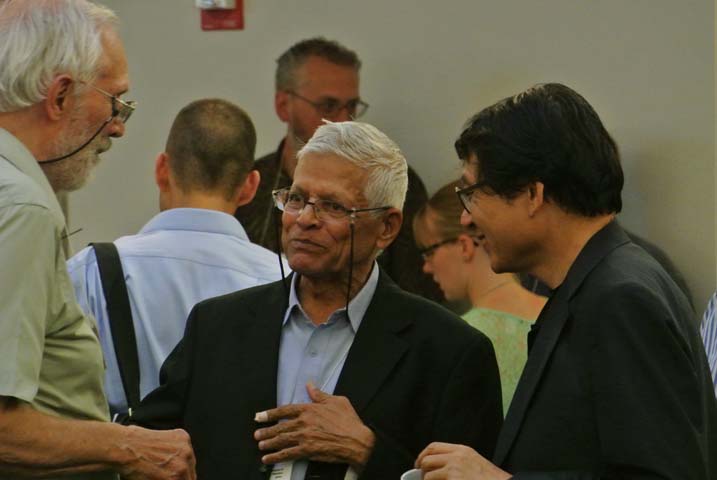
The talent in the room was stunning. Major figures of research going back twenty-four years are all together to hash out the latest.
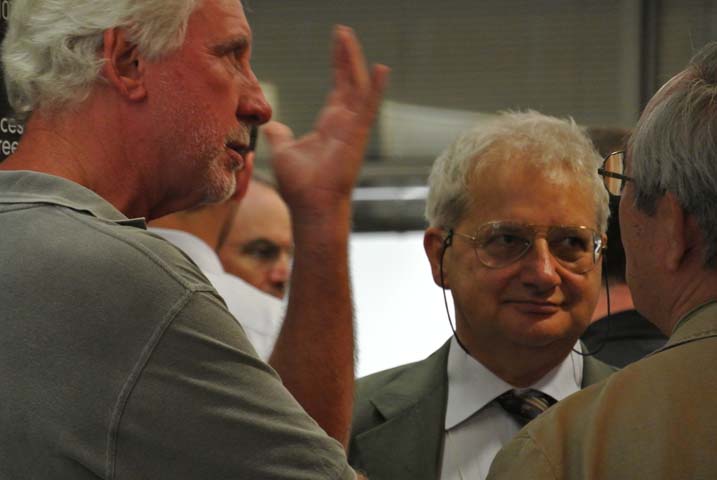
Dr. Michael McKubre and Dr. Francesco Celani are both presenting at ICCF-18 this week.
I went around the room introducing myself to the participants, telling them about our film we are making and asking them if they’d speak with me on camera about their work. We lined up alot of interviews, though most will be on-the-fly due to the super-tight schedule.
I chatted with Akito Takahashi and Akira Kitamura who will be presenting their work this week, both experimental and theoretical. I met Sunwon Park and Frank Gordon who organized last year’s ICCF-17.
It was a great pleasure to briefly meet Charles Beaudette, author Excess Heat: Why Cold Fusion Research Prevailed, one of the great books on the field.
I cannot name all the people I met, so forgive me for leaving most of them out.
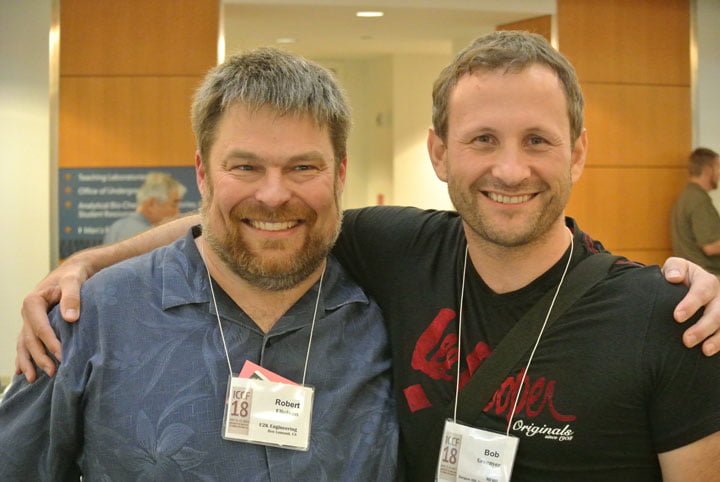
However, it was very exciting to also meet the crew of the Martin Fleischmann Memorial Project’s (MFMP) Bob Greenyer and Robert Ellefson. Representatives of this ever-growing group are presenting their new cell design tomorrow (Monday), a design made by Ellefson, whom I had previously met at the San Jose screening of The Believers movie.
Here’s some great audio with these two passionate experimentalists and inventors.
We will be getting video of the lectures tomorrow, and lots more photos, too.
Video: Dr. Bob excited about Defkalion demo drboblog.com
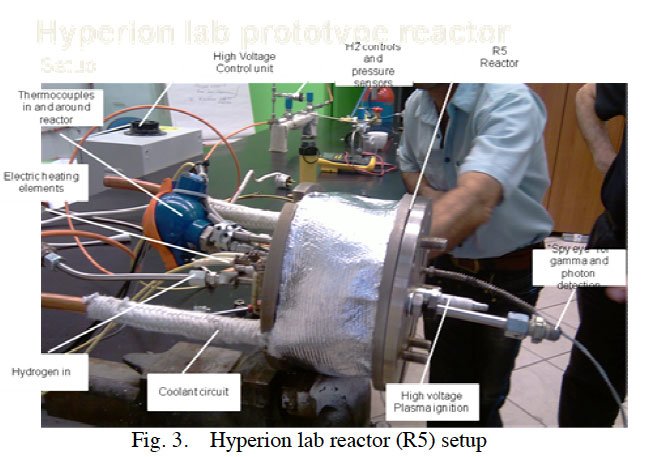
Defkalion Green Technologies has scheduled two public demonstrations of their Hyperion core reactor next week concurrent with the 18th International Conference on Cold Fusion (ICCF-18).
Defkalion originates from Greece, but now has their main lab in Vancouver, Canada. Labs dedicated to applications for the steam generator are in part located in Brazil and Milano, Italy. The two demos will occur from two different locations in Vancouver and Milano beginning on July 22, 2013, concurrent the ICCF-18 Defkalion poster event occurring in Columbia, Missouri, USA.
“There will be an official announcement of this technology during ICCF 18 (International Conference Cold Fusion 18) at the University of Missouri (USA) […]. For those interested you can see this Internet transmission of all phases of the experiment, power, performance and off – he wrote about the CEO of Defkalion Europe Franco Cappiello – In this broadcast will participate in two independent scientists and two science journalists at international level, in addition to a component Cicap.”
The 18th International Conference of Cold Fusion (ICCF-18) begins Sunday, July 20, 2013 at University of Missouri in Columbia, Missouri. The week-long event brings condensed matter nuclear scientists together to exchange the results of their research on cold fusion, also called low-energy nuclear research (LENR), lattice-assisted nuclear reactions (LANR), quantum fusion, and the Anomalous Heat Effect (AHE) among other acronyms.
The Rumplestiltskin-reaction derives from the Fleischmann-Pons Effect (FPE), the generation of excess heat from the elements of hydrogen and metals in electrolytic chemical cells. The search for control of this reaction has led to the discovery of multiple types of systems, as well as other anomalous effects, such as transmutation.
A form of powerful energy, and the realization of the ancient search for alchemy, is poised to transform human culture in one sweep of adoption, and the mainstream press is clueless.
Luckily, Cold Fusion Now will be there to document the event!
Dear Friends,
Driving cross-country from two different directions, I’ll be meeting videographer Eli Elliott at the conference to capture lectures and video interviews with participants for a new documentary film on the field. We’ll also be posting up regular updates from the conference.
You know our work – traveling to the streets and the lab to bring you the voices of scientists in their own words.
We put it together completely self-funded, DIY, and volunteer-driven.
Now we need your help.
I’ve got to get more video chips, and another hard drive. I had to rent a car, cause my poor truck just can’t make the trek anymore, and dorm rooms, food and gas are adding up.
Can you make a financial donation to help us report from the conference? Your support is needed now.
Contribute, and get ready for the good news of new energy on the horizon.
We’ll also be sharing a table with Infinite Energy. Stop by for books, magazines, t-shirts. (Say the words “Cold Fusion Now!” and get a free History of Cold Fusion Calendar!)
Also Needed: Web Designer
Do you know .php? Do you have ideas on how to organize the content on our huge site?
Can you get a subscription button working after a database was corrupted?
If you’d like to contribute your skills to this clean energy effort, please send me a note about yourself to ruby@coldfusionnow.org.
We’re getting bigger, and we need to get better. Your help is needed now. We can’t do it alone.
Charles François of FuturProbable continues to develop his TMLECPW plasma micro-reactor for use as a steam generator.
This technology is getting smaller and more sophisticated with François claiming 245% energy return. In a video released June 22 (below), he provides some background on the TMLECPW technology en Française, described as having 51 Watts input and 125 Watts output.
The most recent video above unveils the new Micro Plasma Reactor design that looks, well, … “Awesome, dude!“. With a professed energy return of 300%, it is!
François is preparing to move to new lab space, where he will work towards a higher steam output suitable for a hot-water boiler.
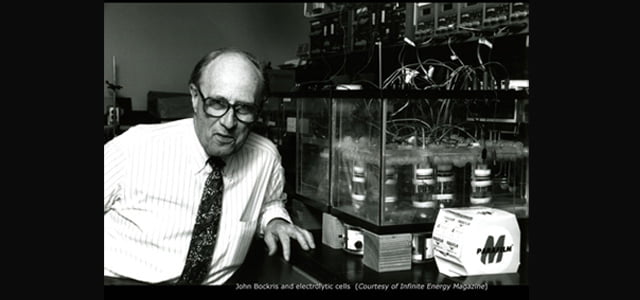
Photo: John O’M. Bockris from the 2013 History of Cold Fusion Calendar month of April courtesy Infinite Energy.
Infinite Energy Magazine reports that John O’M. Bockris has crossed over on July 7. Words of remembrance are gathered in IE’s Bockris Memorial. [.pdf]
He was one of the first few scientists to detect tritium from cold fusion electrolytic cells while reproducing the Fleischmann-Pons Effect (FPE) of excess heat, and he paid a price for it. Accused of fraud, and then “misconduct”, Texas A&M University’s Committee of Inquiry eventually cleared of all charges after a third and final investigation turned up no wrongdoing.
Still, an early workshop on transmutations, documented in The History of the Discovery of Transmutation at Texas A&M University [.pdf] written by Bockris, was organized in an atmosphere so hostile, the second workshop was held off-campus at a Holiday Inn, with off-duty police hired for security.
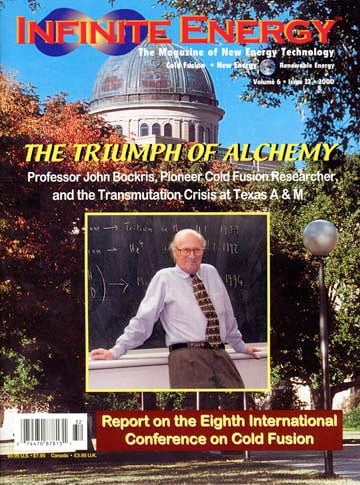
Eugene Mallove wrote a full report in Infinite Energyissue #32 “The Triumph of Alchemy: Professor John Bockris and the Transmutation Crisis at Texas A&M“. [.pdf]
However, Bockris told his own story in the documentary film Cold Fusion: Fire from Water written by Eugene Mallove and Jed Rothwell and directed by Chris Toussaint.
Released in 1999, Bockris speaks nonchalantly as a man at-ease who was nonplussed at the events.
“I think the main part was that, I had done work which was against the paradigm, and that’s what they were really upset about,” said Bockris.
“You know people said they’d been to our university, and some people had laughed at it, saying ‘What the heck are you doing trying to disprove the laws of nuclear physics?‘, and of course, that’s exactly what we were doing,” he laughs, ” – and succeeding.”
Watch the clip of John Bockris here. (The still image is that of George H. Miley, but Bockris begins the piece.)
One of the world’s top electrochemists, Bockris was first to use the phrase “Hydrogen Economy” in the year 1970. A prolific writer, he authored more than twenty books on electrochemistry, energy resources, and the topology of cultural paradigms. Aware of Peak Oil and the work of Richard Heinberg, he was realistic in his analyses of renewable energies, though still clear on the need for alternatives to carbon-emitting fuels. Read his Global Warming [.pdf] for a comprehensive outline of the problem.
First and foremost, Bockris was a teacher. After the passing of Martin Fleischmann, and the journal Nature‘s horrendous obituary, Bockris was one of many who wrote to protest the “gross distortion” of statements made by author Philip Ball. Bockris had supervised part of Martin Fleischmann‘s PhD thesis, calling him “a brilliant scientist”.
As a generation of new-energy researchers leaves our world behind for bigger, better beyonds, their teaching remains alive, with us here today, through the legacy of their work. You can honor the contributions of these scientists by buying their books, and giving them to schools, science clubs, and your local library.
Original article by Nancy Moen on Mizzou News here.
A cool scientific mystery is drawing researchers worldwide to Mizzou for a week in July to investigate recent developments in understanding how nuclear fusion could occur at or near room temperature.
Scientists representing the U.S. and 18 countries internationally will gather July 21–27 at the International Conference on Condensed Nuclear Matter Science to share information on low-energy nuclear reactions (LENR) that could someday provide a new energy source.
The idea of usable low-energy nuclear reactions is compelling to countries worldwide. Participants of the ICCF-18 conference include distinguished nuclear physicists and related research specialists from countries such as Italy, China, Japan, India, Russia, South Korea and the United Arab Emirates.
The researchers are looking for the capability to eventually produce high-performance, inexpensive, clean energy with few or no emissions. Such a sustainable energy source could eliminate the problems of greenhouse gases and heavy air pollution.
For years, scientists have either experienced or read reports of unexplained substantial levels of excess heat thought to be caused by nuclear phenomena that deviate from what is expected.
The regularity of these anomalous heat occurrences — reported by scientific observation worldwide — continues to pique interest, and logical conclusions seem to indicate the existence of an entirely new nuclear reaction that could become a source of energy.
Global interest
While in graduate school at the University of California, Santa Barbara, working toward a PhD in low-temperature physics, Robert Duncan designed liquid helium cells. The glass sphere is a sample of helium gas, which is how gasses were stored and transported long ago. Photo by Shane EppingLeading the conference is MU Vice Chancellor for Research Rob Duncan, who oversees MU’s research and facilities. Duncan says it has taken years for mainstream scientific communities to realize this science is valid and real.
“It has been undervalued and treated as a ‘pariah science’ in the past, but now the world is beginning to realize how important it is,” he says.
An expert in measuring energy, Duncan has published extensively in low-temperature physics. Among his $8 million of funded projects, Duncan developed ultra-sensitive measuring equipment — specifically the best thermometer made in its temperature range — for a proposed NASA experiment in space aboard the 2005 International Space Station.
At the request of CBS television’s 60-Minutes in 2009, Duncan served as an independent scientist to test the validity of research in low-energy nuclear reactions by examining the objective scientific methods used in the experiments.
How LENR works
The ingredients involved in a low-energy nuclear reaction can be quite simple: deuterium, which is a type of heavy hydrogen (found in ocean water), a palladium wire and an electric current.
Researchers become very excited when far more energy comes out of the apparatus than was put in. That’s anomalous heat. These levels of anomalous heat are often more than a thousand times greater than what could be produced by a chemical process.
In recent work, researchers have made advancements in understanding the physics and in developing small units capable of initiating low-energy reactions, but the mechanisms of the phenomena still pose many questions. Improved research methodology may be the key that unlocks the mysteries of a potentially limitless supply of energy for global use.
The challenge is to determine the physical mechanisms causing excess thermal energy, the “whys” and “hows,” if you will. It’s not easy because measuring the input power is tricky, and the heat isn’t necessarily produced on demand. It can take days or even weeks for the heat to appear.
“We don’t fundamentally understand the process yet. In the past, only one in 10 or so attempts actually produced excess heat,” Duncan says. Excess heat is a comparison of the amount of heat produced to the amount of energy put in.
Experiments then and now
The first report of a possible low-energy nuclear reaction occurred in a 1926 test conducted in Germany by Austrian-born scientists Friedrich Paneth and Kurt Peters of the Berlin University Institute of Chemistry. The researchers were experimenting with palladium loaded with hydrogen. They reported that the process produced helium but later retracted their findings.
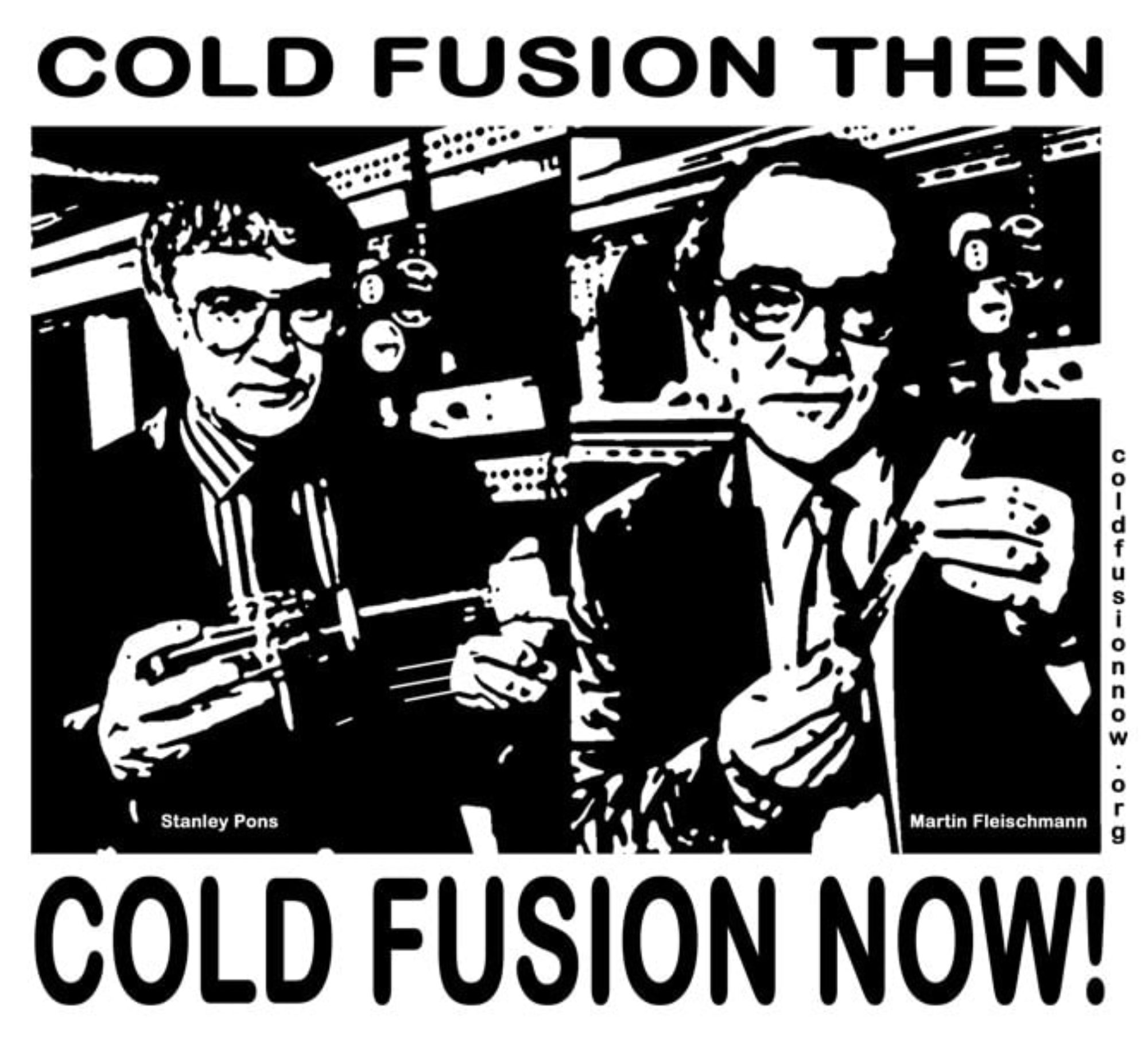
In 1989, electrochemists Martin Fleischmann and Stanley Pons at the University of Utah reported excess heat in their “cold fusion” experiments, but their work was later discredited when other researchers were unable to reproduce the results. “We understand now why these results were not immediately reproducible,” Duncan says.
Although the early experiments were difficult to replicate, other researchers through the years have observed similar anomalous heat effects in low-temperature nuclear research at several laboratories, including the Naval Research Laboratory, Los Alamos National Laboratory, ENEA (the national energy lab of Italy) and Bhabha Atomic Research Centre in Bombay, India.
In 2009, when Duncan accompanied the 60 Minutes news team on an investigation of claims of LENR at Energetics Technologies in Israel, he was a good choice because he counted himself among the skeptics.
For two days on site, Duncan asked questions, measured, checked numbers and looked for errors and other explanations. What he found was repeatable results, leading him to conclude that “excess heat is quite real.” 60 Minutes broadcast his reports on a segment airing that year.
“In Israel, I found how important the research was. I think it surprised a lot of people when a main-street physicist found the research credible. Since then, there have been exciting new developments,” Duncan says.
Researchers working independently in 20 different laboratories have repeated the results, finding excess heat in low-temperature nuclear experiments, Duncan says. Some of those have been confirmed scientifically, making the study of LENR a new and real science.
Fascinating potential
Conference attendees will go into extreme depth of this phenomenon, which is just beginning to be understood. One of the major questions being considered is whether researchers can produce excess heat on demand.
In addition to serious scientific debate, there will be discussion of opportunities in research, engineering and the development of technology.
The many participants have a lot to share. Among them, Vittorio Violante, representing ENEA, the Italian Agency for Energy and Economic Development, will lead a panel on some of the best recent work in condensed matter nuclear science.
Electrochemist Michael McKubre, director of SRI International in California, will discuss a new technique he developed to perform a range of critically important experiments. McKubre is recognized internationally for his work in examining potential new energy sources and has been at the top of his field for the past 24 years. He also was featured in the 60 Minutes report on cold fusion.
Speakers include David Kidwell of the U.S. Naval Research Laboratory; Professor Emeritus Jirohta Kasagi of Tohoku University in Japan; and Thomas Passell of TOP Consulting, a retired project manager for Electric Power Research Institute. Attendees are from top laboratories and research institutions such as the Hoover Institute, MIT and the Aerospace Corporations.
Visit the conference website for a list of conference attendees and the topics of their presentations. Members of the press are invited to register to attend.
MU’s nuclear research facilities
For the first time in 20 years, the ICCF conference is being held on a major research university campus, an achievement for MU and one that brings new opportunities, Duncan says.
Mizzou’s facilities offer a rich combination of ongoing research, and the university recently acquired a new, prestigious $3 million grant from the National Science Foundation specifically to investigate and apply neutron scattering, which has already begun.
Conference attendees will tour MU’s nuclear research facilities:
The MU Research Reactor is the nation’s largest university-operated research reactor, making possible advances in basic and applied sciences across multiple disciplines.
With seven collaborative scientific groups, the Sidney Kimmel Institute for Nuclear Renaissance is dedicated to finding the origin of anomalous heat effects using a sound materials-science approach.
The Nuclear Science and Engineering Institute is becoming a global leader in nuclear– engineering education and research with a mission to offer degrees in nuclear engineering.
The International Institute of Nano and Molecular Medicine is dedicated to the discovery and application of fundamental and translational medical science based on previously unexplored chemistry combined with nanotechnology and the biosciences.
 The 18th International Conference on Cold Fusion (ICCF-18) started today with a special meet-and-greet reception. Robert Duncan, Physics Professor and Vice-Chancellor for Research at the University of Missouri began the event with just a few welcoming remarks. He then introduced a local Columbia City Councilman from the 2nd Ward Michael Trapp who was attending the event and spoke in support of the school’s research in this area of condensed matter nuclear science (CMNS).