
Find 2014 CF/LANR Colloquium at MIT up-to-date Full Coverage Here



























The water in one cup of coffee could make a cold fusion battery that would last 18 years.
—Dr. Mitchell Swartz at the 2014 CF/LANR Colloquium
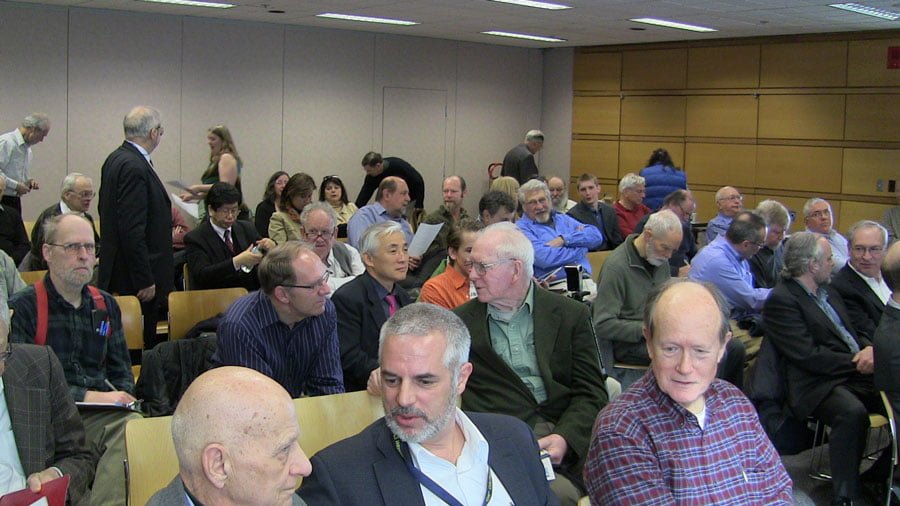
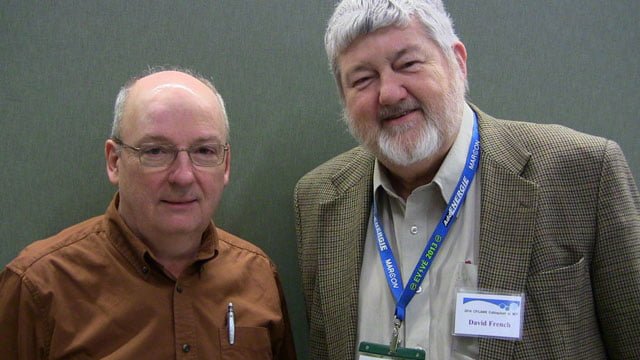
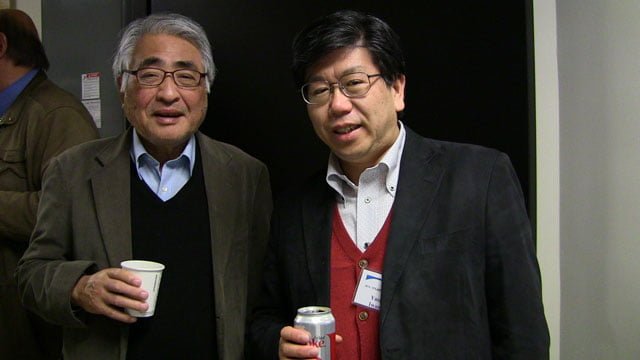
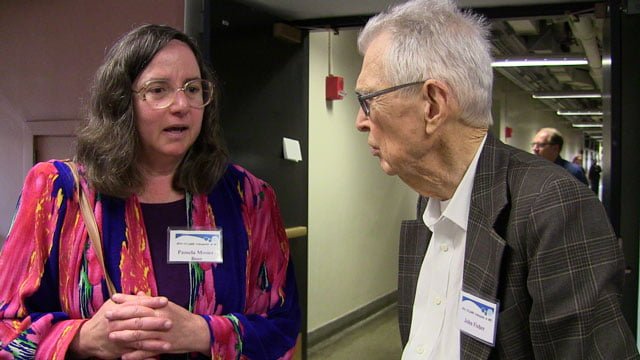
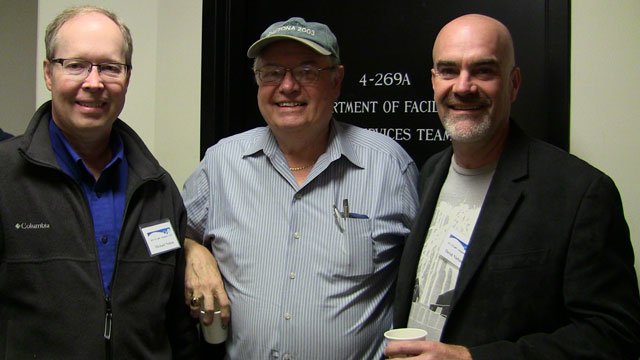
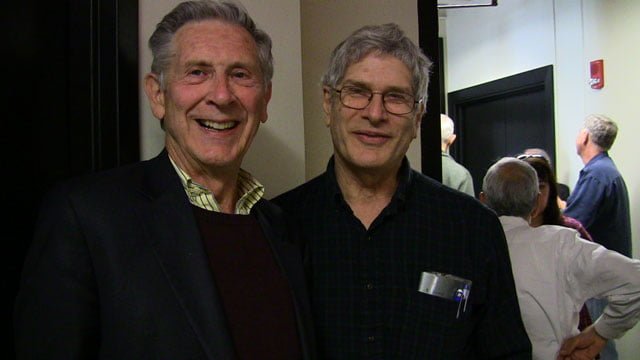
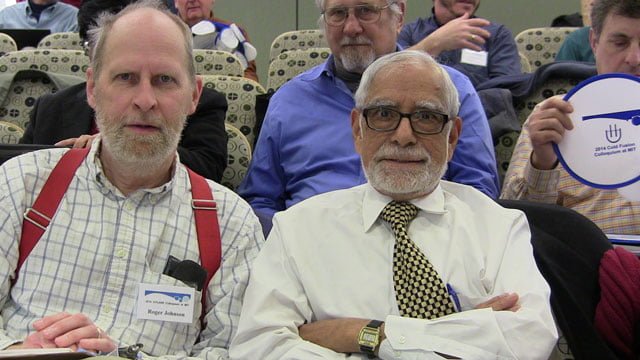
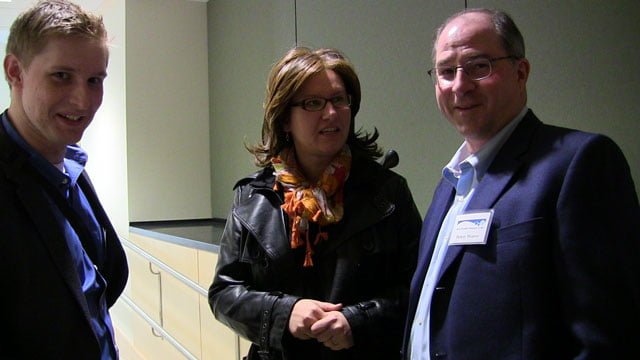
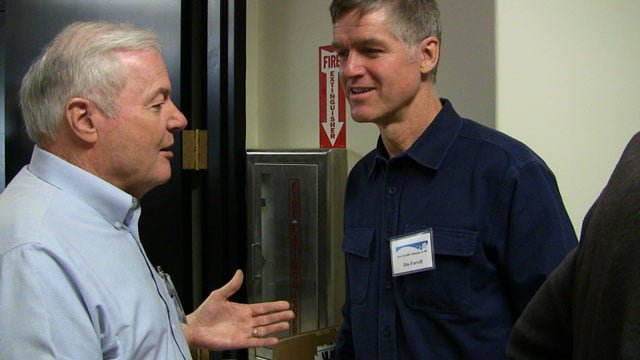
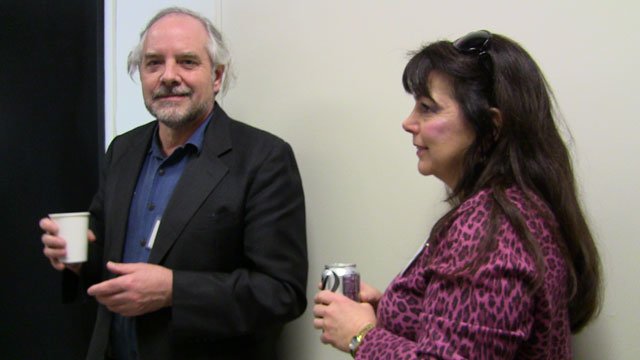
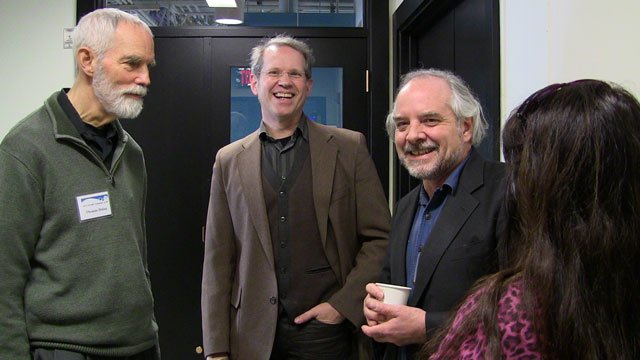
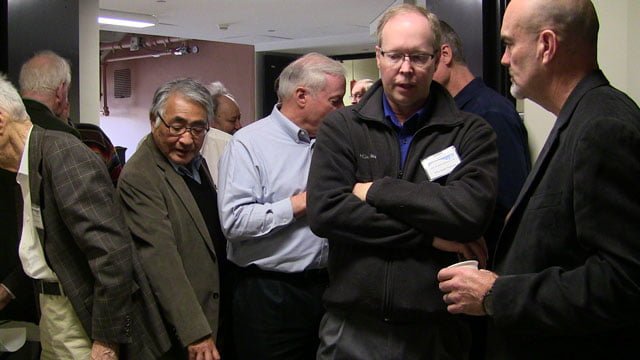
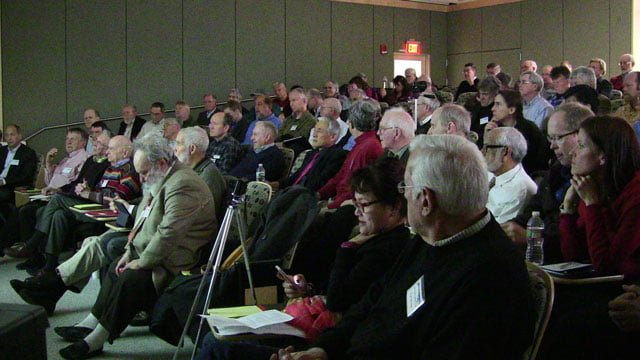
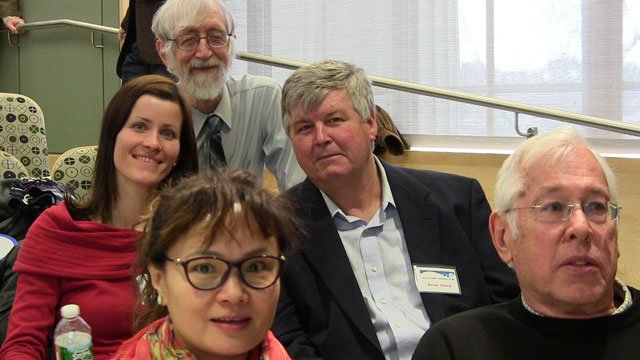
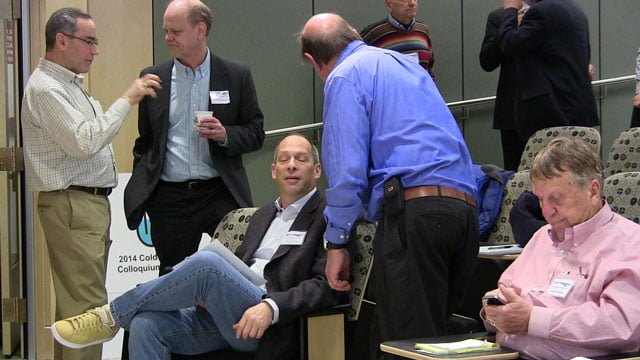
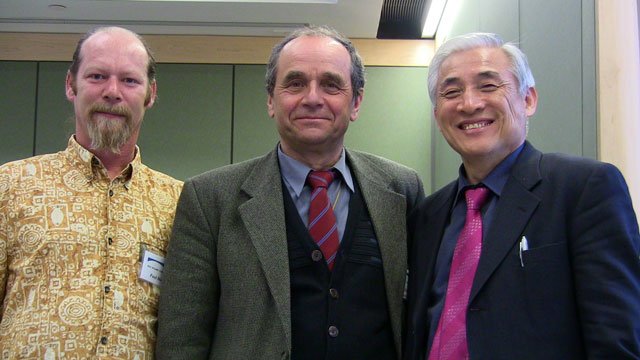
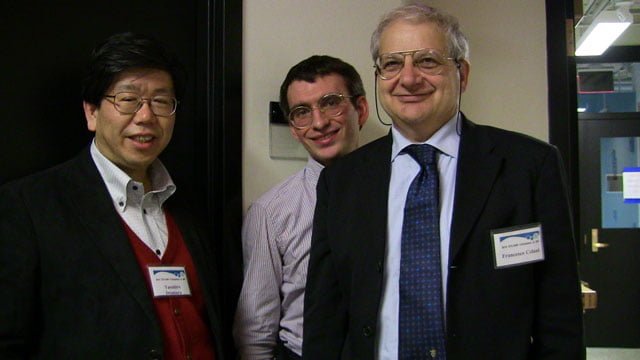
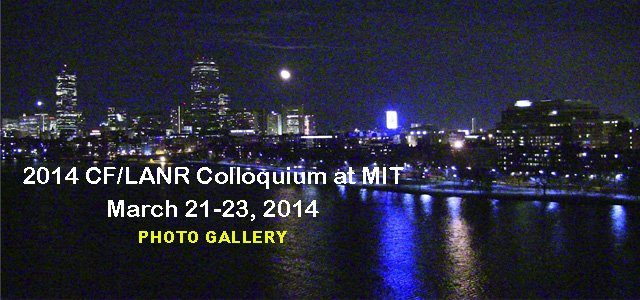
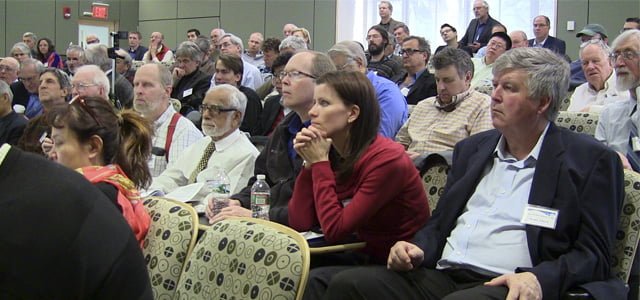
The 2014 LANR/CF Colloquium brought international scientists to the MIT campus March 21-23, 2014 to share the most up-to-date and innovative research on cold fusion, also called lattice-assisted nuclear reactions (LANR). It was the sixth such event organized by Mitchell Swartz and Gayle Verner of JET Energy, and the atmosphere was electric as one speaker after another reported on research with world-changing implications.
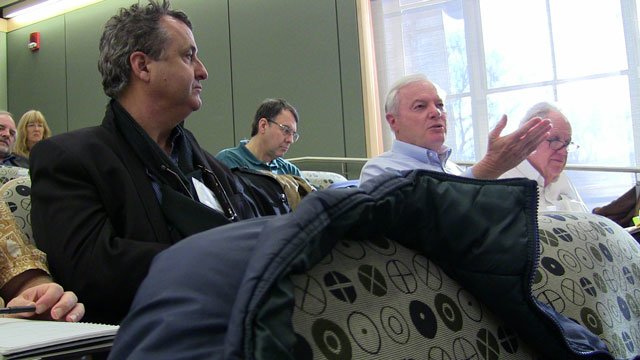
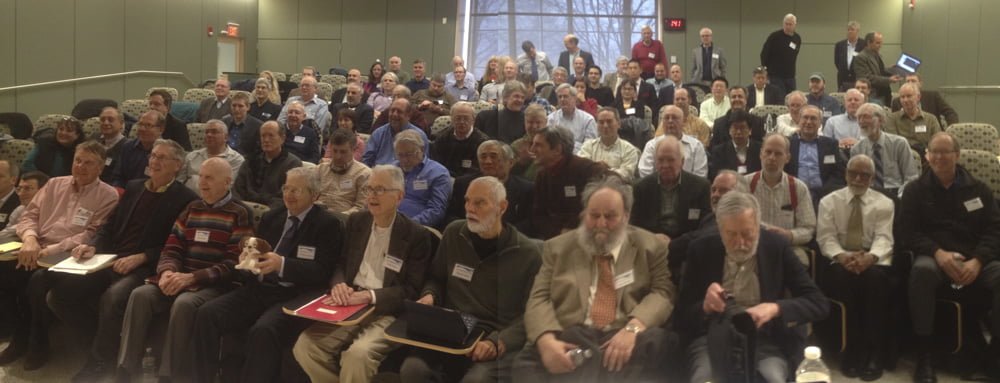
The intimate gathering began in one room, but then had to move to another room as the audience grew within the first hour. Investors, entrepreneurs, and a few more students rounded out the scientists in attendance.
Find 2014 CF/LANR Colloquium at MIT updated Audio, Video and Full Coverage Here
Jeremy Rys captured video that will be available on the Cold Fusion Now Youtube channel as they are edited. I took photos and recorded audio. As usual, the mainstream press was absent, and I am unaware of any reporters at all showing up to cover the event.
 But Cold Fusion Now represented with complimentary calendars and Infinite Energy provided free magazines. Colloquium organizers made frisbees! – here displayed on the wall of my Prealgebra classroom at 8AM the following morning.
This was one fun event, and the whole crowd was buzzing with positivity. Two days later, I still feel charged-up about the accelerated pace of discovery, and interest in the field. It’s been a difficult couple of decades for breakthrough energy researchers, but on this 25th Anniversary of the Announcement of Cold Fusion, there’s a real feeling of hope that glues everybody together and strengthens the commitment and dedication to find a solution to our energy problems.
Even as environmental disasters mount, listen to these lectures, and you might feel it too! The science results are tremendous, and show a path to a peaceful, green, technological future for all of Earth.
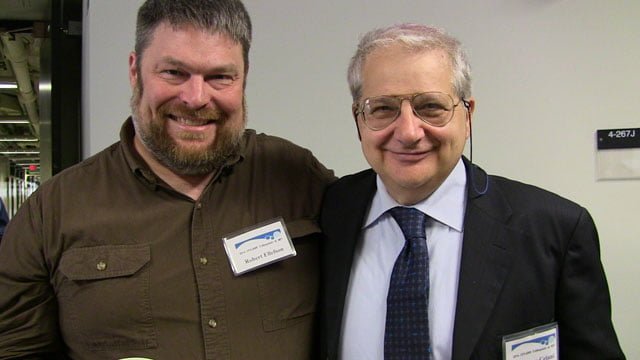
Thus it is, Francesco Celani reported that the Martin Fleischmann Memorial Project was nominated for a Nobel Peace Prize!
Find 2014 CF/LANR Colloquium at MIT updated Audio, Video and Full Coverage Here
Related Links
Past Colloquium
2011: Part 1 – http://www.infinite-energy.com/images/pdfs/LANR2011Colloq.pdf
Part 2 – http://www.infinite-energy.com/images/pdfs/SwartzColloqPart2.pdf
2010: http://www.infinite-energy.com/images/pdfs/Colloquium2010.pdf
2009: http://world.std.com/~mica/colloq09.html
2007: http://www.infinite-energy.com/iemagazine/issue75/colloquium.html
2005: http://world.std.com/~mica/colloq.html
Video: Arthur C. Clarke excerpt from 1998 documentary film Fire From Water
Sir Arthur C. Clarke wrote in support of cold fusion when mainstream publications refused to publish on the topic. Clarke also lent the authority of his voice to the film Fire From Water, the 1998 documentary film written by Eugene Mallove (creator) and Jed Rothwell and directed by Chris Toussaint.
Multiple takes of Sir Clarke discussing science, and scandal, are now available as an .mp3 and a transcript courtesy Infinite Energy Magazine via Jed Rothwell of lenr-canr.org. Eugene Mallove and Infinite Energy Magazine followed the science-fiction icon’s interest in new energy, publishing several articles by Clarke, and collaborating on advocacy within government.
Buy the DVD from Infinite Energy and support the New Energy Foundation, founded by Eugene Mallove.
STATEMENTS FROM SIR ARTHUR C. CLARKE FOR THE DOCUMENTARY COLD FUSION: FIRE FROM WATER AT CLARKE’S HOME IN SRI LANKA (AUGUST 1998)
http://lenr-canr.org/Collections/ClarkeInterviewTranscript.pdf
Take 1
When the original news of so-called “cold fusion” came out ten years ago, I was very
excited, like almost everybody else. But then when it seemed as though it was a mistake, I
more or less forgot about it, though I was very surprised that two world-class scientists
could have made such fools of themselves. However. . .
Take 2
Like everyone else, I was very excited when the so-called “cold fusion” announcement was
made. And then, again like everybody else, I became disappointed and forgot about the
whole thing when it seemed to be a mistake, though I was rather puzzled why two worldclass
scientists could have made such fools of themselves. Well, during the years that
followed, slowly, from time to time, there came news of other laboratories repeating the
experiment and getting positive results. And there has been a sort of groundswell, all over
the whole world, of new information. And during the course of the last five years or so, I’ve
slowly become convinced, from my original skepticism, to 99% certainty that it is for real.
The evidence now is really overwhelming, and I do think this is a major scandal.
There’s a curious parallel back at the beginning of the century, which people have
forgotten all about. When the Wright brothers first flew in 1903, no papers covered it at all,
because everybody was convinced—certainly the American press—that heavier-than-air
flight was totally impossible. All the top scientists said, “This is nonsense.” And editors
wouldn’t even bother to send journalists or photographers to interview the Wrights, or even
to take pictures of them flying in full public view. And it wasn’t for about five years that
eventually they realized, “My goodness, this is real! Heavier-than-air flight is possible.” And
I think a similar thing is going to happen with so-called “cold fusion”—although it’s seldom
cold and often isn’t fusion at all.
2
[PAUSE IN TAPE]
I believe it was Niels Bohr who once said that new theories don’t become accepted by
converting the opposition. You have to wait until the opponents die, and then the next
generation of scientists take the new theory for granted. Well I hope in this case it is not
necessary for too many people to die before everyone realizes that there is something
here. I don’t like the phrase “cold fusion,” because although that may exist there are
obviously, or almost certainly, other forms of energy production which have nothing
whatsoever to do with fusion. Some may depend on magnetic machines of some kind,
which tap some source of energies. There are many theories, in fact perhaps too many
theories, and that’s a problem in this area. I can quite understand the scientists saying,
“Well look, how does this work, if it’s for real?” I think it was Eddington who once said, “I
won’t accept any experimental fact until there’s a theory to account for it.” And that’s rather
an exaggeration, but it’s not a bad idea.
[PAUSE]
Take 1
There are some classic examples of earlier scientific scandals, which should make us think
that we aren’t always sure of what. . .
Take 2
I’d like to remind you of some earlier examples of scientific scandals. My favorite one
concerns meteorites—stones falling from the sky. And President Jefferson, who was one of
the most brilliant of all American presidents, once said, “I would sooner believe that two
Yankee professors lied than that stones fall from the sky.” Well, now we know that
mountains fall from the sky, and there is considerable interest in this particular subject of
meteor or asteroid impact on the earth. Atomic energy itself was a matter of great
skepticism. Rutherford—Lord Rutherford—who uncovered the secrets of the atom, once
said that the idea of getting energy from the atom was “utter moonshine.” In my own field
of interest—space travel—for most of my youth people thought the idea of leaving the
earth was “utter bilge” to quote a remark made by a certain Astronomer Royal. Well, again and again we have seen these new and revolutionary ideas proved, and then finally accepted and taken for granted.
[PAUSE]
Take 1
These two examples are probably unnecessary, but I’ll just give them to you, and you can
use them if you. . .They are relevant, but they’re rather long winded. . .
Take 2
Two of my favorite examples of scientific revolutions where a heretical idea has been
finally accepted are continental drift and the origin of lunar craters. Now, continental drift—
the idea that the continents moved around and that once the American and European
continents fitted together like a jigsaw puzzle, and then drifted apart—was regarded as
absolutely ridiculous by probably 99% of geologists. In fact, someone once said that, “The
only time I ever saw a man literally foaming at the mouth was when I mentioned continental
drift to a distinguished geologist.” Well, now we know that continental drift does occur, and
that originally all the continents were stuck together and they have moved apart. So here is
a total revolution which occurred actually in the last couple of decades. The other one is. . .
Another revolution is in our ideas about the craters on the moon. They look slightly like
volcanoes and, until we went to the moon, most astronomers thought they were volcanic in
origin. The other theory was that they were created by huge meteors splashing into the
moon. But that idea was dismissed, at least in England, by most astronomers. And I am
fond of quoting one who said that, “The presence of central peaks completely rules out the
theory of meteor impact.” Well, now we know that when a meteor does impact, it does
create a central peak, and most lunar craters are in fact the result of meteor or asteroidal
impact. So there is a revolution in our ideas which has taken place in a very short time and
proved that old ideas, old concepts, were completely wrong.
I’m an old fashioned conservative, so I still believe in the law of the conservation of energy.
Energy doesn’t come from nowhere. So, if these various devices work, where do they get
the energy? Well, some of these electrolytic cells—the original Pons-Fleischmann cells and their derivatives—may be some kind of nuclear reaction: fusion of hydrogen, or deuterium,
or tritium, or whatever. Others may be tapping what’s known as zero point energy. Space
itself is a seething mass of energy, although we are not aware of it, luckily! But there are
tremendous energies in space, and one famous scientist, a Nobel Prize winner, once said,
“The energy contained in a volume of space equal to a coffee mug is enough to boil all the
oceans of the world.” And perhaps we are beginning to tap that. It’s a pretty scary idea. I’ve
often wondered if supernovae are industrial accidents.
Another possible source of energy is something called micro-cavitation. It’s a little known
fact that when ultrasonic waves—very high frequency sound—pass through a liquid, they
can produce bubbles. And if those bubbles collapse, preferably symmetrically, they can
produce temperatures of perhaps millions of degrees, and possibly some kind of reaction
may take place in ordinary water, or water enriched with deuterium or tritium, that may
produce some kind of fusion. I became interested in this as a result of some news I
received from Russia, which I’d like to talk about in a minute. [Potapov] Now there’s only
one more thing. . .
If these new sources of energy do turn out to be real—and, as I say, there are several
totally different varieties—the question is: What effect will this have on our society? On the
future? Well, it’s just possible they may be no more than laboratory curiosities, and can’t be
scaled up to commercial levels. I think that’s rather unlikely. Nuclear energy was once a
laboratory curiosity. So let’s assume that these devices can be developed. The future is
then almost unlimited. It could be the end of the fossil fuel age: the end of oil and coal. And
the end, incidentally, of many of our worries about global pollution and global warming. So
that’ll be a very good thing. If they can be made on a small scale, that could be the end of
electrical distribution. In other words, every house could be totally self-contained with its
power source. The automobile, belching carbon dioxide and other fumes, would be a clean
device. What an effect that would have on our cities! The oil companies will simply go out
of business, and the effect on the world’s politics, particularly in the East, will be. . .well,
staggering. And, in fact, one can imagine all sorts of unpleasant geopolitical scenarios. I
hope we have the wisdom to adapt to this new order, when we are certain that it is going to
come about.
[BACK TO POTAPOV]
This is one of the things that made me interested in this whole area of new energy. I hope I
can. . .(lifting device) oh, it’s quite a weight! This is the business end, or component, of
something called a Yusmar. About five years ago I heard there was a Russian inventor,
with the odd name of Potapov, who had a factory producing devices which produced more
energy than went into them. They work on this principle: He has a powerful electric pump
which squirts water through this thing, which he calls a vortex tube, and something
happens in here. The water becomes very hot, or even steam, and apparently, about 20%
more energy comes out in heat than goes in in electricity. Well, this man has had a factory
running for years now, and it has produced thousands of these units, including very large
ones which can heat whole apartment houses. So I sent a friend, an engineer named Chris
Tinsley, who unfortunately is now dead, into Russia with a video camera and he filmed the
whole operation: hundreds of these units, big units, going up for sale. And Potapov is
advertising really large units now, in the megawatt range. We are still not quite certain if
they do produce excess energy, but if they do, they probably depend on micro-cavitation—
making bubbles which collapse and then produce tremendous temperatures. Another thing
that made me take this fairly seriously is that two independent firms in the United States
are producing similar devices, and selling them. Some of them don’t claim to produce
excess energy; they may be very, very efficient ways of turning electricity into heat. But
there is some evidence that occasionally, at any rate, these things produce a little more
energy going out than comes in. This is not enough to revolutionize the world as some of
the other devices would. Some of the devices being advertised and even sold produce tens
or hundreds of times more energy than goes into them. But these claims still remain to be
completely substantiated, though I do take them seriously enough to wish that people
would investigate them more carefully.
Okay . . . [Discussion of quotes for voice-overs.]
It is really quite amazing by what margins competent but conservative scientists and
engineers can miss the mark when they start with the preconceived idea that what they are
investigating is impossible. When this happens, the most well informed men become
blinded by their prejudices and are unable to see what lies directly ahead of them.
To predict the future we need logic; but we also need faith and imagination, which can
sometimes defy logic itself.
It has been said that the art of living lies in knowing where to stop, and going a little further.
When a distinguished but elderly scientist says that something is possible, he is almost
certainly right. When he states that something is impossible, he is very probably wrong.
That’s one of Clarke’s laws. But my favorite Clarke law is the third, which is. . .
I’d like to give you the three Clarke’s laws.
The first one: The only way of finding the limits of the possible is by going beyond them,
into the impossible.
Second law: When a distinguished but elderly scientist states that something is possible,
he is almost certainly right. When he states that something is impossible, he is very probably wrong.
The third law is my favorite, and perhaps the most quoted: Any sufficiently advanced
technology is indistinguishable from magic.
. . .If you doubt that, look at your compact disks; look at your pocket computers. They
would have been pure magic only a few decades ago.
Cold Fusion: the new parliamentary question Written by Roberta De Carolis
Thursday, March 13, 2014
Original Italian
http://nextme.it/scienza/energia/7349-fusione-fredda-interrogazione-parlamentare-e-cat
Google translate English
http://translate.google.com/translate?sl=it&tl=en&js=n&prev=_t&hl=en&ie=UTF-8&u=http%3A%2F%2Fnextme.it%2Fscienza%2Fenergia%2F7349-fusione-fredda-interrogazione-parlamentare-e-cat
An excerpt:
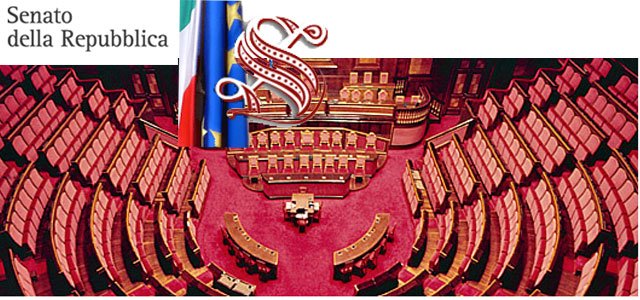
Cold fusion. The ‘E-Cat and LENR all devices subject of a new parliamentary question. The act formally presented to the Minister of Education, Universities and Research on March 4, was signed by some members of the 5 Star Movement, including Ivan Della Valle, currently the spokesperson of the party in the Chamber of Deputies.
The ladies, in particular, ask if the Minister “considers it appropriate to take action to allocate adequate funding for the activities taking place at universities and public research sector Italians LENR” and “if it intends to promote new research in the field of LENR.” The query joins previous signed by other political parties .
Della Valle and his colleagues start from the premise that the field of LENR now arouses great interest in the international arena, which is “the field of research in many laboratories around the world” and that there are concrete evidences that justify these efforts. A clear reference to the studies of Francesco Celani (quoted in fact the INFN).
And Rossi? The question he founded the premises, in fact, academic studies, probably because it addressed to the Minister of Research. And what by many is considered a problem, or the poor reproducibility of the results for Della Valle and his is an ‘opportunity, which should drive investment in the sector.
While waiting for the response of the Department, in the U.S. we are preparing for a large meeting on the occasion of the 25th anniversary of the conference of Fleischmann and Pons, dated March 23, 1989, during which the British researchers announced to the world that cold fusion was a reality, and therefore the energy problem of our planet might have a solution soon……
Related Links
Italian Senator lobbies Parliament for action
European Parliament ITRE committee meets over Fleischmann-Pons Effect

Rate this essay on cold fusion submitted to the Foundational Questions Institute, and give new energy your vote!
Cold Fusion May Have Revolutionary Potential by Jed Rothwell of LENR-CANR.org was submitted to the FQXi How Should Humanity Steer the Future? 2014 Essay Contest. Open to entries until April 18, 2014.
Go to http://fqxi.org/community/forum/topic/2000 to read the essay and comment.
Essay Abstract
Cold fusion is a form of nuclear energy produced in metals saturated with hydrogen or heavy hydrogen (deuterium). It has been replicated in hundreds of major laboratories, and these replications have been published in mainstream, peer-reviewed journals. This literature shows that cold fusion can generate heat at temperatures and power density equivalent to a fission reactor core. It has sometimes produced high power, 20 to 100 watts, in reactions that produced roughly 100,000 times more energy than any chemical fuel.
Download Cold Fusion May Have Revolutionary Potential [.pdf]
Author Bio
BA Cornell U. 1976 in Japanese language and literature Programmer and technical writer. Librarian at lenr-canr.org, an on-line library of 1,200 full text documents and a bibliography 3,500 items. Rothwell edited many cold fusion papers, especially for several ICCF conference proceedings. He translated several papers and one book from Japanese into English.
Japan marks the third anniversary of the Fukushima tsunami-quake disaster from Deutsche Welle.
“We have to engage in the preventative care” for the planet, says U.S. Senator Ed Markey, during an all-night filibuster towards a new energy policy. Markey has been contacted multiple times about the solution that cold fusion offers, but he has yet to take any action.
So on this sad day when the world careers from one disaster to another and solutions are ignored, and denied, Ralph Nader cuts through the image created by media programming to expose the mechanisms that operate to make that situation turn in favor of the powerful, instead of the wise.
http://www.democracynow.org/2014/3/12/nader_on_senates_climate_stance_insanity
Nader responds to the seemingly impending Keystone pipeline, the U.S. Nuclear Regulatory Agency, and Fukushima, a tragedy still unfolding. Amateur-lenr blogger and author Toshiro Sengaku has updated English readers with news about an effort to use nano-particles in radioactive waste clean-up.
“It’s not worth the risk! Just to boil water – just to produce steam! … Shut down the aging nuclear plants!” says Ralph Nader.
Unfortunately, he uses the word nuclear as a reference to all bad, all the time.
He says on Democracy Now with Amy Goodman how we need “fusion power … from the sun”.
He mentions Al Gore, who we know has openly offered cold fusion as a path to a green economy, but Mr. Nader said nothing about that.
Still, he inspired me to write about the opportunity we have to change our way living, change our bad habits – change everything, with any one of several breakthrough energy technologies, and the suffering that will only increase unless we do choose a different path for our species.
I haven’t been blogging lately, and there have been recent losses to the community of scientists with the passing of Emilio Del Giudice and Peter Graneau.
But Cold Fusion Now continues activities off-the-Internet. (Try it!) I will attend the 2014 LANR/CF Colloquium this March 21-23 to gather video for a feature film on the field. Along with Jeremy Rys, we will interview and document the historic 25-year anniversary of the announcement of cold fusion by Drs. Martin Fleischmann and Stanley Pons, who endured the hostility from their peers reserved only for the most courageous and bold of humans, those who dare speak the truth, honestly, and though disruptive a truth it may be, do not shy away from challenge and mystery, but act without malice and without fear to follow that truth wherever it may lead.
Twenty-five years and going stronger than ever, the breakthrough energy community is growing, and getting closer to a technology that will revolutionize our world and offer a second chance for humanity. The colloquium will bring some of the world’s top researchers together to talk about the progress, and the problems that remain.
From the New Energy Movement Seattle chapter’s John Coelho, here is a list of just some of the groups who are working on this science:
GROWING LIST OF CREDIBLE MAINSTREAM PEOPLE AND ORGANIZATIONS AFFIRMING WITH FIRST HAND KNOWLEDGE THAT LENR (COLD FUSION) IS REAL AND PRODUCES A NET ENERGY GAIN
· Vladimir Vysotskii, doctor of sciences, http://www.iccf17.org/popup/bio_23.htm
· Olga Drimitriveya, Phd. research scientist at Cool Essence http://www.linkedin.com/pub/olga-dmitriyeva/4/b72/910
· Arik L. Boher, physicist, University of Missouri Group Leader- Research https://www.youtube.com/watch?v=Yb2M4a-gDyY
· David J. Nagel, physicist, Naval Research Lab, Professor George Washington University http://coldfusioninformation.com/personalities/david-j-nagel/
· John Fisher, physicist https://www.youtube.com/watch?v=3jQ_xDqHfQM
· Pamela Mosier-Boss, visiting scientist at MIT. https://www.youtube.com/watch?v=HbA6ZH8AiN4
· Dr. Larry Forsley, physicist’ is president of JWK International Corporation and CTO of Global Energy Corporation (GEC). Previously, he was a group leader with the Laboratory for Laser Energetics engaged in inertial confinement fusion (ICF, or, laser fusion) at the University of Rochester in Rochester, NY. He was a consultant to the Lawrence Livermore National Laboratory mirror fusion program, TMX-U, in Livermore, California and a visiting scientist on the ASDEX Tokamak at the Max Planck Institut fur Plasmaphysik in Garching, Germany. http://iccf17.org/popup/bio_6.htm
· Dr. Mitchell Swartz, physicist https://www.youtube.com/watch?v=5Oab9COjOvM
· DR. Brian Josephson, Nobel Prize Theoretical physics, Cambridge https://coldfusionnow.org/nobel-laureate-brian-josephson-affirms-support-for-e-cat-ht/
· •Dr. Julian Schwinger, Nobel Prize Physics, Berkeley, Purdue, deceased http://en.wikipedia.org/wiki/Julian_Schwinger
· •Dennis Bushnell, NASA chief scientist, Langley Research Center, LRC http://www.lenrnews.eu/dennis-bushnell-lenr/
· •Dr. Joseph Zawodny, NASA senior research scientist Langley Research Center http://climate.nasa.gov/news/864
· •Dr. Michael A Nelson, NASA LENR Space Applications Lead http://www.youtube.com/watch?v=djBIWTsnwjY&noredirect=1
· •David Wells, NASA LRC, Aeronautical engineer
· •Gustave C. Fralick, Arthur J. Decker, and James W. Blue, NASA Lewis Research
· •George Miley, University of Illinois, Department of Nuclear, Plasma, and Radiological Engineering http://en.wikipedia.org/wiki/George_H._Miley
· •Dr. Mike McKubre, SRI (Stanford Research Institute), Director Energy Research Center, University of Missouri http://en.wikipedia.org/wiki/Michael_McKubre
· •Dr. Francis Tanzella, SRI, PhD chemistry, senior electrochemist http://www.iccf17.org/popup/bio_22.htm
· •Dr. Brian Ahern , Ames National Laboratory http://nextbigfuture.com/2011/06/brian-ahern-getting-8-watts-in-low.html
· •Prof. Peter Hagelstein, Electrical Engineering, MIT http://en.wikipedia.org/wiki/Peter_L._Hagelstein
· •Dr. James Truchard, National Instruments founder, President and CEO https://coldfusionnow.org/james-truchard-opening-niweek-2012-ni-gives-free-labview-to-cold-fusion-scientists-since-1989/
· •Edmund Storms, Los Alamos National Laboratory http://www.infinite-energy.com/images/pdfs/stormsinterview.pdf
· •Dr. Mace, Los Alamos National Laboratory
· •John Bockris, electrochemist Texas A&M University http://en.wikipedia.org/wiki/John_Bockris
· •Dr. Francesco Piantelli, University of Siena, Considered the father of modern LENR, filed original patents in 1995 for Ni/H based LENR http://coldfusion3.com/blog/piantelli-files-international-lenr-patent-application
· •Dr. Sergio Focardi, emeritus professor University of Bologna http://en.wikipedia.org/wiki/Sergio_Focardi
· •Dr. Giuseppe Levi , University of Bologna http://coldfusion3.com/blog/giuseppe-levi-goes-on-record-to-discuss-e-cat
· •Dr. David Bianchini, University of Bologna
· •Dr. Christos Stremmenos, University of Bologna, Dept of. Physical and Inorganic Chemistry, retired
· •Francesco Celani, National Institute of Nuclear Physics (Italy’s equivalent of Los Alamos http://www.iccf17.org/popup/bio_5.htm
· •Dr. Frank Gordon, US Navy’s Space and Naval warfare systems (SPAWAR), retired
· •Eugene Mallove (late), Professor of science MIT http://en.wikipedia.org/wiki/Eugene_Mallove
· •Dr. Mastromatteo, STMicroelectronics http://www.lenrproof.com/slide_05.html#sthash.opm2RlWn.dpuf
· Hanno Nessen, Chairman of Swedish Royal Academy of Science , board member and previous chairman of Swedish Skeptics Society http://coldfusion3.com/blog/swedish-scientists-think-e-cat-is-for-real
· Cherokee Investment Partners/Industrial Heat (http://ecat.org/tag/cherokee-investment-partners/ )
· DARPA Defense Advanced Research Projects Agency http://energycatalyzer3.com/news/leading-researcher-says-he-has-replicated-at-least-five-lenr-technologies-for-us-government-admits-working-for-darpa-2
· NASA http://climate.nasa.gov/news/864
· MIT http://www.lenr-coldfusion.com/2013/01/26/mit-cold-fusion-101-videos/
· Los Alamos National Laboratory http://searcher-green.lanl.gov/search?q=cold+fusion&btnG=Search&client=outside_lanl&proxyreload=1&proxystylesheet=outside_lanl&output=xml_no_dtd&x=8&y=5&ulang=en&sort=date%3AD%3AL%3Ad1&entqr=3&entqrm=0&entsp=a&oe=UTF-8&ie=UTF-8&ud=1)
· SRI International http://coldfusioninformation.com/organisations/sri-international/
· University of Missouri http://energycatalyzer3.com/news/cold-fusion-research-starts-at-the-university-of-missouri
· The British Columbia Provincial Government and Canadian Federal Government working with:
· Defkalion a private LENR corporation http://nickelpower.org/2013/04/10/my-visit-to-defkalion-canada/
· Robert Duncan, physicist, vice president for research at Texas Tech (http://en.wikipedia.org/wiki/Robert_Duncan_(physicist) http://coldfusion3.com/blog/lenr-champion-to-leave-post-at-university-of-missouri
· Ray Bradbury (late)_, science fiction writer with uncanny predictive powers in terms of scientific developments (http://en.wikipedia.org/wiki/Ray_Bradbury
· The Space Naval Warfare Systems unit of the US Navy. http://coldfusioninformation.com/organisations/spawar/
· Garrett Moddel, professor University of Colorado- Boulder http://ecee.colorado.edu/fac_staff/personnel_pages/moddel.html
· John Dash, PhD professor emeritus of physics Portland State University http://www.pdx.edu/physics/john-dash-0
· The Mitsubishi Corporation http://indico.cern.ch/event/177379/material/slides/5
· The American Chemical Society http://www.newenergytimes.com/v2/books/2009-LENR-Sourcebook/2009-LENR-Sourcebook.shtml
· Cool Essence LLC 2450 Central Avenue # F, Boulder, CO 80301
Compiled by John Coelho
NEW ENERGY MOVEMENT-Seattle
Contact