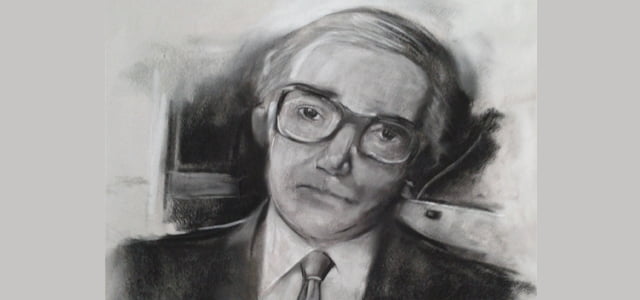
“One of the greatest contributions made to science”

Portrait of Martin Fleischmann by Winston August 2012

Infinite Energy Magazine Issue #117 highlights the new book Developments in Electrochemistry Science Inspired by Martin Fleischmann with the chapter on cold fusion written by veteran Navy scientist Melvin Miles and Michael McKubre, Director Energy Research Lab at SRI International, both of whom collaborated with Martin Fleischmann on cold fusion research for over a decade.

Read the original article here.
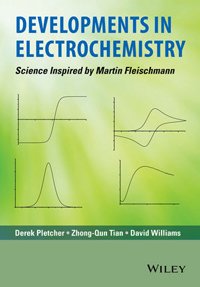
Science-Inspired-200x287New Book Honors Scientific Legacy of Fleischmann
by Christy L. Frazier

A new book honoring the scientific legacy of the late Prof. Martin Fleischmann has just been published by John Wiley & Sons. Developments in Electrochemistry: Science Inspired by Martin Fleischmann is edited by Derek Pletcher, Zhong-Qun Tian and David E. Williams, with 19 chapters (including the Introduction) about electrochemistry-related science written by electrochemists. Infinite Energy readers will be particularly interested in the chapter written by Melvin Miles and Michael McKubre, “Cold Fusion After a Quarter-Century: The Pd/D System.” Miles notes that he was picked as the cold fusion author and asked McKubre to assist him. He said he may have been chosen because he is “the only one other than Stan Pons who has written papers with Martin Fleischmann about calorimetry and the palladium-deuterium system.” Miles co-authored a number of papers during the last part of Fleischmann’s career.

Wiley’s website describes the book as “neither a biography nor a history” of Fleischmann’s contributions but rather a “series of critical reviews of topics in electrochemical science associated with Martin Fleischmann but remaining important today.” The chapters begin with an outline of Fleischmann’s contribution to the topic, followed by examples of research, established applications and prospects for future developments.

Editor Derek Pletcher worked with Fleischmann for 15 years at the University of Southampton. The book project was initiated because, “We believe Martin to have been a leading international scientist with very broad interests and a very warm personality and that we had benefitted greatly from our association with him (this includes some who were/are strongly anti cold fusion). We were therefore seeking a way to honor his memory and this became the book.”

The editors’ introduction, “Martin Fleischmann: The Scientist and the Person,” highlights great respect for Fleischmann’s approach to science and forward-thinking skill. They write: “Often his ideas were ahead of the ability of equipment to carry out the experiments, and it was only a few years later that the ideas came to fruition and it became possible to obtain high-quality experimental data.”

One of the editors, David Williams, was on the team at Harwell Atomic Energy Laboratory that purported to have negative results in replicating the cold fusion effect in 1989. Yet, in the Introduction the basic story of cold fusion is laid out and Fleischmann’s willingness to the end of his life in August 2012 to “defend the underlying concepts as well as his experiments” is recorded. They conclude, “It is inevitable and appropriate that this book contains a chapter on cold fusion that takes a positive view.”

McKubre appreciates the editors’ willingness to include what became a major part of Fleischmann’s scientific legacy. He said of the book, “This was a first class endeavor. I am very happy that it was done, and that cold fusion was included. At the end of Julian Schwinger’s life they rewrote his biography and reedited his bibliography to exclude mention of cold fusion. It is great to see that the electrochemistry community is not as narrowminded as the nuclear physics community seemed to be.”

The cold fusion chapter by Miles and McKubre focuses on “the multithreshold materials constraints that prevented easy reproducibility” of the Fleischmann-Pons (F-P) heat effect and the “brilliant, but largely not understood, implementation” of the F-P calorimeter. They note that some will believe that cold fusion “represents Martin Fleischmann’s greatest scientific failure.” They argue that the work may instead be one of the greatest contributions that Fleischmann made to science, noting that “few would have had the vision to see such a possibility, the courage to pursue it and the skill to test it” and that the F-P heat effect “is the sort of invention that only a man of Fleischmann’s knowledge, genius, confidence and courage was capable of making.”

Miles and McKubre conclude that “the future of Fleischmann’s dream must be practical, and therefore the heat effects must be cheaper, easier and of much larger scale and gain.” Future experiments are likely to utilize small-dimension materials including metals other than palladium in high-temperature.

Other chapters in the book include: A Critical Review of the Methods Available for Quantitative Evaluation of Electrode Kinetics at Stationary Macrodisk Electrodes; Electrocrystallization: Modeling and Its Application; Nucleation and Growth of New Phases on Electrode Surfaces; Organic Electrosynthesis; Electrochemical Engineering and Cell Design; Electrochemical Surface-Enhanced Raman Spectroscopy; Applications of Electrochemical Surface-Enhanced Raman Spectroscopy; In-Situ Scanning Probe Microscopies; In-Situ Infrared Spectroelectrochemical Studies of the Hydrogen Evolution Reaction; Electrochemical Noise: A Powerful General Tool; From Microelectrodes to Scanning Electrochemical Microscopy; In-Situ X-Ray Diffraction of Electrode Surface Structure; Tribocorrosion; Hard Science at Soft Interfaces; Electrochemistry in Unusual Fluids; Aspects of Light-Driven Water Splitting; Electrochemical Impedance Spectroscopy.

Developments in Electrochemistry: Science Inspired by Martin Fleischmann is available in hardcover ($115) and e-book format ($92.99) from the publisher at http://www.wiley.com/WileyCDA/WileyTitle/productCd-1118694430.html, and is also available on Amazon. According to editor Derek Pletcher, proceeds from sales will be used to fund a Biannual Fleischmann Lecture at the Annual Conference of the Electrochemistry Group of the Royal Society of Chemistry.

Related Links
“Science Inspired by Martin Fleischmann”

Martin Fleischmann in 10 minutes

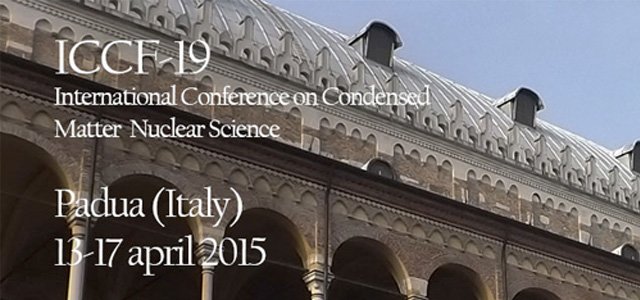
New dates announced for ICCF-19

The 19th International Conference on Condensed Matter Nuclear Science (ICCF-19) will be held on new dates April 13-17, 2015 in Padua, Italy.

A website iccf19.com is now under construction.


New! A Brief History and Introduction to the International Conference Series
First part – From ICCF1 to ICCF3
by Michael McKubre


At this time, you can sign-up for the newsletter to receive information as it happens. According to the timeline, special rates for hotels must be booked by March 13, 2015.

ICCF-19 “New approach on Material Investigations“ is organized by TSEM SpA, an Italian company involved in “the research, design and manufacture of innovative technologies in the areas of Healthcare, Energy and Security.” Support is also provided by Confindustria Padova, “which represents Italian manufacturing and services companies…”

A message from conference chair Antonio LaGatta, a TSEM Founder and Engineer, welcomes participants:

It is my pleasure to welcome you to the 19th edition of the International Conference on Condensed Matter Nuclear Science: ICCF-19.

TSEM is the first private company to independently host ICCF and, as Founder and President, I’m proud to be part of a science and organization that will certainly have significant impact both in the short and long term on everyday life.

This conference looks to continue the evolutive tradition that has been the hallmark of past conferences. Results achieved during previous years have been phenomenal and ICCF-19 presents an opportunity to not only reemphasize the importance of this scientific field, but also to generate and encourage fresh perspectives that reflect how CMNS can change the world.

The purpose of ICCF-19 will be to discuss recent scientific findings as well as to encourage a more general public interest, encouraging a better understanding of the significance of this research and how it will impact society. We will move to accomplish this in part by utilizing the Italian Media and international press, both in science and non-academic media outlets.

Another innovation within ICCF-19 is the establishment of a new committee: The Engineering Applications Committee. The EAC appointees are engineers and investors whose goal is to form a bridge between academia and industry thereby encouraging the generation of products derived from years of scientific research.

Researchers will meet companies seeking to form cooperative partnerships to encourage technological development and industry formation. Research is critical and it is now time to look towards market readiness for CMNS and all its related technologies.

As we near the conference dates, continue to browse the ICCF-19 website for updates on the homepage and please follow our newsletter.

Thank you for your interest and I look forward to welcoming each of you in Padua, Italy, for what will certainly be a revolutionary ICCF-19.

Antonio La Gatta
General Chair, ICCF-19
Engineer and Professor
TSEM Founder

A link to the Padua Visitor’s and Convention Bureau is also provided.

See you there!

“The Explanation of LENR” book review by Nikita Alexandrov

Book Review of The Explanation of Low Energy Nuclear Reaction by Nikita Alexandrov, President of Permanetix Corporation, was originally published in Infinite Energy Magazine issue #117 September/October 2014 and is reproduced here.


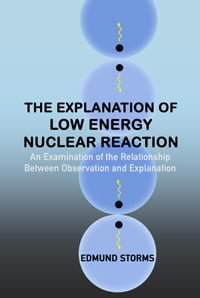
Dr. Edmund Storms, one of the foremost experts in cold fusion/LENR research has recently published a new book titled The Explanation of Low Energy Nuclear Reaction: An Examination of the Relationship Between Observation and Explanation. Dr. Storms worked at Los Alamos labs for 34 years studying energy related chemistry, specifically advanced nuclear projects. This book is currently the most up-to-date compilation of LENR research and contains over 900 references, but is written in such a way that it is organized and conducive to a well rounded understanding.

According to the preface by Dr. Mike McKubre of Stanford Research Institute, “There is no better synthesis of knowledge and understanding presently available to us and I know of no other person capable of making an evaluation at this level.” While this could be considered a reference material for experimental results, it differs from Dr. Storms’ previous books in that it introduces his theory of the mechanism behind the LENR effect, an oscillating linear cluster of two or more hydrogen or deuterium atoms called the Hydroton.

Front-cover-300ppi-200x298The first half of the book contains a wealth of knowledge regarding the experimental results obtained in the field. This includes the physics of the various experimental systems as well as an overview of instrumentation and general trends in the collective data. There are a large amount of pictures and graphs which really help to mentally process some of the complex relationships in the data. This section of the book is critical for anyone interested in LENR because it organizes and condenses the experimental procedures and results in a way which makes the huge amount of seemingly contradictory research much simpler to understand.

Dr. Storms takes a first-principles approach and imposes certain limits on the parameters of LENR theory based on what has been observed and basic chemical and physical principles. The experimental techniques used in the field are explained as well as the limitations and some reasons all of the facets of the LENR effect have eluded researchers. An overview of the physics of radiation from various nuclear reactions which may be present is very helpful in explaining the odd experimental results of the field. It is proposed that only a few types of radiation are produced directly from the LENR reaction but secondary radiation is produced from either the interaction of radiation with other matter in the system, traditional nuclear effects such as fractofusion (example: Ti-D experiments) or combination fusion-fission reactions (very unique part of the Hydroton theory). Dr. Storms goes into detail about how he believes various triggering methods initiate or improve the production of the LENR effect.

Hydroton-vertical-chain-137x800Dr. Storms’ theory revolves around a linear oscillating cluster of two or more hydrogen or deuterium atoms called a Hydroton. Under certain conditions this structure forms in the nano-cracks of metallic substrates. This differs significantly from the early theories of LENR in that it does not take place in the metallic lattice. Many theories are based on the fact that hydrogen or deuterium loaded into a metallic lattice inherently become pushed very close together, a shortcut towards fusion. These same theories require that the nuclear energy be communicated directly from the nucleus to the electrons (lattice) which is not unheard of but is not a traditional nuclear pathway and requires a complex explanation. Dr. Storms examines the lattice vs. nano-crack argument from a chemical, thermodynamic and transport standpoint, pulling from what we know of nuclear product production in LENR and the physics and chemistry of hydride/deuteride systems.

Dr. Storms insists that it is simply not possible to both produce fusion and dissipate the energy inside of a lattice. His model does not rely on energy dissipation via the lattice but through a steady release of bursts of low energy photons as the Hydroton oscillates and fusion occurs. Another significant difference compared to most theories is that it explains the different results obtained using deuterium vs. using hydrogen via two different mechanisms. This is important because many early theories only focused on deuterium fusion ignoring hydrogen all together, but modern experiments show that hydrogen does indeed participate in the LENR effect.

Lastly, Dr. Storms explains the various methods of producing transmutation products, either via a fusion-fission reaction of a hydrogen containing Hydroton or by the substrate atoms becoming part of the Hydroton in deuterium containing Hydrotons. The mechanism producing tritium and helium is explained in detail as well, but will not be explained here. Dr. Storms’ theory explains all known aspects of LENR in a very new way, not requiring the limitations of the mechanism taking place directly in the substrate lattice.

This theory is testable in various manners. Dr. Storms makes some suggestions in the book including the confirmation of predicted transmutation products as well as the detection of soft radiation such as low energy photons, betas, alphas and energetic ions. Dr. Storms points out that the reason radiation is not often detected is that the expected types and energies of radiation can simply not be detected outside of the experiment, requiring in-situ soft radiation detectors. So far it seems that experimental results line up with Dr. Storms’ theory but since his theory was built around this data it is important that future experiments be compared to what is expected using his model. Single or multiple deuterium addition to the substrate in deuterium containing Hydrotons, or fusion-fission products in hydrogen containing Hydrotons, would be expected and a good place to examine the theory experimentally.

Overall this is an excellent theory which can make some predictions; it will not allow us a complete mastery of LENR but is a large step in the right direction. Most of Dr. Storms’ theory is based on traditional physics and chemistry but there are certain aspects which are not fully understood, specifically how a Hydroton releases controlled bursts of photons at very low energies before the completion of the fusion process. This is the sticking point of LENR theory—it is not so hard to explain how two atoms fuse, but how they release their huge amount of energy without creating standard hot fusion products and detectable radiation as well as destroying the lattice local where the event took place.

By investigating experimental results and applying his physics and chemistry understanding, Dr. Storms is able to produce some basic equations which explain the power produced by LENR systems and show optimal operating conditions. Like everything else Dr. Storms produces, these equations are created using first principles and basic science; a Ph.D. is not required to wrap your head around this book as well as his theory in general.

Dr. Storms’ book contains a chapter of modern theories of LENR including limitations and possible shortcomings. This inventory of theories is great because it provides an excellent balanced overview of the field from a theoretical standpoint. This combined with the overview of the field from an experimental standpoint makes this the best reference book in the field of LENR. This book is highly recommended for anyone from the student interested in learning about LENR for the first time to highly trained scientists working in the field of LENR. There will be no disappointment in the level of detail and with over 900 references it provides an incredibly organized wealth of information regarding LENR experiments and theory.

The final chapter “Future of LENR” provides a road-map forward, listing the requirements for mastering the LENR effect as well as what needs to be done experimentally to get there. One thing the book does not mention is that Dr. Storms is ready and willing to put his LENR skill-set and understanding to the ultimate test—along with other researchers Dr. Storms has proposed an experimental research program to further the understanding of LENR. Dr. Storms is currently in the process of raising money for this research program and at millions of dollars per year, this could be the Manhattan project of LENR. The only thing standing between mankind and a guaranteed increased understanding of LENR is research funding and public awareness. I urge anyone interested in LENR to inform others about this book and the field in general and those which are financially independent to contact Dr. Storms about his research proposal. — Nikita Alexandrov, Permanetix Corporation

Read the original article published on Infinite Energy.

Related Links

The Explanation of LENR Homepage http://lenrexplained.com/

Nikita Alexandrov Advanced analytic and highly parallel Cold Fusion Experimentation [.pdf] presented at the 2014 CF/LANR Colloquium at MIT.

Joint Institute of Nuclear Research cold fusion seminar video

Dr. Edward Tsyganov of Cold Fusion Power presented a Cold Nuclear Fusion Seminar at N. N. Bogolyubov Laboratory of Theoretical Physics (BLTP) 2014 in Dubna, Russia.

Powerpoint files of the presentation can be found here.

A video news report on the event was posted by the Joint Institute for Nuclear Research JINTV here and on Youtube here

A transcript of the video news report was provided by Scientific Information Department JINR 2014 and is reproduced below:

The seminar, which dealt with cold nuclear fusion, took place at the Laboratory of Theoretical Physics of the Joint Institute for Nuclear Research. In his report, Professor Edward Tsyganov gave a possible explanation of the effects observed in numerous experiments. The scientist was asked many questions. Currently, physicists believe that there is no conclusive evidence for the existence of cold fusion. However, cold fusion studies continue to be carried out in various countries in order to discover and secure an inexhaustible supply of nuclear energy.

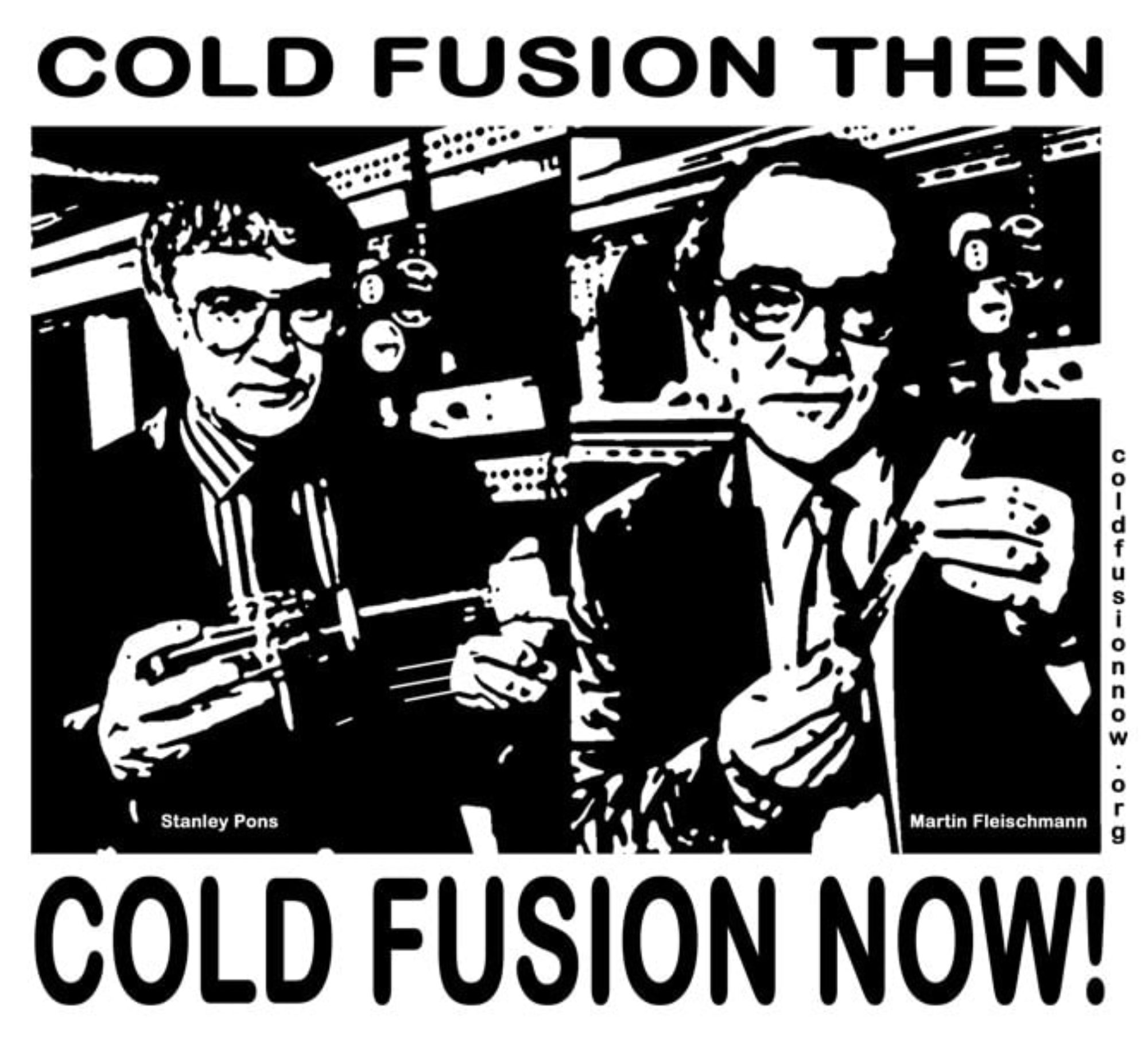
It all started with a report by chemists Martin Fleischmann and Stanley Pons on electrochemically induced nuclear fusion—the conversion of deuterium to tritium or helium through electrolysis using a palladium electrode. This report, which appeared in March 1989, caused quite a stir. The scientists observed neutron emission and the recovery of large amounts of heat, which are signs of nuclear processes. However, the scientific community believes that their claims are incomplete and inaccurate. So-called cold fusion established itself as a pseudoscience; however, after a public demonstration of the experiment using electrochemical cells in 2008 by Yoshiaki Arata of Osaka University, discussions on cold fusion began to appear again.

Known nuclear fusion reactions—thermonuclear reactions—take place in plasma at temperatures of millions of degrees Kelvin. So-called cold nuclear fusion assumes the possibility of nuclear fusion reactions in chemical (atomic and molecular) systems without significantly heating the working substance. However, most chemists and physicists are trying to find an alternative (non-nuclear) explanation for the phenomenon.

Professor Edward Tsyganov remarked that, when saturating conductive crystals with deuterium atoms, the presence of free electrons in the crystal potential niches leads to a ban for the unexcited deuterium atoms to occupy these niches. At the same time, even the first excitation level of deuterium atom removes this ban. When all of the potential niches have already been filled by deuterium atoms at least once, further saturation of a crystal with deuterium atoms gives rise to twin clusters of atoms in one such niche.

In most of these clusters, deuterium nuclei are pulled together to distances of 1/10–1/20 of the nominal size of these atoms. The zero level of quantum mechanics vibrations in the adjacent deuterium nuclei quickly leads to the penetration of the two deuterium nuclei through the reduced Coulomb barrier. The spatial orientation of the excited deuterium atoms in the crystal lattice is strictly determined with respect to one of the crystal lattice’s spatial directions.

The report also discussed the further dissipation of energy during the transition from the excited state of 4He* to the ground state–formed nuclei of 4He (~24 MeV).

This was the second seminar on the topic of cold fusion at JINR. About a year and a half ago, Professor Edward Tsyganov gave a similar talk at JINR. Both then and now, his report “DD fusion in conducting crystals” has caused heated debate.

–Scientific Information Department JINR 2014

Editor: Inna Orlova
Video: Igor Belvedersky

Related links:

Cold Fusion Power Dubna conference files

Appeal to Putin on cold fusion countered with “nothing new”

Open Power Association Newsletter #13: Lab photos and “magnacules”

The Open Power Association’s recently released Newsletter #13 contains a wealth of news and information touching upon science, politics and the environment. Below are selected excerpts of interest to cold fusion readers, google-translated and slightly modified to facilitate understanding.

Go to http://www.hydrobetatron.org/ to download a .pdf of the file.

*********************************
OPEN POWER WISHES HAPPY HOLIDAYS! (SEPTEMBER THERE WILL BE MORE GOOD NEWS)

London-lab
Open Power Laboratory is in full swing! See the whole gallery of photos here: http://www.hydrobetatron.org/


2-Schema-Santelli
Luciano Saporito: The new chemistry “magnecules” (a term coined by prof. Ruggero Maria Santilli) paves the way for an energy revolution unprecedented in the development of clean technologies and even able to restore the environmental balance strained by two centuries of use of traditional fuels. Even for the non-specialist it is possible to approach these issues by reading the book by RM Santilli “magnecular structure with the new fuels.”
Full article: http://www.hydrobetatron.org/files/02_VersB_Articolo_Ruggero-Maria-Santilli.pdf


3-Tesla-tower
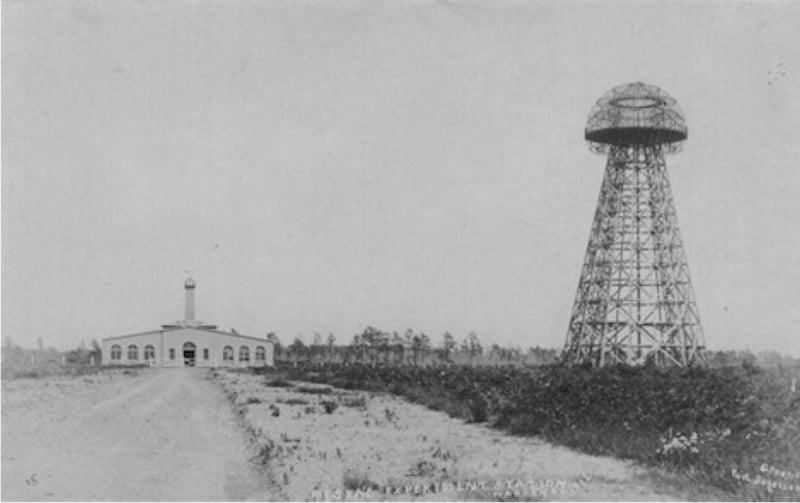
“RUSSIAN SCIENTISTS WANT TO REBUILD THE TOWER OF TESLA”
Full article: http://nexusedizioni.it/it/CT/scienziati-russi-vogliono-ricostruire-la-torre-di-tesla-4524


4-oil-rig
“The oil will run out by 2067”
Full article:
http://www.greenstyle.it/petrolio-si-esaurira-entro-il-2067 100048.html?utm_source=newsletter&utm_medium=email&utm_campaign=Newsletter:+Greenstyle&utm_content=15-07-2014+petrolio-si-esaurir-entro-il-2067

“Shale gas: California orders to stop fracking”
Full article:
http://www.greenstyle.it/shale-gas-california-ordina-stop-al-fracking-101630.html?utm_source=newsletter&utm_medium=email&utm_campaign=Newsletter:+Greenstyle&utm_content=21-07-2014+shale-gas-california-ordina-stop-al-fracking

“The war of Gas: behind the Israeli invasion of Gaza, there are fields”
Full article:
http://www.ilprimatonazionale.it/2014/07/22/la-guerra-del-gas-dietro-allinvasione-israeliana-ci-sono-i-giacimenti-di-gaza/

Picture: Foecardiff.co.uk
5
“Let them eat carbon. How Big Tobacco and Big Energy to build on the developing world ”
Full article: http://www.tzetze.it/2014/07/che_mangino_carbonio_in_che_modo_big_tobacco_e_big_energy_puntano_sul_mondo_in_via_di_sviluppo/

6-no-water“Water, a tempting resource that is going to end”
Full article: http://www.tzetze.it/2014/07/acqua_la_risorsa_che_fa_gola_a_tutti_sta_per_finire/

“WINTER BREAKS OUT IN THE USA (IN SUMMER), WHILE AT YELLOWSTONE ROADS MELT”
Full article: http://nexusedizioni.it/it/CT/negli-usa-scoppia-linverno-in-estate-mentre-a-yellowstone-si-sciolgono-le-strade-4522

Patrick Moore “EX EXPONENT GREENPEACE WORRIED ABOUT THE IMPENDING GLOBAL COOLING”
Full article:
http://nexusedizioni.it/it/CT/ex-esponente-di-greenpeace-preoccupato-per-il-raffreddamento-globale-imminente-4519

NASA is certain: “aliens exist”. Thanks to the new data and new telescopes, within a maximum of twenty years, astronomers could announce the breakthrough. “We are not alone in the universe.”
Full article:
http://www.tzetze.it/2014/07/la_nasa_sicura_non_siamo_soli_nelluniverso/

“Mystery on the Yamal hole; the hole appeared out of nowhere” in Siberian Russia
Video:
http://video.corriere.it/mistero-buco-yamal-voragine-comparsa-nulla/05f89f1a-09ea-11e4-bfee-4a37bea40287

“NASA: successful test of the” flying saucer “Mars”
Full article:
http://www.corriere.it/foto-gallery/scienze_e_tecnologie/14_giugno_30/nasa-test-riuscito-disco-volante-marte-ef9d878a-002f-11e4-9185-2e4a12f9e1bf.shtml

“Phones in Space”
A next-generation smartphone will be the heart of a small robot that will start in a few hours for the ISS. Here’s what will be its tasks and the live video of the launch.
SPEHERES, the robot with the brain … Google. | NASA / AMES
Full article:
http://www.focus.it/tecnologia/innovazione/cellulari-nello-spazio

“Stella, the solar powered car”
He has developed a group of students dell’Eindhoven University of Technology
Video, Full article:
http://www.lafucina.it/2014/07/21/stella-lauto-ad-energia-solare/

Air conditioning heat pump DIY: Just a little time and less than 50 €
Video and Article:
http://www.lafucina.it/2014/07/23/aria-condizionata-pompa-calore-fai/
.
.
.
L. S.

Open Power Association Newsletter #12: 400+ parameter tests and a model

The Open Power Association at Hydrobetatron.org published Newsletter #12. The original newsletter N 012_Luglio_2014_Ottimizzato in Italian is here.

Excerpts below are google-translated to English, then, in some cases, slightly smoothed out.

********************************************
Dear Friends, there is much news this month!

open-power1
It is a matter of pride for us, as well as honor, be able to announce that Our Scientific Director Ugo Abundo has been officially invited as a speaker at: “First International Workshop on on Nuclear Syntheses Without Harmful Radiations”
Organizers: A. Bhalekar (India), C. Rope (Italy), and T. Vougiouklis (Greece)
http://www.santilli-foundation.org/ICNF-ECNAAM-2014.php

Session 110 of the ICNAAM meetings in Rhodes, Greece, September 22 to 26, 2014
http://www.icnaam.org/sessions_minisymposia.htm
TITLE: An Intrinsically Irreversible, Neural-network-like Approach to the Schrödinger Equation and some Results of Application to Drive Nuclear Synthesis Research Work

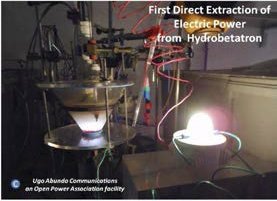
Direct-Extraction-Electricity2
010 NEW REPORT: Open Power Association Main aspects in the modeling of an electrolytic cell: effect of parametricoinvolti.

Study of Anomalies [.pdf]
Theoretical Analysis: Prof. Michele Di Lecce
Experimental Campaign: Prof. Ugo Abundo

It is also experimental evidence for the presence of anomalies that existing partial models do not wholly explain, first of all the “negative resistance” that many cite as a condition for the possibility of direct extraction of electrical energy from the natural oscillations of the plasma.

This report also analyzes the main aspects of the behavior of an electrolytic cell, in order to gain a following consistent pattern that frames the role of the parameters involved, and operational status, the complexity of the response to the operating conditions.

The data of the experimental campaign (more than 400 structured tests) conducted by varying the interelectrode voltages, the exposed electrode surfaces, the interelectrode distance, the temperature, the concentration of electrolyte, reading the resulting intensity of the circulating current and detecting any scintillations to the cathode and electromagnetic waves (frequency and intensity) show different anti-intuitive aspects.

It will be the task of a subsequent report grant the concomitant phenomena, and often antagonists, in order to obtain a model of the mechanisms, with some parameters to be estimated by means of ad-hoc tests, usable as a forecasting tool for the design and operation of equipment for plasma electrolytic.

To a classical scheme of the electrolytic cell and its power supply system, is added, in parallel to the electrodes, a series RC circuit with the load (lamp), to which the alternating voltage is monitored extremes generated, which turns on the lamp.
Full report: http://www.hydrobetatron.org/files/REPORT-n.-10_Ottimizzato.pdf

3
We are pleased to announce that by unanimous decision the Executive Our Association “Open Power” resolved to ‘inclusion as Honorary Member of: Prof. Walter A.N. Valeri “For scientific merit and Scholars”

MFMP-nominated-Nobel-Peace-Title

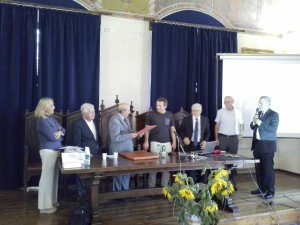
MFMP-NOBEL-PEACE-NOMINATION4 In the scope of the conference “Innovation and Research” held in Assisi June 28 last was the official candidate of the MFMP (Martin Fleischmann Memorial Project) and Francesco Celani for the Nobel Peace Prize.

“Innovation Research Conference on the trails of Matter and Spirit,” Gen. Murace delivery to Bob Greenyer, Francesco Celani and Ubaldo Mastromatteo for Live Open Science for Peace.
video: http://www.francescocelanienergy.org/

5
ALWAYS PRESENT! Interviews with major initiators of cold fusion in Italy:
Profs. Giuliano Preparata, Emilio Del Gudice and other researchers with limited funds braving the hostility of the official academic culture and started the first fundamental studies that have contributed to the present results. The interviews were extracted from a RAI program: Format of a few years ago.
VIDEO: http://www.youtube.com/watch?v=0_sHXk2ixbc

Brown6
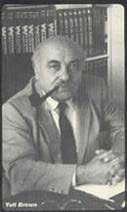
WE ARE PLEASED TO ANNOUNCE ALSO THE MANAGEMENT OF OPEN POWER HAS RESOLVED THE ‘START OF A TRIAL ON THE BROWN GAS

Segnialimo ‘s article by Luciano Saporito on Brown’s Gas: Yull Brown (an Energy for the Future)
Full article: http://www.hydrobetatron.org/files/GAS-DI-BROWN_Articolo.pdf


gravity7
ARTICLES PUBLISHED IN THE SECTION OF HYDROBETATRON.ORG
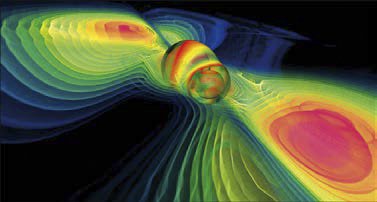
PROF. CHRISTIAN ROPE ON GRAVITATIONAL WAVES “GRAVITATIONAL RADIATION OF FUND AS SNAPSHOT OF THE UNIVERSE PRIMORDIAL” Much has been made recently of the so-called gravitational waves, also because of the ‘”Antenna” for the detection of the same which is under construction in Cascina, near Pisa, the famous Project VIRGO …
Full article: http://www.hydrobetatron.org/files/ChristianCorda.pdf

8
“Turn Tesla patents car open-source” Elon Musk, we free the way for the creation
ARTICLE copleto: http://www.ansa.it/sito/notizie/tecnologia/hitech/2014/06/13/svolta-tesla-brevetti-auto-open-source_53a6368d-06f9-4db0-ac03-0b569dd6d28b.html

“Bicycles in the anti-aircraft bunker, when saved the life cycle”
The ancestors of our bike-generators come from the bunker of World War II, where pedaling meant to ensure the continuity of ventilation systems and ventilation
Full article: http://www.tzetze.it/2014/07/biciclette_nei_bunker_antiaerei_quando_pedalare_salvava_la_vita/

9
“Environmental Crimes 213 billion a year”
Did you know that the global environment-related crime in the name of profit goes over to any rules and rule on the enforcement of ecosystems has a turnover of about 213 billion dollars every year?
photo: unimondo.org
Full article: http://www.tzetze.it/2014/07/crimini_ambientali_per_213_miliardi_di_dollari_lanno/

New Law on Forests: Here comes the green light in the Lombardy Region for minorities and associations: “Easier to cut the woods»
Full article: http://milano.corriere.it/notizie/cronaca/14_luglio_09/nuova-legge-foreste-arriva-via-libera-regione-bda1f196-073f-11e4-99f4-bbf372cd3a67.shtml

10
“Greenhouse gas emissions: just 18% from the livestock sector”
The FAO report: “In his 2006 report ‘Livestock’s Long Shadow’, – true milestone on the subject – FAO had found that 18 per cent of all greenhouse gas emissions were caused by the livestock sector, taking into account the entire life cycle aggregate. The final report on greenhouse gas emissions will take the same approach, but using updated data and providing a disaggregated analysis of the different production systems, as well as indicating solutions for manufacturers, for the processing industry and for the political organs. ”
Full article:
http://www.lafucina.it/2014/07/09/emissioni-di-gas-serra-18-solo-da-settore-zootecnico/

“THE SECRET OF SHAME ALEMA” FEPES (Foundation for European Progressive Studies
2008 to present, the FEPS has received 16.7 million Euros!
Massimo D’Alema is committed to the FEPS, Foundation for European Progressive Studies. The former prime minister has been president since 2008.

And the public support for our Open Power Association, which is responsible for identifying energy “cheap, clean, inexhaustible”? ZERO EURO! How so?? This type of research study is unimportant? Or maybe we are not as good as those of the “FEPES”?!

“But all this confirms the mechanism of a double-track EU austerity for citizens and then payments to parties and foundations” … D ‘Alema help you …
Full article: http://www.tzetze.it/redazione/2014/06/il_vergognoso_segreto_di_dalema/index.html

11
DOES NOT SEEM REAL: “At the expense of our 70 nuclear warheads on the Italian territory”
According to a survey by L’Espresso, Italy is by far the country which holds the highest number of U.S. nuclear weapons.
Full article: http://www.tzetze.it/2014/07/a_spese_nostre_70_testate_nucleari_presenti_sul_territorio_italiano/

******************

See also:

Open Power Association Newsletter #11

Open Power Association Newsletter #10

Q&A with Ugo Abundo on forming the Open Power Association

Top