Open Power Newsletter #15: E-Cat analysis by Ugo Abundo

The Open Power Association at Hydrobetatron.org has published Newsletter #15 devoted to the E-Cat test report.

A .pdf of Newsletter #15 in the original Italian can be downloaded from Hydrobetatron.org.

The newsletter begins with a Review by Luciano Saporito of a new paper by Ugo Abundo hypothesizing on the E-Cat reaction. We reproduce the full Review here in English and also provided are links to two Abundo reports on the E-Cat.

********************************************************************************************

About the Ugo Abundo’s hypothesis for explaining and enhancing Rossi’s E-Cat reactions, via R.M.Santilli’s Neutroids
By Luciano Saporito
OpenshareLAB
Open Power Association Rome, Italy

In the original paper “Representation and Enhancement of the Excess Energy of Rossi’s Reactors via Santilli’s Neutroids and Nucleoids”, Ugo Abundo proposes a hypothesis for explaining reactions involved in Andrea Rossi’s E-Cat reactor, based on Nucleoids and Neutroids of R. M. Santilli.

Such a hypothesis, in the opinion of the writer, is very important from the scientific viewpoint, because of Andrea Rossi, standing the related trade secret strategies, at date maintains undisclosed the nature and function of the unknown substance that catalyzes the behaviour of E-Cat reactions towards its extraordinary performances. Consequently, the third-party tests on the reactor, at date, cannot be considered scientifically complete and exhaustive , owing to the lack of knowledge about all parameters involved in the reactor operation.

Exclusive finality of the above mentioned tests is verifying and certifying the continuous operation of the reactor and the related COP. Indeed, such results were awaited by researchers of the field and public opinion since beginning of Rossi’s claims.

It should be noted that the novel independent report dealing with the Rossi’s reactor performances: http://www.sifferkoll.se/sifferkoll/wp-content/uploads/2014/10/LuganoReportSubmit.pdf shows transmutations that cannot be explained via Quantum Mechanics, specially owing to the impossibility of proton skipping the coulombian wall and the inadequate cross-section about proton electronic capture in the operating conditions.

On the other hand, considering both the energy concentration amounts and the isotopic changes shown in the comparative analysis between reactants and ashes, no doubt is allowed: low energy transmutations does occur.

Thus U.Abundo hypothesized a model according to which new neutron-like particles can interact with Lithium and Nickel nuclei, in the specific isotopic occurrence in the reactants, leading to the proper isotopic chain detected in the ashes.

The paper functionally reviews a systematic synthesis of research work of prof. Ruggero Maria Santilli by decades, since the founding of a new mathematics, then a new physics oriented towards the solving of the neutron structure problem, preliminary to the understanding of the change of viewpoint needed for conceiving and employing the models leading to the idea of neutron-like neutroids and their behaviour.

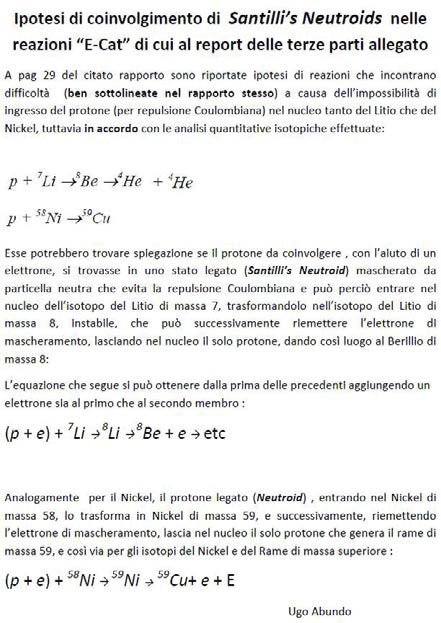
Now, we will recall page 29 of the above mentioned independent report, where some hypothesized reactions are detailed. The report explicitly underlines the impossibility that the reactions may occur, notwithstanding their capability to account for the observed quantitative isotopic content.

p + 7Li → 8Be → 4He + 4He

p + 58Ni → 59Cu

The reaction equations might result admissible if the proton to be involved, helped by an electron, were in a bound state (Santilli’s Neutroid) masked as a neutral particle, so avoiding the coulombian repulsion to enter into the 7Lithium isotope nucleus, turning it into the unstable 8Li one: the latter can thus experience a β-decay, holding the proton in the nucleus, leading to 8Beryllium, decaying into α particles.

The following equation can be obtained via the first of the previous ones, by simply adding an electron to both members:

(p + e) + 7Li → 8Li → 8Be + e → 2 α + E

The possibility of burning the 7Li isotope by employing neutroids is particularly relevant in the cosmological research field: indeed, in astrophysics a problem known as “Cosmological Lithium Depletion” is everywhere present.

It deals with the lack of interpretation about the observed 7Li presence less than the one as predicted by theories concerning the relative abundances of elements. The above mentioned considerations might represent a solution to the indicated discrepancy standing the chance, near the stars, of finding very high magnetic fields, in the regions involved with stellar prominences, of magnitude order greater than 1012 – 1014 Gauss, capable of inducing neutroid formation.

In a similar way, a bound proton (Santilli’s neutroid) can enter in a 58Nickel nucleus, turning it into 59Ni, emitting the masking electron, holding in the nucleus only the proton, thus generating 59Cu and so on, for higher mass Ni and Cu isotopes:

(p + e) + 58Ni → 59Ni → 59Cu + e + E

The neutron-like particles don’t need the notorious 0.782 MeV per proton, to turn it into a real neutron, capable to penetrate the target nucleus, thus leading to the transmutations to be explained.

Such particles, whose existence was firstly hypothesized by Don Carlo Borghi and successively theoretically justified and experimentally detected by R.M.Santilli, were called, by Don Borghi himself, “neutroids”.
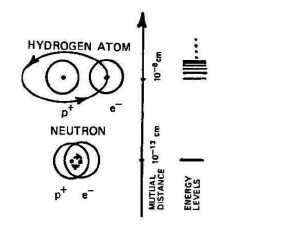
Fig-1
Fig, 1.Neutron as a Hydrogen atom Energy level. [from J. V. Kadeisvili, The Rutherford – Santilli Neutron, Hadronic Journal, 31, 1-114 Institute for Basic Research, Palm Harbor, Florida, U.S.A. (2008]
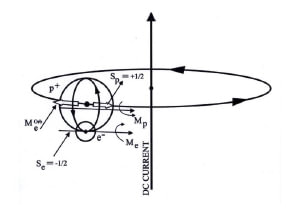


Fig-2
Fig. 2.Proton and electron captured by magnetic field. [from J. V. Kadeisvili, The Rutherford – Santilli Neutron, Hadronic Journal, 31, 1-114 Institute for Basic Research, Palm Harbor, Florida, U.S.A. (2008]

If confirmed, the model would constitute a great confirmation of Santilli’s Hadronic Mechanics, from the microscopic world roots to the cosmic boundaries, furtherly (from the industrial applications viewpoint) capable to explain and foresee the best geometrical and physical configurations for the esoenergetic reactions (clean energy production) towards the occurring of optimal COP conditions.

This new viewpoint could open new perspectives to LENR insights, now supported by a complete theory such as Hadronic Mechanics, accounted it is an extension of Quantum Mechanics to the case of interacting particles at distances about a nucleon diameter.
Of course, the model verification asks for an extensive experimental work, already independently started in Italy at the OpenshareLAB, under the Scientific Direction of U. Abundo himself. In the same time, the experimental work in the U.S., at least about some aspects, is directly supervised by R.M.Santilli.

We must thus hope that together with the incentive concerning the consequent industrial interests (related to large investments), the free research too will find the needed resources, both economic and human, to achieve the goal to drive all Mankind and Earth planet towards the benefits related to the new energy technologies promising a clean, inexhaustible and inexpensive energy.
Luciano Saporito

***********************************************************************************************

HADRONIC JOURNAL 37, 697-737 (2014)
REPRESENTATION AND ENHANCEMENT OF THE EXCESS ENERGY OF ROSSI’S REACTORS VIA SANTILLI’S NEUTROIDS AND NUCLEOIDS [full .pdf]
Ugo Abundo
Neural Calculus Lab
J. Von Neumann Foundation

Abstract
A recent, independent-party report shows that Rossi’s E-Cat reactor produces an excess heat that cannot be explained via quantum mechanical or chemical processes, thus supporting the possible presence of new nuclear processes. In this paper, we recall the studies by Don Carlo Borghi on the synthesis of the neutron from the Hydrogen, and the systematic, mathematical, theoretical and experimental studies conducted by R. M. Santilli on the neutron synthesis via the covering hadronic mechanics and chemistry. We review in particular the detection of an apparent new bound state of a proton and an electron called ”neutroid,” which is solely predicted by hadronic mechanics with the characteristics of the neutron except spin zero, thus being different than Mills hydrino. We then recall Santilli’s new series of ”nucleoids” which are given by conventional nuclides when absorbing a neutroid or nucleoid, and illustrate their es- oenergetic decay into stable nuclides. In this paper, we submit the hypothesis, apparently for the first time, that Rossi’s E-Cat reactor converts, at least in part, Hydrogen into Santilli’s neutroids by therefore avoiding the Coulomb repulsion between protons and nuclei present in current interpretation. The use of Santilli’s nucleoids and their esoenergetic decay then allow a quantitative interpretation of the excess heat in Rossi’s reactor. We close the paper by indicating the reasons according to which Santilli’s new species of MagneHydrogen offers realistic possibilities to enhance the energy output for Rossi’s as well as other Hydrogen-based nuclear transmutations.
PACS 03.75.Be, 29.30.H, 67.65.+z

Full article: http://www.hydrobetatron.org/files/abundo-paper-2014_Ottimizzato.pdf

**********************************************************************************************

A nuclear battery Nickel-Metal Hydride Lithium as a promoter of the reactions in the E-Cat? [.pdf]
by Ugo Abundo
OpenshareLAB
Open Power Association

Combined analysis of the scheme of construction details of the apparatus and methods of operation deduced from the patent application by A. Rossi (link) and the processing of information about the chemical composition of the “charge” as stated in the report of third parts (link) shows some key considerations for the interpretation of the performance of the E-Cat.

a) There is a strong analogy with the functional diagram of Lithium batteries Nickel-Metal Hydride (Nickel, Lithium, Hydrogen are the major components identified in the report mentioned): the splitting of the ‘hydride, the release of the proton and its sale Nickel , according to the scheme of the half-reaction from the left to the right of the conventional battery, with simultaneous release of the electron and the creation of electrical potential gradient, and raising the performance in case of micro and nano particle sizes:

Li Li ↔ H + Heat + H ++ e-

b) The evolution of hydrogen is promoted by rising the temperature (which for the Lithium hydride must reach about 500 ° C), as urged by the resistance heaters employed, leading to a rise in blood pressure, useful for the purposes of the absorption of hydrogen from part of Nickel.

c) The heating is carried out in a variable (cyclic), creating thermal gradients that trigger dynamic phenomena in point d), leading to static avoid saturation and to promote a continuing effort to “flow” of protons, essential parameter that blems and maintain fusion reactions (as reported, among others, by F. Celani), with the chain of production of isotopes of Ni to increasing mass, up to decay and the obtaining of Cu.

d) The presence, in the charge, of contiguous particles with different chemical composition, justify the hypothesis of a thermoelectric effect, because of the strong thermal gradients involved and that for Soininen http://www.google.com/patents/WO2013076378A2 ? cl = en & hl = en can produce high local gradients of electric potential acts of the so-called “Energy Localization” by B. Ahern, they agree F. Celani and G.Vassallo both the theoretical and experimental (ICCF18, July 2013)
http: //www.francescocelanienergy.org/files/Presen_Finale-ICCF18Celani_E.pdf in order to accelerate the charged particles and make them reach the required energy to achieve the transmutation esoenergetic.

e) The need for adjustment of the promoters of the reaction, under the dual production and efficient use, is well understood by the long period of time that was required for the development of the reactor Rossi. Lacking clearly even in the E-Cat this criterion, the occurrence of reactions random disordered door, to avoid reactions catastrophically unstable, to limit unnecessarily the COP in such conditions as to ensure the absence of explosions, forcing it however to values well below those potentially obtainable with controlled reactions; in this direction, the activity of current research at OpenshareLAB adopting a series of criteria arising from a deep theoretical analysis, the results of which will be announced soon systematized.
Full article http://www.hydrobetatron.org/files/A-Nickel.pdf

*********************************************************************************************

BOOK: “PILLS OF WISDOM” PILL 011
“The scientific method” according to Richard Feynman

In general, we look for a new law by the following process. First, we guess it (audience laughter), no, don’t laugh, that’s really true. Then we compute the consequences of the guess, to see what, if this is right, if this law we guess is right, to see what it would imply and then we compare the computation results to nature, or we say compare to experiment or experience, compare it directly with observations to see if it works.

If it disagrees with experiment, it’s wrong. In that simple statement is the key to science. It doesn’t make any difference how beautiful your guess is, it doesn’t matter how smart you are who made the guess, or what his name is… If it disagrees with experiment, it’s wrong. That’s all there is to it.
http://www.presentationzen.com/presentationzen/2014/04/richard-feynman-on-the-scientific-method-in-1-minute.html
Cold fusion defended against ITER at Channeling Conference

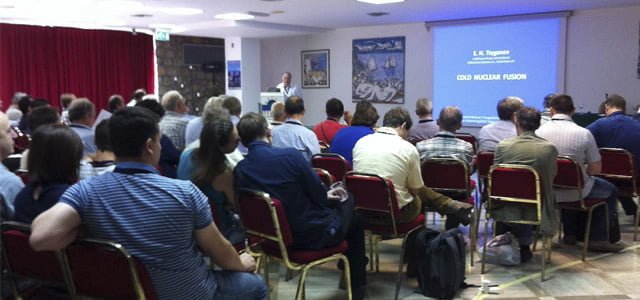
Edward Tsyganov presented Cold Nuclear Fusion at the Channeling 2014 Conference held October 5-10, Capri, Italy.

During the Oct. 8 roundtable session, Dr. Tsyganov has reported that “some of the participants suggested that we avoid rushing to promote cold fusion and, therefore, prevent any interference with the implementations of international tokamak ITER.”

Tsyganov explained, “… it is difficult to ignore the cold fusion process because it is much less expensive and much more practical than traditional thermonuclear fusion.”

In a summary of the discussion in English, Tsyganov continued:

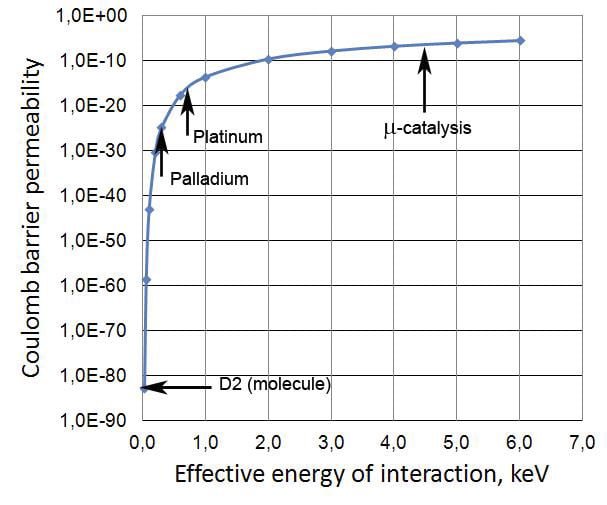
Fig. 8. The transparency of the Coulomb barrier for the reaction of DD in the crystal depending on the effective interaction energy Eeff.
The scientific community has always had trouble adapting to truly new knowledge. The current paradigm of nuclear physics does not contain effects such as cold fusion, although this phenomenon does not contradict any of the fundamental laws of nature. Attempts to generate controlled nuclear fusion, which have been conducted for nearly half a century, have already come a long way. The most advanced attempt, ITER, a tokamak of cyclopean size and corresponding value is currently under construction. Realists assess that this facility will take 35-50 years to complete and commence operations. It is only considered as a research project and is expected, after its launch, to start even more gargantuan industrial tokamak. The prospect of huge financial and material spends for another half century looms.

Oil and gas can no longer serve as global fuel, due to its exhaustion, while the companies will try to fight back. This way also may well lead to climate change, a population reduction, and social upheavals.

Cold fusion is a real alternative to this tragic scenario. We believe that in the coming years, the scientific success of cold nuclear fusion will be realized and a radical change in the applied nuclear research will come.

Unfortunately, cold fusion still seems to be quite distant from wide recognition, even though the issue is now practically solved in experimental and theoretical terms. At the moment we are facing a problem that is not scientific but sociological. It is difficult to predict how fast events will develop in this direction. A paradigm shift in science has never been an easy task for society. We should propose the optimal behavior for scientists in these circumstances.

Find Powerpoint presentation slides and photos of the event here:


http://www.coldfusion-power.com/channeling-2014.html

Edmund Storms’ The Explanation of LENR available for Kindle

Edmund StormsThe Explanation of Low Energy Nuclear Reaction is now available in a Kindle version.

Get The Explanation of LENR on Kindle here.

The ebook includes a new Appendix that answers the questions readers have posed to Dr. Storms since the book’s release in July, and contains a further description of hydroton formation.

There is also a newly formatted References section.

Those who already purchased The Explanation of LENR can download the newly added Appendix and References here:

Appendix.pdf
References.pdf

Print copies can be purchased from Infinite Energy Press here.

For more information, go to the books website at http://lenrexplained.com/

New graphic from updated version of The Explanation of Low Energy Nuclear Reaction depicting resonating hydrogen nuclei upon approach
New graphic from updated version of The Explanation of Low Energy Nuclear Reaction depicting resonating hydrogen nuclei upon approach in region where photon emission occurs.

Open Power Newsletter 14: “WE WANT A CHANGE OF CONSCIENCE!”

Open Power Association Newsletter #14 has been released. The newsletter is archived in Italian here. The following are a few google-translated and slightly modified excerpts that refer to cold fusion-related activities.

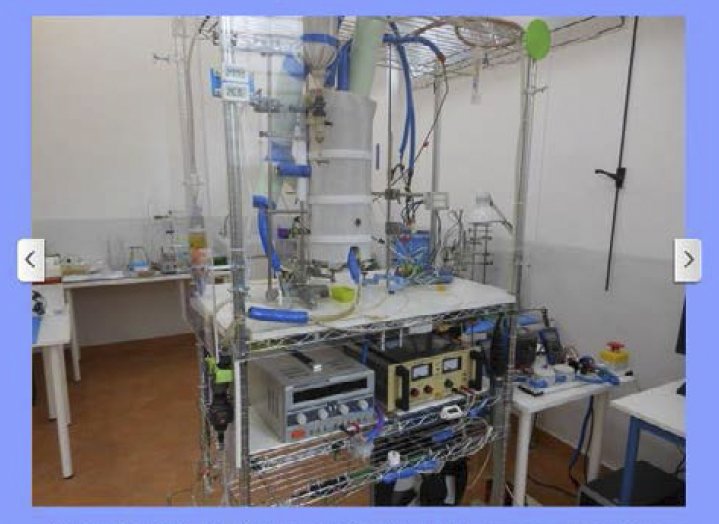
Open Power lab workstation
Hydrobetatron Full Gallery http://www.hydrobetatron.org/

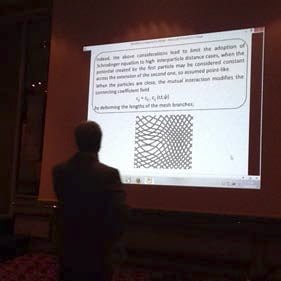
Ugo Abundo speaking in Rhodes
Our Scientific Director: Prof. Ugo Abundo at the International Conference of Rhodes
From 22 to 28 September was held in Rhodes (Greece) International Conference 2014 on Numerical Analysis and Applied Mathematics. Ugo Abundo was invited to participate in the proceedings as a representative of Open Power, to discuss the results of the activities that are part of the Association.

The work has been focused on the re-establishment of new mathematical foundations of physics, able to address the many issues currently unresolved, through change of paradigms in force. The new isomatematica (and evolutions “geno” and “hyper”) Professor Ruggero Maria Santilli presented as the appropriate tools to deal with maps deformed intrinsic irreversibility fields to ipervalori.

By means of these tools, it has been shown by speakers from all over the world, in view of industrial development, advanced applications in the field of energy, and in particular, in regards to the structure of the neutron and the atomic behavior for the purpose of nuclear synthesis. In the previous treatment of such areas, the math, as well as Quantum Mechanics appears inadequate. Hadronic mechanics, specifically developed by Prof. Santilli as an evolution of the above when both distances between particles comparable to the size of the nuclei, is revealed adequate to treat nuclear-type energy situations, where the particles can not be assimilated to material points, as in Quantum Mechanics.

Ugo Abundo presented in two separate reports, the LENR experiments conducted in the Open Power laboratory, and a neural network model generalized setting from the field of Artificial Intelligence, which makes homogeneous Quantum Mechanics and the Hadronic, justifying the applicability conditions of each of them, showing from the mathematical point of view, what happens in terms of internal information to physical systems when the first turns in the second.

Abundo’s report, entitled “An intrinsically Irreversible, Neural-network-like Approach to the Schrödinger Equation and some Results of Application to Drive Nuclear Synthesis Research Work” [.pdf] has been accepted for publication as part of the American Institute of Physics in the Proceedings of the Conference. Hence, the conditions for collaboration with other mathematicians (mainly French, Indian, Greek) to jointly pursue such studies about the applications of AI in the field isomatematica and subsequent transferability to modeling of elementary particles in interaction.

Ugo Abundo presentation slides http://www.hydrobetatron.org/files/ABUNDOpdf.pdf

(L) Prof. Santilli, (R) Prof. Abundo at Rhodes Conference
New web site nuovascienza.org dedicated to the work of Prof. Ruggero Maria Santilli
It is certainly easy to understand and explain briefly the complex thought articulated by Prof. Ruggero Maria Santilli, developed in the ‘arc of 40 years of work, both theoretical and experimental. Remarkable also is the amount of writings, conference papers, and scientific publications, he authored. This website has as main purpose to spread all those materials, video lectures, writings, etc.. In which Santilli describes in clear words and straightforward His theories and their mathematical models; His experimental paths (and industrial), and insights for the future of scientific research and experimentation in the field of new energy …

Here lists the work and thought of Santilli, who (unlike many academics pigtails Italian or not), does not miss at all courage in an attempt to place in certain areas more correct and the same theories of Eintein (Holy Grail?), and even quantum mechanics, from certain points of view. He did not even hesitate to take a picture of the “Science Today”; a photograph very brave, uncomfortable, and merciless; in substance, very critical …

In fact, he argues more explicitly that “the greatest responsibility for the crisis of physics should be seen in the press as a result of the total subservience to the centers of scientific power, while the political responsibility is only indirectly, as the political world uses print as a medium of information and action.”

This website has been designed so as a sort of very concise and articulate “compendium”, the enormous scientific thought and work Santilliano not yet sufficiently known and disclosed, and therefore unappreciated by the general public (at least in Italy, in my opinion), but certainly well-known and much appreciated from a small circle of experts and professionals, even in Italy, for his innovative value; a “compendium” I said for the use of those Italian researchers thirsty and with the critical spirit of true knowledge, but alas mè, with little time available to study the large amount of material and information that the Internet provides us every day.

Prof. Ruggero Maria Santilli Works and Thought http://www.nuovascienza.org/

Third-party report on ‘E-CAT released — Andrea Rossi

Observation of abundant heat production from a reactor device of and isotopic changes in the fuel [.pdf]
Giuseppe Levi
Bologna University, Bologna, Italy
Evelyn Foschi
Bologna, Italy
Bo Höistad, Roland Pettersson and Lars Tegnér
Uppsala University, Uppsala, Sweden
They Essén
Royal Institute of Technology, Stockholm, Sweden

ABSTRACT
New results are presented from an extended experimental investigation of anomalous heat production in a special type of reactor tube operating at high temperatures. The reactor, named E-Cat, is charged with a small amount of hydrogen-loaded nickel powder plus some additives, mainly Lithium. The reaction is primarily initiated by heat from resistor coils around the reactor tube. Measurements of the radiated power from the reactor were performed with high-resolution thermal imaging cameras. The measurements of electrical power input were performed with a large bandwidth three-phase power analyzer. Data were collected during 32 days of running in March 2014. The reactor operating point was set to about 1260 ºC in the first half of the run, and at about 1400 °C in the second half. The measured energy balance between input and output heat yielded a COP factor of about 3.2 and 3.6 for the 1260 ºC and 1400 ºC runs, respectively. The total net energy obtained during the 32 days run was about 1.5 MWh. This amount of energy is far more than can be obtained from any known chemical sources in the small reactor volume.
A sample of the fuel was carefully examined with respect to its isotopic composition before the run and after the run, using several standard methods: XPS, EDS, SIMS, ICP-MS and ICP-AES. The isotope composition in Lithium and Nickel was found to agree with the natural composition before the run, while after the run it was found to have changed substantially. Nuclear reactions are therefore indicated to be present in the run process, which however is hard to reconcile with the fact that no radioactivity was detected outside the reactor during the run.
Read the full report: http://www.hydrobetatron.org/files/ROSSI.pdf

Ugo Abundo on the E-Cat

Newsletter compiled by L.S. and the Open Power Association

The Ultimate Hot Tub

2014-report-coverI have never been an optimist or a pessimist. I’m an apocalyptic only. Our only hope is apocalypse. Apocalypse is not gloom. Its salvation.” –Marshall McLuhan

Apocalypse – Old English, via Old French and ecclesiastical Latin from Greek apokalupsis, from apokaluptein ‘uncover, reveal,’ from apo- ‘un-’ + kaluptein ‘to cover.’ –Google

A report released Wednesday on a test of the E-Cat Energy Catalyzer concludes a large amount of heat was generated using a fuel of one gram of nickel powder, with no radiation detected at all.

The authors describe details of the equipment, the experimental set-up, and how heat measurements were taken, along with an analysis of the outer shell material and fuel, in the paper Observation of abundant heat production from a reactor device and of isotopic changes in the fuel [.pdf]


Listen to Andrea Rossi discuss the results with John Maguire here.


The paper was authored by scientists who had performed tests on an earlier version of the E-Cat, releasing the report Indication of anomalous heat energy production in a reactor device containing hydrogen loaded nickel powder [.pdf] last year. During one November, 2012 experiment, the E-Cat generated so much thermal power, it melted the steel inner core body and the ceramic casing. This second test purposefully kept the input power moderate to ensure a longer life for the newly designed E-Cat.

As in the previous test, David Bianchini monitored radiation from the unit “before, during, and after operation”. No radiation was reported from the E-Cat, or from the fuel charge.

Over the last year, E-Cat intellectual property and licensing rights were acquired by private company Industrial Heat, LLC, an affiliate of Cherokee Investment Partners, with investment in the project reported at over $10 million. The group has retained inventor, designer, and Chief Engineer of the E-Cat, Andrea Rossi to lead the development of the energy generator.

Andrea Rossi participated in the experiment by fueling, starting the E-Cat, stopping the E-Cat, and removing the fuel from inner chamber. At these times, members of the evaluation team were present, and observing the activity.

Observation of abundant heat production from a reactor device and of isotopic changes in the fuel [.pdf]

The report was organized into sections with the lead authors writing the Abstract and main body of the report. Five other authors contributed four appendixes describing radiation monitoring and fuel analysis, including scanning electron microscope SEM and x-ray spectroscopy studies.

Giuseppe Levi
Bologna University, Bologna, Italy

Evelyn Foschi
Bologna, Italy

Bo Höistad, Roland Pettersson and Lars Tegnér
Uppsala University, Uppsala, Sweden

Hanno Essén
Royal Institute of Technology, Stockholm, Sweden

Abstract
1. Introduction
2. Reactor characteristics and experimental setup
3. Experimental procedure
4. Data analysis method
5. Analysis of data obtained from the dummy reactor
6. Analysis of data obtained from the E-Cat
7. Rangone Plot
8. Fuel analysis
9. Summary and concluding remarks
Acknowledgements
References

Appendix 1
Radiation measurements during the long-term test of the E-cat prototype.
D. Bianchini
Bologna

Appendix 2
Alumina sample analysis
Ennio Bonetti
Department of Physics and Astronomy
University of Bologna

Appendix 3
Investigation of a fuel and its reaction product using SEM/EDS and ToF-SIMS
Ulf Bexell and Josefin Hall
Materialvetenskap, Hogskolan Dalarna

Appendix 4
Results ECAT ICP-MS and ICP-AES
Jean Pettersson
Inst. of Chemistry-BMC, Analytical Chemistry
Uppsala University

Comparing E-Cats

E-Cat HT on support frame from December test
E-Cat HT on test bed November 2012
The E-Cat has undergone many design changes since 2011 when the public got their first glimpse of the Energy Catalyzer.

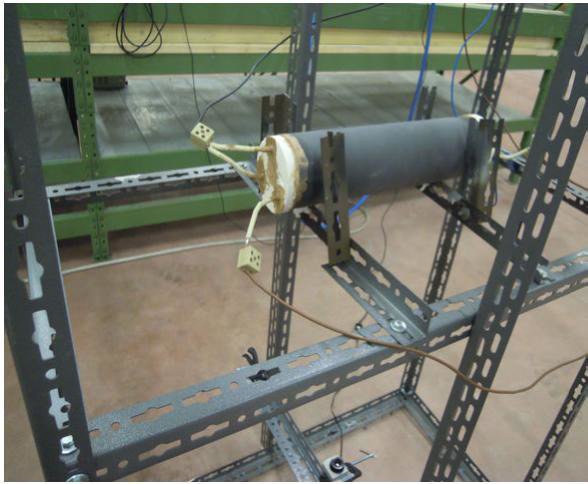
Last year, the E-Cat appeared as a smooth, silicon nitride ceramic shell cylinder 33 cm in length and 10 cm in diameter, painted black. Inside was a second cylinder made of corandom, which contained resistor coils to heat the reactor with an “industrial trade secret waveform”. The innermost cylinder was made of steel, 33 mm long and 3 mm in diameter and contained the fuel charge of treated nickel powder with the secret catalyst.
 

E-Cat on scale, February 2014
E-Cat on scale February 2014
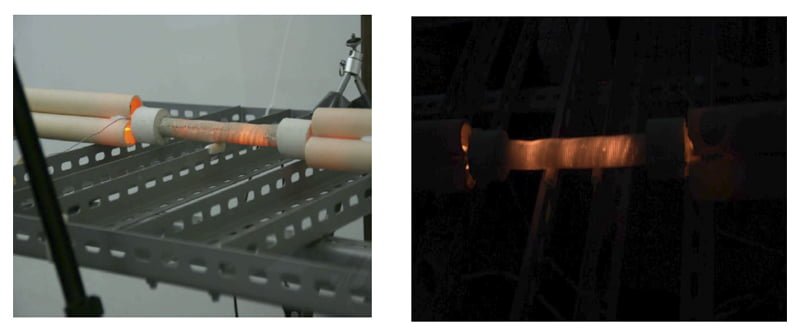
This year, the E-Cat is less than two-thirds the length, appearing as “an alumina cylinder, 2 cm in diameter and 20 cm in length, ending on both sides with two cylindrical alumina blocks (4 cm in diameter, 4 cm in length), non-detachable from the body of the reactor…”

The outer surface of the body of the E-Cat is no longer smooth, but “molded in triangular ridges, 2.3 mm high and 3.2 mm wide at the base, covering the entire surface and designed to improve convective thermal exchange…”

Design changes allowed for improved features, says the report. This year’s 2014 model E-Cat thermal generator can attain higher temperatures, while avoiding internal melting of the powder.

To initiate and control the reaction, resistor coils surrounding the inner fuel cylinder heat up from “specific electromagnetic pulses”. The authors report the reactant is a micron-sized nickel-powder mixture and that once heated, “it is plausible” that a lithium hydride delivers the hydrogen fuel for the reaction.

Last year, the E-Cat had a cyclic input power, which appeared to regulate the heat-producing reaction. On one end of this year’s new bone-shaped generator, a hole that allows for re-charging of the reactant also holds a temperature sensor that sends data to the controller. If the inner chamber gets too hot, the pulse is dialed down.

Measuring E-Cat Heat

Previous model E-Cat HT from 2013 report
As in the previous test, heat was measured by thermal imaging and computing the convection away from the surface of the generator.

Two thermal image cameras mapped the heat data of the generator across its surface as the E-Cat operated. Thermal imaging is a well-developed technology with a strong track record in many applications, but not in the field of cold fusion, which has relied on calorimeters and direct contact thermocouples.

New model 2014 E-Cat in operation.
Optical photo of new model E-Cat in operation.

The authors of the report state that they wanted to use a thermocouple, but that “the ridges made thermal contact with any thermocouple probe placed on the outer surface of the reactor extremely critical, making any direct temperature measurement with the required precision impossible.”

An empty E-Cat played the dummy to check that power in would match power out, as was observed.

The infrared camera’s temperature readings were converted to radiant power in watts by the Stephan-Boltzmann formula, an equation with parameters dependent on the emissivity ε of the material as well as the temperature. The outer shell of 99% alumina was divided into sections, and ε assigned to each area.

The issue of emissivity of alumina is still under discussion in the scientific community. Some believe there may be a larger source of error in the value ε. Aware that the emissivity of Alumina is temperature-dependent, the authors plot the emissivity ε over temperature saying that ε “has been measured at +/- 0.01 for each value of emissivity; this uncertainty has been taken into account when calculating radiant energy.”

E-Cat Power and Energy

Net thermal power produced by E-Cat
Plot 6: Net thermal power produced by E-Cat
Plot 6 shows a graph of the Net Power Out. The horizontal axis marks every two days and the vertical axis showing average Watts produced.

Net Power Out is the power produced by the E-Cat, minus the power inputs, and shows the amount of watts generated solely by the E-Cat.

As described in the report, after the first ten days, the input power was lowered by the controller. The team then decided to increase the input power about 100 Watts, which over six minutes, activated a large jump in temperature, equating to a net thermal power output of about 2.3 kilowatts. At peak usage, a large home may require 1-3 kilowatts electrical power.

The area under the graph over the next twenty-days represents just over 1 Megawatt-hour of energy. According to the report, the total energy produced over the month of testing was a remarkable 1.5 MWh generated from 1 gram of nickel-powder fuel.

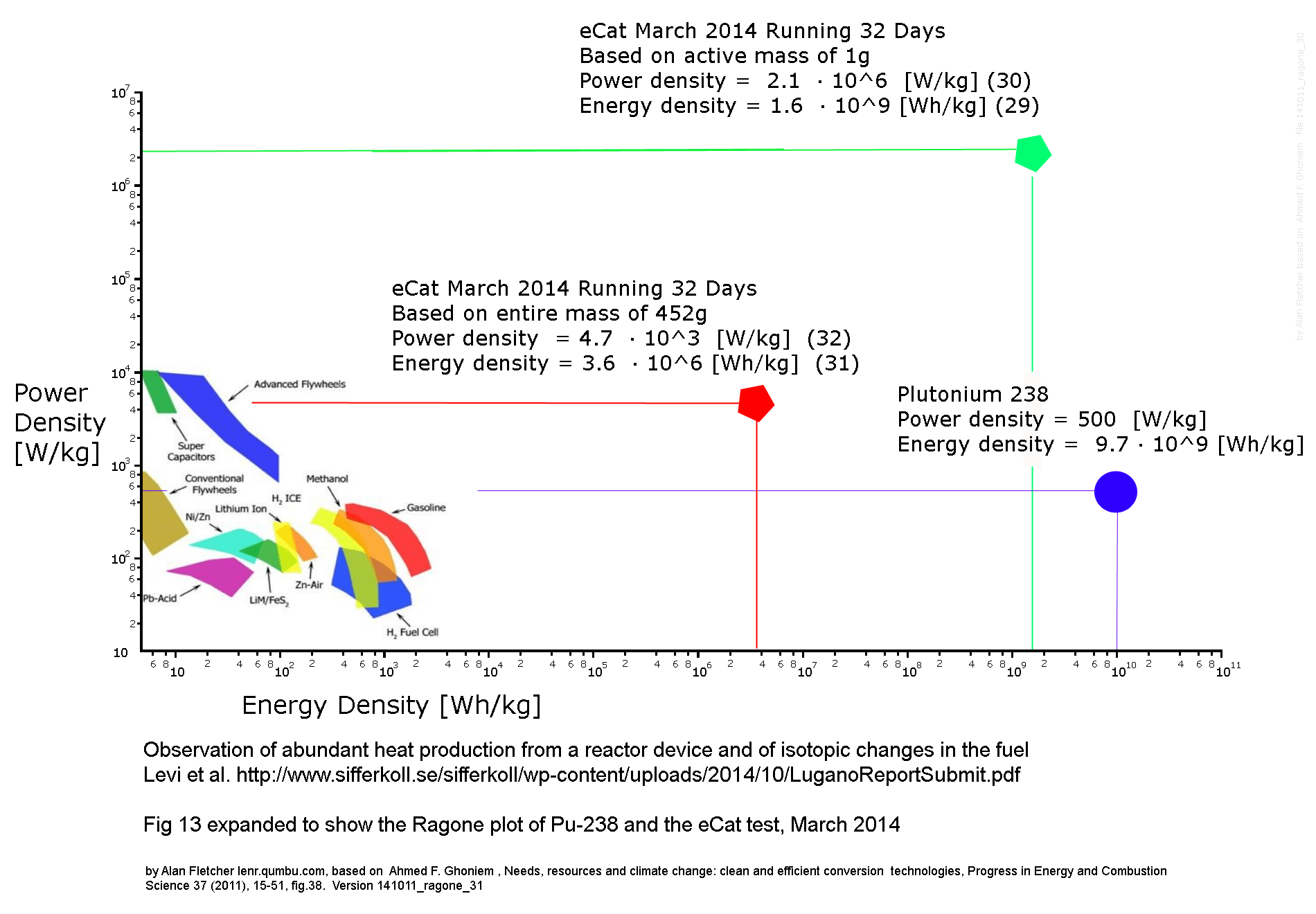
Thus, E-Cat energy density – 1.6 billion +/- 10% Watt hours/kilogram – is much greater than any energy derived from the chemical burning of gasoline, oil, or coal.

Compare energy densities of traditional fuels modified Rangone chart by Alan Fletcher:

141011_ragone_30-ColdFusionNow

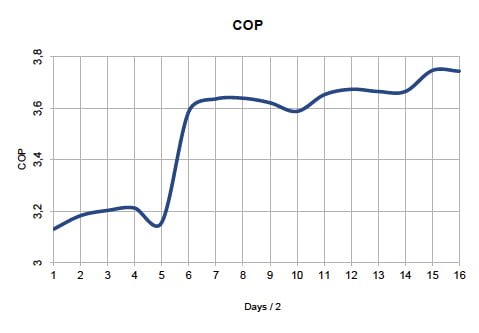
Plot-8-COP-cropLast year, E-Cat test COPs at or below three, with values of 2.9 +/- 0.3.

This year, COP was computed as well over 3, even though the device was said to not have operated at maximum output.

It has been stated many times that a COP > 3 makes a commercially-viable energy technology.

Read David French’s explanation of COP here.

Fuel Analysis

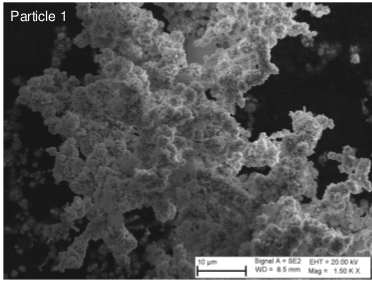
SEM of fuel Particle 1
SEM of fuel “sample granule” Particle 1
Of the 1 gram total in the reactor, a 10 mg sample was removed from the reactor and analyzed for content.

Materials analysis revealed natural nickel grains of a few microns in size as the bulk of the material. Other elements included Lithium, Aluminum, Iron, and Hydrogen. “Large amounts” of Carbon and Oxygen were also found.

But after the reaction, the ash had a “different texture than the powder-like fuel by having grains of different sizes”, and there was an unusual and unexpected shift in isotopic composition for the Nickel and Lithium grains.

Quoting from the report:

The Lithium content in the fuel is found to have the natural composition, i.e. 6Li 7 % and 7Li 93 %. However at the end of the run a depletion of 7Li in the ash was revealed by both the SIMS and the ICP-MS methods. In the SIMS analysis the 7Li content was only 7.9% and in the ICP-MS analysis it was 42.5 %. This result is remarkable since it shows that the burning process in E-Cat indeed changes the fuel at the nuclear level, i.e. nuclear reactions have taken place.

The shift in Nickel is reported as:

Another remarkable change in the ash as compared to the unused fuel is the identified change in the isotope composition of Ni. The unused fuel shows the natural isotope composition from both SIMS and ICP-MS, i.e. 58Ni (68.1%), 60Ni (26.2%), 61Ni (1.1%), 62Ni (3.6%), and 64Ni (0.9%), whereas the ash composition from SIMS is: 58Ni (0.8.%), 60Ni (0.5%), 61Ni (0%), 62Ni (98.7%), 64Ni (0%), and from ICP-MS: 58Ni (0.8%), 60Ni (0.3%), 61Ni (0%), 62Ni (99.3%), 64Ni (0%). We note that the SIMS and ICP-MS give the same values within the estimated 3% error in the given percentages.

Possible reaction pathways to these stunning results are provided in the report, but the authors caution that “reaction speculation above should only be considered as an example of reasoning and not a serious conjecture.” There is as yet no explanation for these findings.

What to think

The E-Cat has attracted financial investment, and inventor Andrea Rossi has given rights to the technology to private company Industrial Heat. They are in to win. Engineering changes are improving control of the reaction and the E-Cat is shrinking in size, now down to a breadstick.

While discussion of procedure and parameters continues, it won’t change the fact that we are within epsilon of a revolution in energy technology. Whether it is the front-running E-Cat, or another start-up that finds the right recipe, the E-Cat test report gives a peek at what is possible to achieve.

On multiple occasions, the E-Cat has publicly demonstrated steam, heat, and energy, once producing one-half megawatt power. Even if the net power out were 50% less, this E-Cat test run would still be making excess heat.

Global research, as presented at these conferences here and here, is focused on understanding the science, and finding a theory to describe this newly discovered phenomenon. Swedish research and development institute Elforsk, a partial sponsor of the test along with the Royal Swedish Academy of Sciences, will begin a ‘research initiative’ as stated by Elforsk CEO Magnus Olofsson.

Companies like Industrial Heat and men like Andrea Rossi are pushing the frontiers of engineering to create a product to re-make the world. Safe, non-polluting, with the energy-density to free a planet from the present destructive paradigm, there is nothing that will change our world more than new energy technology.

Renewing a civilization by empowering local communities, restoring our wildspaces and the wildlife that lives there, powering the hot tub in my backyard (that’s not my backyard in the picture), we are at the break-boundary. Are you ready for Apocalypse???

Cold Fusion Now!

An-impossible-invention-cover-200x279The most important thing that can be learned from the work that we are doing is that we will overcome any critical moment, so in this difficult moment for everybody, if anybody works, believing in what he does, and works with all his efforts, we can build up a new, strong economy.” —Andrea Rossi in interview with James Martinez December 2011

Ask questions of the authors at LENR-forum.

Related Links

Status Report – Rossi Pending US Patent Application David French October 2014

US Examiner Addresses Andrea Rossi US Patent Application David French March 2014

Raleigh investor Darden still bullish on controversial nuclear technology Bizjournal.com October 2014

Mats Lewan Interview E-Cat, Andrea Rossi, & An Impossible Invention John Maguire May 2014

Rossi E-Cat HT energy density off the chart Ruby Carat May 2013

Andrea Rossi in James Martinez interview [.mp3] December, 2011

E-Cat test: One-half Megawatt Self-Sustained Ruby Carat October 2011

Videos: Rossi’s “One Megaatt Plant” + New E-Cat Test (via NYTeknik) Eli Eliott September 2011

E-Cat World Frank Acland

Chase Peterson, Former President of University of Utah, Dies

This article was originally published in Infinite Energy Magazine here.


CHASE PETERSON, FORMER PRESIDENT OF UNIVERSITY OF UTAH, DIES

by Marianne Macy

Chase Nebeker Peterson, former President of University of Utah, died on September 14, 2014 from complications of pneumonia. His life story was traced in his 2012 autobiography, The Guardian Poplar: A Memoir of Deep Roots, Journey, and Rediscovery. The concept of roots were important to Chase Peterson. He never forgot his own from a family of Mormon pioneers, despite a life that would take him from his birthplace of Logan, Utah to elite eastern prep schools and Harvard University, from which he was an undergraduate and graduate of the medical school. In 2006, Peterson received the Harvard Medal, awarded at commencement by the Alumni Association for a “lifetime contribution to Harvard.” He had three official careers—Vice President of Harvard University, Vice President for Health Services at the University of Utah, and President of the University of Utah. He also practiced medicine and taught his last class in July of 2014. He was a public spokesperson for innovation at the institutions he was associated with, an innovator, administrator who instituted an open door policy with students, doctor, writer, and visionary.

Cornel West, philosopher, best-selling author, civil rights activist, saluted Chase Peterson for “his prophetic witness at Harvard in the turbulent 60s and 70s, his promotion of black priesthood in the Mormon church, his support of anti-apartheid protest in the 1980s, and his steadfast defense of academic freedom during the cold fusion controversy in the early 90s—all expressed his quiet and humble effort to be true to himself.”

MSNBC’s Lawrence O’Donnell, Jr. heard that Dr. Chase Peterson had died and put a moving tribute on air that saluted Peterson for his historically important actions at Harvard which included hiring the first African-American admissions staff member, instituting an enrollment strategy to embrace students less privileged than the typical Ivy League undergraduate—which, as it turned out, included O’Donnell himself, whose admissions entry interview was with Chase Peterson. The United States Supreme Court cited the measures Chase Peterson instituted as exemplary.

In 1978 Peterson had returned from Harvard to the University of Utah as Vice President in charge of health sciences and the university hospital program. There he found “a unique culture.” The University of Utah, he wrote, offered “an unfettered opportunity to restless young faculty members” who would not face the restraints imposed by more settled places. “Ambitious people—often mavericks held back by practices at other institutions—found comfort and support at the University of Utah.” In his book, Peterson mentioned Max Wintrobe, who in the 1940s was the leading hemotologist, texbook author and junior professor at John Hopkins, where he felt at the time he hit a glass ceiling of anti-Semitism at the otherwise excellent institution. Wintrobe, Peterson wrote, felt Utah, while lacking the research budgets of the institutions in the east, “nevertheless presented unlimited opportunity—a new Zion as it were—open to a Jew or anyone else smart and hard-working enough to take advantage of possibilities. As chief of the Department of Internal Medicine, he brought with him a critical mass of respected young medical investigators. Even more importantly, he brought a personal level of excellence that was infectious and launched Utah toward the upper ranks of medical schools and centers.” Peterson also pointed out that this receptive climate was historically illustrated in 1916, when Utah elected the second Jewish governor in the United States, Simon Bamberger, who was widely admired. He added that Bamberger had called the Utah Legislature into special session to ratify the national woman’s suffrage amendment.

Salt Lake City’s University of Utah is the “economic engine for the state,” a phrase coined by former University President David Gardner. Chase Peterson throughout his career valued his home state for its pioneering spirit and what to him was the epitome of American opportunity. Peterson worked to establish a nationally recognized center of medical research, with special contributions in genetic research and the high profile recognition for being the site of the first human heart implant based on research done by Dr. Willem Kolff. In 1982 Kolff’s results were approved by the FDA. In December 1982 the chief surgeon, Dr. William DeVries, operated on Barney Clark and implanted the artificial heart. Chase Peterson was the face of the University, giving twice a day reports to the assembled international media. In his memoir, Dr. Chase Peterson discussed the extraordinary events, but in a narrative twist completely his own finished his in-depth account of the medical breakthrough with the sort of question that Peterson attributed to the extraordinary world fascination with the story. Chase Peterson wrote that Barney Clark’s wife had told Chase right before surgery Barney had asked, “I wonder if I will still love you when I lose my heart?” Peterson wrote, “He answered that question a few days post-op when—still reduced whispering around a tracheotomy tube—he gestured to his wife and mouthed the words, ‘I love you.’ The scalpel had met its match. Love required a functional pump, but its home was elsewhere.”

Chase Peterson’s tenure and tributes are marked with mentions of his leadership, enthusiasm and generosity. Others remarked on his courage and support of academic freedom, freedom of inquiry and pursuit of ideas. To Peterson, this was a sacred trust he felt was his mission to uphold. His obituaries mentioned controversies of his tenure as University President, what he wrote of as the “perfect storm” on conflicting interests and opinions over Martin Fleischmann and Stanley Pons’ discovery and work on cold fusion at the University of Utah. The variety of descriptions reflected on the field now in Peterson’s obituary accounts illustrate the spectrum of those perspectives. Chase Peterson never stopped believing it was his job and responsibility to support the freedom of research, no matter the personal cost to himself and his family, no matter the warnings of no less an advisor than Nobel laureate Hans Bethe, who told him ahead of time, “They will only laugh at you.”

Peterson wrote in his memoir: “No president, dean or department chair at any research university can arbitrarily influence the publication or suppression of something against a faculty member’s will, whether that something is a chemical process, a better can opener, a concerto, a play, a piece of writing, or anything else. Neither can a faculty member’s right to publish or circulate something be prevented. Such action violates academic freedom in its most basic sense.”

If cold fusion could work, Chase Peterson said, it would be as important as the discovery of fire. The local NPR station in Salt Lake City rebroadcast a program on Peterson’s book this week that quoted him as saying this. More important was the right to pursue cold fusion, or any idea. Chase Peterson’s support of cold fusion was instrumental in costing him the presidency of the University of Utah. He often stated that he would do it all over again. Patrick Shea, who had served as counsel to Fleischmann and Pons, this week reflecting on Chase Peterson’s death commented, “No University of Utah president has ever done as much to support his faculty and their academic freedom.”

Chase Peterson is survived by his wife Grethe Ballif Peterson, his children Stuart and Edward Peterson, Erika Munson, and thirteen grandchildren. His memorial service will be held on September 27th at 10:00 am in the Church of Jesus Christ of Latter-day Saints Monument Park North Stake.

Marianne Macy has been doing oral histories relating to the history of cold fusion since 2007 and is writing a book on cold fusion’s start to the present day. An excerpt from the book will run in Issue 118 of Infinite Energy.

Related Links

The Guardian Poplar: A Memoir of Deep Roots, Journey, and Rediscover by Chase Nebeker Peterson

Cold Fusion Now Cross-Country Tour Ruby Carat visits the University of Utah campus.

Top