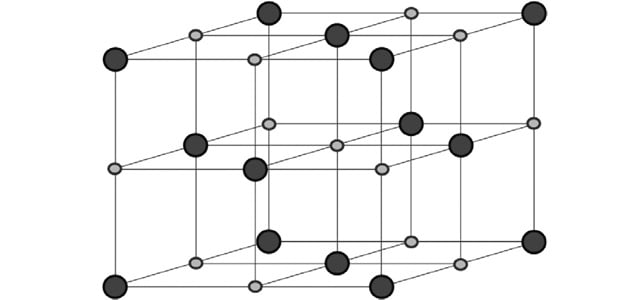
Deformation of electron outer shells important for Hyperion too, says Tsyganov

Physicist and cold fusion researcher Edward Tsyganov presented his research on low-energy collisions of atoms within a crystal at the Channeling 2012 Conference organized by the Italian National Institute for Nuclear Physics (INFN). A description of this work was summarized in our Q&A A Physicist’s Formula with Tsyganov.

Now, Registration of energy discharge in D + D 4He⁄ reaction in conducting crystals (simulation of experiment) [.pdf] has been published along with the Proceedings of the conference, and Tsyganov had this to say about the results of his research presented in the paper, and in particular, how it relates to Defkalion Green Technologies recent demonstration of the Hyperion R5 reactor:

In the article presented to your attention here, we simulated the proposed experiment to further elucidate the nature of the process of the so-called cold fusion, which is observed in metallic crystals. We are convinced that in the present experimental evidence does not leave any room to doubt the reality of the existence of this phenomenon. Unfortunately, the negative attitude of the nuclear physics community to this new phenomenon, hastily formulated some 20 years ago in a poor repeatability of experiments of the time, remains dominant today.

It should be noted that the only calorimetric measurements, supporting cold fusion, have not been able to bring the experimenters to a correct explanation of this phenomenon. Help came from the accelerator experiments at low energies. It should be noted that the first cycle of these experiments took place in Japan as early as 1996-2000, but remained virtually unnoticed. Below these works are cited.

H Yuki, T Satoh, T Ohtsuki, T Yorita, Y Aoki, H Yamazaki and J Kasagi “D + D reaction in metal at bombarding energies below 5 keV”, J. Phys. G: Nucl. Part. Phys. 23 (1997) 1459-1464

J. Kasagi, H. Yuki, T. Itoh, N. Kasajima, T. Ohtsuki and A. G. Lipson “Anomalously enhanced d (d, p) t reaction in Pd and PdO observed at very low bombarding energies”, the Seventh International Conference on Cold Fusion, 1998, Vancouver, Canada:, ENECO, Inc., Salt Lake City, UT. : P. 180.

H. Yuki, J. Kasagi, A.G. Lipson, T. Ohtsuki, T. Baba, T. Noda, B.F. Lyakhov, N. Asami “Anomalous Enhancement of DD Reaction …”. JETP Letters, December 1998.

J. Kasagi, H. Yuki, T. Baba and T. Noda “Low Energy Nuclear Fusion Reactions in Solids”, 8th International Conference on Cold Fusion, 2000, Lerici (La Spezia), Italy: Italian Physical Society, Bologna, Italy.

A.G. Lipson, G.H. Miley, A.S. Roussetski, A.B. Karabut “Strong enhancement of dd-reaction …” The work was presented at the ICCF 10 in 2003 and is interesting due to recorded soft X-ray radiation.

Already at the conference ICCF 7 April 1998, Prof. Bressani quite clearly laid out the path to an explanation of the process of cold fusion based on this series of experiments. [See Nuclear Physics Aspects of Cold Fusion Experiments Scientific Summary after ICCF-7 by T. Bressani .pdf.]

Unfortunately, the cold fusion community has not followed the Bressani call; each group had its own theory of the process. In 2002-2009, a similar accelerator experiments at Gran Sasso (Rolfs et al) and Berlin (Czerski et al) successfully produced similar results . References to this work are given in our article. However, even after these experiments very few people realize what all of this might mean.

In our analysis, the only hypothesis which provides sufficient explanation of this “cold fusion” phenomenon , which the traditional nuclear physics community has found difficult to accept, is the assumption that the sub-barrier fusion reactions in the nuclear decay rate of the resulting composite intermediate nucleus is slowing down if the excitation energy of the intermediate nucleus is reducing. In this case, at the thermal energy of the reagents intermediate compound nucleus becomes metastable, and the energy transfer process to the electrons of the crystal lattice through the exchange of so-called virtual photons becomes effective.

If we talk about the DD reaction in metallic crystals, for the practical start of the reaction, we need to fill in all the possible deuterium vacancies in the crystal. When these positions are not filled the reaction is practically not observed. This is due to the vacancy and the extended location of the deuterium atoms from one another. This fact was the main reason for poor repeatability of experiments in the past. As the vacancy is filled with deuterium, the double fillings appear where the fusion process becomes much faster due to the deformation of the electron shells of deuterium in metallic crystals.

To conclude, it is especially important to comment on the recent experiments on the Hyperion reactor, under the direction of John Hadjichristos (ICCF 18). Hadjichristos took an interesting comparison of the process of deformation of the outer electron orbits of the reacting atoms with the detail of the legend of the Trojan horse in the capture of Troy. As was noted earlier in our studies, the deformation of the electron orbits can effectively mask the Coulomb barrier in the fusion reaction at very low (thermal) energy.

An extremely interesting (if confirmed) result of the experiments on the Hyperion is the emergence of strong magnetic fields during the cold fusion reactions. This result often immediately shuts down many theoretical constructions which can only explain the released nuclear energy going directly to the thermal vibrations of the crystalline lattice by nothing short of a magical force. For this reason, the closer look at the current experimental data presented here is so essential.
Edward N. Tsyganov

Original text:

Уважаемые коллеги!

В предлагаемой вашему вниманию статье мы провели расчеты предполагаемого эксперимента по дальнейшему выяснению природы процесса так называемого холодного синтеза, наблюдающегося в условиях металлических кристаллов. По нашему убеждению, в настоящее время экспериментальные факты не оставляют места никакому сомнению в реальности существования этого феномена. К сожалению, отрицательное отношение сообщества ядерной физики к этому новому явлению, поспешно сформулированное около 20 лет тому назад в условиях недостаточной повторяемости экспериментов того времени, остается попрежнему доминиружщим.

Нужно отметить, что одни только калориметрические измерения, подтвеждающие холодный синтез, оказались не в состоянии привести экспериментаторов к правильному объяснению этого явления. Помощь пришла со стороны ускорительных экспериментов при низких энергиях. Нужно отметить, что первый цикл этих экспериментов прошел в Японии еще в 1996-2000 гг, но остался практически незамеченным. Ниже приводятся эти работы.

H Yuki, T Satoh, T Ohtsuki, T Yorita, Y Aoki, H Yamazaki and J Kasagi “D+D reaction in metal at bombarding energies below 5 keV”в журнале J. Phys. G: Nucl. Part. Phys. 23 (1997) 1459–1464

J. Kasagi, H. Yuki, T. Itoh, N. Kasajima, T. Ohtsuki and A. G. Lipson “Anomalously enhanced d(d,p)t reaction in Pd and PdO observed at very low bombarding energies”, the Seventh International Conference on Cold Fusion, 1998, Vancouver, Canada:, ENECO, Inc., Salt Lake City, UT. : p. 180.

H. Yuki, J. Kasagi, A.G. Lipson, T. Ohtsuki, T. Baba, T. Noda, B.F. Lyakhov, N. Asami “Anomalous Enhancement of DD Reaction…”. Декабрь 1998 г, письма в ЖЭТФ.

J. Kasagi, H. Yuki, T. Baba and T. Noda “Low Energy Nuclear Fusion Reactions in Solids”, 8th International Conference on Cold Fusion, 2000, Lerici (La Spezia), Italy: Italian Physical Society, Bologna, Italy.

A.G. Lipson, G.H. Miley, A.S. Roussetski, A.B. Karabut “Strong enhancement of dd-reaction…” Работа была доложена на ICCF 10 в 2003 г. Интересна тем, что там регистрировалось мягкое рентгеновское излучение.

Уже на конференции ICCF 7 в апреле 1998 г проф. Брессани достаточно ясно изложил путь к объяснению процесса холодного синтеза, основанный на этой серии экспериментов. К сожалению, сообщество холодного синтеза не последовало призывам Брессани, у каждой группы была своя теория процесса. В 2002-2009 гг успешно прошли аналогичные эксперименты на ускорителях в Гран Сассо (Ролфс и др.) и в Берлине (Черский и др.). Ссылки на эти работы даются в нашей статье. Тем не менее, даже после этого мало кто осознал, что все это может означать.

В нашем рассмотрении единственной гипотезой, которая необходима для объяснения холодного синтеза и с которой традиционным ядерным физикам оказалось трудно согласиться, является предположение о том, что в реакции подбарьерного синтеза скорость распадов образующегося составного промежуточного ядра по ядерным каналам замедляется при уменьшении энергии возбуждения этого ядра. В этом случае при тепловых энергиях реагентов составное промежуточное ядро оказывается метастабильным, и процесс передачи энергии этого ядра электронам кристаллической решетки посредством обмена так называемыми виртуальными фотонами становится эффективным.

Если говорить о реакции DD в металлических кристаллах, то для практического начала реакции нужно заполнить дейтерием все возможные вакансии в кристалле. Пока эти вакансии не заполнены, реакция практически не наблюдается, так как вакансии и, соответственно, атомы дейтерия располагаются достаточно далеко друг от друга. Это обстоятельство являлось главной причиной плохой повторяемости опытов. При дальнейшем заполнении кристалла дейтерием появляются вакансии с двойным заполнением, где процесс синтеза протекает очень быстро из-за деформированности электронных оболочек дейтерия в металлических кристаллах.

Завершая это предисловие, необходимо особенно отметить недавние эксперименты на установке Гиперион под руководством Джона Хаджихристоса (ICCF 18). Хаджихристос приводит интересное сравнение процесса деформации внешних электронных орбит реагирующих атомов внутри кристаллических кристаллов с подробностями легенды о троянском коне при взятии Трои. Как отмечалось в наших первых работах, деформация электронных орбит позволяет эффективно преодолевать кулоновский барьер в реакции синтеза при низких (тепловых) энергиях.

Исключительно интересным результатом (если он подтвердится) экспериментов на установке Гиперион можно назвать возникновение сильных магнитных полей при протекании реакции холодного синтеза. Даже один этот результат Гипериона сразу закрывает многие теоретические построения, в которых выделившаяся ядерная энергия некоторым магическим образом переходит непосредственно в тепловые колебания кристаллической решетки.

С уважением,

Э.Н. Цыганов

Successful Defkalion demo has scientists wanting more

Press Release –From: Attilia Cozzaglio <press@triwu.it>

Google translate (original Italian below):

Cold Fusion: After the streaming of 22 and 23 July, Defkalion has decide to make more accurate measurements on his apparatus.

Saturday night, July 3 (Editor – August 3?) at 20:00, and then repeat Sunday the 4th at 23:00, Moebius will broadcast on Radio 24, a new chapter on the controversial story on cold fusion (better defined LENR, Low Energy Nuclear Reaction).

On July 22, Moebius and TRIWU ‘organized a streaming from the Defkalion laboratories of Europe in Milan, devoted to describing how a cold fusion experiment works in general (also this definition is controversial), during the streaming in which it was amply clear that the appointment was far from presenting as a demo.

On 23 July, at the request of the International Conference on Cold Fusion taking place in Columbus, Missouri, Defkalion organized a long demo of about 10 hours, at which – since broadcast live on the Internet – was attended by a very large number of people, almost 30 thousand contacts, among which were many technicians. Specifically designed for an audience of 200 physicists gathered in Columbus, who watched for an hour and a half, there were many requests for clarification on the apparatus in operation.

This suggested to Defkalion the need to investigate aspects of the measurement.
In the interview on Saturday 3 July (Editor – August 3?) in Moebius will explain the various aspects of that decision.

The streaming video of the July 22 and 23 are available online at www.triwu.it

Info: www.radio24.ilsole24ore.com/
www.moebiusonline.eu
www.triwu.it

Fusione fredda: dopo gli streaming del 22 e 23 luglio la Defkalion
decide di effettuare misure più accurate sul suo apparato.

Sabato sera 3 luglio alle 20, e poi in replica domenica 4 alle
23,all’interno della trasmissione di scienza Moebius, in onda su Radio
24, un nuovo capitolo dedicato alla controversa vicenda sulla fusione
fredda (meglio definita LENR, Low Energy Nuclear Reaction).

Il 22 luglio scorso Moebius e TRIWU’ hanno organizzato un streaming
dai laboratori della Defkalion Europe a Milano, dedicati a descrivere
come funziona in generale un esperimento di fusione fredda (anche
questa definizione è controversa), streaming durante il quale si è
ampiamente chiarito che l’appuntamento era ben lontano dal presentarsi
come una demo.

Il 23 luglio la Defkalion, su richiesta delle Conferenza Mondiale
sulla fusione fredda in corso a Columbus nel Missouri, ha organizzato
una lunga demo di 10 ore circa, alla quale – era ovvio, essendo in
Internet – ha partecipato un numero decisamente ampio di persone,
quasi 30 mila contatti, fra i quali moltissimi tecnici. In
particolare, poi, da una platea di 200 fisici riuniti a Columbus, sono
arrivate, per un’ora e mezzo, molte richieste di chiarimento
sull’apparato in funzione.

Questa perfomance ha suggerito a Defkalion la necessità di
approfondire alcuni aspetti della misurazione.
Nell’intervista di sabato 3 luglio a Moebius si chiariranno i vari
aspetti di tale decisione.

I video degli streaming del 22 e 23 luglio sono disponibili on line su
www.triwu.it

Info : www.radio24.ilsole24ore.com/
www.moebiusonline.eu
www.triwu.it

Transmutation of Nuclear Waste – LENR SPAWAR Navy Patent

THE TRANSMUTATION OF NUCLEAR WASTE

The nuclear waste problem is totally unresolved. There are no sites, no containers and no places on earth which can safely contain radioactive waste materials. No container will outlive the radioactivity of its contents. Areas contaminated with radioactive waste are uninhabitable for the lifetime of their radioactive contents, which can amount to half a million years. Unless a process for transmuting radioactive wastes is developed, the best that we can hope for is above ground disposal sites managed by responsible people with valid monitoring systems. It is impossible to monitor radioactive waste that has been dumped into our rivers or the ocean, buried in the ground or shot into space.

What kind of legacy are we leaving our children and their children?

Is their hope?

INTRODUCTION

This article addresses nuclear waste contamination from ionizing radiation, the kind produced by nuclear plants, nuclear tests, medical procedures, food irradiators, facilities that sterilize via the use of radiation, and research facilities using radioactive isotopes.

There are at least 110 nuclear reactors in the United States. Currently, they generate 3,000 tons of nuclear waste each year. Well over 22,000 tons have already accumulated, according to a May 11, 1993 USA Today article on the nuclear waste crisis. Today (1997), this has increased to 34,000 tons. This waste would fill a football field nine feet deep.

This tonnage does not include low-level wastes – materials that come in contact with radioactive substances. These wastes, such as gloves, filters, tools and clothing, come from nuclear power plants, hospitals and research centers that use radioactive substances. There are 100,000 U.S. facilities that use these materials. They produce 1.6 million cubic feet of low-level wastes each year.

Describing the contamination of earth by radiation as “low-level ionizing radiation” is misleading and implies that it is insignificant. It’s not.

Low-level ionizing radiation means 5-15 rems (similar to a red) or about what we all get each year if we don’t work in a nuclear plant. Dr. John Gofman, a pioneer on the health effects of ionizing radiation, calls this the doubling dose, the dose required to double the cancer rate.

More worrisome is Dr. Abram Petkau’s observation that it takes only 700 millirads of protracted radiation (from external or internal sources) to Iyse (break) the cell membrane. By protracted, I mean over a period of time, instead of all at once. In the absence of antioxidant enzyme protection, such as superoxide dismutase and catalase, a mere 10-20 millirads were required to destroy the cell membrane. P.S., we’re all deficient in antioxidant enzymes because there’s much more radiation-induced free radical damage than nature intended, thanks to the nuclear industry.

There has been no viable solution to the nuclear waste disposal problem. It is the greatest of all disposal problems, and not just because of clean-up costs. Radioactive waste sites are virtually uninhabitable for the lifetime of the radioactive materials contained, which can amount to thousands of years. There are no containers which will last as long as the radioactive materials stored in them, thereby promising leakage of the radioactivity into the water, soil and air.

The U.S. government and the Department of Energy (DOE) are faced with enormous volumes of radioactive waste, with no solution of how to store them.

An April 8, 1992 article in The Arizona Republic reported the results of an eight-month study by the Environmental Protection Agency on radioactive sites in the United States. The EPA designated 45,361 locations, including factories and hospitals, with nuclear waste contamination ranging from slight to severe.

COSTS OF THE NUCLEAR INDUSTRY

Despite a one-half-trillion dollar subsidy to the nuclear power and weapons industry over the last 40 years, nuclear power is a dismal economic failure and a safety nightmare. Here are some examples to illustrate the severity of these problems, both financial and safety.

On July 4, 1990, the DOE estimated costs for nuclear cleanup to be $31 billion over the following five years. This figure represents a 50% increase over 1989 projections. In 1991, DOE revised this estimate to $100 billion.

During the last 10 years the nuclear industry and the federal government have spent $6 billion on a plan to store 77,000 metric tons of radioactive waste in tunnels bored into the granite bedrock of Yucca Mountain, Nevada. The San Jose Mercury News reported on July 14, 1992 that a June earthquake caused $ 1 million in damage to a Department of Energy building six miles from the proposed Yucca Mountain, Nevada Site. (The San Jose Mercury News reported on July 14, 1992 that a June earthquake caused $1 million in damage to a Department of Energy building six miles from the proposed Yucca Mountain site). DOE scientists were rattled to discover that the epicenter of the quake was 12 miles from the proposed dump site.

In 1991, mining experts reported that a deep underground salt chamber in the New Mexico desert designated for the first U.S. tests of permanent radioactive waste disposal would probably collapse years before the tests could be completed. The $800 million DOE nuclear- waste disposal project was already years behind schedule when this ominous proection was made (June 14, 1991, The Arizona Republic).

WHERE DOES THE WASTE GO?

Nuclear waste has been dumped into oceans, rivers and lakes, and into the ground. Leaking containers of radioactive wastes add to this on a daily basis, endangering the earth’s groundwater. There is no permanent storage site that is free from the hazards of radioactive waste.

The following examples are given to indicate the serious and unsolved nature of the nuclear waste crisis.

Port Granby, Canada dump site: Port Granby, east of Oshawa, Canada, is one of three landfills in the Port Hope area storing radioactive waste from a nearby uranium processing plant. Over 40 years, more than half-a-million tons of radioactive waste was buried in 122 14- foot pits in the Port Granby dump. Years of public outcry forced the closing of the dump in 1988. Despite efforts to capture the seepage, radioactive groundwater from this site makes its way down the bluffs, where the current carries it towards Toronto. A greater fear is the cliff sides that are eroding. One day, the bluffs will send chunks of the dump site crashing into the water. Currendy, anti-dump activists debate with nuclear officials over the perilous dump site, with no solution at hand. (New Magazine, Toronto, March 1993).

Russian Dumping: On September 2, 3, and 4, 1992, the Los Angeles Times reported on “The Soviets’ Deadly Nuclear Legacy”. From 1966 to 1991, the Russians dumped nuclear wastes into rivers, lakes and into the ocean. Russia’s deadly atomic legacy is just now coming to light in a report issued in March 1993 by Russian President Boris Yeltsin. From 1949 to 1956, nuclear waste from plutonium refining was dumped into the Techa River, even though radioactivity began showing up 1000 miles downstream in 1953. Today, gamma radiation on the river bank measures 100-times normal levels. Aware of the radioactivity in the Techa, Russian workers began dumping into Lake Karachai. Today, “to stand on its bank, even for a short time, would be deadly,” according to Mira Kosenko, M.D., of the Chelyabinsk Institute of Physics and Biology.

The Russians dumped at least 15 used nuclear reactors including six submarine units containing uranium fuel into the Kara Sea. According to Andrei Zolotkov, a radiation safety engineer, the entire hull section of the obsolete nuclear powered icebreaker V.1. was cut out with blowtorches and sunk. The irradiated mass measured 65 by 65 by 35 feet, or as high as a five-story building. The results of this are now evident. Officials at the Northern Division of the Polar Institute of Fish and Oceanography in Arkhangelsk report that thousands of seals are dying of cancer. This was caused by radioactive pollution of the seabed plus fallout from Russian nuclear tests on Novaya Zemyla, the archipelago where the seals live.

Rocky Flats Nuclear Weapons Plant, Colorado: On March 26,1992, Rockwell Intemational Corporation, operator of the Rocky Flats plant pleaded guilty to criminal violations of hazardous-waste laws and the illegal discharging of radioactive wastes into two streams that feed water supplies serving four Colorado Cities. The government fined Rockwell $20 million and selected EG&G Inc. as the new plant operator (Thursday, March 26, 1992, The Arizona Republic).

The Hanford crisis: A new EPA analysis revealed that Hanford workers dumped millions of gallons of radioactive waste into the ground. Some of the wastes were injected deep into the earth, while others were dumped into open trenches or ponds which were later covered with dirt. These wastes contain two long lived carcinogens, technetium 99 and iodine 129. Technetium 99 has a half-life of 212,000 years and iodine 129 a half-life of 16 million years. Because Hanford is located close to the Columbia River, radioactive isotopes continue to flow into the river.

In addition, storage tanks at Hanford are in danger of exploding due to continuous production of extremely reactive, labile products. This serious situation is described below.

CURRENT LEGAL METHODS OF NUCLEAR WASTE STORAGE

There are two storage methods.

The most common is to store the radioactive waste in wafer pools made of reinforced concrete six feet thick lined with stainless steel. The second method is to store the material in dry casks which are transported by rail, ,truck or barge to outdoor storage sites where they are placed on 3-foot reinforced concrete pads.

CURRENT DUMP SITES

The 1980 plan for waste storage has unraveled. In this plan, the federal government would be responsible for high-level waste and states would take responsibility for low-level wastes. States could build their own waste sites or form compacts with other states to share common repositories. However, states encountered massive opposition when possible locations were chosen. The problem is unsolved.

The only two current disposal sites, in Richland, Washington and Barnwell, South Carolina, are nearing capacity and will have to shut down. Wastes not allowed to go there are piling up in makeshift storage facilities across the United States. Currently, there are more than 100 makeshift sites in 41 states where nuclear waste is being stored in cooling pools. Many of these sites are in developing areas and some are near businesses, residential areas and schools.

The fight over dump sites continues. As of Tuesday, April 1997, the Senate voted (65-34) to establish a temporary central storage facility for the nation’s 33,000 tons of nuclear waste at Yucca Mountain, northwest of Las Vegas. President Clinton is expected to veto it. If he does, the question of what to do with nuclear garbage will remain unanswered.

Opponents emphasize the danger of transporting hazardous nuclear waste through populated areas by rail or highways and believe that a temporary site in Nevada will lead to a permanent facility there.

This temporary site would be above ground but there is a proposed permanent storage location underground in the same area. This proposal is fraught with controversy. The DOE says that four more years of study are needed before making a final decision. Why? An earthquake of 5.9 magnitude on the Richter scale occurred on June 29, 1992 just six miles from the proposed burial site. Since then, federal officials have had major problems convincing people that nothing can go wrong at their proposed nuclear dump sight. Senator Richard Bryan (Democrat Nevada) said of this quake, “Mother Nature delivered a wake-up call to America’s policy-makers. Placing … high-level radioactive nuclear waste in an active earthquake zone defies common sense.” (San Jose Mercury News, Tuesday, July 14, 1992).

Most people are unaware of how grim it is to have 33,000 tons of radioactive garbage which will take from 30 to 480,000 years to decay to a harmless substance. However, the government knows.

That’s why their policy says that radioactive waste must be stored at least 10,000 years, even though this is hardly realistic. Let me explain. The range of half-lives of these materials varies from 24 seconds to nearly 15.9 million years.

The half-life of a radioactive element is the time it takes it to decay to one-half of its mass. The whole lifetime of a radioactive element is its half-life times 20 years. This makes the situation grim. For example, the half-life of Strontium 90 is 28 years. Multiplying this by 20 gives you a life time of 560 years. For Plutonium 239 with its half-life of 24,000 years, has a whole-life of 20 X 24,000 or 480,000 years. Cesium 137 with its half-life of 30 years will hang around for 600 years.

“Do not be surprised if you learn that the nuclear industry makes billions of dollars by being a part of government’s policy of burial of nuclear wastes. It is not in their financial interest to try any other process. They are not idealists. ” Radha R. Roy, Ph.D. Professor Emeritus

WHAT’S WRONG WITH STORING NUCLEAR WASTE ABOVE THE GROUND?

Although above-ground storage has the advantage of access to being monitored, it is still not without unsolved dangers. Nuclear waste is highly unstable and reactive. For exarnple, at Hanford, Washington, radioactive wastes were stored in million-gallon tanks while awaiting a permanent (?) storage site (lots of Luck!). These tanks contain plutonium wastes and organic materials. Chemicals in the tanks break down, producing hydrogen gas, increasing pressure inside the tanks. This lays the conditions for an explosion, which would spread contaminants into the atmosphere, the land and the water, not to mention the people and the animals.

In 1957, similar waste storage tanks exploded at the Russian Mayak plutonium plant and contaminated hundreds of square miles in the southern Ural mountains. According to a Thursday, January 28, 1993 Washington Post article, this explosion released two million curies over a huge territory, leading to the resettlement of 10,700 people. This disaster caused thousands of casualties.

Now it is 1993. In April, several newspapers reported that yet another tank of radioactive waste exploded at a weapons plant in the secret Siberian city of Tomsk-7. This explosion contaminated 2,500 acres and exposed firefighters to dangerous levels of radiation. Tomsk-7 is believed to be about 12 miles outside Tomsk, a city of half-million people. Since Tomsk-7 is secret, it is not on ordinary maps (The Arizona Republic, April 7; The Washington Post, April 8, 14; The Register-Guard, Eugene, Oregon, April 7, 8, 1993).

WHAT’S WRONG WITH STORING NUCLEAR WASTE BELOW THE GROUND?

Only two problems: #1, there is no material that will outlast its radioactive contents; #2, radioactive wastes are so active that their contents continuously produce heat, hydrogen gas and other labile products. Who will monitor this for 10,000 years? How will the contents be stabilized to prevent explosions and leakage of radioactive waste into the groundwater? Who will pay the astronomical costs?

However, during the 1980’s burial became the official government policy, despite the objections of many scientists, and national organizations concerned about dangers to the environment.


The information in this article is plagarized from a dear and respected friend of mine. It was written a number of years ago. LightParty About the Roy Process (unrelated) the nuclear waste information is still pertinent here.

He is one of a concerned group of millionaires in Marin County, California who love and care about me.

I sent him this.

Hi Da Vid,

Sprout Amir from the Gorilla Choir here.

Yes there is hope.

Here is my recent series.

NAVY LENR Patent Granted – Transmutes Radioactive Waste

This U.S. Navy patent transmutes radioactive elements into less harmful elements through a benign “cold fusion” low energy nuclear reaction process. The patent was granted April 16, 2013 for a device and method that shortens the half-life of radioactive materials by increasing their rate of emissions. The process creates high pressure steam for the turbines eliminating the need for any refueling of existing nuclear reactors.

I noticed your earlier interest in this subject. It seems you follow everything.

lightparty.com Energy Transmutation Nuclear Waste

Your article was about the Roy Process. This is new, different, and more promising.

Anyways,

You could fly to Missouri now and attend the last few days, it ends July 27th. Talk to some of these cold fusion scientists. Form a company together. Buy a licence from the SPAWAR technology gateway. Together, (with this new info they have the know how and capability) you and the scientists could build a small “GeNie” type modular reactor that works (10 to 20 spent fuel rods transmuted in each).

Fits in a 40 foot shipping container. Send 50 or a 100 of them to every nuclear power plant in the world. Charge them for the steam. Charge them a fee for each fuel rod transmuted. Retain ownership of each “GeNie” type reactor.

Ruby Carat, my editor is covering the ICCF conference now. Please develop a Light Party funding group and send Cold Fusion Now a chunk. She needs a $10K infusion into the coffers of CFN.Org after utilizing her savings, leaving a high pay field (she holds many degrees), and traveling extensively to produce alot of quality videos and articles advocating this technology.

You know love, love, love, and more love. Sent your way… Always we pray.

Thank you for the loving works you do…. We love you!

Sprout Amir aka Greg Goble

I was in the presidents’ office of the Media Writers Guild Union last week, in San Francisco, showing my recent Navy LENR Patent Series and asking help with getting this news published in mainstream print.

I was told that this Navy patent granted transmuting radioactive waste is the scoop of the decade… It’s probably the scoop of the Century! Now the Guild is contacting writers, helping to fullfill my request.

Plasma micro-reactor steaming ahead

Charles François of FuturProbable continues to develop his TMLECPW plasma micro-reactor for use as a steam generator.

This technology is getting smaller and more sophisticated with François claiming 245% energy return. In a video released June 22 (below), he provides some background on the TMLECPW technology en Française, described as having 51 Watts input and 125 Watts output.

The most recent video above unveils the new Micro Plasma Reactor design that looks, well, … “Awesome, dude!“. With a professed energy return of 300%, it is!

François is preparing to move to new lab space, where he will work towards a higher steam output suitable for a hot-water boiler.

Fusion Froide Maintenant!

Related

Plasma Discharge inspires FuturProbable

New energy technology in our FuturProbable

Bob Rohner: Plasma engine reproduced; now optimizing for efficiency

Transmutes Radioactive Wastes Now – U.S. Navy and LENR Energy

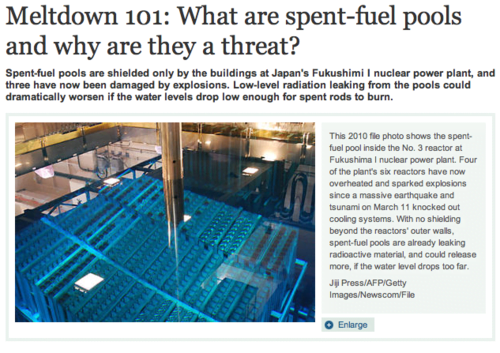
The United States of America Navy LENR energy patent is noteworthy. The transmutation of radioactive waste to benign elements through LENR low energy nuclear reactions is of global importance. With the continuing Fukushima disaster, inadequate storage of spent fuel rods, and the plutonium sludge leaks at the Hanford Nuclear Reservation site; each which threaten planetary health, our government should be fast-tracking the LENR remediation of nuclear waste. This technology should be brought forward with broad disclosure and international involvement. The U.S. has not made broad disclosure and is thereby stalling international collaboration in development of this important nuclear waste and pollution remediation, a cold fusion technology.

Can we trust the DoE to do it right this time?

NAVY LENR Patent Granted – Transmutes Radioactive Waste

genie_fast_facts

Ruby read the previous article and had this to say

Ruby Carat July 9, 2013 at 11:32 AM

“Who will license this???”

“Somebody – please!” see GEC Fast Facts

The Global Energy Corporation Has Use of Patent

Companies working with U.S. governmental agencies developing technology have first consideration as patent licensing takes place.

Global Energy Corporation is utilizing the LENR nuclear waste remediation technology developed at SPAWAR. Lawrence Parker Galloway Forsley of Global Energy Corporation along with JWK International have worked with SPAWAR developing this technology for decades. Following many years of research and development the Navy patent was filed in 2007. Department of Energy funded SPAWAR LENR research has most likely been continuous since the 1989 announcement of cold fusion.

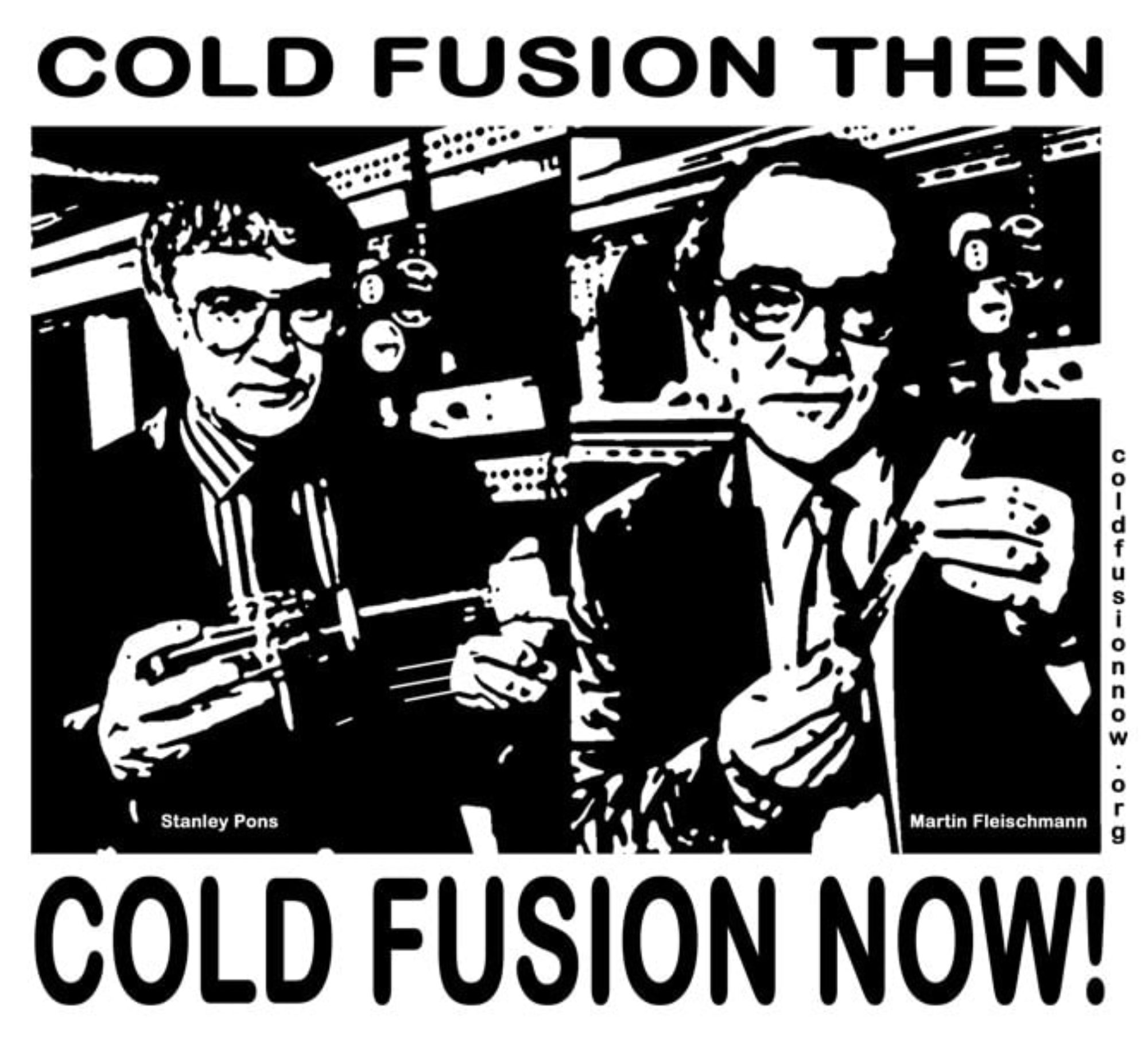
The DoE has controlled the release of information pertaining to this technology since before 2007, keeping it from the eyes of the public. It is well known that the DoE discredited Pons and Fleischmann in 1989 and has continued to marginalize LENR through search engine censorship and misinformation.

Quote Global Energy Corporation, “This manuscript has been co-authored by National Security Technologies, LLC, under Contract No. DE-AC52-06NA25946 with the US Department of Energy. The United States Government retains and the publisher, by accepting the article for publication, acknowledges that the United States Government retains a non-exclusive, paid-up, irrevocable, worldwide license to publish or reproduce the published form of this manuscript, or allow others to do so, for United States Government purposes.”

We have been lied to about cold fusion research at SPAWAR. (see Navy Commander Halts SPAWAR LENR Research Posted on March 1, 2012 New Energy Times). We have been misled about the value of pursuing LENR Energy. Historians will investigate those responsible for this. We will eventually understand why the Department of Energy of the United States of America has secretly coveted while publicly denouncing the science of cold fusion.

We the People, as the Government of the United States of America, would certainly like to see our State and Federal representatives, fellow citizens, scientific institutions, as well as the nuclear regulatory agencies and political leaders of all nations to be informed of this nuclear remediation technology now.

Furthermore

We the Peoples of the United States of America, as owners of this important technology, certainly do not want it to be hidden or marginalized any more. Contrary to the DoE and their method, the truth should be told about LENR. International development should be sought and licensing agreements offered widely to utilize this technology. A Congressional sub-committee should be formed seeking international cooperation in making this technology available, worldwide, as quickly as possible. 

The Lawrence Parker Galloway Forsley LENR Patent

A HYBRID FUSION FAST FISSION REACTOR (View it here)

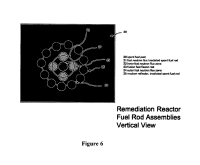
A hybrid nuclear fusion fast fission reactor is disclosed. The hybrid reactor may include an electrolyte solution comprised of PdCI2 a conductive salt and D2O, an anode of a noble metal, a cathode consisting of a conductive high Z (atomic number greater than 46) material wound around a deuteride-forming actinide nuclear fuel element, a power source providing constant current to the + anode and the – cathode, an applied power profile for fabricating the PdD nanoalloy, and a co-deposition of a PdD nanoalloy on to the high Z cathode winding as well as the nuclear fuel element. A preferred embodiment stablizes the actinide deuteride nuclear fuel element from hydrogen isotope de-loading. A preferred embodiment initiates deuterium-deuterium fusion in the deuterized fuel element and fissioning deuterized fuel element actinides. A preferred embodiment includes surrounding spent nuclear fuel elements with deuteride nuclear fuel elements that will fast fission the spent fuel elements. Another preferred embodiment includes surrounding the deuteride nuclear fuel elements with spent fuel elements as fast neutron reflectors that will also fission.

WOUS2009001213@@@true@@@en.gif

Claims

What’s Claimed Is

1. A hybrid nuclear fusion fast fission reactor in a vessel comprising:
an electrolyte solution comprised of PdCb a conductive salt and D2O;

  • an anode of a conductive noble metal provided within said electrolyte solution;

  • a cathode comprising a conductive high Z (atomic number greater than 46) material wound around a metallic actinide nuclear fuel element;

  • a power source providing constant current to the + anode and the -cathode;

  • an applied power profile for fabricating the PdD nano-alloy; and

  • an electrolytically co-deposited PdD nano-alloy on to the high Z cathode winding and on said fuel element.

2. A hybrid nuclear fusion fast fission reactor as claimed in claim 1 wherein said cathode wound around said fuel element acts as a neutron generator and said cathode is comprised of a composition of the non-deuteriding series selected from the group consisting of platinum, gold, mercury, lead and bismuth.

3. A hybrid nuclear fusion fast fission reactor as claimed in claim 1 wherein the nuclear fuel element is electrolytically deuterided beyond the actinide-deuterium beta phase.

4. A deuterided nuclear fuel element adapted by the electrolytic loading of deuterium to provide lattice fluctuations which initiate primary and secondary deuterium-deuterium fusion reactions at sites in the actinide metal lattice producing fast neutrons.

5. A deuterided fuel element as claimed in claim 4 where said fast neutrons fission the actinides comprising said nuclear fuel element.

6. A deuterided fuel element as claimed in claim 5 then sealed with an amalgam of compounds to prevent isotopic hydrogen deloading through desorption.

7. The deuterided fuel element of claim 6 further comprising an apparatus for pulsed control that produces acoustic, thermal, radiofrequency or other emanations attached to the deuterided fuel element and periodically enhancing local actinide-deuterium loading resulting in deuteron fluctuations producing primary and secondary deuterium-deuterium fusion reactions and neutrons.

8. A deuterided fuel element as claimed in claim 7 where said neutrons fission the actinides comprising said fuel element.

9. A plurality of said deuterided fuel elements as claimed in claim 8 arranged to irradiate and fission a spent nuclear fuel element, or a plurality of nuclear spent fuel elements, with fast primary and secondary deuterium-deuterium fusion reaction neutrons.

10. A plurality of said spent nuclear fuel elements arranged around said deuterided fuel elements claimed in claim 9 to act as fast neutron reflectors while also fissioning said spent fuel elements.

11. A nuclear spent fuel pool comprised of a plurality of said spent fuel elements and deuterided fuel elements as claimed in claim 10.

12. A method for removing heat generated by the primary and secondary deuterium-deuterium fusion reactions in said deuterided fuel elements and from fast neutron fission of said spent fuel elements.


Abstract Highlight Terms
Chemicals (link)
A hybrid nuclear fusion fast fission reactor is disclosed. The hybrid reactor may include an electrolyte solution comprised of PdCI2 a conductive salt and D2O, an anode of a noble metal, a cathode consisting of a conductive high Z (atomic number greater than 46) material wound around a deuteride-forming actinide nuclear fuel element, a power source providing constant current to the + anode and the – cathode, an applied power profile for fabricating the PdD nanoalloy, and a co-deposition of a PdD nanoalloy on to the high Z cathode winding as well as the nuclear fuel element. A preferred embodiment stablizes the actinide deuteride nuclear fuel element from hydrogen isotope de-loading. A preferred embodiment initiates deuterium-deuterium fusion in the deuterized fuel element and fissioning deuterized fuel element actinides.; A preferred embodiment includes surrounding spent nuclear fuel elements with deuteride nuclear fuel elements that will fast fission the spent fuel elements. Another preferred embodiment includes surrounding the deuteride nuclear fuel elements with spent fuel elements as fast neutron reflectors that will also fission.

Global Energy Corporation

Publications

Publications by Global Energy Corporation and collaborators at SPAWAR Systems Center, Pacific and JWK International

Although it has sometimes been difficult to publish in a controversial field, by conducting careful experiments and reporting the results, Global Energy Corporation collaborators at the U.S. Navy SPAWAR Systems Center Pacific and its predecessors and JWK International have published 24 peer-reviewed papers in seven technical journals and two book chapters. Our publication record documents steady progress in conducting experiments to demonstrate ever-increasing evidence that nuclear reactions can be stimulated using low energies in an electrochemical cell. Our most recent paper uses CR-39 to record and compare the impacts of high-energy particles produced in our pilot GeNiE reactor with neutrons from a known D-T fusion source.

P.A. Mosier-Boss, J.Y. Dea, L.P.G. Forsley, M.S. Morey, J.R. Tinsley, J.P. Hurley, and F.E. Gordon, “Comparison of Pd/D Co-Deposition and DT Neutron Generated Triple Tracks Observed in CR-39 Detectors,” Eur. Phys. J. Appl. Phys. 51 (2010) 20901.

Abstract

Solid state nuclear track detectors (SSNTDs), such as CR-39, have been used to detect energetic charged particles and neutrons. Of the neutron and charged particle interactions that can occurin CR-39, the one that is the most easily identifiable is the carbon breakup reaction. The observation of a triple track, which appears as three alpha particle tracks breaking away from a center point, is diagnostic of the 12C(n,n’) 3α carbon breakup reaction. Such triple tracks have been observed in CR-39 detectors that have been used in Pd/D co-deposition experiments. In this communication, triple tracks in CR-39 detector sobserved in Pd/D co-deposition experiments are compared with those generated upon exposure to a DT neutron source. It was found that both sets of tracks were indistinguishable. Both symmetric and asymmetric tracks were observed. Using linear energy transfer (LET) curves and track modeling, the energy of the neutron that created the triple track can be estimated.

Acknowledgements

This work was funded by the SPAWAR Systems Center Pacific ILIR and S&T Initiatives Programs, the Defense Threat Reduction Agency (DTRA), and JWK Corporation. The authors would also like to thank Dr. G. Phillips, nuclear physicist, retired from the Naval Research Laboratory, US Navy, Radiation Effects Branch, and P. Carbonnelle fromUniversité catholique de Louvain for valuable discussions in interpreting the optical data. It was G. Phillips who first pointed out the existence of triple tracks in our CR-39 photomicrographs. The authors acknowledge the contributions of Dr. S. Szpak, retired from SPAWAR Systems Center Pacific, who pioneered the Pd/D co-deposition process. This manuscript has been co-authored by National Security Technologies, LLC, under Contract No. DE-AC52-06NA25946 with the US Department of Energy. The United States Government retains and the publisher, by accepting the article for publication, acknowledges that the United States Government retains a non-exclusive, paid-up, irrevocable, worldwide license to publish or reproduce the published form of this manuscript, or allow others to do so, for United States Government purposes.

Technology

GeNiE Reactor technology is based on 20 years of experimental research by Global Energy Corporation, JWK International, and SPAWAR Systems Center San Diego scientists and engineers. The results have been published in over 20 peer-reviewed technical journal articles. Our most recent publications document the ability to efficiently produce high-energy neutrons that are capable of fissioning uranium. We have answered the critical scientific questions:

  • Our experiments are repeatable.

  • Our experiments have been replicated by others.

  • Our experiments provide direct evidence that nuclear reactions are involved including the production of high-energy neutrons. Although our experimental results are not predicted by current nuclear physics theories, the results are real.

The GeNiE Reactor takes advantage of the efficiently produced high-energy neutrons in a proprietary hybrid fusion, fast-fission reactor design to produce power from un-enriched uranium. The GeNiE Reactor is not prone to melt down since it doesn’t rely on a chain-reaction to produce high-energy neutrons. The GeNiE Reactor will extract more energy from the fuel than conventional nuclear Reactors. The GeNiE Reactor is lower cost since it doesn’t required enriched uranium and it doesn’t produce hazardous nuclear waste that is costly to handle. By fissioning existing hazardous waste, the GeNiE Reactor can generate power and mitigate existing hazardous waste at the same time. And by eliminating the need for enrichment, the GeNiE Reactor removes all requirements for uranium enrichment except for weapons production, thereby removing the uncertainty in the purpose of enrichment programs such as the current program in Iran.

Global Energy Corporation and their collaborators are currently experimenting with small pilot GeNiE Reactors and are designing prototype GeNiE Reactors for commercial applications. While there are numerous products possible, GEC is currently focusing on the GeNiE Hybrid Fusion, Fast-Fission Reactor that will use either natural uranium or existing hazardous waste as fuel.

FAQ

(The facts according to the Global Energy Corporation)

  • Q. This sounds like Cold Fusion. Wasn’t “Cold Fusion” disproven?

  • A. While most people think that the Department of Energy concluded that the claims were wrong, this is not the case. In fact, after two reviews in 1989 and 2004, the DOE ENERGY RESEARCH ADVISORY BOARD found that there wasn’t enough evidence to either prove or disprove the claims and that more research was needed. Furthermore, several other countries are awaking to the fact that the phenomena may be real as documented in a recent DEFENSE INTELLIGENCE AGENCY TECHNOLOGY ALERT paper. GEC scientists and collaborators developed a different experimental protocol that allowed them to go beyond the initial claims of Fleischmann and Pons. Our experiments are repeatable, they have been replicated by others and our results have been published in peer-reviewed papers. Additionally, our experiments produce direct evidence of nuclear activity including emission of high-energy neutrons.

  • Q. How can this be real since it doesn’t match theory?

  •  A. History is full of examples where the accepted theory had to be adapted to match new experimental results. At one time, theory held that the earth was flat. Galileo was put under house arrest by the church for observing that the earth was not the center of the universe. Cassini and other scientists held that the speed of light was infinite long after Romer had provided solid experimental evidence that it was 186,000 miles per second. There’s a statement in science that, “Theory guides, experiment decides.” A theory is only as good as its ability to predict or describe experimental results. If the experimental results don’t confirm the theory, it’s the theory that must change since the experimental results are controlled by nature. This is not to say that all current nuclear physics theories are wrong but that they are incomplete when it comes to explaining our experimental results. Each year, hundreds of PhD’s are awarded to students who have improved or evolved a theory so that it more accurately explains experimental results. These and many other examples show how theory must evolve to match observation. Several theories have been proposed but to date, none match all of our observed experimental results.

  • Q. How do you overcome the coulomb barrier?

  • A. Several possibilities such as a stripping reaction or the equivalent to “tunneling” in solid state electronics have been suggested as a way to overcome the coulomb barrier. More research is needed to determine the answer to this question.

  • Q. What technical challenges need to be overcome before this technology can be commercialized?

  • A. Our GeNiE pilot reactors have demonstrated the ability to produce neutrons with enough energy to fission either natural uranium, enriched uranium, or existing hazardous waste. We are currently working to optimize the reactions and increase the flux of high-energy neutrons. Once this is achieved, many commercial applications are possible.

  • Q. If this is real, you should all be dead because of the neutrons that would have been produced. How do you answer that since you’re obviously still alive?

  • A. One of the properties of our experiments is that the neutron flux is several orders of magnitude less than that predicted by conventional theory. The current flux levels are not hazardous however we are currently working to optimize the experiments to increase the flux. We recognize the dangers of high-energy neutrons and take appropriate precautions.


National Security Technologies

National Security Technologies, LLC (NSTec) was formed in 2006 as a joint venture between Northrop Grumman Corporation, and three other corporate partners. These partners are AECOM, CH2M Hill, and Babcock & Wilcox (B&W). With some 2,450 employees, NSTec manages operations at the 1,360-square-mile Nevada National Security Site, 65 miles northwest of Las Vegas, and at its related facilities and laboratories for the U.S. Department of Energy (DOE), National Nuclear Security Administration, Nevada Site Office. The company has satellite offices in Los Alamos and Albuquerque, New Mexico; Santa Barbara and Livermore, California; and Washington, D.C., along with a small number of employees located in nine other states and two foreign countries.

Our mission includes homeland security and defense applications, defense experimentation and nuclear weapons stockpile stewardship, as well as environmental management. We specialize in training our nations experts and testing new technologies to detect weapons of mass destruction (WMD), and to mitigate and manage the consequences posed by WMDs once they are detected. We are also equipped to conduct arms control verification testing as well as training of arms control inspectors. NSTec frequently teams on projects with Lawrence Livermore National Laboratory, Los Alamos National Laboratory, and Sandia National Laboratories. In addition, the company works on projects for other federal agencies such as the Defense Threat Reduction Agency, NASA, Department of Defense, Department of State, the Nuclear Regulatory Commission, and the U.S. Air Force, Army, and Navy.

We are also committed to fulfilling our role as a responsible corporate citizen through support of charitable organizations, primarily in the areas where we live and work. At NSTec, we focus on three key areas to achieve more effective results: education, civic and community relations, and diversity.

The Naval, Joint and National knowledge superiority through quality research, development, acquisition, test and evaluation (RDAT&E) and full life cycle support of effective Command, Control, Communications, Computers, Intelligence, Surveillance and Reconnaissance (C4ISR), Information Operations (IO), Enterprise Information Services (EIS) and Space capabilities.

SPAWAR Systems Center Pacific

Our Mission: Enable Information Dominance for our Naval, Joint, National and Coalition warfighters through research, development, delivery and support of integrated capabilities.

Our Vision: SSC Pacific will be the Nation’s pre-eminent Technical Leader for Integrated C4ISR Solutions for Warfighters.

Defense Threat Reduction Agency

DTRA is the U.S. Department of Defense’s official Combat Support Agency for countering weapons of mass destruction. Our people are Subject Matter Experts on WMD, and we address the entire spectrum of chemical, biological, radiological, nuclear and high yield explosive threats. DTRA’s programs include basic science research and development, operational support to U.S. warfighters on the front line, and an in-house WMD think tank that aims to anticipate and mitigate future threats long before they have a chance to harm the United States and our allies. SCC-WMD, the U.S. Strategic Command Center for Combating Weapons of Mass Destruction, synchronizes Combating Weapons of Mass Destruction efforts across our military’s geographic commands and leverages the people, programs and interagency relationships of DTRA at a strategic level. We work with the military services, other elements of the United States government, and countries across the planet on counterproliferation, nonproliferation and WMD reduction issues with one goal in mind: Making the World Safer.

Since DTRA stood up in October 1998 and SCC-WMD in August 2005, the Department of Defense and other federal agencies have increasingly looked to both for support and advice. Both organizations’ responsibilities span the full range of activities necessary to combat and respond to WMD proliferation and use. At home and abroad, DTRA and SCC-WMD deliver mission success against a very real and growing threat.

JWK Corporation

(JWK) has provided reliable, high quality professional services to our customers for over 30 years. Our customers, which include the Department of Defense, numerous U.S. government agencies, and various commercial and foreign enterprises, have come to realize that JWK stands for high quality, affordable technical expertise.

JWK has earned a reputation for technical excellence and cost effective operations by ensuring our customers receive the benefits of a highly qualified, affordable technical workforce, high quality products, and on time delivery. After many years of successful service contract work we are now pleased to be able to offer the full range and depth of our experience and our cost effective labor schedules to the General Services Administration.

Our emphasis on efficient, responsive management helps to ensure our client’s satisfaction. JWK honors our commitments.

JWK has traditionally provided and will continue to provide professional and technical services related to engineering, computing, telecommunications and information technology, health care and education, transportation and energy, environmental protection, intelligence, logistics, and operations and maintenance. These diverse disciplines have provided the background for JWK to focus on innovative, “high end” technology solutions that will provide a paradigm shift in strategies and solutions for our clients. Some of our technologies are uniquely our own, proprietary innovation. In some cases, we integrate other available technologies to develop “technology packages” for specific solutions.

Follow Navy LENR part III

“Energy Shortage – LENR Cold Fusion – Navy Guam”

  • MONDAY, 13  FEB  2012

  • THE Consolidated Commission on Utilities and the Guam Power Authority are investigating a new type of “generation five” nuclear power generator – one that could potentially reduce power costs for Guam ratepayers by half or more.

  • The Variety has learned Dr. Jay W. Khim, CEO of Global Energy Corp. (GEC) based in Annandale, Va., made a presentation to the utilities commission, GPA officials and Navy engineers last month and will make another tomorrow afternoon.

  • CCU member Eloy Hara, who says he is “spearheading” the project on behalf of GEC, told Variety: “After the presentation that Dr. Khim gave to the CCU and the Guam power management team, and almost an hour-long discussion afterward … we were all awed by the technology.

The Navy LENR – A Four Part Series

Navy LENR Part I

You are viewing Navy LENR Part II

Navy LENR Part III

Navy LENR Part IV 

HOPE cell offers clean fuel for Hydrogen Economy

Video: HOPE plasma cell #4 view from top

Early cold fusion researcher John O’M. Bockris is credited with coining the term “hydrogen economy” in 1970 while a Professor at University of Pennsylvania. Twenty years later, and one of the top electro-chemists in the world, Bockris became an embattled academic at Texas A&M University when he found positive results confirming the nuclear nature of the Fleischmann-Pons Effect (FPE).

His prescience in seeing humanity’s energy future within the most abundant element in the universe was shared by many. In Jules Verne‘s 1874 novel Mysterious Island, the author wrote “…I believe that water will one day be employed as fuel, that hydrogen and oxygen which constitute it, used singly or together, will furnish an inexhaustible source of heat and light, of an intensity of which coal is not capable.”

But why don’t we have a hydrogen economy now?

It’s not just the vested interests of the fossil fuel industry, or the ignorance of policy makers. The reason is mostly scientific.

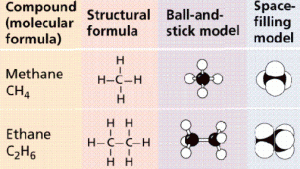
Hydrocarbons are built from carbon atoms. The simplest hydrocarbon is methane (CH4), and the addition of more carbon molecules creates more complex hydrocarbons which can form chains or rings. Image Credit: M.J. Farabee
Hydrocarbons are built from hydrogen H and carbon C atoms. The simplest hydrocarbon is methane (CH4), and the addition of more H and C atoms creates hydrocarbons which can form chains or rings. Image Credit: M.J. Farabee
Hydrogen doesn’t show up alone; it’s a highly reactive element that loves to pair up and bond with other elements forming the many complex molecules we see all around us.

Besides water, hydrogen is largely locked inside hydrocarbon molecules, the source of most hydrogen on the market today. Unfortunately, current processes, whereby high-temperature steam is heated with methane in the presence of a nickel catalyst to form the hydrogen, leave as by-product the greenhouse gas carbon-dioxide CO2.

Regardless of how efficient a fuel cell can be developed, existing production of hydrogen by steam thermal reaction produces almost 8.8 billion tons of the carbon per year (Royal Society of Chemistry, 2009). Burning a gallon of gasoline releases about 20 pounds of CO2. Producing 1 kg of hydrogen by another method using electrolysis would generate, on average, 70 pounds of CO2. [J. Romm, The Hype About Hydrogen]

The grim reality of our ‘Green Economy’ today is that retrieving hydrogen cleanly is an energy-expensive process, and still a technical challenge, reducing the economic viability of the abundant fuel: it takes so much energy to produce the hydrogen, the energy you get back just isn’t enough to make business, or ecological, sense.

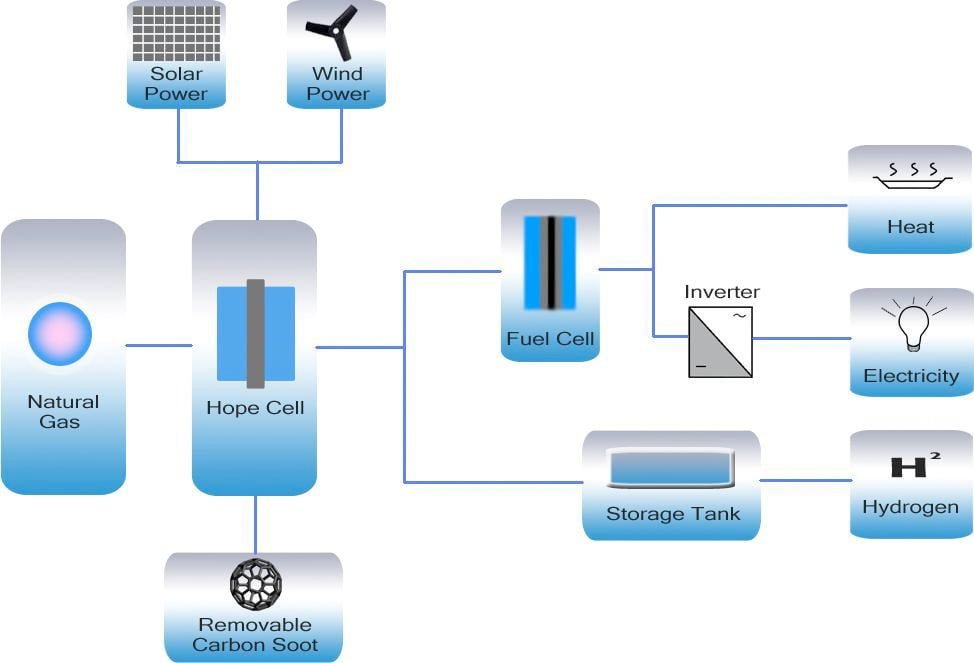
But suppose we could, say, re-route the methane emitted as pollution from landfills and cheaply, safely decompose it into the hydrogen we want, while converting the CO2 into a solid soot form, which could be stored or re-purposed?

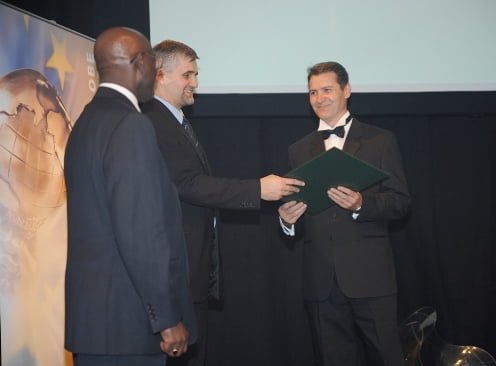
Robert Vancina accepting Energy Globe award for Sustainability 2009
Robert Vancina accepting Energy Globe award for Sustainability 2009 for HOPE cell concept.
Robert Vancina‘s HOPE cell won the Energy Globe Award 2009 World Award for Sustainability by demonstrating such a process, and he’s been developing a usable technology ever since, recently receiving two patents for his hydrogen production process.

An independent effort, Vancina will present his work at this year’s Green Leaders Summit 2013 where he will be speaking before a host of innovators from around the world who are attempting to build a clean energy infrastructure.

Entrepreneurs such as Elon Musk, Chairman and CEO of TESLA Motors, have manufactured electric cars to run on lithium-ion batteries, not fuel cells, because of the difficulties that hydrogen poses as a fuel. The production, transport and storage of hydrogen all pose significant engineering challenges, until now. HOPE cell technology offers a path to on-demand hydrogen production in-situ, promising to revolutionize power production for applications from transportation to power-production for grid or grid-less energy supply.

signatureIn developing his hydrogen-oxygen plasma electrolysis (HOPE) cell for hydrogen separation, Vancina discovered that it also made excess heat, and he is now developing a 5th generation model to enhance the low-energy nuclear reaction (LENR) effect.

HOPE cell hydrogen production with added efficiency of LENR heat marks a transition technology between the 20th-century fossil fuel infrastructure we have now, and the de-centralized independent power production of the 21st-century new energy age we need.

Plasma research inspired by Tesla, Mizuno, and Cirillo

Vancina’s father was an inventor, but due to conditions in his home country of Croatia at the time, his dad remained unrecognized for his contribution. Instead, he taught his son the skills necessary to engineer dreams into real solutions.

As a young man, Vancina learned of Nikola Tesla‘s work, and then began his own plasma research. For Vancina, “it was a natural evolution that working on plasma implemented in hydrogen generation from water, I then became familiar with the work of Tadahiko Mizuno, Tadashi Akimoto, and Tadayoshi Ohmori, as well as other scientists such as Domenico Cirillo and Vicenzo Iorio.”

Michael Faraday‘s 1834 First Law of Electrolysis can be stated as “The amount of a substance consumed or produced at one of the electrodes in an electrolytic cell is directly proportional to the amount of electricity that passes through the cell.”

Vancina describes how a paper by Mizuno, Akimoto and Ohmori entitled “Confirmation of anomalous hydrogen generation by plasma electrolysis” [.pdf] discusses hydrogen generation in quantities greater than Faraday’s Law predicts.

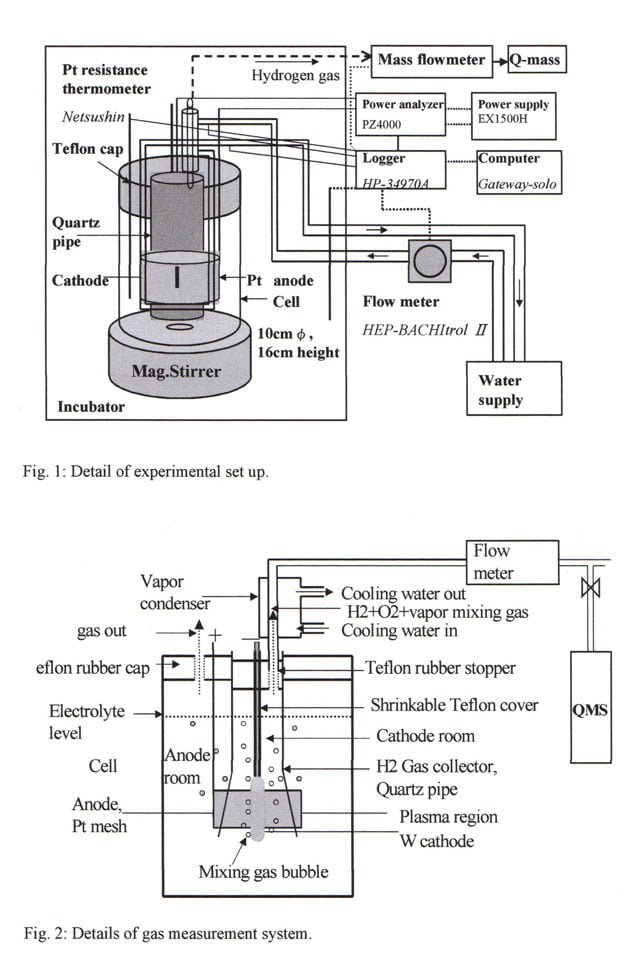
Cell design from Confirmation of anomalous hydrogen generation by plasma electrolysis by Mizuno, Akimoto, and Ohmori
Cell design from Confirmation of anomalous hydrogen generation by plasma electrolysis by Mizuno, Akimoto, and Ohmori.
Mizuno teaches that plasma forms when an applied potential difference between electrodes exceeds l00V in an aqueous solution, and that a mixture of oxygen, hydrogen and steam are formed on the surface of a cathode. However, he states: ‘The generation of hydrogen at levels exceeding Faraday’s law is observed when the conditions such as the temperature, current density, input voltage and electrode surface are suitable. The precise conditions are still not known, and controlling these conditions is difficult, so only a few observations of excess hydrogen have been made.’

Mizuno observed non-Faradic hydrogen generation. For example: when plasma electrolysis occurred at 2 A/cm2 of input current at l20V and at an electrolyte temperature of 80 degrees C, Mizuno concludes that non-Faradic hydrogen generation occurs when the potential difference between electrodes is several hundred volts, but does not provide any explanation for controlling the plasma beyond short bursts.

A theory explaining plasma electrolysis that produces non-Faradic quantities of hydrogen, and giving some base for LENR, is outlined in a technical paper by Cirillo and Itorio entitled “Transmutation of metal at low energy in confined plasma in water”. [.pdf] Specifically, Cirillo teaches that electrolysis is aided by metal anions, dissolved in an electrolyte, which form a screen spaced a few nanometres from the cathode, thereby effectively forming an anode. This is known as a ‘double layer’.

Electrochemical plasma cell from Transmutation of metal at low energy in a confined plasma in water by Cirillo and Iorio
Electrochemical plasma cell from Transmutation of metal at low energy in a confined plasma in water by Cirillo and Iorio.
Under conventional electrolysis conditions, hydrogen gases generated at the cathode, with much of the space between the cathode and the anion screen being filled with H ions, migrate through the screen to discharge on the cathode, producing hydrogen gas.

Increasing the applied voltage above 80V has the effect of significantly increasing hydrogen gas production to the point that the space between the cathode and the anion screen becomes filled with hydrogen gas. The gas has a much lower conductivity than the liquid electrolyte, so the resistance increases until unstable bursts of plasma form to discharge the potential difference between the cathode and the anion screen.

The high localized voltage can result in cathode temperatures for tungsten electrodes, greater than 3000″ C. Such heating of the cathode results in instant vaporization of electrolyte from the surface of the cathode and destabilizes plasma formation. Such a process also destroys the initiating electrode.

HOPE cell can clean up today's hydrogen generation process
HOPE cells readily use water, natural gas, or hydrogen blending in synthetic gas as a source of hydrogen. Mixing up to 15% hydrogen in with synthetic gas is cleaner, and will still power existing appliances.
Cirillo does not discuss hydrogen generation as a goal and does not address problems of stabilizing plasma. There are practical problems with those experiments being produced in a lab environment and equipment without viable implementation. Metal transmutation mechanism of effect, beyond few intermittent bursts, was not given an explanation.

However, through his research, Vancina has learned much more about the properties of hydrogen bond clusters and discovered what he describes as “techniques of scalably controlling plasma in robust enclosures, relocating the plasma away from initial electrode, stabilizing its operation, and magnifying it throughout the cell body.”

“It represents a practical approach which is dedicated for hydrogen generation,” says Vancina. “Initiating and stabilizing the LENR exothermic emission also functions to enhance bond breaking, as well as the energy efficiency of the process.”

From hydrogen to heat

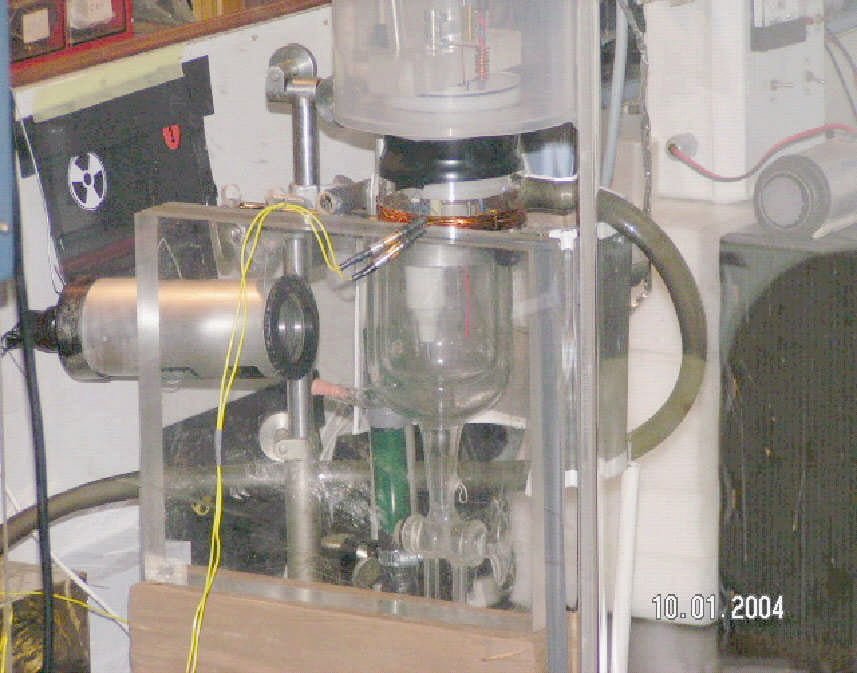
HOPE cell test unit
HOPE cell test unit
Vancina discovered the LENR effect during the first HOPE cell trials, and spent alot of time trying to manage the exothermic reaction.

“Cold Fusion seemed like a reasonable explanation at the time, but this raised some concern due to the sensitivity of publication,” he says. “After more research and testing I realized that this is a reaction of atomic hydrogen generated with plasma dislocation of medium, so I could apply techniques to induce it, stabilize bursts and scatter it across body of my cell.” 


The HOPE cell is currently at the proto-type stage. Self-funded until now, Vancina needs sponsorship to develop several applications he has designed that utilize LENR.

“I have previously approached local universities with the request of collaboration and applied for government grants to name a few. However, these attempts were unsuccessful due to scientific stigma of the nature of the project at the time.”

GLSummit_2013Sponsorships[613]Vancina believes that our own limited knowledge of atomic behavior, and strong lobbying by special interests, are holding us back from discovering a host of world-changing solutions saying, “It is fact that a great amount R&D followed by adequate capital have been invested towards Atomic Force research by the military, and power generation through civilian nuclear energy development, but there are parts of the atomic mechanisms which were missed, and now it’s time to admit that we made some mistakes along the way.”

“In the process,” he says, “we’re managing to destroy our natural environment on this planet – our home, which we are treating as a resource and commodity. That is a huge mistake.”

“I still have hope that our positive, collective mindset approach will become our savior. It’s time for LENR to come to the World stage and, coupled with alternative energy sources, become recognized as a viable option for mainstream application. It’s an exceptional opportunity to speak at the Green Leaders Summit 2013. I will strongly advocate LENR and help facilitate further research and investment in this area.”

Cold Fusion Now!

Related Links

The Truth About Hydrogen Popular Mechanics

Energy Globe http://energyglobe.info/

HOPE Cell Home http://hopecell.wordpress.com/

Anomalous Heat Generation during Hydrogenation of Carbon (Phenanthrene) [.pdf] by Tadahiko Mizuno and Shigemi Sawada

Top