Andrea Rossi on 3rd-Party Report, Industrial Heat, & 1MW Plant — New Interview

Intro: You are listening to the Q-Niverse podcast. Let me just say, before we get started, that today’s episode is being brought to you in part by ColdFusionNow.org who helped facilitate the dialogue you are about to listen to. Today I have with me Andrea Rossi. Mr. Rossi is an inventor and entrepreneur who, for many years, has worked to develop the Energy Catalyzer, also known as the E-Cat – a reactor fueled by nickel and hydrogen that allegedly harnesses “cold fusion”, or low-energy nuclear reactions, on an industrial scale. Mr. Rossi has been working on this technology for well over a decade and has recently partnered with a highly-credible commercial investor to take the technology to the “next level”. A recent third-party analysis of the E-Cat, carried out by a coalition of European professors and engineers over the course of the past year, reports that the technology is in fact producing energy well in excess of any known chemical reaction. Andrea Rossi, thank you for being with me today.

Andrea Rossi: Thank you.

John Maguire: Starting off, can you explain your thoughts and feelings over the past year waiting for the new analysis of the E-Cat? Has this been a tense time for you, or have you been too busy refining the reactor to worry much about it?

Rossi: Basically I am focused on my work which is Research and Development, and direction of the manufacturing of the E-Cat and plant. This has been, as always, a period just of work. For what concerns the report – it is for sure an important report. [It] has been made by a third, independent party. The results are interesting, [and] very problematic, and we are studying these results.

JM: Now, were you worried at all that [analysis/report] might come up with negative results? Did you have any indication over the course of the year? Or were you pretty much in the dark like everyone else?

Rossi: This report is in the hands of the professors that made it.

JM: Sure…fair enough. What do you think the ultimate impact of the report will be? Can it possibly persuade the larger scientific community or other major industrial players beside ELFORSK to get interested in LENR generally speaking, in your opinion?

Rossi: This is difficult to say…this is difficult to say. Honestly, I do not know. But our target is not to convince anybody. Our target is to make a plant that works properly. Now we have finished [with all the tests] and we are focusing exclusively on the market and on the production that we have to set up. This report is no doubt very interesting and we are studying it because, as you probably know, there is a surprising result regarding the Nickel-62 in particular, and we are studying it because we are strongly directed, under a theoretical point of view, to understand these kinds of results that was unexpected. But our main focus remains the operation of industrial plant.

JM: Now you mentioned theory there real quick, so maybe we can talk about that really quick. Do you think that the reaction can be explained within the Standard Model or do you think we’re gonna have to go well beyond that to account for what’s going on, because as you noted there were some strange changes in the powder – which we don’t really have time to get into too much – but can you put it in a theoretical context, or do you any ideas theory wise that you’re able to share?

Rossi: No, we are starting on it. It will take time because the reconciliation is not an easy task. And we are studying with specialists.

JM: You’re working with a team to develop the theory, is that the idea?

Rossi: Yes.

JM: Now getting back to the report. In regards to excess heat, the measured coefficient-of-performance, or COP, came out to be around 3.2-3.6 over a very prolonged period of time. Some experts argue the calorimetry was suitable, while others remain unsatisfied for various reasons. So first, what did you make of the review group’s methodology and excess heat measurements?

Rossi: Well the calculations have been made by the professors. I know that some of them are very well [experienced with] that kind of measurement. They have also [made a core] with manufacturer of thermal chambers. I suppose they know what they did. I want not to enter into this question because I just accept the results [I have been given]. I have nothing to comment about that. About the various opinions [out there] we do not consider them real [objections] because what’s of interest to us, again, is that the plant we have in operation works properly. Honestly we have no more time to lose in this discussion. [Concerning] the COP – you have seen in the report the COP has been calculated in a very conservative way. Every number has been calculated [within] the most conservative margin. Actually, I think [the COP] could be maybe increased but again, this is not a theoretical issue, this is a technological issue that can be seen only at a fixed point in an industrial, operational plant — no more theoretical suppositions.

JM: The new version of the E-Cat that was tested this time had an alumina casing on it. Now this as far as my understanding goes acted as an insulator…

Rossi: It has been described in the report. I don’t want to say anything about that. The report has been very well described [elsewhere] – the casing of the reactor.

JM: You brought up the 1MW plant – how is progress going on that? And to be more specific how is the new design superior to the old version, and how long do you think it will take to get to market or, at the very least, be demonstrated publically for people?

Rossi: Well, yes, the new 1MW plant has gotten a strong evolution with [regard] to the older one — mainly under the reliability point of view; under the industrial point of view. The control system is enormously more sophisticated. Basically the plant is governed by a robot. Nevertheless it will take at least one year of operation in the factory of the customer of Industrial Heat, to whom the plant has been supplied…it will take at least one year before they complete the analysis [and] all possible errors have been adjusted. After this year with the permission of the customer, because industry is not a showroom or a theatre, so we cannot just open access to the public and say, “Alright guys, come and see!” It will not be that simple, but selected visits for a person who has title to that will be open – [but] not before we consider the plant absolutely [finished] under an industrial point of view. I suppose it will take about one year…about one year from now I suppose. But when you are in this field you cannot be sure about the scheduling because you can be sure of one thing now today, and tomorrow discover you were wrong and have to change something. This is the first time – and this is important to underline – this is the first time we had the possibility to see in operation 24-hours-a-day continuously the plant because before we could only operate on it for a couple of days or three before [we encountered] a lot of problems. The [past manufacturing facilities that we installed the old 1MW plant were not in full operations]. There was not a load to supply all the energy to. So now in the real industrial operation/situation we can see all the problems that are generated from this real operation.

JM: Now you say you’ve seen it running longer than a few days can you give some idea of how long one has been running, or how long one has been tested for? Are we talking weeks?

Rossi: You know in our factory the one megawatt plant that had been presented in October 2012 — it worked at that time.  Then, we could work with it for some [amount of time], but you cannot put in exercise for long a plant like that if you don’t have a real load and if you do not have a real operation going on.

JM: Can you give us an idea of how many people are working to develop the E-Cat? Obviously you have your hands on it in some capacity, but is this a rather large team or just a small group of engineers?

Rossi: We are working with a complex team where there are specialists for any issue.

JM: Can you give an idea of how many scientists are working on [the project]?

Rossi: I prefer to not answer in detail, but what I can say is that for any single matter, we have a specialist to take care of [that].

JMGetting a bit more personal, I’m sure people are wondering what exactly has driven you all these years, and what do you hope to ultimately achieve by bringing this technology to the world? How do you hope to be remembered?

Rossi: The first stone has been put in the building so, you know, the first industrial plant, not working in an experimental warehouse, but working in the factory of a customer to produce a profit is already in operation. So this process of industrialization has begun already.

JM: What do you hope to accomplish personally?  What drives you to keep pushing this forward?

Rossi:  Well, you know, I just go one step at a time. My biggest aspiration now is to make the 1 MW plant perfect, absolutely and totally reliable, with all the defects corrected.  This is my aspiration now. After this, I do not know.

JM: Briefly, can you speak on your past work with the now-deceased Professor Sergio Focardi of the University of Bologna. I think he might be one of the unsung heroes after the story is told, along with many others of course, but he was one of the pioneers in the nickel-hydrogen work, along with [Francesco] Piantelli and others, most notably Italians. How significant in your opinion were his contributions to the genesis of the E-Cat, your work, and just your general thoughts on him?

Rossi: Focardi has been a strong collaborator with me, mainly in the period between 2007 and 2010. I have been lucky to be helped by him with his strong theoretical preparation.  For sure, he has contributed to the development of this work, and we absolutely have to be grateful forever for his precious contribution and he is always present in our memory.

JM: I know he was in a special situation in one sense because he was retired, and though his career wasn’t behind him, he could come out and support controversial work that he might not have been able to do while he was still a teaching professor, and that’s the kind of pressure many academics face in dealing with these new technologies or this new science.  And so, we need people like Sergio Focardi, we need people like Hano Essen, like Sven Kullander, who are willing to stick their necks out for new science to discover something new. Without pioneers, without people taking these kind of risks, both economic on your end, and sociologically, say in the scientific community, on the professors’ end. So I wish people were more open-minded [and] would follow their example. I think a lot of the barriers to people understanding this new technology, this new science, is again the academic pushback, so I am always encouraged by these men of integrity, whether they are sure or unsure of what’s going on, they say, “let’s look”, “let’s investigate”.  That’s why I’m always in inspired by those kinds of people, and that’s why I brought him up.

Rossi:  Yes, I agree with you.

JM: I know you don’t have a lot of time today. We appreciate all the time you afforded to us. I know there are things you can talk about, and things you cannot talk about. So before we go our separate ways, do you have any parting thoughts? Any words of wisdom or anything you think is appropriate?

Rossi: What I can say is that, at this point, we have to focus on the industrial plant in operation, because at this point in the story we are in a situation similar to the one at the dawn of the computers.  At the very beginning it was important to have the theoretical discussion on microchips, etcetera, but at a certain point, the development, and the importance of the computer, has been determined by the market, not by the scientific community.

JM: Absolutely. Thank you for taking the time out of your very busy schedule to speak to us.

Rossi: Thank you very much.  It has been a pleasure and an honor to be with you today.

Conclusion: That does it for today’s episode. Thanks again to Andrea Rossi, Ruby Carat at Cold Fusion Now.org, and thanks to you for listening. Take care, and stay tuned for more episodes in the near future.

* More of Interviews/Essays on Cold Fusion/LENR & other topics can be found at Q-Niverse.
 

Dr. Melvin Miles on Helium-4, Excess Heat, & Peer Review — New Interview

Dr. Mel Miles is an electrochemist and college professor who spent much of his career at the China Lake Naval Research Laboratory, and is probably best known for systematically detecting the presence of helium ash in Palladium-Deuterium cold fusion cells between the years 1989 and 1995. Many experts in the field believe that Dr. Miles’ findings constitute some of the best evidence in favor of the “cold fusion” hypothesis.

For the first part of the interview Mel and I discuss some of the finer points of his pioneering experiments as well as the link between excess heat & helium-4 production. Dr. Miles then retells some of his first-hand experiences during the tumultuous year of 1989. We also discuss Mel’s peer reviewed critiques of the allegedly “negative” results produced by both MIT & Cal Tech. Not only were their lab procedures and reports fraught with basic/fundamental errors, but in parallel they seemed to abandon the scientific method by engaging in ridicule & grandstanding only months after the discovery. In closing we touch on Dr. Miles’ new book that will compile years of personal correspondences from Martin Fleischman himself.

An overview/summary of Dr. Miles’ experiments, written by Jed Rothwell, can be read here. Other LENR/Cold Fusion related interviews/essays can be found at my blog Q-Niverse.

“One of the greatest contributions made to science”

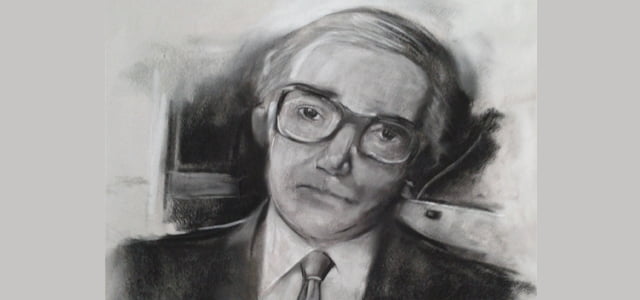
Portrait of Martin Fleischmann by Winston August 2012

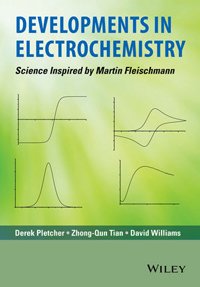
Infinite Energy Magazine Issue #117 highlights the new book Developments in Electrochemistry Science Inspired by Martin Fleischmann with the chapter on cold fusion written by veteran Navy scientist Melvin Miles and Michael McKubre, Director Energy Research Lab at SRI International, both of whom collaborated with Martin Fleischmann on cold fusion research for over a decade.

Read the original article here.

Science-Inspired-200x287New Book Honors Scientific Legacy of Fleischmann
by Christy L. Frazier

A new book honoring the scientific legacy of the late Prof. Martin Fleischmann has just been published by John Wiley & Sons. Developments in Electrochemistry: Science Inspired by Martin Fleischmann is edited by Derek Pletcher, Zhong-Qun Tian and David E. Williams, with 19 chapters (including the Introduction) about electrochemistry-related science written by electrochemists. Infinite Energy readers will be particularly interested in the chapter written by Melvin Miles and Michael McKubre, “Cold Fusion After a Quarter-Century: The Pd/D System.” Miles notes that he was picked as the cold fusion author and asked McKubre to assist him. He said he may have been chosen because he is “the only one other than Stan Pons who has written papers with Martin Fleischmann about calorimetry and the palladium-deuterium system.” Miles co-authored a number of papers during the last part of Fleischmann’s career.

Wiley’s website describes the book as “neither a biography nor a history” of Fleischmann’s contributions but rather a “series of critical reviews of topics in electrochemical science associated with Martin Fleischmann but remaining important today.” The chapters begin with an outline of Fleischmann’s contribution to the topic, followed by examples of research, established applications and prospects for future developments.

Editor Derek Pletcher worked with Fleischmann for 15 years at the University of Southampton. The book project was initiated because, “We believe Martin to have been a leading international scientist with very broad interests and a very warm personality and that we had benefitted greatly from our association with him (this includes some who were/are strongly anti cold fusion). We were therefore seeking a way to honor his memory and this became the book.”

The editors’ introduction, “Martin Fleischmann: The Scientist and the Person,” highlights great respect for Fleischmann’s approach to science and forward-thinking skill. They write: “Often his ideas were ahead of the ability of equipment to carry out the experiments, and it was only a few years later that the ideas came to fruition and it became possible to obtain high-quality experimental data.”

One of the editors, David Williams, was on the team at Harwell Atomic Energy Laboratory that purported to have negative results in replicating the cold fusion effect in 1989. Yet, in the Introduction the basic story of cold fusion is laid out and Fleischmann’s willingness to the end of his life in August 2012 to “defend the underlying concepts as well as his experiments” is recorded. They conclude, “It is inevitable and appropriate that this book contains a chapter on cold fusion that takes a positive view.”

McKubre appreciates the editors’ willingness to include what became a major part of Fleischmann’s scientific legacy. He said of the book, “This was a first class endeavor. I am very happy that it was done, and that cold fusion was included. At the end of Julian Schwinger’s life they rewrote his biography and reedited his bibliography to exclude mention of cold fusion. It is great to see that the electrochemistry community is not as narrowminded as the nuclear physics community seemed to be.”

The cold fusion chapter by Miles and McKubre focuses on “the multithreshold materials constraints that prevented easy reproducibility” of the Fleischmann-Pons (F-P) heat effect and the “brilliant, but largely not understood, implementation” of the F-P calorimeter. They note that some will believe that cold fusion “represents Martin Fleischmann’s greatest scientific failure.” They argue that the work may instead be one of the greatest contributions that Fleischmann made to science, noting that “few would have had the vision to see such a possibility, the courage to pursue it and the skill to test it” and that the F-P heat effect “is the sort of invention that only a man of Fleischmann’s knowledge, genius, confidence and courage was capable of making.”

Miles and McKubre conclude that “the future of Fleischmann’s dream must be practical, and therefore the heat effects must be cheaper, easier and of much larger scale and gain.” Future experiments are likely to utilize small-dimension materials including metals other than palladium in high-temperature.

Other chapters in the book include: A Critical Review of the Methods Available for Quantitative Evaluation of Electrode Kinetics at Stationary Macrodisk Electrodes; Electrocrystallization: Modeling and Its Application; Nucleation and Growth of New Phases on Electrode Surfaces; Organic Electrosynthesis; Electrochemical Engineering and Cell Design; Electrochemical Surface-Enhanced Raman Spectroscopy; Applications of Electrochemical Surface-Enhanced Raman Spectroscopy; In-Situ Scanning Probe Microscopies; In-Situ Infrared Spectroelectrochemical Studies of the Hydrogen Evolution Reaction; Electrochemical Noise: A Powerful General Tool; From Microelectrodes to Scanning Electrochemical Microscopy; In-Situ X-Ray Diffraction of Electrode Surface Structure; Tribocorrosion; Hard Science at Soft Interfaces; Electrochemistry in Unusual Fluids; Aspects of Light-Driven Water Splitting; Electrochemical Impedance Spectroscopy.

Developments in Electrochemistry: Science Inspired by Martin Fleischmann is available in hardcover ($115) and e-book format ($92.99) from the publisher at http://www.wiley.com/WileyCDA/WileyTitle/productCd-1118694430.html, and is also available on Amazon. According to editor Derek Pletcher, proceeds from sales will be used to fund a Biannual Fleischmann Lecture at the Annual Conference of the Electrochemistry Group of the Royal Society of Chemistry.

Related Links

“Science Inspired by Martin Fleischmann”

Martin Fleischmann in 10 minutes

“The Explanation of LENR” book review by Nikita Alexandrov

Book Review of The Explanation of Low Energy Nuclear Reaction by Nikita Alexandrov, President of Permanetix Corporation, was originally published in Infinite Energy Magazine issue #117 September/October 2014 and is reproduced here.


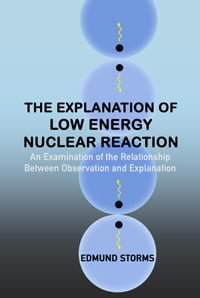
Dr. Edmund Storms, one of the foremost experts in cold fusion/LENR research has recently published a new book titled The Explanation of Low Energy Nuclear Reaction: An Examination of the Relationship Between Observation and Explanation. Dr. Storms worked at Los Alamos labs for 34 years studying energy related chemistry, specifically advanced nuclear projects. This book is currently the most up-to-date compilation of LENR research and contains over 900 references, but is written in such a way that it is organized and conducive to a well rounded understanding.

According to the preface by Dr. Mike McKubre of Stanford Research Institute, “There is no better synthesis of knowledge and understanding presently available to us and I know of no other person capable of making an evaluation at this level.” While this could be considered a reference material for experimental results, it differs from Dr. Storms’ previous books in that it introduces his theory of the mechanism behind the LENR effect, an oscillating linear cluster of two or more hydrogen or deuterium atoms called the Hydroton.

Front-cover-300ppi-200x298The first half of the book contains a wealth of knowledge regarding the experimental results obtained in the field. This includes the physics of the various experimental systems as well as an overview of instrumentation and general trends in the collective data. There are a large amount of pictures and graphs which really help to mentally process some of the complex relationships in the data. This section of the book is critical for anyone interested in LENR because it organizes and condenses the experimental procedures and results in a way which makes the huge amount of seemingly contradictory research much simpler to understand.

Dr. Storms takes a first-principles approach and imposes certain limits on the parameters of LENR theory based on what has been observed and basic chemical and physical principles. The experimental techniques used in the field are explained as well as the limitations and some reasons all of the facets of the LENR effect have eluded researchers. An overview of the physics of radiation from various nuclear reactions which may be present is very helpful in explaining the odd experimental results of the field. It is proposed that only a few types of radiation are produced directly from the LENR reaction but secondary radiation is produced from either the interaction of radiation with other matter in the system, traditional nuclear effects such as fractofusion (example: Ti-D experiments) or combination fusion-fission reactions (very unique part of the Hydroton theory). Dr. Storms goes into detail about how he believes various triggering methods initiate or improve the production of the LENR effect.

Hydroton-vertical-chain-137x800Dr. Storms’ theory revolves around a linear oscillating cluster of two or more hydrogen or deuterium atoms called a Hydroton. Under certain conditions this structure forms in the nano-cracks of metallic substrates. This differs significantly from the early theories of LENR in that it does not take place in the metallic lattice. Many theories are based on the fact that hydrogen or deuterium loaded into a metallic lattice inherently become pushed very close together, a shortcut towards fusion. These same theories require that the nuclear energy be communicated directly from the nucleus to the electrons (lattice) which is not unheard of but is not a traditional nuclear pathway and requires a complex explanation. Dr. Storms examines the lattice vs. nano-crack argument from a chemical, thermodynamic and transport standpoint, pulling from what we know of nuclear product production in LENR and the physics and chemistry of hydride/deuteride systems.

Dr. Storms insists that it is simply not possible to both produce fusion and dissipate the energy inside of a lattice. His model does not rely on energy dissipation via the lattice but through a steady release of bursts of low energy photons as the Hydroton oscillates and fusion occurs. Another significant difference compared to most theories is that it explains the different results obtained using deuterium vs. using hydrogen via two different mechanisms. This is important because many early theories only focused on deuterium fusion ignoring hydrogen all together, but modern experiments show that hydrogen does indeed participate in the LENR effect.

Lastly, Dr. Storms explains the various methods of producing transmutation products, either via a fusion-fission reaction of a hydrogen containing Hydroton or by the substrate atoms becoming part of the Hydroton in deuterium containing Hydrotons. The mechanism producing tritium and helium is explained in detail as well, but will not be explained here. Dr. Storms’ theory explains all known aspects of LENR in a very new way, not requiring the limitations of the mechanism taking place directly in the substrate lattice.

This theory is testable in various manners. Dr. Storms makes some suggestions in the book including the confirmation of predicted transmutation products as well as the detection of soft radiation such as low energy photons, betas, alphas and energetic ions. Dr. Storms points out that the reason radiation is not often detected is that the expected types and energies of radiation can simply not be detected outside of the experiment, requiring in-situ soft radiation detectors. So far it seems that experimental results line up with Dr. Storms’ theory but since his theory was built around this data it is important that future experiments be compared to what is expected using his model. Single or multiple deuterium addition to the substrate in deuterium containing Hydrotons, or fusion-fission products in hydrogen containing Hydrotons, would be expected and a good place to examine the theory experimentally.

Overall this is an excellent theory which can make some predictions; it will not allow us a complete mastery of LENR but is a large step in the right direction. Most of Dr. Storms’ theory is based on traditional physics and chemistry but there are certain aspects which are not fully understood, specifically how a Hydroton releases controlled bursts of photons at very low energies before the completion of the fusion process. This is the sticking point of LENR theory—it is not so hard to explain how two atoms fuse, but how they release their huge amount of energy without creating standard hot fusion products and detectable radiation as well as destroying the lattice local where the event took place.

By investigating experimental results and applying his physics and chemistry understanding, Dr. Storms is able to produce some basic equations which explain the power produced by LENR systems and show optimal operating conditions. Like everything else Dr. Storms produces, these equations are created using first principles and basic science; a Ph.D. is not required to wrap your head around this book as well as his theory in general.

Dr. Storms’ book contains a chapter of modern theories of LENR including limitations and possible shortcomings. This inventory of theories is great because it provides an excellent balanced overview of the field from a theoretical standpoint. This combined with the overview of the field from an experimental standpoint makes this the best reference book in the field of LENR. This book is highly recommended for anyone from the student interested in learning about LENR for the first time to highly trained scientists working in the field of LENR. There will be no disappointment in the level of detail and with over 900 references it provides an incredibly organized wealth of information regarding LENR experiments and theory.

The final chapter “Future of LENR” provides a road-map forward, listing the requirements for mastering the LENR effect as well as what needs to be done experimentally to get there. One thing the book does not mention is that Dr. Storms is ready and willing to put his LENR skill-set and understanding to the ultimate test—along with other researchers Dr. Storms has proposed an experimental research program to further the understanding of LENR. Dr. Storms is currently in the process of raising money for this research program and at millions of dollars per year, this could be the Manhattan project of LENR. The only thing standing between mankind and a guaranteed increased understanding of LENR is research funding and public awareness. I urge anyone interested in LENR to inform others about this book and the field in general and those which are financially independent to contact Dr. Storms about his research proposal. — Nikita Alexandrov, Permanetix Corporation

Read the original article published on Infinite Energy.

Related Links

The Explanation of LENR Homepage http://lenrexplained.com/

Nikita Alexandrov Advanced analytic and highly parallel Cold Fusion Experimentation [.pdf] presented at the 2014 CF/LANR Colloquium at MIT.

Dr. Sally Goerner Discusses Chaos, Complexity & Social Transition — Interview

This is an interview I recently conducted w/ general systems theorist Dr. Sally J. Goerner. While not focusing on Cold Fusion-LENR per se, it does focus on how a society might transition (aka self-organize) during a time of tumultuous change. It seems to me that CF-LENR, as well as the hope & uncertainty that accompanies it, is undoubtedly part of this complex “bifurcation point” in planetary history. I think the success of CF-LENR depends as much on humanity discovering innovative and/or “emergent” social arrangements, aka “cooperative modes” — and the two technologies will mutually reinforce one another through feedback. The dialogue is rather long, so I have provided an outline below. Thanks for taking an interest:

0.min-10.min: Dr. Goerner’s eclectic background; general systems theory; studying under Ralph Abraham; patterns & strange attractors; physical vs. spiritual; order-producing universe; energy network science vs. chaos theory; popular misconceptions surrounding chaos theory; lost meaning & lost science

10.min-20.min: Energy flow networks; self-organization vs. classical mechanization; basic elements of chaos theory; complementarity & chaos; boiling water & hydrodynamic self-organization; autopoetic cycles; bifurcation points

20.min-30.min: Orders & David Bohm; entropy as a subtle form of order; quantum chaos; fractal orders; particles as localized energy flow; linear vs. non-linear systems; importance of coupling; determinism

30.min-40.min: Reconceptualizing evolution; information & self-organization produce evolution; adapting to information & crises; co-evolution & stages of consciousness; fractal hierarchy & panarchy; distributed power & learning to listen; autopoetic genesis of DNA; Freeman Dyson’s energy accident

40.min-50.min: Holographic DNA; Stephen Jay Gould; aperiodic evolutionary jumps; Darwinism & elite politics; fallacy of Social-Darwinism; Dawkins & free-market society; How the Leopard Changed Its Spots; development of the prefrontal cortex; reforming economics & finance; economics as a complex metabolism; appealing to power-brokers; bio-mimicry & development; needs hierarchies & dysfunction

50.min-60.min: Necessary conditions for self-organization; corruption; focus on what energizes you; thinking outside the box; reading & synthesizing; the politics of resignation; transition from medieval worldview to modern age; distortion of society’s root metaphor; After the Clockwork Universe

60.min-69.min: Bifurcations & social change; Jean Gebser & integral society; solutions & education; local order & global order; restoring integrity; reciprocity & the science of cooperation; time-banking; beyond charity; banking reform; international development of networks vs. GDP growth; constraining metrics & NGOs

Also see:

Dr. Edmund Storms Explains LENR Theory — Interview

Dr. Brian Ahern Explains Non-Linear LENR — Interview

Joint Institute of Nuclear Research cold fusion seminar video

Dr. Edward Tsyganov of Cold Fusion Power presented a Cold Nuclear Fusion Seminar at N. N. Bogolyubov Laboratory of Theoretical Physics (BLTP) 2014 in Dubna, Russia.

Powerpoint files of the presentation can be found here.

A video news report on the event was posted by the Joint Institute for Nuclear Research JINTV here and on Youtube here

A transcript of the video news report was provided by Scientific Information Department JINR 2014 and is reproduced below:

The seminar, which dealt with cold nuclear fusion, took place at the Laboratory of Theoretical Physics of the Joint Institute for Nuclear Research. In his report, Professor Edward Tsyganov gave a possible explanation of the effects observed in numerous experiments. The scientist was asked many questions. Currently, physicists believe that there is no conclusive evidence for the existence of cold fusion. However, cold fusion studies continue to be carried out in various countries in order to discover and secure an inexhaustible supply of nuclear energy.

It all started with a report by chemists Martin Fleischmann and Stanley Pons on electrochemically induced nuclear fusion—the conversion of deuterium to tritium or helium through electrolysis using a palladium electrode. This report, which appeared in March 1989, caused quite a stir. The scientists observed neutron emission and the recovery of large amounts of heat, which are signs of nuclear processes. However, the scientific community believes that their claims are incomplete and inaccurate. So-called cold fusion established itself as a pseudoscience; however, after a public demonstration of the experiment using electrochemical cells in 2008 by Yoshiaki Arata of Osaka University, discussions on cold fusion began to appear again.

Known nuclear fusion reactions—thermonuclear reactions—take place in plasma at temperatures of millions of degrees Kelvin. So-called cold nuclear fusion assumes the possibility of nuclear fusion reactions in chemical (atomic and molecular) systems without significantly heating the working substance. However, most chemists and physicists are trying to find an alternative (non-nuclear) explanation for the phenomenon.

Professor Edward Tsyganov remarked that, when saturating conductive crystals with deuterium atoms, the presence of free electrons in the crystal potential niches leads to a ban for the unexcited deuterium atoms to occupy these niches. At the same time, even the first excitation level of deuterium atom removes this ban. When all of the potential niches have already been filled by deuterium atoms at least once, further saturation of a crystal with deuterium atoms gives rise to twin clusters of atoms in one such niche.

In most of these clusters, deuterium nuclei are pulled together to distances of 1/10–1/20 of the nominal size of these atoms. The zero level of quantum mechanics vibrations in the adjacent deuterium nuclei quickly leads to the penetration of the two deuterium nuclei through the reduced Coulomb barrier. The spatial orientation of the excited deuterium atoms in the crystal lattice is strictly determined with respect to one of the crystal lattice’s spatial directions.

The report also discussed the further dissipation of energy during the transition from the excited state of 4He* to the ground state–formed nuclei of 4He (~24 MeV).

This was the second seminar on the topic of cold fusion at JINR. About a year and a half ago, Professor Edward Tsyganov gave a similar talk at JINR. Both then and now, his report “DD fusion in conducting crystals” has caused heated debate.

–Scientific Information Department JINR 2014

Editor: Inna Orlova
Video: Igor Belvedersky

Related links:

Cold Fusion Power Dubna conference files

Appeal to Putin on cold fusion countered with “nothing new”

Top