
Life at the Center of the Energy Crisis: A Technologist’s Search for a Black Swan by George H. Miley


cover-image-9789814436489_p0_v1_s260x420Published by World Scientific, Life at the Center of the Energy Crisis: A Technologist’s Search for a Black Swan by Dr. George H. Miley describes “the story of the author’s work and struggles in the field of energy research.”

Dr. Miley is Professor Emeritus at the University Of Illinois Urbana-Champagne (UIUC) in the Department of Nuclear, Plasma, and Radiological Engineering, and, he was one of the few plasma scientists who considered seriously the possibility of nuclear reactions taking place in a solid metal at low-temperatures after the announcement of Drs. Martin Fleischmann and Stanley Pons.

As Director of the Fusion Studies Lab at UIUC, he has engaged students (though he will say his students engaged him!) in cold fusion research, also called low-energy nuclear reactions (LENR) since 1989.

When virtually all other mainstream scientific journals refused to accept them, he as a founding editor of the American Nuclear Society’s (ANS) Fusion Science and Technology was singular in allowing publication of blacklisted cold fusion research papers.

From the World Scientific site:

The author’s experience in the field spans from work with Admiral Rickover and the Nuclear Navy to research with NASA designing propulsion for spacecraft to travel to Mars. The book provides insights into the differences between nuclear research done during the Cold War by the two superpowers, and offers a commentary on the flaws in each system with hope for change in the future. The book also provides a look into the development of the nuclear engineering program at the University of Illinois from the author’s years as a professor and an administrator.

The recipient of numerous awards, Dr. Miley has been a Guggenheim Fellow and held a senior NATO fellowship. He holds six patents, and has most recently been involved in a new-energy start-up LENUCO, a company formed to develop a heat-source for energy production based on metallic-hydride reactions.

Earlier this year, LENUCO lost a crowd-voting contest in a bid for a presentation spot before venture capitalists held by Future Energy. The LEN-GEN Module followed the design Miley presented before rocket scientists at last year’s NETS conference. He continues to develop plasma solutions for multiple applications including space-drive with Nuclear Plasma Laboratories Associates, Inc., another company based in Illinois.

The book’s Foreword is by Dr. Heinz Hora, Professor Emeritus of University of New South Wales and long-time collaborator with Dr. Miley on theoretical models of LENR. In my interview with Dr. Miley during the 2012 NETS conference, I profiled some of their work.

Table of Contents

Foreword [.pdf]
Why a “Black Swan”?
Living at the Center of the Energy Crisis
Timeline and Apology
Early Days and Searching for a Starting Path [.pdf]
Burnable Poison Control for Nuclear Submarine Reactors
Nuclear Pulse Propagation and Fission Reactor Kinetics
Nuclear Pumped Laser (NPL) Research
Direct Electron Beam Pumped Laser
Advanced Lasers
Alpha Particle Effects in Thermonuclear Fusion Devices
Alternate Fusion Concepts
Advanced Fuel Fusion and Direct Energy Conversion
Inertial Confinement Fusion (ICF)
Inertial Electrostatic Confinement (IEC) Fusion
Low Energy Nuclear Reactions (LENR)
Hydrogen Economy and Fuel Cells
Fusion Propulsion and Space Colonization
Nuclear Batteries
Computation and Theory
Nuclear Power Plant Safety and the Illinois Low-Level Waste Site
Teaching, Education, and University Administration
Creation of a Small Company, NPL Associates, Inc.
Where Am I in the Search? What Have I Found?
Concluding Comments
Timeline of Events

The contents are suitable for undergraduates and PhDs, as well as anyone in the public interested in the history of the field.

Buy George H. Miley’s book from World Scientific or from Amazon

Related
New Book Tells of Miley’s Career, Energy Crisis

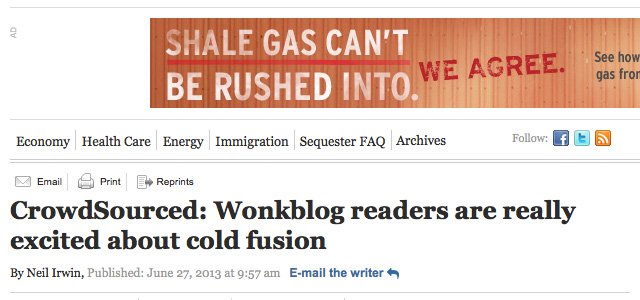
Washington Post blog cites Cold Fusion Now in LENR win

Weeks ago, the Washington Post asked readers What energy sources offer the most promise for the U.S.?

LENR won.

Today the journal noted that win, with author Neil Irwin citing the strong community support:

After four weeks of the first Wonkblog CrowdSourced, there is a consensus! Asked to explain what you view as the most promising energy source for America’s economic and environmental future, you favored one answer, heavily, above the others: Low energy nuclear reactions, or cold fusion. Nine of the top ten vote-getters favored this answer. (Perhaps with an assist from the website ColdFusionNow.org, which urged readers to participate).

Well, I must add Harry Veeder posted a call on Vortex-l first, and that’s what got us all started, and thanks go to Lenr-forum.com for spreading the word far and wide. (If I ever get my Subscription button working, I may be able to help even more. It might be working now, so subscribe again please and let me know!) And no doubt more than a few E-Cat World readers contributed to this win.

Featured are two top comments, the first from Tom888 who wrote:

There is little doubt that the future energy will be LENR, aka cold fusion. The field developed off the mainstream over the past years and we are at a point where commercial applications are being prepared for roll out now by several companies. This is mainly engineering and inventor driven, whereas basic science is lagging behind understanding the phenomenon. Nevertheless, the effect is indisputable now and the prospect is clean, unlimited source of thermal energy at very low cost. Today, June 03, this subject is being discussed at the EU in Brussels – questions are funding and how to move forward. In US, the company National Instruments is involves in supplying control software for LENR reactors, Siemens is looking at it, research is being done at many places (U of Missouri, NAS, SRI…). Several companies in US announced commercial LENR heaters within the coming months.
Those reactors are typically small, table top devices, overall low-tech, which can be bundled to larger units for heating, steam and electricity generation. This puts an end to CO2 problems and oil wars.

And PeterRoe wrote:

While it makes sense to continue to use existing ‘renewable’ energy sources such as solar, hydro and tidal power where available, all these, together with fossil fuels and nuclear will soon be obsolete. The energy source of the future is the phenomenon of cold fusion, also known as LENR etc.

Before skeptics dismiss this as fantasy, they need to do a bit of research. Several parties have recently claimed breakthroughs at kilowatt levels from cold fusion reactors including Brillouin, Defkalion Green Technologies and Leonardo Corporation (Andrea Rossi), and a number of very serious researchers are reporting positive results.

The current leader of the field seems to be Rossi, who recently had one of his devices tested by a group of independent scientists, under the auspices of a major Swedish power consortium. The test results clearly confirmed his claim that he has invented a practical cold fusion reactor. Through his agent ecat.com, he is also offering to install a 1MW thermal plant free of charge to a suitable host organisation, in order to publicly demonstrate the technology in action.

And that’s how it will roll. There’s no stopping it. We will have a clean energy future, with a green technology to power this planet, and beyond.

Trolls continue typing, but no matter. The efforts are nothing but the itch on a phantom limb, soon to fade away as a new vision takes hold.

Cold Fusion Now!

Book on exotic energy features LENR

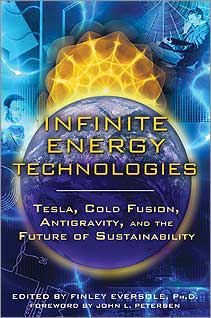
A new book published this year by Inner Traditions and Bear & Company features exotic energy technologies including cold fusion, also called low-energy nuclear reactions (LENR).

Infinite Energy Technologies: Tesla, Cold Fusion, Antigravity, and the Future of Sustainability is edited by Finley Eversole, Ph.D and includes chapters on “clean, sustainable energy solutions from the geniuses of our past and the visionaries of our future” authored by the leading new-energy technologists and writers today.

infinite-energy-technologies-9781594773808Described by the back cover copy,

As the global need for clean, renewable energy grows and the shortage of viable large-scale solutions continues, it is time to look to the geniuses of our past and the visionaries of our future for answers. Taking inspiration from Albert Einstein’s statement that “problems cannot be solved by the same level of thinking that created them,” Finley Eversole explains that the key to a pollution- and poverty-free future of infinite energy lies not in pursuing one single method but in investigating all the possibilities–in uniting as a world in creative pursuit of global transformation.

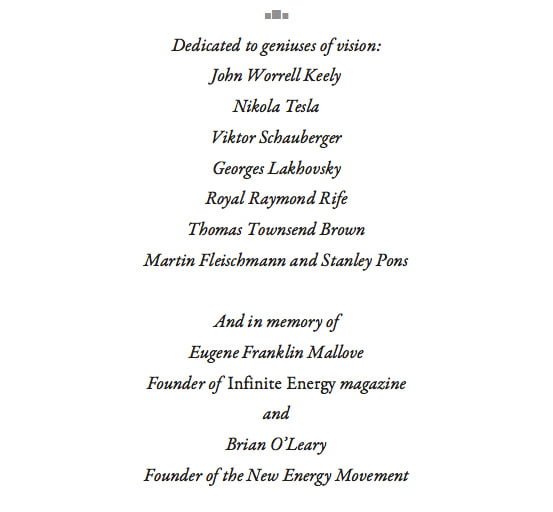
Exploring five nearly unknown geniuses of our past–John Worrell Keely, Nikola Tesla, Viktor Schauberger, Royal Raymond Rife, and T. Townsend Brown–and their revolutionary discoveries about free energy, electricity, water vortex motion, electric ray and super-microscope technology, and antigravity, this book helps to restore their long-suppressed scientific legacies and bring us one step closer to the destiny they foresaw. Eversole has gathered research from leading experts on cold fusion, zero-point energy, power from water, and the free-energy potential of the Searl Effect Generator to reveal technologies that work with Nature’s laws and that, if fully implemented, could establish sustainable energy systems in a single generation.Infinite Energy Technologies: Tesla, Cold Fusion, Antigravity, and the Future of Sustainability [link]

***Support Eugene Mallove‘s New Energy Foundation and buy this book here.***

The Table of Contents
Acknowledgments
Foreword … John L. Petersen
Introduction … Finley Eversole, Ph.D.

Part 1 Back to the Future: The Legacy of the Visionaries

1 Nikola Tesla: Electrical Savant … Marc J. Seifer, Ph.D.
2 John Worrell Keely: Free-Energy Pioneer–a New Chapter …Theo Paijmans
3 Viktor Schauberger: A Brief Overview of His Theories on Energy, Motion, and Water … Callum Coats
4 Royal Raymond Rife: The Fate of Compassion and the Cancer Cure That Worked … Gerry Vassilatos
5 T. Townsend Brown: The Suppression of Antigravity Technology … Jeane Manning

Part 2 Infinite Energy: A New Science for a Pollution-Free World

6 The Sustainable Technology Solution Revolution: A Universal Appeal … Brian O’Leary, Ph.D.
7 Power for the People–From Water … Jeane Manning
8 Imagine a Free-Energy Future for All of Humanity … Steven M. Greer, M.D.
9 Energy Technologies for the Twenty-first Century … Theodore C. Loder III, Ph.D.
10 Harnessing Nature’s Free Energy: The Searl Effect Generator … John R. R. Searl and John A. Thomas Jr.
11 Cold Fusion: The End to Conventional Energy and the Start of Social Reorganization … Edmund Storms, Ph.D.
12 Zero Point Energy Can Power the Future … Thomas Valone, Ph.D., P.E.
Afterword … Brian O’Leary, Ph.D.

Appendix A The Four Occupations of Planet Earth … Tom Engelhardt
Appendix B Evidence of Cosmic Community … Finley Eversole, Ph.D.
Appendix C The Earth Charter
Notes
Additional Resources
Contributors
Index

The 400-page paperpack has 74 black & white illustrations. An excerpt from Chapter 5 by Jeane Manning is available here or as a downloadable .pdf

With humanity facing the dismaying prospects of global ecological collapse and geopolitical chaos, there is an urgent need for clear solutions-based guidance that penetrates our dulled consciousness and pulls us back from the precipice. Infinite Energy Technologies delivers such guidance. Through a powerfully resonant combination of new energy science, societal analysis, and spiritual insight, Finley Eversole’s compilation shakes us awake from our dangerous stupor. The wise voices in this anthology make a compelling case for the immediate embrace of a new wave of energy technologies that is key to launching an era of shared abundance, planetary healing, and unprecedented creativity. I pray that millions will heed this call for action without delay and lead the transformation so desperately needed on our imperiled planet.” —Joel Garbon, President of New Energy Movement and coauthor of Breakthrough Power

Infinite-energy-technologies-dedicated-to

Swedish District Heat Is A Perfect Fit For Cold Fusion

Original article on Atom-Ecology here.

Cold fusion is a technology that has arrived in practical form, and that practical form is simple district heat.

Chilly Stockholm Uses District Heating
It’s strange that so many people think of energy only as electricity to power devices or petrol to fuel a vehicle. Anything short of those most convenient energy sources is treated as if it’s all but useless, certainly not interesting.

This attitude reveals a common human failing that equates manly power with all forms of power. If you can’t fuel a testosterone mutant power machine you are nothing. Fast cars and faster computer video games is what a preponderance of internet ruled media and chat room discussions are all about.

But our human society runs on simple heat. And where it comes to the economics of heat it matters not what the source of the ΔT (extra degrees of temperature) comes from it matters what each degree of ΔT costs!

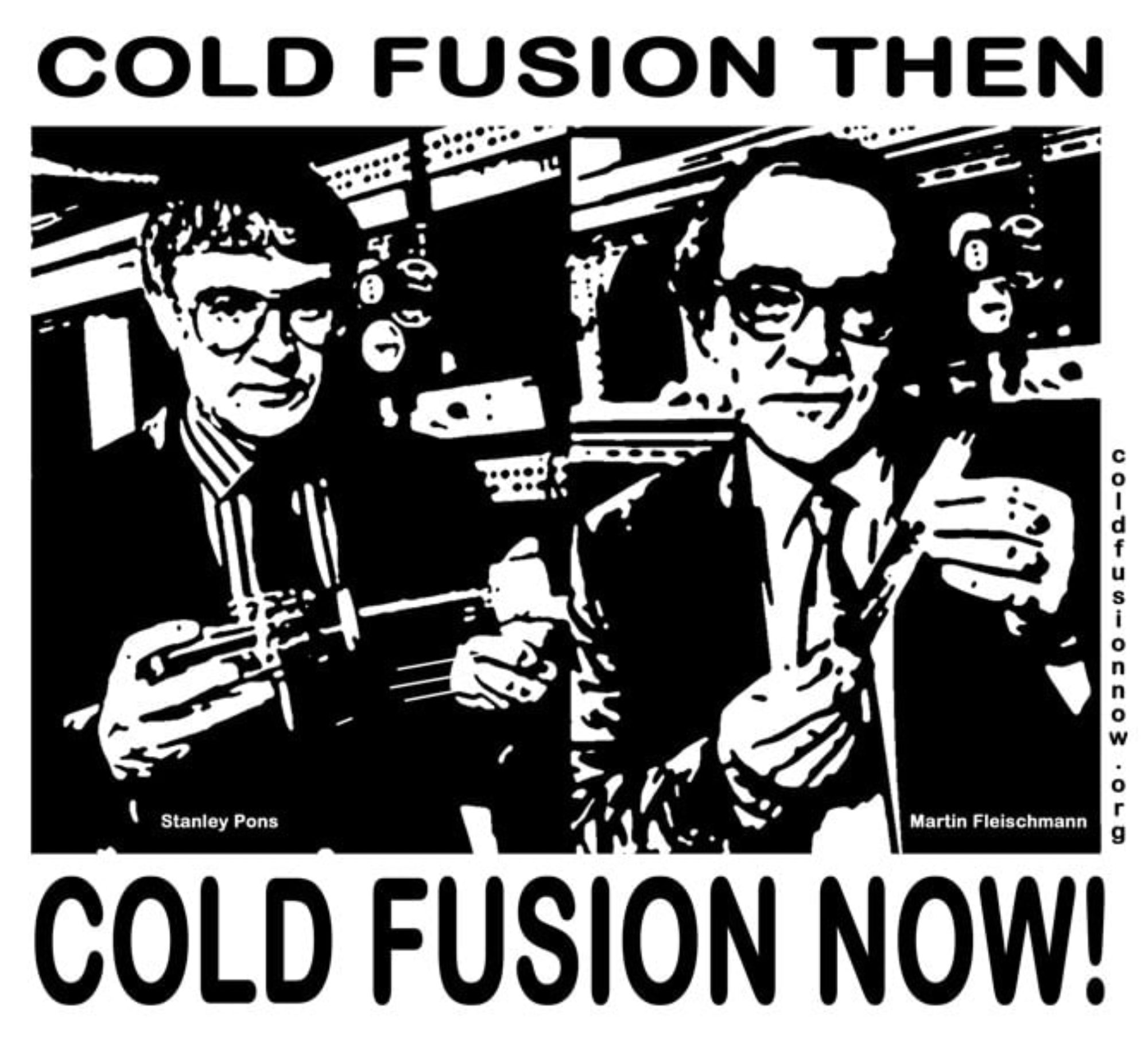
Dr. Stanley Pons and Dr. Martin Fleischmann
Martin Fleischmann knew this very well and his design of his “boiling cell” was just that, a constantly boiling cold fusion cell. Had Martin stacked hundreds of his boiling cells into a common container and done the engineering to manage the heat we’d likely be using his branded cold fusion as a simple boiling water and steam heat source today.

But Martin was a professor and bench chemist and he was more keenly interested in understanding the mysteries of his discovery than engineering practicalities.
glowing hotcat

Recently our friend Andrea Rossi in Italy has shocked the world with his start of delivery of megawatt cold fusion heat machines. Some of his designs produce very high temperatures as evidenced by the glowing red/orange Hot-CAT devices witnessed by many.

Hot cat at 600-800C.
But equally if not more interesting are his lower temperature devices which operate with high efficiency, producing 6 times the energy output in hot water as the energy input to run the devices.

At a design output temperature of 120° C many gadflys and pundits trolling the Internet chat rooms and media eschew this “low temperature” output and worse they bemoan it isn’t even electricity. But Rossi and his team have ignored what Rossi calls “the snakes of the internet” and moved ahead in a pragmatic and practical energy engineering and product delivery process.

Heat is heat and if you have a system that needs a million joules of heat at 120° C then Rossi’s machine is the “cats meow.” If you need 1.5 million joules and Rossi’s machine can give you 2/3′s of that energy on the cheap and you have to burn some conventional fuel to get the last 0.5 megajoules then you are still saving an enormous amount of money on your total fuel bill.

1MW thermal E-Cat on its way to Customer
So now there is an offer to install one of Rossi’s E-CAT cold fusion thermal units in Sweden as a demonstration. A Swedish group is backing the installation, as a proof of commercial principal, in cooperation with some Swedish energy company. They are inviting applications from one and all.

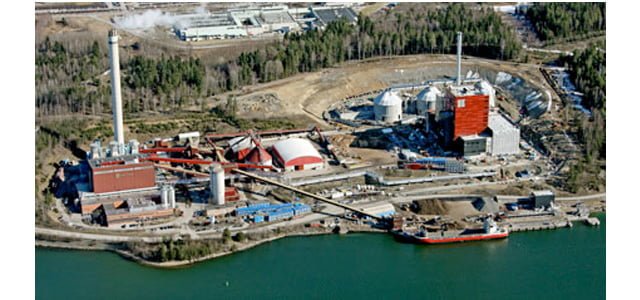
Why Sweden? The answer is very clear. Sweden is one of the many countries that has district heat.

District heat is generated in a centralized location for residential and commercial heating requirements such as space heating and water heating. The heat is often obtained from a cogeneration plant burning fossil fuels but increasingly biomass. Although heat-only boiler stations, utilizing geothermal heating and central solar heating are also used, as well as nuclear power.

District heating plants provide higher efficiencies and better pollution control than localized boilers. According to some research, district heating with combined heat and power (CHPDH) is the cheapest method of cutting carbon emissions, and has one of the lowest carbon footprints of all fossil generation plants.

Insulated steam pipes
District heating system is a vital part of the total energy supply of Stockholm. Almost 60 percent of the customers of the city’s total heat market have chosen district heat.

Throughout Europe many cities choose district heat as a major part of their energy grid. It’s not electrical, it’s hot water and steam heat moved through the city in insulated pipelines much like natural gas but with many advantages.

District heating and cooling plays an important role in the supply of low-carbon heating and cooling in Europe. While having just an average market share of 10 percent in all of Europe, it is much more widespread in North, Central and Eastern Europe, where market shares often reach 50 percent and more. On average, over 80 per cent of heat supplied by district heating originates from renewable energy sources or heat recovery (i.e. from electricity production or industrial processes).

A European Commission confirms the possibility of saving an extra 400 million tonnes of CO2 yearly (corresponding to 9.3% CO2 reduction – thus more than the whole Kyoto target!) with more District Heating and Cooling across 32 European countries. These CO2 savings are projected just from switching to “district heating” using conventional fuels. With cold fusion the CO2 savings might approach 2 billion tonnes of CO2 saved.

As cold fusion heat is added to the expansion of district heating Europe may have a very energy efficient and clean energy future. The time required to implement this cold fusion energy source is incredibly fast, years not decades.

Sergio Focardi in Remembrance

Video by Ecat.com Sergio Focardi: This is an energy revolution

Sergio Focardi from Ecat.com's video This is an energy revolution
Sergio Focardi from Ecat.com’s video This is an energy revolution
Physicist Sergio Focardi of University of Bologna has crossed over.

He was part of an early group that included Fracesco Piantelli and Roberto Habel who pioneered the generation of excess heat from Flesichmann-Pons cells using light-water and the metal nickel.

He inspired and worked closely with Andrea Rossi on the design of the Energy Catalyzer, or E-Cat, a thermal generator that operates from nickel powders and light-hydrogen gas.

Today on the Journal of Nuclear Physics website, Rossi wrote of Focardi’s passing:

Andrea Rossi
June 22nd, 2013 at 2:46 AM

SERGIO FOCARDI, PROF. EMERITUS OF THE UNIVERSITY OF BOLOGNA, IS DEAD. I RECEIVED THE NEW FROM ITALY TODAY AT 3 A.M., USA EASTERN TIME, FEW MINUTES AGO.

We all have lost one of the greatest scientists in the field of the LENR.

For me he has been a tremendous ally, he helped our work enormously and the safety certifications that we are obtaining are the fruit of his consulting during the last 7 years. For me he has been also a teacher for Physics and Mathematics, anytime I needed his help in these matters to better understand the theory behind the effect of the E-Cat.

He has always worked with us with total, absolute and disinterested attitude, thinking only the the interest of the Science behind the LENR.

All the newspapers of the scientific world will say what he has been in the Scientific and University world and his enormous legacy: he has been Professor of Physics, Mathematic, he has been the Dean of the Scientific Faculties of the Alma Mater University of Bologna and the founder of the Cesena branch of the University of Bologna. His pubilcations in the fields of Mathematics and Physics are monumental.

Now, after a long period of illness, that obviously all his friends have taken secret to respect his privacy, he ceased to suffer and starts a new duty for God under anothe form of life. I am sure he will continue to look after my work from where he is now.

See you soon, my great Friend and Master Sergio! I will never forget our work together and that day in the Brasimone Nuclear facility.

Yours Andrea Rossi

Sergio Focardi at TEDxBologna: E-cat e la fusione nucleare fredda con il Nichel e l’Idrogeno

Related

Anomalous Heat Production in Ni-H Systems 1994 [.pdf]
Sergio Focardi, Francesco Piantelli, and Roberto Habel

Overview of Ni-H systems: old experiments and new set-up [.pdf] by E. Campari, S. Focardi, V Gabbani, V. Montalbano, F. Piantelli, and S. Veronesi

Cold Fusion: The History of Research in Italy 2009 [.pdf]

National Science Foundation – Cold Fusion & LENR – Search Engine Censorship

DownloadedFile

The National Science Foundation falls short. According to them, popular Cold Fusion – LENR Science does not even exist. In the age of the Internet this equates to search engine censorship. Recently (last year) the U.S. science.gov finally revealed links to LENR. Yet the National Science Foundation site still leaves people clueless, without any information provided on low energy nuclear reaction science or engineering.

The incident leading up to my investigation of search engine censorship of LENR was a World Wide Science Alert for “Low Energy Nuclear Reaction” sent on Jun 19, 2013, informing me about Doug Wells  – NASA “Low Energy Nuclear Reaction Aircraft” research grant; which enabled our coverage of it.

I then found this about World Wide Science org.

On behalf of the World Wide Science Alliance, WorldWideScience.org was developed and is maintained by the Office of Scientific and Technical Information (OSTI), an element of the Office of Science within the U.S. Department of Energy.

At World Wide Science you will find hundreds of publications about LENR – Search 2013 and 2012 LENR  and 2011 LENR. Including this paper picked up by the “Institute of Scientific and Technical Information of China” web search engine. The Chinese science web portal yields high LENR returns; which leads me to believe more Chinese have news of LENR Energy than do Americans.

NUCLEAR, AND CLEAN 原文传递 Joseph Zawodny, Aviation Week & Space Technology, 2011-01-01

Experimental evidence indicates low-energy nuclear-reaction (LENR) technology is potentially an extremely clean and green energy source that could revolutionize not only aerospace but the wider field of power generation for home and industry. But much work remains to turn today’s inefficient and self-destructive devices into practical powerplants, LENR is a form of nuclear energy. Although research goes back to the birth of nuclear physics, recent work began the late 1980s and the “cold fusion” debacle of Stanley Pons and Martin Fleischmann. A growing body of increasingly repeatable experimental evidence indicates the LENR effect is real and is likely not fusion, cold or otherwise. Theories to explain the phenomenon have emerged, but the majority have relied on flawed or new physics, often being used to explain only a small subset of the extant evidence and ignoring the rest.

Yet nothing is listed about LENR at the U.S. Department of Energy OSTI.  Their search engine censors out the LENR publications found by the World Wide Science search engine. Why? It certanly shouldn’t.

  • Your search – LENR – did not match any documents.

  • No pages were found containing “LENR”.

Only recently has the DoE revealed links to LENR science through their Science Accelerator site. It fails to provide much of the information available, censoring out almost every paper on LENR research. Science Accelerator lists only two LENR publications for 2013, four from 2012, and three from 2011.

U.S. National Science Foundation Fails Mission – Shows Ignorance

Regarding LENR Science
 
QUOTE

“The National Science Foundation (NSF) is an independent federal agency created by Congress in 1950 “to promote the progress of science; to advance the national health, prosperity, and welfare; to secure the national defense…” With an annual budget of about $7.0 billion (FY 2012), we are the funding source for approximately 20 percent of all federally supported basic research conducted by America’s colleges and universities. In many fields such as mathematics, computer science and the social sciences, NSF is the major source of federal backing.

We fulfill our mission chiefly by issuing limited-term grants — currently about 11,000 new awards per year, with an average duration of three years — to fund specific research proposals that have been judged the most promising by a rigorous and objective merit-review system. Most of these awards go to individuals or small groups of investigators. Others provide funding for research centers, instruments and facilities that allow scientists, engineers and students to work at the outermost frontiers of knowledge.

NSF’s goals–discovery, learning, research infrastructure and stewardship–provide an integrated strategy to advance the frontiers of knowledge, cultivate a world-class, broadly inclusive science and engineering workforce and expand the scientific literacy of all citizens, build the nation’s research capability through investments in advanced instrumentation and facilities, and support excellence in science and engineering research and education through a capable and responsive organization. We like to say that NSF is where discoveries begin….

Many of the discoveries and technological advances have been truly revolutionary. In the past few decades, NSF-funded researchers have won more than 200 Nobel Prizes as well as other honors too numerous to list. These pioneers have included the scientists or teams that discovered many of the fundamental particles of matter, analyzed the cosmic microwaves left over from the earliest epoch of the universe, developed carbon-14 dating of ancient artifacts, decoded the genetics of viruses, and created an entirely new state of matter called a Bose-Einstein condensate.” – end quote

The NSF Can “Begin to Discover”

At Cold Fusion Now!

Bose-Einstein condensates and the theorized role they play in the low energy nuclear reactive environment.

  • Purdue Nuclear and Many Body Theory Group – PNMBTG-6-2011

  • “Generalized Theory of Bose-Einstein Condensation Nuclear Fusion for Hydrogen-Metal System” (LENR)

  • Dr. Yeong E. Kim Department of Physics – June 18, 2011

  • ABSTRACT (download pdf)

  • Generalized theory of Bose-Einstein condensation nuclear fusion (BECNF) is used to carry out theoretical analyses of recent experimental results of Rossi et al. for hydrogen-nickel system. Based on incomplete experimental information currently available, preliminary theoretical explanations of the experimental results are presented in terms of the generalized BECNF theory. Additional accurate experimental data are needed for obtaining more complete theoretical descriptions and predictions, which can be tested by further experiments.

  • Read new data about the Rossi reactor (shown as this articles title picture), “Indication of Anomalous Heat Energy Production in a Reactor Device”. Found through a title search here at worldwidescienceorg and at scienceacceleratororg. No reference to the paper is found at the National Science Foundation.

NOTE:

  • The  state of matter called a Bose-Einstein condensate was not “created” by researchers funded by the  National Science Foundation. Rather its existence was verified through scientific experiments. (discovery)

  • Bose-Einstein researchers review LENR papers citing the role of Bose Einstein condensates in the low energy nuclear reactive environment.

  • Learn from Nobel Laureates about popular “cold fusion” science…..         LENR by –Dr. Brian Josephson and LENR by –Dr. Julian Schwinger.

  • The U.S. National Science Foundation assuredly knows about LENR Science and is certainly marginalizing LENR Research.(search engine censorship)

The National Science Foundation has an Impressive Budget

The  NSF FY 2014 Budget Request for the Research and Related Activities (R&RA) Appropriation is: (given in million to one dollars)

  • $6,212.29 million, an increase of $523.29 million, or 9.2 percent, above the FY 2012 Enacted level of
  • $5,689.00 million. Support from the R&RA Appropriation enables U.S. leadership and progress across the frontiers of scientific and engineering research and education.

$6,212,290,000 ($6.2 Billion) +/-  $493,290,000 / 8.6%

That’s 6 billion 212 million and 290 thousand dollars ” plus or minus an estimated $493,290,000

Plus or minus a budget variable of $493.29 million?

The NSF should give that budget variable to…

NSF – LENRgy – Engineering and Science

LENR Grants/$493,290,000/National Science Foundation

Not likely since, at NSF – LENR does not even exist…

Where is Cold Fusion – LENR Low Energy Nuclear Reaction Science at NSF?

LENR Censored at NSF Budget Poorly Spent

National Science Foundation – Cold Fusion / LENR – Search Engine Censorship


Search NASA LENR at the NATIONAL SCIENCE FOUNDATION (link)

Your search – nasa lenr – did not match any documents.

No pages were found containing “nasa lenr”.

Suggestions:

  • Make sure all words are spelled correctly.
  • Try different keywords.
  • Try more general keywords.

There is nothing about NASA LENR at the National Science Foundation.


Then there is this search for “cold fusion”  (link)

Which leads us to this list discrediting popular ‘cold fusion’ researchers

  1. nsf.gov – National Science Foundation (NSF) News – NSF  He organized and chaired the high-profile 1989 meeting on cold fusion that
played a major role in establishing a more scientific perspective on this  
www.nsf.gov/news/news_summ.jsp?cntn_id=104250 – 57k – 2013-05-25
  2. Assessing Fundamental Science: III. Performance Measures with certain caveats: in a few cases, high numbers of citations may indicate
a negative evaluation (eg, the disputed cold fusion results); possible  
www.nsf.gov/statistics/ostp/assess/nstcafsf.htm – 23k
  3. [TEXT] Title : NSF9046 – Directory of NSF-Supported Young Scholars  scrap metal into superconductor materials, finding ways to separate/analyze
vital metals like the palladium used in “cold fusion” energy experiments  
www.nsf.gov/pubs/stis1990/nsf9046/nsf9046.txt  – 1997-01-13


Search for “cold fusion energy” (link)

Yields Nothing!  Zip! (just a 1997 duplicate from the previous search) 

  1. [TEXT] Title : NSF9046 – Directory of NSF-Supported Young Scholars  metal into superconductor materials, finding ways to separate/analyze vital
metals like the palladium used in “cold fusion” energy experiments, or  
www.nsf.gov/pubs/stis1990/nsf9046/nsf9046.txt – 1997-01-13


Search for NASA LENR Documents at the NSF

Search for “Low Energy Nuclear Reactions, The Realism and Outlook” link

by Dennis Bushnell Chief Scientist NASA @Langley (article)

Yields NADA! Zip! Shhh! Keep very, very quiet about it. At the NSF we believe in censorship by omission.

Your search – “low energy nuclear reactions the realism and outlook” – did not match any documents.

No pages were found containing “”low energy nuclear reactions the realism and outlook””.

Search for “The Nuclear Reactor in Your Basement” link

NASA – Climate Change News (article)

Once Again! NADA! Zip!


“LENR – A solution for all your energy needs.” – quote NASA

Not according to the National Science Foundation. LENR energy does not exist!

Contact (LINK)

Demand LENRgy at the U.S. National Science Foundation

NSF Director Subra Suresh – “New Era of Global Science & Engineering”

National Academy of Engineering – Washington D.C. September, 2012 (slideshare)

NATIONAL SCIENCE FOUNDATION

“Where Discoveries Begin” – sic –

FY 2014 Budget Request to Congress

April 10, 2013 (pdf)

End Search Engine Censorship

Begin to Discover @ Cold Fusion Now!


Explore these in-links to this article on the web
About 199 results  (i.e the Blog-O-Sphere)

Post Script

Excellent research and educational opportunities are enabled through the NSF. Most all of the folks at the NSF are outstanding, with zero tolerance for corruption or censorship in science and I respect them for their works. Thank you all for the loving works you do.

And Now… For the Rest of the Story

  • The Scientist Magazine: Exporing Life Inspiring Innovation

Now Part of the LabX Media Group: Lab Manager Magazine | LabX | LabWrench

Clandestine NSF Panel Warms To Cold Fusion

By Christopher Anderson | November 13, 1989

WASHINGTON—Four months after one federal agency killed the prospect of government support of cold fusion, a second agency has brought it back to life.

“The strange phenomenon of low-temperature nuclear fusion, announced at the University of Utah with great fanfare March 23 by two chemists, took another bizarre turn last month when a self-described “upbeat, enthusiastic” panel of experts assembled by the National Science Foundation’s engineering division concluded that the effects of cold fusion are real and “cannot be explained as a result of artifacts, equipment, or human errors.” Besides contradicting a preliminary report issued by another panel of experts convened by the Department of Energy in July, the October workshop was vehemently opposed by physicists and chemists at NSF. In seeming testimony to the audacity of their effort, the sponsors tried to keep the meeting secret, initially planning to transport the participants by bus to an undisclosed location for their three-day meeting. Then, after news of the event was leaked to the press, NSF agreed grudgingly to hold an informal “media opportunity” rather than a public press conference to declare the panelists’ support for further research.”


Top