“Towards the extraction of ‘live’ electricity”: Report from Open Power Association

From Open Power Association Report OO6 by Ugo Abundo and Luciano Saporito, these excerpts are google translated from the original Italian:

Best wishes for the new year 2014 from the staff of hydrobetatron.org/Open Power!
May you be peaceful and happy, and make the most of your projects in the spirit of “open” and sharing, possibilente

Dear friends,
In this latest report, compiled by Ugo Abundo, is communicated in an articulated manner the state of the art of the important work of our team.

In particular, it is shown that, as far as we are concerned, our attention is paid to all those theories, working hypotheses, and experimental ideas, even different, that through a clever synthesis can contribute to achieve the results that we hope for, namely: the discovery of a new energy, economic, inexhaustible and clean, for the welfare of ‘humanity and the survival of Planet Earth!

In particular, our ​​research is oriented to the extraction and production of electricity (electric power) directly from LENR (from Plasma, the Zero Point Energy, etc.), with Overunity.

I do not hide the enormous difficulties faced by our work carried out only on voluntary basis, and in almost no financial aid from the institutions, and so on. While the waste of public money, and the depredations of all kinds, especially in our country, they are all on the agenda.

LoS-for-PeaceRecall that the logo refers to the meritorious and innovative activity and REVOLUTIONARY scientific methodology that is known as the “Live Open Science”, introduced in October 2012 by a group of researchers of the International Martin Fleischmann Memorial Project (MFMP) .

Their website, exclusively for the exchange of scientific information, has so far been visited by more than a million Internet users.

The metolologia of Live Open Science was also recently nominated for the Nobel Peace Prize in 2014! More information is HERE.

Los-for-Peace-LargeOur Logo!

Maybe some good soul wants to nominate even modest We Rircercatori of hydrobetatron.org Open Power for the Nobel Prize for Peace? Certainly this would help a lot also working on our new energy!

Francesco Celani
has published “Improved understanding of self-sustained, sub-micrometric multicomposition surface Constantan wires interacting with H2 at high temperatures: experimental evidence of Anomalous Heat Effects”. For .pdf, click HERE

See our collection of articles, including “HOW MUCH ET INERTIA” by Stephen QUATTRINI and “Quantum Space Theory” (QST) and “THE ATTEMPT TO FLY HIGH NO MORE long overdue” by Ugo ABUNDO and Francis SANTANDREA, by clicking the “WALL” to address: http://www.hydrobetatron.org/articoli.html

“We are humble, but we develop our talents, without false modesty, always remembering that: to understand a poem must be Poets”
Luciano Saporito Open Power Association

***************************************************************************************

A Bridge on Knowledge – 2: Towards the extraction of ” live” electricity
by Ugo Abundo of LENR Open Power Association

Original Italian: Report-006

Google translated: The long period of silence after our meeting of Coherence 2013 Conference on 15 October has seen us working on three major parallel fronts:

  • the experimental set of cathodes that now allow “direct” energy balances in the reactor to be measured, the Calorimetric response times compatible with the demand for scientific precision, and the development of a special protocol of optimal loading of the cathodes, in tune with the functional constraints introduced by operations with the apparatus (pilot program).
  • a powerful work coordinating the responsibilities that belong to the Association: to outline a route to a leap in quality of energy yields theorized about, and the study of solutions for the direct extraction of electrical energy from LENR any apparatus, to which the experimenters demonstrate performance in Overunity, if adaptable to the conceptual core set forth below (theoretical program).
  • a separate design of experiments for new generation reactors that aim to build on theoretical indications and to come to integrate with the phenomenon of which must be an expression (pilot program).

The title deliberately recalls a paradigm exposed long ago to duet with Francis Santandrea on 22Passi, according to which the very different interpretations of this experimental research area can traced back to a common central core whose identification and investigation not only promise to improve the understanding of said specific interpretations, but give rise to a design “synergistic” that is enriched with all aspects and should especially avoid the risk of phenomena antagonists.

In this ambitious goal are collaborating, directly or with their previous work, Francesco Celani, Antonella De Ninny, Fabio Cardone, Santandrea by Francesco Domenico Cirillo, Luciano Saporito, Paola Pieravanti, Michele Di Lecce with Alessandro Burgognoni, in Ugo Abundo and many other precious companions on this journey.

For the first point, it refers to a subsequent communication, to be issued at the completion of the experimental campaign in progress.

As for the second and third front, we have the pleasure to present the following preview for readers!

Conceptual core
We recall the same name as in the previous post we http://22passi.blogspot.it/2012/09/il-ponte-della-conoscenza-post-di-ugo.html [translate]including different types of experiments integrating mainly in the context of a metal matrix condensed capable of accepting hydrogen in the presence of a driving force for loading (pressure, voltage , etc.) and subjected to stresses (plasma, laser, ultrasound , etc. .), also using additives that catalyze one or more steps of the reactions.

He spoke to outline the equipment as triodes generalized (if any third electrode for adjustment) proposing to introduce, if they are not already ‘ constructively present, a cathode (metal matrix), an anode, an interelectrode voltage, a voltage intracatodica, half conductor (electrolyte or ionized gas, eg. hydrogen).

To give a concrete example of adaptation to the paradigm suggested, in a nanostructured (or cathode monolithic, metal layers, powder or composite) reactor cathode wire, it is possible to introduce an anode facing from which starts a voltage relative to the cathode while fed to its heads under less tension, the loading is no longer created by the gas pressure but by the inter-electrode voltage across the void of ionized hydrogen (or the voltage of the electrolytic cell), an RC circuit would extract electrical energy, by means of the download autopulsante in scheme resistance negative (see below), from the source of excess claimed abnormal, be it of Zero Point or LENR (even, possibly, as reported in some papers, from the thermal energy content of the external environment).

Theories
In the literature, a very diverse aspects and implications of the different approaches have been addressed, both in experimental and theoretical.

At the moment, our commitment is not intended to discriminate the validity of competing theories. On the contrary, we consider all the interesting working hypotheses that are internally consistent, to help in the search of the interrelationships between parameters governing the phenomena.

Solicitations
The strain appears to be more effective as a preventive measure, the electric force that directly participates in the charged particles (protons or electrons) within the appropriate paths by making them “buy” the necessary energy and local concentrations under the action of the electric field.

It is, as repeatedly stressed during our presentations, to act both on the field of loading (or deloading, more promising because it does not directly limited by processes in the effect of saturation) and on the migration of the charges through the latex.

The stress then is the administration of periodic pulses of high peak, extremely steep, and very high load-bearing, powers for durations so low as to cause only small energy input to the system.

The techniques implemented using the latest state of the art equipment in the field of production and impulse control, and of K. Shoulders EV (Strong electron), show bundles consisting of an incredibly high number of energetic electrons.

Structures
The adoption of nanostructures is presented as a must for the emergence of behaviors that have been predicted theoretically by several authors (B. Ahern, etc.) relating to far-from-equilibrium conditions and the consequent possibility of localization of energy above threshold levels for the activation of nuclear reactions.

It must not necessarily consist of nano powders, but preferably micro-structure surface nano-powders, in combination with ceramic powders to avoid sintering.

Of fundamental importance is also the presence of alkali or alkaline-earth elements as electron donors.

Systems with two/three active components may raise the synergistic effect. For example, combining metals with significant difference between the Fermi levels, or using piezoelectric or pyro powders, which enhance the effects of the localizations of temperature or of electrical impulses.

Important as well is the experimentation on the stresses in metal colloids. We therefore realized electrodes of metalloceramici to nanoscale structure, and a more easily handled powder.

Reactors
Were designed (and is currently under construction), three different reactors, based on cathodes in electrolytic mixture of powders:

  • a radial configuration, serial and serial Shoulders;
  • two pulse – integrated reactors (which perform both the function of on-site production of the discharge, that the use of ) high voltage, one electrolyte, the other for operation in vacuum;
  • a vacuum tube for replication and enhancement of the experiments of P. Correa, using nano-structured cathodes also metalloceramici.

Extraction of electricity
And ‘ all clear how simple heat production (medium or high temperature) is in itself already a high goal, if achieved by processes that do not require non-renewable fuel, do not produce CO2, do not pollute, and the next step, the transformation of thermal energy into electricity, in addition to requiring high temperatures and a cycle of transformation with machines in motion, always presents low yields.

Thus the need for a direct production of electric energy from processes with unclaimed Overunity is much felt by justify a significant research effort.

The experiments for the extraction of current of P. Correa with Glow Discharges in vacuum tubes, those of A. Chernetsky with Spark Gaps of J.L. Naudin and our plasma electrolytic, have in common at least a fundamental point: the existence of a part of the diagram IV with negative slope, the so-called negative resistance zone, in which a voltage increase corresponds to a decrease of current.
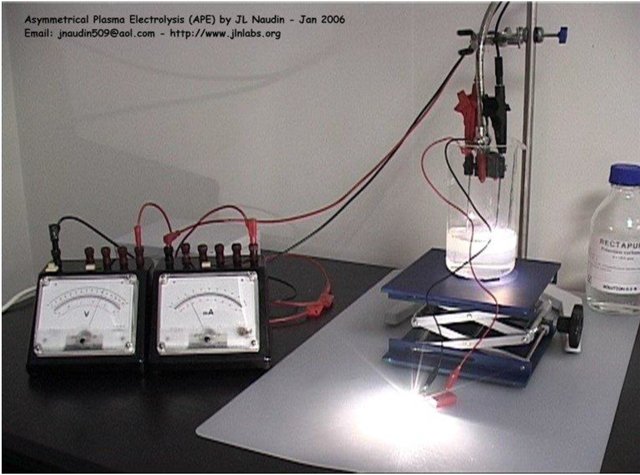
Chart-1

According to the theories, processes are assumed periodic spontaneous reorganization of the plasma, negative entropy, the so-called negentropy.

From the sustained spontaneous oscillations that arise exerting the plasma in these conditions, it is possible to extract energy directly as electricity through an RC circuit consistently sized to agree with the frequencies of pulsation of the plasma.

For example, here is a picture from the site of J. L. Naudin:
http://jlnlabs.online.fr/cfr/ape/apenrg.htm
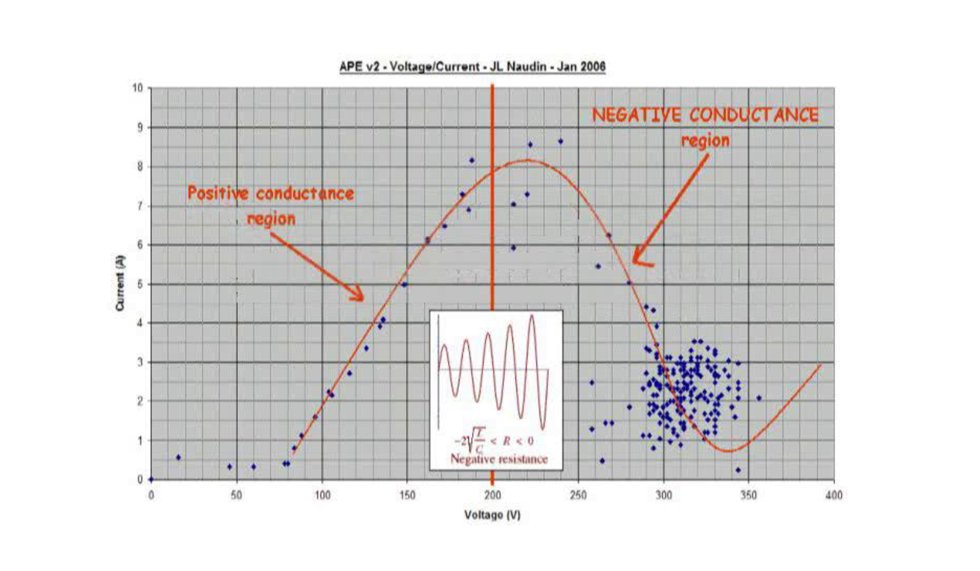
From the labs of J. L. Naudin

In accordance with what is stated, we are determining the values ​​of the optimum parameters for our configurations and for the corresponding operating ranges.

Conclusions
Whether it’s energy or Zero Point of anomalous excess energy, the complex plasma – circuit can extract the energy available and ennobles the form electricity.

It remains to be seen whether, and how much, electricity has pulled from Overunity, but it is certainly a crucial first step towards the efficient production of electricity, a method which deserves to be given an adequate trial.

In addition, the direct provision of electricity brings us closer to the day when we will have self-reliance of equipment, allowing machines to generate enough power to power themselves. —Ugo Abundo Open Power Association

Help support our research and experimentation on LENR

We remind you that you can join the Association “Open Power” by connecting with us at hydrobetatron.org HERE

Or, make a simple donation HERE

January 2014! New year, new outlook!

Related Links

Q&A with Ugo Abundo on newly forming Open Power Association

See Leopoldo Pirelli Instruction Institute student reactors featured in the 2014 History of Cold Fusion Calendar courtesy Ugo Abundo.
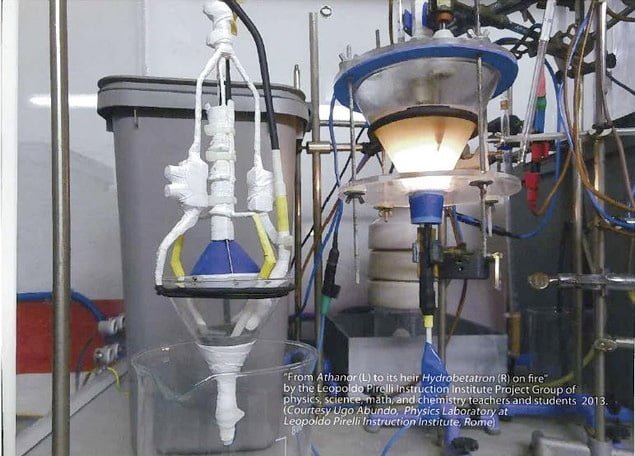
Calendar-photo

President Obama and LENR Energy – Cold Fusion Now

Is President Barrak Obama or MIT aware of developments in LENR Energy?

MIT blocked funding to cold fusioneer Haglestein for LENR Energy research in 2012.

Obama is mute concerning NASA and SPAWAR breakthrough LENR Energy (popular cold fusion) research and engineering.

Here’s an announcement from Mitchell Swartz’s Cold Fusion Times web site of a conference to be held at MIT on March 21-23, 2014, to commemorate the 25th anniversary of the Pons-Fleischmann news conference where they introduced their cold fusion research to the world. I expect more details will be forthcoming.
COMMEMORATE THE TWENTY FIFTH ANNIVERSITY OF COLD FUSION ENERGY SCIENCE AT MIT
THE ANNIVERSITY OF THE  DISCREDITING OF THE ART OF COLD FUSION RESEARCH AND SCIENCE AT MIT
25th Anniversary of the announcement of CF/LANR: March 21-23, 2014 – 2014 Colloquium on CF/LANR at MIT

Speakers: Peter Hagelstein, Mitchell Swartz, Larry Forsley, Frank Gordon, Pam Mosier-Boss, George Miley, Robert Smith, Tom Claytor, Mel Miles, John Dash, Yiannis Hadjichristos, Yeong Kim, Vladimir Vysotskii, Yasuhiro Iwamura, Charles Beaudette

A Google  search of “Obama LENR” http://www.google.com/search?client=safari&rls=en&q=obama+lenr&ie=UTF-8&oe=UTF-8#q=%22obama+lenr%22&rls=en On Dec. 6, 2013  yields this:

Obama Calls Oil “Fuel of the Past”, Pushes Alternatives — Does He Know About LENR? March 8, 2012. E-catworld

http://www.e-catworld.com/2012/03/obama-calls-oil-fuel-of-the-past-pushes-alternatives-does-he-know-about-lenr

“LENR and the U.S. Election” April 14, 2012. Nickel Power http://nickelpower.org/2012/04/14/lenr-and-the-u-s-election/

  1. Questions:1 – What position by Obama would benefit his election campaign, what would hurt him?2 – What position by Romney (I presume he’ll be the Republican candidate) would benefit his election campaign, and what would hurt him?

    3 – During the next term, what role should the president play regarding LENR?
  2. nickelpower.org/2012/04/14/lenr-and-the-u-s-election/

    Apr 14, 2012 – The amount of energy that has been flowing on the previous thread has inspired me to turn it into a post. My short opinion is this — if LENR gets 

  3. ECAThome | All about ECAT

    www.ecathome.eu/

  4. Obama LENR | ECAThome

    www.ecathome.eu/?tag=obama-lenr

  5. Obama Unveils New Climate Change Policy — LENR … – E-Cat 

    ecat-news.com/…/obama-unveils-new-climate-change-policy-lenr-e-cat-…

  6. President Obama Cold Fusion/LENR: Is an October Surprise …

    ecat-news.com/…/president-obama-cold-fusionlenr-is-an-october-surpris…

  7. Buy, Sell, Hold — Which Industries Will Prosper or Decline in an 

    conservativebyte.com/…/buy-sell-hold-which-industries-will-prosper-or-…

  8. Cool Fusion – There seems to be little or no help for low… | Facebook

    https://www.facebook.com/permalink.php?story_fbid…id…

  9. Obama’s 2013 NASA Budget Request Shifts Funds from Mars to 

    article.wn.com/…/Obamas_2013_NASA_Budget_Request_Shifts_Funds_…

    1. Obama Calls Oil “Fuel of the Past”, Pushes Alternatives – E-Cat World

      www.e-catworld.com/…/obama-calls-oil-fuel-of-the-past-pushes-alternati…

    2. nickelpower.org/2012/04/14/lenr-and-the-u-s-election/

    3. www.ecathome.eu/?tag=obama-lenr

    4. obama | ECAThome

      www.ecathome.eu/?tag=obama

    5. Obama Unveils New Climate Change Policy — LENR … – E-Cat 

      ecat-news.com/…/obama-unveils-new-climate-change-policy-lenr-e-cat-…

    6. President Obama Cold Fusion/LENR: Is an October Surprise …

      ecat-news.com/…/president-obama-cold-fusionlenr-is-an-october-surpris…

    7. Buy, Sell, Hold — Which Industries Will Prosper or Decline in an 

      conservativebyte.com/…/buy-sell-hold-which-industries-will-prosper-or-…

  1. Federal cold fusion | ECAThome

    www.ecathome.eu/?tag=federal-cold-fusion

  2. article.wn.com/…/Obamas_2013_NASA_Budget_Request_Shifts_Funds_…

    1. obama lenr | eCat Now! – Rossi eCat News

      ecatnow.com/tag/obama-lenr/

    2. ecatnow.com/tag/lenr-pollicy/

      lenr politics | eCat Now! – Rossi eCat News

    3. ecatnow.com/tag/lenr-politics/

    4. ecatnow.com/tag/obama/

    5. buy | eCat Now! – Rossi eCat News

      ecatnow.com/tag/buy/

Cold Fusion to usher in second Earthrise for “grand oasis”

Video: Earthrise: The 45th Anniversary NASA Goddard

A new and powerful energy technology based on cold fusion will offer humanity a chance for a green technological future, one where all lifekind shares in the freedom of existence and Earth becomes the greatest work of art ever wrought.

Our “grand oasis” is fated for a renaissance in culture as all systems re-boot to accommodate the off-grid, ultra-clean, power generated by the hydrogen in water.

New mental imprints have already initiated Homo sapiens 2.0, and a distinct service environment is forming. After twenty-five years, and heartache aplenty, there is much reason to rejoice.

It’s only a matter of time until the most significant scientific question of our time is solved, and a revolution in life ensues.

christmas-tree-in-woods

Happy Holidays
and

Cold Fusion Now!

From NASA Goddard:

In December of 1968, the crew of Apollo 8 became the first people to leave our home planet and travel to another body in space. But as crew members Frank Borman, James Lovell, and William Anders all later recalled, the most important thing they discovered was Earth.

Using photo mosaics and elevation data from Lunar Reconnaissance Orbiter (LRO), this video commemorates the 45th anniversary of Apollo 8’s historic flight by recreating the moment when the crew first saw and photographed the Earth rising from behind the Moon. Narrator Andrew Chaikin, author of A Man on the Moon, sets the scene for a three-minute visualization of the view from both inside and outside the spacecraft accompanied by the onboard audio of the astronauts.

The visualization draws on numerous historical sources, including the actual cloud pattern on Earth from the ESSA-7 satellite and dozens of photographs taken by Apollo 8, and it reveals new, historically significant information about the Earthrise photographs. It has not been widely known, for example, that the spacecraft was rolling when the photos were taken, and that it was this roll that brought the Earth into view. The visualization establishes the precise timing of the roll and, for the first time ever, identifies which window each photograph was taken from.

The key to the new work is a set of vertical stereo photographs taken by a camera mounted in the Command Module’s rendezvous window and pointing straight down onto the lunar surface. It automatically photographed the surface every 20 seconds. By registering each photograph to a model of the terrain based on LRO data, the orientation of the spacecraft can be precisely determined.Earthrise Earth Observatory
Earthrise_CFN

Industry and academic partnerships report from JCF-14 meeting

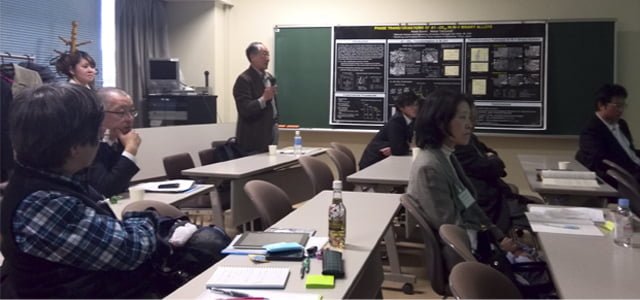
The Japanese Cold Fusion Research Society (JCF) held their fourteenth meeting on December 7-8, 2013 at the Tokyo Institute of Technology in Tokyo, Japan where teams from academia and industry reported on their research.

Japanese business was an early supporter of cold fusion, also called Condensed-matter Fusion (CF), with giants like Toyota Corporation funding research that supported Drs. Martin Fleischmann and Stanley Pons in their French laboratory.

Over the twenty-five years since, official support waned for the notoriously difficult-to-reproduce reaction. The Japanese Cold Fusion Society (JCF) was formed in 1999 to bring scientists still working in the field together to share data. Since then, annual meetings have hosted live demonstrations of energy-producing cells, along with reports on multiple reproductions of key experiments.

Today, momentum is stronger than ever as industry involvement grows rapidly with corporations like Technova, Toyota, and Mitsubishi engaging in partnership with independent scientists and academics to pursue a commercial product.

Clean Planet is a new capital firm now working to advance the field with funding and resources. Founder and Chair Hideki Yoshino attended the recent meeting in Tokyo and described what triggered his involvement.

“On March 11, 2011, Japan was struck by a tsunami which devastated and created havoc throughout this island nation,” writes Yoshino. “The Fukushima meltdown triggered by the tsunami highlighted our vulnerability, even when we have the best back up systems in place. The failure of backup systems has left this country and parts of the world dealing with the threats of radioactive fallout. It became apparent that nuclear fission simply isn’t a safe and clean form of energy. This event was the catalyst for Clean Planet.”

“Clean Planet was created out of the need to better understand how we as a society can grow and prosper while protecting and providing peace and security for our future generations because we believe that a clean, safe and abundant source of energy is the key for the future of our global community.”

Yoshino and his team at Clean Planet have extensive experience in education, business, and law, and they’ve launched strong into CF. Two of the first recipients of support are Dr. Tadahiko Mizuno‘s group at Hydrogen Engineering Application & Development Company (HEAD) and Dr. Yoshiaki Arata‘s team at Arata Research Lab.

“Our direct and transparent approach allows us to 1, fund, and 2, bring human resources to the table which in turn allows us to optimize these resources to their full potential,” says Yoshino.

“Also, by bringing the community of researches and scientist together we are able to share in each others experiences which brings efficiencies both financially and academically to this exciting field of research.”

To what purpose? Yoshino is clear.

“We will initiate, create and distribute clean energy technologies that will enhance the well-being of all mankind to the global community.”

Clean Planet and HEAD will host JCF-15 scheduled for next year in Hokkaido, Japan.

Until then, Dr. X.F. Wang of the Hydrogen Eng. A&D Co. (HEAD) and the Arata R&D Center has filed this report on JCF-14.

JCF-14-Heavyweights

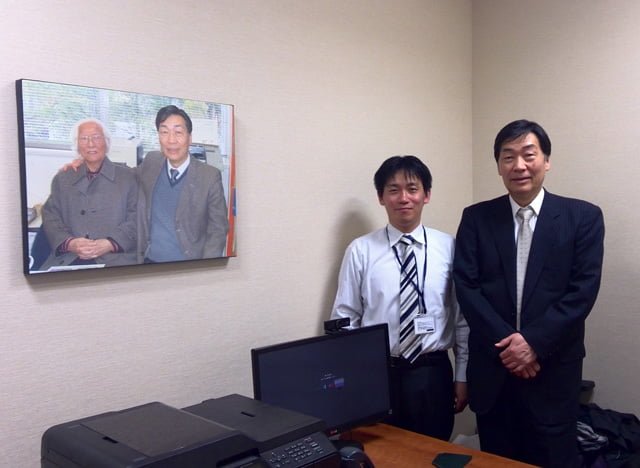
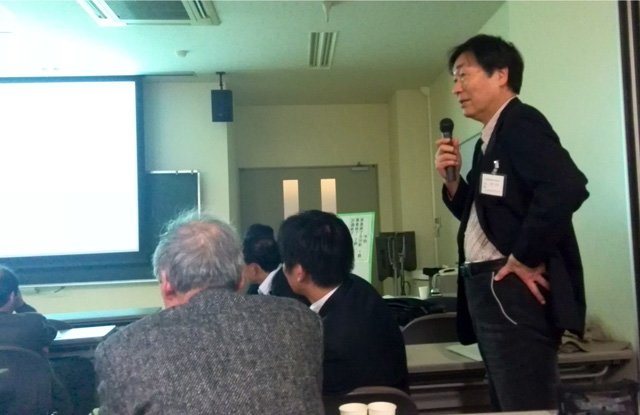
14th Japanese Cold Fusion Research Society Meeting Report by Dr. X.F. Wang

The program: http://jcfrs.org/JCF14/jcf14-program.pdf

The abstracts: http://jcfrs.org/JCF14/jcf14-abstracts.pdf

Paper presentation: Oral presentation 20 min.
(Review: 25min) + Discussion 5 min.
Oral report language: Japanese

Please see the following abstract of JCF14 about the brief content of theoretical analysis, which is not involved in this report. (The abstracts: http://jcfrs.org/JCF14/jcf14-abstracts.pdf)

It is summarized by the speech sequence.

Day 1 Saturday, December 7, 2013

13:00-13:10 Opening Address H. Numata (Tokyo Institute of Tech.)

Experiment-1 Chairman; T. Mizuno (Hydrogen Eng. A&D Co.)

JCF-14-1

13:10-13:35 JCF14-1 A. Kitamura (Technova Inc., Kobe U.)
Title: Study on Anomalous Heat Evolution from H-Ni Nanoparticle System at Elevated Temperature with Mass-Flow Calorimetry

① A new scaled-up (ten-times-larger volume: from 50cc to 500cc) absorption system with oil(boiling point: 390 deg-C)-mass-flow calorimetry (Fig.1) is calibrated using a dummy Al2O3 powder:

Conclusions:
a. The coolant oil reached almost 300 deg.C at heater input of 231W.
b. Long-term stability, or fluctuation in terms of standard deviation, is better than 0.5deg.C.
c. Conversion factor, dW/dT=(0.970.08)W/deg with an oil-flow rate of 20 cc/min.
d. Heat recovery efficiency is (0.880.03) with heat removal time constant of (301.2) min.

②The first trial run with a 50g CNS sample (silica-included Cu・Ni nano-compound containing 4g of Ni) mixed with 200g Al2O3:

Conclusions:
a. Both TC2 at the oil outlet and RTD’s inside the reaction chamber show higher temperatures than for the blank sample, which implies a long-lasting excess power of ~20W(i.e., 5W/g-Ni).
b. The assumed excess heat appears to be on the same order as that of the CNZ(Cu・Ni/ZrO2) sample yielding 2 W/g-Ni excess power.
c. Further measurements with more precise comparison are necessary to confirm the excess.

③ The runs with a 294-g CNZ4 sample (ZrO2-supproted Cu・Ni nano-composite containing 61-g of Ni) with an axial heater added:

Conclusions:
a. TC2 at the oil outlet and RTD’s inside the reaction chamber showed higher temperatures than for the blank sample, which implies an excess power and energy of ca. 10W (i.e., 0.2W/g-Ni) and 30 eV/atom-Ni, respectively.
b. The excess power is hardly explained only by atomic/molecular processes, although no hard radiations have been observed.
c. Further investigations with a variety of run parameters is necessary to enhance the excess.

13:35-14:00 JCF14-2 S. Tsuruga (Mitsubishi H. I.)
Title: Recent Advances in Deuterium Permeation Induced Transmutation Experiments using Nano-Structured Pd/CaO/Pd Multilayer Thin Film

Concluding Remarks:
1. Low energy nuclear transmutations from Cs into Pr, Sr into Mo, Ba into Sm and Ca into Ti have been observed in the Pd complexes, which are composed of Pd and CaO thin film and Pd substrate, induced by D2 gas permeation (Fig.4).
2. An electrochemical method was applied to increase the local deuteron density near the surface of the nano-structured Pd multilayer film. Transmutation products were increased up to ~1μg/cm2 by this approach (Fig.5).
3. Statistically significant gamma-rays were detected. These emissions were supposed to be caused by the increase of transmutation products (Fig.6).

14:00-14:25 JCF14-3 T. Takahashi (Iwate U.)
Title: Deuterium permeation experiment using Pd/Ni multi-layered sample
Deuterium permeation experiment using Pd/Pd/Ni/Pd Multi-layered sample was carried out(Fig.7a).

Experiment process:
1. Sample was sealed inside the stage (shown in Fig. 7c), and then vacuumed (10-4Pa) at temperature 120℃, kept for 48~72h.
2. The temperature of sample was set up to 70℃, and then D2 gas was loaded into the chamber (Fig.7b) until 0.2MPa. D2 gas flow rate was measured by the Mass flow meter. This process was kept for 7 days.
3. After the D2 gas loading process , the chamber was exhausted at temperature 120℃ for 48~72 hours.
4. The sample was analyzed by TOF-SIMS (Time-of-Flight Secondary Ion Mass Spectrometry).
Conclusions:
1. Transmutation products from Element 133Cs were not identified (Fig.8).
2. For other transmutation products (Fig.9), it is necessary to proceed carefully assess from the impurity.
3. It is necessary to investigate about increasing the permeate flow rate, and the optimization of conditions for forming the film (Fig.10).
The flow rate is about 0.1~0.3[ccm/cm2] (Fig.10). Higher flow rate applying the sample immediately after preparation is observed. That is to say that the impurities on the surface is related to the flow rate.

Theory-1 Chairman; N. D. Cook (Kansai U.)

14:40-15:05 JCF14-4 T. Sawada (Nihon U.)
Title: Relation between the magnetic monopole and NAE of the nuclear cold fusion

15:05-15:30 JCF14-5 H. Kozima et al. (CF Res. Lab.)
Title: Atomic Nucleus and Neutron Nuclear Physics Revisited with the Viewpoint of the Cold Fusion Phenomenon

15:30-15:55 JCF14-6 H. Kozima (CF Res. Lab.)
Title: Nuclear Transmutation in Actinoid Hydrides and Deuterides

16:00-17:30 JCF Annual Meeting

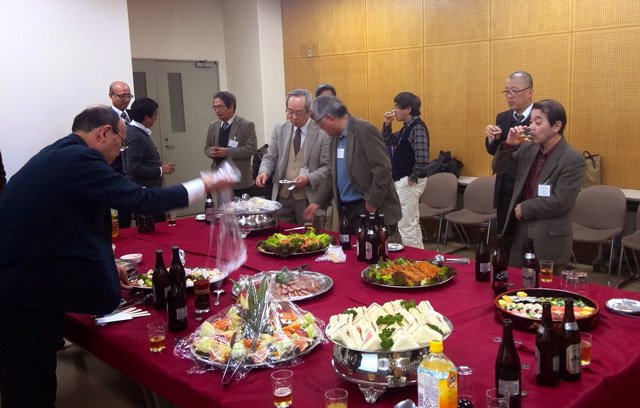
18:00-20:00 Reception

JCF-14-reception

Day 2 Sunday, December 8, 2013

Experiment-2 Chairman; Y. Iwamura (Mitsubishi H. I.)
*This section was chaired by S. Narita (Iwate U.) because Y. Iwamura (Mitsubishi H. I.) called in sick.

10:00-10:25 JCF14-7 X.F. Wang (Arata R&D Center and Hydrogen Eng. A&D Co.)
Title: Synthesis of nano-Pd particles in Y-Zeolite pores by ultrasonic irradiation

0.8nm nano-Pd particles can be synthesized in Y-Zeolite pores by ultrasonic irradiation as shown in Fig.12. Since the synthesis process is not complicated, nano-Pd particles in Y-Zeolite pores can be expected to be applied to Cold Fusion. The Hydrogen/deuterium absorption features of nano-Pd particles in Y-Zeolite pores should be investigated as follows:
1. The effect of species, pores ​​diameter of Y-Zeolite.
2. The effect of average particle size, particle size distribution of Nano Pd particles.
3. The effect of temperature, pressure.

JCF-14-Mizuno-Wang

10:25-10:50 JCF14-8 H. Yamada et al. (Iwate U.)
Title: Impressive Increase in Number of Etch Pit occasionally Produced on CR-39 in Light and Heavy Water Electrolysis Using Ni Film Cathode

Conclusions:
1. The reaction does not always take place in every electrolysis experiment but occasionally does under the same experimental condition.
2. Impressive increase in number of etch pit has been observed in 4 out of 16 for H2O and 1 out of 6 for D2O electrolysis conditions.
3. The common factors to increase number of the etch pit in the CR-39 chip might be
 ①Ni film cathode
②The long electrolysis time
③Li in the electrolyte solution

Theory-2 Chairman; K.Tsuchiya (Tokyo National College of Tech.)

10:50-11:20 JCF14-9 A. Takahashi et al. (Technova Inc.)
Title: D(H)-Cluster Langevin Code and Some Calculated Results

*The source of BASIC EXE applied by Prof. Takahashi can be downloaded from here:
http://hp.vector.co.jp/authors/VA008683/basicw32.htm

11:20-11:45 JCF14-10 H. Miura
Title: Computer Simulation of Hydrogen States near T site in Ni and Pt Metals

11:45-12:10 JCF14-11 H. Numata (Tokyo Institute of Tech.)
Title: Numerical simulation of vortex appeared on electrode surface under long term evolution of deuterium in 0.1M LiOD

Vortex formation locally, triggered by cylindrical pillar current initiation.

12:10-13:30 Lunch

Theory-3 Chairman; E. Yamaguchi (Doshisya U.)

13:30-13:55 JCF14-12 K. Tsuchiya (Tokyo National College of Tech.)
Title: The quantum states of the system including two species of charged bosons in ion traps Ⅲ

13:55-14:25 JCF14-13 E. Igari (Hydrogen Eng. A&D Co.)
Title: Discussion about the quality of the experiments in cold fusion

Conclusions:
When we experiment in cold fusion, we must think about both theoretical and technical issues. The theory of cold fusion continues to evolve. But, the technology of experiment has not caught up with the theory. The Problems remains in the nanostructure and gas control. However, these problems will be solved by technological innovations.

JCF-14-Igari

14:25-14:50 JCF14-14 N. D. Cook (Kansai U.)
Title: Transmutation of Palladium and Nickel Isotopes

14:50-15:15 JCF14-15 H. Kozima (CF Res. Lab.)
Title: Nuclear Transmutations (NTs) in Cold Fusion Phenomenon (CFP) and Nuclear Physics

15:15-15:40 JCF14-16 H. Kozima (CF Res. Lab.)
Title: The Cold Fusion Phenomenon What is It?

**********************************************************************************************

Cold Fusion NOW!

Related Links

Clean Planet [in English]

Japanese Cold Fusion Research Society [in English]

Dr. Yasuhiro Iwamura
at ICCF-18 “Recent Advances in Deuterium Permeation Induced Transmutation Experiments Using Nano-Structured Pd/CaO/Pd Multilayer Thin Film” [slides]

Akira Kitamura at ICCF-18 “A Mass-Flow-Calorimetry System for Scaled-up Experiments on Anomalous Heat Evolution at Elevated Temperatures” [slides]

Akito Takahashi at ICCF-18 “Nuclear Products of Cold Fusion by TSC Theory” [slides]

Decontamination of radioactive ashes by nano-silver by Toshiro Sengaku

No active nuke power in Japan in Toshiro Sengaku

Science journal rejections suppress clean energy research

JCMNSlogoThe recently published Volume 12 December 2013 Journal of Condensed Matter Nuclear Science has an article detailing censorship by science journals.

How the Flawed Journal Review Process Impedes Paradigm Shifting Discoveries” by P.A. Mosier-Boss, L.P. Forsley, and F.E. Gordon describes the experience of these researchers as they submitted papers describing their low-energy nuclear reaction (LENR ) experiments to mainstream science journals.

From the Abstract:

The purpose of scientific journals is to review papers for scientific validity and to disseminate new theoretical and experimental results. This requires that the editors and reviewers be impartial. Our attempt to publish novel experimental results in a renowned physics journal shows that in some cases editors and reviewers are not impartial; they are biased and closed-minded. Although our subject matter was technical, its rejection was not: it was emotionally charged. It was an agenda-laden rejection of legitimate experiments that were conducted in US DoD and DoE laboratories. This paper describes the flawed journal review process, detailing our own case and citing others. Such behavior on the part of editors and reviewers has a stifling effect on innovation and the diffusion of knowledge.
© 2013 ISCMNS. All rights reserved. ISSN 2227-3123

Noting that the rejection of revolutionary science “is hardly a new phenomenon”, the authors quote from Responsible Conduct of Research by A.E. Shamoo and D.B. Resnik:

History provides us with many examples of important theories that were resisted and ridiculed by [reviewers of] established researchers, such as Gregory Mendel’s laws of inheritance, Barbara McLintock’s gene jumping hypothesis, Peter Mitchell’s chemiosmostic theory, and Alfred Wegener’s continental drift hypothesis. –Shamoo and Resnik

Shamoo and Resnick explain what these decisions regarding new energy research have meant:

As a result of this controversy, it has been difficult to conduct peer-reviewed work on cold fusion, because mainstream physics journals select reviewers with strong biases against cold fusion.

Boss, Forsely, and Gordon had submissions to journals rejected by reviewers who knew little about the phenomenon or the instruments involved, and didn’t attempt to learn. The authors found “the lack of curiosity and the unwarranted, surprisingly emotional responses” shown by some reviewers “disturbing”.

The consequences are far-reaching:

One immediate and long lasting effect of journals refusing to publish papers on as yet controversial observations is the elimination of a field of research and the diminution of scientists and engineers working in it. Without peer-reviewed publications, university faculty are precluded from funding as well as students, as no student will pursue an unrecognized field where jobs do not exist. Scientists are unable to find funds or management support. Entrepreneurs are limited because it is not likely that corporate angels or venture capitalists will risk funds on a technology, which is denigrated by leading scientists and subject to ridicule. In 1991, Nobel Laureate Julian Schwinger [38] aptly summarized the problem when he wrote:

“The pressure for conformity is enormous. I have experienced it in editors’ rejection of submitted papers, based on venomous criticism of anonymous referees. The replacement of impartial reviewing by censorship will be the death of science.”

Indeed, this whole situation is a “Catch-22” [39]; a situation named for the war novel in which a pilot who claims he is crazy so he wouldn’t have to fly missions, but by refusing to fly missions he proved he was sane! Our Catch-22 is that both DoE and DoD have unequivocally stated that until “first-tier” journals, like Science and Nature, publish papers inn this field, they will not fund programs. But, editors of these journals have stated they would not publish papers without DoE acceptance of the phenomena: a Catch-22. –Mosier-Boss, Forsley, and Gordon.

The Journal of Condensed Matter Nuclear Science (JCMNS) is published by the International Society of Condensed Matter Nuclear Science (ISCMNS).

Read the article “How the Flawed Journal Review Process Impedes Paradigm Shifting Discoveries” in Volume 12 December 2013 [.pdf]

MIT IAP Cold Fusion 101 to run again

The IAP course on cold fusion co-taught by Drs. Peter Hagelstein and Mitchell Swartz is scheduled to run again in 2014 for a third year in a row.

Cold Fusion 101: Introduction to Excess Power in Fleischmann-Pons Experiments will be held on campus at the Massachusetts Institute of Technology (MIT) January 27-January 31 at 10:30AM-1:30PM in Room 4-145. The class is sponsored by the MIT Electrical Engineering and Computer Science Department where Hagelstein is a faculty member.

In 2012, the course was well-attended and featured a JET Energy, Inc demonstration of the NANOR, a nano-material, two-terminal component that generates excess energy gain using a dry, pre-loaded hydrogen fuel. Open to the public for viewing, the NANOR ran for months in Hagelstein’s office. Massachusetts State Senator Bruce Tarr visited the campus to witness the event, and is now a supporter of the pioneer technology.

Cold Fusion Now’s Jeremy Rys attended the course in 2013 and videod the lectures throughout the week. Problems with the audio feed were lessened with a second Enhanced Audio edit by uploadJ. Watch the 2013 background and theory lectures by Peter Hagelstein here, and see the experimental and technology talks by Mitchell Swartz of JET Energy, Inc. here.

The course syllabus includes:

Excess power production in the Fleischmann-Pons experiment;
lack of confirmation in early negative experiments;
theoretical problems and Huizenga’s three miracles;
physical chemistry of PdD;
electrochemistry of PdD;
loading requirements on excess power production;
the nuclear ash problem and He-4 observations;
approaches to theory;
screening in PdD;
PdD as an energetic particle detector;
constraints on the alpha energy from experiment;
overview of theoretical approaches;
coherent energy exchange between mismatched quantum systems;
coherent x-rays in the Karabut experiment and interpretation;
excess power in the NiH system;
Piantelli experiment;
and prospects for a new small scale clean nuclear energy technology.

Independent Activities Program (IAP) is designed for MIT students wishing to learn between semesters, but enrollment is open with permission from the instructor and there is no advance registration required. For more information and to contact the instructor, visit the IAP Cold Fusion 101 course page.

Related Links

Synopsis of Cold Fusion 101 2013 [.pdf] by Gayle Verner Infinite Energy Magazine

Peter Hagelstein Introduction to Excess Power … 2013

Mitchell Swartz Introduction to Excess Power … 2013

Slide Set of NANOR®type output presented at MIT IAP Course [.pdf] 2012

Top