THE PRESSURIZED CIHT UNIT – after the SunCell


To: Industry and Government

The following letter was sent to Blacklight Power (BLP) in the hope that the original CIHT unit [now apparently redundant because of the promise and enthusiasm for their SF-CIHT project] could be revisited with a prospect of being commercially viable as perhaps, a second alternative to their main project [with the SF-CIHT]. I hope you find the following interesting

John Varney

—————————————————————-
To Dr. Randell Mills
Dated September 3rd. 2014 -[Rev 1 dated Sept. 4th. 2014]

From John Varney

THE PRESSURIZED CIHT UNIT
Using saturated steam at 500 psig as electroyte – Generated in a small adjacent pressurized electric kettle.

The steam passes from the inlet chamber via a porous anode disc and a porous [non conductive] catalyst containment disc, through the stack of catalyst discs, to the other catalyst containment disc and then the cathode disc to the outlet chamber.
This vertical cylindrical unit with the steam inlet chamber at the top and the steam outlet chamber at the bottom will have an effective stack height of say 36 inches and a disc diameter of 12 inches.
The shell, with an internal diameter of 12.06 inches will be made of a non-conductive, non-porous material [perhaps a composite material] of suitable thickness to contain the steam pressure. The design conditions of all pressure parts shall be generous to withstand temperature excursions that may occur during the three phases of operation [ charge phase, discharge phase and idle phase ].
The complete exterior of the pressure vessel will be applied with a 4 inch layer of insulation such that little heat will be lost from the unit during operation in the charge or discharge phases.

A small, compact and simple electric steam generator or kettle [constructed of same material as pressure vessel for the CIHT unit] will provide a low feed rate of saturated steam [at a final pressure of 500 psig and derived from a distilled water feed]that will be maintained throughout all three phases of operation.
In the event of over pressure due to electrolysis in the charge phase or a temperature excursion during the discharge phase, bleeds from the top or bottom chambers will be automatically activated to re-establish the operating pressure and temperature. If some condensation is occuring within the CIHT unit then this will be handled with a steam trap serving the bottom chamber.

With regard to bleeds, [following experimentation, showing magnitude, frequency and causes of pressure/temperature excursions during the charge or discharge phases] it may be practical to initiate, on commencement of charge, a continuous micro-bleed [from the bottom chamber] and to have a slightly larger bleed to automatically cut in when serious over press/temp occurs [that can not be corrected with the micro-bleed]. The accumulative loss of steam with such a system could still be small and acceptable [energy wise] whilst enabling the unit to operate smoothely without ongoing operator interface.

Note: The unit may be mounted in a horizontal position, but care taken to drain minute condensate effectively to steam trap.

CHARGE PHASE
When the steam condition in the CIHT unit has gradually increased and is stabilized at 500 psig, the charging phase may proceed and with a 36 inch total layer of catalyst discs to be penetrated, the voltage required may be substantial [perhaps in the range of several hundred volts]. When the charging energy approaches zero, the electrolysis [charge] phase is ended and the discharge phase can begin.

DISCHARGE PHASE
Only experimentation will indicate the optimum conditions of discharge or the consistency, duration, magnitude of exported energy.
It is probable that temperature or pressure excursions will occur and will require focused attention to remedy.
One would not be surprised if the basic performance signatures of the pressurized CIHT unit were indeed found to be remarkable and encouraging.

John Varney

I trust you find the above of some interest in that it would provide a secondary option to your promising SF-CIHT unit.

“The Explanation of LENR” book review by Nikita Alexandrov

Book Review of The Explanation of Low Energy Nuclear Reaction by Nikita Alexandrov, President of Permanetix Corporation, was originally published in Infinite Energy Magazine issue #117 September/October 2014 and is reproduced here.


Dr. Edmund Storms, one of the foremost experts in cold fusion/LENR research has recently published a new book titled The Explanation of Low Energy Nuclear Reaction: An Examination of the Relationship Between Observation and Explanation. Dr. Storms worked at Los Alamos labs for 34 years studying energy related chemistry, specifically advanced nuclear projects. This book is currently the most up-to-date compilation of LENR research and contains over 900 references, but is written in such a way that it is organized and conducive to a well rounded understanding.

According to the preface by Dr. Mike McKubre of Stanford Research Institute, “There is no better synthesis of knowledge and understanding presently available to us and I know of no other person capable of making an evaluation at this level.” While this could be considered a reference material for experimental results, it differs from Dr. Storms’ previous books in that it introduces his theory of the mechanism behind the LENR effect, an oscillating linear cluster of two or more hydrogen or deuterium atoms called the Hydroton.
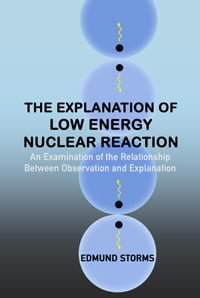
Front-cover-300ppi-200x298The first half of the book contains a wealth of knowledge regarding the experimental results obtained in the field. This includes the physics of the various experimental systems as well as an overview of instrumentation and general trends in the collective data. There are a large amount of pictures and graphs which really help to mentally process some of the complex relationships in the data. This section of the book is critical for anyone interested in LENR because it organizes and condenses the experimental procedures and results in a way which makes the huge amount of seemingly contradictory research much simpler to understand.

Dr. Storms takes a first-principles approach and imposes certain limits on the parameters of LENR theory based on what has been observed and basic chemical and physical principles. The experimental techniques used in the field are explained as well as the limitations and some reasons all of the facets of the LENR effect have eluded researchers. An overview of the physics of radiation from various nuclear reactions which may be present is very helpful in explaining the odd experimental results of the field. It is proposed that only a few types of radiation are produced directly from the LENR reaction but secondary radiation is produced from either the interaction of radiation with other matter in the system, traditional nuclear effects such as fractofusion (example: Ti-D experiments) or combination fusion-fission reactions (very unique part of the Hydroton theory). Dr. Storms goes into detail about how he believes various triggering methods initiate or improve the production of the LENR effect.

Hydroton-vertical-chain-137x800Dr. Storms’ theory revolves around a linear oscillating cluster of two or more hydrogen or deuterium atoms called a Hydroton. Under certain conditions this structure forms in the nano-cracks of metallic substrates. This differs significantly from the early theories of LENR in that it does not take place in the metallic lattice. Many theories are based on the fact that hydrogen or deuterium loaded into a metallic lattice inherently become pushed very close together, a shortcut towards fusion. These same theories require that the nuclear energy be communicated directly from the nucleus to the electrons (lattice) which is not unheard of but is not a traditional nuclear pathway and requires a complex explanation. Dr. Storms examines the lattice vs. nano-crack argument from a chemical, thermodynamic and transport standpoint, pulling from what we know of nuclear product production in LENR and the physics and chemistry of hydride/deuteride systems.

Dr. Storms insists that it is simply not possible to both produce fusion and dissipate the energy inside of a lattice. His model does not rely on energy dissipation via the lattice but through a steady release of bursts of low energy photons as the Hydroton oscillates and fusion occurs. Another significant difference compared to most theories is that it explains the different results obtained using deuterium vs. using hydrogen via two different mechanisms. This is important because many early theories only focused on deuterium fusion ignoring hydrogen all together, but modern experiments show that hydrogen does indeed participate in the LENR effect.

Lastly, Dr. Storms explains the various methods of producing transmutation products, either via a fusion-fission reaction of a hydrogen containing Hydroton or by the substrate atoms becoming part of the Hydroton in deuterium containing Hydrotons. The mechanism producing tritium and helium is explained in detail as well, but will not be explained here. Dr. Storms’ theory explains all known aspects of LENR in a very new way, not requiring the limitations of the mechanism taking place directly in the substrate lattice.

This theory is testable in various manners. Dr. Storms makes some suggestions in the book including the confirmation of predicted transmutation products as well as the detection of soft radiation such as low energy photons, betas, alphas and energetic ions. Dr. Storms points out that the reason radiation is not often detected is that the expected types and energies of radiation can simply not be detected outside of the experiment, requiring in-situ soft radiation detectors. So far it seems that experimental results line up with Dr. Storms’ theory but since his theory was built around this data it is important that future experiments be compared to what is expected using his model. Single or multiple deuterium addition to the substrate in deuterium containing Hydrotons, or fusion-fission products in hydrogen containing Hydrotons, would be expected and a good place to examine the theory experimentally.

Overall this is an excellent theory which can make some predictions; it will not allow us a complete mastery of LENR but is a large step in the right direction. Most of Dr. Storms’ theory is based on traditional physics and chemistry but there are certain aspects which are not fully understood, specifically how a Hydroton releases controlled bursts of photons at very low energies before the completion of the fusion process. This is the sticking point of LENR theory—it is not so hard to explain how two atoms fuse, but how they release their huge amount of energy without creating standard hot fusion products and detectable radiation as well as destroying the lattice local where the event took place.

By investigating experimental results and applying his physics and chemistry understanding, Dr. Storms is able to produce some basic equations which explain the power produced by LENR systems and show optimal operating conditions. Like everything else Dr. Storms produces, these equations are created using first principles and basic science; a Ph.D. is not required to wrap your head around this book as well as his theory in general.

Dr. Storms’ book contains a chapter of modern theories of LENR including limitations and possible shortcomings. This inventory of theories is great because it provides an excellent balanced overview of the field from a theoretical standpoint. This combined with the overview of the field from an experimental standpoint makes this the best reference book in the field of LENR. This book is highly recommended for anyone from the student interested in learning about LENR for the first time to highly trained scientists working in the field of LENR. There will be no disappointment in the level of detail and with over 900 references it provides an incredibly organized wealth of information regarding LENR experiments and theory.

The final chapter “Future of LENR” provides a road-map forward, listing the requirements for mastering the LENR effect as well as what needs to be done experimentally to get there. One thing the book does not mention is that Dr. Storms is ready and willing to put his LENR skill-set and understanding to the ultimate test—along with other researchers Dr. Storms has proposed an experimental research program to further the understanding of LENR. Dr. Storms is currently in the process of raising money for this research program and at millions of dollars per year, this could be the Manhattan project of LENR. The only thing standing between mankind and a guaranteed increased understanding of LENR is research funding and public awareness. I urge anyone interested in LENR to inform others about this book and the field in general and those which are financially independent to contact Dr. Storms about his research proposal. — Nikita Alexandrov, Permanetix Corporation

Read the original article published on Infinite Energy.

Related Links

The Explanation of LENR Homepage http://lenrexplained.com/

Nikita Alexandrov Advanced analytic and highly parallel Cold Fusion Experimentation [.pdf] presented at the 2014 CF/LANR Colloquium at MIT.

Dr. Sally Goerner Discusses Chaos, Complexity & Social Transition — Interview

This is an interview I recently conducted w/ general systems theorist Dr. Sally J. Goerner. While not focusing on Cold Fusion-LENR per se, it does focus on how a society might transition (aka self-organize) during a time of tumultuous change. It seems to me that CF-LENR, as well as the hope & uncertainty that accompanies it, is undoubtedly part of this complex “bifurcation point” in planetary history. I think the success of CF-LENR depends as much on humanity discovering innovative and/or “emergent” social arrangements, aka “cooperative modes” — and the two technologies will mutually reinforce one another through feedback. The dialogue is rather long, so I have provided an outline below. Thanks for taking an interest:

0.min-10.min: Dr. Goerner’s eclectic background; general systems theory; studying under Ralph Abraham; patterns & strange attractors; physical vs. spiritual; order-producing universe; energy network science vs. chaos theory; popular misconceptions surrounding chaos theory; lost meaning & lost science

10.min-20.min: Energy flow networks; self-organization vs. classical mechanization; basic elements of chaos theory; complementarity & chaos; boiling water & hydrodynamic self-organization; autopoetic cycles; bifurcation points

20.min-30.min: Orders & David Bohm; entropy as a subtle form of order; quantum chaos; fractal orders; particles as localized energy flow; linear vs. non-linear systems; importance of coupling; determinism

30.min-40.min: Reconceptualizing evolution; information & self-organization produce evolution; adapting to information & crises; co-evolution & stages of consciousness; fractal hierarchy & panarchy; distributed power & learning to listen; autopoetic genesis of DNA; Freeman Dyson’s energy accident

40.min-50.min: Holographic DNA; Stephen Jay Gould; aperiodic evolutionary jumps; Darwinism & elite politics; fallacy of Social-Darwinism; Dawkins & free-market society; How the Leopard Changed Its Spots; development of the prefrontal cortex; reforming economics & finance; economics as a complex metabolism; appealing to power-brokers; bio-mimicry & development; needs hierarchies & dysfunction

50.min-60.min: Necessary conditions for self-organization; corruption; focus on what energizes you; thinking outside the box; reading & synthesizing; the politics of resignation; transition from medieval worldview to modern age; distortion of society’s root metaphor; After the Clockwork Universe

60.min-69.min: Bifurcations & social change; Jean Gebser & integral society; solutions & education; local order & global order; restoring integrity; reciprocity & the science of cooperation; time-banking; beyond charity; banking reform; international development of networks vs. GDP growth; constraining metrics & NGOs

Also see:

Dr. Edmund Storms Explains LENR Theory — Interview

Dr. Brian Ahern Explains Non-Linear LENR — Interview

Joint Institute of Nuclear Research cold fusion seminar video

Dr. Edward Tsyganov of Cold Fusion Power presented a Cold Nuclear Fusion Seminar at N. N. Bogolyubov Laboratory of Theoretical Physics (BLTP) 2014 in Dubna, Russia.

Powerpoint files of the presentation can be found here.

A video news report on the event was posted by the Joint Institute for Nuclear Research JINTV here and on Youtube here

A transcript of the video news report was provided by Scientific Information Department JINR 2014 and is reproduced below:

The seminar, which dealt with cold nuclear fusion, took place at the Laboratory of Theoretical Physics of the Joint Institute for Nuclear Research. In his report, Professor Edward Tsyganov gave a possible explanation of the effects observed in numerous experiments. The scientist was asked many questions. Currently, physicists believe that there is no conclusive evidence for the existence of cold fusion. However, cold fusion studies continue to be carried out in various countries in order to discover and secure an inexhaustible supply of nuclear energy.

It all started with a report by chemists Martin Fleischmann and Stanley Pons on electrochemically induced nuclear fusion—the conversion of deuterium to tritium or helium through electrolysis using a palladium electrode. This report, which appeared in March 1989, caused quite a stir. The scientists observed neutron emission and the recovery of large amounts of heat, which are signs of nuclear processes. However, the scientific community believes that their claims are incomplete and inaccurate. So-called cold fusion established itself as a pseudoscience; however, after a public demonstration of the experiment using electrochemical cells in 2008 by Yoshiaki Arata of Osaka University, discussions on cold fusion began to appear again.

Known nuclear fusion reactions—thermonuclear reactions—take place in plasma at temperatures of millions of degrees Kelvin. So-called cold nuclear fusion assumes the possibility of nuclear fusion reactions in chemical (atomic and molecular) systems without significantly heating the working substance. However, most chemists and physicists are trying to find an alternative (non-nuclear) explanation for the phenomenon.

Professor Edward Tsyganov remarked that, when saturating conductive crystals with deuterium atoms, the presence of free electrons in the crystal potential niches leads to a ban for the unexcited deuterium atoms to occupy these niches. At the same time, even the first excitation level of deuterium atom removes this ban. When all of the potential niches have already been filled by deuterium atoms at least once, further saturation of a crystal with deuterium atoms gives rise to twin clusters of atoms in one such niche.

In most of these clusters, deuterium nuclei are pulled together to distances of 1/10–1/20 of the nominal size of these atoms. The zero level of quantum mechanics vibrations in the adjacent deuterium nuclei quickly leads to the penetration of the two deuterium nuclei through the reduced Coulomb barrier. The spatial orientation of the excited deuterium atoms in the crystal lattice is strictly determined with respect to one of the crystal lattice’s spatial directions.

The report also discussed the further dissipation of energy during the transition from the excited state of 4He* to the ground state–formed nuclei of 4He (~24 MeV).

This was the second seminar on the topic of cold fusion at JINR. About a year and a half ago, Professor Edward Tsyganov gave a similar talk at JINR. Both then and now, his report “DD fusion in conducting crystals” has caused heated debate.

–Scientific Information Department JINR 2014

Editor: Inna Orlova
Video: Igor Belvedersky

Related links:

Cold Fusion Power Dubna conference files

Appeal to Putin on cold fusion countered with “nothing new”

Open Power Association Newsletter #13: Lab photos and “magnacules”

The Open Power Association’s recently released Newsletter #13 contains a wealth of news and information touching upon science, politics and the environment. Below are selected excerpts of interest to cold fusion readers, google-translated and slightly modified to facilitate understanding.

Go to http://www.hydrobetatron.org/ to download a .pdf of the file.

*********************************
OPEN POWER WISHES HAPPY HOLIDAYS! (SEPTEMBER THERE WILL BE MORE GOOD NEWS)

London-lab
Open Power Laboratory is in full swing! See the whole gallery of photos here: http://www.hydrobetatron.org/


2-Schema-Santelli
Luciano Saporito: The new chemistry “magnecules” (a term coined by prof. Ruggero Maria Santilli) paves the way for an energy revolution unprecedented in the development of clean technologies and even able to restore the environmental balance strained by two centuries of use of traditional fuels. Even for the non-specialist it is possible to approach these issues by reading the book by RM Santilli “magnecular structure with the new fuels.”
Full article: http://www.hydrobetatron.org/files/02_VersB_Articolo_Ruggero-Maria-Santilli.pdf


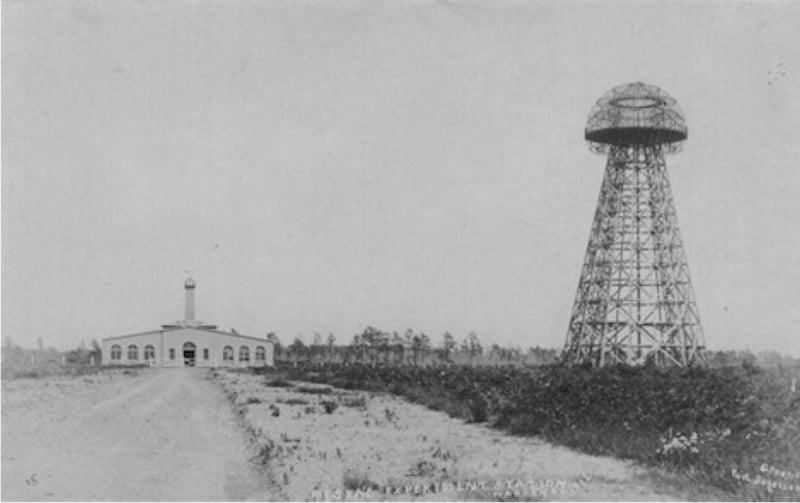
3-Tesla-tower
“RUSSIAN SCIENTISTS WANT TO REBUILD THE TOWER OF TESLA”
Full article: http://nexusedizioni.it/it/CT/scienziati-russi-vogliono-ricostruire-la-torre-di-tesla-4524


4-oil-rig
“The oil will run out by 2067”
Full article:
http://www.greenstyle.it/petrolio-si-esaurira-entro-il-2067 100048.html?utm_source=newsletter&utm_medium=email&utm_campaign=Newsletter:+Greenstyle&utm_content=15-07-2014+petrolio-si-esaurir-entro-il-2067

“Shale gas: California orders to stop fracking”
Full article:
http://www.greenstyle.it/shale-gas-california-ordina-stop-al-fracking-101630.html?utm_source=newsletter&utm_medium=email&utm_campaign=Newsletter:+Greenstyle&utm_content=21-07-2014+shale-gas-california-ordina-stop-al-fracking

“The war of Gas: behind the Israeli invasion of Gaza, there are fields”
Full article:
http://www.ilprimatonazionale.it/2014/07/22/la-guerra-del-gas-dietro-allinvasione-israeliana-ci-sono-i-giacimenti-di-gaza/

Picture: Foecardiff.co.uk
5
“Let them eat carbon. How Big Tobacco and Big Energy to build on the developing world ”
Full article: http://www.tzetze.it/2014/07/che_mangino_carbonio_in_che_modo_big_tobacco_e_big_energy_puntano_sul_mondo_in_via_di_sviluppo/

6-no-water“Water, a tempting resource that is going to end”
Full article: http://www.tzetze.it/2014/07/acqua_la_risorsa_che_fa_gola_a_tutti_sta_per_finire/

“WINTER BREAKS OUT IN THE USA (IN SUMMER), WHILE AT YELLOWSTONE ROADS MELT”
Full article: http://nexusedizioni.it/it/CT/negli-usa-scoppia-linverno-in-estate-mentre-a-yellowstone-si-sciolgono-le-strade-4522

Patrick Moore “EX EXPONENT GREENPEACE WORRIED ABOUT THE IMPENDING GLOBAL COOLING”
Full article:
http://nexusedizioni.it/it/CT/ex-esponente-di-greenpeace-preoccupato-per-il-raffreddamento-globale-imminente-4519

NASA is certain: “aliens exist”. Thanks to the new data and new telescopes, within a maximum of twenty years, astronomers could announce the breakthrough. “We are not alone in the universe.”
Full article:
http://www.tzetze.it/2014/07/la_nasa_sicura_non_siamo_soli_nelluniverso/

“Mystery on the Yamal hole; the hole appeared out of nowhere” in Siberian Russia
Video:
http://video.corriere.it/mistero-buco-yamal-voragine-comparsa-nulla/05f89f1a-09ea-11e4-bfee-4a37bea40287

“NASA: successful test of the” flying saucer “Mars”
Full article:
http://www.corriere.it/foto-gallery/scienze_e_tecnologie/14_giugno_30/nasa-test-riuscito-disco-volante-marte-ef9d878a-002f-11e4-9185-2e4a12f9e1bf.shtml

“Phones in Space”
A next-generation smartphone will be the heart of a small robot that will start in a few hours for the ISS. Here’s what will be its tasks and the live video of the launch.
SPEHERES, the robot with the brain … Google. | NASA / AMES
Full article:
http://www.focus.it/tecnologia/innovazione/cellulari-nello-spazio

“Stella, the solar powered car”
He has developed a group of students dell’Eindhoven University of Technology
Video, Full article:
http://www.lafucina.it/2014/07/21/stella-lauto-ad-energia-solare/

Air conditioning heat pump DIY: Just a little time and less than 50 €
Video and Article:
http://www.lafucina.it/2014/07/23/aria-condizionata-pompa-calore-fai/
.
.
.
L. S.

Top