IEEE Meeting on “LENR Phenomenon” well attended

IEEE-logo
The IEEE Meeting on “LENR Phenomena and Potential Applications” with Professor Peter Hagelstein and Dr. Louis DeChiaro was on Sept. 23 at Teradyne in North Reading, Massachusetts.

It was sponsored by the Boston Reliability Chapter and ESD Group (Electro-Static Discharge).

LENRIA attended and captured these photos.

“The meeting registration had reached capacity and online registration had been closed,” said Steve Katinsky. “There were about 62 pre-registered, and 52 in attendance.”

Dr. Peter Hagelstein’s presentation slides for his talk Research issues associated with excess heat in the Fleischmann-Pons experiment are
here.

Dr. Louis DeChiaro“s presentation slides are here.

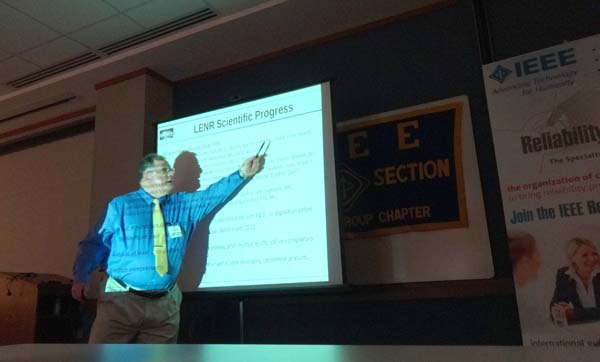
Dr. Louis DeChiaro presenting:
Lou and IEEE Sign1

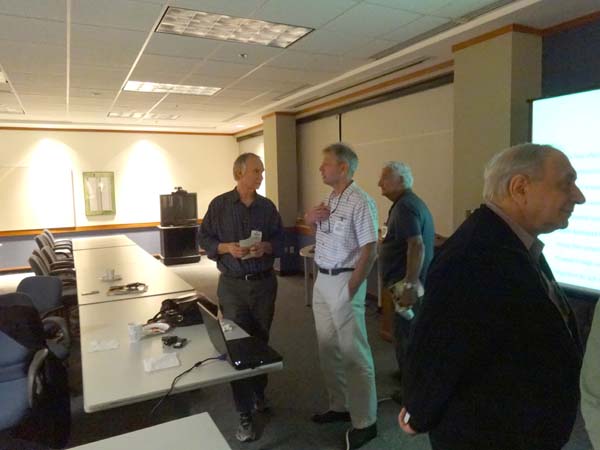
Dr. Mitchell Swartz and Dr. Louis DeChiaro facing:
Lou and Mitchell2

Professor Peter Hagelstein and Mitchell Swartz in the foreground:
Peter Background, Mitchell Foreground3

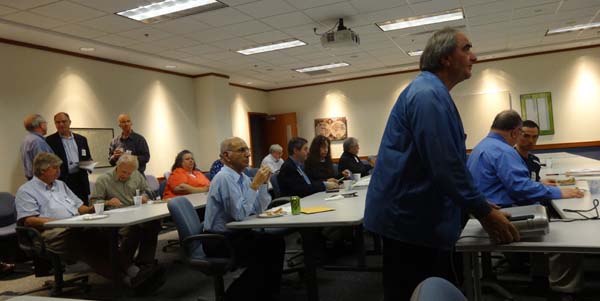
Dr. Brian Ahern on bottom left of the meeting room:
Room Shot II Brian Ahern, Peter4

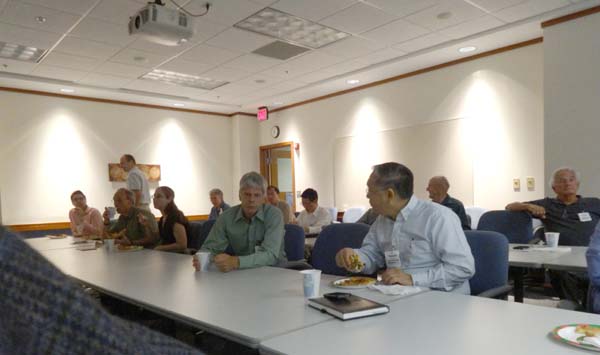
The meeting room:
Room Shot II5


Next LENR Event:

ras22nd Russian Conference on Cold Nuclear Transmutation of Chemical Elements and Ball Lighting

Chairman of the RCCNT&BL-22 Organizing Committee Yury Bazhutov

Vice-Chairmen Vladimir Bychkov, Nikolai Samsonenko
Sept 27-October 4, 2015

Dagomys, Sochi, Krasnodar region, Russia

See all Upcoming Events here.

Analysis of Rossi US Patent 9,115,913 issued 25Aug15 Part 2

This is Part 2 of a multi-part commentary on the above patent, US 9,115,913 issued on an invention by Andrea Rossi. Part 1 may be found here.

Please note that Part 1 has been amended since posted to retract the earlier statement that patents for the same invention cannot issue abroad if the US patent is to remain valid. Rossi has followed a procedure at the USPTO that will allow foreign filings to be made without jeopardizing the validity of the issued US patent.

Claim Principles

A most important principle from Part 1 is that, to examine the scope of the blocking power of a patent, it is inappropriate to talk about the “invention”. That is too vague. The claims must be the focus. The words of a claim are words of limitation. If you are outside the scope of the words of a claim then you do not infringe. The words mean what the inventor apparently intended them to mean, according to the description accompanying the patent grant. The starting assumption is that words have meaning corresponding to their normal usage unless the description indicates otherwise.

The scope of this patent is no broader than the span of Claim 1. If a competitor builds an apparatus or arrangement that does not fit with the wording in Claim 1, taken in its totality, this patent will not be infringed. Practicing a patent exactly as it is claimed for the sole purpose of verifying that it works is not an infringement.

No one can ever patent “generating excess heat by LENR”. This idea has already been “made available to the public”. All that can be patented now are new, unobvious, configurations that work, i.e. deliver LENR heat. The validity issue with respect to the claims of this patent requires that the claims are restricted to describing only things that are new and unobvious.

A patent is infringed if a competitor builds an apparatus or arrangement that fits with the wording of any of its valid claims. If Claim 1 is infringed and valid, then no other claims need be assessed. If Claim 1 is invalid but describes an accused infringer’s activities, then the claims dependent from Claim 1 must be assessed.

Dependent Claims

The dependent Claims 2 – 10 are straightforward. Every dependent claim adopts by reference all of the limitations of the prior claims upon which they depend. This tends to reduce the scope for infringement. If a claim does describe an accused infringer‘s operation, then that claim, taking into account all of the limitations of the prior claims upon which it depends, must also be valid for infringement to occur. Validity assessment is a complex analysis that will only be partially addressed in a subsequent posting.

Before leaving the dependent claims, we may note that they additionally stipulate for the optional presence of, amongst other things:

• nickel powder as a “catalyst” (claim 2)
• nickel powder that has been treated to enhance porosity thereof (claim 3)
• said fuel wafer comprises a multi-layer structure having a layer of said fuel mixture in thermal communication with a layer containing said electrical resistor (claim 4)
• said fuel wafer comprises a central heating insert and a pair of fuel inserts disposed on either side of said heating insert (claim 5)
• said tank comprises a recess for receiving said fuel wafer therein (claim 6)
• said tank further comprises a door for sealing said recess (claim 7)
• said tank comprises a radiation shield (claim 8)
• said reaction in said fuel mixture is at least partially reversible (claim 9)
• said reaction comprises reacting lithium hydride with aluminum to yield hydrogen gas (Claim 10, dependent on claim 9)

Some of these claims are silly. For example Claims 6 and 7 hardly add an idea that could provide a missing inventive feature if the earlier claims were invalid. Other claims might, in circumstances where prior art has been found that knocks-out earlier claims, add something that would create a claim that is novel and nonobvious.

Microporous Nickel

Claim 4 addresses a configuration where the nickel is microporous. This feature is addressed in the disclosure as follows:

“Preferably, the nickel has been treated to increase its porosity, for example by heating the nickel powder to for [sic] times and temperatures selected to superheat any water present in micro-cavities that are inherently in each particle of nickel powder. The resulting steam pressure causes explosions that create larger cavities, as well as additional smaller nickel particles.”

No reference is made to RaneyTM nickel which is a standard for micro-porosity for this metal. RaneyTM nickel provides actual voids: see https://en.wikipedia.org/wiki/Raney_nickel
Made by leaching-out aluminum from a solid solution of nickel and aluminum, there is always some residual aluminum present within the nickel structure after leaching is terminated. At high temperatures the aluminum will likely melt. For LENR purposes it may be desirable to use silicon-based RaneyTM nickel, if this can be obtained.

The original version of RaneyTM nickel was made by using an alloy of nickel and silicon. Any residual silicon can be expected to melt at a much higher temperature than aluminum. This original patent is exceptional for its conciseness and the broad scope of patent coverage that was granted – see claims at the end of the last above link.

Perhaps the process of “heating the nickel powder to [and] for times and temperatures selected to superheat any water present in micro-cavities that are inherently in each particle of nickel powder… [whereby] the resulting steam pressure causes explosions that create larger cavities” creates more than just microporosity. Surface conditions as hypothesized by Dr Edward Storms may be generated.

Hydrogen Generation

Claims 9 and 10 addresses a configuration wherein lithium hydride is reacted with aluminum to yield hydrogen gas, the reaction specified is said to be at least partially reversible (claim 9). The decomposition stages for Lithium Aluminum Hydride as acknowledged in the patent disclosure and described in Wikipedia https://en.wikipedia.org/wiki/Lithium_aluminium_hydride are as follows:

“When heated LAH decomposes in a three-step reaction mechanism:

3 LiAlH4 → Li3AlH6 + 2 Al + 3 H2 (R1)
2 Li3AlH6 → 6 LiH + 2 Al + 3 H2 (R2)
2 LiH + 2 Al → 2 LiAl + H2 (R3)

“R1 is usually initiated by the melting of LAH in the temperature range 150–170 °C, immediately followed by decomposition into solid Li3AlH6, although R1 is known to proceed below the melting point of LiAlH4 as well. At about 200 °C, Li3AlH6 decomposes into LiH (R2) and Al which subsequently convert into LiAl above 400 °C (R3). Reaction R1 is effectively irreversible. R3 is reversible with an equilibrium pressure of about 0.25 bar at 500 °C. R1 and R2 can occur at room temperature with suitable catalysts.”

The third reaction R3 is said to be reversible. This is the situation as required by Claims 9 and 10.

We may guess why these features are important. Reactions R1 and R2 will, when the temperature is raised over threshold levels, release hydrogen into the confined interior between the outer steel plates. Note that reaction R1 is said to be effectively irreversible. This will cause the pressure of the hydrogen surrounding the nickel particles to rise. As the temperature rises reaction R3 will add more hydrogen, increasing the hydrogen pressure further. With increased pressure more hydrogen will either enter the lattice structure of the nickel particles or be adsorbed at sites which are active in generating excess heat. Presumably this increased pressure may induce and support an LENR reaction.

The possibility to generate hydrogen in a confined volume at pressures in excess of 1000 Atmospheres through chemistry is referenced in US patent 7,393,440. In this patent, assigned to the Research Council of Canada, aluminum as a cathode is confined a sealed volume with magnesium as an anode sharing a water-based electrolyte. The combination reacts galvanically to decompose the water and release hydrogen at potentially high pressures. This is an alternative hydrogen generation mechanism outside the scope of the Rossi claims.

Returning to the Rossi disclosure, since heat is being extracted through the surrounding water jacket, this may cool the nickel-hydrogen combination below a self-sustaining reaction level. The LENR reaction at lower temperatures may need the continued supply of heat to the nickel core to keep the reaction going. A thermal gradient between the nickel core and the water jacket may be needed to sustain the generation of heat.

Operating under these conditions the reversible character of reaction R3 may also provide a means to prevent thermal runaway. Hypothetically higher heat could release more hydrogen in a rising cycle if enough Lithium Aluminum Hydride were present. Conversely, a decline in the pressure of the reaction may cause the reaction to subside. This may be why the control mechanism is stipulated as an essential feature of Claim 1.

Claim 1 stipulates that Lithium must be present, independently from the Lithium Aluminum Hydride. The Lithium is not necessarily a reactant. It could simply be a reservoir to absorb hydrogen gas, once released, by forming LiH. The hydrogen could be released from the LiH in the “rejuvenation” process.

Please note that on points of the physics of the actual reaction these observations are speculations and should not be taken as being true without further confirmation.

This ends Part 2 of the analysis. There remains to address the validity of this patent and its claims in a further analysis.

Analysis of Rossi US Patent 9,115,913 issued 25Aug15 Part 1

Part 1

Due to the length of analysis involved, this posting is divided into parts. This present part is Part 1. Reference to Part 2 is made here.

On August 25, 2015 a US patent issued to Leonardo Corporation on an invention by Andrea Rossi. This US patent, US 9,115,913, is part of a series of applications filed by Andrea Rossi variously in Italy, before the European and United States Patent Offices, and under the Patent Cooperation Treaty. However, this specific application, unusually, and not like the others, was filed directly before the US Patent Office by Andrea Rossi on March 14, 2012 using a new attorney. It was thereafter assigned to a company originally formed by Andrea Rossi, Leonardo Corporation, both of Miami Beach, Florida. Further assignments may have occurred, but they were not, as of August 25, 2015, available for review over the Internet at the United States Patent Office – US PTO.

The application leading to this August 25th patent was unusual in that it was not laid-open for public examination – “published” – as of 18 months from its earliest filing date, as is typical for virtually all countries around the world. This publication procedure applies even for the United States in respect of the bulk of American applications. Instead, the applicant in this case took advantage of a special provision in US law summarized as follows:

37 C.F.R. 1.213 Nonpublication request.

• (a) If the invention disclosed in an application has not been and will not be the subject of an application filed in another country, or under a multilateral international agreement, that requires publication of applications eighteen months after filing, the application will not be published under 35 U.S.C. 122(b) and § 1.211 provided:
o (1) A request (nonpublication request) is submitted with the application upon filing;
o (2) The request states in a conspicuous manner that the application is not to be published under 35 U.S.C. 122(b);
o (3) The request contains a certification that the invention disclosed in the application has not been and will not be the subject of an application filed in another country, or under a multilateral international agreement, that requires publication at eighteen months after filing; and
o (4) The request is signed in compliance with § 1.33(b).

Such a request was filed on Rossi’s behalf at the time of filing.

The following is a correction to what was published earlier on the prospect for foreign filings corresponding to Rossi’s US patent of August 25th, 2015, No 9,115,913.

There is a possibility, probably a likelihood, that Rossi patent applications have been filed outside the US for inventions disclosed in US patent 9,115,913. This would likely be in the form of an application under the Patent Cooperation Treaty.

Rossi filed a NonPublication request under 35USC122(b)(2) with his application when it was filed on March 14, 2012. But this section goes on to provide:

(ii) An applicant may rescind a request made under clause (i) at any time.

(iii) An applicant who has made a request under clause (i) but who subsequently files, in a foreign country or under a multilateral international agreement specified in clause (i), an application directed to the invention disclosed in the application filed in the Patent and Trademark Office, shall notify the Director of such filing not later than 45 days after the date of the filing of such foreign or international application. A failure of the applicant to provide such notice within the prescribed period shall result in the application being regarded as abandoned.

Rossi filed a letter at the US Patent Office on July 27, 2015 withdrawing the non-publication request.

The consequence is that Rossi may have, and probably has, filed corresponding patent applications in other countries as early as June 12, 2015. This could be done on a bulk basis using the PCT. Filings made earlier that that would invalidate the US patent.

All filings made from June 12, 2015 or later would be subject to the novelty requirements of the national laws of each country applied as of the actual filing date in each country. In Europe any disclosures prior to the local filing date would qualify as prior art. Canada, Australia, South Korea and prospectively a number of other countries will shelter applications for up to one year for “self-originating” disclosures that can be traced to the applicant.

The Lugano Report released in October 6, 2014 contained a speculation that at least part of the “fuel” in the Lugano apparatus consisted of Lithium Aluminum Hydride (page 28). Lithium was also included in the initial fuel mixture. Claim 1 in Rossi’s August 25, 2015 US patent specifies for a fuel that includes both Lithium and Lithium Aluminum Hydride. The claim also stipulates for a control circuit that reheats the fuel using an electrical resistor when the reaction needs “rejuvenation”. Dependent claims add further limitations.

It is an unresolved question whether Applications filed by Rossi in countries not providing a grace period will be able to survive exposure to the prior art. Even where there is a grace period, Rossi applications will be exposed to the disclosures of independent origin arising from others.

A filing, for example under the PCT, will not normally be published until 18 months from its filing dated. Therefore some time will likely pass before the extent of such filings is known.

Quality of the disclosure

Unlike other applications filed on behalf of Rossi, and indeed many patent applications filed around the world, the disclosure in this case is relatively short and to the point. This is a sign of good patent draftsmanship. The patent disclosure contains no discussion of theory. In fact, some readers will find this disappointing; but the reality is that it is not required for an inventor to disclose a theory supporting why an invention works. It is enough for the disclosure to provide sufficient direction to enable a skilled workman in the field to reproduce the useful results promised by the disclosure.

This patent has the signs of having been drafted by a particularly competent patent attorney. The preamble section under the titles Field of Disclosure and Background are about as short as you could ever expect. In fact, under Field of Disclosure the text simply provides: “This disclosure relates to heat transfer systems, and in particular to devices for transferring heat to a fluid.” The Background section that follows contains a mere 7 sentences divided into 2 paragraphs. Compare this with the bulk of US and other national patents that have extensive content in these sections. Elaborate content in these two portions of a patent disclosure is not required. What is key is to describe how to build something that is useful and then to identify the features of what is disclosed which are novel, inventive and over which the applicant wishes to obtain exclusive rights. Too few inventors ever understand these principles.

Before leaving this portion of the disclosure it is important to remark that these statements do not define the invention. They are not binding on the scope of the exclusive rights being granted. They are merely guidelines to get a reader started in reviewing the entire patent document. The “invention” for which the patent has been granted is defined in the one or more patent “claims” that conclude the patent document. The invention in this case is not about a novel arrangement for “transferring heat to a fluid”. The novelty that supports the validity of the patent claims resides elsewhere.

Further, the Summary of the Invention portion of the disclosure is not binding on the scope of monopoly established by the claims. It is the claims that count. However, in this particular case, the drafting attorney has simply used the text of the claims in order to generate the Summary of the Invention. A simple comparison will show that one is derived from the other. This is good patent practice.

The Patent Claims

A patent is all about obtaining exclusive rights. Those rights are defined in the “claims” which appear as numbered sentences usually at the end of the patent document. Each numbered claim is actually the completion of a preamble statement such as: “I claim” or, as in Canada, “The embodiments of the invention in which an exclusive right is claimed are as follows”. Each claim completes the preamble by listing elements which are interrelated in a specific way to define something that is new, something that has never before been “available to the public.” This last phrase can be understood to include any obvious variants on things explicitly previously available to the public.

A patent can have multiple claims restating the exclusive rights over and over again with more specific detail. As a convenient compressed mode, a 2nd claim can refer-back to an earlier claim thereby adopting all of its limitations. A dependent claim, such as Claim 2, may appear to be very short. However, it is longer than Claim 1 from which it depends since it adopts all of the limitations listed in Claim 1.

It is a basic principle that if a competitor does not infringe Claim 1 then they cannot infringe any of the claims dependent on Claim 1. Therefore, for infringement purposes, it may be sufficient to stop the analysis after reading Claim 1. If you do not infringe there is no need to go further.

On the other hand, if Claim 1 is infringed, then the only recourse for a competitor is to demonstrate that Claim 1 is invalid. If this were to be achieved, then the exercise must move to Claim 2, which may be valid, and which may be infringed, or not. Dependent claims that accumulate many limitations from prior claims have a higher probability of being valid, but a lower probability of being infringed. To avoid infringement, all a competitor has to demonstrate is that they do not use every element stipulated within the claim under consideration.

The Rossi Claims

The claims of this particular patent are relatively concise, and are listed as follows:

1. An apparatus for heating fluid, said apparatus comprising a tank, an electrical resistor, and a fuel wafer,

wherein said tank is configured for holding fluid to be heated,

wherein said fuel wafer is configured to be in thermal communication with said fluid,

wherein said fuel wafer includes a fuel mixture that includes reagents and a catalyst,

wherein said electrical resistor is in thermal communication with said fuel mixture and said catalyst,

wherein said resistor is configured to be coupled to a voltage source,

wherein said apparatus further comprises a controller in communication with said voltage source, and a temperature sensor,

wherein said fuel mixture comprises lithium, and lithium aluminum hydride,

wherein said catalyst comprises a group 10 element,

wherein said controller is configured to monitor a temperature from said temperature sensor, and, based at least in part on said temperature, to reinvigorate a reaction in said fuel mixture,

wherein reinvigorating said reaction comprises varying a voltage of said voltage source.

2. The apparatus of claim 1, wherein said catalyst comprises nickel powder.

3. The apparatus of claim 2, wherein said nickel powder has been treated to enhance porosity thereof.

4. The apparatus of claim 1, wherein said fuel wafer comprises a multi-layer structure having a layer of said fuel mixture in thermal communication with a layer containing said electrical resistor.

5. The apparatus of claim 1, wherein said fuel wafer comprises a central heating insert and a pair of fuel inserts disposed on either side of said heating insert.

6. The apparatus of claim 1, wherein said tank comprises a recess for receiving said fuel wafer therein.

7. The apparatus of claim 6, wherein said tank further comprises a door for sealing said recess.

8. The apparatus of claim 1, wherein said tank comprises a radiation shield.

9. The apparatus of claim 1, wherein said reaction in said fuel mixture is at least partially reversible.

10. The apparatus of claim 9, wherein said reaction comprises reacting lithium hydride with aluminum to yield hydrogen gas.

Technically, to be valid, claims must not read-on arrangements that do not work. But analysis on this basis is complex. To be addressed on another occasion.

The challenge for competitors wishing to build a competing device that does not infringe is to ensure that their devices are not described by Claim 1. If Claim 1 describes their arrangement, then they will be an infringer. They can avoid infringement by ensuring that their product omits at least one of the features listed in Claim 1.

In a sense, the challenge for a competitor is to invent an arrangement that works but does not fall within the language of Claim 1. On the other hand, the challenge for a patent applicant and his attorney is to produce a valid statement of exclusive rights in Claim 1 that cannot be avoided by competitors wishing to market a competing product.

Analyzing Claim 1 for infringement we note the necessary requirement: “wherein said fuel mixture comprises lithium, and lithium aluminum hydride”. Is it essential that lithium be present, apart from being a component of lithium aluminum hydroxide? Did Dr Parkhomov include lithium in his mixture? Apparently not: “640 mg Ni + 60 mg LiAlH4”. This suggests that lithium may not be necessary in order to obtain an LENR effect. But if the presence of elemental lithium enhances the generation of excess energy, then this is an invention in its own right, and merits the granting of patent exclusivity.

On the other hand, if it turns out that elemental lithium need not be present in order to achieve the useful, commercially relevant effect, then this claim has an “loophole”. Patent applicants and their attorneys are expected to labor long and hard in order to draft claims that do not have a “loophole”.

Addressing another possible loophole, if the lithium aluminum hydride serves only as a source of hydrogen, is it essential for the aluminum to be present? Other sources of hydrogen could include magnesium hydride – MgH2; calcium hydride – CaH2; sodium borohydride – NaBH4 and lithium borohydride – LiBH4 as examples. Cf “Thoughts on attending ICCF-19 in Padua by David French”.

We may search Claim 1 for further limitations that may be unnecessarily specific or over limiting. For example, heat is provided to the “fuel” by the presence of an “electrical resistor [which] is in thermal communication with said fuel mixture and said catalyst”. While this language is so vague as to be difficult to visualize, the disclosure outlines a structure described as follows:

“multilayer fuel wafer 32 includes a heating section 34 sandwiched between two fuel sections 36, 38. The heating section 34 features a central layer 40 made of an insulating material, such as mica, that supports a resistor 42. FIG. 4 shows an exemplary central layer 40 having holes 44 through which a resistive wire 42 has been wound”,

And:

“The entire set of layers is welded together on all sides to form a sealed unit. The size of the wafer 32 is not important to its function. However, the wafer 32 is easier to handle if it is on the order of 1/3 inch thick and 12 inches on each side.”

This gives some understanding as to the meaning of the words in the claim. The disclosure does not necessarily limit the words in the claim. The Disclosure is only intended to be exemplary. Claim 1 clearly stipulates for the presence of an electrical resistor. This could be in the form of resistance wire wrapped around mica sheeting, or it could be a “resistor” of another form.

The claim language is to be read as broadly as the natural meaning of the words and is not necessarily limited by the examples given in the preceding patent disclosure, unless the disclosure requires this. In this case, “electrical resistor”, while not tied to a specific structure, does limit the character and function of this component.

Furthermore, the presence of an electrical resistor is emphasized by the additional limitations stipulating:

“wherein said resistor is configured to be coupled to a voltage source,

“wherein said apparatus further comprises a controller in communication with said voltage source, and a temperature sensor,

“wherein said controller is configured to monitor a temperature from said temperature sensor, and, based at least in part on said temperature, to reinvigorate a reaction in said fuel mixture,

“wherein reinvigorating said reaction comprises varying a voltage of said voltage source.”

Taking this portion of the claim as defining the novel aspect of invention, the invention may really be all about a mechanism for controlling the generation of heat within the wafer.

If the purpose of having a heated core within the wafer is to start an LENR reaction, this might possibly be achieved by simply providing the wafer with a core plate of conductive metal which is heated externally. (Aluminum or copper may spring to mind, but these have a low melting temperature. Aluminum nitride has a melting point of 2200°C). While this might start an LENR reaction, if the use of a resistive heater facilitates controlling the rate or level of the LENR reaction, then that in itself might be a basis for the granting of patent rights. Otherwise, the stipulation for the necessary presence of a “resistor” may also qualify as a “loophole”.

These observations are not exhaustive. They are offered merely as examples. The challenge for competitors is to invent configurations that do not infringe.

This ends Part 1 of the analysis. Further parts of the analysis to follow subsequently will address inferences that can be made from the dependent claims, considerations on the treatment of the nickel, and speculations as to the types of reactions that may be occurring. Additionally, the prospect that further inventions are present in this disclosure, which have not been claimed, and the consequences, will also be explored.
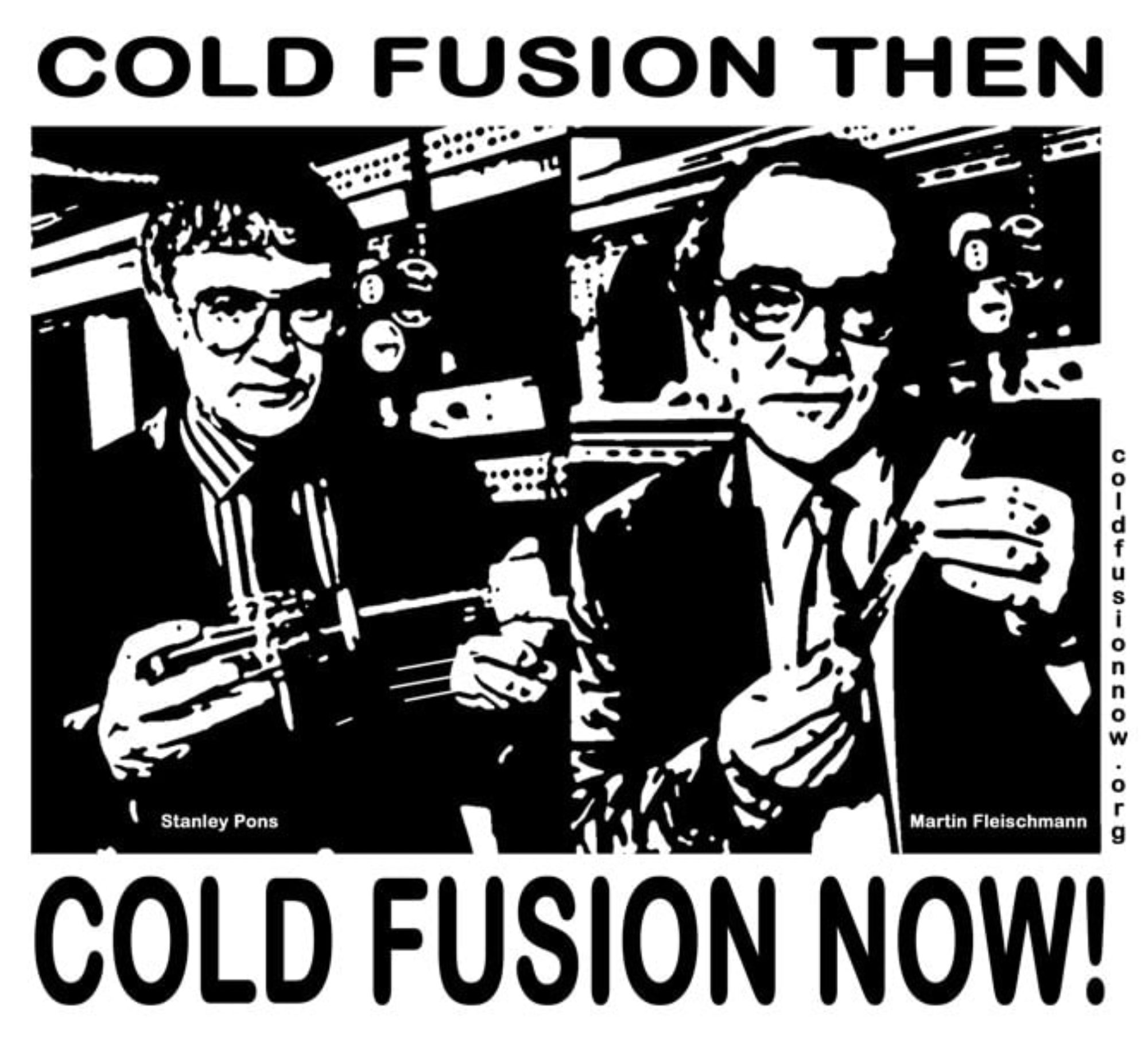

Davids vs. Goliath In A Race to Replace Hydrocarbons With Nuclear Fusion As The World’s Dominant Energy Source

Davids vs. Goliath
In A Race to Replace Hydrocarbons With Nuclear Fusion As The World’s Dominant Energy Source
[.pdf]
by Douglas A. Pinnow, Ph.D.

There is only so much oil, coal, and natural gas remaining to supply the energy needs for humanity. What to do when it runs out? And perhaps more relevant: What should be done if a disruptive alternative energy source takes everyone, including the entrenched hydrocarbon industries, by surprise?

It’s unlikely that nuclear fission will become the replacement energy source of choice with the negative legacy of Chernobyl, Three-Mile Island, and Fukushima along with a limited supply of uranium that many view as analogous to limited oil supplies. Perhaps renewable energy sources like wind and solar will evolve to fill the gap when oil runs out. But, these are still “fair weather” sources because the energy that they produce cannot yet be economically stored on the vast scale required to supply the needs of the entire civilized world after dark and on windless days.

The another possibility on the horizon is fusion energy that might be produced by taming the power of the sun and by using plentiful fuel available from the seas – specifically, an isotope of hydrogen, known as deuterium, which can be extracted from normal water. However, recreating the sun in a box on earth has proven to be very problematic. This article is to report on a rather exciting race to be the first to commercialize the fusion energy alternative. The race participants include a well-funded but slow moving international consortium, the Goliath, and a number of nimble companies, the Davids, which are financed primarily by venture capital.

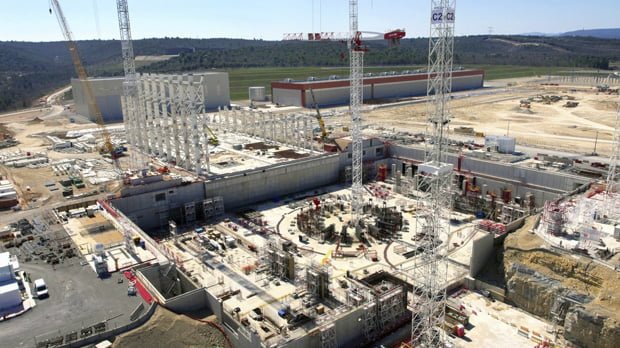
While fusion energy is not a hot daily topic for the publishing and broadcast media, it is, nevertheless, impressive that the world’s most expensive machine (presently projected to cost $16 billion) is currently being built in Cadarache, France to advance the prospects for fusion energy. This machine is called the ITER (International Thermonuclear Experimental Reactor) and, as can be seen in Figure 1, it is really big – the Goliath of the fusion energy research efforts

ITER
Figure 1. Construction site for the $16 billion ITER located in Cadarache, France (near Monaco) that is sponsored by seven participants; the European Union, India, Japan, China, Russia, South Korea, and the United States. The circular structure in the center-right is the footing for a 500 Megawatt hot fusion plasma reactor that is projected to become operational around 2027.

This massive project was launched as a Reagan-Gorbachev initiative in 1985 to consolidate the efforts being conducted by thousands of scientists around the globe to harness fusion energy using extremely hot gas plasmas contained in a large donut shaped reactor vessel. The temperatures in the plasma must reach approximately 100 million degrees Centigrade to duplicate the fusion reactions in the sun. This is so hot that it would melt all known materials. So, the strategy is to contain the plasma inside of an intense magnetic field that is suspended in free space within the donut.

The “E” in the ITER name clearly establishes this machine as an Experimental project. Its goal is limited – to sustain a fusion reaction for only eight minutes! If successful, there will still be years, if not decades of research required to perfect a viable power producing machine. To put this all into perspective, the French Nobel laureate in physics Pierre-Gilles de Gennes said of nuclear fusion, “We say that we will put the sun into a box. The idea is pretty. The problem is, we don’t know how to make the box.”

If this Goliath were the only contender in the race to replace hydrocarbons as the world’s preferred energy source, the race would, indeed, be a slow-motion event that might work to the benefit of established global energy and financial interests. No one would be concerned about the Goliath introducing a disruptive technology with an early and unexpected success.

But, things changed in 1989 when two chemistry professors at the University of Utah, Stanley Pons and Martin Fleischmann, held a press conference and announced to the world that they had succeeded in producing useful fusion energy inside of an inexpensive glass jar in their laboratory. The jar contained a rod of palladium metal with a surrounding platinum wire and both were immersed in heavy water (deuterium oxide, D2O). The palladium rod was connected to the negative terminal of a 12 Volt car battery and the platinum wire was connected to the positive terminal. It was reported that this simple set-up produced four times more energy than the electrical input from the car battery for sufficiently long periods that the only viable explanation could be a nuclear reaction.

Not surprisingly, such a potentially transformative and disruptive technology was attacked very hard from many quarters, including established energy and banking interests, and many scientists who were convinced that their hot plasma fusion approach (that is well funded by government agencies) is the only scientifically viable approach. The press dubbed the work of Professors Pons and Fleischmann “cold fusion”, and within a relatively short period of time (1992) a book was published by one of the most vocal opponents, John Huizenga, titled Cold Fusion: The Scientific Fiasco of the Century. He persuasively attacked cold fusion on the basis that Pons and Fleischmann’s work was difficult to reproduce and it didn’t result in the harmful radiation from energetic neutrons that was expected based on known results from hot plasma fusion reactions.

By the way, elimination of harmful radiation would be a wonderful result if it could be achieved. But, character assassination by discrediting those who reported positive results was a stronger factor during the early years after the press conference announcing cold fusion. A good example to convey the flavor of those times can be gleaned from the title of an article that appeared in the April 15, 1992 issue of the Wall Street Journal, “Physicist to Report Cold Fusion Findings from Japan at MIT’s Bastion of Skeptics”. The Japanese visitor, Professor Takahashi, was not well received but he stuck to his guns saying “I will say what I observed, …That is the only thing I can do.”

Discrediting of cold fusion was so thorough during those early days that even the U.S. Patent & Trademark Office announced that no patents would be granted to inventions in the field of cold fusion because it was too speculative. Cold fusion was relegated to the same category as a “perpetual motion machine” that everyone knows is nonsense.

As a consequence, legitimate scientists who might otherwise have been interested in conducting research in cold fusion realized that they would likely lose their government support, become ostracized by their colleagues, and not even be able to benefit by the grant of a patent if they did make a breakthrough.

But, in spite of all of this, work in cold fusion continued around the world for the past 26 years by a small group of dedicated scientists – and convincing progress has been made. So convincing, in fact, that politicians in Washington are actively in process of ditching the name “cold fusion” because it has been so thoroughly discredited. Now, it is more acceptable to call the technology by a new name ‘Low Energy Nuclear Reaction’ or just LENR. Apparently, it is no longer important to Washington’s elite if the reaction is cold, tepid, or warm.

In 2009, an unclassified assessment was made by the U.S. Defense Intelligence Agency in their report DIA-08-0911-003. Quoting from this report:

Although much skepticism remains, LENR programs are receiving increased support worldwide, including state sponsorship and funding from major corporations. DIA assesses that Japan and Italy are leaders in the field, although Russia, China, Israel, and India are devoting significant resources to this work in the hope of finding a new clean energy source. Scientists worldwide have been reporting anomalous excess heat production [for years], as well as evidence of nuclear particles and transmutations.

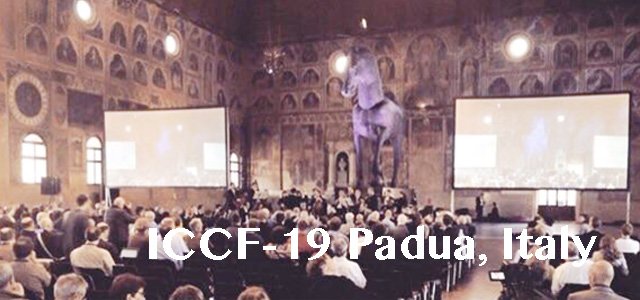
The dedicated scientists who did brave the stigma of the ‘cold fusion’ name and related consequences proudly held their 19th International Conference on Cold Fusion (19-ICCF) in Padua, Italy in mid-April, 2015. And they plan to meet again next year in Sendai, Japan. Figure 2 is a photo of some of the attendees in the main conference hall. Take a close look at this picture and see if it appears to be a group of individuals gathered to advance the “nonsense” that the patent office has branded their science.

ICCF19-Day-4-J-P-Biberian-Title
Figure 2. Photograph of some of the attendees at the 19th International Conference on Cold Fusion (ICCF) held April 13-17, 2015 in Padua, Italy.

Perhaps, the most intriguing aspect of the cold fusion (LENR) work is that there appears to be a number of different processes involved in a growing number of reported successful experiments. However, there is not yet an accepted theory that encompasses this work. Nevertheless, young companies are emerging with names like Brillouin Energy Corp. and Industrial Heat that are receiving venture capital support with hopes of becoming the ‘Davids’ who might slay the ‘hot fusion Goliath’ in spite of the U.S. Patent Office’s continued reluctance to grant cold fusion patents.

It’s too early to tell if the Davids will win or even survive. It is also too early to tell if the name change to LENR will work any magic at the patent office. But pressure is building there. A ‘cold fusion’ patent titled FLUID HEATER was actually issued to Andre Rossi (U.S. 9,115,913) on August 25, 2015 using the subterfuge of totally avoiding the use of the words ‘fusion’ and ‘isotope’ that might otherwise raise a red flag leading to rejection. And a patent application (U.S. 14/696423) titled SPONTANEOUS ALPHA PARTICLE EMITTING METAL ALLOYS AND METHOD FOR REACTION OF DEUTERIDES was filed earlier this year by the present author who is a patent agent as well as a Ph.D. physicist. This patent application addresses the reluctance of the patent office to grant cold fusion patents head-on by making a solid case for granting patents on the basis of advancing the state-of-the-art in this field even if an application does not disclose a fully working apparatus.*

And now, eager young students at MIT can take an introductory course in Cold Fusion presented by highly respected faculty members. The chemistry and physics are intriguing, but the secrets of the sun have not yet been fully revealed. So, the big question is will LENR become that disruptive and transforming fusion energy technology or just remain the ‘fiasco of the century’? I believe that it will be big – but stay tuned.

* PERSPECTIVE [Extracted from patent application U.S. 14/696,423]

The inventor is well aware that the subject matter in a patent application must be ‘useful’ and satisfy the requirement of utility. Further, as stated by the U.S. Patent & Trademark Office, “the term ‘useful’ in this connection refers to the condition that the subject matter has a useful purpose and also includes operativeness, that is, a machine which will not operate to perform the intended purpose would not be called useful, and therefor would not be granted a patent”.

In this regard, the inventor makes no claim that the subject matter in this patent application will solve or mitigate the present or future energy problems facing humanity. Nor does the inventor represent that the subject matter in this patent application can be used to produce any commercially useful amounts of energy. Rather, the subject matter is “useful” for two reasons, (1) it would be generally agreed by persons of normal skill in nuclear arts and also based on the teachings of conventional physics that purposely triggering a LENR by employing the subject matter in this patent application would enhance the reaction rate (thereby making the subject matter operative) – even though the magnitude of the enhancement is not presently known, and (2) the subject matter is expected to contribute to a better understanding of the LENR process that will likely continue to be explored by researchers throughout the world for years to come. In this regard, the availability and use of spontaneous alpha particle emitting metal alloys, encouraged by this invention, should be useful in advancing the understanding of LENRs and may also lead to possible future commercial applications. These factors are considered to be more than sufficient to satisfy the criteria of utility.
Douglas A. Pinnow, Ph.D. Contact

Next two months packed with LENR/AHE science

There are four LENR/AHE meetings – over the next two months!

US, Russia, Switzerland, and France – Can you make it???

See this listing on our new Upcoming Events page, too.

IEEE-logo
IEEE Meeting at Teradyne

LENR Phenomena and Potential Applications
Professor Peter Hagelstein and Dr. Louis DeChiaro

Wednesday Sept. 23, 2015 05:30PM to 08:15PM (US/Eastern)
North Reading, Massachusetts, US

https://meetings.vtools.ieee.org/m/35303


ras
Conference at RUSSIAN ACADEMY of SCIENCES

22nd Russian Conference on Cold Nuclear Transmutation of Chemical Elements and Ball Lighting
Chairman of the RCCNT&BL-22 Organizing Committee
Yury Bazhutov
Vice-Chairmen
Vladimir Bychkov, Nikolai Samsonenko

Sept 27-October 4, 2015
Dagomys, Sochi, Krasnodar region, Russia

Abstracts


ISSOLDE-Seminar-2015-420x276
Seminar at CERN

The anomalous heat effect on D/H loaded Palladium: Exploration at an atomic level, preliminary perturbed angular correlations studies
by Juliana Schell, Vittorio Violante, Graham K. Hubler
and Collaborators: Moustapha Thioye, Jinghao He, João G. M. Correia, Iberê R. S. Junior, Izabela T. Matos, Michel Zoghby

Wednesday, 14 October 2015 from 14:30 to 15:30 (Europe/Zurich)
Geneva, Switzerland

Abstract [.pdf]

https://indico.cern.ch/event/440482/


ISCMNS

LENR-Cities

HERA

AIRBUS_Group_3D_Blue_RGB.2015-01-16-09-20-05Workshop at Airbus

11th International Workshop on Anomalies in 
Hydrogen Loaded Metals
Conference Chair Jean-François Geneste
Organizing Committee W. Collis, J.D. Vinko, S.Valin-Le-Gouellec, M.Valat

Thursday and Friday, 15-16 October, 2015
Toulouse, France

http://workshop.wonderevents.fr/

http://www.iscmns.org/work11/


To list an Event, contact Ruby Carat at ruby@coldfusionnow.org.

Top