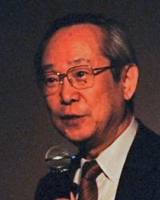
The 19th Natural Philosophy Alliance Conference held in Albuquerque, New Mexico featured Dr. Edmund Storms as the John Chappell Lecturer.
Details of the conference can be found through links here.
Dr. Storms presented What is Cold Fusion and Why Should You Care? based on a paper by the same name authored by Edmund Storms and Brian Scanlan.
We present here an annotated version with additional images for your viewing pleasure.
The first part is a historical perspective. The middle part surveys the experimental evidence confirming excess heat and nuclear products. The last part offers an idea of what might be occurring to start the reaction.
Related Links
Storms and Scanlan: What is Cold Fusion and Why Should You Care? by Ruby Carat March 11, 2012
“So, the puzzle looks approaching the resolution now. The long lasting excess heat phenomena, currently being observed by several groups in Japan, Italy, USA, etc., will be understood in the extension of their research.
When we will trace inversely in time, we will find the original point of perspective in the Fleischmann-Pons work at 1989.” –Dr. Akito Takahashi
The passing of Martin Fleischmann has sounded throughout the noosphere, where lightspeed assisted in the collective and simultaneous mourning for a Lion of Science who dared follow truth, turning away from the insults of lesser minds without regret, and without reward.
The loss is felt strongly by his family, his friends, and fellow scientists who worked with him on over two-decades of cold fusion research where his intellect and integrity left an indelible mark on multiple programs around the world.
Indeed, Martin Fleischmann and Stanley Pons created the field of condensed matter nuclear science. Without the public announcement of their discovery in 1989, we might not have the new generation of experimentalists and inventors working to bring this technology to fruition.
After the recent news, Andrea Rossi, inventor of the Energy Catalyzer, a commercial steam generator now in development based on nickel-hydrogen exothermic reactions, an extension of the original electrolytic palladium-deuterium systems, noted that “Fleischmann and Pons were not the first to witness” these mercurial energy-producing reactions, but they “have been the pioneers to speak about the so called ‘Cold Fusion’.”
He said in a previous interview with James Martinez that ‘it was the announcement of their discovery in 1989 that was the “spark that ignited the fire”’ in his own research. [read]
“All their attempts failed to produce the real big energy, but the idea to pursue low-energy nuclear reactions has been further followed by many others, myself included“. –Andrea Rossi
Martin Fleischmann was born in Czechoslovakia in 1927, but fled the looming approach of war to Great Britain as a child. As an adult, he traveled the world creating several laboratories, consulting and collaborating with scientists on every continent.
Fleischmann’s influence was particularly felt in scientific circles in Japan where cold fusion science received unprecedented support from academia, business and government. The 1994 BBC documentary Too Close To The Sun features an historical perspective on that support which included that of Technova Corporation, a subsidiary of Toyota, which funded Drs. Fleischmann and Pons’ continued research at a laboratory in France, after U.S. scientists successfully pilloried the pair, forcing a re-location from the “freedom-loving” American continent to Europe.
Dr. Akito Takahashi has been involved in the early Japanese cold fusion research as part of the Department of Nuclear Engineering at Osaka University. Now, also associated with Technova, Inc, he is speaking at the NIWeek 2012 conference beginning this week as well as the 17th International Conference on Cold Fusion ICCF-17.
Before his trip, Dr. Takahashi took a moment to share what Martin Fleischmann meant to the Japanese program of research:
“You know the NHE (New Hydrogen Energy) project 1994-1998 was funded by Japanese Government. To confirm the excess heat effect (EHE) by F-P’s D2O/Pd electrolysis was the target of NHE.
Fleischmann visited the NHE lab in Sapporo several times to lead and assist the Japanese team. Unfortunately, the NHE team could not firmly reproduce the F-P claim and the NHE project was terminated in 1998. However, a Japanese company, IMURA-Europe, Niece France, under the Toyota Motors, invited Martin Fleischmann and Stanley Pons to continue the ‘cold fusion’ research with Japanese researchers. The effort by the company was also terminated soon.
However Professor Fleischmann, as regarded by Japanese as the initiator of cold fusion research, gave a favorable impression to several tens of remaining JPN cold fusion researchers, especially in universities, and a small number of companies, who have found some positive, albeit irreproducible, data during the NHE and IMURA projects. The remained people have continued research works, both experiments extending to gas-loading method with nano-catalysts and theories on underlying physics, and have accumulated more and more concrete data. So, JPN researchers have sincere respect for Professor Martin Fleischmann to this day.”
In regards to being an influence in research, Dr. Takahashi wrote:
“Of course, Japanese researchers were inspired by the speculation that the dynamic behavior of deuterons fully/over-fully absorbed in metal lattice might cause ‘hither-to-unknown’ and ‘clean-radiation-less’ nuclear energy release. However, the NHE effort was still using the original F-P method (ICARUS device) and metallurgical performances of D(H)-absorption.
After the NHE project, a change of mind pursued ‘dynamic/transient’ adsorption/absorption conditions with nano-fabricated metal composite samples, after the original work by Arata-Zhang based on the idea of Emeritus Prof. Hiroshi Fujita expert of atom-clusters, Osaka University.
The gas-loading method with nano-fabricated samples of pure-Pd, Pd-Ni binary and then Cu-Ni binary nano-particles dispersed in ceramics supporters (ZrO2, SiO2, etc.) have finally provided the present on-going experiments with very reproducible excess heat release and interesting D(H)-isotopic effects probably indicating the nuclear origin of heat evolution. As the electrolysis method, done by the Energetics-SRI-ENEA collaboration, is getting to the similar condition of nano-fractal surface of Pd-metal for meeting ‘large excess heat’, the original F-P cell might have had nano-fractal conditions, albeit accidentally conditioned in uncontrolled way.
So, the puzzle looks to be approaching the resolution now. The long lasting excess heat phenomena, currently being observed by several groups in JPN, Italy, USA, etc., will be understood in the extension of such research line.
When we will trace inversely in time, we will find the original point of perspective in the Fleischmann-Pons work at 1989.” –Dr. Akito Takahashi
After the U.S. had kicked the discoverers of our future energy source out of the country, money from the Toyota empire built them a new laboratory in France. Ironically, Drs. Fleischmann and Pons were interviewed on Good Morning America – from France – in 1994.
Dr. Jean-Paul Biberian, a cold fusion scientist based in Marseilles, France and Editor-in-Chief of the Journal of Condensed Matter Nuclear Science, wrote of the influence of Martin Fleischmann on French research:
“Martin Fleischmann played a major role at the beginning of Cold Fusion in France. Georges Lonchampt, who was then working at the French Atomic Energy Commission in Grenoble met him and Stanley Pons several times when they were working at IMRA in Sophia Antipolis. Fleischmann gave him full details of the experimental procedure, and even gave him two of their ICARUS 2 cells. Thanks to his help, Longchampt and his colleagues managed to duplicate, at least partly, the original work. Lonchampt was one of the very few who duplicated exactly the Fleischmann and Pons experiment.
Without his help there is no doubt that the initial program started in France in 1989 would have ended quickly after.”
Martin Fleischmann’s influence has not yet been assessed. But as the world turns towards this viable alternative, there will be alot of looking back, and human eyes will see what they want to see.
Martin Fleischmann still lives. I can see him lecture, hear him speak, read his words, and see his face, just as much as I could before Friday August 3, 2012 when he reportedly left the physical world for a freer, larger existence. 0s and 1s dart about the network, framing his presence in the digital space that exists as an external double of our consciousness.
While a virtual visit to Mars is not the same as physically being there, robotic cameras give millions the opportunity to experience a form of space travel to another world. Millions more will meet Martin Fleischmann through his legacy of work, too, as documented by his true peers in the cold fusion community, and available for as long as human civilization exists.
“Martin was probably the greatest scientist that I have ever known… I believe that eventually truth will win out. I don’t know how long it might take, but eventually Martin will be honored by many for his great scientific work in the cold fusion field.” —Dr. Melvin Miles
“The world is slowly, but inexorably, moving toward a better place because of Martin Fleischmann’s transit through it.” —Dr. Mitchell Swartz
“He was chosen to pay the price for success. Now he has peace and the rest of us have the responsibility not to let his sacrifice be in vain.” —Dr. Edmund Storms
“Martin Flesichmann was one of the greatest scientists that ever lived.” —Dr. George H. Miley
Martin Fleischmann has left the planet, on his way to better beyonds where knowledge is total and awareness a mere triviality in a larger existence.
New Energy Times has reported here that he passed away in his home in the United Kingdom Friday, August 3, 2012 with his family in attendance.
Born March 29, 1927, Dr. Martin Fleischmann was lauded as one of the greatest electrochemists that ever lived. Co-discoverer of cold fusion with his partner Stanley Pons, the pair embarked on an epic scientific journey that adds their names to the list of greatest scientific figures in history.
Enduring decades of ostrasization from their conventionally-thinking peers, both Drs. Fleischmann and Pons have been vindicated for their claims as cold fusion, also called lattice-assisted nuclear reactions (LANR), and low-energy nuclear reactions (LENR), has been reproduced hundreds of times by multiple types of systems.
Cold fusion offers a viable alternative to the continued use of dirty fossil fuels and nuclear power that uses radioactive materials leaving waste so dangerous, it threatens biological systems worldwide. Cold fusion presented an ultra-clean energy-dense source of power using as fuel hydrogen from water. The development of both the science and technology of cold fusion was almost extinguished by a coordinated effort from hot fusioneers and conventional energy physicists in 1989 who sought to discredit their results, and succeeded in delaying the development of clean energy technology for two decades.
It has been a small group of intrepid researchers from around the globe that have continued the work, bolstering the data with over-two decades of experimental confirmation that cannot be refuted. Commercial development of cold fusion technology in the form of hot water heaters and steam generators is currently ongoing by a new generation of scientists that were inspired by initial announcements of Drs. Fleischmann and Pons.
Andrea Rossi, inventor of the Energy Catalyzer, has said in an interview with James Martinez that ‘it was the announcement of their discovery in 1989 that was the “spark that ignited the fire”’. [read]
In an interview with Ruby Carat, hot- and cold-fusion pioneer Dr. George H. Miley remarked that “Martin Flesichmann was one of the greatest scientists that ever lived.”
Referring to the wild emotional backlash from physicists who felt their research threatened by the discovery, Dr. Miley said, “Any personal ramifications of individuals is so unfortunate. But you know that’s happened to many people in the field. The field has had a series of tragic events occur where workers in it have been maligned. Emotions grew so high. It should have been done in a scientific fashion, it would’ve been so much better. But I have nothing but the highest respect for Pons and Fleischmann, such great scientists, anyone would be privileged to follow their lead in science.” [read]
Cold fusion researcher and author Dr. Edmund Storms responded to the news of Martin Fleischmann’s passing with, “I was not part of his major field of interest, so my role in the LENR field was not important to him. Nevertheless, I’m sad that he paid such a high and unreasonable price and is now gone. His efforts to make the CF effect work could just as well have been as unsuccessful as experienced by most attempts at replication. But he was chosen to pay the price for success. Now he has peace and the rest of us have the responsibility not to let his sacrifice be in vain.”
He was further quoted here:
“Martin demonstrated that Nature has a diabolical plan. He and Stan were
not the first to cause the LENR process but they were the first to attract
attention. For that, they paid the price Nature always extracts when a
great discovery is made. They attempted the “impossible” based on a flawed
model, using lucky material that most people could not duplicate, and
stirred up a firestorm of antagonism from people who were their colleagues
and friends. They were rejected for reasons both ignorant and self-serving
by people who we all thought should know better. Sadly, Martin did not
live long enough to say he told them so, and have the last laugh.
Hopefully, the rest of us can complete the process and gain acceptance for
what he and Stan paid such a dear price to make known. We will all miss
the man who led us into this crazy field.” —Edmund Storms
Scientist and designer of the NANOR device currently on public display at the Massachusetts Institute of Technology, Dr. Mitchell Swartz of JET Energy has written:
“The world is slowly, but inexorably, moving toward a better place because of Martin Fleischmann’s transit through it.
He was involved in two of the most important things in life: learning and teaching. He taught at King’s College, Durham University (later, University of Newcastle upon Tyne) and University of Southampton. He discovered and taught surface enhanced Raman scattering effect and the achievement of high energy Cold Fusion in a palladium lattice
Martin and his two partners were the first to achieve the purposeful attainment of cold fusion (fusion of deuterons to helium 4) using applied electric fields and a lattice in salty heavy-water.
As the cat whisker junction is to the Internet, Dr. Martin Fleischmann’s contribution in cold fusion will be to space travel, fully powered artificial internal organs, and much more.” —Mitchell Swartz
In a recent interview with Ruby Carat, former-Navy researcher and Professor of Chemistry Dr. Melvin Miles remarked that the data analysis Martin Fleischmann did on their collaborations that confirmed his own calculations was like none other in the world in it’s detailed meticulousness. “Only Martin could have done an analysis like this”, he said, calling him “one of the greatest scientists ever”. [read]
Dr. Miles responded to the news today re-iterating his assessment: I have had many communications from Martin starting in about 1994 and have these here at home. Martin was probably the greatest scientist that I have ever known. I hope that this will someday be recognized by many others. I have spent many hours, days, and weeks studying his calorimetric equations and methods. He was far ahead of any other group in his calorimetric designs, modeling, and data analysis. This will be the topic of one of my ICCF-17 presentations and what led to my recent question for him. One of the main inspirations for me to continue with the difficult cold fusion research and calorimetry was my recognition of Martin Fleischmann’s brilliance that shown so far brighter than that for any Caltech, MIT, or Harwell scientist who worked with calorimetry.
Martin Fleischmann visited me here in California in October of 2000, and we took him to see again his favorite spot in Yosemite National Park. It was always a pleasure to spend time with Martin and to learn from him. I will greatly miss him. I believe that eventually truth will win out. I don’t know how long it might take, but eventually Martin will be honored by many for his great scientific work in the cold fusion field. —Melvin Miles
The courage and character of Martin Fleischmann, along with his pal Stanley Pons, and including Eugene Mallove and all the scientists who continued their bold and honest inquiry into the workings of nature for the benefit of humankind, are the inspiration for Cold Fusion Now, and remain the heart of our existence.
With respect to his family, the cold fusion/LANR/LENR community, and all peoples of the globe who long for freedom, we dedicate ourselves to the same tenacious quest for the clean energy to power a green and peaceful human future.
Martin Fleischmann will emerge again when the new documentary by 137 Films called “The Believers” is finally released later this year. Until then, here is Martin Fleischmann speaking in 1999 at the American Chemical Society meeting on the 10-year anniversary of the announcement of cold fusion. He is introduced by Dr. Melvin Miles, a long-time researcher who collaborated with Dr. Fleischmann on many investigations.
Thank you to the New Energy Foundation for archiving this historical sequence.
Graphic: Torus Design naturally-built house – powered by LENR.
“The effects precede the causes” —Marshall McLuhan
To appropriate the language of art and psychology, a figure is recognized in relation to a ground. A figure is not seen by the eye without a ground.
Our total environment is a constantly morphing ground from which technological figures appear and disappear.
Though there is some ratio of feed-back and feed-forward, the ground precedes the technology. Technological figures form from this ambient environment. Materials are manufactured, networks are created, and people are educated. A set of services and disservices structure the environment, foreshadowing the imminent recognition of the fresh figure.
A new energy technology is now being developed to provide an unprecedented level of power, cleanly, cheaply, and with the smallest footprint of any other form of energy ever exploited by humans. This emerging figure is intimated by the increase in activity forming the environment that services the new fire.
Scientists are making exponential advances in experimental research and theory, inventors have moved to engineering over proto-typing, distribution networks about entrepreneurial ventures are contouring a new physical geography of Earth, and designers are beginning to incorporate cold fusion technology into their architectures.
As revolutionary as this energy up-grade is, the first commercial product utilizing this technology will be a very familiar steam generator to provide hot, clean water, and heating. Andrea A. Rossi‘s E-cat is available on the market right now, though you might not know it. The currently hand-crafted units only come in the 1MW-thermal size, and are solely for industry and agency use. The current status of the domestic line of E-cats is being closely guarded while Underwriters Laboratory works through their certification process.
But Owen Geiger isn’t waiting around. He’s begun to incorporate LENR technology into designs for sustainably-built and -operated homes supplied with green, energy-dense power, completely off-grid.
Founder and Director of the Geiger Research Institute of Sustainable Building in Crestone, Colorado, U.S., Dr. Owen Geiger, has two engineering degrees and a doctorate in Social and Economic Development. Dr. Geiger was a former director of Builders Without Borders and his designs have been implemented in crisis situations around the world. He worked closely with Habitat for Humanity for 7 years and mentored housing officials with the United Nations Institute for Training and Research.
Devoted to finding solutions to the world’s housing problems, Dr. Geiger believes the answer lies in education-helping people help themselves. He calls for a global housing initiative to address the unprecedented level of homelessness in substandard housing around the world. He has developed an expertise in natural building and Earthbag buildings and is the author of Earthbag Building Guide, a complete how-to on building Earthbag homes. [visit]
And, he has been researching LENR with the goal of fully-implementing this new ultra-clean energy technology into natural building. Cold fusion energy generators will initially provide hot water, clean water, home-, barn-, and garage-heating. The first small, portable units will be perfect for keeping a greenhouse warm for those in higher latitudes.
The Torus is “the first home specifically designed for the E-Cat/LENR fusion energy system”, according to Geiger. “E-Cats or Low Energy Nuclear Reaction (LENR) technology, promises clean, nearly free energy that will likely rank as one of the most important discoveries in history.”
“LENR technology can provide extremely low cost energy that doesn’t pollute or create nuclear wastes”, writes Geiger. “LENR creates distributed/decentralized energy where it’s needed – right in your home, for instance. This eliminates transmission losses and frees us from dependence on big businesses that are prone to manipulating prices. Distributed energy means you’re not reliant on the grid or vulnerable to grid disruptions. A blizzard, for instance, can’t knock out your power.”
Geiger says the Torus is based on the shape of an electromagnetic field. Looking at the plans, the Torus has all the elements of a modern home heated by a LENR energy generator, yet it retrieves the roundness of ancient design.
The Torus floorplan; ready and waiting.
We asked Owen Geiger how it was that he came to see the advantages of LENR energy technology for natural building.
Q&A with Natural Builder Owen Geiger
CFN When did you first hear about the new cold fusion technology that is just now emerging? What were your first thoughts?
OG I’ve read about alternative energy developments for quite a few years. Rossi’s public demonstrations starting in January, 2011 caught my eye and I’ve followed cold fusion research much more closely since then.
CFN What prompted you to begin incorporating an E-cat/LENR generator into your home designs?
OG I guess I was looking for a way to spread the word and help this technology take hold. How could I bridge the disconnect between proposed energy devices and actual applications?
CFN Can you describe some of the features that make this home specifically suited to cold fusion heating, hot water, as well as power?
OG Envisioning a more sustainable cold fusion future encompasses home designs that harmonize with LENR principles. Roundhouses in general are very strong, energy efficient, and provide maximum space using a given amount of materials. That’s probably why they’ve been so popular down through the ages in many cultures. The wind, for instance, will blow around the structure versus building up pressure against flat surfaces. Round shapes work with nature rather than against it. Same is true with cold fusion. Possible features include radiant floor heating, water heating and power generation.
CFN What is a general figure for the cost to build one of these homes? How long would you estimate it would take to build the Torus – assuming you had a LENR generator all ready to go?!
OG The Torus design can be built with earthbags (tamped earth in sand bags), straw bales, adobe, stone and other materials to create low cost, energy efficient 18” thick walls. The choice of materials depends on factors such as climate, what materials are locally available, skill sets, building codes and so on. Construction costs vary considerably from region to region. The only way to accurately determine the cost is by making a cost estimate based on local costs.
CFN As a sustainability expert in natural home-building, what do you see in the future for green home power? Do you see solar and wind providing the kind of power we want for a technological future, or do you see cold fusion energy usurping the conventional alternatives?
OG In the near term, we can choose from a variety of renewables. Use what makes most sense in your situation. Micro-hydro is very efficient. Wind and solar is practical in some areas. Having more than one system is often a good idea. Long term, I see LENR as the leading contender for renewable power. Nothing else that I’m aware of will be able to match the cost, efficiency and practicality of cold fusion.
CFN Are there any techniques to build a house to keep you safe from radioactivity?
Earthbag dome shelter by Owen Geiger.OG The best, least costly way to shield against radiation (or at least nuclear fallout) is to build underground. Here’s one prototype of an earthbag dome. [go] It’s currently used as a tool shed, but could serve as a fallout shelter in emergencies. This basic design could be improved a lot if you were serious about making an actual fallout shelter.
Survival shelter made out of Earthbags. Design by Owen GeigerThere are two main approaches to underground structures, one is with the sides and roof earth-sheltered, and the south-side mostly windows and doors. These can be very nice looking homes with exceptional energy efficiency – at or near ‘zero energy’ use.
Secondly, you could have a fully underground structure, but for severe emergencies only. Now that I think of it, you could build a small underground earthbag dome for sleeping in your backyard, possibly add a tunnel between your house and the dome. This would protect you from radiation for 1/3 of the day.
Earth-covered homes have many advantages. These were built in 1193 in Keldur, Iceland.Earth-sheltered housing has a long history. These type of houses were becoming popular in the 70’s until the price of oil dropped. They’re very well tested and extremely efficient with some requiring near-zero energy input.
CFN Has anybody bought the Torus Design plans yet?
OG Yes, it’s proven quite popular. Everyone has different needs and so most clients opt for a custom plan. Options include using part of the home as a granny suite or rental, adding extra bedrooms or even a 2nd story.
CFN Thanks Dr. Geiger. Any final thoughts?
OG I encourage people to do their own research about LENR. For instance, look at what’s happening with nanotechnology and other developments that will enable LENR to flourish. Doing an image search on Google turns up cutting edge materials such as nickle-embedded nanotubes, metal-doped SWNTs, and more. Vary the search words a little and you can find almost anything imaginable either already in the marketplace or in the research pipeline.
CFN Good advice, and thanks again. How can people contact you for more info on sustainable building and natural homes?
OG You’re welcome, Ruby. Anyone interested in a fixed quote on custom plans can email me at: strawhouses [at] yahoo.com or visit my Natural Building Blog http://naturalbuildingblog.com/.
It’s been twenty-three years since the announcement of the discovery of cold fusion, and yet, this powerful solution to our energy needs is not even recognized by the Department of Energy (DoE), despite the interest of other federal agencies like NASA and the military.
In trying to understand why, I learned that it was the top science schools in the U.S. who produced negative reports early in 1989 that influenced both federal policy and mainstream academic science, and still do today. Read Remove Institutional Blocks for more.
In that year, the Massachusetts Institute of Technology (MIT) and California Institute of Technology (CalTech) conducted experiments to test the claims of Martin Fleischmann and Stanley Pons, two scientists who had discovered a powerful form of energy that could be created in a test tube. These experiments by MIT and CalTech were to be the centerpiece of the DoE’s Energy Research Advisory Board report, a report that would determine the federal response to cold fusion and shape energy policy at the highest level of government.
However, as long as twenty years ago, several studies have shown that the experiments conducted by MIT and CalTech were seriously flawed. Dr. Mitchell Swartz of JET Energy and the designer of the NANOR device still on public display at the MIT campus, did the first analysis showing that some temperature data had been shifted downwards, with no adequate reason given for why.
Since then, Dr. Melvin Miles, a former university chemistry professor and Navy researcher, has performed several studies on the calorimetry of MIT and CalTech finding major mistakes in experimental procedure and heat measurement. The most recent analysis was published in the Journal of Condensed Matter Nuclear Science and co-authored by Dr. Peter Hagelstein, an MIT electrical-engineering professor, and the lone cold fusion researcher on the campus. [.pdf]
I met with Dr. Miles to talk about his work de-constructing the original style Fleischmann-Pons electrolytic cell, and becoming an expert at calorimetry, the art of measuring heat. I wanted to ask him about these early studies that had such influence, and what went wrong. Our conversation ensued for over four hours.
We met at the Chemistry Department at University of LaVerne where Dr. Miles had previously taught and we were joined by Dr. Iraj Parchamazad, Chairman of the Chemistry Department there. Dr. Parchamazad is also a cold fusion researcher who has recently had an amazing success in generating excess heat from palladium-loaded zeolites exposed to a deuterium gas. With no energy input besides that needed to make the zeolites, he is able to get a huge energy return. I will be writing about Dr. Parchamazad’s work in an upcoming article.
These first two videos discuss Miles’ work on calorimetry, on which he has spent two decades of his career.
This is not a discussion about technology, but science. The cells on which Miles works are research experiments, designed to determine variables, and answer the multiple criticisms that have kept this science out of the mainstream. The skills he has developed in calorimetry make him one of the top scientists in the world with this specialty.
I provide for you here this fascinating look into a meticulous researcher’s inner process of discovery, a scientific experiment that has lasted for two straight decades, and which only recently has begun to provide a preliminary model for the mysterious and mercurial cold fusion reaction.
Armed with Science to Fight Climate Change an interview with Melvin Miles from University of LaVerne Campus Times March 2, 2007 “The government needs to be exploring energy alternatives and cold fusion is being ignored,” Miles said. “Even if there is a small chance it will work, it should be explored.”
“There is enough deuterium in the oceans to fulfill the energy needs of the world for 13 billion years. One gram of deuterium costs $20 and has the energy equivalent of 2400 gallons of gasoline. Also, the fusion of deuterium does not cause greenhouse gases that produce global warning.
“Science today is a new type of religion,” Miles said. “New discoveries or concepts that don’t agree with the scientific scriptures are to be banished without a fair hearing.”
Most 4-year-olds’ interests lie in toys, cartoons and cookies.
However, Melvin Miles, research electrochemist, was curious about the moon, stars and electricity.
“I tried to generate electricity at about age 4 by using baling wire, a light bulb, and stolen matches, and received one of my early spankings,” Miles said.
At age 8, he became hooked on chemistry when he experimented with his dad’s chemicals in the family barn.
He began reading his father’s books to learn about chemistry.
Miles went on to earn his Ph.D. at the University of Utah with a major in physical chemistry and a minor in physics. He wanted to become a scientist.
Now at age 70, Miles begins his day with a five mile run. He then researches thermal batteries at the China Lake Navy laboratory.”