“Secrets of E-Cat” Book Review and Q&A with author Mario Menichella

Book Review “Secrets of E-Cat
by Brad Arnold

Brad Arnold read Mario Menichella‘s Secrets of E-Cat almost immediately after the English version was released so we asked him for his impressions. Following his review is a Q&A with author Mario Menichella.–CFN

“The aim of this essay, therefore, is not to determine whether the E-Cat is an amazing product or the scam of the century – this verification and the scientific validation is only a secondary theme of the book, although it is treated in some depth – but to bring an understanding of how it works to all those who, like me, would like to try to replicate it.” –Mario Menichella Secrets of E-Cat [pg 6].

The 144 page e-book “Secrets of E-Cat” is a good read. It doesn’t dwell on the politics or gossip surrounding Rossi – in fact the author is friends with both Rossi and Focardi – but instead it analyzes the mechanics of the E-Cat, or Energy Catalyzer. Since Mr. Menichella is an inquisitive physicist, he was able to lend more light than heat to the subject.

What is the E-Cat, how much energy does it produce, how is an E-Cat made, what is the secret catalyst, and what are possible theories for why LENR Ni-H (Low-energy nuclear reactions Nickel-Hydrogen systems) work. These are the questions the book explores. Safe to say that Rossi’s secret Italian sauce is still secret, but never the less several interesting possibilities are raised. It really isn’t fair to the author that I steal his thunder by going into specifics, but it is curious that iron is found in some of the products of Rossi E-Cat reactions.

There is an analysis of Rossi’s treatment of the nickel before it goes into the reaction chamber – what size particles and if he selects for isotope. Rossi said he tried about 10,000 experiments – there are a lot of combinations. What the book made clear was that Rossi was the first to be able to get a large amount of energy from nuclear fusion reactions at relatively low temperatures.

If you want to build a LENR Ni-H device, the book could very well help you do that, even fingering a nickel powder distributor, but don’t expect 6 (to 200) over unity. It feels good to know the basic working principles behind the E-Cat, but I wish the author had been more specific about the energy density of nickel (this is an important subject, because the more energy dense nickel is, the more spectacular LENR technology is).

At one point, the book mentioned that Rossi’s 5kW E-Cat used one gram in 5 days of continuous use. Then later, it was theorized that a 10kW E-Cat would use the same. That would mean that (as the book says) nickel was 100,000 times as energy dense as diesel fuel. I’d like to contrast that with the claim Rossi made on his patent application, which was that a gram of nickel was equivalent to 517 tons kilograms of oil. That would mean nickel was over 5 hundred million thousand times as energy dense (according to my calculations).

Editor’s note: Yes, Mr. Arnold’s calculations were correct. However, there is an error in the patent application that has been addressed; the available energy is equivalent to 517 tons kilograms of oil per gram of nickel. [NYTeknik]

Thus, the calculations in the book are correct. “1 gram of oil can gives a chemical energy in the order of electron Volts, while 1 gram of nickel can give – in a typical nuclear reaction – an energy in the order of MeV, which is about 10^6 larger.”-Mario Menichella

By the way, all you need to do to figure out energy density is to calculate how many grams of (for instance) oil would be the same as a gram of nickel. Just go to this site and plug in 517 kilograms, and you get the answer 517,000, which means that 517,000 grams of oil equals a single gram of nickel in terms of producing the same amount of heat energy (the nickel in a LENR reaction, and the oil by burning it).

Also according to the book, Rossi was sometimes getting 200 times the return energy. In public demonstrations, Rossi’s E-Cat was only getting a little over 6 from unity. The issue is safety. Right now the E-Cat is limited to lower temperatures and more electrical usage because the reaction (which, by the way, takes a few minutes to initiate) must be controlled, or it could spike and explode (any pressured container, even a small one, is a danger).

I suppose a lot of this will become clear as the mass media picks up on the story. We are all looking forward to Rossi’s 1 megawatt E-Cat being introduced to the public the last week of October. Until then, Mr. Menichella’s book “Secrets of E-Cat” is a good substitute and primer. — Brad Arnold

Author Mario Menichella
Q&A with Secrets of E-Cat
author Mario Menichella

CFN Mario, you are the first to write a book on the E-Cat. What are your impressions of the technology?

MM Your question would require a long answer. I think that the E-Cat produces excess energy, but in this moment we do not know, through an official test or certification, how much it is. However, the machine is able to function in a self-sustained mode, as declared in an interview by the Italian physicist Giuseppe Levi: he saw the machine operating for a long time without electric energy provided in input during a private test lasted 18 hours, at the beginning of 2011.

A few weeks ago, on September 8, I met Andrea Rossi in a meeting I organized in Bologna and he told me that his 1-MW prototype is guaranteed to have a 1:5 input/output power ratio: i.e. if, I have 5 thermal kWh in output for every electric kWh provided in input.

CFN This is very exciting news…

MM Yes, I do not want to bore your readers with calculations, but I am a physicist working also as energy consultant, so I have made an accurate estimate, for a customer, of the cost of 1 thermal kWh produced with a 10-kW E-Cat sold at a reasonable price of about 20,000 euro, corresponding to 2,000 euro/thermal kWh, as Rossi has always hypothesized.

The result I found is surprising, because such cost is less than the half that in the case of the alternative technologies in the heating field: heat pumps, solar panels, Diesel boilers, natural gas boilers, wood chip boilers, electric stoves. So, the E-Cat, with the current 1:5 input/output power ratio, has already the potential to revolutionize the heat market, especially in the temperature range 175-500 °F (80-250 °C). It can also be used, with savings, for medium or large cogeneration applications. The above power ratio, instead, is not enough for a pure electricity production.

CFN What prompted you to write this book on the E-Cat?

MM The obvious answer is because I am a writer on science and this is my job. However, I wrote my last book in 2006, and I did not plan to write a new book in my life. But a series of coincidences led me to change my decision. When, on February 2011, I read about the first public presentation of the E-Cat made on January 14 in Bologna (Italy), I immediately understood the potential of such a machine. So, I write to Rossi to compliment with him. But I was really involved in this adventure only when I was contacted by Claudio Puosi and his wife, Vessy Nikolova, to organize a popular conference on cold fusion and E-Cat in Viareggio, an event which held on July 23, 2011, with the contribute of Sergio Focardi (through a long recorded interview) and Andrea Rossi (interviewed in real-time by phone). Then I decided not to disperse the information I had on this argument, and I wrote an instant book, with a somewhat investigative approach.

CFN Who is the audience you wrote for?

MM I wrote for many years long articles on single scientific hobbies in Italian magazines and in dedicated web sites, describing interesting fields like: amateur seismology, model rocketry, search for meteorites with a metal detector, and so on. My model was the old famous book “The amateur scientist” by C. L. Stong. The E-Cat is one of the most intriguing topic for an amateur scientist, because it is an object with a huge potential and a fascinating mystery regarding its core, the “secret catalyst”. But my public is not composed only of amateurs. Due to the economic importance of such invention, I think that small, medium and big companies could be interested in trying to reproduce a similar device, not to say about many open-minded researchers in Universities and other scientific institutions, who are now changing their opinion on cold fusion (and LENR).

CFN Is it really possible for a competent amateur to replicate the E-Cat technology?

MM Theoretically, yes, because you can split the problem in two parts. The first is to replicate the old apparatus developed by Focardi-Pianteli in Siena, with its input/output power ratio of 1:2. It is well described in many scientific articles, so it is not an impossible task. The second part of the problem is to discover the “secret catalyst” used by Rossi, and this is more difficult: you need to be very lucky!

However, it is a fascinating enterprise, and you can also try, in your experiments on the Ni-H cell, non-standard routes to achieve an energy gain: world literature on low-energy nuclear reactions is full of different kinds of techniques for loading the gas in the metal and for providing some forms of excitation to the system, and they are the two typical key-factors to trigger a cold fusion nuclear reaction.

CFN Can you confirm that NASA is interested in Francesco Piantelli’s nickel-hydrogen system?

MM Yes, I can confirm, but not from news coming from Piantelli or collaborators: our sources of information are in USA. However, you are touching a very “hot” topic. Behind cold fusion there are big interests both in the civil and military field, but I am not authorized to reveal the entire information I have. Today, public information is only a little part of the “reality” on cold fusion: everything else is covered by some kind of secrecy. For example, some of the hypothesis on the secret catalyst used by Rossi – that you can find in my book – are supported by confidential information that I could not reveal explicitly. I can only say that, probably, Piantelli will be – directly or indirectly – involved in experiments/research funded by the USA through NASA.

CFN How does Mr. Piantelli’s work differ from Mr. Rossi’s?

MM Piantelli described quite precisely the experimental apparatus in his patents, and anyone was able (or tried) to replicate it. The main differences from Rossi’s work are two. The first is that he does not use a catalyst, like in the old Focardi-Piantelli experiments. The second difference is that we know for sure he uses nanostructured nickel, created through a very expensive dedicated machine. He works mainly on the nickel geometry, even if in his experiments other 5-6 factors are important to trigger the nuclear reaction.

CFN What is it that makes Italian researchers so successful at LENR?

MM The mean level of Italian research in physics is very high: Italy is the main contributor, in terms of people involved at every level, in the experiments of nuclear physics performed at CERN (Geneve). Another factor is creativity, which is quite typical of the Italian researchers. Also luck, obviously, has a big role. We do not know how Rossi discovered his secret catalyst, so we are missing an important piece of information about his “route to success”. However, success requires also patience and many unsuccessfully attempts.

CFN Thanks for the good news, Mr. Menichella!

******************************************************************************
Related Links

Know the Secrets of E-Cat press release by Ruby Carat CFN September 23, 2011

Secrets of E-Cat by Mario Menichella from Consulente Energia

Viareggio Cold Fusion conference: science, politics, and an Italian competitor by Matt Ivy CFN July 23, 2011

CERN European Organization for Nuclear Research Geneve, Switzerland
English homepage

Convert Units from tons to grams at www.convertunits.com

Know the “Secrets of E-Cat”

Secrets of E-Cat by Mario MenichellaA new book called Secrets of E-Cat by Mario Menichella, has just been released in English.

Trained as a physicist, Mr. Menichella writes on science topics and has several published books with titles such as “Interstellar Travel” and “Future Worlds“. He worked as a press officer at the headquarters of Italy’s Instituto Nazionale di Fisica Nucleare (INFN) and was an organizer of the conference Has cold fusion become a reality? held in Viareggio, Italy this past July.

Mario Menichella
Mario Menichella
In the book’s Preface, free to download here, Mr. Menichella recalls how as a child he was attracted to

“an “eighth-century” physics – a kind of physics that allows you to make an important discovery in a one-room laboratory while spending only a little money – exactly the opposite of today’s physics, which requires research machines that are increasingly large and expensive, and have to be run by ever-larger teams of scientists.”

He contrasts the increased complexity of scientific experiments over the last millenia with the relatively simple components of Andrea A. Rossi’s Energy Catalyzer; his book is, in part, intended as an aid to the curious and capable in their attempts to re-construct the revolutionary energy-producing device. Chapters like How Is An E-Cat Made? and Discovering The Setup are a compilation of the publicly known information organized as an orderly reference, while Towards A Possible Theory surveys the ideas that have been offered as an explanation of the phenomen.Secrets of E-Cat

Ever wonder what the special ingredient that makes the E-Cat have such a high thermal energy ratio is?
You have only to turn to Chapter 5 The Secret Catalyst for Mr. Menichella’s input.

Sergio Focardi, a physicist whose long-time research in nickel-hydrogen systems makes him one of a handful of experts in this technology, was interviewed by by Mr. Menichella during the conference in Viareggio. You can watch a video of that interview in Italian here.

Sergio Focardi interviewed by Mario Menichella in Viareggio, Italy
Sergio Focardi interviewed by Mario Menichella in Viareggio, Italy July 2011

It’s not easy to keep track of all the E-Cat clues. Message board posts, emails, and YouTubes are constantly updating the cloud with freshly revised data. Maybe “the book arrives too late”, but this early effort at summarizing what is known about the Energy Catalyzer is sure to be one of many undertakings that attempt to document this revolutionary energy technology in book form, and Mr. Menichella’s background makes him ideal to detail this process, as well as the figures leading it forward.

And as this technology matures from Mystery Science to Household Appliance, we can look forward to many sequels.

**********************************************************************

Related Links

Mario Menichello homepage in English.

Viareggio Cold Fusion conference: Science, politics, and an Italian cometitor by Ivy Matt July 23, 20011

Sergio Focardi The Father of Ni-H Cold Fusion from 22 passi d-amore e dintorni April 14, 2011

Consulente Energia http://www.consulente-energia.com

Instituto Nazionale di Fisica Nucleare http://www.infn.it/indexen.php

The Virtual Marshall McLuhan by Donald Theall The book arrives too late, quoting Lamartine 1830 page 285

Roy Virgilio on Piantelli, plus the 2008 Piantelli hypothesis

After a vacation of several weeks, Roy Virgilio has returned to the EnergeticAmbiente Forum to answer some more questions on the work of Francesco Piantelli’s group. The following is a summary of his answers, translated from Italian with much help from Google Translate and Yahoo! Babel Fish:

  • The old cells were self-sustaining for some time, maybe a few days, and they were eventually made to stop, or the reaction would have gone on.
  • The new joint-stock company will be a subsidiary of Nichenergy.
  • The expected increase in the energy gain factor from 2 or 3 to 200 will be achieved primarily by the exploitation of theoretical insights Piantelli has had recently, leading to the most efficient preparation of the nickel, as well as different and more suitable materials and configurations used in the construction of the cell. The actual amount of excess energy produced by the new cells is not known, but will be determined soon with the new tests.
  • Nearly all the materials used in the older patents have changed. For example, the newer cells use high-tech ceramics.
  • The present stage of development involves prototypes in a variety of configurations undergoing various tests. Those configurations that give the best results will go on to the pre-industrialization stage.
  • Piantelli says the reaction that occurs in his cell is not nuclear fusion, but is exclusively a protonic reaction, so to speak, that involves nuclear transmutation and a series of primary and secondary decays, and which is exothermic.
  • There will be several other patents filed.
  • Piantelli and Focardi share the same basic knowledge of the hydrogen-nickel technology, but at the time Focardi left Piantelli to follow after Rossi, his knowledge was not as extensive or as up-to-date as Piantelli’s.

Unless Andrea Rossi is bluffing, it appears the Piantelli group is still playing catch-up with regard to the industrialization of their device. Whether their professed superior knowledge of the hydrogen-nickel reaction will allow them to surpass Rossi in the energy output and/or reliability of their reactors remains to be seen.

In their favor, however, the Piantelli group has proposed a rather elegant hypothesis in their 2008 patent application that might just explain what is going on in the hydrogen-nickel reaction. The details may not be quite the same as those of the paper that is due to be released by the University of Siena, but the essential idea has probably not changed, going by the title of the group’s patent application of April of this year: “Method and Apparatus for Generating Energy through Nuclear Reactions of Hydrogen Adsorbed by Orbital Capture to a Metal Crystalline Nanostructure”. The Piantelli hypothesis is highly reminiscent of the known nuclear processes of electron capture and muon-catalyzed fusion. Piantelli insists it is not nuclear fusion. If it is to be regarded as a completely new type of nuclear reaction, perhaps it might be called “anion capture”, although a cursory Internet search reveals that the phrase is already in use to refer to extra-nuclear processes.

The process involves molecular hydrogen (H2) being adsorbed onto the surface of a crystalline transition metal that has a partially-filled electron shell. Under the right conditions the H2 molecules dissociate and pick up valence electrons from the metal, becoming hydrogen anions (H), also known as hydrides. The H ion consists of a proton with two electrons. As protons and electrons have equal and opposite charges, the H ion has a net negative charge.

According to Piantelli’s hypothesis, under the right conditions a H ion can replace an electron of a transition metal atom, just as a muon replaces an electron in muon-catalyzed fusion. Due to its relatively large mass, the H ion continually falls to lower electron levels, causing the emission of X-rays and Auger electrons. As it has a net negative charge, there is no Coulomb repulsion to hinder its progress toward the transition metal nucleus. At the lowest level the H ion is close enough to be captured by the nucleus. After capturing the H ion, the unstable nucleus releases energy and eventually expels the anion in the form of a proton.

As expounded in the 2008 patent application, the hypothesis lacks a number of details, hard data, and experimental evidence, although the protons expelled from the nuclei are said to have been experimentally detected in a cloud chamber. It would also be interesting to see if the hypothesis could be extended to explain deuterium-palladium reactions. Still, it is a good overview, which is perhaps the most that can be expected from a patent application. Hopefully the paper to be released by the University of Siena will go into much more detail on this new kind of nuclear reaction.

UPDATES:

Just a note: in calling the above hypothesis the “2008 Piantelli hypothesis”, I only mean that it is the hypothesis included in the patent application filed in Italy in 2008. I am not certain exactly when the idea first came to Piantelli, or when he first mentioned it publicly.

On a related note, I would be remiss if I did not link to Peter Gluck’s recent post detailing Piantelli’s academic papers and patents over the years.

Peter Gluck also reports that Piantelli and Virgilio are collaborating on a book titled Galileo e il metodo scientifico attraverso i secoli, or Galileo and the scientific method during the ages.

As an addendum to my summary of Piantelli’s hypothesis above, perhaps I should also add that the expelled protons apparently have sufficient energy to engage in more conventional proton-metal reactions with nearby metal nuclei, resulting in nuclear transmutations.

Finally, just because it’s too cool not to include, I made a link to a YouTube video of a cloud chamber in my post above. Check it out.

************************************************************
Related posts:

Viareggio Cold Fusion conference: science, politics, and an Italian competitor — Ivy Matt July 23, 2011

Roy Virgilio releases more details on Piantelli’s research — Ivy Matt July 25, 2011

Roy Virgilio releases more details on Piantelli’s research

In the wake of Saturday’s cold fusion conference in Viareggio, Italy, Roy Virgilio has released more details on the Piantelli group’s research on the Italian renewable energy forum EnergeticAmbiente. Virgilio is an administrator on the forum with the username eroyka. Akira Shirakawa has provided an English translation on the Vortex mailing list here and here. To summarize:

  • Experiments are being performed in a lab near Siena, Italy.
  • Older units worked continuously for months and produced 2× to 4× energy gain, but the actual energy balance was higher, as the cells reached self-sustaining mode.
  • Several unnamed third parties have confirmed that the older units worked in self-sustaining mode for long periods of time.
  • Several of these older units were recently reactivated. After some maintenance they turned on easily and produced 2× to 3× energy gain, but they haven’t yet been pushed to high excess energy levels.
  • New units with new fuel should be completed in about two months, and are expected to produce 200× energy gain.
  • The new units will be tested gradually in several steps of increasing power, beginning from a few hundred watts up to high levels of power on the order of kilowatts.
  • The scale-up will take as long as is necessary. Smaller devices will be ready for sale first.
  • No catalyst is necessary. The trick is in the preparation of the nickel.
  • Piantelli has a theory that doesn’t require exotic reactions, but can be explained using known physics and mathematics. A semi-complete theory has been provided to the University of Siena and will be published shortly. The complete theory will probably be disclosed after the first commercial units have been sold.
  • No Italian public institutions are involved in the current research, but a US government agency that has had the opportunity to review the research will probably validate and certify the reactor, as well as contribute to its development.
  • Piantelli’s group is also in talks with several large industrial corporations to develop generators operating at certain power levels.
  • The research is protected by three pending patents, the latest of which was filed last week.
  • Piantelli’s group will create a supporters’ trust. In two to four months the public will be able to buy shares in the trust to support the research, to prevent the technology from suddenly disappearing, and to share in any future revenues. Piantelli’s group doesn’t need money: the aim is protect the technology by putting it under the control of a multitude of stakeholders and enthusiasts, but there is no guarantee the shares will make a profit. [Emphasis added. —Ivy Matt]

Thanks, Akira!

The three patents mentioned above probably do not include Piantelli’s 1995 patent application. The Piantelli group filed an Italian patent application, “Method for Producing Energy and Apparatus Therefor”, on November 24, 2008, which was published on May 25, 2010. More recently, on April 26, 2011 they filed an Italian patent application, “Method and Apparatus for Generating Energy through Nuclear Reactions of Hydrogen Adsorbed by Orbital Capture to a Metal Crystalline Nanostructure”, which is due to be published on October 27, 2012. And then last week they filed a third patent application, the title of which is not yet known, and which should be published in January of 2013.

It looks like 2011 will be the year cold fusion attempts to make it on the commercial stage, and with at least two competitors. Piantelli’s group appears to be starting off at a disadvantage to Rossi and Defkalion, as Defkalion claims to have already achieved a 6× to 30× energy gain. (See Section 3: “Product Status” in the white paper.)  However, Piantelli professes to have a comprehensive theory of the hydrogen-nickel reaction, which may speed up his group’s research. Cold fusion is not exactly suffering from a lack of explanatory hypotheses, but if Piantelli’s hypothesis fits well with the available evidence and, more importantly, if it makes predictions that can be tested experimentally, it will be worthy of the notice even of detractors of cold fusion research.

************************************************************
Related posts:

Viareggio Cold Fusion conference: science, politics, and an Italian competitor — Ivy Matt July 23, 2011

The New Fire


You know, sometimes dreams are more important than actuality.
Andrea A. Rossi EVWorld interview

C’ mon baby, light my fire.
Jim Morrison

texas-wildfires-2011
Wildfires dot the mountains surrounding the McDonald Observatory in West Texas, US

Our planet is heating up.

Whether its rising temperatures, or the limits of human tolerance, we’ve reached a bifurcation point, and a phase change is in progress: the age of Chemical Energy is ending.

The degradation of the physical environment mirrors the perversions of human perception that have reduced our bodies and souls to numbered sacks of biomass starved by our own virtual fantasies of infinite growth upon a finite Earth.

But as the world burns, a discovery of such magnitude that it guarantees humanity another chance at life is coming to light, literally, an opportunity to heal the wounds of industrial expansion and allow Earth’s biosphere to emerge as the greatest work of art ever shaped by man.

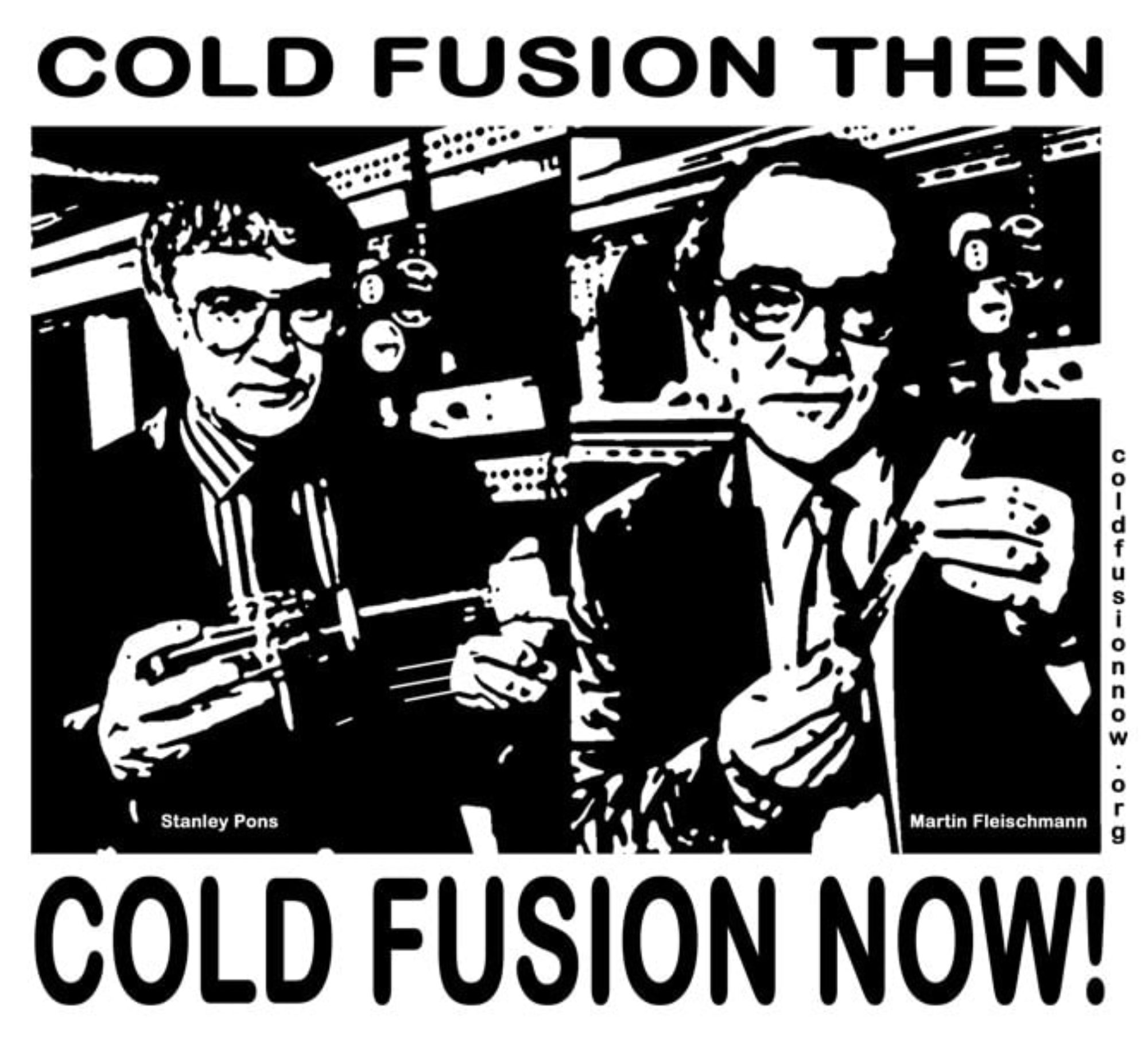
This newly developing energy technology is based on the discovery announced 22 years ago by Drs. Martin Fleischmann and Stanley Pons, and after two decades of assiduous research, a simple hot-water boiler called the Energy Catalyzer will be the first model of breakthrough engineering based on that discovery with a planned commercial release for industrial applications in the last quarter of this year.

The heat-energy reactor is the invention of Andrea A. Rossi and he calls it the New Fire. The New Fire is described by it’s developers as a nickel-hydrogen exothermic reaction for it uses a fuel of hydrogen gas and a powder made of nickel. Infused into the nickel powder at high-pressure, the hydrogen reacts with the metallic nuclei creating a huge amount of heat well beyond that of any chemical interaction.

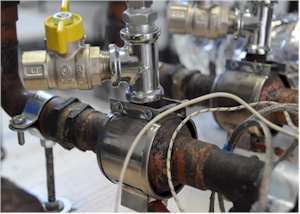
Internal E-cat proto-type
A test of the early proto-type of the E-Cat. photo: Mats Lewan

One early test of the Energy Catalyzer E-Cat reportedly produced over 15 kilowatts of heat energy over 18 hours. In Low Energy Nuclear Revolution a documentary video from PhiZero,[1] one of Mr. Rossi’s collaborators Sergio Focardi, himself a longtime researcher in these types of nickel-hydrogen systems, said of the early E-Cat tests, “On average the relationship between thermal energy gained and input electrical energy was on the order of around 200 times.”

Another collaborator of Mr. Rossi’s, Giuseppe Levi, described an early test of the E-Cat where an astounding 120 kilowatts of power was produced, at which point it was turned off. “We restarted it, and the system ran for one hour at 40 kilowatts,” said Mr. Levi. “I saw that it was capable of being self-sustaining.”

You cannot step into the same water twice.
Heraclitus

The Fleischmann-Pons Heat Effect FPHE was first studied in a glass beaker using a heavy-water solution and a small, solid piece of the metal palladium, but with that initial system, the effect of excess heat was difficult to reproduce. Today, nano-sized particles of metal such as nickel, platinum, titanium, and others, are the medium that support reproducibility. The plethora of metals that create the nuclear active environment where the reaction occurs is further diversified by the fuel of hydrogen, which can be either in gas or liquid form and even in the form of water.

There are three forms of hydrogen: protium, deuterium, and tritium, and possibly even more in the form of hydrinos, hydrogen purported to exist in fractional ground-states. Both protium and deuterium have been used to initiate energy-producing reactions, while tritium is a sometime by-product of the reaction whose presence reveals the nuclear nature of the reaction.

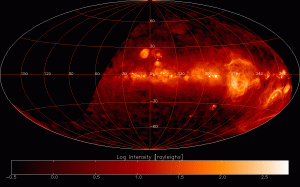
halpha_shassa_big
The red visibile light of hydrogen in the southern sky.

Hydrogen makes up about 75% of the chemical mass of the universe and is the most abundant material that exists. Indeed, three-fourths the mass of our Sun is hydrogen, and the reactions that keep our Sun alive begin with the fusion of hydrogen nuclei deep in the interior. On Earth, hydrogen makes up the bulk of water.

Chemically, water is H2O, meaning two hydrogen atoms and one oxygen atom together make up a water molecule. Continually replenished on Earth by the solar wind and cosmic particles from interstellar space, hydrogen is “the ultimate renewable energy resource”.[2]

Hydrogen can be burned just like oil or gas, and this is what many alternative energy advocates are proposing when they discuss hydrogen technologies, but that is not what the New Fire does. Chemical burning of fuel is a process that involves the outer electrons of atoms as they mix and match, forming new compounds as well as energy. Wood and oil burn, but the New Fire is a reaction of nuclear dimension whereby protons, the nuclei of the hydrogen atoms, interact with electrons and other nuclei to liberate energy many times greater than any chemically-induced process.

Neither is the excess heat of the New Fire the process of fusion that occurs in the Sun’s plasma. While the theory behind the reaction is unknown at this time, scientists piece together scraps of 20th century modern physics in an attempt to describe a 21rst century phenomenon: clean, dense energy from the most plentiful material in the universe.

Prehistoric humans discovered fire

Not having a definitive theory won’t stop this technology from materializing out of the Mystery Landscape, nor will it be stopped by the virtual silence of the mainstream scientific community and media which has been deliberately hostile to this research in the past. Historically, just about every new technology ever introduced was brought into existence without a theory first. Humans discovered fire hundreds of thousands years ago, and it’s possible that as far back as 800,000 years, our ancestors made opportune use of natural fire in the environment.

They did not have to know how it worked, only that it did.

It was Marshall McLuhan who noticed that “the biggest secrets are kept by public incredulity”. We the public are surviving in the after-image of 20th century myopia with little knowledge of this epoch-making advancement in energy technology. But when the mass of men realize that a solution to scarcity exists, and this solution is available to all, power will re-distribute around the globe “at the speed of thought”.[3]

The New Fire will be able to replace radioactive fuel assemblies one-for-one, generating ultra-clean steam heat for today’s power plants, but an off-grid, clean technology that uses a fuel of water decentralizes power allowing individuals and local communities to better control their own energy choices.

greek protestThe New Fire is not an incremental change in existing energy technology introduced by multi-national corporations. The New Fire does not recognize the hierarchy of centralized authority, and will not be stopped by parochial notions such as “reputation”. The New Fire burns through satellite links sparking the minds of young people who haven’t the prejudices of their parents, and who will not wait patiently while their future is mortgaged by distant incorporated entities.

The New Fire comes from the curious tinkerings of those who believe they really can change the world, and aren’t afraid to succeed.

In their book Breakthrough Power, authors Jeane Manning and Joel Garbon describe some of the opportunities that exist with a green and plentiful energy like the New Fire. The list included:

“rewarding, life-affirming work that enhances human dignity and contributes to the planetary clean-up and advancement of global society. Low-cost energy permits recycling on an unprecedented scale, and the unsightly gigantic heaps of trash that previously blighted the landscape are transformed into valuable mines of recovered resources.”

“The world’s thirsty families are supplied abundant and pure drinking water extracted from the atmosphere itself or by desalination of ocean water. Depleted farmland is restored to productive agriculture. Stream, rivers, and aquifers are no longer exhausted by damaging diversion and over-pumping, but are restored to their natural balance, permitting fish stocks and streamside ecosystems to thrive once again…”

“Food can be grown anywhere – even in the desert or arctic conditions – in compact, multi-level greenhouses whose natural heating and lighting are augmented by energy easily and cleanly extracted from space itself.” –Breakthrough Power

And

“…imagine how both the environment and and the forest industry would benefit if new energy technology resulted in a fuel-less helicopter. Suddenly selective harvesting of trees from the air would be economical. No logging roads would be needed. Instead of clear-cutting swaths of forest, heli-loggers could selectively thin the weakest tress. Forest could be restored to pristine “old growth” status.”

“Without the need for hydroelectric power, there is no need to dam rivers. With certain dams dismantled, salmon in the northwest would be able to easily return upriver to spawning grounds. The vitality of cool, clear, unimpeded flowing waters could be restored.” [4] –Breakthrough Power

The ideas and dreams of new-energy researchers have imagined some of the possibilities that the New Fire may bring. Jed Rothwell‘s Cold Fusion and the Future describes many more solutions to be derived from this technology. But all these fantastic possibilities are not guaranteed.

We as citizens have to be ready to participate in co-creating our society and demand the tools to do so. We cannot expect others to create the reality we want to live in if we’re not willing to put any effort in that.
Birgitta Jonsdottir Icelandic Parliment July 5, 2011 Ca$h Flow

Humans may never appreciate the beautiful and delicate world we inhabit until other worlds are explored, for as exotic and amazing as they are, toxic gases and the severe cold vacuum of space will not support our life without layers of artificiality. The pleasant air, the sweet water, the elegant variety of life that complements beautiful formations of forest, plain and desert are unique in our corner of the universe, with not another living sphere in sight.

Earth, our home – it is this world we must care for. It is this world we must preserve, this time, with our eyes wide open, and the New Fire to light the way.

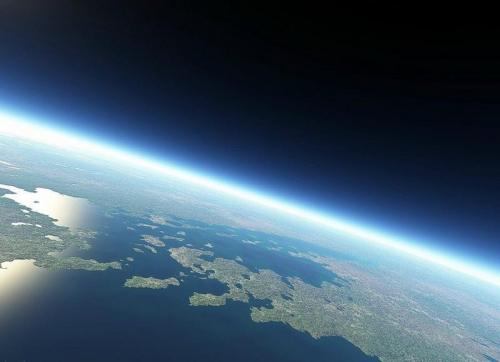
Earth's atmosphere
Thin, delicate atmosphere of Earth protects all life on the planet.

Supporting links:

1. Low Energy Nuclear Revolution from PhiZero by Ivy Matt June 23, 2001
2. Robert E. Godes Funding dam (almost) breaks for Brillouin boiler that uses – water! –Ruby Carat July 7, 2011
3. “Now, we’re living at the speed of thought.” Bob Neverit Ca$h Flow July 6, 2011
4. Breakthrough Power by Jeane Manning & Joel Garbon www.breakthroughpower.net
5. Cold Fusion and the Future Part 1: Revolutionary Technology Jed Rothwell Infinite-Energy

Top