SRI International: “What happened to cold fusion?”
Dr. Michael McKubre, long-time researcher in cold fusion from the SRI lab in Menlo Park, California speaks to the public on the subject at Cafe Scientifique.
This is the first of eight separate Youtubes, all entitled “What happened to cold fusion?”
Dr. McKubre describes two main branches of the science, electro-chemical palladium-dueterium PD-D and nickel-hydrogen gas-loading Ni-H systems in plain easy language that any interested person can understand.
“I’m going to teach you enough electro-chemistry to go home and do these experiments yourselves.”
He says “Most of the work in the field has been in PD-D systems.” Francesco Piantelli began exploring Ni-H cells in the early nineties. It is this type of reaction on which inventor Andrea A Rossi based his Energy Catalyzer steam generator. Dr. McKubre will discuss that development at the end of the talk because as a news topic, its “hot and interesting.” He also says “Some recent results at SRI seem to support the idea that nickel and light hydrogen also can support nuclear level excess heat.”
In video 2 following, he says of the excess heat generated by a cold fusion energy cell, “This amount of heat is 100 or 1000 times the sum of all possible chemical energies combined.”
PD-D systems are sensitive to impurities. The cell itself is not glass.Fusilica, Teflon, platinum, palladium, quartz and alumina are the only materials that can be used in the cell.
To measure the heat generated accurately, Dr. McKubre says “we need a very well-defined temperature environment.”
The temperature difference between the water coming in and the water going out is measured by two sensors at the inlet of water moving past the heating unit and two-to-four sensors on the outlet water.
The three things we need to know is “what is the temperature difference, what is the mass, the flow rate, how many grams-per-second of water is going through that calorimeter, and what is the heat capacity of that water which is 4.186 Joules per gram of air-saturated water.”
Part 3:
Part 4:
Part 5:
Part 6
Part 7
Part 8
Related Links
Michael McKubre interviewed by James Martinez on Ca$h Flow June 1, 2010 download mp3
Starting 2012 with Cold Fusion 101
A new short course on cold fusion science and technology sponsored by the Engineering and Computer Science departments at Massachusetts Institute of Technology will be held in January 2012 during institute’s Independent Activities Period.
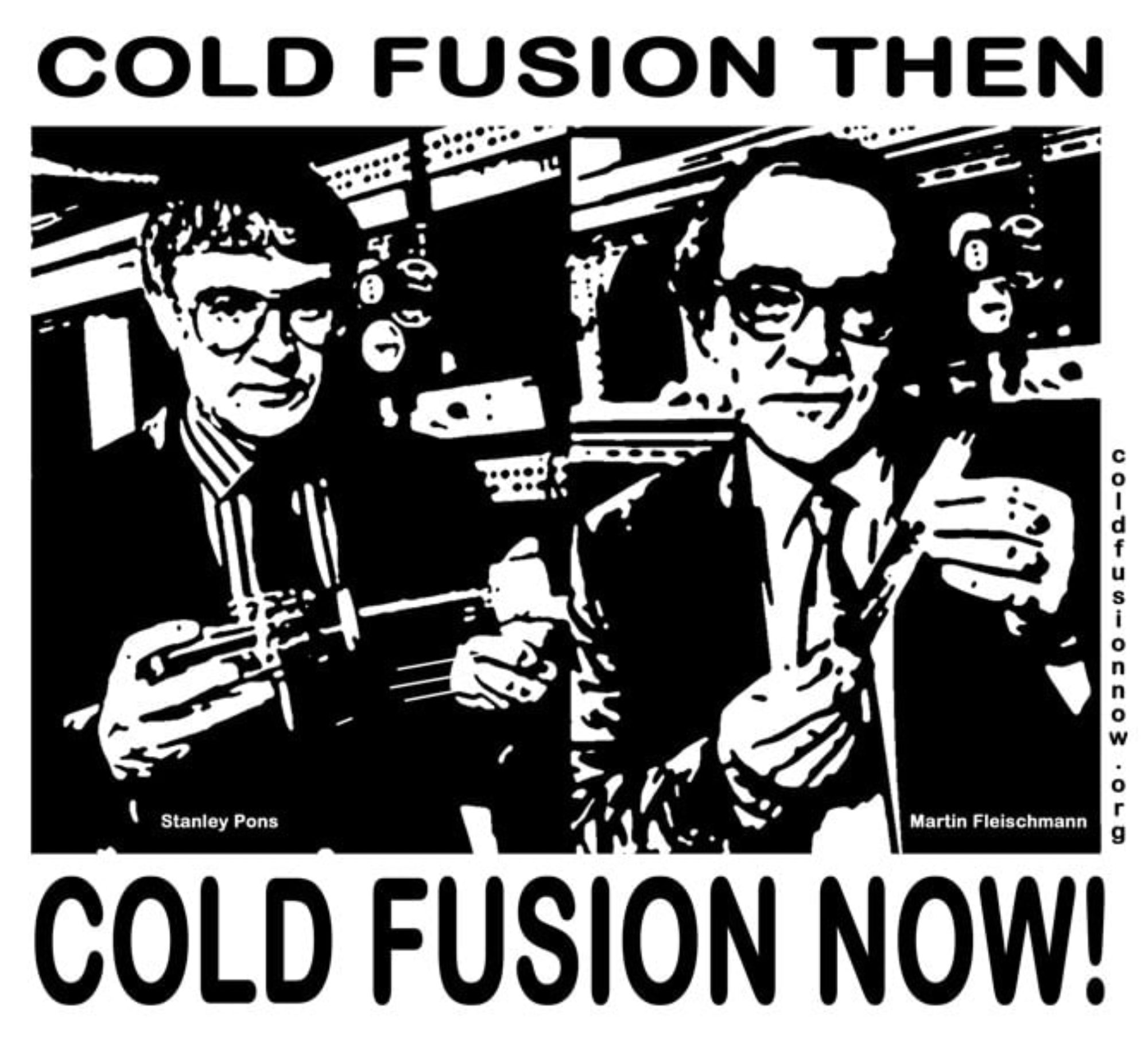
Designed for MIT students, Cold Fusion 101: Introduction to Excess Power in Fleischmann-Pons Experiments addresses the early history of cold fusion science beginning with the analysis of the original palladium-deuterium type systems that Drs. Fleischmann and Pons used in their research during the late 1980s.
Peter Hagelstein of MIT Electrical Engineering is leading the class with Mitchell Swartz of Jet Energy in a technical overview of theory and experimental electro-chemistry over seven days January 23-27, 30, 31 from 11AM-12:30PM.
Nickel-hydrogen systems will also be addressed with a look at Francesco Piantelli‘s experiments. Professor Piantelli collaborated with Sergio Focardi generating energy by combining hydrogen and the metal nickel in the mid-nineties, research which inspired Andrea A. Rossi‘s E-Cattechnology.
Dr. Hagelstein has been exploring the theoretical aspects of cold fusion looking to find a model of the reaction. He is also involved experimentally through the design of thermal diodes, a technology which promises a more efficient thermoelectric conversion, the process whereby heat energy is converted into usable electricity. He was quoted in this article of 2009 “Turning Heat into Electricity” about this research.
Most recently, Dr. Hagelstein spoke as part of Cold Fusion Energy Inc at the World Green Energy Symposium held in Philadelphia, PA this past October.
Reviews of the Colloquium can be downloaded from Infinite Energy here for Part 1 and Part 2.
You can read the scientific papers of both Dr. Hagelstein and Dr. Swartz on the International Society of Condensed Matter Nuclear Science‘s Library page, and it’s pretty heady stuff.
While the course is designed for the students at MIT, special candidates may be able to attend with prior instructor approval.
Cold Fusion Now!
Related Links
Cold Fusion Energy, Inc debuts at World Green Energy Symposium by Ruby Carat October 14, 2011
First Commercial Cold Fusion Steam Heat Generator For Sale
Order your Energy Catalyzer today!
It is the first thermal energy generator to be powered by the reaction between hydrogen and the metal nickel based on two-decades of research that began when Drs. Fleischmann and Pons announced cold fusion in 1989.
Essentially a hot-water boiler, the generator creates steam heat. Currently, coal-fired power plants create steam heat to make electricity for the power grid.

The units sell for $2000 per kilowatt housed inside a standard steel shipping container that will ship anywhere in the world. Sterling Allan of PESN who attended the recent deal-closing demonstration reports that all products are currently designed for industrial and agency use, and “smaller units for domestic use by individuals, [will be] ready in about a year’s time” citing pending certifications as the delay.
Potential buyers have a complete demonstration available to them before purchase including the opportunity to fully test the E-Cat generator to their satisfaction.
The high-energy return for hydrogen fuel that reacts inside a tiny piece of metal is akin to the energy generated by fusion. Fusion is where the central portions of atoms combine together releasing enormous amounts of energy many times greater than the chemical burning of oil, gas, or coal.
Conventional theories of fusion claim the process can only occur in the Sun, under intense pressure and heat. Hot fusionists have attempted to re-create those extreme conditions in the laboratory for half-a-century without success in generating over-unity power for more than a a second or two. Cold fusion occurs by as-yet unknown processes that are described by modern physics concepts of phonon resonance and quantum transitions inside a nuclear active environment.
Interactions between the hydrogen and the atoms of the solid metal occur that create heat, and even transmutation products, at room temperature. Updating the current theories to incorporate this phenomenon challenges mainstream scientists adamantly against investigating this very post-modern phenomenon.

He has also demonstrated his units in self-sustain mode, whereby there is no input power, and the energy return is exponentially increased.
The nickel-hydrogen exothermic reaction does not use radioactive material, and does not generate radiation like today’s nuclear power plants. There is no chain-reaction and no runaway scenario. If the generator gets too hot, the nickel powder melts, stopping the reaction.
This technology promises to disrupt the fossil fuel economy by generating cheap power from abundant fuel that is ultra-clean, mobile, and independent of the grid. The transformation will not be easy. Dr. Edmund Storms chatted with Cold Fusion Now about “Transition” here.
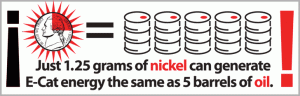
Graphic artist Ashley Swanson from Miami, Florida illustrated the dense energy return for tiny amounts of fuel with this picture you can put on your website.
O my peoples!
This is a fresh era for the new-energy movement. The courageous efforts of independent new-energy scientists who have labored for twenty-two years without funding, without recognition, and without respect, will be realized in the delivery of a revolutionary technology that they alone deserve commendation for.
If you are a business with heating or steam needs, contact the Leonardo Corporation about their E-Cat product line and get cold fusion technology delivered to your door today!
Cold Fusion Now!
Related Links
E-Cat orders being taken after a successful launch by Sterling Allan PESN
Leonardo Corporation homepage (previous bio-diesel product line showing)
E-Cat Northern Europe distributors homepage
Ashley Swanson graphic artist http://www.ashandburn.com/
Dr. Edmund Storms on “Transition” by Ruby Carat Cold Fusion Now October 24, 2011
Oil to Nickel: The E-Cat Energy Equivalence by Ruby Carat Cold Fusion Now October 4, 2011
Mass power outages from superstorms no issue for cold fusion
Storms hit the US hard this past year.
In August, a large hurricane took an unusual path and dumped record amounts of rain up the whole of the eastern coast, saturating grounds and leaving more than 6 million people without electrical power.
Just days ago, an early snowstorm in the northeast of the country broke tree limbs still full of leaves, downing power lines that left 3 million without power.
A surprise two-feet of snow hit some areas and brought business-as-usual to a halt as residents were trapped in their homes, without electricity, and in some cases without heat. Consequently, schools, shops and businesses were closed and billions of dollars of economic damage is added to the infrastructural damage. Close to a dozen people were reportedly killed by fallen power lines and other storm-related circumstances.
As climate change brings more severs swings in weather, from extreme heat and drought to early frost and bitter snowstorms, we enter into the waning moments of both the current economic model and energy paradigm. The confluence of environmental crisis meets economic and energy collapse in what some call a Clusterf**k.
Dismay and despair fill the minds of those who’ve lost everything amidst the crises. Occupy Wall Street is criticized by the corporate media outlets as having no clear demands, but they’re just not listening. The ills of this lifestyle are too complex to be managed by a talking head in 5 seconds.
Or is it? The simple solution to our ecological, economic, and energy problems may be described in two seconds or less.
Cold fusion.
The radical new energy that can be generated on location, as needed, without the requirement of power lines and substations. That’s right, cold fusion technology means you generate your own power in your own house when you need it, not connected to any grid or centralized power plant. Robust and resiliant, cold fusion technology will be our energy go-to as the fossil fuel infrastructure fades away into ruin.
Cold fusion energy means:
NO centrally located coal plants.
NO centrally located nuclear plants using dangerous radioactive fuel.
NO high-voltage electricity substations.
NO power lines across the wilderness, in town, or on your street.
NO power companies monitoring your consumption and dictating your bill.
Cold fusion is disruptive technology that will change the energy industry from a centralized corporate hierarchy to a decentralized individual network. It is for this and other reasons that cold fusion science has been abandoned by the Department of Energy, a federal entity populated with oil and coal industry veterans as well as hot fusion enthusiasts.
Looking at all the power plants along the eastern US coast that were in the path of Hurricane Irene this year shows the risk that large centralized power plants pose.
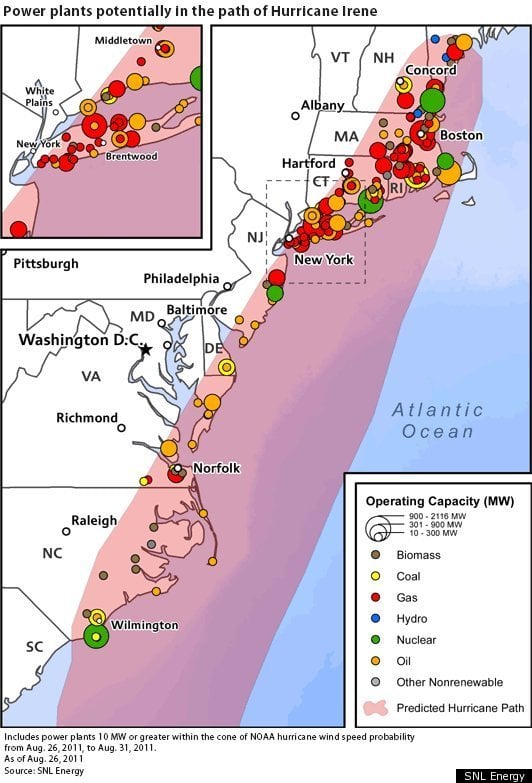
Dangerous toxins from coal and coal ash, radioactive fuels, oil and gas pipeline ruptures, all pose a threat to the environment we live in.
Losing services due to weather related events risk the well-being of residents who relay on electricity to power medical devices, food refrigeration, and other important needs.
The economic toll becomes incalculable when homes, businesses, schools and government offices are without power.
This past August, as a hurricane hit the coast, the state of Texas was suffering from a long drought with more days of 100-degree-and-above temperatures than any year since records began. With the drought, farmers lost crops and cattle, wildlife suffered from lack of food and water, and costs shot up when electricity needs increased.
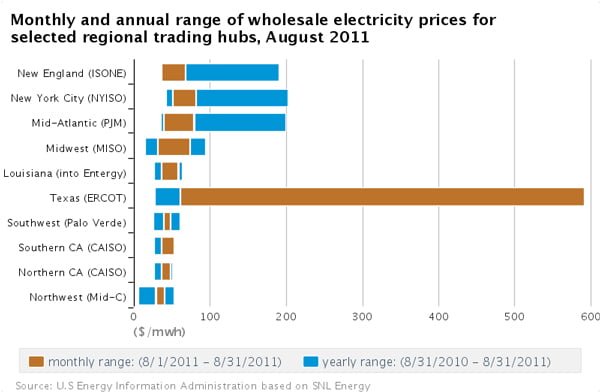
As our economy runs down the peak oil slope, higher fossil fuel costs, loss of jobs coupled with the exponential growth of paper money create human and ecological tragedies that are sure to continue, unless we change paths.
Cold fusion is a reaction that takes place between hydrogen and the atoms inside a solid metal. The metal is “host” to the reaction, but the atoms of the metal also take part in the energy-generating process.
The first commercial device to be released for industrial use runs on simple hydrogen, the main element in water, along with the metal nickel, just like the nickel in your pocket. Called a nickel-hydrogen exothermic reaction the device makes steam heat, heat is clean. There is no carbon dioxide emitted during the reaction.
A single 1 Megawatt nickel-hydrogen E-Cat, the cold fusion-based steam generator created by inventor Andrea A. Rossi, would consume about 20 kilograms of nickel powder and 36 kilograms of hydrogen each year with the only by-product is steam and hot water. The nickel is recyclable after six-months of operation.
On the other hand, a 1 Megawatt coal-fired power plant will burn 20,000 rail cars of coal each year. At 183.65 metric tons CO2 per railcar [see here], that’s 3.7 million metric tons of CO2 for 20,000 railcars.
Since a metric ton is 1000 kilograms, that 3.7 billion kilograms of CO2 emitted annually from a single 1 MW coal-fired power plant.
Nature is not finished with us. In fact, she’s only just begun. With 7 billion people on this planet extracting resources exponentially, climate change and extreme weather add another layer to the stressed social and economic systems.
Cold fusion offers a path to navigate the near-future crises that inevitably will affect our planet to a greater degree. And when storms take the power out, it offers a safe, clean, energy that you have the perogative to turn on and off at will, your will.
Cold Fusion Now!
Related Links
Edmund Storms on “Transition” Cold Fusion Now video October 24, 2011
The Answer to All Our Energy Problems video by Alien Scientist transcribed by Sterling Allan PESN
CO2 Emissions Report July 2000 from EIA
Emissions from Energy Consumption at Conventional Power Plants from EIA
What if matter was a state of energy?
“With his famous equation E = mc2, Albert Einstein proved that when you come right down to it everything in the universe is energy.” – Deepak Chopra
The current scientific “worldview” is that matter exists in four distinct states, with the most common states on Earth being: solid, liquid and gas. Beyond gas is a more exotic kind of electromagnetic substance called plasma, which is considered to be the most common state of matter in the physical Universe.
 If Einstein’s theory of Relativity implies an interchangeble equivalence between matter and energy, then it might be consistent to view all states of matter as states of energy – like steam, water and ice are states of water. Why cannot we view energy as manifesting within a spectrum of higher to lower frequencies or vibrations? For example, that part of the spectrum which is visible to us might manifest as light, plasma, and matter. Matter could then be viewed as “solidified” or “frozen” energy – the densest state of energy. Matter as a state of energy with the lowest frequency or vibration, could be further sub-divided according to its vibrational frequency into gas, liquid and solid.