It’s been twenty-three years since the announcement of the discovery of cold fusion, and yet, this powerful solution to our energy needs is not even recognized by the Department of Energy (DoE), despite the interest of other federal agencies like NASA and the military.
In trying to understand why, I learned that it was the top science schools in the U.S. who produced negative reports early in 1989 that influenced both federal policy and mainstream academic science, and still do today. Read Remove Institutional Blocks for more.
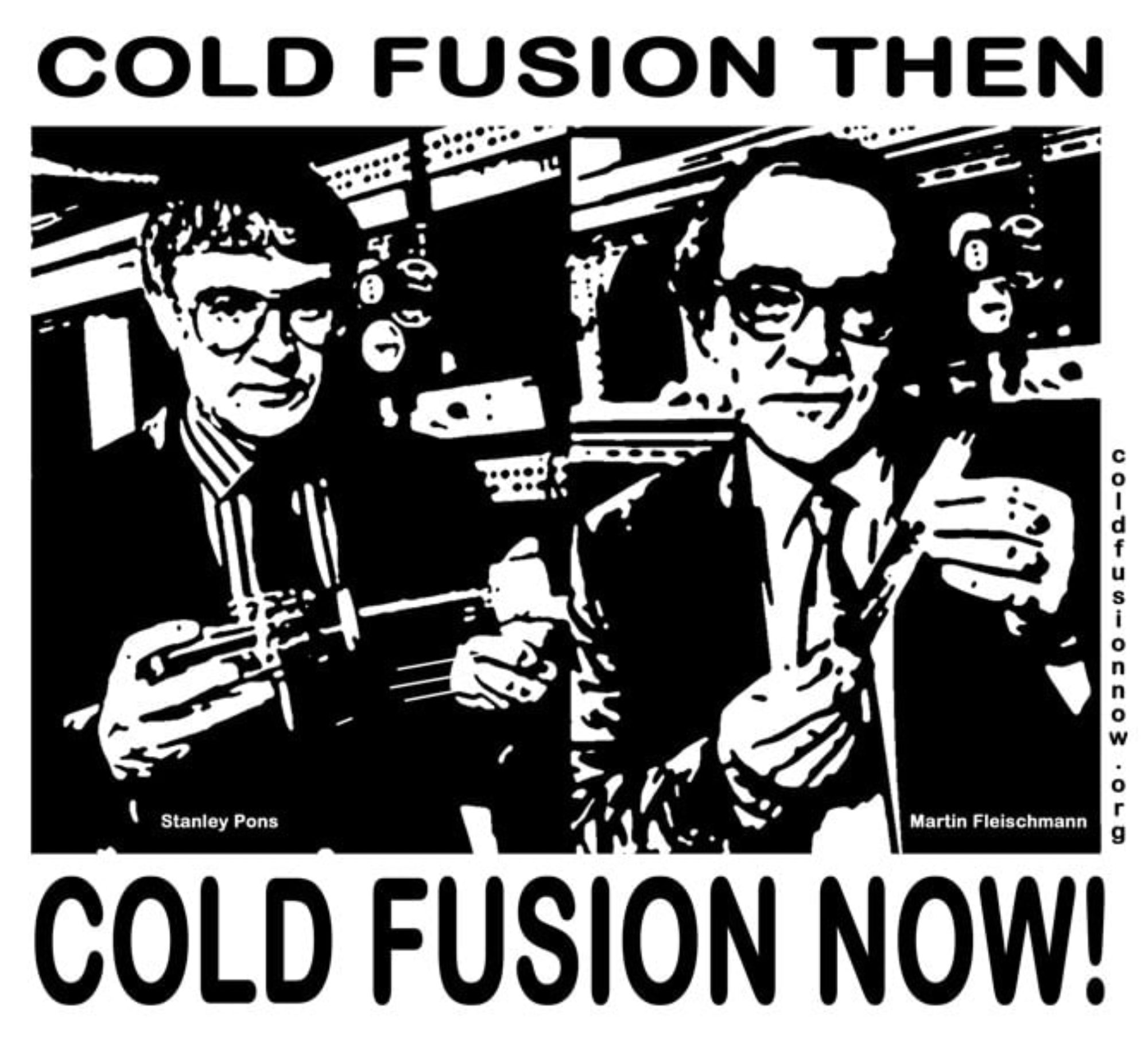
In that year, the Massachusetts Institute of Technology (MIT) and California Institute of Technology (CalTech) conducted experiments to test the claims of Martin Fleischmann and Stanley Pons, two scientists who had discovered a powerful form of energy that could be created in a test tube. These experiments by MIT and CalTech were to be the centerpiece of the DoE’s Energy Research Advisory Board report, a report that would determine the federal response to cold fusion and shape energy policy at the highest level of government.
However, as long as twenty years ago, several studies have shown that the experiments conducted by MIT and CalTech were seriously flawed. Dr. Mitchell Swartz of JET Energy and the designer of the NANOR device still on public display at the MIT campus, did the first analysis showing that some temperature data had been shifted downwards, with no adequate reason given for why.
Since then, Dr. Melvin Miles, a former university chemistry professor and Navy researcher, has performed several studies on the calorimetry of MIT and CalTech finding major mistakes in experimental procedure and heat measurement. The most recent analysis was published in the Journal of Condensed Matter Nuclear Science and co-authored by Dr. Peter Hagelstein, an MIT electrical-engineering professor, and the lone cold fusion researcher on the campus. [.pdf]
I met with Dr. Miles to talk about his work de-constructing the original style Fleischmann-Pons electrolytic cell, and becoming an expert at calorimetry, the art of measuring heat. I wanted to ask him about these early studies that had such influence, and what went wrong. Our conversation ensued for over four hours.
We met at the Chemistry Department at University of LaVerne where Dr. Miles had previously taught and we were joined by Dr. Iraj Parchamazad, Chairman of the Chemistry Department there. Dr. Parchamazad is also a cold fusion researcher who has recently had an amazing success in generating excess heat from palladium-loaded zeolites exposed to a deuterium gas. With no energy input besides that needed to make the zeolites, he is able to get a huge energy return. I will be writing about Dr. Parchamazad’s work in an upcoming article.
These first two videos discuss Miles’ work on calorimetry, on which he has spent two decades of his career.
This is not a discussion about technology, but science. The cells on which Miles works are research experiments, designed to determine variables, and answer the multiple criticisms that have kept this science out of the mainstream. The skills he has developed in calorimetry make him one of the top scientists in the world with this specialty.
I provide for you here this fascinating look into a meticulous researcher’s inner process of discovery, a scientific experiment that has lasted for two straight decades, and which only recently has begun to provide a preliminary model for the mysterious and mercurial cold fusion reaction.
Armed with Science to Fight Climate Change an interview with Melvin Miles from University of LaVerne Campus Times March 2, 2007 “The government needs to be exploring energy alternatives and cold fusion is being ignored,” Miles said. “Even if there is a small chance it will work, it should be explored.”
“There is enough deuterium in the oceans to fulfill the energy needs of the world for 13 billion years. One gram of deuterium costs $20 and has the energy equivalent of 2400 gallons of gasoline. Also, the fusion of deuterium does not cause greenhouse gases that produce global warning.
“Science today is a new type of religion,” Miles said. “New discoveries or concepts that don’t agree with the scientific scriptures are to be banished without a fair hearing.”
Most 4-year-olds’ interests lie in toys, cartoons and cookies.
However, Melvin Miles, research electrochemist, was curious about the moon, stars and electricity.
“I tried to generate electricity at about age 4 by using baling wire, a light bulb, and stolen matches, and received one of my early spankings,” Miles said.
At age 8, he became hooked on chemistry when he experimented with his dad’s chemicals in the family barn.
He began reading his father’s books to learn about chemistry.
Miles went on to earn his Ph.D. at the University of Utah with a major in physical chemistry and a minor in physics. He wanted to become a scientist.
Now at age 70, Miles begins his day with a five mile run. He then researches thermal batteries at the China Lake Navy laboratory.”
The vision of Earth provided by NASA lunar missions is a powerful image; possibly the most potent archetypal image of our times. This image brings to mind the beauty of the biosphere, our world and life-as-we-know-it, surprisingly small against the vast starlit darkness of space.
NASA sees LENR energetics in concert with advanced computer and flight technologies as, “The key to supersonic transports and neighbor-friendly personal fly/drive air vehicles.”(NASA)
This technology could replace much earth bound transport; roads and their inherent environmental damage would become obsolete.
NASA realizes the fragility of our biosphere and seeks to limit atmospheric damage from aeronautics and transportation in amazing ways:
The SUGAR Program (SUGAR – Subsonic Ultra Green Aeronautics Research) was initiated in 2008 as a challenge to four that received contracts, Boeing, GE Aviation, Massachusetts Institute of Technology and Northrop Grumman. The goal is a deep reduction in harmful emissions from airplanes and to decrease their noisome irritation. “Hybrid electric engine technology is a clear winner because it can potentially improve performance relative to all of the NASA goals.”(Boeing)
NASA Green Flight Challenge – “NASA has awarded the largest prize in aviation history, created to inspire the development of more fuel-efficient aircraft and spark the start of a new electric airplane industry. The technologies demonstrated by the CAFE Green Flight Challenge, sponsored by Google, competitors may end up in general aviation aircraft, spawning new jobs and new industries for the 21st century.”(NASA)Green Flight Challenge Sponsored by Google – (Final Results 2011)
Txchnologist The Future of Transportation – “Mapping Out the Future of Flight”(GE)
ON A FALLEN TREE ACROSS THE ROAD (To hear us talk) by Robert Frost
The tree a tempest with a crash of wood
Throws down in front of us is not to bar
Our passage to our journey’s end for good,
But just to ask us who we think we are,
Insisting always on our own way so.
She likes to halt us in our runner tracks,
And make us get down in a foot of snow
Debating what to do with an ax.
And yet who knows obstruction is in vain:
We will not be put off the final goal
We have hidden in us to attain,
Not though we have to seize earth by the pole
And, tired of aimless circling in one place,
Steer straight off after something into space.
Rocket Toxicity
Over 4,000 (Wiki) recorded space launches and an unknown number of missile launches have burned hundreds of millions of tons of the following propellants, oxidants, and rocket elements.
Who knows how these recombine after combustion, with each other and with atmospheric elements?
The engines powering the Space Shuttle’s initial liftoff boosters may have been the most polluting engines ever operated by mankind. For each kilogram of payload, the shuttle’s main boosters burn 30 kilograms of fuels and oxidizers.
During 135 missions 122,472,000 kilograms (135,002 tons) of this highly toxic fuel was burned in the solid fuel boosters of the Space Shuttles.
Approximate Amount Burned (tons)
94,365 Ammonium Percholate
5,600 Powdered Aluminum
9,450 Iron Oxidizer Powder
16,204 Polybutadiene Acrylic Acid Acrylonitrile
2,646 Epoxy-curing Agent
21st Century Timeline of U.S. Rocket Fuel Pollution Scandal (read)
Perchlorate is a powerful oxidant that has been detected in public drinking water supplies of over 11 million people at concentrations of at least 4 parts per billion (ppb). High doses of perchlorate can decrease thyroid hormone production by inhibiting the uptake of iodide by the thyroid. Thyroid hormones are critical for normal growth and development of the central nervous system of fetuses and infants.
A Summary of NASA and USAF Hypergolic Propellant Related Spills and Fires (pdf)
The fuel is monomethyl hydrazine (MMH) and the oxidizer is nitrogen tetroxide (N2O4) which is similar to ammonia. Both fluids are highly toxic, and are handled under the most stringent safety conditions. Hypergolic propellants are used in the core liquid propellant stages of the Titan family of launch vehicles, and on the second stage of the Delta.
The Space Shuttle orbiter uses hypergols in its Orbital Maneuvering Subsystem (OMS) for orbital insertion, major orbital maneuvers and deorbit. The Reaction Control System (RCS) uses hypergols for attitude control.
NASA is hoping to reduce launch emissions for space flight with LENR.
Cold Fusion – NASA – LENR Part Three Earthbound and Spacebound Transportation
In my point of view, series of the experiments in Gran Sasso Laboratory under leadership of Dr. Claus Rolfs and similar experiments in Berlin by Dr. K. Czerski and colleagues during 2002-2009 show unusually high electron screening potential in metallic crystals. These experimental facts give a good mechanism how the Coulomb barrier overcame with low energy (thermal) deuterons.
[latexpage]
“The circumstances of hot fusion are not the circumstances of cold fusion”, wrote Julian Schwinger, co-Nobel-prize winner with Richard Feynmann and Shinichiro Tomonaga in 1965 for their work on quantum electro-dynamics (QED).
But there is no shortage of hot fusion analysis of cold fusion. Might some ideas be applicable?
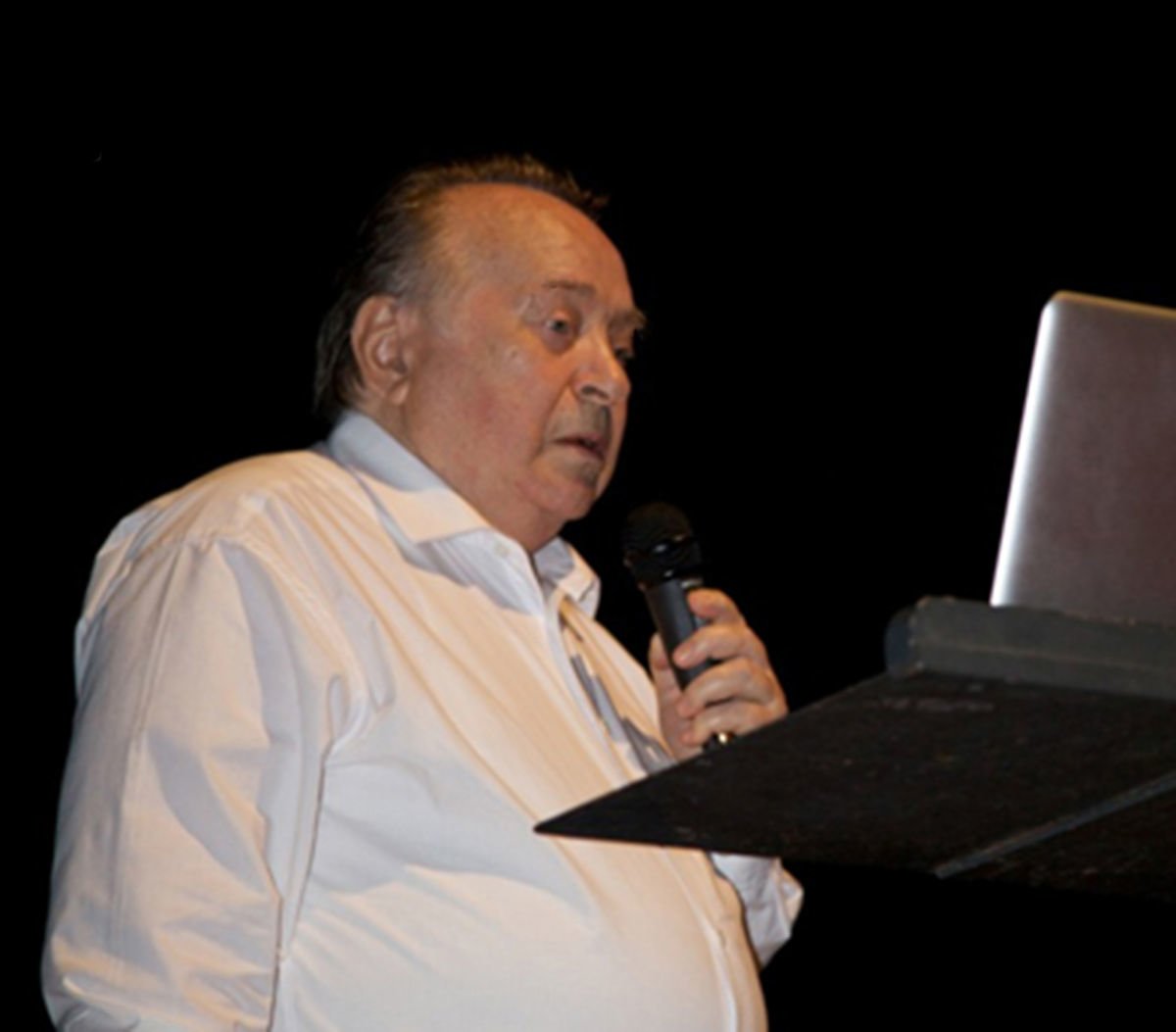
Edward Tsyganov believes so.
Dr. Tsyganov is a professor at University of Texas Southwestern Medical Center who specializes in nuclear detectors, but in 1975, Tsyganov was part of an international group working on the Tevatron proton accelerator at Fermilab, just after successfully completing the first Russian-American scientific collaboration on the Serpukhov 70 GeV proton accelerator in Russia.
Muon catalysis had been discovered by Professor Luis Alvarez, whom he met at Lawrence Berkeley Lab in 1976. Although exciting, muon catalytic fusion did not look very promising to Tsyganov due to the short life time span of the muon.
Later, in December 1989, he was sitting in the audience of a seminar with Martin Fleischmann at CERN in Geneva, Switzerland, having participated in the DELPHI experiment at the Large Electron Positron collider. [visit] He was very excited with Fleischmann’s presentation but, at the time, he had just introduced bent crystals for beam deflection, now used in high-energy physics. The study of crystalline structures drew him away from cold fusion research, which he had heard was “a false observation” anyway.
Gran SassoInspired by experimental work performed with the Gran SassoLaboratory Underground Nuclear Physics (LUNA) facility in Italy, Tsyganov recently returned to the topic of cold fusion. [visit]
Scientists there have shown that when a deuterium atom is embedded in a metallic crystal, the cross section, which gives a measure of the probability that a fusion reaction will occur, increases in comparison with that of free atoms.
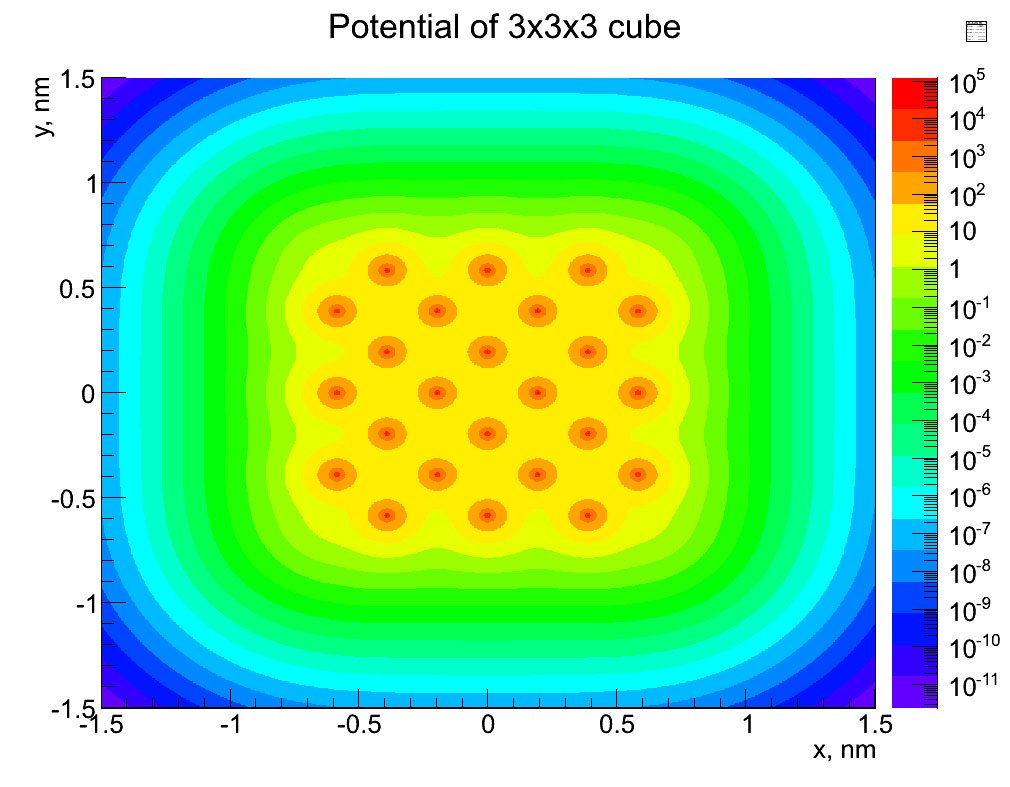
In the 2002-2008 series of international low-energy accelerator experiments, low-energy deuterium beams directed at embedded deuterium atoms showed that, in this environment, the screening potential for the orbital electrons of the embedded atoms is substantially increased. This means that in such conditions, any supplemental embedded nuclei in a single host crystal cell could sit much closer than they normally would due to the Coulomb repulsion.
Can this idea be applied to the low-energy nuclear reaction (LENR) in a solid?
The problem of overcoming the Coulomb barrier, the powerful force that keeps positively-charged protons away from each other, is the central issue for developing clean cold fusion energy. The force that holds nuclei together is called the strong nuclear force. Though it is an extremely powerful force, it only extends for a small distance. Unless nuclei can get close enough for the strong force to take effect, positively-charged nuclei remain too far away from each other to fuse. Elements other than hydrogen have an even bigger Coulomb barrier, since they have many more protons, and a stronger positive-charge. This is true for both free particles, and those housed in a solid metal.
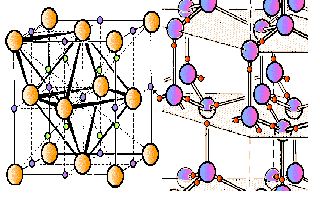
JET Energy model of palladium metallic lattice infused with deuterium.But inside a metallic lattice, the negatively-charged conducting electrons are free to move about, creating a negatively-charged screen. As a result, a positively-charged proton (or deuteron) inside the lattice sees mostly negative charges. But at some point, the bare nucleus could find itself suddenly close to another of its kind, the other’s positive-charge being “hidden”, or screened, by all the surrounding negative charges.
In this environment, deuterons or other nuclei may sit closer together in one host crystalline cell than they normally would. In a paper Cold Nuclear Fusion [1], Tsyganov cites data obtained by Francesco Raiola et al, for the screening Assenbaum potential for deuterium embedded in platinum as 675 +/- 50 eV, which is around 25 times larger than for free atoms of deuterium.
“The so-called screening Assenbaum potential is usually considered as an additional energy of interaction in a fusion process, and this effective energy should be used for calculations,” writes Tsyganov.
“This means that atoms of deuterium embedded in a metallic crystal do not feel the Coulomb repulsion down to distances of 25 times smaller than the size of the free deuterium atoms, increasing the probability of barrier penetration.”
“It was evident that in such conditions two deuteron atoms could approach each other to the distance of 1/10 – 1/20 of the size of an undistorted atom, without feeling the Coulomb repulsion.”
“Normally at very low energies for the deuterium molecule, the Coulomb barrier permeability for deuterium atoms is of the order of $10^{-84}$, including the Assenbaum screening potential (27 eV). However, in an environment of a single metallic crystalline cell this value jumps by $10^{50}$ – $10^{60}$ times! At the same time the real kinetic energy of the interacting deuterium atoms is still very low, some tiny fraction of an eV. All the enhancement of Coulomb barrier permeability is due to much shorter distance between the interacting deuterium nuclei.”
At low energies, the Coulomb barrier permeability is lowered and nuclei can position closer together. “As one can see from the graph, in the region of low effective kinetic energies, as in the case of cold fusion, the dependence of the quantum mechanical probability of Coulomb barrier penetration vs energy is very sharp.”
For Tsyganov, this illustrates the difference between hot fusion and cold fusion.
“Hot fusion produces compound nuclei through multiple single encounters of the particles. In cold fusion, particles interact with the same partner through the quantum oscillations in a ‘closed box…'”, he writes. “This oscillation frequency is directly proportional to the screening potential, or box “size”, giving an additional boost to the process.”
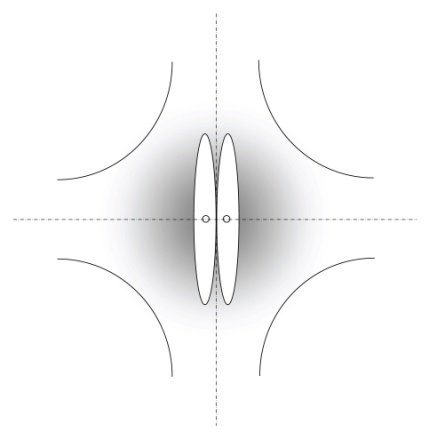
Suppose that two deuterium atoms are trapped inside a single crystalline cell of palladium. The electrons associated with the deuterium will have an elongated shape in response to the cloud of conduction electrons, their orbits distorted by the catalytic effect. This is what allows the deuterium nuclei to situate themselves only a fraction of the distance they would normally tolerate.
Together, these two atoms make a “quasi-molecule” that oscillates at a particular frequency. While Tsyganov admits that calculating the particular oscillation frequency of a deuterium quasi-molecule in the midst of so many potential fields inside the crystal is difficult, he uses Planck’s relation as an approximation to give a frequency $\nu = E/h$, where $E$ is the experimentally measured screening potential and $h$ is Planck’s constant.
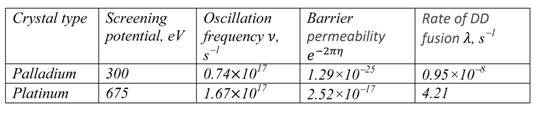
For deuterium embedded in a platinum metallic crystal, the screening potential was measured by Raiola as about 675 eV. This gives a vibrational frequency for the quasi-molecule as $1.67 \hspace{1 mm}\text{x}\hspace{1 mm} 10^{17}$ per second, and offers an estimate of the number of times the nuclei get close enough to fuse.
Multiplying this value for the oscillation frequency by the barrier permeability, a measure of the ability to overcome the Coulomb repulsion, of $2.52 \hspace{1 mm}\text{x}\hspace{1 mm} 10^{-17}$ yields a rate of 4.21 Deuterium-Dueterium fusion events per second.
Based on the calculation above, this table estimates DD fusion rates for crystals of palladium and platinum.
“I took this observation and applied these enlarged screening potential to the condition of McKubre experiments with deuterated palladium”, says Tsyganov.[1] “Heat release of Michael McKubre and the SRI team is well explained. In fact, this is the first confirmation of the cold fusion process using independent data from accelerators.”
Tsyganov believes experiments of Yoshiaki Arata and similar experiments of Mitchell Swartz could be also explained with this mechanism, if “quantitative data on deuterium contamination in palladium nano-crystals would be available.” He is convinced that the mechanism in McKubre’s experiments and that of Arata and Swartz’ are the same.
“Experiments of Francesco Piantelli and Andrea Rossi are well fitted in the above model. Higher heat release in the Rossi case is probably explainable by the use of platinum catalyst”, writes Tsyganov.
“Professor S.B. Dabagov, Professor M.D. Bavizhev and I have tried to analyze the nuclear processes occurring in the Ecat installation and provide a possible explanation for the observed results, says Tsyganov. “In addition to the slowing of the nuclear decay processes of the intermediate compound nucleus formed during the cold fusion of elements [2], some modification of the decay process of the intermediate nucleus of the compound (H+Ni)* must be assumed to provide a plausible explanation of the Rossi results. We discuss such possibilities in this paper.”
Tsyganov’s idea pertains to how nuclei might become situated close enough inside a metal to overcome the Coulomb barrier and fuse, an idea derived from hot-fusion experiments. Still, he believes this model can be applied to the cold fusion environment too, claiming predictions agree well with heat energy measured by SRI and extend to the nickel-hydrogen systems as well.
I asked Dr. Tsyganov how his model might explain some other experimental data in cold fusion.
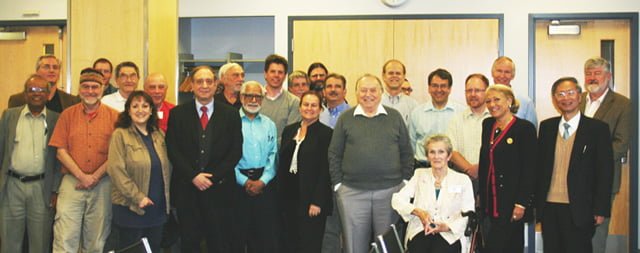
Dr. Tsyganov attended the 2011 LANR/CF Colloquia at MIT.
Q&A with Edward Tsyganov
CFN Supposing two deuterium can fuse in this way, how would the heat be dissipated through the lattice?
Tsyganov There is the traditional belief among nuclear scientists that nothing in a nucleus could depend on the outside world. It is very true for the fast processes in a nucleus (and these processes usually are very fast due to the very small size of a nucleus) because it is necessary that some time pass to reach the outside world. This time is about $10^{-19}$ seconds and is defined by the size of atom and speed of light.
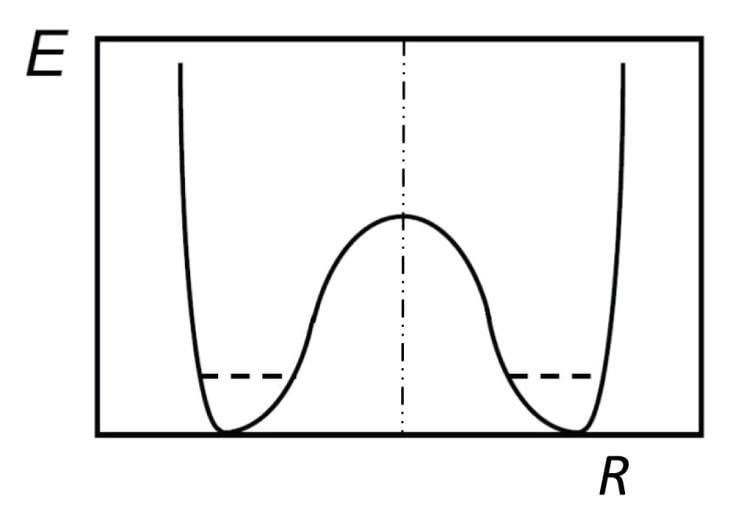
However, according to the only hypothesis of mine, the intermediate compound nucleus 4He* created in cold DD fusion, as also in other cold fusion cases, presents an absolutely unique situation. After the penetration of main Coulomb barrier (about 200 keV high), deuterons save their identities for some time, due to the residual Coulomb mini-barrier, already inside the strong potential well. This mini-barrier very much reduced and smothered by the strong interaction forces (quark-gluon mechanism) and the finite sizes of the deuterons, but still prevents immediate nucleonic exchange between the two deuterons.
This figure represents the bottom of the potential well of strong interactions of two deuterons.In my estimations, this mini-barrier is less than 2 keV high (~1% of the main Coulomb barrier), because at this kinetic energy usual nuclear decays of 4He* are still taking place. In fact, the Gran Sasso experiments, where this enhanced screening potential was discovered, used nuclear products to detect fusion processes. However, excitation (thermal) energy at cold fusion is still more than $10^{4}$ times less than 2 keV, or about 0.040 eV. Obviously, one can expect decreasing of nuclear decay rate of 4He* with decreasing of excitation energy.
I would highlight again that the decrease of nuclear decay rate at the very low excitation energy is the only hypothesis in all my consideration.
This situation could be treated as the experimental evidence. High electron screening potentials makes the cold fusion process the must. At the same time there are no neutrons and other nuclear products detected experimentally. An explanation must be provided. The only explanation (and the very reasonable one) that I could think of is the decrease of nuclear decay rate with decreasing of the energy of excitation.
If one adopts this hypothesis, further explanation does not presents real difficulties. Quantum electrodynamics provides the framework, through exchange by the virtual photons. Julian Swinger was very close to this solution but did not make the final step. Energy of discharge 4He* to the ground state 4He is released mostly by several hundreds of low energy electrons, with very short range in the crystal. About 400 60 keV electrons produce the heat.
CFN How might the production of tritium be explained with this process?
Tsyganov Production of tritium in McKubre’s experiments could be explained, if the nuclear decay rate of 4He* in cold fusion is reduced, but still non-negligible. This rate is at least two orders of magnitude less than expected for hot fusion. Perhaps, cracks and defects of the palladium sample could also contribute. I hope this question could soon be answered in future studies.
CFN Thank you Dr. Tsyganov.
Tsyganov My pleasure.
[1] Cold Nuclear Fusion by E.N. Tsyganov published Physics of Atomic Nuclei 2012, Vol. 75, No. 2, pp. 153–159 [.pdf]
[2] Cold Fusion Continues by E.N. Tsyganov, S.B. Dabagov, and M.D. Bavizhev, from the Proceedings of “Solid State Chemistry: Nano-materials and Nanotechnology” Conference, 22-27 April, 2012, Stavropol, Russia Report in Stavropol 4-24-2012 [.pdf]
[3] Cold Nuclear Fusion by E.N. Tsyganov on Journal of Nuclear Physics [visit]
Alongside the ExtraOrdinary Technology Conference hosted by Tesla Tech, this year’s Natural Philosophy Alliance (NPA) Conference will have a variety of speakers on the philosophy of science as it broadens the boundaries of conventional thinking when they meet July 25-28 in Albuquerque, New Mexico, U.S. The scheduled list of speakers is here.
The 2012 John Chappell Memorial Paper is “What Is Cold Fusion and Why Should You Care?” to be presented Friday, July 27 by NPA-member Dr. Edmund Storms, a veteran cold fusion researcher based in Santa Fe, New Mexico who recently released the paper with co-author Brian Scanlan. [source] A text is posted on the NPA website here.
Storms has recently presented a new idea naming the nuclear active environment (NAE) as a crack or fissure between atoms near the surface of the metallic lattice hosting the cold fusion reaction, also called low-energy nuclear reaction (LENR). The idea is described in the paper “Explaining LENR“, soon-to-be published in the forthcoming Journal of Condensed Matter Nuclear Science Vol. 9. The unassuming title belies a heap of paradigm-changing notions as Storms narrows the possibilities for modeling the cold fusion reaction by using experimental results to exclude contemporary theories that do not uphold the twenty-three years of empirical data. [.pdf]
Formulated after a complete survey of the field, his recipe for the NAE derives from the commonalities of all observable data from over two decades of experiments. Unusual topologies are a feature of each cell design that successfully measured excess heat or nuclear products.
Storms' NAE supposes the regular atomic array of a metallic matrix is cracked and filled with hydrogen and electrons in this artist rendition.Storms believes it is these cracks, as well as the tiny spaces between thin-films, nano-particles, and co-deposition tendrils, where hydrogen nuclei and electrons can become trapped. When applied power in the form of heat, an electromagnetic field, or laser light, reaches just-the-right vibrational frequency for the stacked column of material, resonance, a characteristic of sympathetic vibration, instigates a “nuclear mechanism”, and the heat-generating reaction ensues.
In naming the NAE, Storms does not hypothesize on the nature of the nuclear mechanism, only that resonance turns it on. His goal is to give a recipe to start the reaction on-demand, so experiments and commercial products can be designed optimally, as opposed to the hit-or-miss successes so far.
When a definitive how-to for creating the cold fusion reaction is eventually published, the world will have the opportunity for a new age of green energy technology utilizing optimally designed generators that unlock the clean and safe power inherent in the fusion of hydrogen from water, causing a transformation of human culture far greater than even the digital revolution.
Artist's rendition of a crack stacked with hydrogen and electrons.
Peter Gluck, a long-time researcher in the field, asked Storms to respond to questions about his new idea and Cold Fusion Now posted their exchange here.
Currently, Storms is testing the recipe for creating the NAE at Kiva Labs in Santa Fe, with encouraging results. He will continue to test the hypothesis throughout the year, seeing if he can generate the effect on-demand, the determining factor in whether the idea has merit or not.
Cold Fusion Now’s Ruby Carat will attend the NPA conference to video Storms’ presentation and interview him afterwards about his research.
The NPA conference will be held at the Marriott Pyramid North in Albuquerque, NM alongside the ExtraOrdinary Technology Conference hosted by TeslaTech. More information about this particular event can be found at their site here.
What is Cold Fusion and Why Should You Care? by Edmund Storms and Brian Scanlan [.pdf] An earlier version of the paper was published by Cold Fusion Now in March here.
Explaining LENR by Edmund Storms soon-to-be published by Journal of Condensed Matter Nuclear Science Vol. 9 2012 pre-print [.pdf]
Journal of Condensed Matter Nuclear SciencePublications
Explaining LENR: Answering Peter Gluck posted by Ruby Carat June 11, 2012
2012 ExtraOrdinary Technology Conference sponsored by TeslaTech Home
“Since 1926 there have been over 200 observations of intense heat release in palladium when it is loaded well beyond its equilibrium limit with deuterium. Very careful work at two national laboratories, namely the Naval Research Laboratory in the United States, and at ENEA, the National Energy Laboratory of Italy, and at many other laboratories around the world, clearly indicate that these extreme ‘excess’ heat releases are in fact real, despite earlier claims to the contrary, and I will discuss why these experiments have proven to be so difficult to repeat. These heat releases are anomalous, since we do not yet have a clear understanding of the physical process that is responsible for these often extreme levels of heat release. These effects have been referred to as ‘cold fusion’ and ‘low-energy nuclear reactions’ in the past, but these names imply an understanding of the physical origin of these anomalous effects that in fact does not yet exist. Hence the term ‘Anomalous Heat Effect (AHE).
View this video to see Dr. Robert Duncan discussing a series of experiments that we are conducting within the Sidney Kimmel Institute for Nuclear Renaissance at the University of Missouri that are designed to elucidate the physical mechanism that is responsible for the AHE.
Looks like alot of young people in the audience, too!
Quotes from Robert Duncan in The Mystery of Cold Fusion:
“I like to call it AHE Anomalous Heat Effect.”
From a typical 0.3 gram palladium cathode, there was regularly “heat release of about 50,000 Joules, and occasionally heat releases of over one megajoule. This clearly cannot be described by conventional chemical origins.”
“If you think that the excess heat effect is not real, you’re being oblivious to data.”
“But, I have no idea, conclusively, what’s causing it. Some propose it’s fusion. Some propose it’s a low energy nuclear reaction involving electron-weak electron capture, or something like that. There’ve been other proposals that are even broader.”
“I know it’s real. I know I don’t understand it. And that fascinates me.”
“When you see something that defies everything you think you know, that should be very motivating.”
“You don’t say, ‘I can’t study it because I don’t understand it’, you study it because you want to understand it.”
“You have to be sensitive to empirical surprise. That’s the only thing that’s improved science through history. That’s the only thing that continues to improve science today.”
The Sidney Kimmel Institute for Nuclear Renaissance is planning neutron scattering experiments for the hydrogen and deuterium system, and x-ray scattering experiments in the palladium lattice; doing both simultaneously.
“Are these anomalous effects happening in the lattice itself, or is this an effect occurring say, in the voids, that may have concentrated packets of material?”
They are trying anything that will help them understand the anomalous heat effect and understand what’s going on.
“I love the saying here: National Instruments doesn’t judge, they measure.”
“A nanogram of conclusive data is worth a ton of conjecture.”
“Superconductivity above room-temperature should be considered as empirical evidence that our understanding of physics remains incomplete. It is simply too convenient and scientifically counter-productive to dismiss all claims that don’t agree with what we currently think.”
“The scientific method is the only thing we have, and the only thing we need; that’s what got us from the Wright flyer to Apollo 11 in just sixty-six years.”
“Julian Schwinger shared the Nobel prize with Richard Feynman and Sin-Itiro Tomonaga for Quantum Electrodynamics (QED), and he had a theory that this was proton-deuterium fusion, not DD fusion, but since he was pursuing something that had been pronounced a pariah science – watch out when all the scientists in the world agree on something – but since his ideas were being forwarded after they had been so thoroughly discredited at the end of 1989, the American Institute of Physics (AIP) refused to review his [Julian Schwinger] papers for publication.”
“Now it’s certainly fair to accept his paper, review it, and if you find tragic flaws or real problems in the paper, in logic or in data analysis, to reject it. Journalists do that all the time. That’s what journalists should do. I referee for Physical Review Letters, that’s the way it should be. But the fact that the AIP said this is in an area that we are so thoroughly convinced that this is wrong, we won’t even review it, was in my opinion, wrong.”
“That infuriated Julian Schwinger, and he resigned from the American Physical Society because of that.”
“These empirical results that don’t fit our current picture of the way we think things should be, are an opportunity to challenge the way we think, not a reason to object it as bad, junk science.”
“There exists a huge gap exists between a new scientific discovery and useful engineered systems.”
“We should not speculate wildly, in my opinion, we should manage expectations.”
“Science is the tool to understand.”
“I don’t know if this will have any impact on energy production, I think it has the potential to. In fact, maybe within a year or two, these other engineered systems that are being promoted in Greece and Italy may show that there is a viable energy opportunity, maybe not.”
“When people ask me about Rossi’s work from Italy, or this company in Greece, that are saying that they’re going to put out HVAC units based on low-energy nuclear reactions, they ask me my opinion, I say, the beauty of it is, my opinion in insignificant.”
“They are saying they are going to put this on the market. There is even talk of selling them through major retailers. If they provide products to the market, and it doesn’t work as advertised, it’s all going to be damaged goods and returned stock.”
“The point is, my opinion doesn’t matter. If they hit the market within the next year or so, let’s see whether they work. If they work as advertised, that’s significant, and if they don’t, well that’s significant too.”
“I don’t really need to take a scientific position in something that’s at the endgame of market delivery, as they claim to be.”
“Research funding needs to become much less dependent on common assumptions and common wisdom.”
“…become much more courageous in general I am certainly delighted to see really visionary places, like many universities, many national labs, many industries like National Instruments taking that objective view …”
“If we ever get to the point where we’re told it’s a pariah science and we can’t go there, that’s very detrimental to the future of science.”
Speaking about cold fusion, he said “It’s one of the most interesting things I’ve ever seen.”
Q&A follows, with many more GREAT quotes, though the audio goes in and out. The video ends abruptly, in mid-sentence.
Related Links
Robert Duncan interview on Ca$h Flow: “Public investment means public ownership” by Ruby Carat February 6, 2011
Political Support for Cold Fusion in an Election Year by Ruby Carat May 6, 2012
The Chief Scientist of NASA and the Chief Scientist NASA Langley Porter Research Institute move forward with the energetics of LENR – cold fusion as the solution to problems like global warming, transportation, energy, and NASA space missions planned yet unrealized.
NASA has a broad prerogative, their mission is to:
Protect the Earth
Develop a permanent extraterrestrial human presence
Enable commercial ventures to advance into space
The science of LENR will give us electricity without generators and controlled heat without a carbon signature. Overpopulation, global warming, and environmental damage are the greatest dangers to Earth. Converting to LENR power and human expansion into space is the solution.
The energetics of LENR will enable a new generation of launch vehicles and platforms that bring payload costs down from thousands per pound to dollars per pound. The compact size of LENR power, abundance of LENR fuels, and safe clean operation allows ease of use for space colonies.
The wide range and ease of availabity of LENR technology, 3D- Printing technology, advanced robotics, and the abundance of natural resources will allow private sector interests to thrive in space without a standard profit motive. Humanity as a space faring race will develop new economic models.
NASA Names Waleed Abdalati As Agency’s New Chief Scientist (nasa)
The NASA Office of Chief Scientist was discontinued in 2005 and reinstated in 2011.
NASA Administrator Charles Bolden has named Waleed Abdalati the agency’s chief scientist, effective Jan. 3, 2011. He is currently on leave from his position as director of the University of Colorado’s Earth Science and Observation Center, which carries out research and education activities on the use of remote sensing observations to understand the Earth.
His research has focused on the use of satellites and aircraft to understand how and why Earth’s ice cover is changing, and what those changes mean for life on our planet.
His appointment as Chief Scientist marks a return to NASA for Dr. Abdalati, where he worked from 1996-2008. From 2004-2008, he was head of the Cryospheric Sciences Branch at NASA’s Goddard Space Flight Center in Greenbelt, Md., where he supervised a group of scientists who carried out research in the development and analysis of remote sensing observations to study the behavior of ice sheets, sea ice, and glaciers.
From 2000-2004, he managed NASA’s Cryospheric Sciences Program at NASA Headquarters, managing the agency’s interests and research investments in cryospheric research, and serving as program scientist on the ICESat and RADARSAT missions.
From 1996-2000, Dr. Abdalati was a researcher at Goddard in the Oceans and Ice Branch, where he analyzed satellite and aircraft measurements of glaciers and ice sheets to assess their contributions to sea level rise. He also served as deputy project scientist for NASA’s Ice Cloud and land Elevation Satellite (ICESat).
In the mid 1980s, before returning to graduate school, he worked as an engineer in the aerospace industry, designing, analyzing and testing components of various spacecraft and submarine systems.
Dr. Abdalati has received various awards and recognition, most notably the NASA Exceptional Service Medal and The Presidential Early Career Award for Scientists and Engineers from the White House.
“The Chief Scientist, located in the Office of the Administrator, serves as the principal advisor to the NASA Administrator in science issues and as interface to the national and international science community, ensuring that NASA research programs are widely regarded as scientifically and technologically well founded and are appropriate for their intended applications.“
Goal 1: Provide oversight to assure that NASA funds only the most exemplary and meritorious science to enable NASA to achieve its mission.
Goal 2: Lead strategic planning for new and revolutionary research directions for NASA.
Goal 3: Maintain and foster communication links with the scientific and technical communities at large, including other Federal science agencies, academic, industrial, international partners, and the general public.
Goal 4: Act to encourage cooperation and synergy among the science programs and between science programs and other NASA programs.
Goal 5: Lead and manage the Generate Knowledge cross-cutting process.
Goal 6: Lead and manage the Communicate Knowledge cross-cutting process.
Dr. Waleed Abdalati, recently appointed NASA Chief Scientist, addressed the Science Committee and described his background in Earth Science, research on glaciers and ice sheets, remote sensing, and managing the cryospheric sciences branch at GSFC.
Dr. Abdalati stressed that he accepted the position in the hopes of making a difference and being useful as an advisor to the Administrator. He noted that Mr. Bolden had also expressed an interest in employing a Chief Scientist to address the complex relationships among the agencies. The functions of the new office are meant to be free from the burdens of implementation in order to take a broad agency view, and to offer a different perspective across directorates and centers. The Chief Scientist will also identify where activities span directorates, and where these activities may be leveraged, and also “orphan science” such as life and microgravity sciences, which now resides within ESMD, to address the role of science in exploration.
The Chief Scientist will provide advocacy on behalf of science in general, through a philosophical approach. The office should be perceived as an additional avenue for communication, not an opportunity for an end-run. The main goals are to maximize science return for investment of resources; the objective is to put NASA science at the forefront. As the space program is transitioning, there is an opportunity to highlight this.
Authors note: Many managers cite rising costs of launch platforms as problematic. Read the full NASA Advisory Council Science Committee meeting notes for a deeper understanding.
“Scientists to hold bake sale for NASA”(MSNBC News) Tech article by Clara Mskovitz, June 8, 2012
In his fiscal year 2013 budget proposal, President Obama has requested $17.7 billion for NASA. The 2013 budget proposal submitted would cut funding for NASA’s planetary science projects by about $300 million.
Chief Scientist at NASA Langley
The Chief Scientist at NASA Langley is Dennis Bushnell; a bit of his bio, career, and recent history of actions is worth noting.
Bio: (nasa) Dennis M. Bushnell is the Chief Scientist at the NASA Langley Research Center where researchers are focusing on some of the biggest technical challenges of our time; global climate change, access to space and revolutions in airplanes and the air transportation system.
During his more than four decades at NASA, Dennis served the Gemini, Apollo, Viking and space shuttle programs. He invented and developed the riblet for speeding airflow across surfaces, an advance that led to turbulent drag reduction in aeronautics technology. He had six patents and has authored more than 250 publications and major presentations often on the future of technology and the impact it will have on our society.
He has received awards from professional groups, governmental agencies and academia, including the NASA Exceptional Scientific Achievement and Outstanding Leadership Medals and Distinguished Research Scientist Awards. He is a member of the National Academy of Engineering, and a Fellow of the American Society of Mechanical Engineers, the American Institute of Aeronautics and Astronautics, and the Royal Aeronautical Society.
Career: (link)Responsible for Technical Oversight and Advanced Program formulation for a major NASA Research Center with technical emphasis in the areas of Atmospheric Sciences and Structures, Materials, Acoustics, Flight Electronics/Control/Software, Instruments, Aerodynamics, Aerothermodynamics, Hypersonic Air breathing Propulsion, Computational Sciences and Systems Optimization for Aeronautics, Spacecraft, Exploration and Space Access.
Forty-nine years experience as: Research Scientist, Section Head, Branch Head, Associate Division Chief and Chief Scientist.
Author of 252 publications/major presentations and 340 invited lectures/seminars, Member of National Academy of Engineering, Selected as Fellow of ASME, AIAA and the Royal Aeronautical Society, 6 patents, AIAA Sperry and Fluid and Plasma Dynamics Awards , AIAA Dryden Lectureship, Royal Aeronautical Society Lanchester, Swire and Wilber and Orville Wright Lectures, ICAS Guggenheim Lecture, Israel Von Karman Lecture, USAF/NASP Gene Zara Award, NASA Exceptional Scientific Achievement and Outstanding Leadership Medals and Distinguished Research Scientist Award, ST Presidential Rank Award,9 NASA Special Achievement and 11 Group Achievement Awards, University of Connecticut Outstanding Engineering Alumni, Academy of Engineers ,Pi Tau Sigma and Hamilton Awards, Univ. of Va. Engineering Achievement Award , service on numerous National and International Technical Panels and Committees and consultant to National and International organizations.
DOD related committee/consulting assignments include USAF Rocket Propulsion Laboratory, BMDC, ONR, Intelligence Community/STIC, AFOSR, NRAC, NRC,WL, LLL, HASC, NUWC, DARPA, AGARD, ARL,IAT, AEDC, JANNAF, NAVSEA, Air Force 2025,AFSOC,Sandia ,SAB, Army War College ,ACOM Joint Futures ,SOCOM,TRADOC,SEALS,JFCOM,IDA,NDU,DSB and Army After Next.
Reviewer for 40 Journals and Organizations, Editor, Volume 123 of AIAA Progress Series “Viscous Drag Reduction in Boundary Layers.” Responsible for invention/ development of “Riblet” approach to Turbulent Drag Reduction, High Speed “Quiet Tunnels” for Flight-Applicable Boundary Layer Transition Research, Advanced Computational Approaches for Laminar Flow Control and Advanced Hypervelocity Air-breathing and Aeronautical Concepts with revolutionary performance potential.
Contributions to National Programs include Sprint, HSCT/SST, FASTSHIP, Gemini, Apollo, RAM, Viking, X15, F-18E/F [patent holder for the “fix” to the wing drop problem],Shuttle, NASP, Submarine/Torpedo Technology ,Americas’ Cup Racers, Navy Rail Gun, MAGLEV Trains and Planetary Exploration.
B.S. in M.E. degree from University of Connecticut with Highest Honors, Distinction, University Scholar (1963), M.S. degree in M.E. from University of Virginia (1967).U.S. Govt. ST
Recent History of Actions
“For Bushnell, Green Is Global, Personal”(nasa)by Jim Hodges 03.21.08
Statements by Bushnell
“All of these things indicate that by 2100, we could be looking at an average temperature increase 6 to 14 degrees Centigrade,” adds Bushnell, Langley’s chief scientist. “At those temperatures, beyond 2100 all of the ice will melt and the oceans beyond 2100 could come up 75 to 80 meters, enough to drown the homes of some 2 ½ billion people globally.”
“We would like to incite brainstorming on the part of the entire field,” Bushnell says. “I am soliciting, the (center) is soliciting any and all ideas, thoughts, comments about climate and energy. We want people to intuit, find, seek, identify, hunt an assembly of concepts of green energy generation, storage, conservation and transmission – the entire spectrum of approaches. We’re looking for ideas.”
“There’s some thinking on the field that the next administration may take climate and energy far more seriously,” Bushnell says. “And so we’re involved in an effort at a very low level to do a ‘what-if-the-boss-asks’ planning exercise.
“In other words, if the White House or the next administrator asks what could Langley do for energy, warming or whatever, it’s nice to have an answer.”
“So, it’s sometimes good to work ‘what-if-the-boss-asks’ before he asks it. This is called due diligence homework.”
“LENR the Realism and Outlook”(nasa) by Dennis Bushnell, Chief Scientist NASA Langley Research Institute.
Commercialization of Asteroids for Expansion into Space
“Extraterrestrial Mining Could Reap Riches & Spur Exploration” by Leonard David, SPACE.com (read)
“We talk about asteroids as a source of palladium and platinum and rare metals.” says Peter Diamondis of Planetary Resources Inc. “They’re also a source of … the things we value as humans… air water; that which keeps us alive. Asteroids are primarily a resource for our life as we expand into space.”
“Water sourced from asteroids will greatly enable the large-scale exploration of the solar system. Using the resources of space to expand into space is what will enable that bright future that we all dream of.” Eric Anderson, Co- founder.
.
Planetary Resources Inc.
X Prize’s Peter Diamandis, Space Adventures’ Eric Anderson, NASA astronaut Tom Jones, and Mars mission manager Chris Lewicki, backed by visionary investors James Cameron, Larry Page, Ross Perot want to develop our Solar System’s natural resources.
Electrical current without generators using cheap abundant safe nuclear dense LENR fuels will enable next generation space-planes to use magnetic controlled plasma drives with a thrust magnitudes greater than chemical (400X). Mag Lev Launch will reduce costs and exhaust pollutants.
Plasma Rockets
“Plasma Propulsion in Space” by Eric J. Lerner, The Industrial Physicists magazine (pdf)
Rocketry: A comparative analysis
“PROPULSION SYSTEMS” A PRINCIPLES OF OPERATION OF ROCKET ENGINES (link)
Mag Lev Launch
The same electricity will enable mag lev launch platforms on the Earth, asteroids, moon, and Mars.