

National Science Foundation – Cold Fusion & LENR – Search Engine Censorship

DownloadedFile

The National Science Foundation falls short. According to them, popular Cold Fusion – LENR Science does not even exist. In the age of the Internet this equates to search engine censorship. Recently (last year) the U.S. science.gov finally revealed links to LENR. Yet the National Science Foundation site still leaves people clueless, without any information provided on low energy nuclear reaction science or engineering.

The incident leading up to my investigation of search engine censorship of LENR was a World Wide Science Alert for “Low Energy Nuclear Reaction” sent on Jun 19, 2013, informing me about Doug Wells  – NASA “Low Energy Nuclear Reaction Aircraft” research grant; which enabled our coverage of it.

I then found this about World Wide Science org.

On behalf of the World Wide Science Alliance, WorldWideScience.org was developed and is maintained by the Office of Scientific and Technical Information (OSTI), an element of the Office of Science within the U.S. Department of Energy.

At World Wide Science you will find hundreds of publications about LENR – Search 2013 and 2012 LENR  and 2011 LENR. Including this paper picked up by the “Institute of Scientific and Technical Information of China” web search engine. The Chinese science web portal yields high LENR returns; which leads me to believe more Chinese have news of LENR Energy than do Americans.

NUCLEAR, AND CLEAN 原文传递 Joseph Zawodny, Aviation Week & Space Technology, 2011-01-01

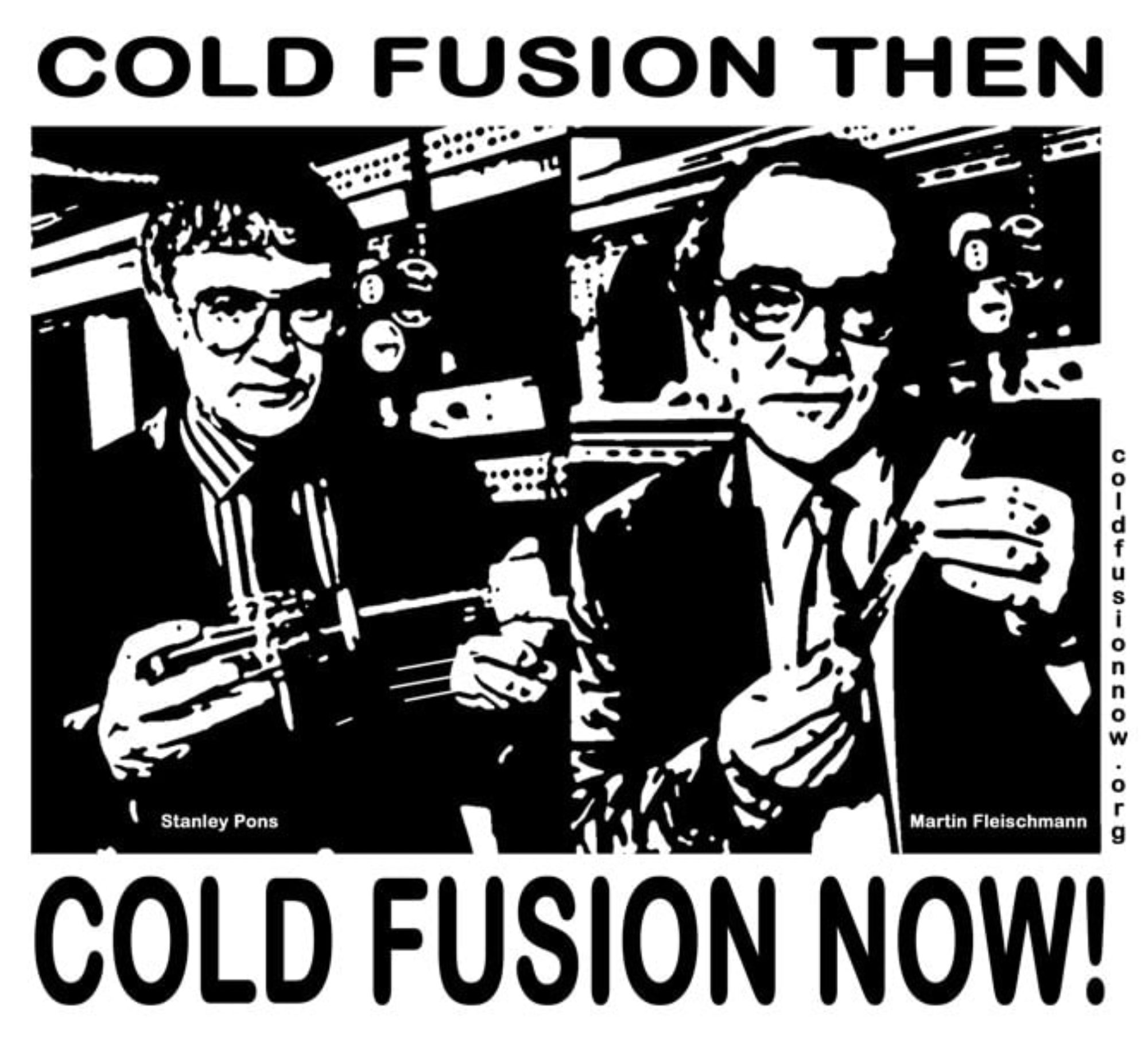
Experimental evidence indicates low-energy nuclear-reaction (LENR) technology is potentially an extremely clean and green energy source that could revolutionize not only aerospace but the wider field of power generation for home and industry. But much work remains to turn today’s inefficient and self-destructive devices into practical powerplants, LENR is a form of nuclear energy. Although research goes back to the birth of nuclear physics, recent work began the late 1980s and the “cold fusion” debacle of Stanley Pons and Martin Fleischmann. A growing body of increasingly repeatable experimental evidence indicates the LENR effect is real and is likely not fusion, cold or otherwise. Theories to explain the phenomenon have emerged, but the majority have relied on flawed or new physics, often being used to explain only a small subset of the extant evidence and ignoring the rest.

Yet nothing is listed about LENR at the U.S. Department of Energy OSTI.  Their search engine censors out the LENR publications found by the World Wide Science search engine. Why? It certanly shouldn’t.

  • Your search – LENR – did not match any documents.

  • No pages were found containing “LENR”.

Only recently has the DoE revealed links to LENR science through their Science Accelerator site. It fails to provide much of the information available, censoring out almost every paper on LENR research. Science Accelerator lists only two LENR publications for 2013, four from 2012, and three from 2011.

U.S. National Science Foundation Fails Mission – Shows Ignorance

Regarding LENR Science
 
QUOTE

“The National Science Foundation (NSF) is an independent federal agency created by Congress in 1950 “to promote the progress of science; to advance the national health, prosperity, and welfare; to secure the national defense…” With an annual budget of about $7.0 billion (FY 2012), we are the funding source for approximately 20 percent of all federally supported basic research conducted by America’s colleges and universities. In many fields such as mathematics, computer science and the social sciences, NSF is the major source of federal backing.

We fulfill our mission chiefly by issuing limited-term grants — currently about 11,000 new awards per year, with an average duration of three years — to fund specific research proposals that have been judged the most promising by a rigorous and objective merit-review system. Most of these awards go to individuals or small groups of investigators. Others provide funding for research centers, instruments and facilities that allow scientists, engineers and students to work at the outermost frontiers of knowledge.

NSF’s goals–discovery, learning, research infrastructure and stewardship–provide an integrated strategy to advance the frontiers of knowledge, cultivate a world-class, broadly inclusive science and engineering workforce and expand the scientific literacy of all citizens, build the nation’s research capability through investments in advanced instrumentation and facilities, and support excellence in science and engineering research and education through a capable and responsive organization. We like to say that NSF is where discoveries begin….

Many of the discoveries and technological advances have been truly revolutionary. In the past few decades, NSF-funded researchers have won more than 200 Nobel Prizes as well as other honors too numerous to list. These pioneers have included the scientists or teams that discovered many of the fundamental particles of matter, analyzed the cosmic microwaves left over from the earliest epoch of the universe, developed carbon-14 dating of ancient artifacts, decoded the genetics of viruses, and created an entirely new state of matter called a Bose-Einstein condensate.” – end quote

The NSF Can “Begin to Discover”

At Cold Fusion Now!

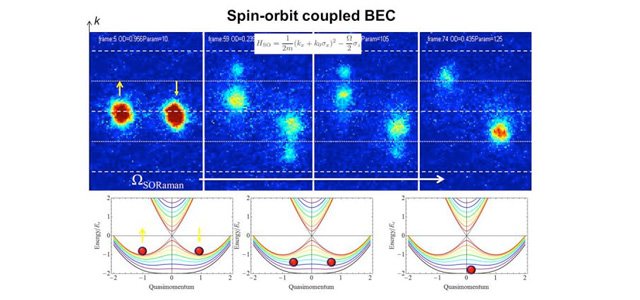
Bose-Einstein condensates and the theorized role they play in the low energy nuclear reactive environment.

  • Purdue Nuclear and Many Body Theory Group – PNMBTG-6-2011

  • “Generalized Theory of Bose-Einstein Condensation Nuclear Fusion for Hydrogen-Metal System” (LENR)

  • Dr. Yeong E. Kim Department of Physics – June 18, 2011

  • ABSTRACT (download pdf)

  • Generalized theory of Bose-Einstein condensation nuclear fusion (BECNF) is used to carry out theoretical analyses of recent experimental results of Rossi et al. for hydrogen-nickel system. Based on incomplete experimental information currently available, preliminary theoretical explanations of the experimental results are presented in terms of the generalized BECNF theory. Additional accurate experimental data are needed for obtaining more complete theoretical descriptions and predictions, which can be tested by further experiments.

  • Read new data about the Rossi reactor (shown as this articles title picture), “Indication of Anomalous Heat Energy Production in a Reactor Device”. Found through a title search here at worldwidescienceorg and at scienceacceleratororg. No reference to the paper is found at the National Science Foundation.

NOTE:

  • The  state of matter called a Bose-Einstein condensate was not “created” by researchers funded by the  National Science Foundation. Rather its existence was verified through scientific experiments. (discovery)

  • Bose-Einstein researchers review LENR papers citing the role of Bose Einstein condensates in the low energy nuclear reactive environment.

  • Learn from Nobel Laureates about popular “cold fusion” science…..         LENR by –Dr. Brian Josephson and LENR by –Dr. Julian Schwinger.

  • The U.S. National Science Foundation assuredly knows about LENR Science and is certainly marginalizing LENR Research.(search engine censorship)

The National Science Foundation has an Impressive Budget

The  NSF FY 2014 Budget Request for the Research and Related Activities (R&RA) Appropriation is: (given in million to one dollars)

  • $6,212.29 million, an increase of $523.29 million, or 9.2 percent, above the FY 2012 Enacted level of
  • $5,689.00 million. Support from the R&RA Appropriation enables U.S. leadership and progress across the frontiers of scientific and engineering research and education.

$6,212,290,000 ($6.2 Billion) +/-  $493,290,000 / 8.6%

That’s 6 billion 212 million and 290 thousand dollars ” plus or minus an estimated $493,290,000

Plus or minus a budget variable of $493.29 million?

The NSF should give that budget variable to…

NSF – LENRgy – Engineering and Science

LENR Grants/$493,290,000/National Science Foundation

Not likely since, at NSF – LENR does not even exist…

Where is Cold Fusion – LENR Low Energy Nuclear Reaction Science at NSF?

LENR Censored at NSF Budget Poorly Spent

National Science Foundation – Cold Fusion / LENR – Search Engine Censorship


Search NASA LENR at the NATIONAL SCIENCE FOUNDATION (link)

Your search – nasa lenr – did not match any documents.

No pages were found containing “nasa lenr”.

Suggestions:

  • Make sure all words are spelled correctly.
  • Try different keywords.
  • Try more general keywords.

There is nothing about NASA LENR at the National Science Foundation.


Then there is this search for “cold fusion”  (link)

Which leads us to this list discrediting popular ‘cold fusion’ researchers

  1. nsf.gov – National Science Foundation (NSF) News – NSF  He organized and chaired the high-profile 1989 meeting on cold fusion that
played a major role in establishing a more scientific perspective on this  
www.nsf.gov/news/news_summ.jsp?cntn_id=104250 – 57k – 2013-05-25
  2. Assessing Fundamental Science: III. Performance Measures with certain caveats: in a few cases, high numbers of citations may indicate
a negative evaluation (eg, the disputed cold fusion results); possible  
www.nsf.gov/statistics/ostp/assess/nstcafsf.htm – 23k
  3. [TEXT] Title : NSF9046 – Directory of NSF-Supported Young Scholars  scrap metal into superconductor materials, finding ways to separate/analyze
vital metals like the palladium used in “cold fusion” energy experiments  
www.nsf.gov/pubs/stis1990/nsf9046/nsf9046.txt  – 1997-01-13


Search for “cold fusion energy” (link)

Yields Nothing!  Zip! (just a 1997 duplicate from the previous search) 

  1. [TEXT] Title : NSF9046 – Directory of NSF-Supported Young Scholars  metal into superconductor materials, finding ways to separate/analyze vital
metals like the palladium used in “cold fusion” energy experiments, or  
www.nsf.gov/pubs/stis1990/nsf9046/nsf9046.txt – 1997-01-13


Search for NASA LENR Documents at the NSF

Search for “Low Energy Nuclear Reactions, The Realism and Outlook” link

by Dennis Bushnell Chief Scientist NASA @Langley (article)

Yields NADA! Zip! Shhh! Keep very, very quiet about it. At the NSF we believe in censorship by omission.

Your search – “low energy nuclear reactions the realism and outlook” – did not match any documents.

No pages were found containing “”low energy nuclear reactions the realism and outlook””.

Search for “The Nuclear Reactor in Your Basement” link

NASA – Climate Change News (article)

Once Again! NADA! Zip!


“LENR – A solution for all your energy needs.” – quote NASA

Not according to the National Science Foundation. LENR energy does not exist!

Contact (LINK)

Demand LENRgy at the U.S. National Science Foundation

NSF Director Subra Suresh – “New Era of Global Science & Engineering”

National Academy of Engineering – Washington D.C. September, 2012 (slideshare)

NATIONAL SCIENCE FOUNDATION

“Where Discoveries Begin” – sic –

FY 2014 Budget Request to Congress

April 10, 2013 (pdf)

End Search Engine Censorship

Begin to Discover @ Cold Fusion Now!


Explore these in-links to this article on the web
About 199 results  (i.e the Blog-O-Sphere)

Post Script

Excellent research and educational opportunities are enabled through the NSF. Most all of the folks at the NSF are outstanding, with zero tolerance for corruption or censorship in science and I respect them for their works. Thank you all for the loving works you do.

And Now… For the Rest of the Story

  • The Scientist Magazine: Exporing Life Inspiring Innovation

Now Part of the LabX Media Group: Lab Manager Magazine | LabX | LabWrench

Clandestine NSF Panel Warms To Cold Fusion

By Christopher Anderson | November 13, 1989

WASHINGTON—Four months after one federal agency killed the prospect of government support of cold fusion, a second agency has brought it back to life.

“The strange phenomenon of low-temperature nuclear fusion, announced at the University of Utah with great fanfare March 23 by two chemists, took another bizarre turn last month when a self-described “upbeat, enthusiastic” panel of experts assembled by the National Science Foundation’s engineering division concluded that the effects of cold fusion are real and “cannot be explained as a result of artifacts, equipment, or human errors.” Besides contradicting a preliminary report issued by another panel of experts convened by the Department of Energy in July, the October workshop was vehemently opposed by physicists and chemists at NSF. In seeming testimony to the audacity of their effort, the sponsors tried to keep the meeting secret, initially planning to transport the participants by bus to an undisclosed location for their three-day meeting. Then, after news of the event was leaked to the press, NSF agreed grudgingly to hold an informal “media opportunity” rather than a public press conference to declare the panelists’ support for further research.”
 

LENR Aircraft gets NASA research grant

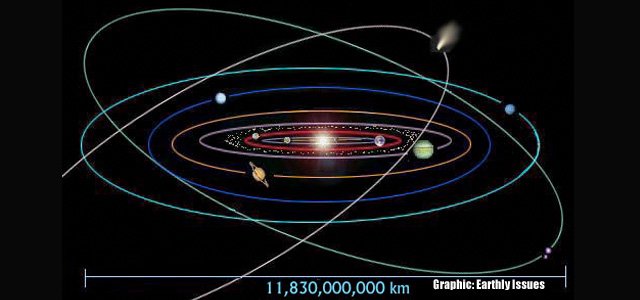
The NASA Aeronautics Research Institute (NARI) was established to pursue “deliberate investments in innovative, early-stage, and potentially revolutionary aviation concepts and technologies.”

NARI announced the 2013 (Round 3) Seedling Fund Phase I Awards on January 28, 2013 and twenty NASA civil servants received awards of $150,000 for research efforts lasting 12 months.

NASA Langley Research Center’s Doug Wells of the Aeronautics Systems Analysis Branch was awarded a grant as Principal Investigator for a concept project titled Low Energy Nuclear Reaction (LENR) Aircraft. The discipline area is Propulsion/Airframe integration.

Wells holds a 2007 Bachelor’s Degree in Aeronautical Engineering from Western Michigan University, and is expecting to graduate with a Masters Degree from Georgia Institute of Science this year!

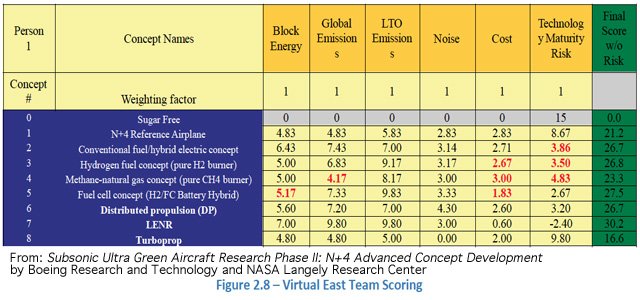
Wells was also named in the Subsonic Ultra Green Aircraft Research – Phase II report [.pdf] as a member of the Virtual East team in the workshop that developed advanced concepts and a future timeline for Boeing, NASA and others to generate green aircraft. The team evaluated LENR as having “important advantages, but extremely high risk – if it works, revolutionary to World energy.”

Period of performance for the NARI project grant is February 1, 2013 to January 31, 2014. Efforts that show significant progress after a year could be selected to receive a larger grant for 12 more months of research.

Related

“Responsibly imaginable” LENR solutions from NASA

NASA Technology Gateway Spinoff

LENR NASA Series

Next-generation NASA

Aether the Theory of Relativity and LENR Energy

“We may say that according to the general theory of relativity space is endowed with physical qualities.      -In this sense-        -Therefore-  

There exists an ether.” – Albert Einstein


Way Back

In 1989, the popular yet controversial Cold Fusion ‘Fleischmann and Pons Effect’, challenged the notions of theoretical physicists of the time. Newly established arts today, like cold fusion-LENR-low energy nuclear reaction science, continue to do so.

Science progresses by challenging established notions that are not able to properly hold observed phenomenon within a theoretical framework. Through this process of – researching the unknown – new scientific arts become established. Then theoretical physicists have a whole new playground in which to make predictions; as well as an arena in which to create new physical theories and grandiose mathematical models of physics, such as the likes of Einstein’s.

Many modern arts of science weren’t firmly established when early cold fusion researchers started college. A few of these arts are notable in the LENR energy arena today. Nano Engineering and Science, with the likes of carbon nanotubes, allows for new methods of constructing the required fractal geometries within the low energy nuclear reactive lattice. Quantum Physics and Engineering also play an important role with a deeper understanding of the atom. This ever-growing field, understanding the actions in the subatomic realm, provides new glimpses into the inner workings of the low energy nuclear reactive environment. In this dynamic multidisciplinary field, LENR Sciences, both theory and engineering, are improving as we progress in the art.

During the early 80’s, one would venture to say, there were three or four dozen subatomic particles that we knew of. During Einstein’s time perhaps even less. Now we are looking at well over a hundred and fifty of them. The list is mind-boggling to conceptualize, observe, and then finally comprehend. (that’s what we have open minded experimental and theoretical scientists for) The article “Not so Elementary, My Dear Electron” is an example. It takes us far from the “Standard Model” of my youth. The once “elementary” electron has been ‘split’ into three… a holon, spinon, and orbiton.

After reading that article my pre-concieved grip on reality became so unhinged. That night I had a dream finding myself shrunk down, traveling the empty space within the low energy nuclear reactive environment. There, right before my eyes, an electron split into its’ three elements -WOW- One Went Flying OFF Into a Far Distancing Dimension

Then it Went Super Nova!!!               Lesson Learned

Watch what you read before nodding off into

The Aether of the Dreamland

My Heart Hopes That

We can ALL

Enjoy


Aether Science

Another art pertaining to the low energy nuclear environment is Aether Science – the science of the vacuum. The Aether, or ether, is that which fills “empty space”. “Space” is found in the outer reaches between planets and between stars and “Space” is found between atoms. There is more space than matter in the universe. More space between the atoms in molecules and more space between the subatomic particles of the atom than there is matter… yet space is not, in reality, truly empty. Read “Dark Energy Dark Matter” NASA

Quantum Science: Pushing the envelope and inviting us to explore the physical realities within the Aether. (links go to the U.S. DoE search engine) Research these sciences at the U.S Department of Energy – Office of Science website links: into Dark Energy (see 46 papers – year 2013), into Zero Point Energy (see 13 papers – year 2013) , into Vacuum Field (see 43 papers –  under ‘Energy’), into Gravity (see 103 papers – year 2013), into LENR (see 38 papers – under ‘Low Energy Nuclear Reaction’)

During an Address delivered on May 5th, 1920, at the University of Leyden

A theoretical physicist once said,

“As to the part which the new ether is to play in the physics of the future we are not yet clear. We know that it determines the metrical relations in the space-time continuum, e.g. the configurative possibilities of solid bodies as well as the gravitational fields; but we do not know whether it has an essential share in the structure of the electrical elementary particles constituting matter. Nor do we know whether it is only in the proximity of ponderable masses that its structure differs essentially from that of the Lorentzian ether; whether the geometry of spaces of cosmic extent is approximately Euclidean. But we can assert by reason of the relativistic equations of gravitation that there must be a departure from Euclidean relations, with spaces of cosmic order of magnitude, if there exists a positive mean density, no matter how small, of the matter in the universe. In this case the universe must of necessity be spatially unbounded and of finite magnitude, its magnitude being determined by the value of that mean density.

If we consider the gravitational field and the electromagnetic field from the standpoint of the ether hypothesis, we find a remarkable difference between the two. There can be no space nor any part of space without gravitational potentials; for these confer upon space its metrical qualities, without which it cannot be imagined at all. The existence of the gravitational field is inseparably bound up with the existence of space. On the other hand a part of space may very well be imagined without an electromagnetic field; thus in contrast with the gravitational field, the electromagnetic field seems to be only secondarily linked to the ether, the formal nature of the electromagnetic field being as yet in no way determined by that of gravitational ether. From the present state of theory it looks as if the electromagnetic field, as opposed to the gravitational field, rests upon an entirely new formal motif, as though nature might just as well have endowed the gravitational ether with fields of quite another type, for example, with fields of a scalar potential, instead of fields of the electromagnetic type.

Since according to our present conceptions the elementary particles of matter are also, in their essence, nothing else than condensations of the electromagnetic field, our present view of the universe presents two realities which are completely separated from each other conceptually, although connected causally, namely, gravitational ether and electromagnetic field, or — as they might also be called — space and matter.

Of course it would be a great advance if we could succeed in comprehending the gravitational field and the electromagnetic field together as one unified conformation. Then for the first time the epoch of theoretical physics founded by Faraday and Maxwell would reach a satisfactory conclusion. The contrast between ether and matter would fade away, and, through the general theory of relativity, the whole of physics would become a complete system of thought, like geometry, kinematics, and the theory of gravitation.”

Albert Einstein

What is Aether?

Robert B. Laughlin Nobel Laureate in Physics-Stanford University-The Ether

In contemporary theoretical physics: “It is ironic that Einstein’s most creative work, the general theory of relativity, should boil down to conceptualizing space as a medium when his original premise [in special relativity] was that no such medium existed. The word ‘ether’ has extremely negative connotations in theoretical physics because of its past association with opposition to relativity. This is unfortunate because, stripped of these connotations, it rather nicely captures the way most physicists actually think about the vacuum. Relativity actually says nothing about the existence or nonexistence of matter pervading the universe, only that any such matter must have relativistic symmetry. It turns out that such matter exists. About the time relativity was becoming accepted, studies of radioactivity began showing that the empty vacuum of space had spectroscopic structure similar to that of ordinary quantum solids and fluids. Subsequent studies with large particle accelerators have now led us to understand that space is more like a piece of window glass than ideal Newtonian emptiness. It is filled with ‘stuff’ that is normally transparent but can be made visible by hitting it sufficiently hard to knock out a part. The modern concept of the vacuum of space, confirmed every day by experiment, is a relativistic ether. But we do not call it this because it is taboo.” Laughlin, Robert B. (2005). “A Different Universe: Reinventing Physics from the Bottom Down”  pp. 120–121.

from the Bottom Down” A REVIEW By Jeremy Chunn

“Tired of the predictable ‘clockwork’ nature of the physical world as defined by Newtonian laws? Then you’ll find a friend in Robert B. Laughlin. He suspects the fact that Newtonian laws break down at quantum levels and fail to predict all phases between states is evidence the physical world is still highly mysterious.”

Paul Dirac wrote in 1951

“Physical knowledge has advanced much since 1905, notably by the arrival of quantum mechanics, and the situation [about the scientific plausibility of Aether] has again changed. If one examines the question in the light of present-day knowledge, one finds that the Aether is no longer ruled out by relativity, and good reasons can now be advanced for postulating an Aether. We have now the velocity at all points of space-time, playing a fundamental part in electrodynamics. It is natural to regard it as the velocity of some real physical thing. Thus with the new theory of electrodynamics [vacuum filled with virtual particles] we are rather forced to have an Aether”. “Is there an Aether?”, Nature 168 (1951), p. 906.

… Is there an Aether?” abstract by Dirac St. John’s College, Cambridge. Oct. 9, 1951

IN the last century, the idea of a universal and all-pervading æther was popular as a foundation on which to build the theory of electromagnetic phenomena. The situation was profoundly influenced in 1905 by Einstein’s discovery of the principle of relativity, leading to the requirement of a four-dimensional formulation of all natural laws. It was soon found that the existence of an æther could not be fitted in with relativity, and since relativity was well established, the æther was abandoned.

John Bell, interviewed by Paul Davies in “The Ghost in the Atom” 1986

Has suggested that an Aether theory might help resolve the EPR paradox by allowing a reference frame in which signals go faster than light. He suggests Lorentz contraction is perfectly coherent, not inconsistent with relativity, and could produce an aether theory perfectly consistent with the Michelson-Morley experiment.

Bell suggests the aether was wrongly rejected on purely philosophical grounds:

“What is unobservable does not exist”

Besides the arguments based on his interpretation of quantum mechanics; Bell also suggests resurrecting the aether because it is a useful pedagogical device. That is, many problems are solved more easily by imagining the existence of an aether.   The Ghost in the Atom: A Discussion of the Mysteries of Quantum Physics

As noted by Alexander Markovich Polyakov in 1987

Elementary particles existing in nature resemble very much excitations of some complicated medium (Aether). We do not know the detailed structure of the Aether but we have learned a lot about effective Lagrangians for its low energy excitations. It is as if we knew nothing about the molecular structure of some liquid but did know the Navier-Stokes equation and could thus predict many exciting things.

Clearly, there are lots of different possibilities at the molecular level:

Leading to the same low energy picture. – end quote

From Harwood Academic Publishers (1987), A. M. Polyakov, “Gauge Fields and Strings” sec,12

LENR and the Aether – Harold Aspden

‘Heavy Electron’ -‘Mu-meson’ Vacuum Field – Electron Proton ‘Creation’

Dr. Harold Aspden is of particular interest. A brilliant man, he successfully predicted the mass of the proton and was a pioneer of efficient thermal electric conversion devices. He was the first to be issued a U.S. patent with ‘cold fusion’ contained in the text of the application. A further example of his brilliance is his theoretical papers on Aether Science. This list is of ten Harold Aspden patents granted, applied, or cited  that concern “Cold Fusion” LENR and the Aether (ZPE). Here is an excellent biography of the honorable Dr. Harold Aspden including all theories, works published, and documented efforts in the Aether and LENR sciences.

GIVE THANKS and Support to Pure Energy Systems News for compiling the best in LENR history and news.

Ten of the 119 patents found at Cold Fusion NowHarold Aspden Patent Tribute – Honoring Dr. Aspden

For links to these patents open the “Harold Aspden Patent Tribute” 

  1. Cold Nuclear Fusion Method and Apparatus App. – Filed Apr 20, 1990 – Published Nov 1, 1990 – Richard Geoffrey Belton – The Broken Hill Proprietary Company Limited May 23, 1994, Dec 8, 1994, Aspden, Harold, Hydrogen activated heat generation apparatus
  2. Hydrogen Activated Heat Generation Apparatus App. – Filed May 23, 1994 – Published Dec 8, 1994 – Aspden, Harold, Eneco, Inc. Inventors. Harold Aspden. Applicant. Aspden, Harold
  3. Cold Nuclear Fusion Method and Apparatus App. – Filed Apr 20, 1990 – Published Nov 1, 1990 – Richard Geoffrey Belton – The Broken Hill Proprietary Company Limited May 23, 1994, Dec 8, 1994, Aspden, Harold, Hydrogen activated heat generation apparatus
  4. Methods and Systems for Generating High Energy Photons or Quantum… Grant – Filed Nov 21, 2001 – Issued Aug 30, 2005 – Kiril B. Chukanov – Chukanov Quantum Energy, L.L.C.
… OTHER PUBLICATIONS Aspden, Harold, “Aether Science Papers: Part I: The Creative Vacuum,” Aether Science Papers, (1996), pp. 26-32. Chukanov, KM
  5. Device to Move an Object Back and Forth Grant – Filed Jan 22, 2008 – Issued Mar 8, 2011 – Harvey Emanuel Fiala, 
Harold E. Puthoff, and Harold Aspden are recent exponents of  ZPE. …. Aspden, Harold: Power from Space: Inertia and Gravitation, Energy Science Report No.
  6. Inertial Propulsion Device to Move an Object Up and Down Grant – Filed Feb 11, 2011 – Issued Nov 29, 2011 – Harvey E. Fiala
… energy (ZPE) or space energy at every point in space, possibly even of the order or magnitude of nuclear energy
  7. Hydrogen Activated Heat Generation Apparatus App. – Filed May 23, 1994 – Published Feb 9, 1995 – Inventors. Harold Aspden. Applicant. Aspden, Harold
  8. Production of Thermal Energy App. – Filed Jun 4, 1990 – Published Dec 13, 1990 – Cyril Barrie Edwards – Edwards, Barrie, Cyril
… May 23, 1994, Dec 8, 1994, Aspden, Harold, Hydrogen activated heat generation apparatus
  9. Method for Producing Plasma Nuclear Fusion App. – Filed Apr 9, 1990 – Published Oct 24, 1990 – Shunpei Yamazaki -Semiconductor Energy Laboratory Co., Ltd. May 23, 1994, Dec 8, 1994, Aspden, Harold, Hydrogen activated heat generation apparatus
  10. Solid State Surface Micro-Plasma Fusion Device App. – Filed May 28, 1992 – Published Dec 23, 1992 – Ell Yeong Kim – Purdue Research Foundation May 23, 1994, Dec 8, 1994, Aspden, Harold, Hydrogen activated heat generation apparatus

Told by Dr. Aspden

His story of a ‘Cold Fusion’ institutional firewall at the U.S. patent office

The tactics I adopted in my efforts to secure a granted patent involved filing a U.S. continuation-in-part application based on the pending cold fusion application that had survived the PCT stage, but before it came under the executioner’s axe wielded by Harvey Behrend. My plan was to emphasize the thermoelectric aspects of the invention, but discuss their relevance to ‘cold fusion’ and incorporate a very substantial Appendix on that subject. I wrote the specification discussing the merits of ‘cold fusion’ and offered as an invention a special form of apparatus which I regarded as useful for testing the cold fusion process.

There was a 50:50 chance that the new application would be assigned to Harvey Behrend’s examining group, but the abstract stressed thermoelectric energy conversion and not cold fusion, so I had my fingers crossed in hoping that Art group 1102 and not Harvey Behrend’s Art group 2204 would be put in charge of the case in the U.S. Patent and Trademark Office.

So that you, the reader, may understand what this is all about, and particularly so that my colleagues in the patent profession in Europe who may come to hear about this as well may understand, I feel it appropriate to quote a few words from an article which appeared in the July-November double issue of ‘Infinite Energy’, Nos. 15 and 16, at page. 86.

I refer to Dr. Hal Fox’s article ‘New Energy Sources for the Near Future: An Open Letter to Decision Makers’. Hal Fox is Editor of the Journal of New Energy. He is located in Utah, where the saga of cold fusion was born, and he has followed the cold fusion theme as closely as anyone over the years dating from March 1989, when that hope and prospect for a new energy technology was first announced.

Hal Fox, Quote…

“A university professor who has been supported by a multi-million dollar hot fusion contract and who becomes an advisor to the Department of Energy is unlikely to advise the government to fund a competitive low-energy technology. There would be very strong university pressure to continue in the development of hot fusion! This combination of federal funds, appointments to advisory groups, and the pressures for institutional funds on the advisers, has resulted in scientists becoming lobbyists with the following results:

  • The Office of Patents and Trademarks has been advised not to allow patents on competitive technology to hot fusion.

  • Leaders of some professional societies (such as the American Physical Society) have lobbied to prevent major peer-reviewed journals from publishing articles about competing technologies.

Aether: How it relates to cold fusion (link)

A BREAKTHROUGH: U.S. PATENT NO. 5,734,122

Cold Fusion Appears in a U.S. Patent!

Copyright © 1998 Harold Aspden

The Fusion Criteria

In a very hot proton gas protons can combine to create heavier atomic nuclei. This is facilitated if there is something effectively neutralizing the charge repulsion between the protons. A proton or anti-proton charge can become neutral if a beta particle of opposite polarity combines with it in some way to be seen as a neutron. Alternatively it is conceivable that in the very energetic field conditions that one can foresee, particularly in the presence of strong gravity fields, the field medium itself can be such as to overcome the mutual repulsion or the medium itself may become electrically polarized to provide a background that can serve as the neutralizing influence. In any event, the high energy physics of the scenario by which protons synthesize heavier forms of matter has to explain why hot fusion occurs and the picture just presented has to be very close to what has just been outlined.

Now, there is one important aspect here that tends to be overlooked. How do those protons get created in the first place? The scientific challenge here is not concerned with fusion but rather initial creation and the answer lies in finding the true explanation for what governs the mass of the proton. This is a theoretical exercise in which this Applicant has played an important and recognized part, because, although the world has not rushed into accepting the Applicant’s explanation, it is a fact that the precise value of the proton-electron mass ratio of 1836.152 was deduced in terms of the mu-meson field. This derivation involved collaboration with Dr. D. M. Eagles of the then National Standards Laboratory in Australia. It was reported in the U.S.A. Institute of Physics journal Physics Today in 1984 (November issue, p. 15) and was mentioned in their 1985 update by the leading U.S. researchers who measure this quantity. See R.S. Van Dyck et al: International Journal of Mass Spectroscopy and Ion Processes, 66, (1985) pp. 327-337. They noted how remarkably close the theoretical value was to the one they measured and added ‘This is even more curious when one notes that they [meaning this Applicant and Dr. Eagles] published this result several years before direct precision measurements of this ratio had begun.

‘Given that the Applicant knows how protons are created from a mu-meson field and taking into account that physicists familiar with quantum electrodynamics know that the vacuum field is the seat of activity of electron and positron creation and that mu-mesons are otherwise known as ‘heavy electrons’, it needs little imagination then to suspect that Nature is trying to create protons continuously everywhere in space. Since we do not see such protons materializing before our eyes we must infer that they exist only very transiently after creation unless the field medium has surplus energy to be shed over and above its local equilibrium requirements.

The Applicant’s Electrodynamic Research

There are long-accepted but unresolved anomalies concerning the anomalously very high forces exerted on heavy ions in a cold cathode discharge. In researching this subject the Applicant has established that the forces exerted on a heavy ion owing to its electrodynamic interaction with an electron are, in theory, enhanced by a factor equal to the ion-electron mass ratio.

This theory leads to a breach of the law that specifies balance of action and reaction, which means that energy is being exchanged with the field medium in which the electromagnetic reference frame is seated. The effective electromagnetic reference frame has a structure, as if it is formed by a fluid crystal lattice which, on a local scale, can adapt or maybe govern the shell structure of an atomic nucleus. Thus, normally, the motion of atoms and even ions in a gas or a solution will not evidence the anomalous electrodynamic effects, simply because they do not move relative to the local electromagnetic reference frame, meaning that, as far as concerns translational motion, the electrons present are the only active participant electrodynamically.

It is, however, quite a different situation when we consider a proton or a deuteron as a free ion inside the crystal host lattice of a metallic form, because there can only be one electromagnetic reference frame effective at any location in that metal. Therefore, a proton that is within a host crystal, and is free to move through it, will be seen as moving relative to the electromagnetic reference frame and then it can contribute to anomalous electrodynamic effects.

These conditions were the subject of the Applicant’s research as a Visiting Senior Research Fellow at the University of Southampton in England 1983 onwards. The Applicant had written on the subject of the proton, the deuteron and the neutron, pursuing the theme that no neutrons exist inside the deuteron and stressing that atomic nuclei are composites of beta particles and protons or antiprotons. This work was all published before 1989.

The anomalous electrodynamic forces that exist in the heavy ion/electron interaction imply a hidden source of energy and so of heat but the Applicant’s research was aimed essentially at proving the modified law of electrodynamics dictated by that research. Certainly, whilst the ability to accelerate heavy ions by drawing on a hidden source of field energy was one of the Applicant’s pursuits, at no time had the Applicant contemplated the prospect of a fusion reaction of the kind implied by Fleischmann and Pons.

Nevertheless, as soon as that latter work was reported, the research knowledge arising from the author’s investigations was seen as relevant in the onward exploration of the excess heat phenomenon.

The Applicant was not only interested because of the excess energy aspect. There was the no-neutron feature and the fact that the process involved ion migration through water. There was the fact that the deuteron was the primary agent and this Applicant had shown, from the theory of the deuteron mass and its magnetic moment, that deuterons undergo cyclic changes of state and the state which prevails for one seventh of the time, the deuteron has a neutral core, having transiently shed a beta particle. More than this, however, the author had become involved at the time with two inventions, one of which later became the subject of a U.S. Patent (Serial No. 5,065,085) and these involved anomalous energy activity in a thermoelectric context which bears upon the cold fusion issue.

The other, lesser important, of these inventions was concerned with ‘warm’ superconductivity. The Applicant’s research had suggested that substances having certain molecular mass forms are adapted to absorb impact by conduction electrons in such a way that the change of inductive energy accompanying the collision is conserved until the resulting EMF changes can impart the energy to another electron. This meant that the thermal energy of a heavy ion in the substance could be reduced to feed the normal resistance loss associated with the current. This was, therefore, a process by which anomalous heat energy activity was involved in electrodynamic interactions between heavy ions and electrons.

The more important invention of the two just mentioned was concerned with the anomalous behaviour of a thermoelectric interface between two metals when subjected to a strong magnetic field in a rather special conductor configuration. The Nernst Effect operates to cause heat carried by electrons in a metal to be converted into an electric potential energy by the ordering action of a transversely directed magnetic field.

The essential requirement for the action of the Nernst Effect is that there is a temperature gradient in the metal and, given such a temperature gradient, and the magnetic field, there will then be an electric potential gradient set up within the metal. Now, a potential gradient inside a metal conductor implies that there is inside the body of the metal a distribution of electric charge not neutralized by normal metallic conduction. The polarity of that charge is determined by the direction of the thermal gradient and the orientation of the magnetic field. It can be negative or positive by choice in the design of the apparatus used.

Besides this, the Applicant knew that the flow of a strong current through a metal conductor will promote what is known as the pinch effect in which electrodynamic forces act on the negative electron charge carriers to pinch them inwards and so set up an excess negative charge distribution inside the metal conductor.

This, plus the additional feature that a strong current flow through a metal conductor that is populated by free deuterons will promote a migration of deuterons that will bring them more frequently into near collision, all militated in favour of an invention proposing the provision of a supplementary high current closed circuit through the cathode of a cold fusion cell. That, indeed, became the subject of the patent application which the Applicant filed in U.K. on April 15, 1989, this being the priority application relied upon in the U.S. Patent Application under petition.

The Applicant, therefore, had reason to believe that the work on cold fusion would progress if the auxiliary current activation circuit were to be used.

However, in the event, the pioneer work of Fleischmann and Pons became the subject of such criticism that there was no prospect of getting R & D funding to take the subject invention forward and one is confronted with a chicken and egg scenario where disbelief of cold fusion as a scientific possibility stands in the way of securing patent grant and the doubts about securing a patent stands in the way of finding sponsorship for the development.

The Fusion Criteria Reexamined: There are three criteria that need to be satisfied simultaneously to promote and enhance the cold fusion reaction of deuterons. 

  • Firstly, there is the background incidence of the virtual mu-meson field which is trying everywhere to create protons. This is a natural activity that cannot be controlled. It is a statistical effect, but one can calculate the probability governing proton creation fluctuations in a given volume of cathode material. See comments below. 

  • Secondly, there is the need to bring the deuteron partner in the fusion process into close proximity with the target deuteron. In hot fusion reactions this is achieved by the motion associated with thermal activity. In cold fusion it is achieved by adsorbing deuterons into a host metal in which they become separate from their satellite electrons and by concentrating the loading by the deuteron population. 

  • Thirdly, as with the creation of stars and by hydrogen fusion, there is the need to provide the field which pulls the deuterons together in spite of their mutual repulsion. In cold fusion this means the provision of a neutralizing negative charge distribution within the metal body of host metal. This requires strong electron current surges resulting in heat concentrations which set up temperature gradients in company with transverse magnetic fields. However, the structural form of the host metal in relation to the current channel, the magnetic field effect and the heat conduction path require a mutually orthogonal geometry to provide an optimum action. 

Note that the surplus negative charge may result in a charge density that is quite small in relation to the positive charge of the deuteron population but every unit of charge is seated in a discrete electron and a single electron which can upset the normal charge balance of deuterons and free conduction electrons can nucleate a pair of deuterons.

Then, the creation of a proton in one deuteron accompanied by the demise of a proton in the other will convert the two deuterons into a tritium nucleus and free a proton with a beta particle transferring between the two. Alternatively one deuteron will convert into helium 3 and the proton released will be in company with a beta minus particle.

The onward reactions involving neutrons that are observed with hot fusion processes need not occur if the events involved are triggered naturally by the mu-meson activity in trying to create protons rather than by neutron bombardment.


Excellent Perspective From Relativity Past


“Ether and the Theory of Relativity” By Albert Einstein

An Address delivered on May 5th, 1920, 
in the University of Leyden

Translated by George Barker Jeffery and Wilfrid Perrett

From: Sidelights on Relativity (1922), pp.3-24, London: Methuen

German original: Äther und Relativitätstheorie (1920), Berlin: Springer

How does it come about that alongside of the idea of ponderable matter, which is derived by abstraction from everyday life, the physicists set the idea of the existence of another kind of matter, the ether? The explanation is probably to be sought in those phenomena which have given rise to the theory of action at a distance, and in the properties of light which have led to the undulatory theory. Let us devote a little while to the consideration of these two subjects.

Outside of physics we know nothing of action at a distance. When we try to connect cause and effect in the experiences which natural objects afford us, it seems at first as if there were no other mutual actions than those of immediate contact, e.g. the communication of motion by impact, push and pull, heating or inducing combustion by means of a flame, etc. It is true that even in everyday experience weight, which is in a sense action at a distance, plays a very important part. But since in daily experience the weight of bodies meets us as something constant, something not linked to any cause which is variable in time or place, we do not in everyday life speculate as to the cause of gravity, and therefore do not become conscious of its character as action at a distance. It was Newton’s theory of gravitation that first assigned a cause for gravity by interpreting it as action at a distance, proceeding from masses. Newton’s theory is probably the greatest stride ever made in the effort towards the causal nexus of natural phenomena. And yet this theory evoked a lively sense of discomfort among Newton’s contemporaries, because it seemed to be in conflict with the principle springing from the rest of experience, that there can be reciprocal action only through contact, and not through immediate action at a distance.

It is only with reluctance that man’s desire for knowledge endures a dualism of this kind. How was unity to be preserved in his comprehension of the forces of nature? Either by trying to look upon contact forces as being themselves distant forces which admittedly are observable only at a very small distance and this was the road which Newton’s followers, who were entirely under the spell of his doctrine, mostly preferred to take; or by assuming that the Newtonian action at a distance is only apparently immediate action at a distance, but in truth is conveyed by a medium permeating space, whether by movements or by elastic deformation of this medium. Thus the endeavour toward a unified view of the nature of forces leads to the hypothesis of an ether. This hypothesis, to be sure, did not at first bring with it any advance in the theory of gravitation or in physics generally, so that it became customary to treat Newton’s law of force as an axiom not further reducible. But the ether hypothesis was bound always to play some part in physical science, even if at first only a latent part.

When in the first half of the nineteenth century the far-reaching similarity was revealed which subsists between the properties of light and those of elastic waves in ponderable bodies, the ether hypothesis found fresh support. It appeared beyond question that light must be interpreted as a vibratory process in an elastic, inert medium filling up universal space. It also seemed to be a necessary consequence of the fact that light is capable of polarisation that this medium, the ether, must be of the nature of a solid body, because transverse waves are not possible in a fluid, but only in a solid. Thus the physicists were bound to arrive at the theory of the “quasi-rigid ” luminiferous ether, the parts of which can carry out no movements relatively to one another except the small movements of deformation which correspond to light-waves.

This theory — also called the theory of the stationary luminiferous ether — moreover found a strong support in an experiment which is also of fundamental importance in the special theory of relativity, the experiment of Fizeau, from which one was obliged to infer that the luminiferous ether does not take part in the movements of bodies. The phenomenon of aberration also favoured the theory of the quasi-rigid ether.

The development of the theory of electricity along the path opened up by Maxwell and Lorentz gave the development of our ideas concerning the ether quite a peculiar and unexpected turn. For Maxwell himself the ether indeed still had properties which were purely mechanical, although of a much more complicated kind than the mechanical properties of tangible solid bodies. But neither Maxwell nor his followers succeeded in elaborating a mechanical model for the ether which might furnish a satisfactory mechanical interpretation of Maxwell’s laws of the electro-magnetic field. The laws were clear and simple, the mechanical interpretations clumsy and contradictory. Almost imperceptibly the theoretical physicists adapted themselves to a situation which, from the standpoint of their mechanical programme, was very depressing. They were particularly influenced by the electro-dynamical investigations of Heinrich Hertz. For whereas they previously had required of a conclusive theory that it should content itself with the fundamental concepts which belong exclusively to mechanics (e.g. densities, velocities, deformations, stresses) they gradually accustomed themselves to admitting electric and magnetic force as fundamental concepts side by side with those of mechanics, without requiring a mechanical interpretation for them. Thus the purely mechanical view of nature was gradually abandoned. But this change led to a fundamental dualism which in the long-run was insupportable. A way of escape was now sought in the reverse direction, by reducing the principles of mechanics to those of electricity, and this especially as confidence in the strict validity of the equations of Newton’s mechanics was shaken by the experiments with β-rays and rapid kathode rays.

This dualism still confronts us in unextenuated form in the theory of Hertz, where matter appears not only as the bearer of velocities, kinetic energy, and mechanical pressures, but also as the bearer of electromagnetic fields. Since such fields also occur in vacuo — i.e. in free ether the ether — also appears as bearer of electromagnetic fields. The ether appears indistinguishable in its functions from ordinary matter. Within matter it takes part in the motion of matter and in empty space it has everywhere a velocity; so that the ether has a definitely assigned velocity throughout the whole of space. There is no fundamental difference between Hertz’s ether and ponderable matter (which in part subsists in the ether).

The Hertz theory suffered not only from the defect of ascribing to matter and ether, on the one hand mechanical states, and on the other hand electrical states, which do not stand in any conceivable relation to each other; it was also at variance with the result of Fizeau’s important experiment on the velocity of the propagation of light in moving fluids, and with other established experimental results.

Such was the state of things when H. A. Lorentz entered upon the scene. He brought theory into harmony with experience by means of a wonderful simplification of theoretical principles. He achieved this, the most important advance in the theory of electricity since Maxwell, by taking from ether its mechanical, and from matter its electromagnetic qualities. As in empty space, so too in the interior of material bodies, the ether, and not matter viewed atomistically, was exclusively the seat of electromagnetic fields. According to Lorentz the elementary particles of matter alone are capable of carrying out movements; their electromagnetic activity is entirely confined to the carrying of electric charges. Thus Lorentz succeeded in reducing all electromagnetic happenings to Maxwell’s equations for free space.

As to the mechanical nature of the Lorentzian ether, it may be said of it, in a somewhat playful spirit, that immobility is the only mechanical property of which it has not been deprived by H. A. Lorentz. It may be added that the whole change in the conception of the ether which the special theory of relativity brought about, consisted in taking away from the ether its last mechanical quality, namely, its immobility. How this is to be understood will forthwith be expounded.

The space-time theory and the kinematics of the special theory of relativity were modelled on the Maxwell-Lorentz theory of the electromagnetic field. This theory therefore satisfies the conditions of the special theory of relativity, but when viewed from the latter it acquires a novel aspect. For if K be a system of co-ordinates relatively to which the Lorentzian ether is at rest, the Maxwell-Lorentz equations are valid primarily with reference to K. But by the special theory of relativity the same equations without any change of meaning also hold in relation to any new system of co-ordinates K’ which is moving in uniform translation relatively to K. Now comes the anxious question: — Why must I in the theory distinguish the K system above all K’ systems, which are physically equivalent to it in all respects, by assuming that the ether is at rest relatively to the K system? For the theoretician such an asymmetry in the theoretical structure, with no corresponding asymmetry in the system of experience, is intolerable. If we assume the ether to be at rest relatively to K, but in motion relatively to K’, the physical equivalence of K and K’ seems to me from the logical standpoint, not indeed downright incorrect, but nevertheless unacceptable.

The next position which it was possible to take up in face of this state of things appeared to be the following. The ether does not exist at all. The electromagnetic fields are not states of a medium, and are not bound down to any bearer, but they are independent realities which are not reducible to anything else, exactly like the atoms of ponderable matter. This conception suggests itself the more readily as, according to Lorentz’s theory, electromagnetic radiation, like ponderable matter, brings impulse and energy with it, and as, according to the special theory of relativity, both matter and radiation are but special forms of distributed energy, ponderable mass losing its isolation and appearing as a special form of energy.

More careful reflection teaches us, however, that the special theory of relativity does not compel us to deny ether. We may assume the existence of an ether; only we must give up ascribing a definite state of motion to it, i.e. we must by abstraction take from it the last mechanical characteristic which Lorentz had still left it. We shall see later that this point of view, the conceivability of which I shall at once endeavour to make more intelligible by a somewhat halting comparison, is justified by the results of the general theory of relativity.

Think of waves on the surface of water. Here we can describe two entirely different things. Either we may observe how the undulatory surface forming the boundary between water and air alters in the course of time; or else — with the help of small floats, for instance — we can observe how the position of the separate particles of water alters in the course of time. If the existence of such floats for tracking the motion of the particles of a fluid were a fundamental impossibility in physics — if, in fact, nothing else whatever were observable than the shape of the space occupied by the water as it varies in time, we should have no ground for the assumption that water consists of movable particles. But all the same we could characterize it as a medium.

We have something like this in the electromagnetic field. For we may picture the field to ourselves as consisting of lines of force. If we wish to interpret these lines of force to ourselves as something material in the ordinary sense, we are tempted to interpret the dynamic processes as motions of these lines of force, such that each separate line of force is tracked through the course of time. It is well known, however, that this way of regarding the electromagnetic field leads to contradictions.

Generalizing we must say this: — There may be supposed to be extended physical objects to which the idea of motion cannot be applied. They may not be thought of as consisting of particles which allow themselves to be separately tracked through time. In Minkowski’s idiom this is expressed as follows: — Not every extended conformation in the four-dimensional world can be regarded as composed of world-threads. The special theory of relativity forbids us to assume the ether to consist of particles observable through time, but the hypothesis of ether in itself is not in conflict with the special theory of relativity. Only we must be on our guard against ascribing a state of motion to the ether.

Certainly, from the standpoint of the special theory of relativity, the ether hypothesis appears at first to be an empty hypothesis. In the equations of the electromagnetic field there occur, in addition to the densities of the electric charge, only the intensities of the field. The career of electromagnetic processes in vacua appears to be completely determined by these equations, uninfluenced by other physical quantities. The electromagnetic fields appear as ultimate, irreducible realities, and at first it seems superfluous to postulate a homogeneous, isotropic ether-medium, and to envisage electromagnetic fields as states of this medium.

But on the other hand there is a weighty argument to be adduced in favour of the ether hypothesis. To deny the ether is ultimately to assume that empty space has no physical qualities whatever. The fundamental facts of mechanics do not harmonize with this view. For the mechanical behaviour of a corporeal system hovering freely in empty space depends not only on relative positions (distances) and relative velocities, but also on its state of rotation, which physically may be taken as a characteristic not appertaining to the system in itself. In order to be able to look upon the rotation of the system, at least formally, as something real, Newton objectivises space. Since he classes his absolute space together with real things, for him rotation relative to an absolute space is also something real. Newton might no less well have called his absolute space “Ether”; what is essential is merely that besides observable objects, another thing, which is not perceptible, must be looked upon as real, to enable acceleration or rotation to be looked upon as something real.

It is true that Mach tried to avoid having to accept as real something which is not observable by endeavouring to substitute in mechanics a mean acceleration with reference to the totality of the masses in the universe in place of an acceleration with reference to absolute space. But inertial resistance opposed to relative acceleration of distant masses presupposes action at a distance; and as the modern physicist does not believe that he may accept this action at a distance, he comes back once more, if he follows Mach, to the ether, which has to serve as medium for the effects of inertia. But this conception of the ether to which we are led by Mach’s way of thinking differs essentially from the ether as conceived by Newton, by Fresnel, and by Lorentz. Mach’s ether not only conditions the behaviour of inert masses, but is also conditioned in its state by them.

Mach’s idea finds its full development in the ether of the general theory of relativity. According to this theory the metrical qualities of the continuum of space-time differ in the environment of different points of space-time, and are partly conditioned by the matter existing outside of the territory under consideration. This space-time variability of the reciprocal relations of the standards of space and time, or, perhaps, the recognition of the fact that “empty space” in its physical relation is neither homogeneous nor isotropic, compelling us to describe its state by ten functions (the gravitation potentials gμν), has, I think, finally disposed of the view that space is physically empty. But therewith the conception of the ether has again acquired an intelligible content, although this content differs widely from that of the ether of the mechanical undulatory theory of light. The ether of the general theory of relativity is a medium which is itself devoid of all mechanical and kinematical qualities, but helps to determine mechanical (and electromagnetic) events.

What is fundamentally new in the ether of the general theory of relativity as opposed to the ether of Lorentz consists in this, that the state of the former is at every place determined by connections with the matter and the state of the ether in neighbouring places, which are amenable to law in the form of differential equations; whereas the state of the Lorentzian ether in the absence of electromagnetic fields is conditioned by nothing outside itself, and is everywhere the same. The ether of the general theory of relativity is transmuted conceptually into the ether of Lorentz if we substitute constants for the functions of space which describe the former, disregarding the causes which condition its state. Thus we may also say, I think, that the ether of the general theory of relativity is the outcome of the Lorentzian ether, through relativation.

As to the part which the new ether is to play in the physics of the future we are not yet clear. We know that it determines the metrical relations in the space-time continuum, e.g. the configurative possibilities of solid bodies as well as the gravitational fields; but we do not know whether it has an essential share in the structure of the electrical elementary particles constituting matter. Nor do we know whether it is only in the proximity of ponderable masses that its structure differs essentially from that of the Lorentzian ether; whether the geometry of spaces of cosmic extent is approximately Euclidean. But we can assert by reason of the relativistic equations of gravitation that there must be a departure from Euclidean relations, with spaces of cosmic order of magnitude, if there exists a positive mean density, no matter how small, of the matter in the universe. In this case the universe must of necessity be spatially unbounded and of finite magnitude, its magnitude being determined by the value of that mean density.

If we consider the gravitational field and the electromagnetic field from the standpoint of the ether hypothesis, we find a remarkable difference between the two. There can be no space nor any part of space without gravitational potentials; for these confer upon space its metrical qualities, without which it cannot be imagined at all. The existence of the gravitational field is inseparably bound up with the existence of space. On the other hand a part of space may very well be imagined without an electromagnetic field; thus in contrast with the gravitational field, the electromagnetic field seems to be only secondarily linked to the ether, the formal nature of the electromagnetic field being as yet in no way determined by that of gravitational ether. From the present state of theory it looks as if the electromagnetic field, as opposed to the gravitational field, rests upon an entirely new formal motif, as though nature might just as well have endowed the gravitational ether with fields of quite another type, for example, with fields of a scalar potential, instead of fields of the electromagnetic type.

Since according to our present conceptions the elementary particles of matter are also, in their essence, nothing else than condensations of the electromagnetic field, our present view of the universe presents two realities which are completely separated from each other conceptually, although connected causally, namely, gravitational ether and electromagnetic field, or — as they might also be called — space and matter.

Of course it would be a great advance if we could succeed in comprehending the gravitational field and the electromagnetic field together as one unified conformation. Then for the first time the epoch of theoretical physics founded by Faraday and Maxwell would reach a satisfactory conclusion. The contrast between ether and matter would fade away, and, through the general theory of relativity, the whole of physics would become a complete system of thought, like geometry, kinematics, and the theory of gravitation. An exceedingly ingenious attempt in this direction has been made by the mathematician H. Weyl; but I do not believe that his theory will hold its ground in relation to reality. Further, in contemplating the immediate future of theoretical physics we ought not unconditionally to reject the possibility that the facts comprised in the quantum theory may set bounds to the field theory beyond which it cannot pass.

Recapitulating, we may say that according to the general theory of relativity space is endowed with physical qualities; in this sense, therefore, there exists an ether. According to the general theory of relativity space without ether is unthinkable; for in such space there not only would be no propagation of light, but also no possibility of existence for standards of space and time (measuring-rods and clocks), nor therefore any space-time intervals in the physical sense. But this ether may not be thought of as endowed with the quality characteristic of ponderable media, as consisting of parts which may be tracked through time. The idea of motion may not be applied to it.”

Scientific Theoretical Physicists

Physics author A. Zee is a Permanent Member of the Institute for Theoretical Physics and Professor of Theoretical Physics at the University of California, Santa Barbara. Professor A. Zee was invited to write an introduction to the new edition of Feynman’s classic book on quantum electrodynamics. Feynman’s QED: The Strange Theory of Light and Matter

A quote from the introduction:

“Theoretical physicists are a notoriously pragmatic lot. They will use whichever method is the easiest. There is none of the mathematicians’ petulant insistence on rigor and proof. Whatever works, man!

Given this attitude, you may ask, which of the three formalisms, Schrödinger, Heisenberg, and Dirac-Feynman, is the easiest? The answer depends on the problem. In treating atoms for example, as the master himself admits on page 100, the Feynman diagrams “for these atoms would involve so many straight and wiggly lines and they’d be a complete mess!”

The Schrödinger formalism is much easier by a long shot and that is what physicists use. In fact, for most “practical” problems the path integral formalism is almost hopelessly involved, and in some cases downright impossible. I once even asked Feynman about one of these apparently impossible cases and he had no answer. Yet beginning students using the Schrödinger formalism easily solve these apparently impossible cases!

Thus, which formalism is best really depends on the physics problem, so that theoretical physicists in one field, atomic physics for example, might favor one formalism, while those in another, high energy physics for example, might prefer another formalism.

Logically then, it may even happen that, as a given field evolves and develops, one formalism may emerge as more convenient than another.” – end quote


The Responsibly Imaginable

To Possibly Be

Imaginable    So Responsibly

Creatively See

Observational    The Reality

Hope of Theory

Occupational   A Visionary

Energize Plea

Survival         With Planetary

Space Faring

Quantum    LENR

Energy


gbgoble2013

FARING : intransitive verb

1. To get along

2. To go or happen

3. To travel; go.

4. To dine; eat.

Middle English faren, from Old English faran; akin to Old High German faran to go, Latin portare to carry, Greek peran to pass through, poros passage, journey.

First Known Use: before 12th century


Plasma discharge inspires FuturProbable

A new video release from Charles François of FuturProbable Laboratoire R&D LENR-CPW incorporates his recent ideas on the nature of the plasma discharge reaction and its relationship to multi-dimensional space. Slides of François’ conceptual model are presented throughout the video.

It appears as if he is also using audio in the soundtrack captured from the plasma in the cell.

New energy technology in our FuturProbable featured background on his experimental work, and though I’m not able to understand the theory presented in French at this time, François has some of the most beautiful plasma cell videos around!

In the video’s introduction, he writes poetically,

Physics of the infinitely large and cosmology
Physics of the infinitely small and particle physics,
we’re all tightrope.

Our universe 4D is any elastic mass
Energy excites the curve as does the
wind on the surface of the water,
waves can travel so
interdimensional.

Fusion froide maintenant!

Related

New energy technology in our FuturProbable January 24, 2013

Following Developments in the LENR Marketplace

Our Curiosity is Piqued at Times

This is one of those

Moments

As I was looking into

The Object of my Curiosity

Wondering if  Others. New to this Might Be

A bit Curious about LENR Energy…   Just like Me!     PIQUED

How many people are newly following recent developments in…

What is Popularly Known as ‘Cold Fusion’ Research and Engineering?

Does the Blog-o-Sphere Eclipse Mainstream Media? Let’s search into this. 

How many People Like/Share/Link LENRgy Now?

As the science behind the LENR – low energy nuclear reaction advances

As LENR Science Engages Marketplace Engineering


Is News of LENR Energy Reaching the Public?

Cold Fusion may just be a misnomer. Yes indeed, it certainly is!

A popular name. A story from the past. Which we should speak of at times.

Besides All That

Who is Talking About ‘Cold Fusion’ – LENRgy – Now?

Let’s Feed Our Curiosity and Take a Look

The Statistics of a Few Recent LENR Articles as of 6/13/13

+++++++++++++++++++++++++++++++++++++++++++++++++++++++++++++++++++++++++++++++++++

From ExtremeTech.com

Which is a registered trademark of Ziff Davis, Inc. 18k people have liked ExtremeTech on Facebook.

“Cold Fusion Reactor Independently Verified… Has 10,000 times the energy density of gas.”

Tests find Rossi’s E-Cat has an energy density at least 10 times higher than any conventional energy source

Read more at: http://phys.org/news/2013-05-rossi-e-cat-energy-density-higher.html#jCp

602 Comments. Liked on Facebook 44k times Tweets  1,143 times StumbleUpon 1.5k times Google 1.2k times InShares 157

+++++++++++++++++++++++++++++++++++++++++++++++++++++++++++++++++++++++++++++++++++++

From Phys.Org

A leading web-based science, research and technology news service. 35,513 people follow and 88,810 have like PhysOrg.

By…     Lisa Zyga on May 23, 2013

“Tests Find Rossi’s E-Cat has an Energy Density at Least 10 Times Higher than any Conventional Energy Source”

107,259 Views 436 Comments.  Liked on Facebook 877 times Tweets 63 times StumbleUpon 68 times Google 85 times

+++++++++++++++++++++++++++++++++++++++++++++++++++++++++++++++++++++++++++++++++++++

From Forbes.com

Mark Gibbs, Contributor

“I cover tech news, science, and tech innovation.” 161 follow him.

“Finally! Independent Testing Of Rossi’s E-Cat Cold Fusion Device: Maybe The World Will Change After All” By Mark Gibbs on May 20.

107,259 Views – 152 comments. Shared on Facebook 6.7k times Tweets 465 times InShare 95 times Submit 151 times  Google 289 times.

Here is Another One by Mark Gibbs

“The E-Cat Testing Team, Real or Ringers?” Forbes – By Mark Gibbs on May 24.

7,326 views. 69 comments. Shared on Facebook 97 times Tweets 70 times InShare 1 times Submit 386 times  Google 3 times

And Another by Mark Gibbs

“Rossi’s A Fraud! No, He’s Not! Yes, He Is! No, He Isn’t!” Forbes – By Mark Gibbs on May 30.

9,366 views. 133 comments. Shared on Facebook 55 times Tweets 154 times InShare 23 times Google 9 times Reddit 6 times.

++++++++++++++++++++++++++++++++++++++++++++++++++++++++++++++++++++++++++++++++++++++

Let’s Look at the Links to These Forbes Articles

“Finally! Independent Testing Of Rossi’s E-Cat Cold Fusion Device”

“Maybe The World Will Change After All”

  1. http://www.overclock.net/t/1397217/forbes-finally-independent-testing-of-rossis-e-cat-cold-fusion-device-maybe-the-world-will-change-after-all/60
  2. http://libertycalling.net/home/categories/miscellaneous/item/890-finally-independent-testing-of-rossi-s-e-cat-cold-fusion-device-maybe-the-world-will-change-after-all
  3. http://www.wanttoknow.info/a-finally-independent-testing-rossis-ecat-cold-fusion-device-maybe-world-will-change-after-all
  4. http://now.motherearthnews.com/story/priority2/finally-independent-testing-of-rossis-ec/44335868394632693765674e6264596d6767684d46413d3d
  5. http://www.usnationpost.com/tech/519aff55e4b0a33fe9e1311a_finally-independent-testing-of-rossis-ecat-cold-fusion-device-maybe-the-world-will-change-after-all.htm
  6. http://www.freerepublic.com/focus/chat/3022044/posts
  7. http://www.i4u.com/2013/05/cold-fusion/maybe-world-device-independent-finally-rossis-cold-after-e-cat-all-fus
  8. http://doubtfulnews.com/tag/cold-fusion/
  9. http://www.scoop.it/t/lenr-revolution-in-process-cold-fusion/p/4001951175/finally-independent-testing-of-rossi-s-e-cat-cold-fusion-device-maybe-the-world-will-change-after-all
  10. https://plus.google.com/+JohnBlossom/posts/4kuaqvVKqix
  11. http://www.alternativefuse.com/rssreader/#.UbQcXeeKIfU
  12. http://www.getthefive.com/articles/the-in-crowd/cold-fusion-could-change-the-world-again/
  13. https://www.facebook.com/Call2Change/posts/599358476748479
  14. http://inagist.com/all/337050951036846082/?utm_source=inagist&utm_medium=rss
  15. http://bd.summit.net/blog/2013/05/finally-independent-testing-of-rossis-e-cat-cold-fusion-device-maybe-the-world-will-change-after-all/
  16. http://69.162.85.146/article/17234284/Finally!%20Independent%20Testing%20Of%20Rossi’s%20E-Cat%20Cold%20Fusion%20Device:%20Maybe%20The%20World%20Will%20Change%20After%20All
  17. http://www.physicstoday.org/daily_edition/science_and_the_media/forbescom_renews_attention_to_widely_disparaged_low-energy_nuclear_reactions
  18. https://coldfusionnow.org/discovery-news-misinforms-on-cold-fusion-again/
  19. http://www.overunityresearch.com/index.php?topic=2117.msg31980;topicseen
  20. http://news.silobreaker.com/finally-independent-testing-of-rossis-ecat-cold-fusion-device-maybe-the-world-will-change-after-all-5_2266834726809501780
  21. http://intjforum.com/showthread.php?p=3430299
  22. http://www.std.com/~mica/cft.html
  23. http://anakupto.blogspot.com/2013/05/finally-independent-testing-of-rossis-e.html
  24. http://www.rumormillnews.com/cgi-bin/testforum.cgi?noframes;read=277588
  25. http://100pct.us/story/top_stories/finally-independent-testing-of-rossis-ec/44335868394632693765674e6264596d6767684d46413d3d
  26. https://twitter.com/quistuipater/status/336738236598730753
  27. http://www.e-catworld.com/2013/05/lenr-the-next-phase/
  28. http://www.gotnewswire.com/news/finally-independent-testing-of-rossis-ecat-cold-fusion-device
  29. http://www.weboflove.org/inspiringnewsstories
  30. http://www.faces.co.ug/m/news_feed/view/71614121
  31. http://www.inooz.co.uk/article/view/2861494/finally!-independent-testing-of-rossi-s-e-cat-cold-fusion-device-maybe-the-world-will-change-after-all/052013
  32. http://www.e-cat.com/2013/05/forbes-mark-gibbs-on-the-e-cat-3rd-party-report/
  33. http://www.lenr-forum.com/showthread.php?1517-Forbes%92-Mark-Gibbs-on-the-E-Cat-3rd-Party-Report
  34. http://donalfagan.wordpress.com/2013/05/23/excess-heat/
  35. http://aashiqui-2.xaowei.com/shows.php?q=Finally!+Independent+Testing+Of+Rossi%26%2339%3Bs+E-Cat+Cold+Fusion+Device%3A+Maybe+The+World+Will+Change+After+All
  36. http://hobbyspace.com/Blog/?p=2357
  37. http://teakdoor.com/world-news/128274-cold-fusion-almost-reality-e-cat.html
  38. http://www.energeticforum.com/renewable-energy/6720-suppression-document-youtube-9.html
  39. http://mikethemadbiologist.com/2013/05/30/links-53013/
  40. http://www.investorvillage.com/smbd.asp?mb=237&mn=68598&pt=msg&mid=12812599
  41. http://jonwizardnews.wordpress.com/2013/05/28/finally-independent-testing-of-rossis-e-cat-cold-fusion-device-maybe-the-world-will-change-after-all-forbes/
  42. http://pesn.com/2013/05/20/9602320_VINDICATION–3rd-Party-E-Cat_Test-Results-show-at-least-10x-gain/
  43. http://digitalflame.org/Cold-Fusion
  44. http://atom-ecology.russgeorge.net/2013/05/21/fossil-fuel-age-replaced-by-cold-fusion-less-than-a-decade-away-from-clean-energy/
  45. http://forum.hegnar.no/thread.asp?id=2179460http://www.pentaxforums.com/forums/general-talk/209194-what-happens-if-cold-fusion-does-become-reality-6.html
  46. http://forums.somd.com/environment-green-living-alternative-energy/271610-lenr-third-party-confirmation.html
  47. https://delicious.com/dbaulig
  48. http://www.abovetopsecret.com/forum/thread948626/pg1
  49. http://sport.topnewstoday.org/sport/article/6059012/
  50. http://alessandrosicurocomunication.wordpress.com/2013/05/25/la-fusione-fredda-italiana-funziona-ci-credono-tutti-tranne-gli-italiani-che-devono-deciderne-lutilizzo-e-lo-sfruttamento-lo-dichiarano-sempre-piu-fonti-autorevoli/
  51. http://www.usmessageboard.com/science-and-technology/294967-hot-cat-report-out-and-vindicates-rossi-s-claims.html
  52. http://smallestminority.blogspot.com/2013/05/paradigm-shift.htmlhttp://smallestminority.blogspot.com/2013/05/paradigm-shift.html
  53. http://forum.weatherzone.com.au/ubbthreads.php/topics/1195555/Re_The_Alternative_Energy_Scam
  54. http://sdoppiamocupido.blogspot.com/2013/05/fusione-fredda-italiana-prime-conferme-test-indipendenti.html
  55. http://www.examiner.com/article/top-news-wsj-on-strange-9-11-phone-calls-goldman-sachs-drives-up-food-costs
  56. http://www.kiwiblog.co.nz/2013/05/general_debate_21_may_2013.html
  57. http://klokkresearch.tumblr.com/
  58. http://slopeofhope.com/2013/05/groupon-is-wall-street-paying-attention.html
  59. http://denverdirect.blogspot.com/2012/11/the-senior-director-of-bonds-and.html
  60. http://museandmaven.wordpress.com/2011/11/07/management-guru-peter-drucker-on-facts/
  61. http://www.continentalwhoswho.co/index.php/technology-and-networking/156-technology1/460-profile-skydoor-pte-ltd
  62. http://intelfaces.com/2013/05/20/ibms-watson-now-a-customer-service-agent-coming-to-smartphones-soon/
  63. http://aren.soup.io/tag/science
  64. http://www.brucetanner.info/
  65. http://lessthantwominutes.wordpress.com/tag/syria/
  66. http://www.anomalist.com/?49442d20
  67. http://techme101.com/2013/05/20/build-your-startup-on-a-vacant-domain-name/
  68. http://elivergarablog.wordpress.com/
  69. http://publiccircles.appspot.com/dailycircle/gideon_rosenblatt-writer_s_circle/2013-05-22
  70. http://slackpile.com/2013/06/07/cold-war-missile-silo-converted-to-home-on-market-for-750k/
  71. http://www.digitalpodcast.com/feeds/23299-mysterious-universe-podcast
  72. http://www.handelsblatt.com/politik/deutschland/-haseloff-kritisiert-roesler-cdu-ministerpraesident-fordert-energieministerium-/8270726.html
  73. http://ephemeral-thoughts.tumblr.com/
  74. http://piratica.eu/search?tag=power
  75. http://offlogic.wordpress.com/page/2/
  76. http://forum.mind-energy.net/skeptiko-podcast/5195-indication-anomalous-heat-energy-production-reactor-device-containing-hydrogen-loaded-nickel-powder.html
  77. http://mysteriousuniverse.org/2013/05/episode-920-mysterious-universe/
  78. http://denverdirect.blogspot.com/2012/11/the-senior-director-of-bonds-and.html

“The E-Cat Testing Team, Real or Ringers?”

  1. http://www.democraticunderground.com/112744965
  2. http://biznewsindex.com/news/the-e-cat-testing-team-real-or-ringers-
  3. http://ewallstreeter.com/the-e-cat-testing-team-real-or-ringers-3450/
  4. http://technogasm.com/the-e-cat-testing-team-real-or-ringers/
  5. http://www.scoop.it/t/lenr-revolution-in-process-cold-fusion/p/4002214038/the-e-cat-testing-team-real-or-ringers
  6. http://www.dailynewscrunch.com/technology/the-e-cat-testing-team-real-or-ringers
  7. https://twitter.com/learnpublishing/status/338057275015049216
  8. http://www.i4u.com/2013/05/ringers-or-real-team-e-cat-testing
  9. http://www.sportballa.com/2013/05/real-team-ringers-testing-or-e-cat
  10. http://article.wn.com/view/2013/05/24/The_ECat_Testing_Team_Real_or_Ringers/#/related_news
  11. http://bd.summit.net/blog/2013/05/the-e-cat-testing-team-real-or-ringers/
  12. http://business.topnewstoday.org/business/article/6108640/
  13. http://www.e-catworld.com/2013/05/wired-uk-covers-e-cat-cold-fusion/
  14. http://inagist.com/all/340733940962836480/
  15. http://www.rsshog.com/a/2013-05-24/the-e-cat-testing-team-real-or-ringers-forbes/bCV7QRysoFmjzcEcqppmpAxv67w9omS2qa2XUI3wqCs_/
  16. http://liberalforum.org/liberalforum/index.php?/topic/148930-now-this-could-be-real-hope-for-change-lenr-news/
  17. http://www.crazyontap.com/topic.php?TopicId=301276&Posts=15
  18. http://occupywallst.org/forum/independent-testing-of-rossis-e-cat-cold-fusion-de/
  19. http://phys.org/news/2013-05-rossi-e-cat-energy-density-higher.html
  20. http://uk.emailpress.net/2013/finally-independent-testing-of-rossis-e-cat-cold-fusion-device-maybe-the-21-05/
  21. http://www.peaceofmindnews.com/2013/06/06/
  22. http://www.extremetech.com/extreme/156393-cold-fusion-reactor-independently-verified-has-10000-times-the-energy-density-of-gas
  23. http://nickelenergy.wordpress.com/
  24. http://ecatbuilder.com/newsfeeds/
  25. http://www.bullfax.com/?q=node-cold-fusion
  26. http://www.sciforums.com/showthread.php?109913-Low-Energy-Nuclear-Reactions-(cold-fusion)/page93
  27. http://www.sharedividends.com.au/eal
  28. http://www.tecnopoly.cl/tech/index.html
  29. http://techandgaming247.com/the-e-cat-testing-team-real-or-ringers/

 “Rossi’s A Fraud!”

“No, He’s Not! Yes, He Is! No, He Isn’t!”

  1. http://www.scoop.it/t/lenr-revolution-in-process-cold-fusion/p/4002463249/rossi-s-a-fraud-no-he-s-not-yes-he-is-no-he-isn-t
  2. http://bd.summit.net/blog/2013/05/rossis-a-fraud-no-hes-not-yes-he-is-no-he-isnt/
  3. http://newssly.com/rossis-a-fraud-no-hes-not-yes-he-is-no-he-isnt/#.UbRdCt1xBDg
  4. http://markets.financialcontent.com/mi.centredaily/news/read/24304138/rossi’s_a_fraud!_no
  5. http://ewallstreeter.com/rossi-s-a-fraud-no-he-s-not-yes-he-is-no-he-isn-t-4163/#_/exjun_
  6. http://www.mail-archive.com/vortex-l@eskimo.com/msg81874.html Ed Storms!
  7. http://www.dailynewscrunch.com/technology/rossi-s-a-fraud-no-he-s-not-yes-he-is-no-he-isn-t/
  8. http://uk.emailpress.net/2013/rossis-a-fraud-no-hes-not-yes-he-is-no-he-isnt-30-05/
  9. http://www.globalne.ws/Latest/D/4028810e3ee8734f013ef3c65926002f/Rossi’s-A-Fraud–No,-He’s-Not–Yes,-He-Is–No,-He-Isn’t-#.UbRjHN1xBDg
  10. http://business.topnewstoday.org/business/article/6176279/
  11. http://technogasm.com/rossis-a-fraud-no-hes-not-yes-he-is-no-he-isnt/
  12. http://www.wopular.com/rossis-fraud-no-hes-not-yes-he-no-he-isnt
  13. http://snciawr.newsonfeeds.com/article/17262668/Rossi’s%20A%20Fraud!%20No,%20He’s%20Not!%20Yes,%20He%20Is!%20No,%20He%20Isn’t!
  14. http://marketblok.com/2013/05/30/rossis-a-fraud-no-hes-not-yes-he-is-no-he-isnt/
  15. http://buzzelicious.com/rossis-a-fraud-no-hes-not-yes-he-is-no-he-isnt/
  16. http://www.e-catworld.com/2013/05/forbes-gibbs-on-e-cat-fraud-claims/
  17. http://inagist.com/all/340733940962836480/
  18. http://www.lenr-forum.com/showthread.php?1560-Forbes%92-Gibbs-on-E-Cat-Fraud-Claims
  19. http://www.getthefive.com/articles/the-in-crowd/cold-fusion-could-change-the-world-again/
  20. http://www.i4u.com/2013/05/andrea-rossi-footballer/hes-fraud-yes-he-rossis-isnt-he-no-no-not
  21. http://www.hotheadlines.com.au/redirect.php?h=Rossis_A_Fraud_No_Hes_Not_Yes_He_Is_No_He_Isnt_&artid=2229009
  22. http://www.checkitdaily.com/news/articles/rossis-a-fraud-no-hes-not-yes-he-is-no-he-isnt
  23. http://15minutenews.com/article.php?articleid=6900347
  24. http://pesn.com/2013/05/30/9602324_LENR-to-Market_Weekly_May30/
  25. http://www.newsxs.com/en/go/12310685/Forbes.com_Technology/
  26. http://factorfixitremotepcrepair.factormatt.com/rossis-a-fraud-no-hes-not-yes-he-is-no-he-isnt/
  27. http://theeestory.ning.com/forum/topics/lenr-or-cold-fusion-thread?commentId=6495062%3AComment%3A75493&xg_source=activity
  28. http://www.ecathome.eu/?m=201305
  29. http://scienceblogs.com/startswithabang/2013/05/21/the-e-cat-is-back-and-people-are-still-falling-for-it/
  30. http://realn3ws.com/rossis-a-fraud-no-hes-not-yes-he-is-no-he-isnt/
  31. http://energyresearch.com.au/index.php?topic=62462.0
  32. https://plus.google.com/communities/111126146224334527320
  33. http://www.ecatnews.net/author/e-cat-world/
  34. http://feedjunkie.com/item/11279692/Rossi’s%20A%20Fraud!%20No,%20He’s%20Not!%20Yes,%20He%20Is!%20No,%20He%20Isn’t!
  35. https://alpha.app.net/quistuipater/post/6203353
  36. http://ao.finalweb.net/site/aoarticle_display.asp?sec_id=140002434&news_id=140001484&issue_id=2
  37. http://www.reddit.com/r/LENR/
  38. http://pro-e-trading.com/testimonials/
  39. http://pro-e-trading.com/products/bullion/
  40. http://www.gascentre.unece.org/ece-gas-portal/news/news-agencies/forbes-energy/
  41. http://www.analysisonline.org/site/aoarticle_section.asp?issue_id=2&sec_id=140002434
  42. http://www.innovativedo.com/2013/05/elon-musk-we-need-to-leave-earth-or-we.html
  43. http://www.vastwind.com/news.php
  44. http://www.continentalwhoswho.co/index.php/ice-magazines/fall-2012
  45. https://delicious.com/Gio746
  46. http://strive-struggle-succeed.org/2013/05/29/atm-repair-is-important/
  47. http://techeffectcomputers.com/
  48. http://politicalprofanity.com/terms-of-use-privacy-policy/
  49. http://1krownpromoting.com/2012/02/26/virginia-grind-family-dj-hood/
  50. http://digitalcommerce2009.blogspot.com/2009/01/business-concept-vs-business-model.html
  51. http://www.globaladvisors.biz/inc-feed/20130529/how-fast-food-eaters-split-along-ethnic-lines/
  52. http://absolutebusiness.co/2013/05/29/avoiding-speeding-tickets/
  53. http://www.bignewsnetwork.com/index.php/sid/214852117/scat/6034630751577834
  54. http://stocktradingnewsanalysis.com/2013/05/30/practical-advice-on-the-smartest-trades-in-foreign-exchange/
  55. http://eupolitics.einnews.com/news/sweden-fraud
  56. http://businessnewsandjournal.com/whats-a-big-deal-in-commercial-real-estate-rebound/
  57. http://forexinvestmentreport.com/2013/05/10/
  58. http://onlinebizweekly.com/luiz-ros-of-the-inter-american-development-bank-on-how-business-can-fight-poverty
  59. http://www.johnyah.com/2013/05/vince-shamwow-video.html
  60. http://stockmarketsfutures.com/2013/05/29/home-based-business-tips-that-can-improve-your-life/
  61. http://www.thebusinessinvestment.com/2012/06/
  62. http://coldfusionenergytech.com/cold-fusion-science/
  63. http://www.stocktradingfinance.com/2013/05/30/the-stock-market-basics-tips-advice-and-secrets/
  64. http://markets.buffalonews.com/buffnews/news/channelinfo?ChannelID=6679
  65. http://www.metrologytools.co.uk/pressure-measuring-devices
  66. http://markets.financialcontent.com/mi.centredaily/news/read/24304138/rossi’s_a_fraud!_no
  67. http://www.pittand.com/rss/news/Rossi’s+A+Fraud!+No,+He’s+Not!+Yes,+He+Is!+No,+He+Isn’t!


Pay Attention Now Students…

Links at Universities to the Independent Test Report

High Energy Astrophysics Division at the Harvard-Smithsonian Center for Astrophysics

Links most likely appear at other Universities as well…  
Those old cold fusioneers must  just LOVE it!

Piqued?

The verb pique means to make someone angry or annoyed.

But when something piques your interest or curiosity, like LENR, the verb pique just means to arouse, stimulate, or excite.

Both the noun and verb are pronounced “pēk” and were borrowed from a French word meaning “a prick, irritation,” from Old French, from piquer “to prick.”

So you can see how something that pricks you could make you both excited and angry. Keystone, Fracking. Fukashima… Why when we have LENR energy at hand?

Enough to make you want to storm away from our present energy policies. That storming away, by the by, might be called a “fit of pique.”

CHOOSE YOUR WORDS peak/peek/pique

Let’s look at three homophones: peak, peek, and pique.

Peak is a topmost point, such as a mountain peak, or to reach that point (finally)

We’ve had a recent peak in LENR interest.

A peek is a glance or a quick look, like you can do with all these Forbes article links.

It’s frequently paired with sneak, which can lead you to use the incorrect peak; like carbon and U238 energy futures.

If LENR doesn’t pique your interest, what will?

Take a peek at this, it’s the very peak of this vocabulary presentation.

Here’s your mnemonic device:

You have to reach to gain the peak.

If you peer at something, you are peeking.

And if you’re piqued about something, there’s usually a question in your mind.

Peter Gluck and Yeong E. Kim on LENR research


Dr. Yeong E. Kim is a professor at Purdue University specializing in theoretical physics who has speculated that Bose-Einstein Condensates (BEC) are involved in low-energy nuclear reactions (LENR). Cold Fusion Now attended the 2012 NETS conference where he presented his theory.

Chemist and new energy writer Peter Gluck has published a new interview with Dr. Kim discussing the changes in the field over the past two-and-a-half decades and his viewing of Defkalion Green Technology’s Hyperion reactor in Vancouver, Canada.

Original article here.

Gluck Q1 Dear Yeong, can you please tell us about your moments of awakening, illumination, scientific revelations to the truth of cold fusion?

Kim As you know, John Huizenga dismissed the Fleischmann-Pons Effect (FPE) as the scientific fiasco of the century [John R. Huizenga, Cold Fusion: the Scientific Fiasco of the Century, U. Rochester Press (1992)]. He claimed that three miracles were needed to explain the FPE:

(1) suppression of the DD Coulomb repulsion (Gamow factor) (Miracle #1),
(2) no production of nuclear products (D+D → n+ 3He, etc.) (Miracle #2), and
(3) the violation of the momentum conservation in free space (Miracle #3).

The above three violations are known as “three miracles of cold fusion”.

My first moment of awakening happened when Fleischmann and Pons announced their experimental results in news media. Initially, my feeling of disbelief dominated about this discovery as a practicing theoretical nuclear physicist, as most of my professional colleagues did. As I was searching a possible theoretical explanation for the claimed discovery, I realized that the conventional nuclear theory could not be applied to deuteron fusion in metal.

However, at the same time, I did not know how to formulate a theory for deuteron fusion in metal, even though I clearly recognized that the conventional nuclear scattering theory at positive energies cannot directly be applied to nuclear reactions involving deuterons bound in a metal, which is a negative-energy bound-state problem. Quantum scattering theory describing the Coulomb barrier problem is applicable to scattering experiments with nuclear beams.

When they were being criticized at the APS meeting, I was frustrated that I could not rebuke public criticisms by my nuclear theory colleagues, since I did not have an appropriate alternative theory, even though I realized that their theoretical arguments are premature. Furthermore, I did not have slightest ideas for explaining the miracles #2 and #3. However my theoretical curiosity on the miracle #1 did kept my intellectual interests on the subject.

My second awakening happened in 1996-1997 when our theory group at Purdue developed the optical theorem approach for low-energy nuclear reactions. Purdue nuclear theory group at that time consists of four members (Y. E. Kim, group leader; A. L. Zubarev, senior scientist; Y. J. Kim, visiting professor; and J. – H. Yoon, graduate student). Our results were published in a publication entitled “Optical Theorem Formulation of Low Energy Nuclear Reactions” (OTF-LENRs) [Physical Review C 55, 801 (1997)]. http://www.physics.purdue.edu/people/faculty/yekim.shtml

Our optical theorem formulation is rigorous. My second awakening came in 1997 with realization that our theoretical result for the OTF-LENRs can be used to develop a generalized theory which is appropriate for describing deuteron fusion in a metal.

My third awakening and illumination happened when I and Zubarev developed a theory of Bose-Einstein condensation nuclear fusion (BECNF) for deuteron fusion in a metal. The results were published in 2000 [“Nuclear fusion for Bose nuclei confined in ion traps,” Fusion Technology 37, 151 (2000); “Ultra low-energy nuclear fusion of Bose nuclei in nano-scale ion traps,” Italian Physical Society Conference Proceedings 70, 375 (2000)]. http://www.physics.purdue.edu/people/faculty/yekim.shtml My third awakening came in 2000 with realization that the BECNF theory is capable of explaining the F- P effect and all of Huizenga’s three miracles.

My fourth awakening is currently evolving ever since I met John Hadjichristos of Defkalion at the NI Week in August 2012. I was very pleasantly surprised when he told me at the NI Week that he quoted our OTF-LENRs paper in his paper submitted to ICCF-17. This was the first time someone in the LENR community was quoting this paper! My second surprise was to hear from him about the even-isotope effect which he observed in his experiments and which was reported in his ICCF-17 paper. The observed even isotope effect is consistent with the theory of BECNF! More detailed theoretical analysis of reaction mechanisms for his experimental results is currently in progress

Gluck Q2 24 years have elapsed; hundreds of successful experiments were made proofs of the reality of the phenomena. Unfortunately the experiments were not sufficiently successful to provide the necessary understanding of what happens and the conditions to enhance the heat release to useful levels? What were your thoughts re the evolution of the experimental situation in the field?

Kim Experiments with electrolysis and gas loading involve very complex measurements with many parameters. Unfortunately, even when useful positive results were observed, it had been very difficult to reproduce the results. The absence of reproducibility of positive experimental results has been a major road block in the field.
We needed desperately a break-through in experimental procedures and techniques to achieve the reproducibility. Unfortunately lack of research funding prevented intense and concentrated experimental works based on fresh new ideas, especially from younger generation.

Gluck Q3 You have published over 200 papers re Physics http://www.physics.purdue.edu/people/faculty/yekim.shtml and over 50 regarding LENR. (An opportunity to thank you for the many fine papers of you have sent me by classic mail and later electronic mail). As a theorist it is said you do not belong to any school, you “are” a school. I could understand this for LENR from your very first note re Cluster Fusion in 1989 till http://www.physics.purdue.edu/people/faculty/yekim/PhysRevC.55.801.pdf the Kim paper I know; may I ask how your theoretical ideas have evolved?

Kim Peter, this was actually answered – for your first question.
I will ask the nice readers to study these two relevant documents: “Critical Review of Theoretical Models (1994)” and “Message to the Colleagues 2012http://www.physics.purdue.edu/people/faculty/yekim.shtml Many of my papers are also posted in the above web site. I hope to publish very important new ones soon.

Gluck Q4 Why is the way to truth and to value so long; why does LENR still have so many problems? On a scale of 1 to 10, what is your degree of discontent with the global situation of LENR?

Kim This is more a philosophical question and I am a physicist. Perhaps CF was not discovered in the best place; perhaps it is a historical bad chance that two electrochemist geniuses have discovered it. And surely I am highly discontented with the experimental situation – weak signals and poor reproducibility – if and when they come, lack of conceptual unity, vision. The theory part was not much better, however I am happy that now becomes obvious – our theory is a part of a greater vision, and it is a critical part.

Gluck Q5 Recently some non-conformist newcomers, as for example Defkalion Green Technologies Global (DGTG) came with the idea that actually what we call LENR is something much more complex than we have thought and the solution is to radically re-design the components – hydrogen, metal, reaction vessel and environment to make it productive and controllable. What do you think about this New Wave idea? New paradigm?

Kim Recently, I had an opportunity to observe experimental runs of DGTG’s R-5 reactor carried out by their group of scientists in Vancouver. The results were positive. More importantly the results are reproducible, since there had been many positive runs with other observers in addition to my observation.

This is very significant historically since we have now a device which yields reproducible results for the first time. It is a break-through which we have been waiting for.

The break-through is accomplished by new-comers, a new breed of scientists and engineers led by a mathematician who became an excellent scientist. This is a new wave and new paradigm change.

Gluck Q6 Prediction is an intellectual activity superior even to wisdom. Please tell my readers what are your predictions for the future of the field! Are you looking to the present and then great chances are you are pessimist, or do you have the vision of a bright future?

Kim Recently I became very optimistic. At Vancouver I witnessed a protocoled successful test with results leaving no doubt about plenty of excess heat and good control of the device. I am an optimist regarding the principles, but also for discovering and or creating the details which I plan to work on very hard in collaboration with my DGTG friends.

Peter Gluck‘s original interview with Yeong E. Kim is at Ego Out.

Related

Dispatch from Daejon Updates from ICCF-17

Top