Francesco Celani continues Live Open Science with Open Power Association

The following is a google-translated and slightly modified Press Release from Open Power Association at hydrobetatron.org. The original in Italian is here.

*************************************
We are honored to be able to announce that Prof. Francesco Celani officially will collaborate with Open Power!

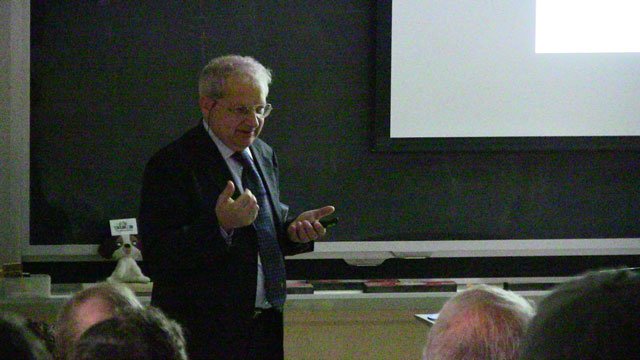
10-Francesco-Celani-IMG_0729Francesco Celani, besides being always our friend as well as an esteemed scientist, is an honorary member of “Open Power” from the foundation of the Association itself.

On Thursday, December 11, 2014, Francesco Celani visited our new laboratory in Rome where he met with Ugo Abundo, our President and Scientific Director of the Open Power Association, for a scientific debate on issues of common interest. On this occasion, the relationship of scientific collaboration that will occur between us and Francesco Celani was made official.

Interviewed by Luciano Saporito, his words filled us with pride about our commitment in the field of new energy. Francesco Celani claimed that “the Open Power laboratory is well structured and the enthusiasm of the researchers involved is strong. The research ranges in different, complementary directions, is carried out in specific work islands; procedures are scientifically confirmable, and the equipment well-built and well-engineered; the fields of investigation are integrated and promising, and the proposed solutions innovative and desirable to make optimal maximum effort in running the designed projects.”

Francesco Celani also explained, in some detail, to Ugo Abundo the NEW discovery (June 25 2014) an electrical phenomenon, apparently not due to known phenomena, due to the interaction of Hydrogen gas with long (100cm ) fine wire (diameter 100 microns and 200-meter) of Constantan (alloy Cu_55%, Ni_44%, Mn_1% with traces of iron from 0 to 0.5%) having the surface covered by the same Constantan with reduced dimensionality (measured between 50 and 5000 nm with SEM) as a methodology developed by the LNF even with help, at various levels of external colleagues.


The whole is measured, at a macroscopic level, when such INDIVIDUAL wires, electrically isolated from each other, with sheaths made of borosilicate glass, placed inside a reactor also having the hydrogen gas, have an internal temperature of about 150° C and external next environment.

In other words, it is as if you were in the presence of a new form / method (apart from the well-known Seebeck effect and / or Thompson) DIRECT CONVERSION from Heat to Electricity. From the point of view of scientific speculation, the role of Hydrogen understood as mono-atomic and / or even proton is a truly challenging idea. Obviously we’re just starting, though recent (December 15, 15:00) results show that the ignition temperature is not 150° C but only (about) 55° C. Some suggestions on the issue of “abnormal current” were provided to Francesco Celani also by some researchers, collaborators Open Power.

Francesco Celani is Senior Researcher of the National Institute of Nuclear Physics in Frascati (INFN), and Vice President of the International Society of Nuclear Science and Condensed Matter (ISCMNS). Francesco Celani came to the study of “Cold Fusion”, now called LENR, out of “suspicion”, as he himself tells us. Indeed, he has always operated by the “methodological skepticism” of Descartes, always inspired by the desire for “truth”. As Franklin Eugene Mallove denounced the falsifying of data in a report on “Cold Fusion” experiments by the MIT (due to the interests of the establishment and related to funds for research on nuclear fission which they already enjoyed), Francesco Celani has courageously instigated the diffusion of two internal documents he himself accidentally discovered on two NASA research efforts on “Cold Fusion”, (that of Martin Fleischmann and Stanley Pons), which validated results from years ago.

Francesco Celani in his decades-long work as an Experimental Physicist, was always animated by a spirit truly Scientific, (also a worthy interpreter of the tradition of the experimental method of Galileo Galilei). He is also a proponent of a vision given to the needs of humanity in general, and to the Italian people in particular, that is, as far as possible, having real evidence in the daily life of the” Citizens Whatever, and now open source, the science itself.

His previous participation in the methodology of Live Open Science (LOS), founded by the working group “Martin Fleischmann Memorial Project” in 2012, continues, and is further strengthened. Both collaborations, with MFMP and Open Power, share the same goals in the same fields of human knowledge: one at International level and the other National.

francescocelanienergy.org
hydrobetatron.org
contatti@hydrobetatron.org

********************* END

Related Links

Live Open Science Methodology .[pdf] presented by Francesco Celani (in Italian)

Martin Fleischmann Memorial Project

Open Power Newsletter #16: New “ITABetatron” reactor starts experiments

Open Power Association at Hydrobetatron.org has published Newsletter #16. Selected excerpts of interest to Cold Fusion Now readers are google-translated from the original Italian and reproduced in English below.

For the full and complete Open Power Association Newsletter #16, go to the Newsletter Archive here: http://www.hydrobetatron.org/archivio-newsletters.html

*********************************************************************************************************

Dear Friends,
Open Power wishes you a merry Christmas and a Happy New Year!

Open Power Associatoin ITAbetatron reactor.
Work is progressng on Open Power Association’s ITAbetatron reactor.

The reactor ItaBetatron is now ready to begin the planned experiments. In the coming weeks we will enter the heart of the work, and we all wish success in this endeavor! In this case, we will finally have a new source of energy: clean, inexhaustible and economical, that creates the conditions for the welfare and prosperity of the peoples of the Earth, and at the same time combats global warming, and the dangerous climate change taking place, and saving the planet Earth.

All your help will be useful, if not decisive. Therefore, please renew your subscription to the Open Power Association, or subscribe for the first time. This is the greatest gift you can give yourself! And you can also receive a nice gift!


To become an Associate with Open Power CLICK HERE
!

The Open Power Association is one year young. We knew that the road would be full of many difficulties, and we did not imagine to see our strength grow so concretely:

We became legal, we received the scientific support from many distinguished honorary members, we organized a multifaceted lab, we built equipment for mechanical construction and electronics, measuring instruments, chamber handling powders, we created a multimedia environment for meetings, a website appreciated over the oceans, developed multipurpose reactors and related equipment for the power unit, a power-pulsed high voltage line for the production of hydrogen on-demand, section of calorimetry, microscopy, chemical and electrochemical under the hood, and shielding with anti-radiative detectors for the production and measures on plasmas.

We have implemented educational measures, obtained insurance for safety and prevention, and finally, designed a deep experimental campaign towards the most advanced research directions suggested from the theoretical analysis, narrowing the multitude of options, thanks to the methodical “hypercube center” of our design.

On the theoretical level, we have developed different behavioral patterns in the possible operating modes of the reactions, to be guided by them during the trial, published in Conference Proceedings and internationally peer-reviewed Journals.

All this, thanks to the economic contribution of our own members and the many hours of competent and passionate volunteer work.

And, before you go, consider that to ask for outside funding, we would be in a contract and at a disadvantage; we want to achieve important experimental results can only be attributed to independent strength.

Therefore, it is with pride that we are communicating that the experimental campaign ITAbetatron started! – with our own strength, (and not cheap!), in just one year. We simply ask you to renew your registration, with payment of the fee-based or fee-supporters:

Please become a member HERE.

Ugo Abundo
President, Open Power Association

lab-wide-view-494x66

THE TALK ABOUT US AMONG OTHERS …

THE PRESTIGIOUS Cold Fusion Now!

THE PRESTIGIOUS LENR FORUM

FACEBOOK PAGE DEDICATED TO ROSSI-FOCARDI COLD FUSION AND THE E-CAT DESIGNED AND MANAGED BY BRAVO UMBERTO GIORDANO

NUCLEAR WASTE? NO Thanks!

The Chernobyl disaster occurred April 26, 1986
The UN reports that in 2005 there were 4000 people died as a result of radiation. The consequences of radiation due to the explosion of the nuclear reactor in Chernobyl affected not only Ukraine, but also Russia and Belarus. The Ukrainian authorities have estimated that a total of 5 million people have suffered for castastrofe nuclear. A good portion of those still living in the contaminated regions. According to Greenpeace, the result of radioactive contamination have been immune system diseases, heart disease, cancer that may cause even between 100 thousand and 400 thousand deaths in the three former Soviet republics.

The accident in central Fukushima Dai-ichi occurred in March 2011
There could be between 15 and 1,300 deaths and between 2400 and 2500 cases of cancer, radiation caused by the accident in the Japanese nuclear power plant Fukushima Daiichi. And as they indicate the first estimates of the health impact of the nuclear accident in Fukushima on 11 March 2011, published today in the journal Energy and Environmental Science. The model was developed by Mark Jacobson and Ten Hoeve, University of California at Stanford.

What is the status of “THE ITALY-JAPAN PROJECT FUNDAMENTAL RESEARCH ON COLD TRANSMUTATION PROCESS FOR TREATMENT OF NUCLEAR WASTES”, circa 1995/96?

-A missed opportunity!

This scientifically-founded project, if it had been followed up in Italy, would probably have permanently solved the very serious problem of cleaning up nuclear waste. Unfortunately, it was not followed. Why? Whose responsibility is this? We provide below some documents about this puzzling affair, with the hope that we can take this path to a solution.

Important press release ANSA of June 23, 2005
TO READ THE COMPLETE PRESS: D: /Desktop/Italian%20Senate%20meeting.html

Read about it HERE.

THE ITALY-JAPAN PROJECT-FUNDAMENTAL RESEARCH ON COLD Transmutation PROCESS FOR TREATMENT OF NUCLEAR WASTES
Akito Takahashi
Osaka University, Japan
Francesco Celani
INFN, Italy
Yasuhiro Iwamura
MHI, Japan
2006

Abstract
The IJ Project proposes, as the first phase research, that confirmation of the cold transmutation using radioactive isotopes as Cs-137, Sr-90 and Cs-135 to non-radioactive elements will be implemented based on the MHI method. A theoretical background has been given by the TSC-induced nuclear reactions3). Charge neutral pseudo-particle of 4d/TSC can become as small as 10 fm radius in its minimum state of squeezing motion and will make 4D-capture reaction with host metal (or added metal) nuclei in the surface region of permeation1,2) samples. Major reaction will be: M(A,Z) + 4d/TSC → M(A+8, Z+4) + Q Theoretical modeling of the process is briefly explained and resulting reaction products, their decays and final stable isotopes are predicted for Cs-137, Sr-90 and Cs-135n transmutations.
-Invited paper at the International Conference on Cold Fusion, ICCF12, Yokohama (Giappone),
28 November to 5 December 2005

TO READ THE FULL DOCUMENT: Click here

Full .pdf Proceedings of ICCF-12 are HERE.

Nuclear power plant in Kiev.
The Prime Minister broke the news in parliament: An accident at the nuclear power plant in southeastern Ukraine.

Energy Minister: “No danger.”

International Atomic Energy Agency: “No comment.”

COMPLETE ARTICLE CLICK HERE

*********************************************************************************************************

A FREE “CHRISTMAS” TO ALL OF YOU – GOOD READING!
Published in the articles section of hydrobetatron.org, the new article by Luciano Saporito Universe and World, on things and reality. [.pdf]

From one point of view, knowledge of the world that we can bring is based primarily on Our five senses. But this is enough to have a clear awareness and understanding of physical phenomena, the world, and the “reality” in which we are immersed? No!
Luciano Saporito Universe and World, on things and reality

READ MORE HERE

*********************************************************************************************************

REMINDER OF AN INTERESTING MEETING
The Conference “ALTERNATIVE ENERGY” conceived and organized by Eugenio Martucci will take place December 13, 2014 from 9:45 to 19:30 at Via di Torrenova n. 39th (Casilina) in Roma.

Poster announcement in .pdf

*********************************************************************************************************

As the carbon dioxide in the atmosphere traveling the video of the NASA shows WHY OUR STUDIES ARE NEEDED TO FIND A NEW FORM OF CLEAN ENERGY, AND ARE URGENT AND IMPORTANT TO SAFEGUARD THE PLANET EARTH, this is a good reason to Support the Open Power Association

TO READ THE ORIGINAL NASA ARTICLE AND SEE THE VIDEO CLICK HERE:
http://www.nasa.gov/press/goddard/2014/november/nasa-computer-model-provides-a-new-portrait-of-carbon-dioxide/

Climate Change Risk Map for Italy

Related Links

Open Power Newsletter #15 Excerpts

JCF-15 pairs Experiment and Theory

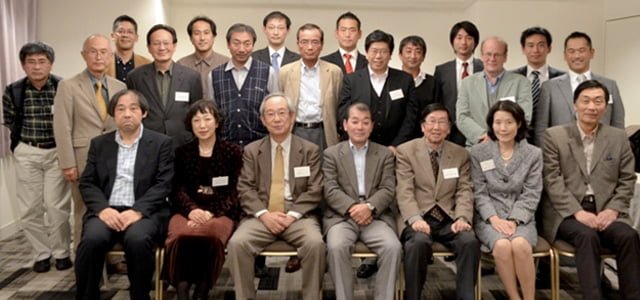
Photo: Participants of the 15th meeting of Japan CF-Research Society courtesy Clean Planet, Inc.

Hideki Yoshino of Clean Planet, Inc co-hosted the event.
The 15th Meeting of the Japan CF-Research Society was held November 1-2, 2014 at the Hokkaido Citizens Activities Promotion Center in Sapporo, Japan.

This year’s event was co-hosted by Hideki Yoshino, Founder of Clean Planet, Inc, a company providing resources to the LENR research community there, and Dr. Tadahiko Mizuno, scientist with Hydrogen Engineering Application & Developing Company and author, Nuclear Transmutation: The Reality of Cold Fusion. [buy].

Members from academia, business, government policy makers and industry in Japan were present. Dr. Akira Kitamura, an experimentalist associated with Technova, Inc and Kobe University, listed about ten active cold fusion research projects active in the country during his presentation in 2013 at ICCF-18 in The Way Forward panel [watch]. It was representatives from these groups who reported at the JCF-15 conference.

ActiveResearchGroups-Kitamura-ICCF-18ActiveResearchGroups2-Kitamura-ICCF-18


Slides from Akira Kitamura in The Way Forward Panel presented at ICCF-18.

JCF15 Program
JCF15 Abstracts

The program alternated between sessions on experiment and sessions on theory.

Co-organizer Hideki Yoshino said, “Emeritus Professor Takahashi from Osaka Univerisity presented his theories based on the results of Professor Kitamura and Dr. Iwamura from Mitsubishi Heavy Industries. These parities demonstrated the spirit of cooperation needed and the importance of collaboration by delivering tangible results.”

Yoshino described the “passionate” atmosphere of collaboration, and hints at a possible set of benchmarks to be delivered:

“Due to the relatively remoteness of Saporo, the conference attracted passionate and committed individuals from their respective fields to contribute in a manner which at times became very intense. This passion and intensity translated to the exchanges, which raised the bar for all those who attended to deliver on goals which otherwise wouldn’t have been set. These exchanges not only raised the bar on measurable and deliverable targets but also made each individual accountable to the collective group.”

“The attendance of Emeritus Professor Kasagi from Tohoku University further demonstrated the quality of the the attendees. He aggressively challenged each one of the presenters on their respective theories and the results of their experiments. His strong demeanor insured the validity and accountability of factual information of theories and processes.”

Proceedings from the meeting have not yet been released, however previously published papers describe some of the research tracks.

Experimentalist Tadahiko Mizuno of Hydrogen Engineering A&D Co. gave the Opening Address and presented Analysis of Heat Generation using Pd and Ni Fine Wires. Recently, archivist Jed Rothwell of lenr.og spent time with Dr. Mizuno and produced Report on Mizuno’s adiabatic calorimetry [.pdf].

Theorist Akito Takahashi of Technova Inc. presented Background for Condensed Cluster Fusion. Dr. Takahashi’s Physics of Cold Fusion by TSC Theory was also published in JSCMNS Vol 13. [DOWNLOAD and go to Acrobat page 575]

Yasuhiro Iwamura et al. of Mitsubishi Heavy Industries presented Increase of Transmutation Products by Electrochemical Deuterium Permeation through Nano-Structured Pd Multilayer Thin Film. A paper on this research program Increase of Reaction Products in Deuterium Permeation-induced Transmutation by Iwamura, Y., T. Itoh, and S. Tsuruga, can be found in the Journal of Condensed Matter Nuclear Science Vol. 13 published May 2014. [DOWNLOAD and go to Acrobat page 252]

Theorist Ken-ichi Tsuchiya of the National Institute of Technology, Tokyo College spoke on Convergence Aspect of the Self-consistent Calculations for Quantum States of Charged Bose Particles in Solids. Quantum States of Charged Bose Particles in Solids from JCF-5 describes the groundwork.[.pdf] See also, JCMNS Vol. 13 published A Self-Consistent Iterative Calculation for the Two Species of Charged Bosons Related to the Nuclear Reactions in Solids [DOWNLOAD and go to Acrobat page 604]

Akira Kitamura et al. of both Technova Inc. and Kobe University presented Comparison of some Ni-based nano-composite samples with respect to excess heat evolution under exposure to hydrogen isotope gas at the meeting. JSCMNS Vol 13 published Recent Progress in Gas-phase Hydrogen Isotope Absorption/Adsorption Experiments by A. Kitamura, Y. Miyoshi, H. Sakoh, A. Taniike, Y. Furuyama, A. Takahashi, R. Seto, Y. Fujita, T. Murota and T. Tahara. [DOWNLOAD and go to Acrobat page 287]

Says Yoshino, “This ongoing cooperation and collaboration among the members of JCF towards a single vision of creating clean, abundant and safe energy for all mankind, is essential for the realization of our collective goal.”

Find more photos of JCF-15 on the Clean Planet Gallery.

Related Links

Japan CF-Research Society

Clean Planet, Inc.

Technova, Inc.

Nuclear Transmutation: The Reality of Cold Fusion by Dr. Tadahiko Mizuno

Open Power Newsletter #15: E-Cat analysis by Ugo Abundo

The Open Power Association at Hydrobetatron.org has published Newsletter #15 devoted to the E-Cat test report.

A .pdf of Newsletter #15 in the original Italian can be downloaded from Hydrobetatron.org.

The newsletter begins with a Review by Luciano Saporito of a new paper by Ugo Abundo hypothesizing on the E-Cat reaction. We reproduce the full Review here in English and also provided are links to two Abundo reports on the E-Cat.

********************************************************************************************

About the Ugo Abundo’s hypothesis for explaining and enhancing Rossi’s E-Cat reactions, via R.M.Santilli’s Neutroids
By Luciano Saporito
OpenshareLAB
Open Power Association Rome, Italy

In the original paper “Representation and Enhancement of the Excess Energy of Rossi’s Reactors via Santilli’s Neutroids and Nucleoids”, Ugo Abundo proposes a hypothesis for explaining reactions involved in Andrea Rossi’s E-Cat reactor, based on Nucleoids and Neutroids of R. M. Santilli.

Such a hypothesis, in the opinion of the writer, is very important from the scientific viewpoint, because of Andrea Rossi, standing the related trade secret strategies, at date maintains undisclosed the nature and function of the unknown substance that catalyzes the behaviour of E-Cat reactions towards its extraordinary performances. Consequently, the third-party tests on the reactor, at date, cannot be considered scientifically complete and exhaustive , owing to the lack of knowledge about all parameters involved in the reactor operation.

Exclusive finality of the above mentioned tests is verifying and certifying the continuous operation of the reactor and the related COP. Indeed, such results were awaited by researchers of the field and public opinion since beginning of Rossi’s claims.

It should be noted that the novel independent report dealing with the Rossi’s reactor performances: http://www.sifferkoll.se/sifferkoll/wp-content/uploads/2014/10/LuganoReportSubmit.pdf shows transmutations that cannot be explained via Quantum Mechanics, specially owing to the impossibility of proton skipping the coulombian wall and the inadequate cross-section about proton electronic capture in the operating conditions.

On the other hand, considering both the energy concentration amounts and the isotopic changes shown in the comparative analysis between reactants and ashes, no doubt is allowed: low energy transmutations does occur.

Thus U.Abundo hypothesized a model according to which new neutron-like particles can interact with Lithium and Nickel nuclei, in the specific isotopic occurrence in the reactants, leading to the proper isotopic chain detected in the ashes.

The paper functionally reviews a systematic synthesis of research work of prof. Ruggero Maria Santilli by decades, since the founding of a new mathematics, then a new physics oriented towards the solving of the neutron structure problem, preliminary to the understanding of the change of viewpoint needed for conceiving and employing the models leading to the idea of neutron-like neutroids and their behaviour.

Now, we will recall page 29 of the above mentioned independent report, where some hypothesized reactions are detailed. The report explicitly underlines the impossibility that the reactions may occur, notwithstanding their capability to account for the observed quantitative isotopic content.

p + 7Li → 8Be → 4He + 4He

p + 58Ni → 59Cu

The reaction equations might result admissible if the proton to be involved, helped by an electron, were in a bound state (Santilli’s Neutroid) masked as a neutral particle, so avoiding the coulombian repulsion to enter into the 7Lithium isotope nucleus, turning it into the unstable 8Li one: the latter can thus experience a β-decay, holding the proton in the nucleus, leading to 8Beryllium, decaying into α particles.

The following equation can be obtained via the first of the previous ones, by simply adding an electron to both members:

(p + e) + 7Li → 8Li → 8Be + e → 2 α + E

The possibility of burning the 7Li isotope by employing neutroids is particularly relevant in the cosmological research field: indeed, in astrophysics a problem known as “Cosmological Lithium Depletion” is everywhere present.

It deals with the lack of interpretation about the observed 7Li presence less than the one as predicted by theories concerning the relative abundances of elements. The above mentioned considerations might represent a solution to the indicated discrepancy standing the chance, near the stars, of finding very high magnetic fields, in the regions involved with stellar prominences, of magnitude order greater than 1012 – 1014 Gauss, capable of inducing neutroid formation.

In a similar way, a bound proton (Santilli’s neutroid) can enter in a 58Nickel nucleus, turning it into 59Ni, emitting the masking electron, holding in the nucleus only the proton, thus generating 59Cu and so on, for higher mass Ni and Cu isotopes:

(p + e) + 58Ni → 59Ni → 59Cu + e + E

The neutron-like particles don’t need the notorious 0.782 MeV per proton, to turn it into a real neutron, capable to penetrate the target nucleus, thus leading to the transmutations to be explained.

Such particles, whose existence was firstly hypothesized by Don Carlo Borghi and successively theoretically justified and experimentally detected by R.M.Santilli, were called, by Don Borghi himself, “neutroids”.
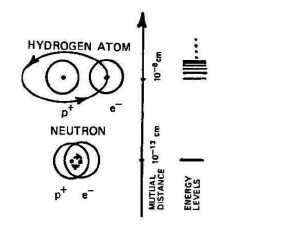
Fig-1
Fig, 1.Neutron as a Hydrogen atom Energy level. [from J. V. Kadeisvili, The Rutherford – Santilli Neutron, Hadronic Journal, 31, 1-114 Institute for Basic Research, Palm Harbor, Florida, U.S.A. (2008]
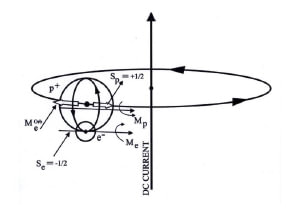


Fig-2
Fig. 2.Proton and electron captured by magnetic field. [from J. V. Kadeisvili, The Rutherford – Santilli Neutron, Hadronic Journal, 31, 1-114 Institute for Basic Research, Palm Harbor, Florida, U.S.A. (2008]

If confirmed, the model would constitute a great confirmation of Santilli’s Hadronic Mechanics, from the microscopic world roots to the cosmic boundaries, furtherly (from the industrial applications viewpoint) capable to explain and foresee the best geometrical and physical configurations for the esoenergetic reactions (clean energy production) towards the occurring of optimal COP conditions.

This new viewpoint could open new perspectives to LENR insights, now supported by a complete theory such as Hadronic Mechanics, accounted it is an extension of Quantum Mechanics to the case of interacting particles at distances about a nucleon diameter.
Of course, the model verification asks for an extensive experimental work, already independently started in Italy at the OpenshareLAB, under the Scientific Direction of U. Abundo himself. In the same time, the experimental work in the U.S., at least about some aspects, is directly supervised by R.M.Santilli.

We must thus hope that together with the incentive concerning the consequent industrial interests (related to large investments), the free research too will find the needed resources, both economic and human, to achieve the goal to drive all Mankind and Earth planet towards the benefits related to the new energy technologies promising a clean, inexhaustible and inexpensive energy.
Luciano Saporito

***********************************************************************************************

HADRONIC JOURNAL 37, 697-737 (2014)
REPRESENTATION AND ENHANCEMENT OF THE EXCESS ENERGY OF ROSSI’S REACTORS VIA SANTILLI’S NEUTROIDS AND NUCLEOIDS [full .pdf]
Ugo Abundo
Neural Calculus Lab
J. Von Neumann Foundation

Abstract
A recent, independent-party report shows that Rossi’s E-Cat reactor produces an excess heat that cannot be explained via quantum mechanical or chemical processes, thus supporting the possible presence of new nuclear processes. In this paper, we recall the studies by Don Carlo Borghi on the synthesis of the neutron from the Hydrogen, and the systematic, mathematical, theoretical and experimental studies conducted by R. M. Santilli on the neutron synthesis via the covering hadronic mechanics and chemistry. We review in particular the detection of an apparent new bound state of a proton and an electron called ”neutroid,” which is solely predicted by hadronic mechanics with the characteristics of the neutron except spin zero, thus being different than Mills hydrino. We then recall Santilli’s new series of ”nucleoids” which are given by conventional nuclides when absorbing a neutroid or nucleoid, and illustrate their es- oenergetic decay into stable nuclides. In this paper, we submit the hypothesis, apparently for the first time, that Rossi’s E-Cat reactor converts, at least in part, Hydrogen into Santilli’s neutroids by therefore avoiding the Coulomb repulsion between protons and nuclei present in current interpretation. The use of Santilli’s nucleoids and their esoenergetic decay then allow a quantitative interpretation of the excess heat in Rossi’s reactor. We close the paper by indicating the reasons according to which Santilli’s new species of MagneHydrogen offers realistic possibilities to enhance the energy output for Rossi’s as well as other Hydrogen-based nuclear transmutations.
PACS 03.75.Be, 29.30.H, 67.65.+z

Full article: http://www.hydrobetatron.org/files/abundo-paper-2014_Ottimizzato.pdf

**********************************************************************************************

A nuclear battery Nickel-Metal Hydride Lithium as a promoter of the reactions in the E-Cat? [.pdf]
by Ugo Abundo
OpenshareLAB
Open Power Association

Combined analysis of the scheme of construction details of the apparatus and methods of operation deduced from the patent application by A. Rossi (link) and the processing of information about the chemical composition of the “charge” as stated in the report of third parts (link) shows some key considerations for the interpretation of the performance of the E-Cat.

a) There is a strong analogy with the functional diagram of Lithium batteries Nickel-Metal Hydride (Nickel, Lithium, Hydrogen are the major components identified in the report mentioned): the splitting of the ‘hydride, the release of the proton and its sale Nickel , according to the scheme of the half-reaction from the left to the right of the conventional battery, with simultaneous release of the electron and the creation of electrical potential gradient, and raising the performance in case of micro and nano particle sizes:

Li Li ↔ H + Heat + H ++ e-

b) The evolution of hydrogen is promoted by rising the temperature (which for the Lithium hydride must reach about 500 ° C), as urged by the resistance heaters employed, leading to a rise in blood pressure, useful for the purposes of the absorption of hydrogen from part of Nickel.

c) The heating is carried out in a variable (cyclic), creating thermal gradients that trigger dynamic phenomena in point d), leading to static avoid saturation and to promote a continuing effort to “flow” of protons, essential parameter that blems and maintain fusion reactions (as reported, among others, by F. Celani), with the chain of production of isotopes of Ni to increasing mass, up to decay and the obtaining of Cu.

d) The presence, in the charge, of contiguous particles with different chemical composition, justify the hypothesis of a thermoelectric effect, because of the strong thermal gradients involved and that for Soininen http://www.google.com/patents/WO2013076378A2 ? cl = en & hl = en can produce high local gradients of electric potential acts of the so-called “Energy Localization” by B. Ahern, they agree F. Celani and G.Vassallo both the theoretical and experimental (ICCF18, July 2013)
http: //www.francescocelanienergy.org/files/Presen_Finale-ICCF18Celani_E.pdf in order to accelerate the charged particles and make them reach the required energy to achieve the transmutation esoenergetic.

e) The need for adjustment of the promoters of the reaction, under the dual production and efficient use, is well understood by the long period of time that was required for the development of the reactor Rossi. Lacking clearly even in the E-Cat this criterion, the occurrence of reactions random disordered door, to avoid reactions catastrophically unstable, to limit unnecessarily the COP in such conditions as to ensure the absence of explosions, forcing it however to values well below those potentially obtainable with controlled reactions; in this direction, the activity of current research at OpenshareLAB adopting a series of criteria arising from a deep theoretical analysis, the results of which will be announced soon systematized.
Full article http://www.hydrobetatron.org/files/A-Nickel.pdf

*********************************************************************************************

BOOK: “PILLS OF WISDOM” PILL 011
“The scientific method” according to Richard Feynman

In general, we look for a new law by the following process. First, we guess it (audience laughter), no, don’t laugh, that’s really true. Then we compute the consequences of the guess, to see what, if this is right, if this law we guess is right, to see what it would imply and then we compare the computation results to nature, or we say compare to experiment or experience, compare it directly with observations to see if it works.

If it disagrees with experiment, it’s wrong. In that simple statement is the key to science. It doesn’t make any difference how beautiful your guess is, it doesn’t matter how smart you are who made the guess, or what his name is… If it disagrees with experiment, it’s wrong. That’s all there is to it.
http://www.presentationzen.com/presentationzen/2014/04/richard-feynman-on-the-scientific-method-in-1-minute.html

Cold fusion defended against ITER at Channeling Conference

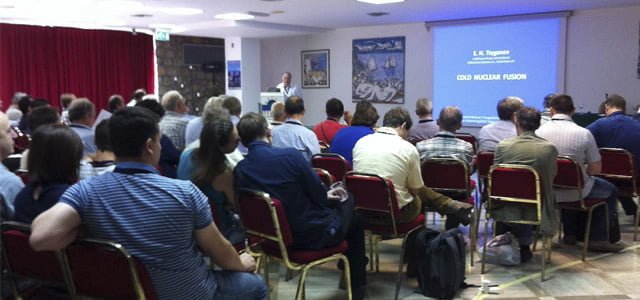
Edward Tsyganov presented Cold Nuclear Fusion at the Channeling 2014 Conference held October 5-10, Capri, Italy.

During the Oct. 8 roundtable session, Dr. Tsyganov has reported that “some of the participants suggested that we avoid rushing to promote cold fusion and, therefore, prevent any interference with the implementations of international tokamak ITER.”

Tsyganov explained, “… it is difficult to ignore the cold fusion process because it is much less expensive and much more practical than traditional thermonuclear fusion.”

In a summary of the discussion in English, Tsyganov continued:

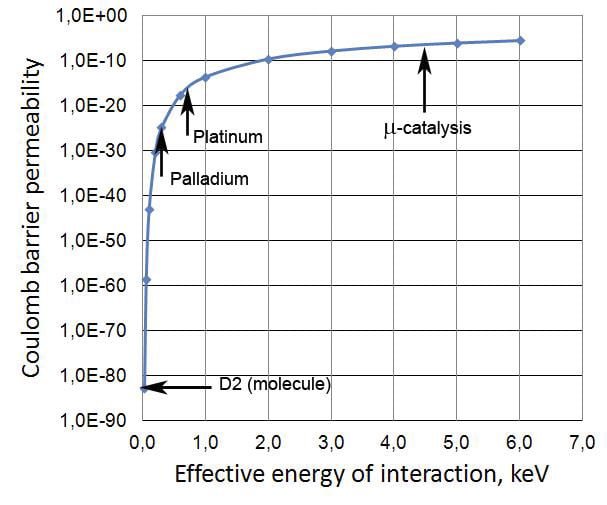
Fig. 8. The transparency of the Coulomb barrier for the reaction of DD in the crystal depending on the effective interaction energy Eeff.
The scientific community has always had trouble adapting to truly new knowledge. The current paradigm of nuclear physics does not contain effects such as cold fusion, although this phenomenon does not contradict any of the fundamental laws of nature. Attempts to generate controlled nuclear fusion, which have been conducted for nearly half a century, have already come a long way. The most advanced attempt, ITER, a tokamak of cyclopean size and corresponding value is currently under construction. Realists assess that this facility will take 35-50 years to complete and commence operations. It is only considered as a research project and is expected, after its launch, to start even more gargantuan industrial tokamak. The prospect of huge financial and material spends for another half century looms.

Oil and gas can no longer serve as global fuel, due to its exhaustion, while the companies will try to fight back. This way also may well lead to climate change, a population reduction, and social upheavals.

Cold fusion is a real alternative to this tragic scenario. We believe that in the coming years, the scientific success of cold nuclear fusion will be realized and a radical change in the applied nuclear research will come.

Unfortunately, cold fusion still seems to be quite distant from wide recognition, even though the issue is now practically solved in experimental and theoretical terms. At the moment we are facing a problem that is not scientific but sociological. It is difficult to predict how fast events will develop in this direction. A paradigm shift in science has never been an easy task for society. We should propose the optimal behavior for scientists in these circumstances.

Find Powerpoint presentation slides and photos of the event here:


http://www.coldfusion-power.com/channeling-2014.html

Edmund Storms’ The Explanation of LENR available for Kindle

Edmund StormsThe Explanation of Low Energy Nuclear Reaction is now available in a Kindle version.

Get The Explanation of LENR on Kindle here.

The ebook includes a new Appendix that answers the questions readers have posed to Dr. Storms since the book’s release in July, and contains a further description of hydroton formation.

There is also a newly formatted References section.

Those who already purchased The Explanation of LENR can download the newly added Appendix and References here:

Appendix.pdf
References.pdf

Print copies can be purchased from Infinite Energy Press here.

For more information, go to the books website at http://lenrexplained.com/

New graphic from updated version of The Explanation of Low Energy Nuclear Reaction depicting resonating hydrogen nuclei upon approach
New graphic from updated version of The Explanation of Low Energy Nuclear Reaction depicting resonating hydrogen nuclei upon approach in region where photon emission occurs.

Top