Cold fusion defended against ITER at Channeling Conference

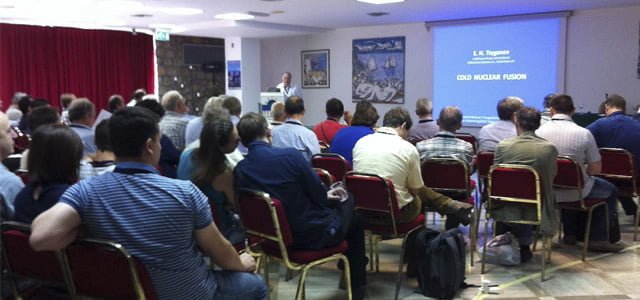
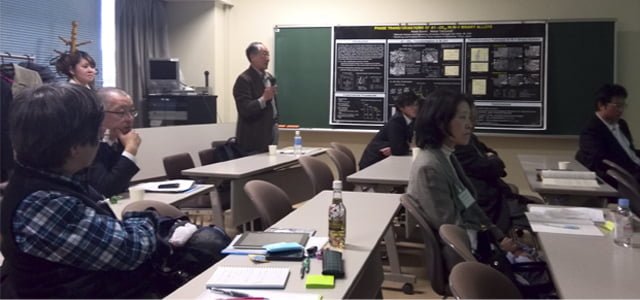
Edward Tsyganov presented Cold Nuclear Fusion at the Channeling 2014 Conference held October 5-10, Capri, Italy.

During the Oct. 8 roundtable session, Dr. Tsyganov has reported that “some of the participants suggested that we avoid rushing to promote cold fusion and, therefore, prevent any interference with the implementations of international tokamak ITER.”

Tsyganov explained, “… it is difficult to ignore the cold fusion process because it is much less expensive and much more practical than traditional thermonuclear fusion.”

In a summary of the discussion in English, Tsyganov continued:

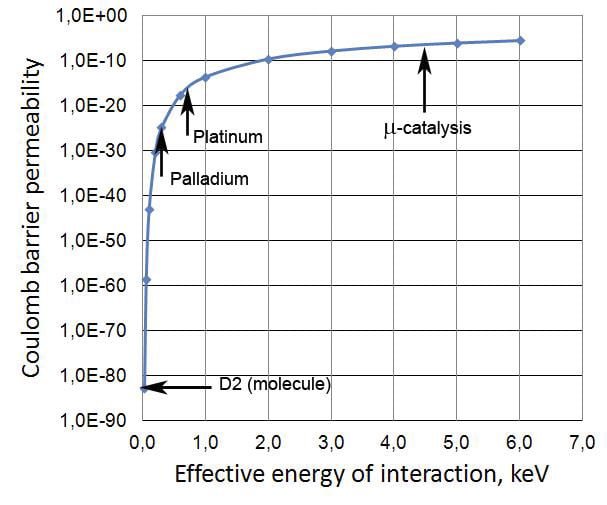
Fig. 8. The transparency of the Coulomb barrier for the reaction of DD in the crystal depending on the effective interaction energy Eeff.
The scientific community has always had trouble adapting to truly new knowledge. The current paradigm of nuclear physics does not contain effects such as cold fusion, although this phenomenon does not contradict any of the fundamental laws of nature. Attempts to generate controlled nuclear fusion, which have been conducted for nearly half a century, have already come a long way. The most advanced attempt, ITER, a tokamak of cyclopean size and corresponding value is currently under construction. Realists assess that this facility will take 35-50 years to complete and commence operations. It is only considered as a research project and is expected, after its launch, to start even more gargantuan industrial tokamak. The prospect of huge financial and material spends for another half century looms.

Oil and gas can no longer serve as global fuel, due to its exhaustion, while the companies will try to fight back. This way also may well lead to climate change, a population reduction, and social upheavals.

Cold fusion is a real alternative to this tragic scenario. We believe that in the coming years, the scientific success of cold nuclear fusion will be realized and a radical change in the applied nuclear research will come.

Unfortunately, cold fusion still seems to be quite distant from wide recognition, even though the issue is now practically solved in experimental and theoretical terms. At the moment we are facing a problem that is not scientific but sociological. It is difficult to predict how fast events will develop in this direction. A paradigm shift in science has never been an easy task for society. We should propose the optimal behavior for scientists in these circumstances.

Find Powerpoint presentation slides and photos of the event here:


http://www.coldfusion-power.com/channeling-2014.html

Open Power Newsletter 14: “WE WANT A CHANGE OF CONSCIENCE!”

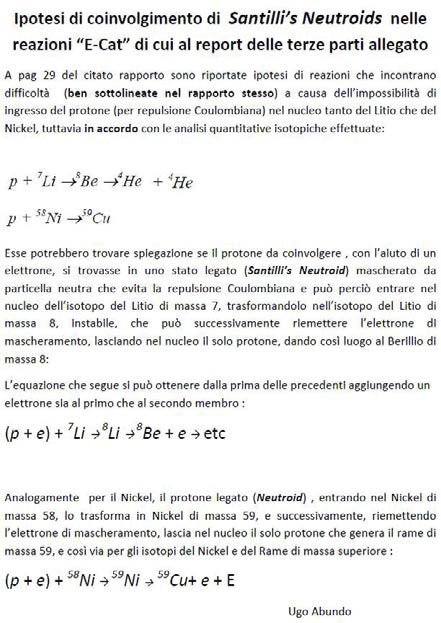
Open Power Association Newsletter #14 has been released. The newsletter is archived in Italian here. The following are a few google-translated and slightly modified excerpts that refer to cold fusion-related activities.

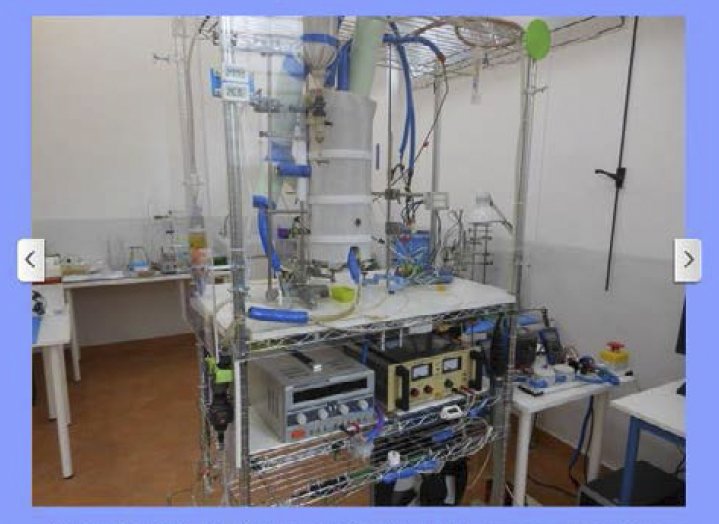
Open Power lab workstation
Hydrobetatron Full Gallery http://www.hydrobetatron.org/

Ugo Abundo speaking in Rhodes
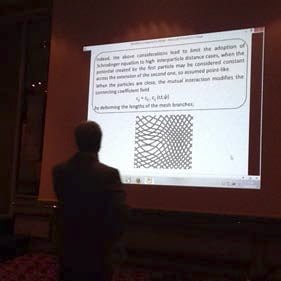
Our Scientific Director: Prof. Ugo Abundo at the International Conference of Rhodes
From 22 to 28 September was held in Rhodes (Greece) International Conference 2014 on Numerical Analysis and Applied Mathematics. Ugo Abundo was invited to participate in the proceedings as a representative of Open Power, to discuss the results of the activities that are part of the Association.

The work has been focused on the re-establishment of new mathematical foundations of physics, able to address the many issues currently unresolved, through change of paradigms in force. The new isomatematica (and evolutions “geno” and “hyper”) Professor Ruggero Maria Santilli presented as the appropriate tools to deal with maps deformed intrinsic irreversibility fields to ipervalori.

By means of these tools, it has been shown by speakers from all over the world, in view of industrial development, advanced applications in the field of energy, and in particular, in regards to the structure of the neutron and the atomic behavior for the purpose of nuclear synthesis. In the previous treatment of such areas, the math, as well as Quantum Mechanics appears inadequate. Hadronic mechanics, specifically developed by Prof. Santilli as an evolution of the above when both distances between particles comparable to the size of the nuclei, is revealed adequate to treat nuclear-type energy situations, where the particles can not be assimilated to material points, as in Quantum Mechanics.

Ugo Abundo presented in two separate reports, the LENR experiments conducted in the Open Power laboratory, and a neural network model generalized setting from the field of Artificial Intelligence, which makes homogeneous Quantum Mechanics and the Hadronic, justifying the applicability conditions of each of them, showing from the mathematical point of view, what happens in terms of internal information to physical systems when the first turns in the second.

Abundo’s report, entitled “An intrinsically Irreversible, Neural-network-like Approach to the Schrödinger Equation and some Results of Application to Drive Nuclear Synthesis Research Work” [.pdf] has been accepted for publication as part of the American Institute of Physics in the Proceedings of the Conference. Hence, the conditions for collaboration with other mathematicians (mainly French, Indian, Greek) to jointly pursue such studies about the applications of AI in the field isomatematica and subsequent transferability to modeling of elementary particles in interaction.

Ugo Abundo presentation slides http://www.hydrobetatron.org/files/ABUNDOpdf.pdf

(L) Prof. Santilli, (R) Prof. Abundo at Rhodes Conference
New web site nuovascienza.org dedicated to the work of Prof. Ruggero Maria Santilli
It is certainly easy to understand and explain briefly the complex thought articulated by Prof. Ruggero Maria Santilli, developed in the ‘arc of 40 years of work, both theoretical and experimental. Remarkable also is the amount of writings, conference papers, and scientific publications, he authored. This website has as main purpose to spread all those materials, video lectures, writings, etc.. In which Santilli describes in clear words and straightforward His theories and their mathematical models; His experimental paths (and industrial), and insights for the future of scientific research and experimentation in the field of new energy …

Here lists the work and thought of Santilli, who (unlike many academics pigtails Italian or not), does not miss at all courage in an attempt to place in certain areas more correct and the same theories of Eintein (Holy Grail?), and even quantum mechanics, from certain points of view. He did not even hesitate to take a picture of the “Science Today”; a photograph very brave, uncomfortable, and merciless; in substance, very critical …

In fact, he argues more explicitly that “the greatest responsibility for the crisis of physics should be seen in the press as a result of the total subservience to the centers of scientific power, while the political responsibility is only indirectly, as the political world uses print as a medium of information and action.”

This website has been designed so as a sort of very concise and articulate “compendium”, the enormous scientific thought and work Santilliano not yet sufficiently known and disclosed, and therefore unappreciated by the general public (at least in Italy, in my opinion), but certainly well-known and much appreciated from a small circle of experts and professionals, even in Italy, for his innovative value; a “compendium” I said for the use of those Italian researchers thirsty and with the critical spirit of true knowledge, but alas mè, with little time available to study the large amount of material and information that the Internet provides us every day.

Prof. Ruggero Maria Santilli Works and Thought http://www.nuovascienza.org/

Third-party report on ‘E-CAT released — Andrea Rossi

Observation of abundant heat production from a reactor device of and isotopic changes in the fuel [.pdf]
Giuseppe Levi
Bologna University, Bologna, Italy
Evelyn Foschi
Bologna, Italy
Bo Höistad, Roland Pettersson and Lars Tegnér
Uppsala University, Uppsala, Sweden
They Essén
Royal Institute of Technology, Stockholm, Sweden

ABSTRACT
New results are presented from an extended experimental investigation of anomalous heat production in a special type of reactor tube operating at high temperatures. The reactor, named E-Cat, is charged with a small amount of hydrogen-loaded nickel powder plus some additives, mainly Lithium. The reaction is primarily initiated by heat from resistor coils around the reactor tube. Measurements of the radiated power from the reactor were performed with high-resolution thermal imaging cameras. The measurements of electrical power input were performed with a large bandwidth three-phase power analyzer. Data were collected during 32 days of running in March 2014. The reactor operating point was set to about 1260 ºC in the first half of the run, and at about 1400 °C in the second half. The measured energy balance between input and output heat yielded a COP factor of about 3.2 and 3.6 for the 1260 ºC and 1400 ºC runs, respectively. The total net energy obtained during the 32 days run was about 1.5 MWh. This amount of energy is far more than can be obtained from any known chemical sources in the small reactor volume.
A sample of the fuel was carefully examined with respect to its isotopic composition before the run and after the run, using several standard methods: XPS, EDS, SIMS, ICP-MS and ICP-AES. The isotope composition in Lithium and Nickel was found to agree with the natural composition before the run, while after the run it was found to have changed substantially. Nuclear reactions are therefore indicated to be present in the run process, which however is hard to reconcile with the fact that no radioactivity was detected outside the reactor during the run.
Read the full report: http://www.hydrobetatron.org/files/ROSSI.pdf

Ugo Abundo on the E-Cat

Newsletter compiled by L.S. and the Open Power Association

Chase Peterson, Former President of University of Utah, Dies

This article was originally published in Infinite Energy Magazine here.


CHASE PETERSON, FORMER PRESIDENT OF UNIVERSITY OF UTAH, DIES

by Marianne Macy

Chase Nebeker Peterson, former President of University of Utah, died on September 14, 2014 from complications of pneumonia. His life story was traced in his 2012 autobiography, The Guardian Poplar: A Memoir of Deep Roots, Journey, and Rediscovery. The concept of roots were important to Chase Peterson. He never forgot his own from a family of Mormon pioneers, despite a life that would take him from his birthplace of Logan, Utah to elite eastern prep schools and Harvard University, from which he was an undergraduate and graduate of the medical school. In 2006, Peterson received the Harvard Medal, awarded at commencement by the Alumni Association for a “lifetime contribution to Harvard.” He had three official careers—Vice President of Harvard University, Vice President for Health Services at the University of Utah, and President of the University of Utah. He also practiced medicine and taught his last class in July of 2014. He was a public spokesperson for innovation at the institutions he was associated with, an innovator, administrator who instituted an open door policy with students, doctor, writer, and visionary.

Cornel West, philosopher, best-selling author, civil rights activist, saluted Chase Peterson for “his prophetic witness at Harvard in the turbulent 60s and 70s, his promotion of black priesthood in the Mormon church, his support of anti-apartheid protest in the 1980s, and his steadfast defense of academic freedom during the cold fusion controversy in the early 90s—all expressed his quiet and humble effort to be true to himself.”

MSNBC’s Lawrence O’Donnell, Jr. heard that Dr. Chase Peterson had died and put a moving tribute on air that saluted Peterson for his historically important actions at Harvard which included hiring the first African-American admissions staff member, instituting an enrollment strategy to embrace students less privileged than the typical Ivy League undergraduate—which, as it turned out, included O’Donnell himself, whose admissions entry interview was with Chase Peterson. The United States Supreme Court cited the measures Chase Peterson instituted as exemplary.

In 1978 Peterson had returned from Harvard to the University of Utah as Vice President in charge of health sciences and the university hospital program. There he found “a unique culture.” The University of Utah, he wrote, offered “an unfettered opportunity to restless young faculty members” who would not face the restraints imposed by more settled places. “Ambitious people—often mavericks held back by practices at other institutions—found comfort and support at the University of Utah.” In his book, Peterson mentioned Max Wintrobe, who in the 1940s was the leading hemotologist, texbook author and junior professor at John Hopkins, where he felt at the time he hit a glass ceiling of anti-Semitism at the otherwise excellent institution. Wintrobe, Peterson wrote, felt Utah, while lacking the research budgets of the institutions in the east, “nevertheless presented unlimited opportunity—a new Zion as it were—open to a Jew or anyone else smart and hard-working enough to take advantage of possibilities. As chief of the Department of Internal Medicine, he brought with him a critical mass of respected young medical investigators. Even more importantly, he brought a personal level of excellence that was infectious and launched Utah toward the upper ranks of medical schools and centers.” Peterson also pointed out that this receptive climate was historically illustrated in 1916, when Utah elected the second Jewish governor in the United States, Simon Bamberger, who was widely admired. He added that Bamberger had called the Utah Legislature into special session to ratify the national woman’s suffrage amendment.

Salt Lake City’s University of Utah is the “economic engine for the state,” a phrase coined by former University President David Gardner. Chase Peterson throughout his career valued his home state for its pioneering spirit and what to him was the epitome of American opportunity. Peterson worked to establish a nationally recognized center of medical research, with special contributions in genetic research and the high profile recognition for being the site of the first human heart implant based on research done by Dr. Willem Kolff. In 1982 Kolff’s results were approved by the FDA. In December 1982 the chief surgeon, Dr. William DeVries, operated on Barney Clark and implanted the artificial heart. Chase Peterson was the face of the University, giving twice a day reports to the assembled international media. In his memoir, Dr. Chase Peterson discussed the extraordinary events, but in a narrative twist completely his own finished his in-depth account of the medical breakthrough with the sort of question that Peterson attributed to the extraordinary world fascination with the story. Chase Peterson wrote that Barney Clark’s wife had told Chase right before surgery Barney had asked, “I wonder if I will still love you when I lose my heart?” Peterson wrote, “He answered that question a few days post-op when—still reduced whispering around a tracheotomy tube—he gestured to his wife and mouthed the words, ‘I love you.’ The scalpel had met its match. Love required a functional pump, but its home was elsewhere.”

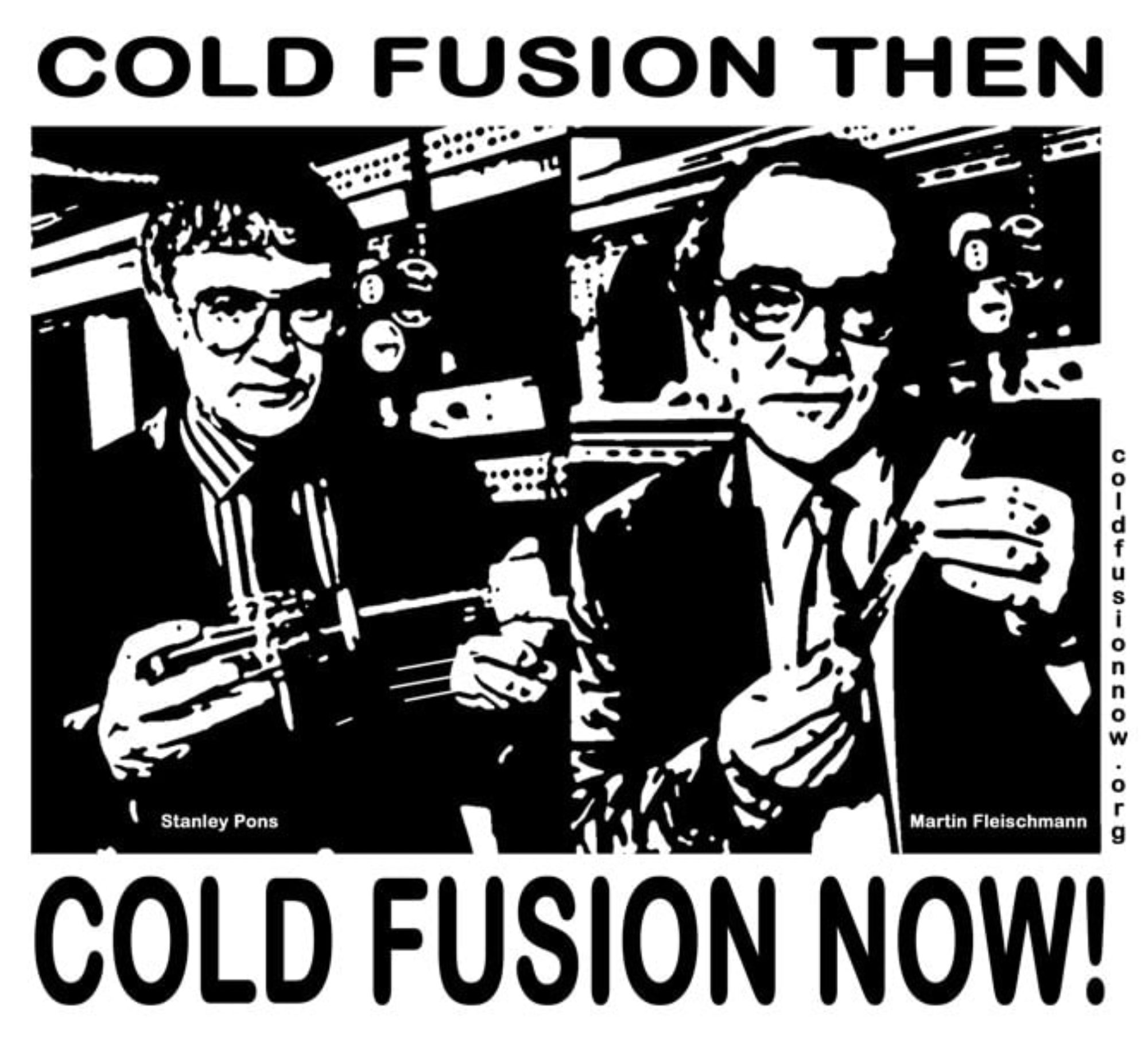
Chase Peterson’s tenure and tributes are marked with mentions of his leadership, enthusiasm and generosity. Others remarked on his courage and support of academic freedom, freedom of inquiry and pursuit of ideas. To Peterson, this was a sacred trust he felt was his mission to uphold. His obituaries mentioned controversies of his tenure as University President, what he wrote of as the “perfect storm” on conflicting interests and opinions over Martin Fleischmann and Stanley Pons’ discovery and work on cold fusion at the University of Utah. The variety of descriptions reflected on the field now in Peterson’s obituary accounts illustrate the spectrum of those perspectives. Chase Peterson never stopped believing it was his job and responsibility to support the freedom of research, no matter the personal cost to himself and his family, no matter the warnings of no less an advisor than Nobel laureate Hans Bethe, who told him ahead of time, “They will only laugh at you.”

Peterson wrote in his memoir: “No president, dean or department chair at any research university can arbitrarily influence the publication or suppression of something against a faculty member’s will, whether that something is a chemical process, a better can opener, a concerto, a play, a piece of writing, or anything else. Neither can a faculty member’s right to publish or circulate something be prevented. Such action violates academic freedom in its most basic sense.”

If cold fusion could work, Chase Peterson said, it would be as important as the discovery of fire. The local NPR station in Salt Lake City rebroadcast a program on Peterson’s book this week that quoted him as saying this. More important was the right to pursue cold fusion, or any idea. Chase Peterson’s support of cold fusion was instrumental in costing him the presidency of the University of Utah. He often stated that he would do it all over again. Patrick Shea, who had served as counsel to Fleischmann and Pons, this week reflecting on Chase Peterson’s death commented, “No University of Utah president has ever done as much to support his faculty and their academic freedom.”

Chase Peterson is survived by his wife Grethe Ballif Peterson, his children Stuart and Edward Peterson, Erika Munson, and thirteen grandchildren. His memorial service will be held on September 27th at 10:00 am in the Church of Jesus Christ of Latter-day Saints Monument Park North Stake.

Marianne Macy has been doing oral histories relating to the history of cold fusion since 2007 and is writing a book on cold fusion’s start to the present day. An excerpt from the book will run in Issue 118 of Infinite Energy.

Related Links

The Guardian Poplar: A Memoir of Deep Roots, Journey, and Rediscover by Chase Nebeker Peterson

Cold Fusion Now Cross-Country Tour Ruby Carat visits the University of Utah campus.
New dates announced for ICCF-19

The 19th International Conference on Condensed Matter Nuclear Science (ICCF-19) will be held on new dates April 13-17, 2015 in Padua, Italy.

A website iccf19.com is now under construction.


New! A Brief History and Introduction to the International Conference Series
First part – From ICCF1 to ICCF3
by Michael McKubre


At this time, you can sign-up for the newsletter to receive information as it happens. According to the timeline, special rates for hotels must be booked by March 13, 2015.

ICCF-19 “New approach on Material Investigations“ is organized by TSEM SpA, an Italian company involved in “the research, design and manufacture of innovative technologies in the areas of Healthcare, Energy and Security.” Support is also provided by Confindustria Padova, “which represents Italian manufacturing and services companies…”

A message from conference chair Antonio LaGatta, a TSEM Founder and Engineer, welcomes participants:

It is my pleasure to welcome you to the 19th edition of the International Conference on Condensed Matter Nuclear Science: ICCF-19.

TSEM is the first private company to independently host ICCF and, as Founder and President, I’m proud to be part of a science and organization that will certainly have significant impact both in the short and long term on everyday life.

This conference looks to continue the evolutive tradition that has been the hallmark of past conferences. Results achieved during previous years have been phenomenal and ICCF-19 presents an opportunity to not only reemphasize the importance of this scientific field, but also to generate and encourage fresh perspectives that reflect how CMNS can change the world.

The purpose of ICCF-19 will be to discuss recent scientific findings as well as to encourage a more general public interest, encouraging a better understanding of the significance of this research and how it will impact society. We will move to accomplish this in part by utilizing the Italian Media and international press, both in science and non-academic media outlets.

Another innovation within ICCF-19 is the establishment of a new committee: The Engineering Applications Committee. The EAC appointees are engineers and investors whose goal is to form a bridge between academia and industry thereby encouraging the generation of products derived from years of scientific research.

Researchers will meet companies seeking to form cooperative partnerships to encourage technological development and industry formation. Research is critical and it is now time to look towards market readiness for CMNS and all its related technologies.

As we near the conference dates, continue to browse the ICCF-19 website for updates on the homepage and please follow our newsletter.

Thank you for your interest and I look forward to welcoming each of you in Padua, Italy, for what will certainly be a revolutionary ICCF-19.

Antonio La Gatta
General Chair, ICCF-19
Engineer and Professor
TSEM Founder

A link to the Padua Visitor’s and Convention Bureau is also provided.

See you there!

Joint Institute of Nuclear Research cold fusion seminar video

Dr. Edward Tsyganov of Cold Fusion Power presented a Cold Nuclear Fusion Seminar at N. N. Bogolyubov Laboratory of Theoretical Physics (BLTP) 2014 in Dubna, Russia.

Powerpoint files of the presentation can be found here.

A video news report on the event was posted by the Joint Institute for Nuclear Research JINTV here and on Youtube here

A transcript of the video news report was provided by Scientific Information Department JINR 2014 and is reproduced below:

The seminar, which dealt with cold nuclear fusion, took place at the Laboratory of Theoretical Physics of the Joint Institute for Nuclear Research. In his report, Professor Edward Tsyganov gave a possible explanation of the effects observed in numerous experiments. The scientist was asked many questions. Currently, physicists believe that there is no conclusive evidence for the existence of cold fusion. However, cold fusion studies continue to be carried out in various countries in order to discover and secure an inexhaustible supply of nuclear energy.

It all started with a report by chemists Martin Fleischmann and Stanley Pons on electrochemically induced nuclear fusion—the conversion of deuterium to tritium or helium through electrolysis using a palladium electrode. This report, which appeared in March 1989, caused quite a stir. The scientists observed neutron emission and the recovery of large amounts of heat, which are signs of nuclear processes. However, the scientific community believes that their claims are incomplete and inaccurate. So-called cold fusion established itself as a pseudoscience; however, after a public demonstration of the experiment using electrochemical cells in 2008 by Yoshiaki Arata of Osaka University, discussions on cold fusion began to appear again.

Known nuclear fusion reactions—thermonuclear reactions—take place in plasma at temperatures of millions of degrees Kelvin. So-called cold nuclear fusion assumes the possibility of nuclear fusion reactions in chemical (atomic and molecular) systems without significantly heating the working substance. However, most chemists and physicists are trying to find an alternative (non-nuclear) explanation for the phenomenon.

Professor Edward Tsyganov remarked that, when saturating conductive crystals with deuterium atoms, the presence of free electrons in the crystal potential niches leads to a ban for the unexcited deuterium atoms to occupy these niches. At the same time, even the first excitation level of deuterium atom removes this ban. When all of the potential niches have already been filled by deuterium atoms at least once, further saturation of a crystal with deuterium atoms gives rise to twin clusters of atoms in one such niche.

In most of these clusters, deuterium nuclei are pulled together to distances of 1/10–1/20 of the nominal size of these atoms. The zero level of quantum mechanics vibrations in the adjacent deuterium nuclei quickly leads to the penetration of the two deuterium nuclei through the reduced Coulomb barrier. The spatial orientation of the excited deuterium atoms in the crystal lattice is strictly determined with respect to one of the crystal lattice’s spatial directions.

The report also discussed the further dissipation of energy during the transition from the excited state of 4He* to the ground state–formed nuclei of 4He (~24 MeV).

This was the second seminar on the topic of cold fusion at JINR. About a year and a half ago, Professor Edward Tsyganov gave a similar talk at JINR. Both then and now, his report “DD fusion in conducting crystals” has caused heated debate.

–Scientific Information Department JINR 2014

Editor: Inna Orlova
Video: Igor Belvedersky

Related links:

Cold Fusion Power Dubna conference files

Appeal to Putin on cold fusion countered with “nothing new”

Japanese Cold Fusion Research Society meeting papers released

The Japanese Cold Fusion Research Society (JCF) held its 14th meeting last December at the Tokyo Institute of Technology, where Dr. X.F. Wang of Arata R&D Center and Hydrogen Eng. A&D Co. and Hideki Yoshino of Clean Planet, Inc. both reported on academic and industry researchers presenting their most recent results.

The JCF-14 Proceedings edited by Akira Kitamura of Technova, Inc. and Kobe University consists of papers of presenters at the event.

“… cold fusion has a potential ability to establish a small-scale, radiationless nuclear reactor, and hopefully to shorten half-lives of radioactive wastes by nuclear transmutation,” writes Kitamura in the Preface.

He believes that this approach has the potential …

“not only to realize an environmentally-sound nuclear power system with zero emission of the greenhouse gases and other harmful oxides, but also to develop a novel technique for disposal of the nuclear wastes produced by fission reactors.”

Transmutation data was presented by several speakers including Yasuhiro Iwamura and S. Tsuruga of Mitsubishi Heavy Industries and Hideo Kozima of Cold Fusion Research Lab. Several theoretical papers are published as well.

Of particular interest to general readers is Hideo Kozima‘s paper What is cold fusion?

In the essay, he defines: The CFP (Cold Fusion Phenomenon) stands for “nuclear reactions and accompanying events occurring in open (with external particle and energy supplies), non-equilibrium system composed of solids with high densities of hydrogen isotopes (H and/or D) in ambient radiation” belonging to Solid-State Nuclear Physics (SSNP) or Condensed Matter Nuclear Science (CMNS). (CFRL News No.81, http://www.geocities.jp/hjrfq930/).

Kozima goes on to say, “The most important fields of the CFP developed after the initial discovery in 1989 are various kinds of events in protium systems and the nuclear transmutations both in deuterium and protium systems which have not been in their targets of the evaluation of the two DOE Reports [DOE Reports 1989, 2004].”

His survey of CF data has caused him to write the “irreproducibility of events in the CFP [cold fusion phenomenon] discussed in Sec. 3 is closely related to the complexity in this phenomenon.” Solutions to data sets are “using the Feigenbaum’s theorem describing a nature of an equation of nonlinear dynamics [Kozima 2012, 2013]”. In response, Kozima presents a “TNCF model [Kozima 1998, 2006] with a single adjustable parameter nn is based on the whole experimental facts obtained in materials composed of various host solids and hydrogen isotopes not only deuterium but also protium.”

Find the essay What is Cold Fusion? by Hideo Kozima in the JCF-14 Proceedings. [.pdf]

See also:

Industry and academic partnerships report from JCF-14 meeting

Top