Global Breakthrough Energy Conference is on in Boulder!

The second annual Global Breakthrough Energy Movement conference is on schedule to bring energy innovators together from around the world next week in Boulder, Colorado, in spite of the floods that have destroyed parts of the area.

Originally to be held at the University of Colorado Boulder campus, an angel named Darek Zurek has, as they say, “stepped up to the plate”, and a new venue for the event has been announced:

The Days Hotel
5397 South Boulder Road, Boulder, CO 80303
Telephone: 1-303-499-4422

MORE Breakthrough POWER TO YOU, Darek Zurek!

http://www.dayshotelboulder.com/

Darek owns the Days Hotel in Boulder, and “has lovingly offered us his entire property, including rooms, restaurant, parking lots and catering at a generous rate.”

“Our team has come together to plan out a more festive event with beautiful tents, art, healing, as well as a premier lineup of global change agents,” says Jeroen van Straaten, co-organizer of the event.

“With such a planetary tribe of focused individuals, nothing can stop the inevitable roll out of Breakthrough Energy technologies.”

van Straaten also says that, “Included in the conference plans are considerations for displaced flood victims and the surrounding city of Boulder. Help us get the word out to all of Colorado and surrounding states: The Global BEM schedule, talks, demonstrations, art, and projects are accelerating this October 10-12 as planned!”

New energy researchers and paradigm-changing architects of our future energy infrastructure will be present to share their successes and challenges in engineering a 21st century global civilization.

Overviews of cold fusion, breakthrough energy technology, and vortex mathematics will give context to updates from researchers in zero point energy (ZPE), magnets, anti-gravity and more exotic energy sciences and technology.

Financial and economic models presented by Catherine Austin Fitts, Mike Waters, and Mike Upstone, focus on crowd-funding mechanisms in support of new energy technologies, and how these resulting breakthroughs will assist global economic recovery and renaissance.

Also speaking will be Joel Gabon, co-author of Breakthrough Energy and New Energy Movement organizer and Sterling Allen of Pure Energy Systems Network, will speak on the recent discoveries in the top exotic technologies, as well as better gauge achievements through standardizing evaluation criteria and engineering benchmarks.

The discoveries of Ken Shoulders and Mark LeClair will be examined by Moray King, and LeClair will join King on Skype for an additional conversation on ZPE and cavitation afterwards.

Veteran insider Tom Valone will be there to survey the energy and propulsion landscape. In 1999, Valone lost a job at the U.S. Patent and Trademark Office for his part in organizing a conference on cold fusion.

Ruby Carat of Cold Fusion Now will open the conference Thursday morning 10AM inventorying key events in cold fusion history that delayed its success, and the Live Open Science initiative that’s driving momentum for research today. David Niebauer follows, discussing potential scenarios for commercialization of technology based on cold fusion, also called low-energy nuclear reactions (LENR), amongst other names.

James Martinez of Cold Fusion Radio will speak on Saturday morning, some of the impending changes built-in to any radical new technology as described by Marshall McLuhan. Writers such as Jeane Manning, environmentalists, engineers, and artists will be speaking and performing a variety of messages about history, technology, and the social implications of disruptive energy technology.

For a complete listing of all participants, see the program.

Front cover of 2014 History of Cold Fusion Calendar compiled by Ruby Carat.
Meet Ruby at the Cold Fusion Now table, and snag some actually free energy swag, compliments of Infinite Energy Magazine and Cold Fusion Now. Ruby will debut the new 2014 History of Cold Fusion Calendar: A 21st Century Education soon-to-be available online at www.coldfusionnow.org and www.infinite-energy.com. Get yours early at the conference for a discounted price.

Check out the promo video, the program, the speakers.

Secure your ticket!

Early bird hotel rates are available.

For more information, go to the Global BEM website or email info@globalBEM.com.

From the Global Breakthrough Energy Movement:

“You never change things by fighting the existing reality. To change something, build a new model that makes the existing model obsolete”
BUCKY FULLER

ICCF-18 Presentation Videos for Monday, July 22

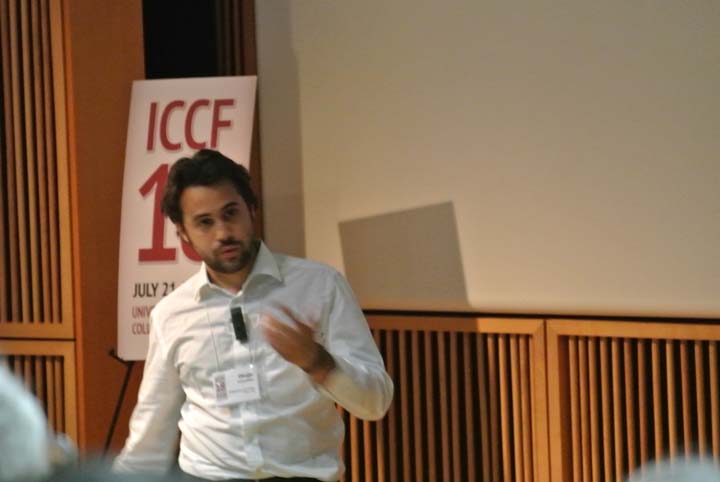
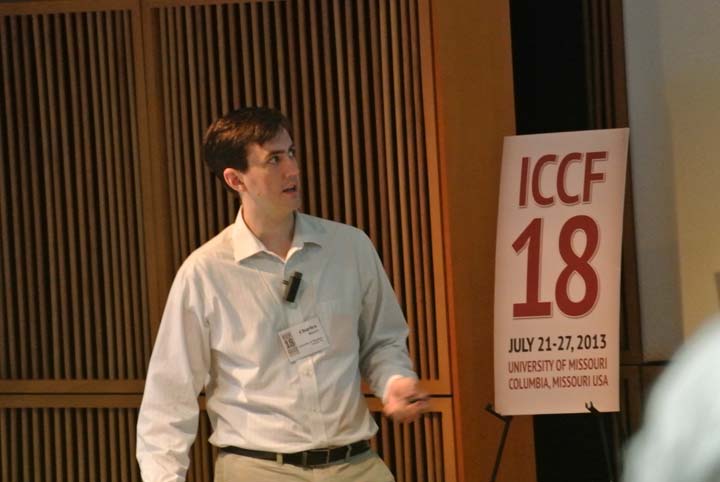
The 18th International Conference on Cold Fusion was held at the University of Missouri, Columbia, Missouri, U.S over July 21-27, 2013

Here’s the ColdFusionNow YouTube channel with Monday’s videos, or see below for the individual links to each video.

Wednesday, July 24, 2013 Presentation videos
Tuesday, July 23, 2013 Presentation videos
Monday, July 22, 2013 Presentations videos

Links to ICCF-18 Monday video presentations from these presenters are available:
(Note: Switch player quality to 720pHD for HD video)

Dr. Edmund Storms “Explaining Cold Fusion” [.pdf slides]

Distinguished Scientist Award: Dr. Edmund Storms
with Tom Claytor

Dr. Jean-Paul Biberian “High Temperature and High Pressure Plasma Electrolysis Experiments” [.pdf slides]

Jed Rothwell “Lessons from Cold Fusion Archives and From History” [.pdf script]

Dr. Vladimir Vysotskii “Subbarrier Processes in LENR for Particles in Correlated States at Action of Damping and Fluctuations” [.pdf slides]

Dr. Mark Prelas “Sporadic Neutron Production by Pressure-Loaded D/Ti Systems Under High Rates of Temperature Change” [.pdf slides]

Keith Fredericks “Possibility of Tachyon Monopoles Detected in Photographic Emulsions” [.pdf slides]

Dr. Yasuhiro Iwamura “Recent Advances in Deuterium Permeation Induced Transmutation Experiments Using Nano-Structured Pd/CaO/Pd Multilayer Thin Film” [.pdf slides]

Matt McConnell (Coolescence) Entrepreneurial Efforts [.pdf slides]

Dr. Mitchell Swartz (JET Energy) Entrepreneurial Efforts [.pdf slides]

Tyler van Houwelingen and Bob Greenyer (Martin Fleischmann Memorial Project)
Entrepreneurial Efforts [.pdf slides]

Nicholas Chauvin (LENR Cars) Entrepreneurial Efforts [.pdf slides]

Dr. Max Fomitchev-Zamilov (Quantum Potential Corp) Entrepreneurial Efforts [.pdf slides]

Robert Godes (Brillouin Energy) Entrepreneurial Efforts

Link to the Playlist here.

All ICCF-18 lecture slides, poster papers, and materials can be found on the University of Missouri site here: https://mospace.umsystem.edu/xmlui/handle/10355/35425

We believe passionately that a new energy solution is waiting to be found. If you would like to support our work in reporting on the new energy field, make a donation to Cold Fusion Now!

Donate to Cold Fusion NOW!


Communiques from Columbia

Cold Fusion Now! coverage from ICCF-18

Message from ICCF-18: Sunday Basic Course
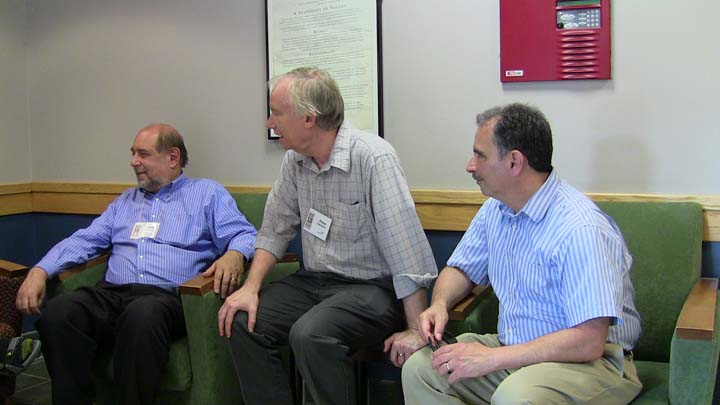
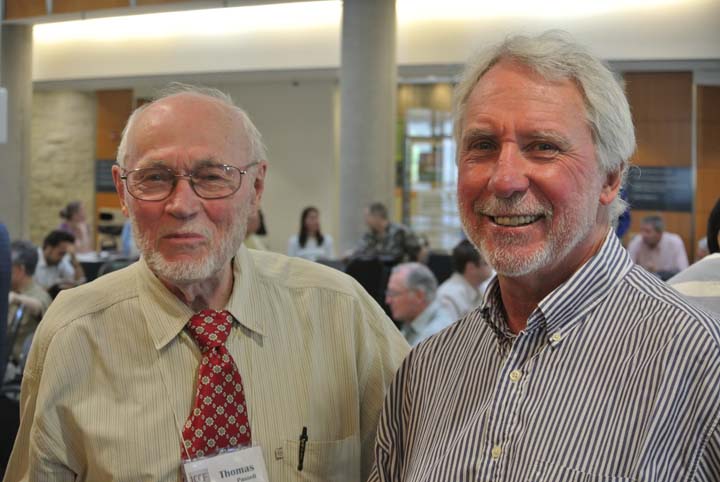
Day 1 Opening Reception: Top Researchers and New Faces
Day 2 Monday: Strong Claims and Rebuttals
Day 3 Tuesday: PHOTOS!
Day 4 Wednesday: Presentations and Behind the Scenes
Day 5 Thursday: Presentation and Awards
Day 6: The Way Forward
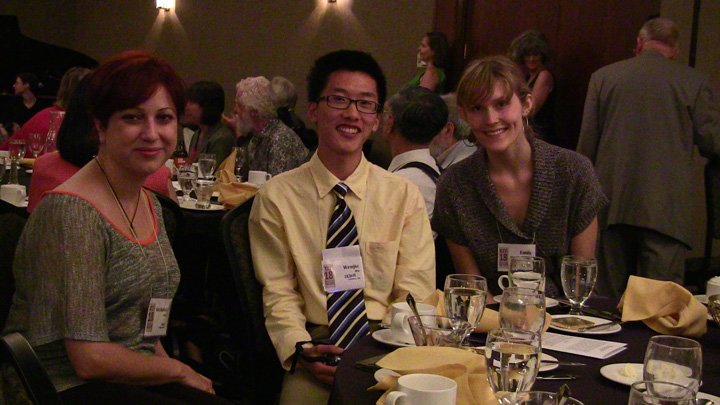
Banquet Snapshots: Celebrating Science
ICCF-18 Post Thoughts: Long Hours, High Spirits, and The Young Guns
Concluding Observations on ICCF-18 by David French

Presentations slides and papers from the proceedings will be available, as authors give their permission, at: https://mospace.umsystem.edu/xmlui/handle/10355/35424

Cravens demo a puzzle for onlookers

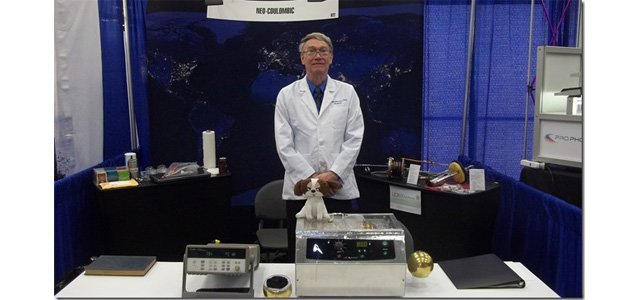
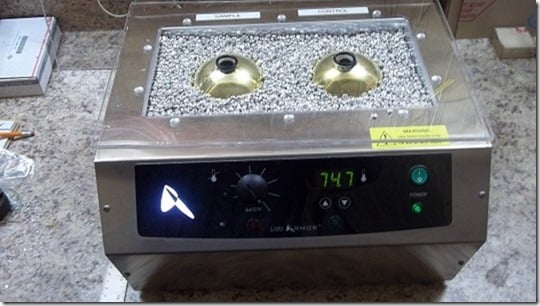
Photo: The Neo-Coulombic booth with Dr. Dennis Cravens at NIWeek 2013.

Last year’s NIWeek 2012 was a pageant of LENR with multiple events bringing condensed matter nuclear scientists from all over the world to the Austin, Texas showcase.

This year, National Instruments chose to focus on conventional energy technologies, with one exception: Dennis Cravens‘ demonstration of anomalous heat generated by … er, well, what could that have been?

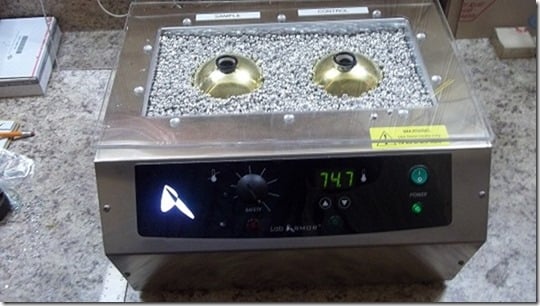
The sample sphere (L) ran about 4 degrees C hotter than the control (R).

The device consisted of “two simple spheres, a control with a little sand (a bead “bath”), and a sample.”

The unusual thing about this was that the sample (L) ran hotter than the surrounding material it was in, or the control (R), by about 4 degrees C.

“Most people that stopped to look at it were software or electrical engineer types, and they seemed to receive it well,” says Cravens. “I would say only 2 out of the hundred+ people had negative statements – at least at the booth. Some may have laughed later, but most were very much interested and had very intelligent questions.”

Oddly, most visitors to the booth did not speculate as to the operation, but focused on a more practical query.

“The most common questions centered on marketing – what would it cost, can you scale it up, and when will it be available?”

What could be making the heat? How can a small ball get hotter than the sand it’s in?

“It was clear that something inside was producing heat. Most people seemed to be satisfied with the D + D to Helium pathway. The most pleasing response was: can you make me a charger for my Tesla?”

Not everyone was satisfied with the display.

“A few software types suggested that a single line of LabVIEW code could have given “fake” heat levels. Thus, we omitted the software and graph the second day. Instead we just read the temperature directly of the Agilent so there could be no question of sneaky behavior.”

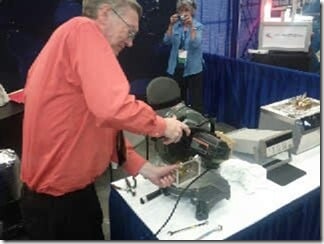
Cutting the sphere open to show nothing inside.
Cutting the sphere open shows nothing inside.
Cravens set-up the device on Sunday, and ran it through the week until Thursday, when he cut the spheres open, and surprised the crowd by showing there was nothing inside.

“I got some applause. Many took pictures. Many came over to exam the material. A few kids wanted some of the gold-looking brass dust from the cutting.”

Cravens describes the experiment by beginning with one of the basic laws of thermodynamics: heat will only flow from a hot object to a cold one.

The small sphere was hotter than its bead bath, so it must necessarily contain a heat-producing source.

At the show, he suggested a mechanism:

You look around the exhibit floor and see hundreds of people but none are touching each other. A physicist would say that deuterium atoms in equilibrium at low temperatures would never interact.

However if some one yells “fire, fire!”, there would be massive interactions at the doors. People would be trampled. Some would be injured. There can be a lot of unexpected interactions when you have a dynamic movement of deuterium.

Here we have deuterium trying to move through the vacancies of the metal lattice that are no bigger than an atom. It is not unrealistic to think some will get trampled. Not only that, the carbon that holds the metal lattice has a size just matched to the black body radiation wavelength at the operating temperatures.

In this analogy, it is like people are having to go through a door way that is vibrating.

Hmm, a lesson with a little mystery left to figure out.

“What NI does is take complex problems and reduce them to the size of the team.” says James Truchard, CEO of National Instruments, the company he founded.

Cravens, who’s been both a research scientist and a teacher, agrees.

“My philosophy is to support and recognize those that are doing good and those that are trying to learn more. Kids live for recognition and praise. I disagree with the current trend in education that tries to cookie-cut all the courses.”

“I feel the reason that America is known for innovation is because of the range of teaching and the creative spirit teachers have had.”

Demonstration experiments that engage minds through wonder, and explanations that use common experiences as analogy, can teach both young and old.

Education should go beyond the “marginal improvement of existing development” and Dennis Cravens is using cold fusion to do it.

Related Links

NIWeek 2013 features Dennis Cravens experiment

Cold fusion-powered car engineer has history of discovery

The Doctor Is Very In: Dr. James Truchard’s Quest For Endless Innovation by Lydia Dishman on FastCompany.com

NIWeek 2013 features Dennis Cravens experiment

NIThis year’s National Instruments weeklong event NIWeek 2013 begins today and runs Monday, August 5 through Thursday, August 8 in Austin, Texas, U.S.

Dennis Cravens, a long-time researcher who pioneered laser-induced reactions and has worked on energy cells as diverse as James Patterson‘s Patterson Power Cell, will be conducting a live demonstration experiment from booth #922 under the name Neo-Coulombic.

From the NIWeek 2013 Program [.pdf]:

Neo-Coulombic is a small private research group specializing in “long shot” technology involving methods of thermal energy generation using hydrogen and metals. physicsandbeyond.com

Cravens described his device to E-catworld.com as:

spheres2… the simplest demo I could come up with at NIWeek. It is not intended to prove anything , just to something to make “Joe Six pack” take notice and give him something to about. There will be no input, no flows to measure, no HV to scramble the instruments, no calculations to explain . . . just one brass sphere warmer than the other, and the bath temperature.

I know full well I will get a lot of people that will want added bells and whistles but I hope the target audience (the average engineer type walking by with their family) can understand the system within in 30 seconds at the booth. One sphere is hotter than the other so it must have a power source of some kind inside- what is it? Come back on Thursday and see inside.

It is just two brass spheres in a constant temperature bath (80C Lab Armor aluminum bead bath). One is a sample and one is the control. The sample just stays warmer than the control (for the full 5 days of the expo). Temperatures will be monitored and displayed via a Lab View interface (after all, this is NI) during the expo.

I hope to cut open the sample on the last day to show there are no hidden items.

The theme for the 2013 summit is “Deploying the smart grid—effective deployment techniques for smart grid embedded control and monitoring systems.” and focuses on conventional alternative energies, a switch from last year’s strong focus on breakthrough energy.

NIWeek 2012 put LENR front and center, with opening remarks by National Instruments President and CEO James Truchard indicating his strong interest and support of the topic. Robert Duncan, Vice-Provost for Research at University of Missouri and organizer of the recently held 18th International Conference on Cold Fusion (ICCF-18) also spoke at the event and Francesco Celani, of the Italian National Institute for Nuclear Physics (INFN) performed a live demonstration of his cell. Defkalion Green Technologies, developers of the Hyperion reactor, gave a presentation, as did Akito Takahashi, of Technova, Inc. Numerous new energy researchers attended, and a panel discussion brought many to the stage for an open debate on the future of LENR.

Dennis Cravens is the sole representative from the new energy community scheduled to appear this year, but that doesn’t mean NI support has waned.

Truchard recently gave the Keynote Address at ICCF-18 and currently supports a number of new energy projects to varying degrees, with NI software, equipment, and more.

Concluding Observations on ICCF-18 by David French

ICCF-18 Way ahead Panel 26Jul13By David J French

I am now back from the above event after a long and circuitous drive home. Here are some of the thoughts I explored during the trip.

Without doubt the conference was wonderful in many respects, including both the opportunity to learn from the presented results of a variety of experimenters, and from seeing and talking with important, knowledgeable persons in the field, face to face. Nevertheless, I developed over the week a frustration that I finally voiced on the last day to the general assembly.

The last event of the conference was a panel discussion on what we can expect in the future: “The Way Forward” panel. Including the panel leader, there were seven persons sitting on the stage. The panel “discussion” proceeded by each of these seven individuals giving a 10 to 15 minute slideshow-supported presentation. The only exception was Mike McKubre who spoke for five minutes without a slideshow celebrating that the next ICCF will be held in Italy. He included in his remarks a criticism that too many people were revisiting past research and simply refining data to one more decimal point: “To move in ever diminishing circles doing the same thing others have done before won’t get us where we want to be.” His observations captured exactly the anxiety that I had been developing during the week.

I made as part of the question period after the panelists were done the following observations:

For this field to become commercially relevant, someone has to develop a system that will deliver:

1. Realistic amounts of power, e.g. 500-5000 W
2. At temperatures which are practical, e.g. 85°C; 150-200°C and, as a dream, 600-700°C, and
3. With coefficient of performance – COP values of at least 6, preferably 10 and possibly as high as 20 or more

In support, I observed that demonstrating milli-watts or even 2-digit watt outputs left this field in the category of a scientific curiosity. And producing even a megawatt of heat at a pathetic temperature level, such as 25°C, was virtually useless. (Perhaps it could be useful, for melting ice!) And finally, on the COP issue, I observed that it takes three barrels of oil to produce one barrel of electricity. Therefore a COP of 3 just breaks even on the electricity consumed. That’s why I set my floor value COP at 6.

There were two participants at the conference that showed commercial relevance. Robert Godes from Brillouin Corporation in California is working on a commercial boiler having nickel and palladium core operating at up to 2000 psi and 200°C. Also Brillouin Corp reports that they have a new Hot Tube model being tested at SRI that is expected to deliver steam at temperatures from 400ºC to 500ºC (750-932ºF). And Defkalion provided on July 23rd a live 9 hour Internet demonstration from Milan, Italy of their LENR technology.

This Defkalion webcast had an audience of around 1000 viewers online at its peak, including some 200 participants at ICCF-18. The Defkalion reactor was reported as providing water at 165.43ºC based on an input of 1858.8 Watts, and the heat output was 5721.6 Watts, giving a coefficient of performance (COP) of 3.1.
If these reports lead to commercial units, then these are the real champions of this year’s annual meeting.

There is still no theory about the effect. But those in the scientific community who whine about the lack of funding should realize that as long as they are producing only a teaspoon or toothpaste dab of unexplained excess energy, they will have to compete with all the vast numbers of other researchers who are lined-up to receive “blue sky” funds for their academic research. The “believers” who are chasing COP levels of 1.2 and 1.6 are hooked on the dream that someday, someone else will take their foundational research and turn it into a commercial reality. But after 24 years it’s time to get on with Part 2. If the three criteria that I have listed above are solidly met by anybody, there will be an avalanche of financial support from the commercial community. Who should receive this money? Why those who have demonstrated success, at a relevant level!

Yes, there is a Nobel Prize waiting out there for somebody who comes up with a theory that explains the effect. This is, indeed, a fascinating puzzle. And the sociology of the hunt for the answer to this puzzle will also be the basis of a number of PhD theses sometime in the future. Meanwhile, the researchers who are duplicating old experiments and ever higher levels of precision are not doing the field a good service, not unless they suddenly achieve a breakthrough in understanding. Such work is simply a demonstration of their competence in using laboratory equipment.

Before the conference I posted on ColdFusionNow a reference to the “Streetlight Effect“. I think this may have hit home with a few people; one of the presenters made an aside as he commenced to describe his 20 years of work in electrochemistry to the effect: “… notwithstanding that it might qualify as being limited to the vicinity of the streetlights”. When I made the original observation on the “Streetlight Effect” I had in mind the search for an explanation to the CF phenomenon. But having attended ICCF-18 I think there are enough favorable indications that practical applications can now be created even without having a rock-solid theory. So I suggest that henceforth the search beyond the range of the streetlights should be directed towards ratcheting-up performance in terms of the above the three criteria into the zone of commercial practicality.

If I were a rich venture capitalist looking to invest in this field, I would mine all the work that’s been done to date by undertaking a massive literature survey. There are people like Jed Rothwell, Jean-Paul Biberian and Ed Storms that know the existing literature pretty well. But they see it from their point of view. To make a breakthrough their knowledge has to be combined with the eager enthusiasm of newcomers who want to venture where others have not gone before.

What a combination if a highly energized core team of new, young and educated Cold Fusion enthusiasts can be combined with the resources and wisdom that have already been developed over the last 24 years! We may have such individuals available in the participants in the Martin Fleischmann Memorial Project. Now all that has to happen is for these enthusiasts to receive the support that will finally produce fruit from this long-struggling vine.

ICCF-18 Post Thoughts: Long Hours, High Spirits, and The Young Guns

DSC_2520Having just wrapped up the week long 18th International Conference on Cold Fusion, some post thoughts and take-aways are beginning to form, and likely will continue in the days to come, as the decompression from the conference and related travel begin to take shape.

The Hours, Long.

The conference itself was excellent, though in actual execution it was rather brutal. Peter Hagelstein told me it reminded him of a conference in the early 2000’s where after all was said and done he settled in for a full 24 hour sleep. This conference had many of the attendees feeling the same way.

For myself and Ruby, after the 8am to 6 or 7pm lectures and presentations would conclude, it was a quick stop into town for some food and then back to the university dorm room (where most of the attendees stayed) for a complete write up on the days events while downloading photos and video, and transferring over numerous 32gig chips to hard drives. We’d usually wrap up a little before 1 am, then set the alarm for 6 to fix typos and finish up any transfers, before the presentations began at 8am.

Seeing as no one else was doing this, covering the event that is, it became a must do moral imperative that fueled us forward. The television program 60 minutes was apparently there for part of one day and I think there was an AP reporter sitting in front of me during some of the lectures, but most of the time I noticed he was on his laptop looking at Facebook.

There was also a filmmaker named Ken Fox who had attended a previous conference and was working diligently on his own Cold Fusion documentary. We hung out and shared ideas, technical and otherwise. Great guy.

But as far as the day to day coverage went with nightly publishing, ColdFusionNow.org was pretty much it.
ruby2 eli3

The Power of Gathering.

“Human relationships always help us to carry on because they always presuppose further developments, a future — and also because we live as if our only task was precisely to have relationships with other people.” — Albert Camus

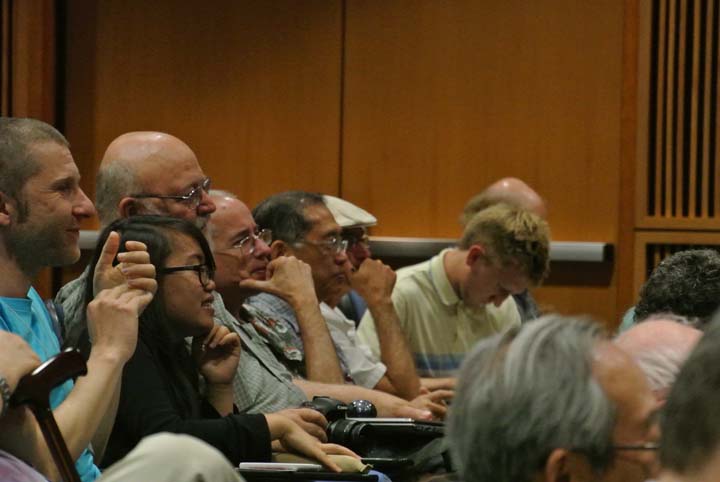
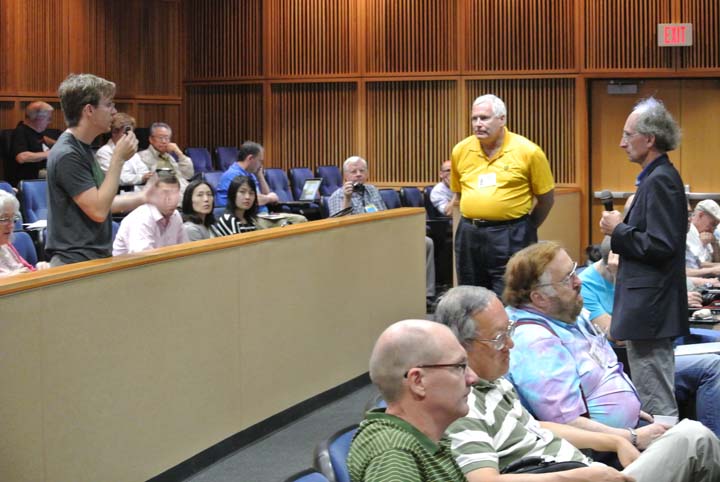
What was evident at this conference was the power of gathering. The enthusiasm among the scientists, researchers and attendees was strong. One night we simply selected numerous photos from the day and made them the majority of the post in an attempt to convey the excitement present in the air. While one criticism came in on the lack of coverage for that day, someone else did get what we were visually trying to reveal. I posted it to our Facebook page and this was one of the responses that summed it up nicely:

I was just looking through some ICCF-18 “day three” pics from coldfusionnow.org If you have any confidence in reading body language and facial expressions as an indicator, you would probably agree that the conference and more importantly, it’s content are being received with “warm regards”… https://coldfusionnow.org/iccf-18-day-3-photos/

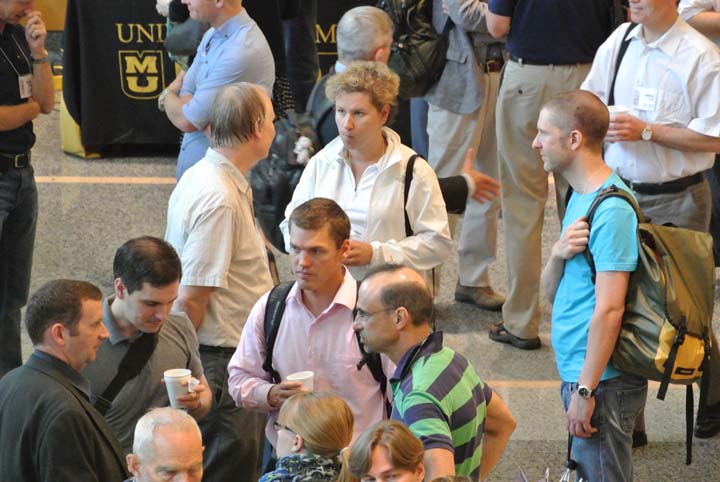
A leading scientist in the field told me during one of the breaks that the most exciting part of the conference was not actually so much the lectures, but rather the “behind the scenes” activity going on. Many exchanges on experiments and other aspects took place, and some of the information exchanged by presenters was not included in their lectures.

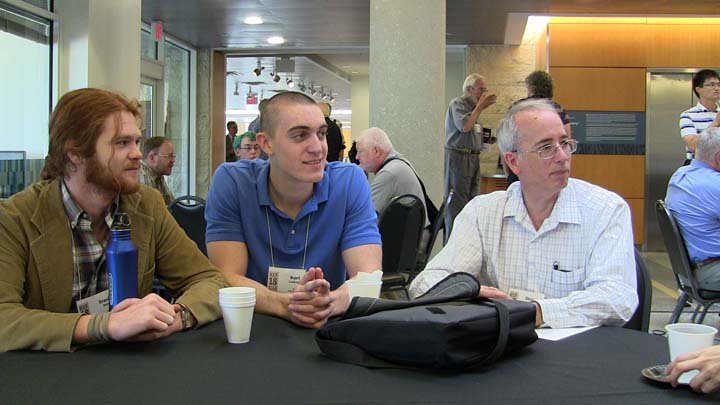
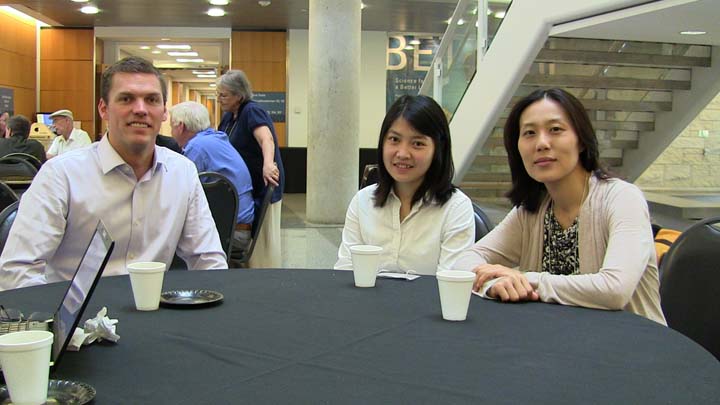
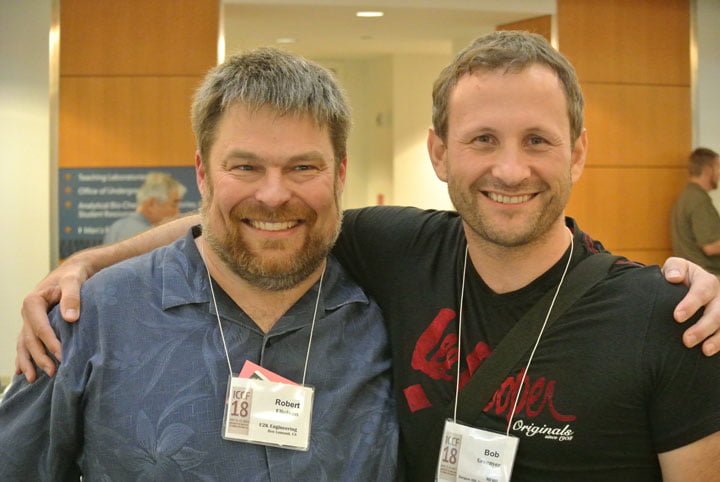
On top of it all was the simple act of friends from across the globe coming together, seeing one another, hanging out, laughing, smiling, socializing, philosophizing and reminiscing. While the same elements of any annual conference on any subject would take place, this being the subject of Cold Fusion and the history this particular endeavor carries, there seems an extra importance in having these conferences and sharing comradery with one another.

DSC_1814

ICCF-1890

rnc_3

ICCF-1813

THE YOUNG GUNS.

If there was one theme I noticed throughout, one element that according to others separated this conference from those in the past, it was clearly the talk about, The Young Guns.

YG-2D

IMG_0372 (2)

ICCF-18-Eli-FridayN (2)

ICCF-18-Eli-FridayL (2)

ICCF-18-Eli-FridayM (2)

YG-2B

ICCF-18-Eli-FridayI (2)

ICCF-18-Eli-FridayD (2)

ICCF-18-Eli-FridayA (2)

Heavyweights Mike McKubre and Peter Hagelstein both personally commented how the presence of young people at this conference was astonishing and inspiring.

At Thursday night’s banquet, Peter had young men and women going up to him and requesting photographs. Peter said that his heart got yanked hard when he was being told by some of the young people how his work had really inspired them.

YG-2C

ICCF-18-Eli-FridayE (2)

Others as well were surprised by the presence of youth. Many were encouraged by it, seeing as the leaders in the field are getting up there in years (McKubre is nearing 65, and considered the Young Gun of the remaining original ICCF group).

The Young Guns ranged from a high school student attending the conference with her dad (and was now re-considering variations on her experiments after listening to the lectures) to the extremely knowledgeable young men and women from the Sidney Kimmel Institute of Nuclear Renaissance (SKINR). I also met a 20 something guy named Nikita involved with analytical chemistry (pictured in the above top photo with Peter) who was part of the poster session presentations. He had incredible enthusiasm. At one point he stood beaming while carefully looking around the room. He then turned to me and said, “Yeah, these are my people…”

ICCF-1820

The Martin Fleischmann Memorial Project really made their presence known at this conference and they are definitely creating a pathway for young people to hop on board and get directly involved with Cold Fusion applications and experimentation. They provide a certain “cool” to this field while combining all the important elements from utilizing technology and the internet in relevant ways to taking direct, immediate actions to make things happen, all while backing it with strong and addicting enthusiasm. They made a HUGE mark at ICCF-18.

MFMP-DSC_1924

ICCF-1863

Overall, it was a long conference, and we agreed with many attendees who said they felt it was weeks and not days that had gone by. However the agreement was also that it was a very positive outcome and an excellent and very uplifting gathering.

The University of Missouri and Rob Duncan organized and put on a tight event that, while overwhelming in nature, was outstanding in outcome, with some very strong take-aways to push this field in the young and enthusiastic direction it needs to go.

Top