David J. French, a Canadian patent attorney with 35 years experience, now focusing on patent issues related to cold fusion, spoke with James Martinez on his Ca$h Flow show Tuesday, September 6.
To listen, download the .mp3 from the Cold Fusion Radio page.
These are excerpts from the hour-long interview:
JM First and foremost, what is the procedure when applying for an patent?
DF “I strongly recommend that people do really in-depth research before filing for a patent. You have to do it individually in each country. You have to file a description of how to build something that works, but then you have to define what it is about what you’re doing that’s new.
A large number of people spend large amounts of money filing for patents only to find out that what they say they want to control, what they want to patent – it isn’t new, and the patent office is supposed to do their own searches and
in many cases, the examiner knows the field very well and will give you the bad news, sorry it isn’t new.
But even if your patent issues, it can be cancelled by a judge in a court if the person you’re suing says ‘Hey this has been done before. So your invention has to have a feature that’s new.”
JM Would you say that’s the first mistake people make, presuming that their invention is unique, and then finding out its not?
DF “You know I have a three-part test for a successful patent. The first two parts don’t relate to patents.
The first part is you’ve got to have an invention people want to use. Presumably in the field of cold fusion that will be met.
Then you’re going to want to have something that other people aren’t already supplying, something that’s equal.
The third one is that your patent has to be like a gate that goes all the way across the road. If you have a situation where your gate goes only halfway across the road, then other people are going to sell things that are just as good.
So it takes these three components: a good invention, a good market situation, and a good patent opportunity before you have a valuable patent.”
JM I feel intuitively that there’s a big block in terms of getting patents for cold fusion, and based on interviews with people in the field, they don’t understand entirely the process, and also, the technology is so disruptive, there’s entities within the patent office and within government who don’t want this to even happen at all. Would you agree with that?
DF “I don’t really have an opinion on this conspiracy aspect. There might be some truth to it, but I’m not going to say I believe it. I do have confidence that the Patent Office will issue a patent for something which is directed to cold fusion if the correct procedures are followed.
Let me explain. The examiner reads your disclosure. Normally they assume that everything you say in it is true. Your disclosure has to describe how to build it. Then you have to say what it is you think is new.
In the case of cold fusion, they treat it similarly to perpetual motion. Somebody says I have something that is perpetual motion, they say prove it, file affidavits saying that it works. Tell us that other people confirm that they followed your instruction, and it works. That’s the way they handle cold fusion.
They read your text and if they say this sounds like maybe it might not work – it’s not just cold fusion that ‘s vulnerable in this respect, anything which they consider to be potentially unbelievable or hard to understand, they can always ask for evidence that it works, and so far, in many cases, they have asked for that kind of evidence, and people have not filed the evidence.
In other cases, patents have issued not necessarily for cold fusion itself, Windom and Larsen have gotten a patent on shielding against gamma rays. Well, that’s part of their theory of how cold fusion works. They got a patent on shielding against gamma rays. The examiner took them at their word that they were achieving a useful result.
So I don’t know that I subscribe to the conspiracy theory, I just know that the patent office wants you to give the story on how to build it so that it will work as a condition to getting a patent.”
JM Who happens to own the US Patent Office?
DF “The US Patent Office is part of the Department of [Commerce], the US federal government, and the Constitution says that if Congress authorizes it, then certificates can be issued to individuals and the public that give them exclusive rights. There’s no real ownership of the Patent Office, it’s really an agency of the federal government.”
JM Are other patent offices in other countries similar in nature in terms of how they proceed to give somebody a patent?
DF “All around the world, patent offices are agencies of the government and the idea is, if you’ve invented something that’s useful and new, and you file a description that works, and you identify correctly what it is that’s new, you get a monopoly, for almost every country now, for 20 years from when you file.
They don’t follow it afterwards, they don’t evaluate whether its a good idea. Just because you get a patent doesn’t mean it’s a good idea. They just test it for have you told the story on how to make it and you have stipulated what’s new.”
JM As a patent attorney yourself, I’m sure you’ve seen alot of stuff that was a complete waste of time, or they didn’t know what they were doing when they acquired the patent, and they probably spent alot of time and effort and it got nowhere. Is that very common?
DF “I’m embarrassed to say that I’ve gotten patents where I’ve known that this wasn’t going to go anywhere, and I think a large number of patent attorneys operate on that basis. A patent’s not going to go somewhere if the public isn’t going to care. Let’s say you’ve got a new way of closing a garden gate, and it makes your wife happy. You want to get a patent on it. But the world may not care.
Or you may invent a better way of cutting the lawn with a lawn mower with three wheels instead of four, but there’s lawnmowers out there that do the job, so there’s something that it may be an OK idea, but there’s other things that are just as good.
So in those cases getting a patent really is a waste of money. You can actually get a valid patent for something that has no commercial worth.”
JM What are the costs to get a patent?
DF “There’s two parts, there’s preparing the story which has to be filed, and there’s paying the processing fees in individual countries. On the average, your processing fees over the world might be on the order of $5000 a country. Some might be less, some might be more, particularly if there’s translations into Japanese or Korean.
But the preparing of the story itself, I used to quote 4, 5, 6, 7 thousand dollars, I now really rough it, I say ten-twenty thousand dollars, sometimes less, sometimes more.
If the subject is complicated, you’ve got to expect your patent attorney will spend alot of time working on it because part of his job is to understand what’s going on. He may have to spend a long time working with you, and that runs up the bill.”
JM In other words, if you can’t convince you’re own patent attorney of what you’re doing and how it works and functions, then you’re wasting your time and and your money.
DF “Yes, but I have to to tell you that many patent agents, when they have somebody that brings them something, they may try and understand it, but if it isn’t working, rather than spend another $25 or $100 working on it, they simply say to the client, you know I don’t know whether this works or not, but I’m gonna write it up so it looks like a patent. You tell me that it’s good, and I’ll file it.
And so the inventor gets his patent application on file, and then it turns out that the examiner either says look this doesn’t work, or, it goes through the patent office and it’s never tested because nobody ever wants to buy it anyway.
So patent attorneys will file patent applications when they don’t fully understand what’s going on.”
JM I see. Now, the terminology “patent pending”, what exactly does that mean?
DF “You know, patent pending is sort of like publicity. Sure, as soon as you file at the patent office and pay your fee, for a small company under 500 employees, the fee is $500 in the US, so as soon as you’ve paid that fee, you’ve got a patent application that’s pending. You don’t have any rights, but you’re telling people there might be a train on the train-track that’s coming, so be prepared to move in case the train arrives. The train arrives when the patent is granted.
But the examiner may make you jump through hoops. He may say ‘No, I won’t give you what you’re asking for, you have to change it.’ He won’t give you very much coaching, but your attorney will say ‘you know the examiner ‘s right, he found this , he found that, our invention has shrunk, we have to ask for something smaller’ and very often patents shrink considerably while their pending, and when they issue, well people look at them and say OK, I won’t do it that way, I’ll find another way to do it.”
JM Suppose a scientist comes to you with a patent for cold fusion and says OK, I want my patent, and I’m going to give you full disclosure on how it works, but I don’t want anybody else to know about it. Are trade secrets protected under a patent, or do you have to give full disclosure on what the trade secret is.
DF “A trade secret is totally incompatible with a patent. The purpose of a patent is to encourage you to tell the whole story so that people can build the invention after the patent expires. You cannot have both a trade secret and a patent.
If you’re going the patent route, you have to tell the full story. If you go the trade secret route, if someone else thinks of it on their own, they’re entitled to use it, so the trade secret route is very risky.”
JM For instance Coca-Cola, they have a trade secret formula, but if they had patented it, that means people could look it up, and they’ll have to pay to use the formula, but they could see what the formula is.
DF “That’s right, and alot of that is marketing sizzle. When they say they have a secret formula, there’s alot of cola beverages out there that many people say I don’t care if its Coca-Cola, just give me a cola. So their secret may be a pinch more of pepper or something like that they just throw in there at the last minute. But some people believe the advertising and say that they prefer Coca-Cola.”
JM The key is if you have an invention, and it fits the parameters of demand from the public, and you’ve got full disclosure, it’s way smarter just to get the patent rather than do any trade secrets because you’re going to lose if you have trade secrets.
DF “If you’re going to put it on the market and people can see what the secret is from what you’re selling, there’s no reason to keep it a trade secret, because the secret will evaporate.
The background rule is that everyone is entitled to copy unless there’s a patent, or a registered design, or a trademark, or a copyright. So the background rule is that there’s freedom to copy. If you are going to put it on the market, anyone can copy you unless you get appropriate protection.”
JM Have you dealt with scientists one-on-one in the cold fusion field?
DF “I have spoken with some of the important people in this field about the work that they’re doing on cold fusion. I won’t list some of the names because they are confidential. But I am not an expert in the technology of cold fusion, so I can’t provide you with any sort of authoritative opinion as to what is going to work.
Rossi has his hydrogen and nickel configuration, and his published patent application says that he has a secret catalyst that’s included, so we don’t know what that is, but I can’t evaluate whether his story and his patent application is valid.”
JM Like for instance, what happens when an attorney doesn’t have the scientific knowledge to understand the process, because you can’t know everything about everything, yet they come to you to acquire a patent. Your job is to evaluate the applications, the demand from the public, make sure the paperwork is done correctly, perhaps reproduce the effect before you. So they essentially have to pass your gate to get a patent.
DF “I’m a different attorney than I was during my 35-year career. During my 35-year career, like most attorneys, it’s the responsibility of the inventor to decide whether there’s a market for his product and its the responsibility of the inventor to realize that there’s other people that are already making something that he has to compete against.
A normal attorney whose acting as an attorney, all they represent to the client is ‘I will try and get you a patent that is valid and is as big and as broad as the prior art permits.’ So I’m going to get you a valid patent.
But the the normal attorney doesn’t coach you or tell you whether you patent is meaningful. Now what does meaningful mean. ‘Meaningful’ means that it is an exclusive right that prevents anybody else from getting close to you.
The Bell patent on the telephone back in 1876 was a meaningful patent because it really controlled the market for 17 years. Now that doesn’t happen very often. And I’m not sure that its going to happen in the case of cold fusion. I don’t know that there will be a controlling patent that will issue for cold fusion.”
JM Why is that?
DF “Well there’s so many people with so many ideas that have expressed themselves in the last twenty years, it may be that out there somebody has already spilled the secret and not fully understood it. A patent can’t issue for anything that’s been disclosed in the literature. A patent can always issue for something new.
Let’s say that Arata or somebody in Japan has proposed doing this and the micro-, nano-size scale of the nickel is an important issue. Well you can’t patent what’s already been disclosed publicly, but, you can find an improvement, or a way to make it more effective, and there’s many, many opportunities for the technology, to make the process work better.
The same thing happened with the Bell telephone. The first phone prepared by Alexander Graham Bell, it wasn’t very good, it didn’t work well. But as they accumulated more and more inventions, they eventually had a winning product, and then they had a stack of four or five, six patents that covered all these improvements, so individually these improvements can make a difference.
I don’t know if whether there’s going to be a master patent on cold fusion. My intuition is – that’s not likely to happen.”
JM Hmm. That in itself is a very interesting statement you just said and I hope people listen to that very carefully.
DF “Can I make another observation about a master patent? All governments around the world have a March-in Right to use inventions. They may have to pay the inventor. But the government of the United States has the right to use a patent, certainly for defense purposes, and if they want to, they can pass legislation saying that they can use it for other purposes.
One of the problems of anybody who were to get a master patent in this field is that the government in the background would say ‘You’d better be reasonable or we’re going to use our March-in Rights.’
And there’s 135 countries around the world. A person whose patenting is not going to patent everywhere. So there will be countries where they neglect to patent, and then they’ll be four or five, six people in Taiwan who’ll be building cold fusion heaters for cabins, and so the technology will available in free markets in other countries. It’s unlikely that a single company will control cold fusion around the world.”
JM Well, we’re certainly at a historic point with what Dr. Andrea Rossi has done. I understand that in Florida he’s going to be unveiling the first showing of this technology on a mass level. It’s very interesting to see what’s going to unfold.
Tell us a little about the workshops you do. It’s important for people if they have an invention, you give these workshops to educate people, put a little bit of realism in the process, to make sure that what they have is suitable before they spend alot of money and go through the patent process.
DF “Many companies get a patent by taking a write-up of the invention and they throw it over the wall to a patent attorney, and he throws back a patent application and tells them to sign it and they have to write a check and pay for it. They don’t even know what they’re getting. The attorney is trying to get them the most valid that they’re entitled too.
But what they’re entitled to may not have any commercial market validity, there may be a loophole, it may be like a gate on a road that goes halfway across the road. So my first premise is that a company should at least have a minimum understanding of when a patent is meaningful. Someone in the organization has to get intellectual property smart to understand what’s being done and blow the whistle when there’s money being wasted.
The second thing is, if you get involved in the patenting process, you will make better inventions, because the invention will change over time, and being involved in the patenting process will help you make better inventions.
The third thing is that you should have the capacity to do commercial intelligence on the Internet using the patent system. Vast resources of valuable information are available.
Those are three key messages. I give morning, afternoon workshops, ideally two mornings back-to-back for people to have the afternoon to think about it. And then if they are interested, I will train an individual in their organization to be an intellectual property coordinator, and that’s my business.”
JM That sounds to me like one of the smartest things people could do if they so they don’t waste alot of money. It’s good to know that someone out there such as yourself is doing a good job educating people.
DF “Thank you. Did you want me to comment on the resources that are available through the patent system as they relate to Rossi?”
JM Absolutely, yes.
DF “If you went to the US Patent Office on the Internet www.uspto.gov, on the homepage, you have to go through about four or five links, you will come to a search page, and the one that I recommended is the structured Boolean search page which you can put in two terms.
You put in term one Andrea, and term two Rossi, and on the right you can choose a field, and it makes it work efficiently if you click off Name of the inventor in both cases, and there you’ll have, amongst two or three or four applications, one of them will be the application by Andrea Rossi before the United States Patent Office. You can actually read that whole application and decide for yourself whether the story is complete or not.
And there is a way which, in my article on Cold Fusion Now I demonstrated how you can use, I won’t explain it now, but you can get it from my article, how you can see the exchange between the examiner and the applicant, and the last time I checked, the examiner had not started commenting on Rossi’s application.
There’s also an application pending in the PCT system for Piantelli. Piantelli worked with Dr. Focardi back in 1995 when the first cold fusion experiments were done with hydrogen and nickel, and I think his name is Francesco Piantelli, and if you go to www.pct.org – I think its .org, [http://www.wipo.int/pct/en/] check that out on google if you don’t get it – you get the Patent Cooperation Treaty website search screen, and if you insert the same way I just described the name of the inventor in the box where the inventor is supposed to be located, you’ll see Piantelli’s pending international application which shortly will be posted at the US Patent Office and you can judge for yourself whether he’s told a story that works.”
JM I know as soon as people hear this, they are going to pull that up on the web and start checking that out for themselves, so thanks for letting us know that. My other question is, of all the patents that you have dealt with, is there one in particular that has been by far the most practical and profitable for the individual that invented it?
DF “Well, I know a case where the inventors actually turned down a larger offer hoping to get paid royalties, and it turns out that they made over a million dollars but they would’ve made more if they’d taken the first offer. It was for a needle guard.
It was a teeny little device that’s on a needle. When a needle’s been used, and there’s a drop of blood on it, if a nurse scratches herself, she can get infected with HIV or other diseases, but this little thing when you slide it to the tip, it locks into place over the tip automatically, and nobody can get scratched. There was over a million dollars paid out on that.”
JM That sounds like a practical device for all over the world. I want to ask you about some other advanced technologies that we are on the brink of. People want to go green and they want to change the way we deal with energy overall. What are some of the other technologies, like for instance zero point energies and the invention of John Searl, have you dealt with those technologies as well?
DF “I haven’t dealt with them and I will tell you that without having any depth of knowledge that I am very skeptical. I believe in the basic laws of physics, and energy doesn’t come from nowhere. In fact, why the Patent Office is concerned about cold fusion, nobody knows where the excess heat is coming from, and that’s why they’re asking for evidence that it really works.
First of all, we’re living in a world where all over the world, if people knew that they could generate energy easily, somebody would do it. So I’m very skeptical that somebody has found the breakthrough and the story that they patented it, and it got bought up, it’s not true. All patents are published when they’re issued, so if there’s somebody out there whose had a breakthrough, it would be available at the Patent Office.
I’m very skeptical about inventions that people represent as the perfect solution for mankind, I ask them why isn’t it being used?
I do however believe that cold fusion is -”
JM -Is there a particular scientist or inventor who has the most patents?
DF “Well, Edison I think had over a thousand patents himself, and he had remarkably good patents. Studying the telephone as a little project that I’m doing here, the telephone really didn’t start to work, even though it was invented by Alexander Graham Bell, until Edison invented the carbon microphone. They had to pick up the speech and turn it into electricity, and it was Edison and another man called Berliner, they competed to see who was entitled to the patent, they invented a compressed carbon with a little membrane over it and when you talked, the carbon got compressed and it caused an increase and a decrease in the flow of electricity. It was that technical advance that made the telephone practical.
Some small things can mean alot. You’ve got to have a difference that makes a difference, but then if you want a valuable patent, it has to be that that’s the only way to do it, and the carbon microphone was in use up until 1980. It was replaced by piezo- electric crystals, but that carbon microphone lasted for a hundred years. In terms of cost and what it delivered, that was the only way to do it. Oh, there were other ways to do it, but they were more costly.”
JM We’ve heard that ‘there’s nothing new under the sun’. When an inventor comes to you, oftentimes they’re abruptly faced with a wall like, look pal, you’re not the first, somebody else had thought of this. That must happen all the time.
DF “You know, I like your expression, I think its from the Old Testament. In one aspect there’s nothing new, depending how you look at it. There are writing instruments, that’s not new. But how to prepare a writing instrument so it doesn’t dry out is got to be valuable for people that are going to be irritated by pens that dry out prematurely.
The problem is if you have a good idea and you do a search, good ideas are thought of by other people. Often the search will come back already been discussed, already been disclosed.
But, if you have a silly idea or a poor idea, and you do a search, it’s not going to come up in the search. So you file with the patent office, and the examiner says sure, we’ll give you a patent. We’re only marking you for being new, we’re not marking you for being good.”
JM It sounds like a remarkably complicated process for the inventor. If an inventor comes along to improve a device that already has a patent, are there alot of people that improve existing technologies, kind of wrapping themselves on top of it?
DF “You know, when Edison invented the improved microphone, he didn’t have the right to use it in a telephone system, he could use it in an auditorium, but not in a telephone system because Bell’s patent was still valid. If you invent an improvement and get a patent on it, it doesn’t mean you can violate someone else’s patent.
But the person who has the over-patent, the master patent, may look at what you’re doing, and say oh my god, I really need this because it will make my system work well. So then they negotiate with each other, and in this case, Bell paid Edison alot of money to use the microphone in his telephone system.
So when you get a patent on a bicycle and somebody invents a bicycle bell, the bicycle bell can’t go on the bicycle without permission from the patent owner, but the patent owner who owns the bicycle patent can’t put a bell on his bicycle without permission.”
JM Oh my gosh.
When’s the last time that you saw something come across your desk that was totally new and profitable for the inventor?
DF “There was a company outside of Montreal and this was quite long ago in my career, but it turned out to be important, they were called SNC Technologies and they made bullets. They were the old Canadian arsenals that had been taken over by a corporation SNC.
They decided they would make bullets that didn’t fire steel or lead, they would just fire plastic with paint, and the bullets when they went down the barrel of regular guns, just didn’t have any oomph, so they made the cartridge so that the cartridge popped, and got a little bit longer, and made the guns work. They became successful around the world.
All over the world people started buying these non-lethal bullets for use in training, and they had patents in thirteen countries, and they were just a couple years ago bought out by General Dynamics. As one of the big successes of the SNC conglomerate in Canada, this little division became world-known in that field because they had this invention of a light-weight paint-marking bullet that could be put in a regular rifle and used in training, because that was the purpose.
The inventor told me the core idea, he said David, over 99.9% of all bullets used by the police and military are used in training, they don’t have to go 5 or 6 kilometers. If they just go a couple a hundred meters or a couple of hundred yards, that’s good enough. And of course if you’re training you don’t want bullets that go 5 kilometers, you want bullets that go 500 meters. It made alot of money.”
JM Here’s the main issue that I wanted to address with you in the first place. Have you found yourself in a position where an investor’s come to you prior to investing, and you are involved in the financial negotiations so that the investor understands specifically what the patent is?
DF “All investors are likely to commission a law firm to do what is called a due diligence evaluation, but when a traditional due diligence evaluation is done, what the law firm verifies is that the patent applications were filed, the right fees were paid, the inventor’s signed the transfer documents transferring the documents over to another company that’s going to be invested in, and they do all of this technical evaluation and then they say, we didn’t find any flaws.
But the normal patent firm does not not tell you this is an invention that works, because it’s not within their capacity- they’re not engineers, and they’re not going to tell you this is an invention that will knock out competitors in the marketplace, because they’re not experts in the marketplace. So a due diligence evaluation is not a certification that a patent is going to deliver value.”
JM From an investors standpoint, it all comes down to the patent –
DF “-The patent doesn’t make the money; what makes the money is that you’re producing a product that people want to buy, and that your doing it at a price people are willing to pay, you have a successful product.
If you have a successful product, the patent will allow you to charge a higher price and make more money. So the patent doesn’t create the success, the patent enhances the profit if there is a success.
But any investor whose looking at a situation should ask, do we have a winning product here. And of course, if somebody were to produce what Andrea Rossi alleges he has, then of course we can see that it’s a winning product.
At that point it would be very important to sit down and say what other ways are there to do this? You should sit down and decide what are your competitors going to do if I do get a patent?
You should start thinking of all the ideas that they might turn to, and patent them as well. And that’s the way to build up a fortification which will protect you from competition.”
JM From an investor standpoint, they just want to get their initial investment money back, and make a profit as well. Let me ask you, have you been privileged to see Andrea Rossi’s technology?
DF “I only have been involved with the Rossi situation in terms of what’s publicly available. I don’t have any background or insider knowledge about what Rossi is doing.”
JM Would you want to see it?
DF “Oh well, I’m waiting, I’m the kind of person whose patient. I mean, I don’t fret. And I’m not even engaging in the exchanges and all the speculation going on. I’ll just wait and see what happens. I’m prepared to wait.
If I wanted to invest money in this, the most important thing to do, is form a team of three or four people, who go out and gather in all of the information that exists out there, the people that are doing things – Hagelstein and Mitchell Swartz and other people, I went to their colloquium recently – all over the world, there are people doing this, but if you were to draw all this information all together, you might be the person who sees the key feature that is going to be valuable, that is going to make cold fusion work, it may not be the basic [?] to create cold fusion, but it may be the way to exploit it.
And so you’ve got to gather in this information and discuss it among yourselves: is there something here that hasn’t been conceived of?
JM All of us on the verge of this big change coming, I respect your conservative opinion as an attorney.
DF “If cold fusion becomes a success, there will be a hundred years people will study why our society was so blind to the opportunity for twenty years. It will be a scandal.”
JM Do you recall where you were when you first heard about cold fusion?
DF “Well I was somewhere in Canada, and I certainly remember a friend of mine who phoned me up and he was very excited on the phone, and of course it was on the cover of Time magazine. I don’t remember the location where is was, but I do remember that phone call.”
JM Did you believe it?
DF “I’m one of these people that I would like to see it happen first before I say I believe it. I must say, I’m a scientist, I can suspend my judgement, my conclusion, until the evidence is in.”
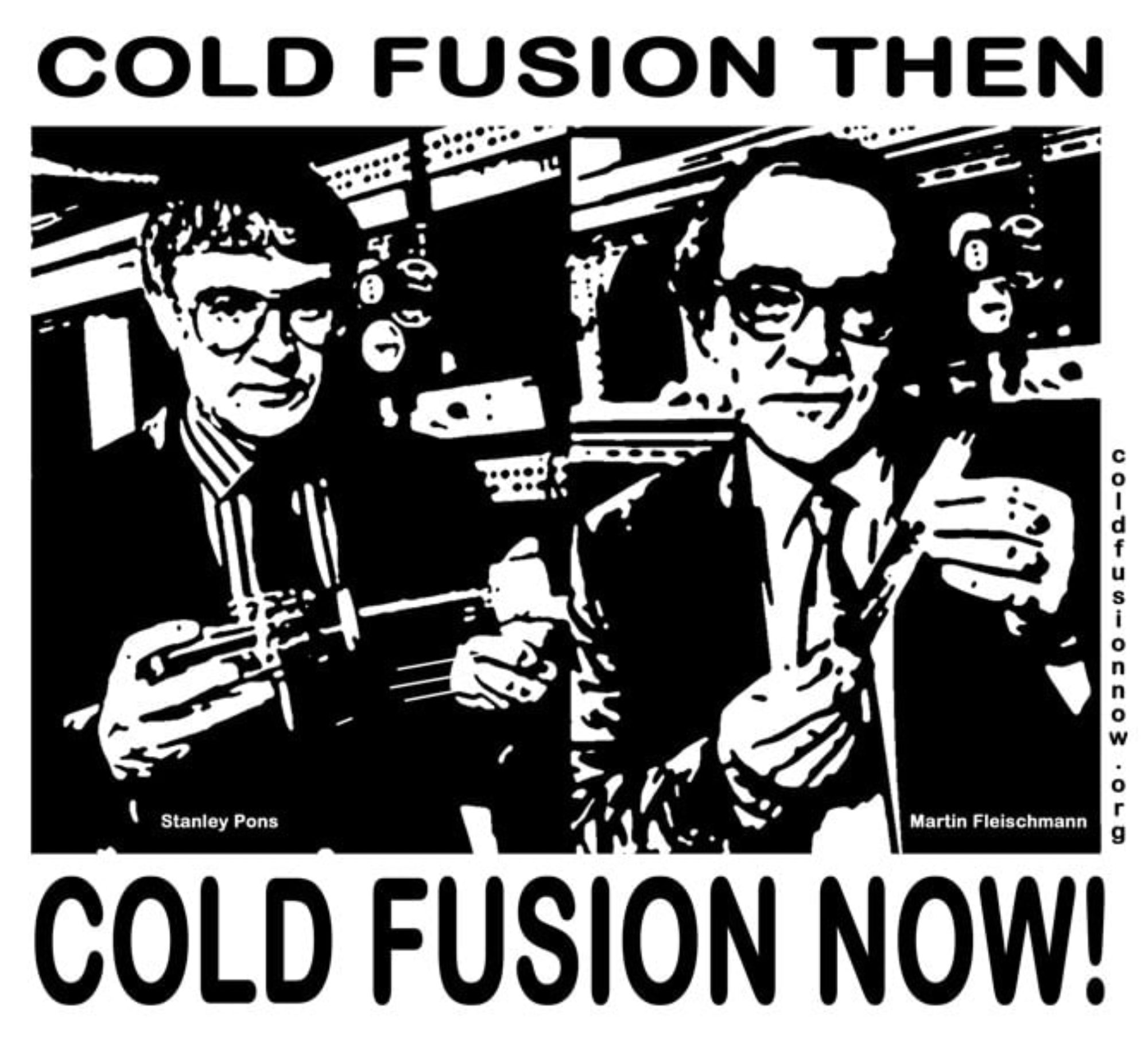
JM Did Pons and Fleischmann file anything?
DF “Yes, I think so, and in fact, I haven’t gone back and looked at their original filings. In those days, they were not published on the Internet. So if you wanted to see their filings, if their patent was turned down, then it wouldn’t have been published. They changed the law in the 1990s.
First of all, there’s two stages, one was that your application became laid open to the public, I think that occurred around 1996. So even if you don’t get a patent, after 18 months anyone can read your story.
And the second thing is that in 2001 the US Patent Office put all the patent applications online over the Internet. So what happened with Pons and Fleischmann is not available directly over the Internet and I don’t know if their applications were published. But the story will come out one day.
And by the way, their applications may have flaws in them; they may not have understood what they were doing.”
JM Thank you very much for taking the time to discuss this important issue.
DF “It’s been a pleasure.”
You can read more about cold fusion-related patents from David J. French from his Cold Fusion Now Patents archive.
Related Links
United States Patent and Trademark Office http://www.uspto.gov/
Patent Cooperation Treaty http://www.wipo.int/pct/en/
Second Counsel www.SecondCounsel.com.