The tagline of the home page says Tomorrows Energy, Today, and while the 1 MW units may be ordered from the website now, Roger Green, listed as CEO and Managing Director of E-Cat Australia PTY LTD, is taking orders for 10 kilowatt domestic units for delivery in 2013.
Roger Green is associated with EcoGlobalFuels.com, Sacred Geometry Academy and other alternative practice groups. Cold Fusion Now has asked Andrea Rossi, inventor of the E-Cat, to verify the official status of the company, and he confirmed that he is indeed officially sanctioned.
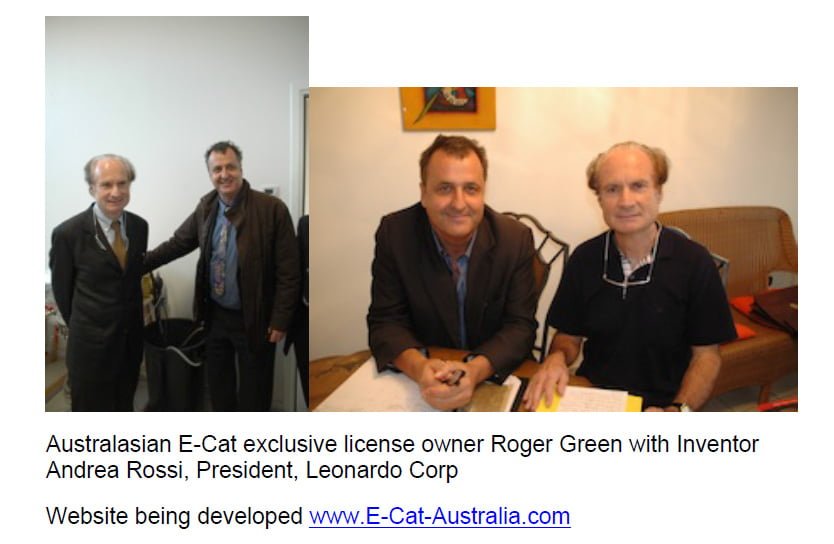
Roger Green with Andrea Rossi
We also contacted Mr. Green who informed us he is the “Exclusive Distributor License for E-Cat Technology in Australia * New Zealand * Indonesia * Singapore * Malaysia * Thailand * Vietnam * Philippines * Cambodia * Brunei * Laos * Myanmar (Burma) * Pacific Islands.”
Rossi has previously stated that all official licensees will be publicly named in October of 2012 and will attend “a convention”.
The Ecat is the first commercial product to be sold based on nickel-hydrogen exothermic reactions (Ni-H), another name for cold fusion. 1 MW steam generators are now offered to industry and agencies, and Rossi has reportedly sold around a dozen of them since last summer, though it is not known if they have been delivered yet. The 10 kilowatt domestic unit is waiting for Underwriters Laboratory certification before manufacturing and distribution begins.
e-cat Australia has a glossy, corporate-style brochure [.pdf]
and a paper titled Benchmarks and Timeline for E-Cat Australia R and D [.pdf]
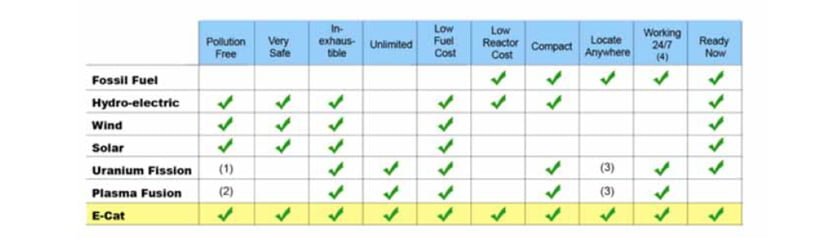
Here is a comparison chart from the brochure showing the value to young families and eco-conscious people: Comparison chart from the E-Cat brochure of new distributor E-Cat Australia.
From a story Dick Smith slams door on cold fusion invention on Reason Australia a few months back, we have:
“This month, Mr Millin threatened to sue Mr Smith for $200,000 after Mr Smith refused to make any payment because he did not believe the claims were correct.
Yesterday, Mr Millin wrote to Mr Smith claiming he had another investor called “Roger Green” who was eager to invest $150,000 in the technology.
In the letter, Mr Millin claimed he had turned down “Mr Green” because “he was being too greedy” and urged Mr Smith to invest in the technology because “we really don’t have much time”.” –[source]
This set of presentation slides by Roger Green borrows from e-cat.com, Mr. Rossi’s northern European distributor, and shows an effort by Green to educate and drum up support for this technology. [.pdf]
I guess he found that investment!
It will be an exciting year indeed; with the cold fusion economy is just coming into view.
Note: This is not a recommendation to buy from any particular company. This article is for information purposes only.
The following is a further posting in a series of articles by David French, a patent attorney with 35 years experience, which will review issues of interest touching on the field of Cold Fusion.
This posting is about an event that occurred over the week of the Fourth of July celebrations. It is not an attempt to report on the science or physics presented on this occasion, but rather to remark on the special atmosphere that exists when proponents and researchers in the Cold Fusion field gather to address their favorite topic.
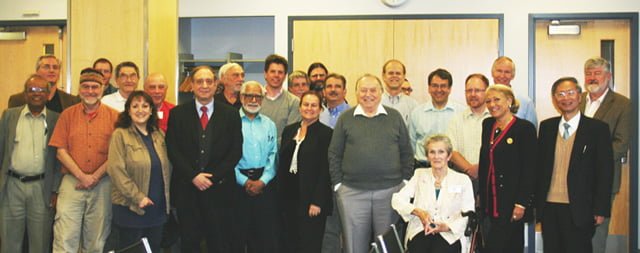
Over July 1-3, 2012, a group of some 40 to 50 Cold Fusion researchers and advocates assembled for a Symposium held at the University of William & Mary in Williamsburg, Virginia. The title of the event was: International Low Energy New Nuclear Reactions Seminar, ILENRS-12. The object was to exchange experiences and knowledge in the Cold Fusion field. The list of attendees was impressive. Included were: Beverly Barnhart (DoD); Jean-Paul Biberian (CINaM, France); Dennis Bushnell (NASA, LRC): Peter Hagelstein (MIT); David Nagel (GWU); Mike McKubre (SRI International); George Miley (UIll) and Mahadeva Srinivasan (BARC- retired, India), as well as many other significant participants in the field.
I arrived early, driving down from Ottawa, Canada, and was therefore sufficiently rested to attend the Sunday night, July 1, opening event: registration combined with a cocktail reception on the William & Mary campus. This was an important initial gathering which was attended by almost everyone.
From the very beginning there was a feeling of camaraderie and egality in the air at this event. While not a Solvay Conference, the importance of the subject and the potential for imminent breakthroughs that might be shortly occurring was in the air. Everyone had a sense of anticipation that perhaps someone amongst the gathering might one day be a Nobel Prize winner.
These opening social exchanges are an important part of any conference event. With only 40 – 50 participants, 10 or so of whom were to be presenters, the atmosphere was very collegial. People assembled in groups of two, three and four, changing circles every 15 or 20 minutes. Everyone present was entitled to listen-in with a certainty that if you stood by for a minute or two you would be find yourself being introduced all round and accepted into the discussion. From that moment on you would be judged by your sharing of intelligent observations and your attentive listening. There was no expectation that you would be a serious expert in the field. Everyone was there to learn.
The next day opened with short introductory remarks followed immediately by presentations by Beverly Barnhart from the Department of Defense, essentially present as an observer, and then by Dr Peter Hagelstein of MIT. Peter is continuing to carry the torch for the original Pons & Fleischmann premise that deuterium atoms can be fused together in a condensed matter environment to form helium without producing high-energy particles or electromagnetic radiation. Peter reported that he is getting close to a mathematical model which would allow direct coupling of the energy from excited atomic nuclei to be transmitted to an adjacent crystal lattice. This could help explain the “miracle” of the absence of high-energy particles or electromagnetic radiation.
Further presentations followed from George Miley who reported on the detection of ultra-high-density hydrogen/deuterium nano-clusters in metal defects; Liviu Popa-Simil who reported on his concepts for a fusion-based battery; Denis Bushnell who summarized initiatives at NASA to study the LENR phenomenon; Mike McKubre commenting on the results of exploding fine nickel wires that have been loaded with hydrogen and deuterium and others who names will eventually be provided, as well as the content of their remarks, in the report on the Symposium.
It was clear by the end of the first day of presentations that there is still no clear theory yet to explain the phenomena of “unexplained excess energy – UEE”. There were no extensive references to the Widom & Larsen theory of electron capture, with the focus being more directed towards experimental data and alternate ideas rooted in a fusion phenomenon.
After the first day’s presentations, everyone was transported by bus to the site of Yorktown on the peninsula between the York and James Rivers where General Cornwallis surrendered his British Army to the encircling French and American armies commanded by George Washington. The noise level from talking in the bus on the way out was incredible. This evening dinner event by the river provided another social occasion for people to discuss face-to-face the questions that concerned them most, and share what they could contribute to answering other people’s questions. The noise level in the bus on the return was quieter, but lots of people were still talking.
The format for the second day was, after a few presentations, a series of moderated panels in which the panelists responded to questions put to them by the moderator, or raised by the audience. The effect was in keeping with the overall objective of the entire event, to address people’s concerns and help everyone better understand what has been achieved in closing-in on the mystery of Cold Fusion, or UEE.
The best part of an event of this character is that the contributions of speakers was generously given and warmly received even though the presentations may not have been perfect. Nobody provided a report that some great breakthrough had been achieved. Great leeway and forgiveness for imperfections can always be expected when the content has potentially great value. This is not to say that the presentations were deficient. The questioning was polite and an air of geniality, graciousness and polite behavior permeated the room in which an intense desire to understand was a commonly shared objective.
Some of the arcane information shared was that permeability of Palladium containing silver reaches a maximum at a silver content of 31% ; – would this be relevant to enhancing the prospects for precipitating an UEE event? And an even more arcane observation made was that the power output in the core of the Sun is less than 1 milliWatt per cubic centimeter. This observation invoked generous laughter when it was combined with the declaration that, by comparison, contemporary Cold Fusion researchers are achieving “stellar results”.
The reality is that the Sun is not a perpetually exploding hydrogen bomb or even a furnace of unimaginable magnitude. It is a heat-containing body that has had 4.5 billion years exposure to a trickle of core-generated energy that will not stop but which takes a long time to work its way out through the 700,000 km trip to the Sun’s surface. There are many more cubic centimeters of volume in the core of the Sun than there are square centimeters of Sun surface area to radiate this energy. This explains the Sun’s apparently modest power output on a cubic centimeter basis. Cold Fusion researchers by comparison truly are achieving stellar performance.
I personally gave a short presentation on Patents and Cold Fusion, making the point that a patent will not be available for the person who eventually provides the theoretical explanation for this phenomenon. They may qualify for a Nobel Prize, but a patent requires the identification of an apparatus or arrangement which produces a useful result.
Many patents are being filed for Cold Fusion and the US PTO as a matter of policy is requiring applicants to demonstrate that the promised results can be produced by following the instructions provided in the patent applications. I was challenged to identify a case where such evidence was successfully presented, resulting in a patent issuing in this field. I could not answer the question directly and now have my homework set out for me. I will now have to read some several dozen of the patents that I have referred to in my earlier postings as being classified under “nuclear fusion”. When I find such a reference, I will definitely share the results with everyone.
The vision of Earth provided by NASA lunar missions is a powerful image; possibly the most potent archetypal image of our times. This image brings to mind the beauty of the biosphere, our world and life-as-we-know-it, surprisingly small against the vast starlit darkness of space.
NASA sees LENR energetics in concert with advanced computer and flight technologies as, “The key to supersonic transports and neighbor-friendly personal fly/drive air vehicles.”(NASA)
This technology could replace much earth bound transport; roads and their inherent environmental damage would become obsolete.
NASA realizes the fragility of our biosphere and seeks to limit atmospheric damage from aeronautics and transportation in amazing ways:
The SUGAR Program (SUGAR – Subsonic Ultra Green Aeronautics Research) was initiated in 2008 as a challenge to four that received contracts, Boeing, GE Aviation, Massachusetts Institute of Technology and Northrop Grumman. The goal is a deep reduction in harmful emissions from airplanes and to decrease their noisome irritation. “Hybrid electric engine technology is a clear winner because it can potentially improve performance relative to all of the NASA goals.”(Boeing)
NASA Green Flight Challenge – “NASA has awarded the largest prize in aviation history, created to inspire the development of more fuel-efficient aircraft and spark the start of a new electric airplane industry. The technologies demonstrated by the CAFE Green Flight Challenge, sponsored by Google, competitors may end up in general aviation aircraft, spawning new jobs and new industries for the 21st century.”(NASA)Green Flight Challenge Sponsored by Google – (Final Results 2011)
Txchnologist The Future of Transportation – “Mapping Out the Future of Flight”(GE)
ON A FALLEN TREE ACROSS THE ROAD (To hear us talk) by Robert Frost
The tree a tempest with a crash of wood
Throws down in front of us is not to bar
Our passage to our journey’s end for good,
But just to ask us who we think we are,
Insisting always on our own way so.
She likes to halt us in our runner tracks,
And make us get down in a foot of snow
Debating what to do with an ax.
And yet who knows obstruction is in vain:
We will not be put off the final goal
We have hidden in us to attain,
Not though we have to seize earth by the pole
And, tired of aimless circling in one place,
Steer straight off after something into space.
Rocket Toxicity
Over 4,000 (Wiki) recorded space launches and an unknown number of missile launches have burned hundreds of millions of tons of the following propellants, oxidants, and rocket elements.
Who knows how these recombine after combustion, with each other and with atmospheric elements?
The engines powering the Space Shuttle’s initial liftoff boosters may have been the most polluting engines ever operated by mankind. For each kilogram of payload, the shuttle’s main boosters burn 30 kilograms of fuels and oxidizers.
During 135 missions 122,472,000 kilograms (135,002 tons) of this highly toxic fuel was burned in the solid fuel boosters of the Space Shuttles.
Approximate Amount Burned (tons)
94,365 Ammonium Percholate
5,600 Powdered Aluminum
9,450 Iron Oxidizer Powder
16,204 Polybutadiene Acrylic Acid Acrylonitrile
2,646 Epoxy-curing Agent
21st Century Timeline of U.S. Rocket Fuel Pollution Scandal (read)
Perchlorate is a powerful oxidant that has been detected in public drinking water supplies of over 11 million people at concentrations of at least 4 parts per billion (ppb). High doses of perchlorate can decrease thyroid hormone production by inhibiting the uptake of iodide by the thyroid. Thyroid hormones are critical for normal growth and development of the central nervous system of fetuses and infants.
A Summary of NASA and USAF Hypergolic Propellant Related Spills and Fires (pdf)
The fuel is monomethyl hydrazine (MMH) and the oxidizer is nitrogen tetroxide (N2O4) which is similar to ammonia. Both fluids are highly toxic, and are handled under the most stringent safety conditions. Hypergolic propellants are used in the core liquid propellant stages of the Titan family of launch vehicles, and on the second stage of the Delta.
The Space Shuttle orbiter uses hypergols in its Orbital Maneuvering Subsystem (OMS) for orbital insertion, major orbital maneuvers and deorbit. The Reaction Control System (RCS) uses hypergols for attitude control.
NASA is hoping to reduce launch emissions for space flight with LENR.
Cold Fusion – NASA – LENR Part Three Earthbound and Spacebound Transportation
In my point of view, series of the experiments in Gran Sasso Laboratory under leadership of Dr. Claus Rolfs and similar experiments in Berlin by Dr. K. Czerski and colleagues during 2002-2009 show unusually high electron screening potential in metallic crystals. These experimental facts give a good mechanism how the Coulomb barrier overcame with low energy (thermal) deuterons.
[latexpage]
“The circumstances of hot fusion are not the circumstances of cold fusion”, wrote Julian Schwinger, co-Nobel-prize winner with Richard Feynmann and Shinichiro Tomonaga in 1965 for their work on quantum electro-dynamics (QED).
But there is no shortage of hot fusion analysis of cold fusion. Might some ideas be applicable?
Edward Tsyganov believes so.
Dr. Tsyganov is a professor at University of Texas Southwestern Medical Center who specializes in nuclear detectors, but in 1975, Tsyganov was part of an international group working on the Tevatron proton accelerator at Fermilab, just after successfully completing the first Russian-American scientific collaboration on the Serpukhov 70 GeV proton accelerator in Russia.
Muon catalysis had been discovered by Professor Luis Alvarez, whom he met at Lawrence Berkeley Lab in 1976. Although exciting, muon catalytic fusion did not look very promising to Tsyganov due to the short life time span of the muon.
Later, in December 1989, he was sitting in the audience of a seminar with Martin Fleischmann at CERN in Geneva, Switzerland, having participated in the DELPHI experiment at the Large Electron Positron collider. [visit] He was very excited with Fleischmann’s presentation but, at the time, he had just introduced bent crystals for beam deflection, now used in high-energy physics. The study of crystalline structures drew him away from cold fusion research, which he had heard was “a false observation” anyway.
Gran SassoInspired by experimental work performed with the Gran SassoLaboratory Underground Nuclear Physics (LUNA) facility in Italy, Tsyganov recently returned to the topic of cold fusion. [visit]
Scientists there have shown that when a deuterium atom is embedded in a metallic crystal, the cross section, which gives a measure of the probability that a fusion reaction will occur, increases in comparison with that of free atoms.
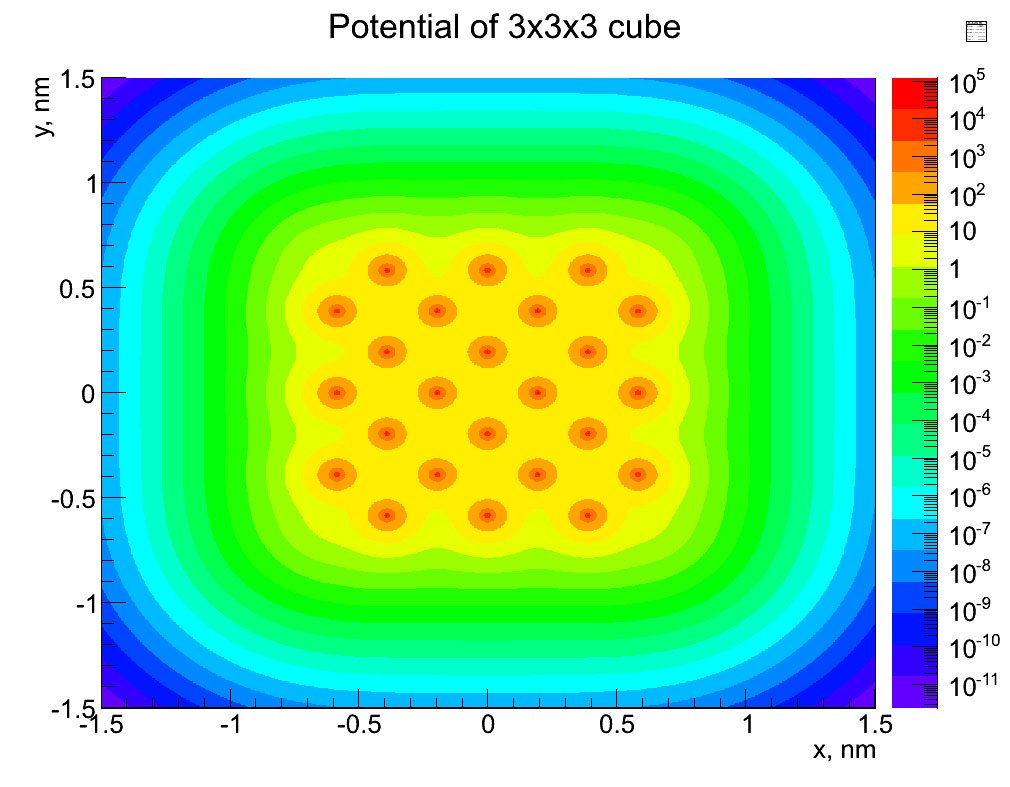
In the 2002-2008 series of international low-energy accelerator experiments, low-energy deuterium beams directed at embedded deuterium atoms showed that, in this environment, the screening potential for the orbital electrons of the embedded atoms is substantially increased. This means that in such conditions, any supplemental embedded nuclei in a single host crystal cell could sit much closer than they normally would due to the Coulomb repulsion.
Can this idea be applied to the low-energy nuclear reaction (LENR) in a solid?
The problem of overcoming the Coulomb barrier, the powerful force that keeps positively-charged protons away from each other, is the central issue for developing clean cold fusion energy. The force that holds nuclei together is called the strong nuclear force. Though it is an extremely powerful force, it only extends for a small distance. Unless nuclei can get close enough for the strong force to take effect, positively-charged nuclei remain too far away from each other to fuse. Elements other than hydrogen have an even bigger Coulomb barrier, since they have many more protons, and a stronger positive-charge. This is true for both free particles, and those housed in a solid metal.
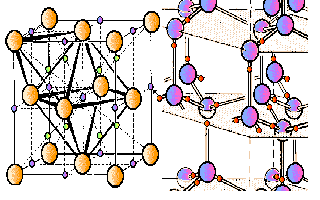
JET Energy model of palladium metallic lattice infused with deuterium.But inside a metallic lattice, the negatively-charged conducting electrons are free to move about, creating a negatively-charged screen. As a result, a positively-charged proton (or deuteron) inside the lattice sees mostly negative charges. But at some point, the bare nucleus could find itself suddenly close to another of its kind, the other’s positive-charge being “hidden”, or screened, by all the surrounding negative charges.
In this environment, deuterons or other nuclei may sit closer together in one host crystalline cell than they normally would. In a paper Cold Nuclear Fusion [1], Tsyganov cites data obtained by Francesco Raiola et al, for the screening Assenbaum potential for deuterium embedded in platinum as 675 +/- 50 eV, which is around 25 times larger than for free atoms of deuterium.
“The so-called screening Assenbaum potential is usually considered as an additional energy of interaction in a fusion process, and this effective energy should be used for calculations,” writes Tsyganov.
“This means that atoms of deuterium embedded in a metallic crystal do not feel the Coulomb repulsion down to distances of 25 times smaller than the size of the free deuterium atoms, increasing the probability of barrier penetration.”
“It was evident that in such conditions two deuteron atoms could approach each other to the distance of 1/10 – 1/20 of the size of an undistorted atom, without feeling the Coulomb repulsion.”
“Normally at very low energies for the deuterium molecule, the Coulomb barrier permeability for deuterium atoms is of the order of $10^{-84}$, including the Assenbaum screening potential (27 eV). However, in an environment of a single metallic crystalline cell this value jumps by $10^{50}$ – $10^{60}$ times! At the same time the real kinetic energy of the interacting deuterium atoms is still very low, some tiny fraction of an eV. All the enhancement of Coulomb barrier permeability is due to much shorter distance between the interacting deuterium nuclei.”
At low energies, the Coulomb barrier permeability is lowered and nuclei can position closer together. “As one can see from the graph, in the region of low effective kinetic energies, as in the case of cold fusion, the dependence of the quantum mechanical probability of Coulomb barrier penetration vs energy is very sharp.”
For Tsyganov, this illustrates the difference between hot fusion and cold fusion.
“Hot fusion produces compound nuclei through multiple single encounters of the particles. In cold fusion, particles interact with the same partner through the quantum oscillations in a ‘closed box…'”, he writes. “This oscillation frequency is directly proportional to the screening potential, or box “size”, giving an additional boost to the process.”
Suppose that two deuterium atoms are trapped inside a single crystalline cell of palladium. The electrons associated with the deuterium will have an elongated shape in response to the cloud of conduction electrons, their orbits distorted by the catalytic effect. This is what allows the deuterium nuclei to situate themselves only a fraction of the distance they would normally tolerate.
Together, these two atoms make a “quasi-molecule” that oscillates at a particular frequency. While Tsyganov admits that calculating the particular oscillation frequency of a deuterium quasi-molecule in the midst of so many potential fields inside the crystal is difficult, he uses Planck’s relation as an approximation to give a frequency $\nu = E/h$, where $E$ is the experimentally measured screening potential and $h$ is Planck’s constant.
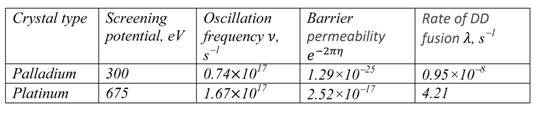
For deuterium embedded in a platinum metallic crystal, the screening potential was measured by Raiola as about 675 eV. This gives a vibrational frequency for the quasi-molecule as $1.67 \hspace{1 mm}\text{x}\hspace{1 mm} 10^{17}$ per second, and offers an estimate of the number of times the nuclei get close enough to fuse.
Multiplying this value for the oscillation frequency by the barrier permeability, a measure of the ability to overcome the Coulomb repulsion, of $2.52 \hspace{1 mm}\text{x}\hspace{1 mm} 10^{-17}$ yields a rate of 4.21 Deuterium-Dueterium fusion events per second.
Based on the calculation above, this table estimates DD fusion rates for crystals of palladium and platinum.
“I took this observation and applied these enlarged screening potential to the condition of McKubre experiments with deuterated palladium”, says Tsyganov.[1] “Heat release of Michael McKubre and the SRI team is well explained. In fact, this is the first confirmation of the cold fusion process using independent data from accelerators.”
Tsyganov believes experiments of Yoshiaki Arata and similar experiments of Mitchell Swartz could be also explained with this mechanism, if “quantitative data on deuterium contamination in palladium nano-crystals would be available.” He is convinced that the mechanism in McKubre’s experiments and that of Arata and Swartz’ are the same.
“Experiments of Francesco Piantelli and Andrea Rossi are well fitted in the above model. Higher heat release in the Rossi case is probably explainable by the use of platinum catalyst”, writes Tsyganov.
“Professor S.B. Dabagov, Professor M.D. Bavizhev and I have tried to analyze the nuclear processes occurring in the Ecat installation and provide a possible explanation for the observed results, says Tsyganov. “In addition to the slowing of the nuclear decay processes of the intermediate compound nucleus formed during the cold fusion of elements [2], some modification of the decay process of the intermediate nucleus of the compound (H+Ni)* must be assumed to provide a plausible explanation of the Rossi results. We discuss such possibilities in this paper.”
Tsyganov’s idea pertains to how nuclei might become situated close enough inside a metal to overcome the Coulomb barrier and fuse, an idea derived from hot-fusion experiments. Still, he believes this model can be applied to the cold fusion environment too, claiming predictions agree well with heat energy measured by SRI and extend to the nickel-hydrogen systems as well.
I asked Dr. Tsyganov how his model might explain some other experimental data in cold fusion.
Dr. Tsyganov attended the 2011 LANR/CF Colloquia at MIT.
Q&A with Edward Tsyganov
CFN Supposing two deuterium can fuse in this way, how would the heat be dissipated through the lattice?
Tsyganov There is the traditional belief among nuclear scientists that nothing in a nucleus could depend on the outside world. It is very true for the fast processes in a nucleus (and these processes usually are very fast due to the very small size of a nucleus) because it is necessary that some time pass to reach the outside world. This time is about $10^{-19}$ seconds and is defined by the size of atom and speed of light.
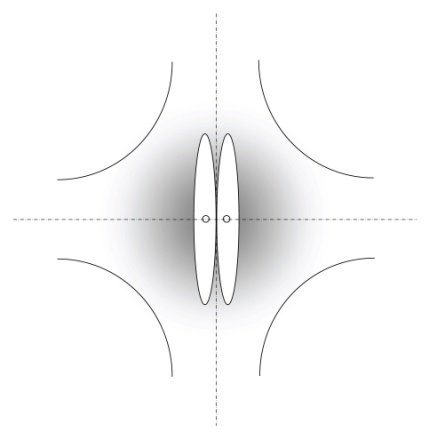
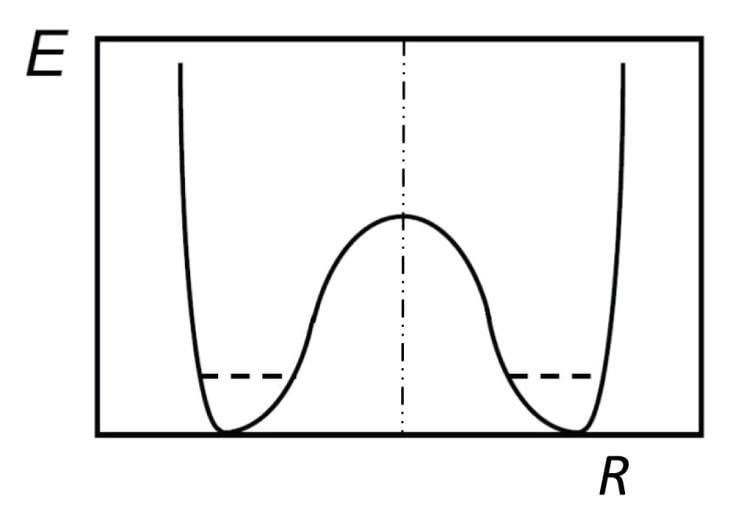
However, according to the only hypothesis of mine, the intermediate compound nucleus 4He* created in cold DD fusion, as also in other cold fusion cases, presents an absolutely unique situation. After the penetration of main Coulomb barrier (about 200 keV high), deuterons save their identities for some time, due to the residual Coulomb mini-barrier, already inside the strong potential well. This mini-barrier very much reduced and smothered by the strong interaction forces (quark-gluon mechanism) and the finite sizes of the deuterons, but still prevents immediate nucleonic exchange between the two deuterons.
This figure represents the bottom of the potential well of strong interactions of two deuterons.In my estimations, this mini-barrier is less than 2 keV high (~1% of the main Coulomb barrier), because at this kinetic energy usual nuclear decays of 4He* are still taking place. In fact, the Gran Sasso experiments, where this enhanced screening potential was discovered, used nuclear products to detect fusion processes. However, excitation (thermal) energy at cold fusion is still more than $10^{4}$ times less than 2 keV, or about 0.040 eV. Obviously, one can expect decreasing of nuclear decay rate of 4He* with decreasing of excitation energy.
I would highlight again that the decrease of nuclear decay rate at the very low excitation energy is the only hypothesis in all my consideration.
This situation could be treated as the experimental evidence. High electron screening potentials makes the cold fusion process the must. At the same time there are no neutrons and other nuclear products detected experimentally. An explanation must be provided. The only explanation (and the very reasonable one) that I could think of is the decrease of nuclear decay rate with decreasing of the energy of excitation.
If one adopts this hypothesis, further explanation does not presents real difficulties. Quantum electrodynamics provides the framework, through exchange by the virtual photons. Julian Swinger was very close to this solution but did not make the final step. Energy of discharge 4He* to the ground state 4He is released mostly by several hundreds of low energy electrons, with very short range in the crystal. About 400 60 keV electrons produce the heat.
CFN How might the production of tritium be explained with this process?
Tsyganov Production of tritium in McKubre’s experiments could be explained, if the nuclear decay rate of 4He* in cold fusion is reduced, but still non-negligible. This rate is at least two orders of magnitude less than expected for hot fusion. Perhaps, cracks and defects of the palladium sample could also contribute. I hope this question could soon be answered in future studies.
CFN Thank you Dr. Tsyganov.
Tsyganov My pleasure.
[1] Cold Nuclear Fusion by E.N. Tsyganov published Physics of Atomic Nuclei 2012, Vol. 75, No. 2, pp. 153–159 [.pdf]
[2] Cold Fusion Continues by E.N. Tsyganov, S.B. Dabagov, and M.D. Bavizhev, from the Proceedings of “Solid State Chemistry: Nano-materials and Nanotechnology” Conference, 22-27 April, 2012, Stavropol, Russia Report in Stavropol 4-24-2012 [.pdf]
[3] Cold Nuclear Fusion by E.N. Tsyganov on Journal of Nuclear Physics [visit]
We walk backwards into the future.
—Marshall McLuhan
Greater than the digital revolution, a new energy technology will change the mental imprint of humanity beyond a global village, beyond a global theater, with the opportunity for a new humanism that recognizes the invisible, and walks a path through the impossible.
We are at the start of the New Energy Age and the creativity has not even begun.
The intersection of art and science, from Nicolas Chauvin CEO of LENR Carshttp://ecatcar.org/ is but a transitory step.
“Nicolas Chauvin, innovator, entrepreneur, EPFL engineer and licensed in business school, co-founder of two other start-ups before LENR Cars, worked for NASA, Nestlé and Logitech.
Highly involved in new technologies across many different fields of engineering and strongly addicted to cars for style, performance, sensations and technology.
Kick-boxing elite athlete, musician and portrait artist.”
Eventually, we won’t have cars, that unique technology evolved from a service environment of fossil fuels; we’ll have something completely different.
But in the meantime, transition products will continue.
Unleash the powerful yearnings of a people hungry for change,
Cold Fusion Now!
Presentation slides by Nicolas Chauvin from the ILENRS 2012 conference. [.pdf]
July 4th here in the States came and went; the celebratory fireworks ringed the air, and the aftermath accounts included one big San Diego display attended by thousands, in which, due to an alleged computer glitch, the would be 20 plus minute sky theatrics, went off all at once. A 20 second burst of everything suddenly exploded simultaneously as people watched in awe and amazement, surprise and confusion. What an exciting start, but…where’s the follow up?
I had just finished reading this post here by Ruby on the Fleischmann/Pons story, and thought about that same sudden like explosion that occurred back in ’89 with their big announcement of Cold Fusion. A flurry of fireworks going off all at once. But eventually, as people waited in anticipation for more, they were told the show’s been cancelled. All just a glitch of sorts in Science, sorry…
I also wondered if the San Diego big bang blowout would be similar to future news of an E-CAT, or other, “suddenly” exploding onto the market. Most of the public remains unaware, the press, both mainstream and alternative, remain silent despite power outage and heat related illness/death on the East Coast of the U.S., (which in turn you would think a natural solution piece story specifically on the emergence of Cold Fusion technology related to home cooling would be a no-brainer).
Since there’s been no gradual mainstream buildup, an explosion of sorts seem likely, but this time with a steady stream of continual fireworks to follow.
As we are in the middle of the year, and working Cold Fusion based units seem to loom near, what are some of the recent updates?
Over a week ago, Defkalion released this update:
Following our absence from the public sphere, the following is a status update:
We are conducting analyses of our materials using XRF and ICP-MS. We are committed that this analysis be done with the highest standards. To ensure these high standards, we are using multiple laboratories in Europe. When those results are available, we shall present them in the appropriate forum.
We also have designed and are operating a fully instrumented flow calorimeter to measure the power production of our reactor. Outside scientists and engineers are measuring the input power as well as our flow calorimeter output performance. All these results will be presented when we are confident that they will withstand the scrutiny demanded by our own interests in product development, and the scrutiny of our customers.
We thank you for your continued interest in our challenging and important work load.
Meanwhile Andrea Rossi claims to have 20 units up and running, 600 degrees celcius, which is part of a 42 day test, with high temperature results to be reported in the coming weeks. EC3 speculates it would be just in time for the “17th International Conference on Cold Fusion (ICCF-17) scheduled for August 12-17 in Daejon, Korea”. A showdown of sorts could occur as EC3 also noted that Defkalion would report results there as well.
The two things noted as far as Rossi updates go is the report coming out mentioned above, which will seem to provide further promising news, and apparently will be validated by the customer with included photos (“Yes, we are working very strongly, in this very hot Summer. Important news are arriving.” A.R. – July 9th), and then also the certification issue, which seems to be the wick needed to be lit to ignite the potential fireworks, at least as far as the U.S. domestic E-Cat models are concerned.
You have said that your invention is undergoing a certification process in both USA and EU. If either one of this processes is delayed will that affect the product launch worldwide?
Like if the certification process is delayed in USA but successful in Europe will your European business go ahead (and not wait for the processes in USA to be completed)??
1- yes, for the domestic E-Cats, while for the industrial we are very close to be all set
2- If one certification goes through it eases the certification elsewhere, based on the existing conventions.
Warm Regards,
A.R.
July 9th, 2012.
Readers at ECat World recently participated in a poll on who they anticipated would be the first to set off the ‘works with a MASS MARKET working unit. The top 3 thus far:
1. Leonardo Corp (Rossi) (436 votes)
2. No one. (155 votes)
3. Defkalion (148 votes)
Followed by Brillouin, Blacklight, PlasmERG, Jet Energy, and Nichenergy, in that order.
On another front, it seems the potential fireworks are being taken seriously by the petroleum industry, at least a little more publicly, as a recent editorial emerged in The Journal of Petroleum Technology, outlining LENR as a threat. This was noted as a comment by a reader at E-Cat World prompting this entry, and the actual editorial can be read here.
So we continue to wait, monitor, and wade through the continuation of more tests/reports, uncertain certification processes, and unknown customers to verify; meanwhile it is announced today the U.S. breaks a new heat record for the first half of 2012, while also we have“Dr. Doom”, Nouriel Roubini reporting today that his prediction for likely global economic collapse earlier this year, is perfectly on track to occur.
As always it’s hard to fathom how the timing will play itself out as far as the various Collapse scenarios go, and the actual on the market emergence of Cold Fusion technology taking hold.
 http://www.e-cataustralia.com/