Energy Shortage – LENR Cold Fusion – Navy Guam

Energy Shortage?

Not so far.. In the near distant future…

The next generation will look back on our generation as the last of the “Fire Era” and know in fact, that “Energy Shortage” was a term for un-enlightened minds. -‘gbgoble2009

I am a Knowledgable Poet. A sub-genius of the birth year 1958, I dropped out of school as did many bright minded individuals at the far end of the ‘Peace and Love’ generation (Woodstock), an in-between time. I became a Gypsy, experiencing “Retirement Living” long before retirement. I enjoyed travel and basking in creative relaxation from town to town. Tune In – Drop Out; which I did, gladly enough. Our company name was “The Beadniks” making many a beaded jewelry design that pleased folks wherever we went. We made our living, bartering our creative line of leather beaded pouches, crystals, and jewelry to live and travel nicely in the State and National Forests of the U.S.A. Lakes, Rivers, and Hot Springs Galore. YES!!!

Why do I break Cold Fusion stories? Guess why I am incensed with the study of exposure? I revel in it.

I for one, sorely miss a Global Energy Corporation presentation at both the annual Global Breakthrough Energy Movement symposium and the International Conference of Cold Fusion research. Why are their findings not presented?

The board of directors of the Global Energy Corporation include three U.S. politicians.

What do they say?

Nothing.

Why?

Cold Fusion Now Looks Into This…

Global Energy Corporation


PACIFIC ISLANDS REPORTPacific Islands Development Program/East-West Center
With Support From Center for Pacific Islands Studies/University of Hawai‘i

EXPERIMENTAL NUCLEAR POWER COMPANY COURTS GUAM
Wary commission weighs Global Energy’s approach


By Gaynor Dumat-ol Daleno

HAGÅTÑA, Guam (Pacific Daily News, April 12, 2012) – The Guam Power Authority management is seeking guidance from the Consolidated Commission on Utilities in light of interest expressed by at least two companies to open power plants using nuclear energy.

According to the minutes of the March 13 CCU meeting, one commissioner, Eloy Hara, told commission members that a Global Energy Corp. proposal “is worth a second look.”

The Global Energy Corp. proposal states it would offer “hybrid fusion technology,” but CCU had learned it has not been tried yet.

The minutes of the meeting also indicate that Hara said GPA should keep the doors of communication with Global Energy Corp. open.

GPA and CCU have seen Global Energy Corp.’s presentation on its proposed power plant, but CCU Chairman Simon Sanchez has said neither the CCU nor GPA has requested proposals from nuclear power companies.

The power agency is instead launching energy projects that harness solar and wind technology.

According to the minutes of the meeting, Hara wanted CCU to send a letter to Global Energy Corp. that thanks the company for its presentation and at the same time mentions a possible memorandum of understanding.

Discussion

Hara said in the meeting Global Energy Corp. invited GPA management and CCU to participate in further discussions in San Diego, but GPA needed to sign a memorandum of understanding before taking part in any further presentation by Global Energy Corp., according to the minutes.

Commissioner Joseph Duenas voiced concern, however, that a mention of an MOU would be construed as a request for proposal, according to the commission’s meeting record.

Hara did say at the meeting that a mention of a possible MOU for the trip to San Diego was cleared by a legal review, but the commission did not go for Hara’s proposal, according to the minutes.

Chairman Simon Sanchez and other commissioners were clear that they only want to send a letter that thanks Global Energy Corp. for its presentation, the meeting minutes state.

Global Energy Corp. made a presentation to CCU in February but the meeting was closed because it contained proprietary information, Sanchez has said.

Global Energy Corp.’s presentation to the CCU should not be viewed as an intention to bring this specific kind of nuclear power to Guam, Sanchez said before the meeting took place.

Feasible

Before GPA could seriously pursue nuclear energy, it would need to study the feasibility of this technology — which can be expensive and dangerous on Guam, Sanchez has said.

“I think the most important question has to be if the community is comfortable with nuclear energy,” Sanchez has said.

According to its website, Global Energy Corp. is a Virginia company that promises a new kind of nuclear reactor that uses natural uranium and does not produce hazardous waste. Sanchez noted that the company has not actually built any of these reactors — so the proposal has a “guinea pig element.”

The other company that has contacted GPA, Q-Power Corp., also proposes a concept for a new kind of nuclear reactor, according to its website.


Pacific Daily News: www.guampdn.com
Copyright © 2012 Guam Pacific Daily News. All Rights Reserved


‘Clean’ Nuclear Power Eyed

MONDAY, 13 FEB 2012 03:45 AM BY JON ANDERSON | VARIETY NEWS STAFF HITS: 2631

THE Consolidated Commission on Utilities and the Guam Power Authority are investigating a new type of “generation five” nuclear power generator – one that could potentially reduce power costs for Guam ratepayers by half or more.

The Variety has learned Dr. Jay W. Khim, CEO of Global Energy Corp. (GEC) based in Annandale, Va., made a presentation to the utilities commission, GPA officials and Navy engineers last month and will make another tomorrow afternoon.

CCU member Eloy Hara, who says he is “spearheading” the project on behalf of GEC, told Variety:  “After the presentation that Dr. Khim gave to the CCU and the Guam power management team, and almost an hour-long discussion afterward … we were all awed by the technology.

“And if it is for real, this technology really could be the answer to our program of One Green Guam; and also it fits right into the alternative energy that we are participating in right now.”

The company, in conjunction with the U.S. Navy and the U.S. Department of Energy, says it has developed a “hybrid fusion-fast-fission” reactor called GeNiE which, according to GEC, “is compatible with the decades-long development of very high temperature, helium cooled reactors.”

The reactors being built now, including the two licensed by the Nuclear Regulatory Commission last week for the State of Georgia – the first in the U.S. in more than 30 years – are based on generation three technology.

Generation five

“We’re generation five,” Dr. Khim told the Variety during an exclusive interview, “and first of all this is a brand new concept.”  He said safety is the first consideration, and that cannot be ensured by building higher walls around reactors, as Japan saw last year with Fukushima.

“You have to change the basic science of nuclear power,” Khim explained. “We’ve been working with the U.S. Navy for about 22 years and the basic science phase is now over. Now we’re going into commercial development, which the Navy is not going to do.”  But Khim says the science has been repeatedly duplicated by the Navy, and has been proven, recognized and published.

Officials of the Navy on Guam, including Capt. John V. Heckmann Jr., CO of Naval Facilities and a professional engineer, attended the GEC briefing.

The GEC board of directors, Khim says, includes some well-known Washington D.C. Players, including former Secretary of Defense Frank Carlucci, former Congressman and Secretary of Transportation Norman Mineta, and former U.S. Congressman Tom Davis, among others.

“The biggest problem I see on Guam,” Dr. Khim told Variety, “is that power is too costly, way above average, and way too dependent on fossil fuel. Those costs have nowhere to go but up.”  He says the clean nuclear technology offered by GEC is the only solution for a place like Guam.

According to Dr. Khim, the GeNiE reactor burns natural uranium which doesn’t require enrichment. It creates no nuclear waste, he says, thus eliminating the need for nuclear waste storage – a major problem wherever nuclear generation using old technology is used.  In fact, the reactor can use spent fuel from current plants as a fuel source, although there is no plan to use such fuel for the Guam reactor, he points out. Since there is no nuclear chain reaction involved, no nuclear meltdown is possible and there is also no weapons proliferation risk. It is clean nuclear technology, Dr. Khim contends.

“The key to this technology,” Khim explains, “is that the GeNiE reactor actually burns uranium 238 in a hybrid fusion-fission process that is clean, utterly safe, and secure. The reactor is cooled by helium gas – rather than water – which cannot become radioactive. There is no need for a separate heat exchanger or secondary loop, which greatly simplifies the reactor, increasing safety and reducing costs.”

Global Energy Corp. is proposing to build a 50-megawatt plant as a pilot project on Guam, on a build, operate and transfer basis for which GEC would obtain its own financing. Guam ratepayers would pay only for the electric power generated. Khim says he will finance the estimated $250 million plant himself. “No initial money for Guam at all,” Khim assured. “I’ll pay all the money; I’ll run it; and give Guam cheap electricity.” He says once his company and the CCU enter into a memorandum of understanding, other issues, such as the location of the reactor, will be explored.

“Our plan is to fuel the generator only once, and the fuel would last for 50 years,” Khim said. The fuel will be natural, unenriched uranium ore, which is mined in various countries including the U.S. and Australia.

“This concept is simple,” Khim added. “We’re tsunami-proof, earthquake-proof, and typhoon-proof. There is no chance of a major catastrophe because there can be no meltdown. This is clean, green nuclear energy. This is the future … where we are going. This is a dream come true for all humankind.

Impeached Governor Inked Secret Deal to Construct Fast Breeder Reactor

Enformable Nuclear News – By Lucas W. Hixson – March 25th 2013

Former governor of the Northern Mariana Islands, Benigno R. Fitial stands alone in history as the first governor of any U.S. territory to be the subject of impeachment, but only the ninth United States governor to be impeached and removed from office.  On August 28th, 2012, while Governor Fitial was in the United States for the Republican National Convention, an impeachment resolution was filed in the Northern Mariana Islands House of Representatives, which accused the governor of multiple felonies, multiple acts of public corruption, and neglecting official duties.  It was even included in the impeachment filed that the governor had allowed a federal prisoner released in order to bring him to the governor’s private mansion to give him a massage.

It is now being discovered that former governor Fitial and then Attorney General Edward Buckingham signed a deal in June of 2012, which would’ve constructed nuclear power plant in partnership with Global Energy Corporation.  The deal was only discovered last week by newly elected Governor Eloy S. Inois, who assumed his post on February 20th of this year, even though since August of last year the Saipan Tribune had been questioning the Fitial administration about rumors of a possible nuclear energy agreement, but had been stonewalled in response.

According to the dates on the document, Fitial and Buckingham signed off on the nuclear energy document around the time GEC scientists and officials, including CEO Dr. Jay W. Khim, visited Saipan during June of 2012.

The terms of the deal sound eerily similar to a deal which Global Energy Corporation offered to Guam in February of 2012, in which the location of the reactor was not even discussed until after a memorandum of understanding had been signed.  Later that month, the press reported that Global Energy Corp. was proposing to build a 50-megawatt plant as a pilot project on Guam, on a build, operate and transfer basis for which GEC would obtain its own financing. The reports argued that Guam ratepayers would pay only for the electric power generated. GEC CEO Dr. Khim even said that he would finance the estimated $250 million plant himself. “No initial money for Guam at all,” Khim assured the press. “I’ll pay all the money; I’ll run it; and give Guam cheap electricity.” He added that once his company and the CCU enter into a memorandum of understanding, other issues, such as the location of the reactor, will be explored.

genie_logo

The Global Energy Corporation is a nuclear industry corporation established in Virginia, with a mission to develop and commercialize proprietary fast-breeder reactor technology it dubbed “GeNiE”, which features a logo incorporating an atom atop of a Genie’s Bottle.  Although the document signed does infer the willingness of Fitial’s administration to invest in fast-breeder technology, it would be hard to hold the Marianas Commonwealth to the terms of the document, considering that the GeNiE reactor has not been licensed for commercial use and is still in the experimental research stage, despite 20 years of efforts by multiple industry organizations.

“From my initial review, it doesn’t look like it’s a firm contract. It was essentially memorialization of a desire of the Commonwealth government to avail of that technology but there are conditions precedent to entering into that contract like securing financing and studies, approval of the technology which has yet to be approved, and so forth. It’s long ways from being a contract that can be executed in terms of the provisions but it is interesting that we have that,” Inos said.

House Speaker Joseph Deleon Guerrero (IR-Saipan) also said in his view the document “does not bind the CNMI to anything.”

The Inos administration has expressed no interest in a nuclear power project and has instead issued orders to conduct a study on the integration of alternative or renewable energy into the existing Commonwealth Utilities Corp. power grid.  Governor Inos is going to send the document to the Office of the Attorney General to ensure that there is not any liability or obligation to fulfill under the document that the former governor and former AG signed.

Quantum Rabbit Labs and The New Energy Foundation

These groups developed a crowd funded research and radioactive elements experiment protocol that developed LENR Induced Transmutation of Nuclear Waste. If SPAWAR had published and shared their tax funded research in 2007, this group and many others would already be remediating the nuclear waste problems of the world through LENR energy science and engineering.

LENR-Induced Transmutation of Nuclear Waste

INFINITE ENERGY • ISSUE 104 • JULY/AUGUST 2012

Edward Esko

Abstract —
Quantum Rabbit (QR) research on the low-energy fusion and fission (low-energy nuclear reactions, or LENR) of various elements indicates possible pathways for applying that process to reducing nuclear materials. In a New Energy Foundation (NEF)-funded test conducted at Quantum Rabbit lab in Owls Head, Maine, QR researchers initiated a possible low-energy fission reaction in which 204Pb fissioned into 7 Li and 197Au (204Pb → 7 Li + 197Au).1 This reaction may have been triggered by a low-energy fusion reaction in which 7 Li fused with 32S to form 39K (7 Li + 32S →19K). These results confirmed earlier findings showing apparent low-energy fusion and fission reactions.2 Moreover, subsequent research with boron indicates apparent low-energy fusion reactions in which boron fuses with oxygen to form aluminum and with sulfur to form scandium.3 At the same time, the QR group has achieved what appear to be low-energy transmutations of carbon using carbon-arc under vacuum and in open air.4 The research group at QR believes these processes can be adapted to accelerate the natural decay cycle of uranium-235, plutonium-239, radium-226 and the fission products cesium-137, iodine-129, technetium-99 and strontium-90 with the long-term potential of reducing the threat posed by radioactive isotopes to human health and the environment.
The Navy LENR – A Four Part Series

Navy LENR Part I

Navy LENR Part II

You are viewing Navy LENR Part III

Navy LENR Part IV 

Connect DOE Department of Energy LENR Cold Fusion

To the DOE Office of Information

This is the connection I have been looking for since I became interested in LENR.  The article is about DOE or so it says and it is correct, except it is really about the part of DOE called NNSA, National Nuclear Security Administration, which is nominally a part of DOE but it is not really the Energy part of DOE but the military/nuclear weapons part.
.
Is this a recent revelation to you or have you known about this for some time?  No one has ever mentioned to me that NNSA has funded research on LENR, possibly since the beginning in 1989.  I would really like to know why NNSA cancelled their LENR research a little over a year ago.
.
I am not quite sure why this seems like such a big deal to me, but it does.  I will have to take some time to think over this.
.
Paul Maher
.
Fusion Energy Sciences
Office of Science
Department of Energy

Cold Fusion Now to report from ICCF-18

The 18th International Conference of Cold Fusion (ICCF-18) begins Sunday, July 20, 2013 at University of Missouri in Columbia, Missouri. The week-long event brings condensed matter nuclear scientists together to exchange the results of their research on cold fusion, also called low-energy nuclear research (LENR), lattice-assisted nuclear reactions (LANR), quantum fusion, and the Anomalous Heat Effect (AHE) among other acronyms.

The Rumplestiltskin-reaction derives from the Fleischmann-Pons Effect (FPE), the generation of excess heat from the elements of hydrogen and metals in electrolytic chemical cells. The search for control of this reaction has led to the discovery of multiple types of systems, as well as other anomalous effects, such as transmutation.

A form of powerful energy, and the realization of the ancient search for alchemy, is poised to transform human culture in one sweep of adoption, and the mainstream press is clueless.

Luckily, Cold Fusion Now will be there to document the event!

Dear Friends,

Driving cross-country from two different directions, I’ll be meeting videographer Eli Elliott at the conference to capture lectures and video interviews with participants for a new documentary film on the field. We’ll also be posting up regular updates from the conference.

You know our work – traveling to the streets and the lab to bring you the voices of scientists in their own words.

We put it together completely self-funded, DIY, and volunteer-driven.

Now we need your help.

I’ve got to get more video chips, and another hard drive. I had to rent a car, cause my poor truck just can’t make the trek anymore, and dorm rooms, food and gas are adding up.

Can you make a financial donation to help us report from the conference? Your support is needed now.

Contribute, and get ready for the good news of new energy on the horizon.


We’ll also be sharing a table with Infinite Energy. Stop by for books, magazines, t-shirts. (Say the words “Cold Fusion Now!” and get a free History of Cold Fusion Calendar!)

Also Needed: Web Designer

Do you know .php? Do you have ideas on how to organize the content on our huge site?
Can you get a subscription button working after a database was corrupted?

If you’d like to contribute your skills to this clean energy effort, please send me a note about yourself to ruby@coldfusionnow.org.

We’re getting bigger, and we need to get better. Your help is needed now. We can’t do it alone.

Your pal,
Ruby

Cold Fusion Now!

The Streetlight Effect and Cold Fusion

By David J French

Sometimes an iconic article is written that makes a change in how our society views important issues. One possibly iconic article is that published in Discover Magazine in July – August, 2010 by a contributing journalist, David H Freedman. Freedman coined the expression “The Streetlight Effect”. The idea is old but the name is rich with meaning; this concept now has a Wikipedia page.

The article explored how scientists everywhere when they undertake research often start with a focus which is driven by their own comfort and convenience. They acknowledge that there’s a puzzle to be solved and they aspire to make a contribution. They have specialized equipment available in their labs and graduate students who are trained in a specific field. Possibly, they may also have access to funding which is slanted towards a certain type of research. So it’s natural that they make a proposal to use their existing resources to address the specific scientific problem. Can this be wrong?

This is the essence of the “Streetlight Effect”: researchers tend to do the kind of research that’s easy, convenient and accessible. They have an aversion to going where no researcher has gone before if it means going where they must acquire new resources and/or undertake a major learning exercise to equip themselves appropriately. Instead, they pursue the easy path.

How does this relate to the scientific mystery colloquially called “Cold Fusion”? This July will see the 18th annual meeting of Cold Fusion researchers from around the world in Columbia, Missouri, attending ICCF-18. Sponsored by the University of Missouri, ICCF-18 will allow dozens of Cold Fusion researchers over a period of five days to present their findings in this field. The field of Cold Fusion is remarkable for the reality that while the miracle of unexplained excess energy has been demonstrated over and over again, more than 1000 times since 1989, the source of this energy is still not accounted for. Nobody understands clearly what is happening.

Since Fleischmann & Pons made their first ill-fated announcements in March, 1989 at the University of Utah, the field of Cold Fusion, also now called Low Energy Nuclear Reactions – LENR, has been in general disrepute in the broader scientific community. The failure by many major institutions in 1989 – 1990 to replicate the Fleischmann & Pons effect and produce meaningful amounts of unexplained excess heat at significant temperature levels has caused an unfortunate prejudice to persist in the scientific community.

This prejudice was entrenched by the publication of several highly critical books such as “Bad Science: The Short Life and Weird Times of Cold Fusion” by Gary Taubes, and “Cold Fusion: The Scientific Fiasco of the Century“ by John R Huizenga. Even though subsequent developments have negated most of the criticisms leveled by critics at the Fleischmann & Pons effect, there is still a general belief in many physics departments, and indeed in government agencies, that Cold Fusion simply is not real.

Well something about it is real. There’s no question that moderate amounts of heat have been generated from sources that cannot be chemical and cannot be attributed to experimental artifacts; heat has persisted long enough that the effect cannot be ignored. But no theory has been presented so far that can conclusively explain the source of this energy.

Now enter the “Streetlight Effect”. What are we going to expect of the experimenters who make presentations at ICCF-18?

Most of them will be reporting on the experimental results that they have achieved. A large number of these results have been will have been carried out in electrolytic cells, in the liquid phase. This is true even though there have been definite demonstrations of the LENR effect in the gas phase, both in the case of Palladium saturated with deuterium as well as nickel saturated with hydrogen. Indeed, even other hydride-forming metals have been shown to demonstrate the unexplained release of excess heat.

Experiments are still being done in the liquid phase even though the gas phase has much greater commercial potential simply because of many of the experimenters have laboratories that are well equipped for electrolysis and the researchers themselves have spent years immersed in this field. But now even the gas phase is finally being explored more extensively. This may open up new opportunities.

These experiments have all been invaluable in order to assemble data on what gives rise to the LENR effect. But the amount of data that has been generated, while almost overwhelming, has not yet lifted the veil on what is actually happening. We have to give credit for all this work that has been done, and indeed it is invaluable in providing a foundation for further thought and analysis. But something more is needed.

Where are the “killer” experiments that will lift the veil and finally provide understanding for what is really going on? Will there be a Milliken attending to describe the measurement of electric charge on oil drops? Or a Rutherford who provides results on alpha particle scattering? Examples of such key experiments in the history of science could be extended indefinitely. But will such a corresponding experiment be proposed at ICCF-18, an experiment that will solve the LENR Mystery? Possibly, but not probably.

We can expect to hear at the conference from researchers who have assiduously been collecting data using the apparatus that they have on hand, attended by their previously recruited graduate students who are focused on their supervisor’s field of expertise and funded by sources who are able to comprehend the proposed research for which they are providing money. Is this the best way to crack the nut that will explain this potentially revolutionary phenomenon?

This work has all made its contribution and more along such lines will still have to be done. It may be that the “Streetlight Effect” is unavoidable. But is it too much to hope that someone, or the consensus of this assembled wisdom, will be able propose an experiment, or series of experiments, which will be so telling that finally a basis will exist to shine light on a robust theory that will explain what is really happening?

ICCF-18 will be a gathering of people knowledgeable in the field. There will be plenty of exchanges of information and insight. Perhaps the “killer” experiment has already been done and may finally see the light of day. But if not, rather than continuing to pursue pet theories, a tremendous opportunity is available for those who know how to do experiments to discuss the key types of tests that should be done. This may, however, require them to depart further away from their streetlights and explore possibilities that will finally bring truth from the darkness. Let us hope this will happen.

Plasma micro-reactor steaming ahead

Charles François of FuturProbable continues to develop his TMLECPW plasma micro-reactor for use as a steam generator.

This technology is getting smaller and more sophisticated with François claiming 245% energy return. In a video released June 22 (below), he provides some background on the TMLECPW technology en Française, described as having 51 Watts input and 125 Watts output.

The most recent video above unveils the new Micro Plasma Reactor design that looks, well, … “Awesome, dude!“. With a professed energy return of 300%, it is!

François is preparing to move to new lab space, where he will work towards a higher steam output suitable for a hot-water boiler.

Fusion Froide Maintenant!

Related

Plasma Discharge inspires FuturProbable

New energy technology in our FuturProbable

Bob Rohner: Plasma engine reproduced; now optimizing for efficiency

Transmutes Radioactive Wastes Now – U.S. Navy and LENR Energy

The United States of America Navy LENR energy patent is noteworthy. The transmutation of radioactive waste to benign elements through LENR low energy nuclear reactions is of global importance. With the continuing Fukushima disaster, inadequate storage of spent fuel rods, and the plutonium sludge leaks at the Hanford Nuclear Reservation site; each which threaten planetary health, our government should be fast-tracking the LENR remediation of nuclear waste. This technology should be brought forward with broad disclosure and international involvement. The U.S. has not made broad disclosure and is thereby stalling international collaboration in development of this important nuclear waste and pollution remediation, a cold fusion technology.

Can we trust the DoE to do it right this time?

NAVY LENR Patent Granted – Transmutes Radioactive Waste

genie_fast_facts

Ruby read the previous article and had this to say

Ruby Carat July 9, 2013 at 11:32 AM

“Who will license this???”

“Somebody – please!” see GEC Fast Facts

The Global Energy Corporation Has Use of Patent

Companies working with U.S. governmental agencies developing technology have first consideration as patent licensing takes place.

Global Energy Corporation is utilizing the LENR nuclear waste remediation technology developed at SPAWAR. Lawrence Parker Galloway Forsley of Global Energy Corporation along with JWK International have worked with SPAWAR developing this technology for decades. Following many years of research and development the Navy patent was filed in 2007. Department of Energy funded SPAWAR LENR research has most likely been continuous since the 1989 announcement of cold fusion.

The DoE has controlled the release of information pertaining to this technology since before 2007, keeping it from the eyes of the public. It is well known that the DoE discredited Pons and Fleischmann in 1989 and has continued to marginalize LENR through search engine censorship and misinformation.

Quote Global Energy Corporation, “This manuscript has been co-authored by National Security Technologies, LLC, under Contract No. DE-AC52-06NA25946 with the US Department of Energy. The United States Government retains and the publisher, by accepting the article for publication, acknowledges that the United States Government retains a non-exclusive, paid-up, irrevocable, worldwide license to publish or reproduce the published form of this manuscript, or allow others to do so, for United States Government purposes.”

We have been lied to about cold fusion research at SPAWAR. (see Navy Commander Halts SPAWAR LENR Research Posted on March 1, 2012 New Energy Times). We have been misled about the value of pursuing LENR Energy. Historians will investigate those responsible for this. We will eventually understand why the Department of Energy of the United States of America has secretly coveted while publicly denouncing the science of cold fusion.

We the People, as the Government of the United States of America, would certainly like to see our State and Federal representatives, fellow citizens, scientific institutions, as well as the nuclear regulatory agencies and political leaders of all nations to be informed of this nuclear remediation technology now.

Furthermore

We the Peoples of the United States of America, as owners of this important technology, certainly do not want it to be hidden or marginalized any more. Contrary to the DoE and their method, the truth should be told about LENR. International development should be sought and licensing agreements offered widely to utilize this technology. A Congressional sub-committee should be formed seeking international cooperation in making this technology available, worldwide, as quickly as possible. 

The Lawrence Parker Galloway Forsley LENR Patent

A HYBRID FUSION FAST FISSION REACTOR (View it here)

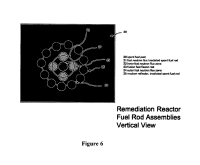
A hybrid nuclear fusion fast fission reactor is disclosed. The hybrid reactor may include an electrolyte solution comprised of PdCI2 a conductive salt and D2O, an anode of a noble metal, a cathode consisting of a conductive high Z (atomic number greater than 46) material wound around a deuteride-forming actinide nuclear fuel element, a power source providing constant current to the + anode and the – cathode, an applied power profile for fabricating the PdD nanoalloy, and a co-deposition of a PdD nanoalloy on to the high Z cathode winding as well as the nuclear fuel element. A preferred embodiment stablizes the actinide deuteride nuclear fuel element from hydrogen isotope de-loading. A preferred embodiment initiates deuterium-deuterium fusion in the deuterized fuel element and fissioning deuterized fuel element actinides. A preferred embodiment includes surrounding spent nuclear fuel elements with deuteride nuclear fuel elements that will fast fission the spent fuel elements. Another preferred embodiment includes surrounding the deuteride nuclear fuel elements with spent fuel elements as fast neutron reflectors that will also fission.

WOUS2009001213@@@true@@@en.gif

Claims

What’s Claimed Is

1. A hybrid nuclear fusion fast fission reactor in a vessel comprising:
an electrolyte solution comprised of PdCb a conductive salt and D2O;

  • an anode of a conductive noble metal provided within said electrolyte solution;

  • a cathode comprising a conductive high Z (atomic number greater than 46) material wound around a metallic actinide nuclear fuel element;

  • a power source providing constant current to the + anode and the -cathode;

  • an applied power profile for fabricating the PdD nano-alloy; and

  • an electrolytically co-deposited PdD nano-alloy on to the high Z cathode winding and on said fuel element.

2. A hybrid nuclear fusion fast fission reactor as claimed in claim 1 wherein said cathode wound around said fuel element acts as a neutron generator and said cathode is comprised of a composition of the non-deuteriding series selected from the group consisting of platinum, gold, mercury, lead and bismuth.

3. A hybrid nuclear fusion fast fission reactor as claimed in claim 1 wherein the nuclear fuel element is electrolytically deuterided beyond the actinide-deuterium beta phase.

4. A deuterided nuclear fuel element adapted by the electrolytic loading of deuterium to provide lattice fluctuations which initiate primary and secondary deuterium-deuterium fusion reactions at sites in the actinide metal lattice producing fast neutrons.

5. A deuterided fuel element as claimed in claim 4 where said fast neutrons fission the actinides comprising said nuclear fuel element.

6. A deuterided fuel element as claimed in claim 5 then sealed with an amalgam of compounds to prevent isotopic hydrogen deloading through desorption.

7. The deuterided fuel element of claim 6 further comprising an apparatus for pulsed control that produces acoustic, thermal, radiofrequency or other emanations attached to the deuterided fuel element and periodically enhancing local actinide-deuterium loading resulting in deuteron fluctuations producing primary and secondary deuterium-deuterium fusion reactions and neutrons.

8. A deuterided fuel element as claimed in claim 7 where said neutrons fission the actinides comprising said fuel element.

9. A plurality of said deuterided fuel elements as claimed in claim 8 arranged to irradiate and fission a spent nuclear fuel element, or a plurality of nuclear spent fuel elements, with fast primary and secondary deuterium-deuterium fusion reaction neutrons.

10. A plurality of said spent nuclear fuel elements arranged around said deuterided fuel elements claimed in claim 9 to act as fast neutron reflectors while also fissioning said spent fuel elements.

11. A nuclear spent fuel pool comprised of a plurality of said spent fuel elements and deuterided fuel elements as claimed in claim 10.

12. A method for removing heat generated by the primary and secondary deuterium-deuterium fusion reactions in said deuterided fuel elements and from fast neutron fission of said spent fuel elements.


Abstract Highlight Terms
Chemicals (link)
A hybrid nuclear fusion fast fission reactor is disclosed. The hybrid reactor may include an electrolyte solution comprised of PdCI2 a conductive salt and D2O, an anode of a noble metal, a cathode consisting of a conductive high Z (atomic number greater than 46) material wound around a deuteride-forming actinide nuclear fuel element, a power source providing constant current to the + anode and the – cathode, an applied power profile for fabricating the PdD nanoalloy, and a co-deposition of a PdD nanoalloy on to the high Z cathode winding as well as the nuclear fuel element. A preferred embodiment stablizes the actinide deuteride nuclear fuel element from hydrogen isotope de-loading. A preferred embodiment initiates deuterium-deuterium fusion in the deuterized fuel element and fissioning deuterized fuel element actinides.; A preferred embodiment includes surrounding spent nuclear fuel elements with deuteride nuclear fuel elements that will fast fission the spent fuel elements. Another preferred embodiment includes surrounding the deuteride nuclear fuel elements with spent fuel elements as fast neutron reflectors that will also fission.

Global Energy Corporation

Publications

Publications by Global Energy Corporation and collaborators at SPAWAR Systems Center, Pacific and JWK International

Although it has sometimes been difficult to publish in a controversial field, by conducting careful experiments and reporting the results, Global Energy Corporation collaborators at the U.S. Navy SPAWAR Systems Center Pacific and its predecessors and JWK International have published 24 peer-reviewed papers in seven technical journals and two book chapters. Our publication record documents steady progress in conducting experiments to demonstrate ever-increasing evidence that nuclear reactions can be stimulated using low energies in an electrochemical cell. Our most recent paper uses CR-39 to record and compare the impacts of high-energy particles produced in our pilot GeNiE reactor with neutrons from a known D-T fusion source.

P.A. Mosier-Boss, J.Y. Dea, L.P.G. Forsley, M.S. Morey, J.R. Tinsley, J.P. Hurley, and F.E. Gordon, “Comparison of Pd/D Co-Deposition and DT Neutron Generated Triple Tracks Observed in CR-39 Detectors,” Eur. Phys. J. Appl. Phys. 51 (2010) 20901.

Abstract

Solid state nuclear track detectors (SSNTDs), such as CR-39, have been used to detect energetic charged particles and neutrons. Of the neutron and charged particle interactions that can occurin CR-39, the one that is the most easily identifiable is the carbon breakup reaction. The observation of a triple track, which appears as three alpha particle tracks breaking away from a center point, is diagnostic of the 12C(n,n’) 3α carbon breakup reaction. Such triple tracks have been observed in CR-39 detectors that have been used in Pd/D co-deposition experiments. In this communication, triple tracks in CR-39 detector sobserved in Pd/D co-deposition experiments are compared with those generated upon exposure to a DT neutron source. It was found that both sets of tracks were indistinguishable. Both symmetric and asymmetric tracks were observed. Using linear energy transfer (LET) curves and track modeling, the energy of the neutron that created the triple track can be estimated.

Acknowledgements

This work was funded by the SPAWAR Systems Center Pacific ILIR and S&T Initiatives Programs, the Defense Threat Reduction Agency (DTRA), and JWK Corporation. The authors would also like to thank Dr. G. Phillips, nuclear physicist, retired from the Naval Research Laboratory, US Navy, Radiation Effects Branch, and P. Carbonnelle fromUniversité catholique de Louvain for valuable discussions in interpreting the optical data. It was G. Phillips who first pointed out the existence of triple tracks in our CR-39 photomicrographs. The authors acknowledge the contributions of Dr. S. Szpak, retired from SPAWAR Systems Center Pacific, who pioneered the Pd/D co-deposition process. This manuscript has been co-authored by National Security Technologies, LLC, under Contract No. DE-AC52-06NA25946 with the US Department of Energy. The United States Government retains and the publisher, by accepting the article for publication, acknowledges that the United States Government retains a non-exclusive, paid-up, irrevocable, worldwide license to publish or reproduce the published form of this manuscript, or allow others to do so, for United States Government purposes.

Technology

GeNiE Reactor technology is based on 20 years of experimental research by Global Energy Corporation, JWK International, and SPAWAR Systems Center San Diego scientists and engineers. The results have been published in over 20 peer-reviewed technical journal articles. Our most recent publications document the ability to efficiently produce high-energy neutrons that are capable of fissioning uranium. We have answered the critical scientific questions:

  • Our experiments are repeatable.

  • Our experiments have been replicated by others.

  • Our experiments provide direct evidence that nuclear reactions are involved including the production of high-energy neutrons. Although our experimental results are not predicted by current nuclear physics theories, the results are real.

The GeNiE Reactor takes advantage of the efficiently produced high-energy neutrons in a proprietary hybrid fusion, fast-fission reactor design to produce power from un-enriched uranium. The GeNiE Reactor is not prone to melt down since it doesn’t rely on a chain-reaction to produce high-energy neutrons. The GeNiE Reactor will extract more energy from the fuel than conventional nuclear Reactors. The GeNiE Reactor is lower cost since it doesn’t required enriched uranium and it doesn’t produce hazardous nuclear waste that is costly to handle. By fissioning existing hazardous waste, the GeNiE Reactor can generate power and mitigate existing hazardous waste at the same time. And by eliminating the need for enrichment, the GeNiE Reactor removes all requirements for uranium enrichment except for weapons production, thereby removing the uncertainty in the purpose of enrichment programs such as the current program in Iran.

Global Energy Corporation and their collaborators are currently experimenting with small pilot GeNiE Reactors and are designing prototype GeNiE Reactors for commercial applications. While there are numerous products possible, GEC is currently focusing on the GeNiE Hybrid Fusion, Fast-Fission Reactor that will use either natural uranium or existing hazardous waste as fuel.

FAQ

(The facts according to the Global Energy Corporation)

  • Q. This sounds like Cold Fusion. Wasn’t “Cold Fusion” disproven?

  • A. While most people think that the Department of Energy concluded that the claims were wrong, this is not the case. In fact, after two reviews in 1989 and 2004, the DOE ENERGY RESEARCH ADVISORY BOARD found that there wasn’t enough evidence to either prove or disprove the claims and that more research was needed. Furthermore, several other countries are awaking to the fact that the phenomena may be real as documented in a recent DEFENSE INTELLIGENCE AGENCY TECHNOLOGY ALERT paper. GEC scientists and collaborators developed a different experimental protocol that allowed them to go beyond the initial claims of Fleischmann and Pons. Our experiments are repeatable, they have been replicated by others and our results have been published in peer-reviewed papers. Additionally, our experiments produce direct evidence of nuclear activity including emission of high-energy neutrons.

  • Q. How can this be real since it doesn’t match theory?

  •  A. History is full of examples where the accepted theory had to be adapted to match new experimental results. At one time, theory held that the earth was flat. Galileo was put under house arrest by the church for observing that the earth was not the center of the universe. Cassini and other scientists held that the speed of light was infinite long after Romer had provided solid experimental evidence that it was 186,000 miles per second. There’s a statement in science that, “Theory guides, experiment decides.” A theory is only as good as its ability to predict or describe experimental results. If the experimental results don’t confirm the theory, it’s the theory that must change since the experimental results are controlled by nature. This is not to say that all current nuclear physics theories are wrong but that they are incomplete when it comes to explaining our experimental results. Each year, hundreds of PhD’s are awarded to students who have improved or evolved a theory so that it more accurately explains experimental results. These and many other examples show how theory must evolve to match observation. Several theories have been proposed but to date, none match all of our observed experimental results.

  • Q. How do you overcome the coulomb barrier?

  • A. Several possibilities such as a stripping reaction or the equivalent to “tunneling” in solid state electronics have been suggested as a way to overcome the coulomb barrier. More research is needed to determine the answer to this question.

  • Q. What technical challenges need to be overcome before this technology can be commercialized?

  • A. Our GeNiE pilot reactors have demonstrated the ability to produce neutrons with enough energy to fission either natural uranium, enriched uranium, or existing hazardous waste. We are currently working to optimize the reactions and increase the flux of high-energy neutrons. Once this is achieved, many commercial applications are possible.

  • Q. If this is real, you should all be dead because of the neutrons that would have been produced. How do you answer that since you’re obviously still alive?

  • A. One of the properties of our experiments is that the neutron flux is several orders of magnitude less than that predicted by conventional theory. The current flux levels are not hazardous however we are currently working to optimize the experiments to increase the flux. We recognize the dangers of high-energy neutrons and take appropriate precautions.


National Security Technologies

National Security Technologies, LLC (NSTec) was formed in 2006 as a joint venture between Northrop Grumman Corporation, and three other corporate partners. These partners are AECOM, CH2M Hill, and Babcock & Wilcox (B&W). With some 2,450 employees, NSTec manages operations at the 1,360-square-mile Nevada National Security Site, 65 miles northwest of Las Vegas, and at its related facilities and laboratories for the U.S. Department of Energy (DOE), National Nuclear Security Administration, Nevada Site Office. The company has satellite offices in Los Alamos and Albuquerque, New Mexico; Santa Barbara and Livermore, California; and Washington, D.C., along with a small number of employees located in nine other states and two foreign countries.

Our mission includes homeland security and defense applications, defense experimentation and nuclear weapons stockpile stewardship, as well as environmental management. We specialize in training our nations experts and testing new technologies to detect weapons of mass destruction (WMD), and to mitigate and manage the consequences posed by WMDs once they are detected. We are also equipped to conduct arms control verification testing as well as training of arms control inspectors. NSTec frequently teams on projects with Lawrence Livermore National Laboratory, Los Alamos National Laboratory, and Sandia National Laboratories. In addition, the company works on projects for other federal agencies such as the Defense Threat Reduction Agency, NASA, Department of Defense, Department of State, the Nuclear Regulatory Commission, and the U.S. Air Force, Army, and Navy.

We are also committed to fulfilling our role as a responsible corporate citizen through support of charitable organizations, primarily in the areas where we live and work. At NSTec, we focus on three key areas to achieve more effective results: education, civic and community relations, and diversity.

The Naval, Joint and National knowledge superiority through quality research, development, acquisition, test and evaluation (RDAT&E) and full life cycle support of effective Command, Control, Communications, Computers, Intelligence, Surveillance and Reconnaissance (C4ISR), Information Operations (IO), Enterprise Information Services (EIS) and Space capabilities.

SPAWAR Systems Center Pacific

Our Mission: Enable Information Dominance for our Naval, Joint, National and Coalition warfighters through research, development, delivery and support of integrated capabilities.

Our Vision: SSC Pacific will be the Nation’s pre-eminent Technical Leader for Integrated C4ISR Solutions for Warfighters.

Defense Threat Reduction Agency

DTRA is the U.S. Department of Defense’s official Combat Support Agency for countering weapons of mass destruction. Our people are Subject Matter Experts on WMD, and we address the entire spectrum of chemical, biological, radiological, nuclear and high yield explosive threats. DTRA’s programs include basic science research and development, operational support to U.S. warfighters on the front line, and an in-house WMD think tank that aims to anticipate and mitigate future threats long before they have a chance to harm the United States and our allies. SCC-WMD, the U.S. Strategic Command Center for Combating Weapons of Mass Destruction, synchronizes Combating Weapons of Mass Destruction efforts across our military’s geographic commands and leverages the people, programs and interagency relationships of DTRA at a strategic level. We work with the military services, other elements of the United States government, and countries across the planet on counterproliferation, nonproliferation and WMD reduction issues with one goal in mind: Making the World Safer.

Since DTRA stood up in October 1998 and SCC-WMD in August 2005, the Department of Defense and other federal agencies have increasingly looked to both for support and advice. Both organizations’ responsibilities span the full range of activities necessary to combat and respond to WMD proliferation and use. At home and abroad, DTRA and SCC-WMD deliver mission success against a very real and growing threat.

JWK Corporation

(JWK) has provided reliable, high quality professional services to our customers for over 30 years. Our customers, which include the Department of Defense, numerous U.S. government agencies, and various commercial and foreign enterprises, have come to realize that JWK stands for high quality, affordable technical expertise.

JWK has earned a reputation for technical excellence and cost effective operations by ensuring our customers receive the benefits of a highly qualified, affordable technical workforce, high quality products, and on time delivery. After many years of successful service contract work we are now pleased to be able to offer the full range and depth of our experience and our cost effective labor schedules to the General Services Administration.

Our emphasis on efficient, responsive management helps to ensure our client’s satisfaction. JWK honors our commitments.

JWK has traditionally provided and will continue to provide professional and technical services related to engineering, computing, telecommunications and information technology, health care and education, transportation and energy, environmental protection, intelligence, logistics, and operations and maintenance. These diverse disciplines have provided the background for JWK to focus on innovative, “high end” technology solutions that will provide a paradigm shift in strategies and solutions for our clients. Some of our technologies are uniquely our own, proprietary innovation. In some cases, we integrate other available technologies to develop “technology packages” for specific solutions.

Follow Navy LENR part III

“Energy Shortage – LENR Cold Fusion – Navy Guam”

  • MONDAY, 13  FEB  2012

  • THE Consolidated Commission on Utilities and the Guam Power Authority are investigating a new type of “generation five” nuclear power generator – one that could potentially reduce power costs for Guam ratepayers by half or more.

  • The Variety has learned Dr. Jay W. Khim, CEO of Global Energy Corp. (GEC) based in Annandale, Va., made a presentation to the utilities commission, GPA officials and Navy engineers last month and will make another tomorrow afternoon.

  • CCU member Eloy Hara, who says he is “spearheading” the project on behalf of GEC, told Variety: “After the presentation that Dr. Khim gave to the CCU and the Guam power management team, and almost an hour-long discussion afterward … we were all awed by the technology.

The Navy LENR – A Four Part Series

Navy LENR Part I

You are viewing Navy LENR Part II

Navy LENR Part III

Navy LENR Part IV 

Top