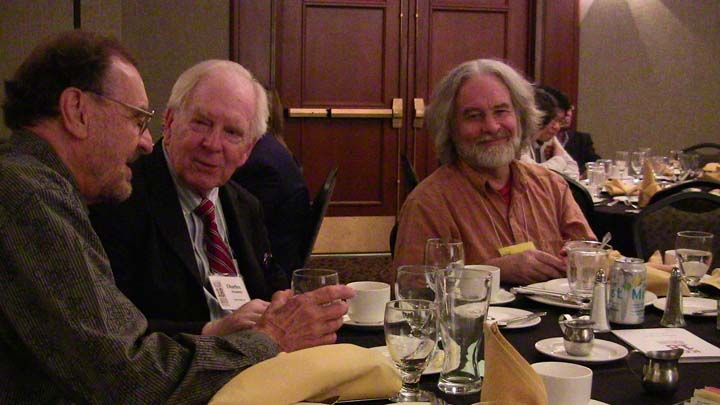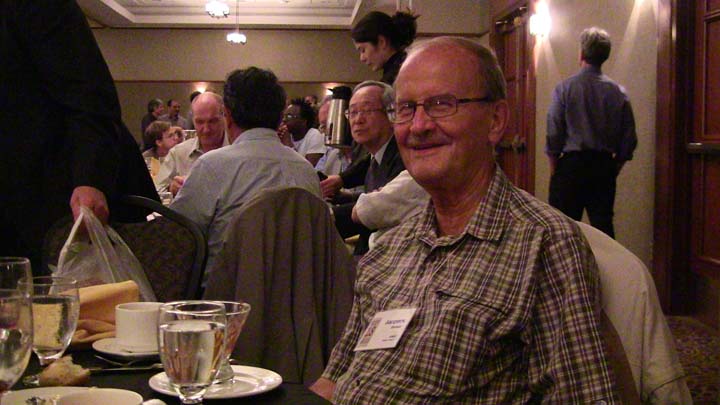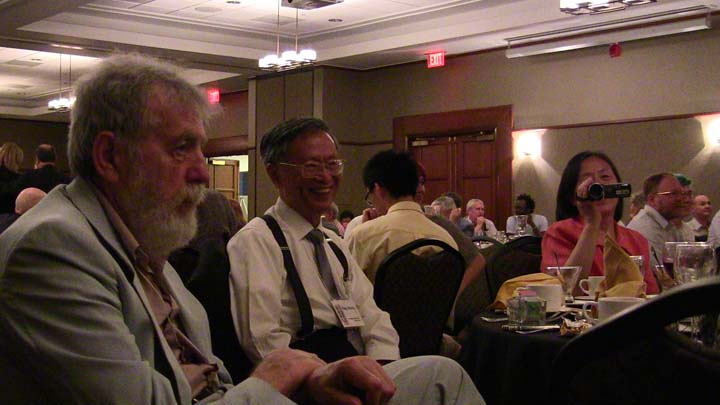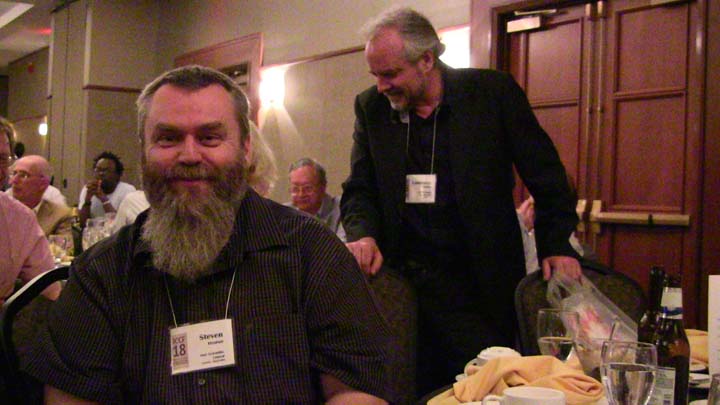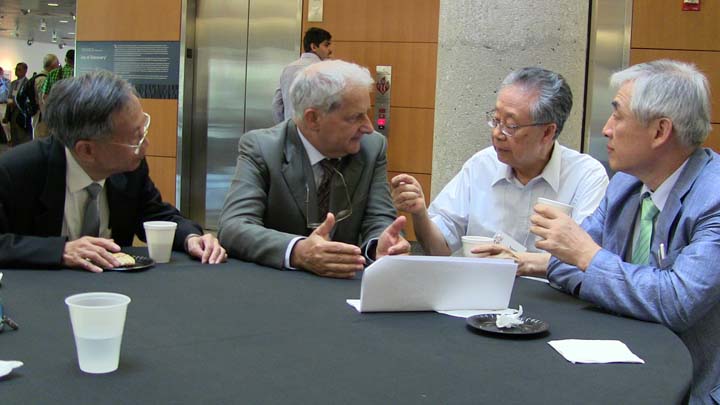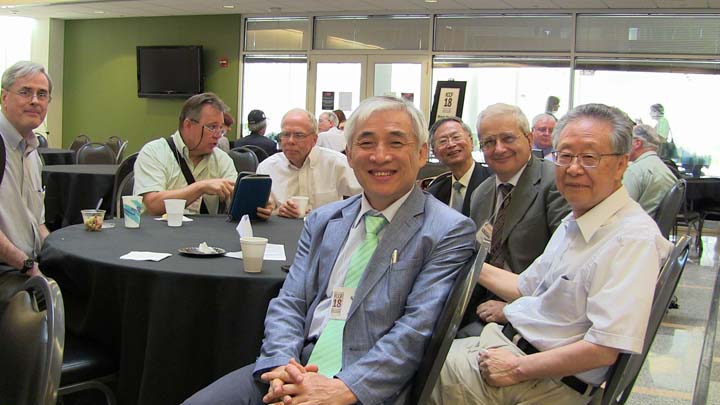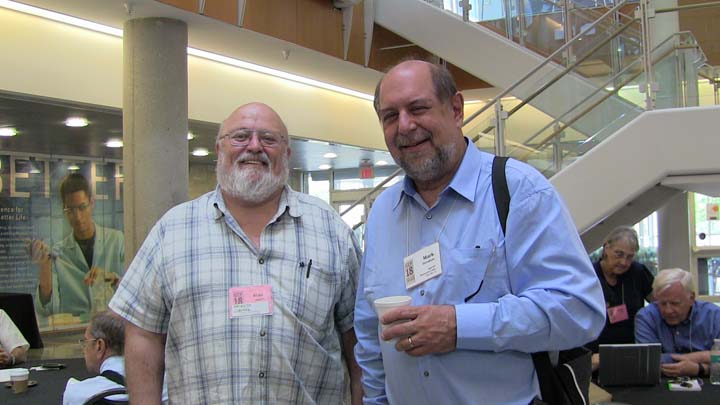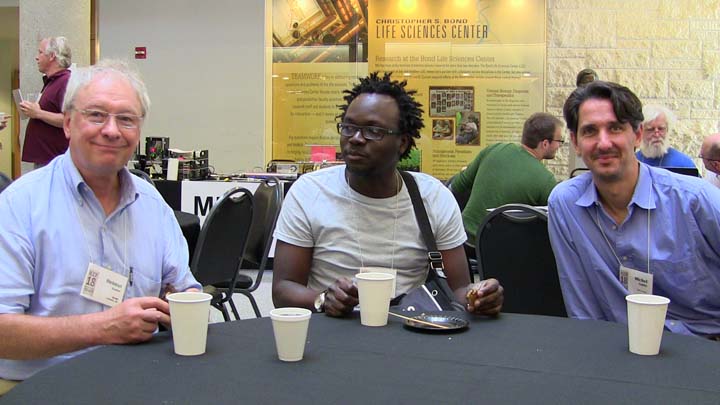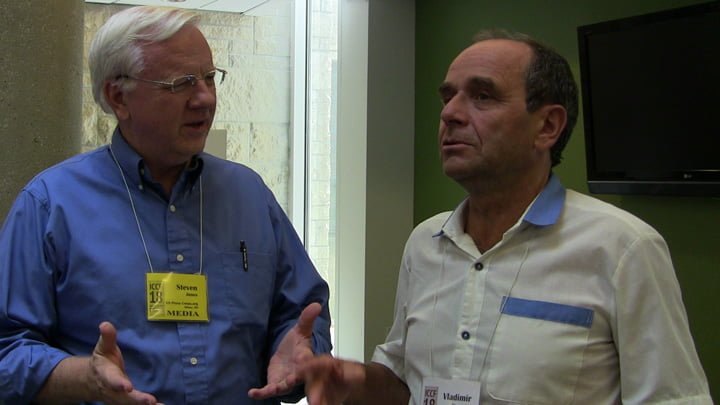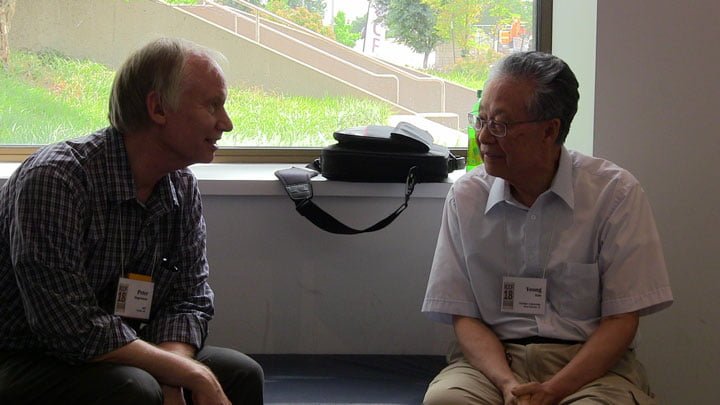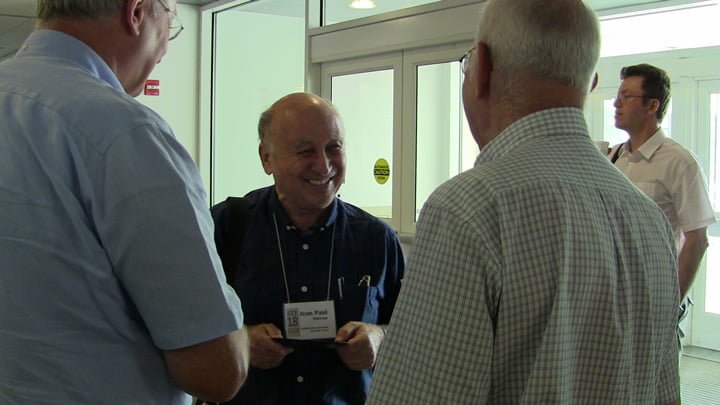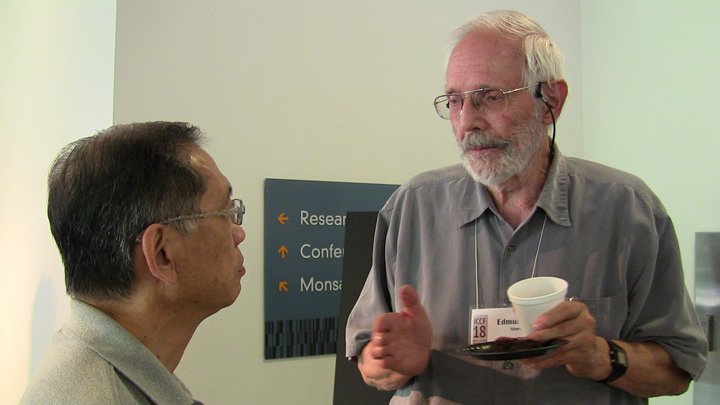
Concluding Observations on ICCF-18 by David French

ICCF-18 Way ahead Panel 26Jul13By David J French

I am now back from the above event after a long and circuitous drive home. Here are some of the thoughts I explored during the trip.

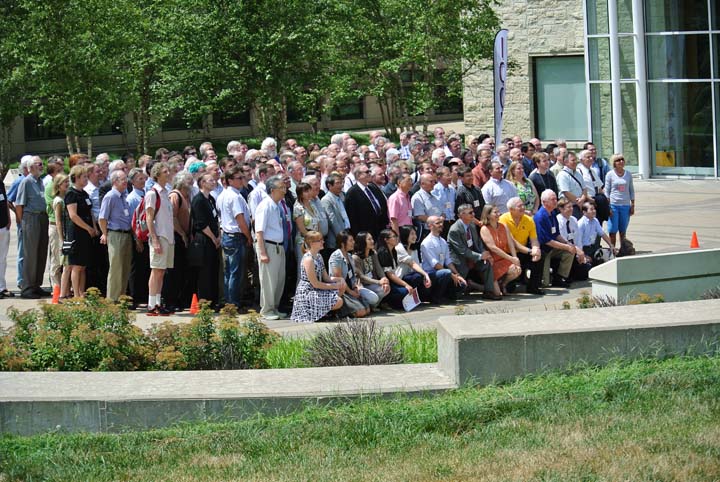
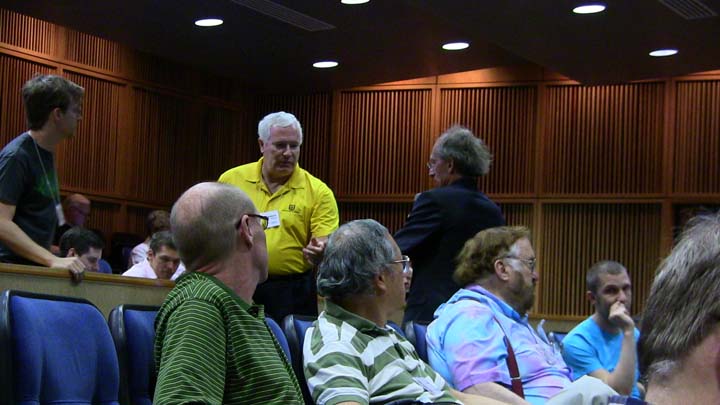
Without doubt the conference was wonderful in many respects, including both the opportunity to learn from the presented results of a variety of experimenters, and from seeing and talking with important, knowledgeable persons in the field, face to face. Nevertheless, I developed over the week a frustration that I finally voiced on the last day to the general assembly.

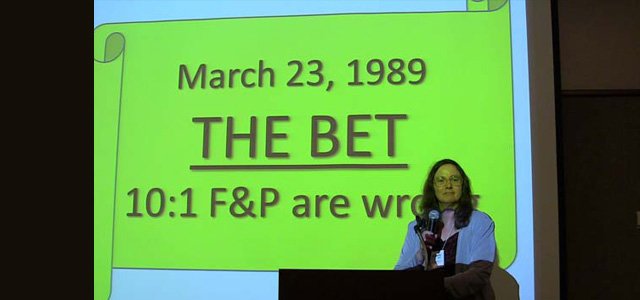
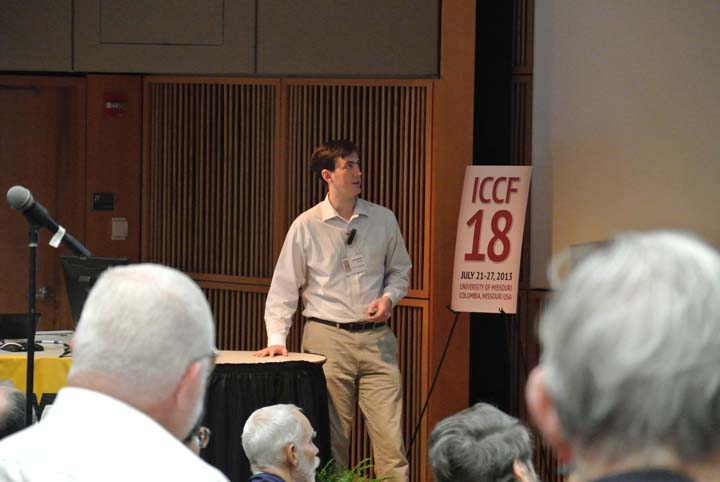
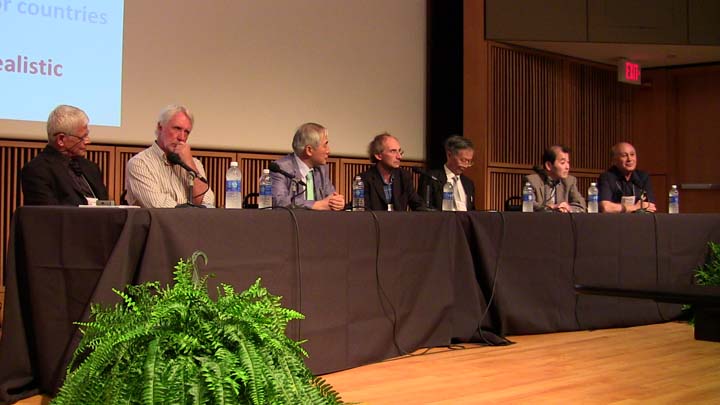
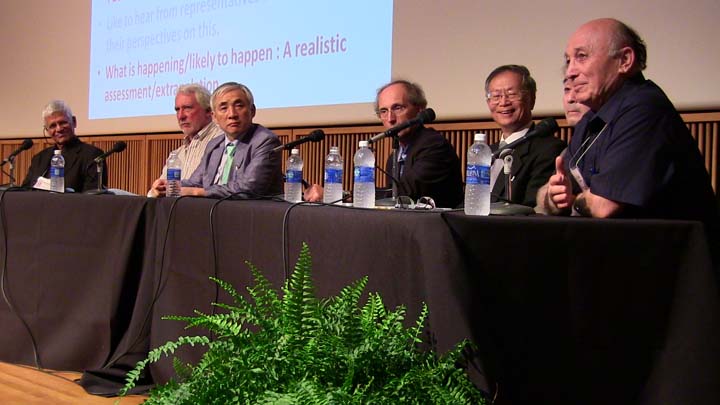
The last event of the conference was a panel discussion on what we can expect in the future: “The Way Forward” panel. Including the panel leader, there were seven persons sitting on the stage. The panel “discussion” proceeded by each of these seven individuals giving a 10 to 15 minute slideshow-supported presentation. The only exception was Mike McKubre who spoke for five minutes without a slideshow celebrating that the next ICCF will be held in Italy. He included in his remarks a criticism that too many people were revisiting past research and simply refining data to one more decimal point: “To move in ever diminishing circles doing the same thing others have done before won’t get us where we want to be.” His observations captured exactly the anxiety that I had been developing during the week.

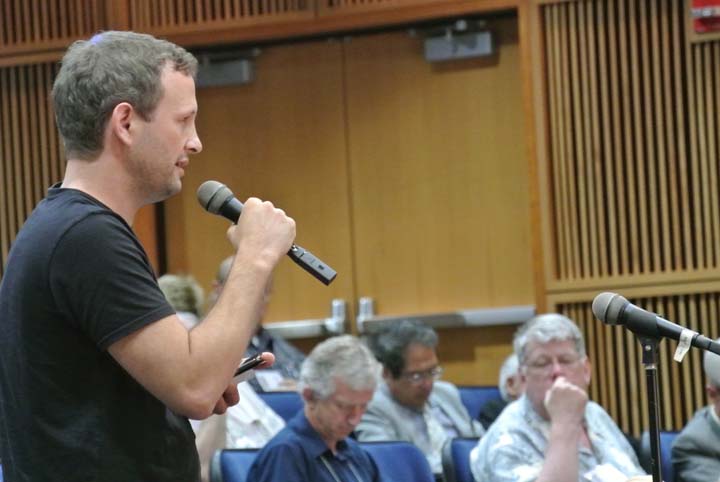
I made as part of the question period after the panelists were done the following observations:

For this field to become commercially relevant, someone has to develop a system that will deliver:

1. Realistic amounts of power, e.g. 500-5000 W
2. At temperatures which are practical, e.g. 85°C; 150-200°C and, as a dream, 600-700°C, and
3. With coefficient of performance – COP values of at least 6, preferably 10 and possibly as high as 20 or more

In support, I observed that demonstrating milli-watts or even 2-digit watt outputs left this field in the category of a scientific curiosity. And producing even a megawatt of heat at a pathetic temperature level, such as 25°C, was virtually useless. (Perhaps it could be useful, for melting ice!) And finally, on the COP issue, I observed that it takes three barrels of oil to produce one barrel of electricity. Therefore a COP of 3 just breaks even on the electricity consumed. That’s why I set my floor value COP at 6.

There were two participants at the conference that showed commercial relevance. Robert Godes from Brillouin Corporation in California is working on a commercial boiler having nickel and palladium core operating at up to 2000 psi and 200°C. Also Brillouin Corp reports that they have a new Hot Tube model being tested at SRI that is expected to deliver steam at temperatures from 400ºC to 500ºC (750-932ºF). And Defkalion provided on July 23rd a live 9 hour Internet demonstration from Milan, Italy of their LENR technology.

This Defkalion webcast had an audience of around 1000 viewers online at its peak, including some 200 participants at ICCF-18. The Defkalion reactor was reported as providing water at 165.43ºC based on an input of 1858.8 Watts, and the heat output was 5721.6 Watts, giving a coefficient of performance (COP) of 3.1.
If these reports lead to commercial units, then these are the real champions of this year’s annual meeting.

There is still no theory about the effect. But those in the scientific community who whine about the lack of funding should realize that as long as they are producing only a teaspoon or toothpaste dab of unexplained excess energy, they will have to compete with all the vast numbers of other researchers who are lined-up to receive “blue sky” funds for their academic research. The “believers” who are chasing COP levels of 1.2 and 1.6 are hooked on the dream that someday, someone else will take their foundational research and turn it into a commercial reality. But after 24 years it’s time to get on with Part 2. If the three criteria that I have listed above are solidly met by anybody, there will be an avalanche of financial support from the commercial community. Who should receive this money? Why those who have demonstrated success, at a relevant level!

Yes, there is a Nobel Prize waiting out there for somebody who comes up with a theory that explains the effect. This is, indeed, a fascinating puzzle. And the sociology of the hunt for the answer to this puzzle will also be the basis of a number of PhD theses sometime in the future. Meanwhile, the researchers who are duplicating old experiments and ever higher levels of precision are not doing the field a good service, not unless they suddenly achieve a breakthrough in understanding. Such work is simply a demonstration of their competence in using laboratory equipment.

Before the conference I posted on ColdFusionNow a reference to the “Streetlight Effect“. I think this may have hit home with a few people; one of the presenters made an aside as he commenced to describe his 20 years of work in electrochemistry to the effect: “… notwithstanding that it might qualify as being limited to the vicinity of the streetlights”. When I made the original observation on the “Streetlight Effect” I had in mind the search for an explanation to the CF phenomenon. But having attended ICCF-18 I think there are enough favorable indications that practical applications can now be created even without having a rock-solid theory. So I suggest that henceforth the search beyond the range of the streetlights should be directed towards ratcheting-up performance in terms of the above the three criteria into the zone of commercial practicality.

If I were a rich venture capitalist looking to invest in this field, I would mine all the work that’s been done to date by undertaking a massive literature survey. There are people like Jed Rothwell, Jean-Paul Biberian and Ed Storms that know the existing literature pretty well. But they see it from their point of view. To make a breakthrough their knowledge has to be combined with the eager enthusiasm of newcomers who want to venture where others have not gone before.

What a combination if a highly energized core team of new, young and educated Cold Fusion enthusiasts can be combined with the resources and wisdom that have already been developed over the last 24 years! We may have such individuals available in the participants in the Martin Fleischmann Memorial Project. Now all that has to happen is for these enthusiasts to receive the support that will finally produce fruit from this long-struggling vine.

Successful Defkalion demo has scientists wanting more

Press Release –From: Attilia Cozzaglio <press@triwu.it>

Google translate (original Italian below):

Cold Fusion: After the streaming of 22 and 23 July, Defkalion has decide to make more accurate measurements on his apparatus.

Saturday night, July 3 (Editor – August 3?) at 20:00, and then repeat Sunday the 4th at 23:00, Moebius will broadcast on Radio 24, a new chapter on the controversial story on cold fusion (better defined LENR, Low Energy Nuclear Reaction).

On July 22, Moebius and TRIWU ‘organized a streaming from the Defkalion laboratories of Europe in Milan, devoted to describing how a cold fusion experiment works in general (also this definition is controversial), during the streaming in which it was amply clear that the appointment was far from presenting as a demo.

On 23 July, at the request of the International Conference on Cold Fusion taking place in Columbus, Missouri, Defkalion organized a long demo of about 10 hours, at which – since broadcast live on the Internet – was attended by a very large number of people, almost 30 thousand contacts, among which were many technicians. Specifically designed for an audience of 200 physicists gathered in Columbus, who watched for an hour and a half, there were many requests for clarification on the apparatus in operation.

This suggested to Defkalion the need to investigate aspects of the measurement.
In the interview on Saturday 3 July (Editor – August 3?) in Moebius will explain the various aspects of that decision.

The streaming video of the July 22 and 23 are available online at www.triwu.it

Info: www.radio24.ilsole24ore.com/
www.moebiusonline.eu
www.triwu.it

Fusione fredda: dopo gli streaming del 22 e 23 luglio la Defkalion
decide di effettuare misure più accurate sul suo apparato.

Sabato sera 3 luglio alle 20, e poi in replica domenica 4 alle
23,all’interno della trasmissione di scienza Moebius, in onda su Radio
24, un nuovo capitolo dedicato alla controversa vicenda sulla fusione
fredda (meglio definita LENR, Low Energy Nuclear Reaction).

Il 22 luglio scorso Moebius e TRIWU’ hanno organizzato un streaming
dai laboratori della Defkalion Europe a Milano, dedicati a descrivere
come funziona in generale un esperimento di fusione fredda (anche
questa definizione è controversa), streaming durante il quale si è
ampiamente chiarito che l’appuntamento era ben lontano dal presentarsi
come una demo.

Il 23 luglio la Defkalion, su richiesta delle Conferenza Mondiale
sulla fusione fredda in corso a Columbus nel Missouri, ha organizzato
una lunga demo di 10 ore circa, alla quale – era ovvio, essendo in
Internet – ha partecipato un numero decisamente ampio di persone,
quasi 30 mila contatti, fra i quali moltissimi tecnici. In
particolare, poi, da una platea di 200 fisici riuniti a Columbus, sono
arrivate, per un’ora e mezzo, molte richieste di chiarimento
sull’apparato in funzione.
Questa perfomance ha suggerito a Defkalion la necessità di
approfondire alcuni aspetti della misurazione.
Nell’intervista di sabato 3 luglio a Moebius si chiariranno i vari
aspetti di tale decisione.

I video degli streaming del 22 e 23 luglio sono disponibili on line su
www.triwu.it

Info : www.radio24.ilsole24ore.com/
www.moebiusonline.eu
www.triwu.it

ICCF-18 Post Thoughts: Long Hours, High Spirits, and The Young Guns

DSC_2520Having just wrapped up the week long 18th International Conference on Cold Fusion, some post thoughts and take-aways are beginning to form, and likely will continue in the days to come, as the decompression from the conference and related travel begin to take shape.

The Hours, Long.

The conference itself was excellent, though in actual execution it was rather brutal. Peter Hagelstein told me it reminded him of a conference in the early 2000’s where after all was said and done he settled in for a full 24 hour sleep. This conference had many of the attendees feeling the same way.

For myself and Ruby, after the 8am to 6 or 7pm lectures and presentations would conclude, it was a quick stop into town for some food and then back to the university dorm room (where most of the attendees stayed) for a complete write up on the days events while downloading photos and video, and transferring over numerous 32gig chips to hard drives. We’d usually wrap up a little before 1 am, then set the alarm for 6 to fix typos and finish up any transfers, before the presentations began at 8am.

Seeing as no one else was doing this, covering the event that is, it became a must do moral imperative that fueled us forward. The television program 60 minutes was apparently there for part of one day and I think there was an AP reporter sitting in front of me during some of the lectures, but most of the time I noticed he was on his laptop looking at Facebook.

There was also a filmmaker named Ken Fox who had attended a previous conference and was working diligently on his own Cold Fusion documentary. We hung out and shared ideas, technical and otherwise. Great guy.

But as far as the day to day coverage went with nightly publishing, ColdFusionNow.org was pretty much it.
ruby2 eli3

The Power of Gathering.

“Human relationships always help us to carry on because they always presuppose further developments, a future — and also because we live as if our only task was precisely to have relationships with other people.” — Albert Camus

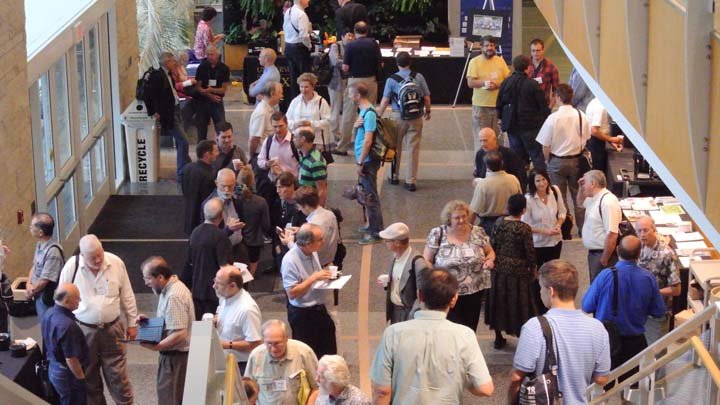
What was evident at this conference was the power of gathering. The enthusiasm among the scientists, researchers and attendees was strong. One night we simply selected numerous photos from the day and made them the majority of the post in an attempt to convey the excitement present in the air. While one criticism came in on the lack of coverage for that day, someone else did get what we were visually trying to reveal. I posted it to our Facebook page and this was one of the responses that summed it up nicely:

I was just looking through some ICCF-18 “day three” pics from coldfusionnow.org If you have any confidence in reading body language and facial expressions as an indicator, you would probably agree that the conference and more importantly, it’s content are being received with “warm regards”… https://coldfusionnow.org/iccf-18-day-3-photos/

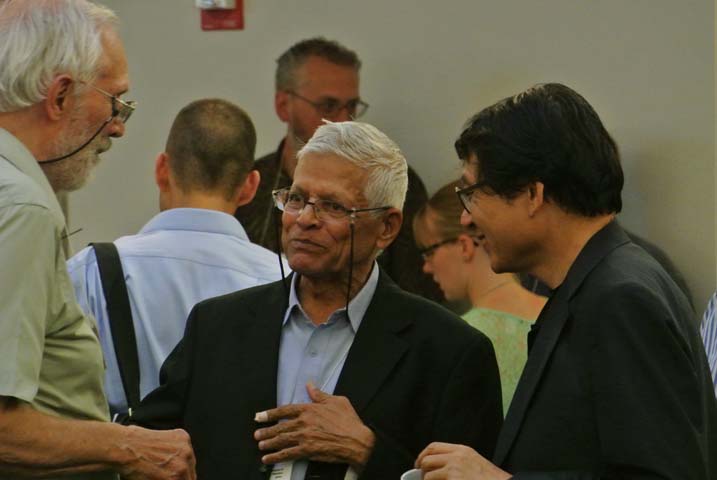
A leading scientist in the field told me during one of the breaks that the most exciting part of the conference was not actually so much the lectures, but rather the “behind the scenes” activity going on. Many exchanges on experiments and other aspects took place, and some of the information exchanged by presenters was not included in their lectures.

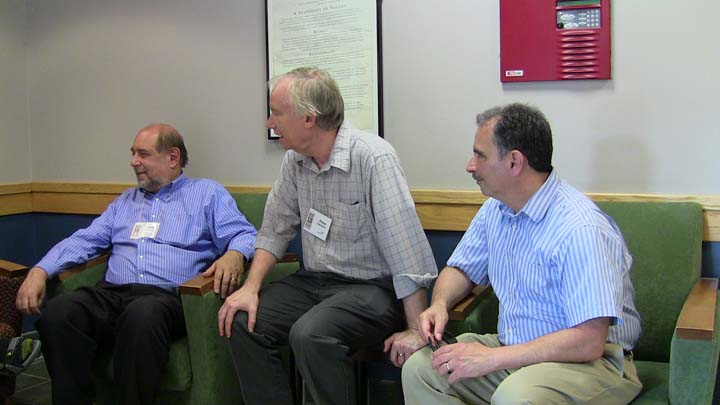
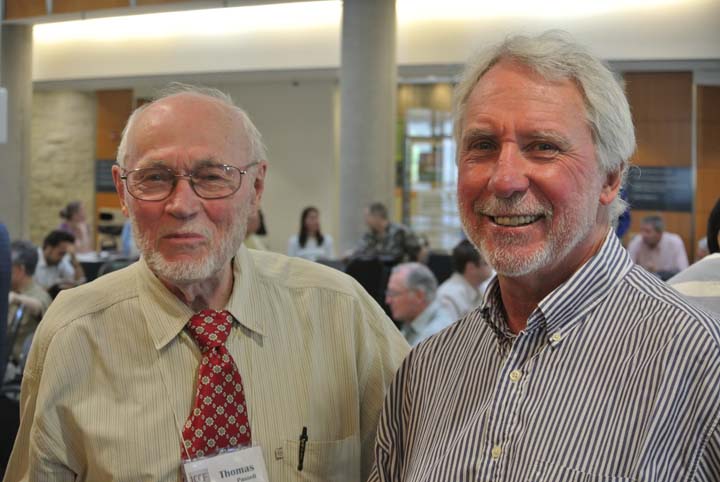
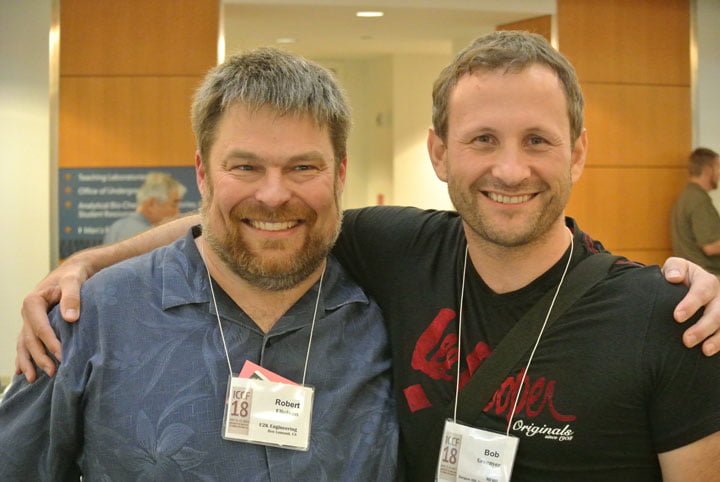
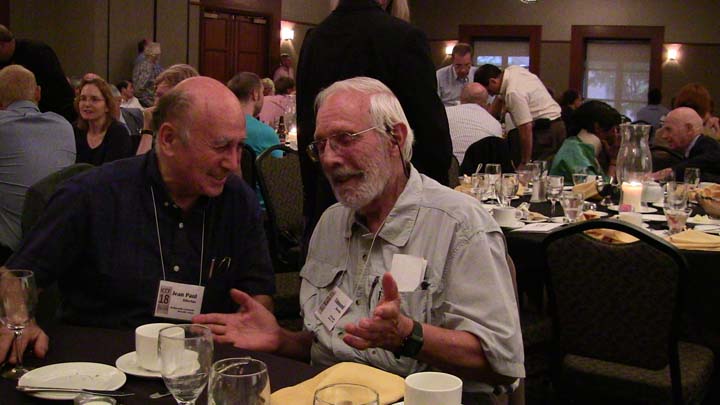
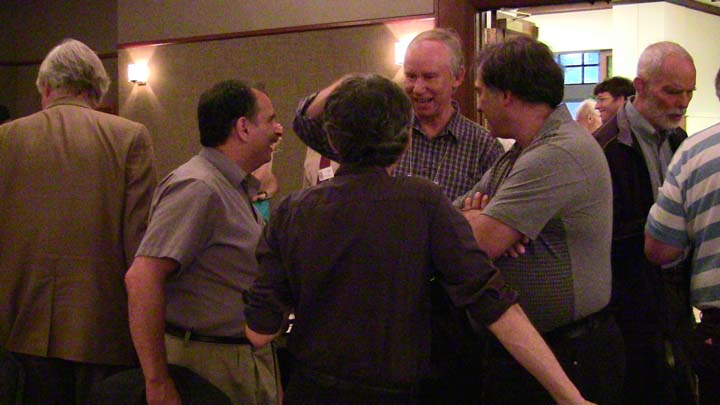
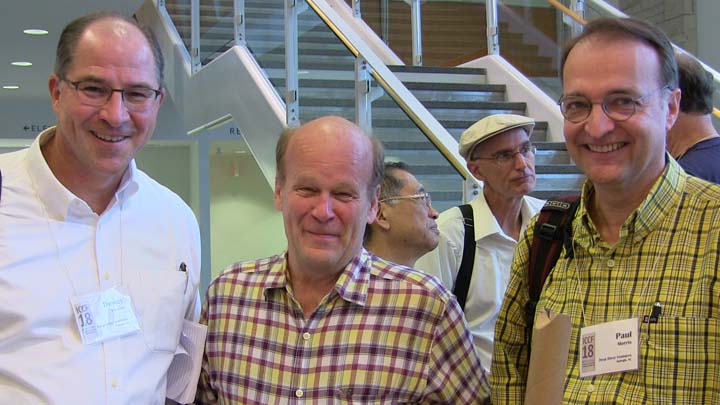
On top of it all was the simple act of friends from across the globe coming together, seeing one another, hanging out, laughing, smiling, socializing, philosophizing and reminiscing. While the same elements of any annual conference on any subject would take place, this being the subject of Cold Fusion and the history this particular endeavor carries, there seems an extra importance in having these conferences and sharing comradery with one another.

DSC_1814

ICCF-1890

rnc_3

ICCF-1813

THE YOUNG GUNS.

If there was one theme I noticed throughout, one element that according to others separated this conference from those in the past, it was clearly the talk about, The Young Guns.

YG-2D

IMG_0372 (2)

ICCF-18-Eli-FridayN (2)

ICCF-18-Eli-FridayL (2)

ICCF-18-Eli-FridayM (2)

YG-2B

ICCF-18-Eli-FridayI (2)

ICCF-18-Eli-FridayD (2)

ICCF-18-Eli-FridayA (2)

Heavyweights Mike McKubre and Peter Hagelstein both personally commented how the presence of young people at this conference was astonishing and inspiring.

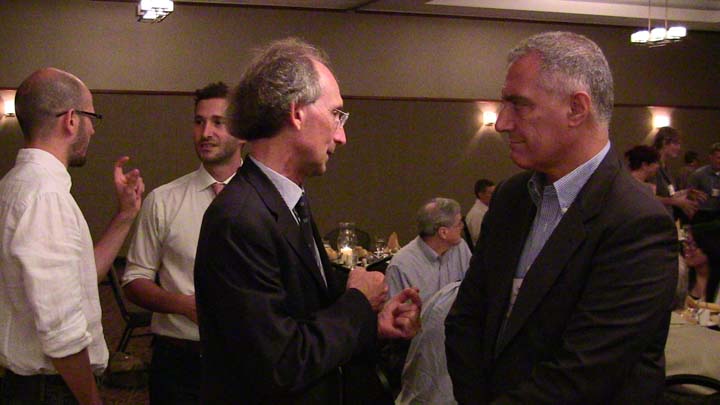
At Thursday night’s banquet, Peter had young men and women going up to him and requesting photographs. Peter said that his heart got yanked hard when he was being told by some of the young people how his work had really inspired them.

YG-2C

ICCF-18-Eli-FridayE (2)

Others as well were surprised by the presence of youth. Many were encouraged by it, seeing as the leaders in the field are getting up there in years (McKubre is nearing 65, and considered the Young Gun of the remaining original ICCF group).

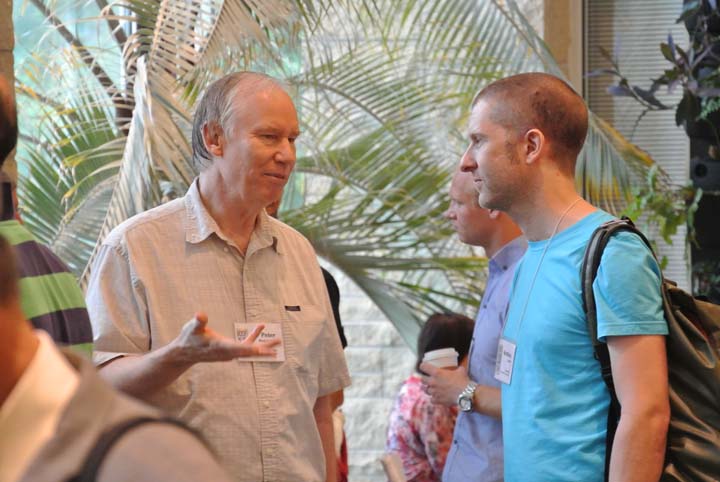
The Young Guns ranged from a high school student attending the conference with her dad (and was now re-considering variations on her experiments after listening to the lectures) to the extremely knowledgeable young men and women from the Sidney Kimmel Institute of Nuclear Renaissance (SKINR). I also met a 20 something guy named Nikita involved with analytical chemistry (pictured in the above top photo with Peter) who was part of the poster session presentations. He had incredible enthusiasm. At one point he stood beaming while carefully looking around the room. He then turned to me and said, “Yeah, these are my people…”

ICCF-1820

The Martin Fleischmann Memorial Project really made their presence known at this conference and they are definitely creating a pathway for young people to hop on board and get directly involved with Cold Fusion applications and experimentation. They provide a certain “cool” to this field while combining all the important elements from utilizing technology and the internet in relevant ways to taking direct, immediate actions to make things happen, all while backing it with strong and addicting enthusiasm. They made a HUGE mark at ICCF-18.

MFMP-DSC_1924

ICCF-1863

Overall, it was a long conference, and we agreed with many attendees who said they felt it was weeks and not days that had gone by. However the agreement was also that it was a very positive outcome and an excellent and very uplifting gathering.

The University of Missouri and Rob Duncan organized and put on a tight event that, while overwhelming in nature, was outstanding in outcome, with some very strong take-aways to push this field in the young and enthusiastic direction it needs to go.

ICCF-18 Banquet Snapshots: Celebrating Science

Communiques from Columbia

Message from ICCF-18: Sunday Basic Course
Day 1 Opening Reception: Top Researchers and New Faces
Day 2 Monday: Strong Claims and Rebuttals
Day 3 Tuesday: PHOTOS!
Day 4 Wednesday: Presentations and Behind the Scenes
Day 5 Thursday: Presentation and Awards
Day 6: The Way Forward
Banquet Snapshots: Celebrating Science
ICCF-18 Post Thoughts: Long Hours, High Spirits, and The Young Guns
Concluding Observations on ICCF-18 by David French

Papers and materials from the proceedings will be available, as authors give their permission, at: https://mospace.umsystem.edu/

ICCF-Picsd

ICCF-Pics001

ICCF-Pics002

ICCF-Picsa

ICCF-Picsb

ICCF-Picsc

ICCF-Banquet-Snapshots009

ICCF-Banquet-Snapshots012

ICCF-Banquet-Snapshots015

ICCF-Banquet-Snapshots016

ICCF-Banquet-Snapshots011

ICCF-Banquet-Snapshots021

ICCF-Banquet-Snapshots023

ICCF-Banquet-Snapshots025

ICCF-Banquet-Snapshots005

ICCF-Banquet-Snapshots002

ICCF-18ba

ICCF-Banquet-Snapshots006

ICCF-Banquet-Snapshots007

ICCF-Banquet-Snapshots026

ICCF-Banquet-Snapshots027

ICCF-Banquet-Snapshots029

ICCF-Banquet-Snapshots032

ICCF-Banquet-Snapshots033

ICCF-Banquet-Snapshots034

ICCF-Banquet-Snapshots036

ICCF-Banquet-Snapshots037

ICCF-Banquet-Snapshots038

ICCF-Banquet-Snapshots041

ICCF-Banquet-Snapshots020

ICCF-Banquet-Snapshots042

ICCF-Banquet-Snapshots043

ICCF-Banquet-Snapshots031

ICCF-Banquet-Snapshots063

ICCF-Banquet-Snapshots044

ICCF-Banquet-Snapshots059

ICCF-Banquet-Snapshots060

ICCF-Banquet-Snapshots057

ICCF-Banquet-Snapshots065

Alights Upon – Cold Fusion Research and LENR Energy – SPAWAR

Alights

The nest instinct through

True imaginings delight

Leads to what’s right


Color the lining new

Tufts soft and light

Bits shiny bright


Into completion it grew

Winged creatures alight

Home for the night

Alights

1. To come down and settle, as after flight.

2. To come by chance: alight on a happy solution.

3. To dismount from a horse or vehicle.

Word Origin & History

Alight:

“On Fire” Early 15c., apparently from M.E. aliht , pp. of alihton O.E. on-lihtan

“To Light Up” also “To Shine Upon”

From Old English

ālīhtan : ā- , intensive pref. + līhtan , to relieve of a burden, from līht , light

“To relieve an animal mount of weight” or to “Relieve a burden from another”

Hey O.G.

Yes yo!

Yo! Yo! Yo!

Yes You! We really do mean each of you!

To those Old Guys and Gals who earned the right to be called Early Cold Fusioneers.

We Honor the Elders of Cold Fusion Research with this oft repeated bit of prose.

Not so far in the near distant future the next generation will look back on our generation as the last of the Fire Era and know in fact that Energy Shortage was a term for unenlightened minds.

Thank you for bringing us the 18th International Conference of Cold Fusion Research.

As pointed out at the conference.

You have all now turned eighteen and the field is stepping into it’s power.

Thanks Pamela Bose!

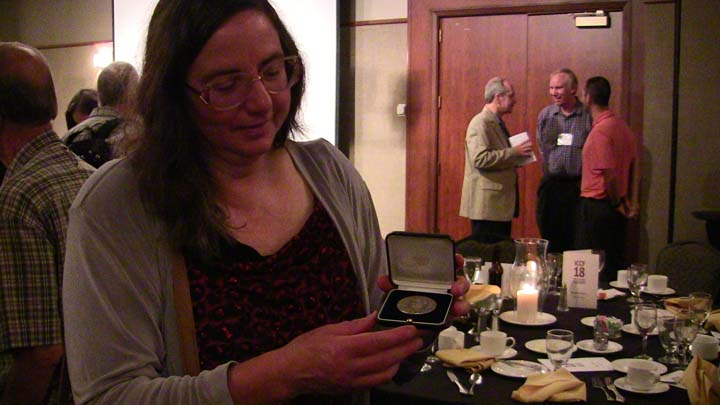
Your award was aptly awarded and you are absolutely correct.

Quote Pamela: “We need to work together.”

Pamela, We hope you get to publish all of your research soon.

Then we can finally and truthfully begin to “work together”.

We hear you Pamela… Truly We do.

It must be really hard to still function while you are sequestered.

You and your wonderful works deserve a big round of applause.

We hope your colleagues will allow you to publish the really juicy stuff soon.

Ask them if you can and let us know what they say.

Encourage them to be truthful

Then you will surely earn

All the childrens’ respect

David Kidwell,

Pamela might talk to you about the transmutation of elements through the application of different forms of LENR Energy. Study up on the value of controlled neutron and proton (X-Ray) creation. This is the key to fine tuning the elimination of different types of radioactive elements. Remember that the really slow (or sometimes fast) moving LENR subatomic particles are very effective on the nano scale yet are often very difficult to detect from a distance outside the cold fusion low energy nuclear reactive environment. The neutron and proton emissions can be tailored for specific effects by control of frequency pulses within the lattice.

Look closely David

  • The actual transmutation of many different elements has been observed at a U.S. National Research Laboratory

  • SPAWAR A United States of America National Research Laboratory

  • David. Wait a minute.  

  • Yes we know and understand what you’re saying.

  • Yes indeed.

  • Few people get to know what’s actually going on in there.

  • While everyone can easily see what Quantum Rabbit Labs is all about.

  • Do to their work and the Martin Fleischmann Memorial Project and other efforts.

  • New young researchers are entering the field of LENR Energy.

SPAWAR – DOE and the DOD

You are stifling this important science and young U.S. researchers interest in it.

It’s time to release your LENR Energy Transmutation of Nuclear Waste Research to the international scientific community at large.

It’s now time to get everyone on board and up to date.

Hey DoD and DoE. It’s time to stop spoon feeding us. We can feed ourselves.

You have the Rossi device and the GeNie in your hands. It’s now time to share.

Or suffer from totally unnecessary humiliation and disgrace.

Meaning your children will have less reasons to like you.

Remember we love you and understand. It’s stupid to lose love and respect.

Seek and give fellowship, appreciation, and love within your community.

Love and Honesty are always healthier than Hate and Fear.

Controlling Strength pales in comparison to Trust and Love.

Believe in the Peoples of the Earth.

Cold Fusion Now!

Navy LENR SPAWAR Series Transmute Radioactive Waste

ICCF-18 Day 6: The Way Forward

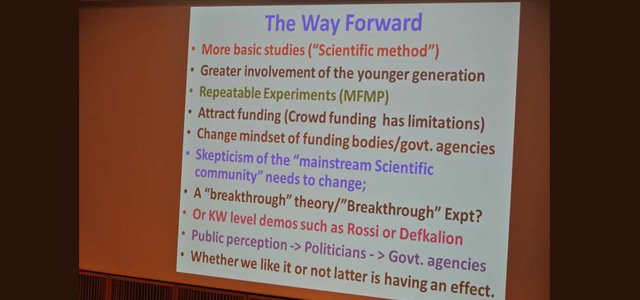
Photo: Slide from Mahadeva Srinivasan‘s presentation The Way Forward

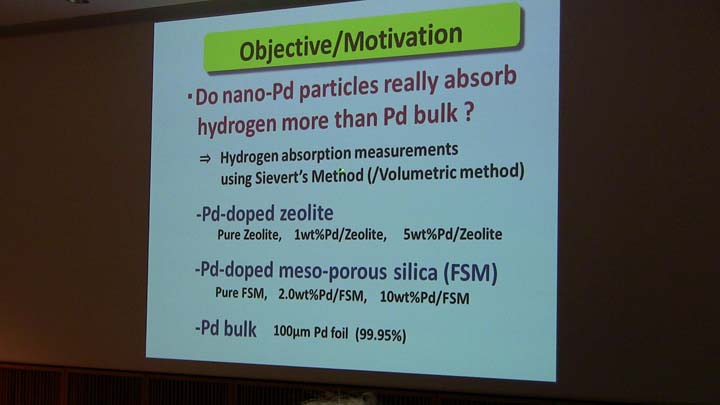
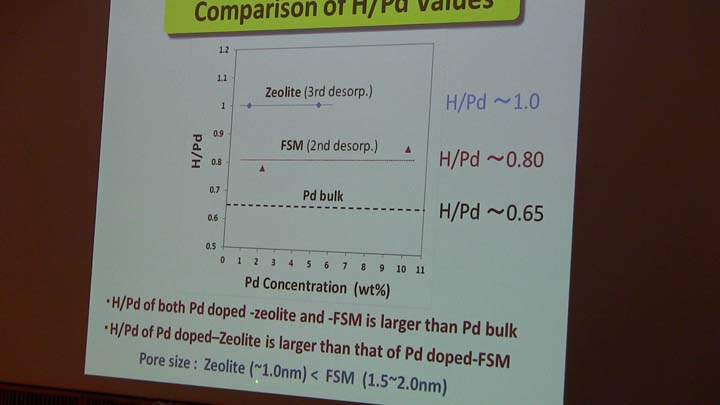
ICCF-18-Eli-FridayBFirst up on the last day of ICCF-18 was Tatsumi Hioki with Hydrogen Absorption Property of Pd-Doped Porous Materials. I am really interested in the use of zeolites as a host for metal-hydrides and made a movie about Iraj Parchamazad‘s research in nano-palladium loaded zeolites.

But my brain was foggy this day at 8AM, in lieu of a summary of Hioki’s work, here are a few slides.

ICCF-18a

ICCF-18b

ICCF-18c

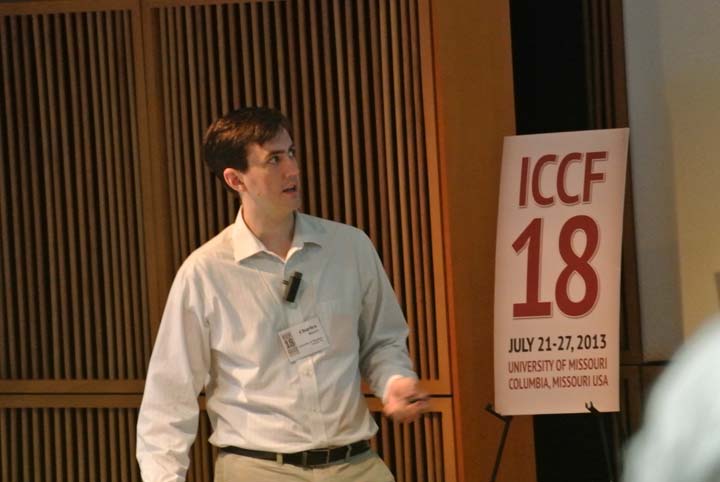
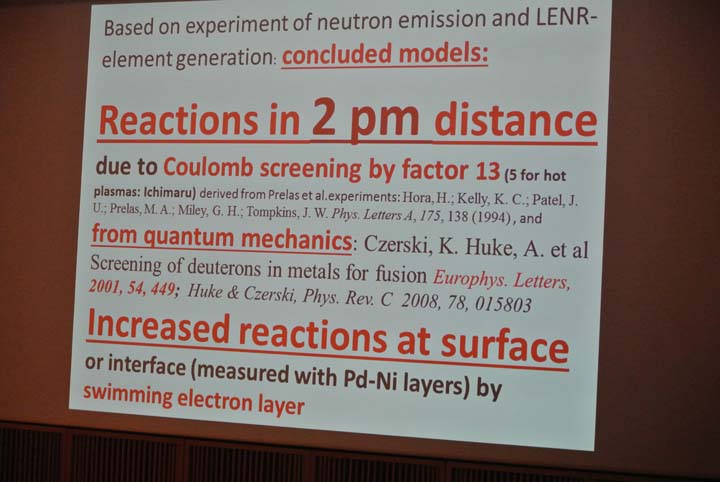
ICCF-18-Eli-FridayDA theoretical Model of Two-Picometer Deuteron Clusters for LENR Supported by Laser Emission of Nuclear Reactions Products by Henrich Hora was presented by substitute Dr. Charles Weaver, as Hora was not feeling well.

This young man was not only brilliant, but kind too, as he offered to help me carry the heavy load of video equipment I carried with me on Monday. Thank you distinguished sir!

Here’re two graphs from Hora’s slides:

ICCF-18-Eli-FridayFICCF-18-Eli-FridayG

Vladimir Vysottski presented Calorimetric & Nuclear Diagnostic of Anode Plasma Electrolysis instead of Yury Bazhutov. Thankfully this substitution was easily assimilated; Vysottski’s powerful voice is unforgettable.

A short break allowed everyone to get a cup of coffee.

ICCF-18-Eli-FridayL

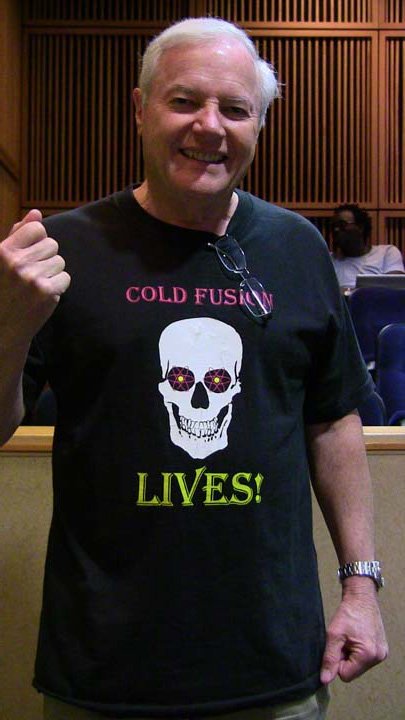
Gordon-Cold-Fusion-Lives-ICCF-18d

ICCF-18e

ICCF-18-Eli-FridayK

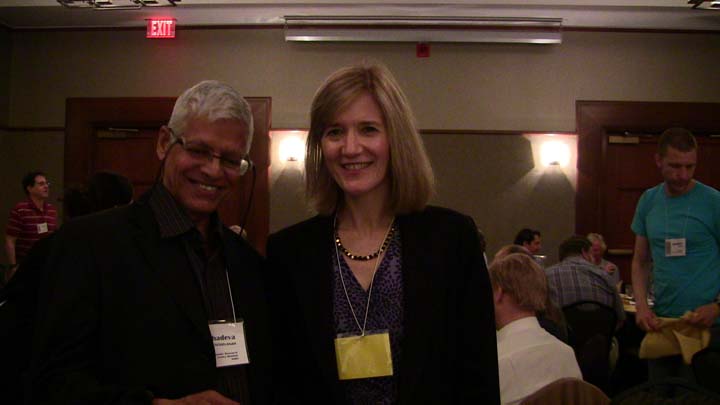
Then it was time for Condensed Matter Nuclear Science – The Way Forward Panel with Mahadeva Srinivasan as Chair included Jean-Paul Biberian, Yury Bazhutov, Akira Kitamura, Xing-Zhong Li, Michael McKubre, Sunwon Park and Vittorio Violante.

ICCF-18-Eli-FridayRVittorio Violante began by outlining possible future plans. His thought is to “Find appropriate contexts for continuing the joint research”, and pursuing “very well conceived research projects involving industries.”

In the Q&A following, Paul Breed commented that the perception of the field needs to be altered through outreach in a coordinated fashion. Cold Fusion Now! He felt that the community need not try to convince the mainstream science skeptics, but concentrate on the populace in general, through outreach and events, feeling strongly that it would provide much more return for the effort.

In response to Paul, SKINR Director Graham Hubler set out the criteria needed to satisfy the scientific establishment, namely, reproducibility, and radiation measurements, criteria challenged by Jed Rothwell, who responded, “There is no real radiation!”

Breed then reiterated that it might be better to bring the public on board, even more than the scientific mainstream.

ICCF-18f

ICCF-18-Eli-FridayAO

The discussion could have gone on, but was ended so Mahadeva Srinivasan could introduce the distinguished panel.

ICCF-18g

He then listed some of the positive recent developments.

  • More young people are becoming involved, as evident by the attendance at the conference.
  • The SKINR program, which has young students and excellent equipment to move forward.
  • International collaboration, in particular between the U.S. and Italy, is strong.
  • More recognition of the role of industry.
  • Increasing dialog between academia and commercially-minded start-ups, in particular in Japan and China.
  • Private money and venture capitalists are taking note

Patent laws are still a hindrance, and Srinivasan felt that representatives of major countries should weigh in on this.

Again on the negative side, he then relayed a story of his attempt to organize a tutorial session on cold fusion in his home country, and the university faculty boycotted the event, though a small group of students did show up.

He handed off to Jean-Paul Biberian, who listed a number of “black holes” and “glass ceilings” in France, meaning avenues that appear promising for support, but never amount to anything concrete, or are blocked from moving forward. The handful of researchers in France work independently without any official recognition.

ICCF-18i

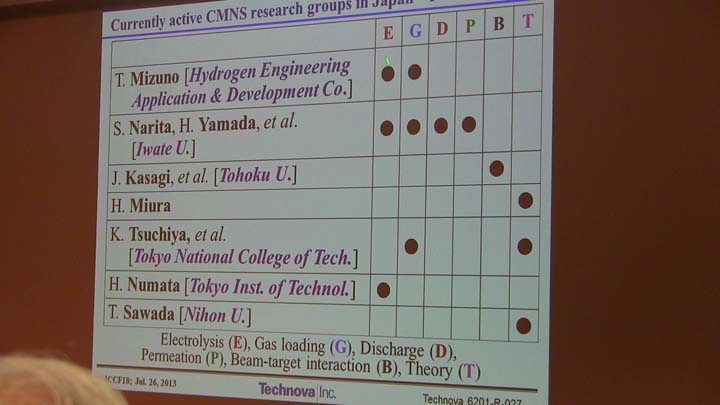
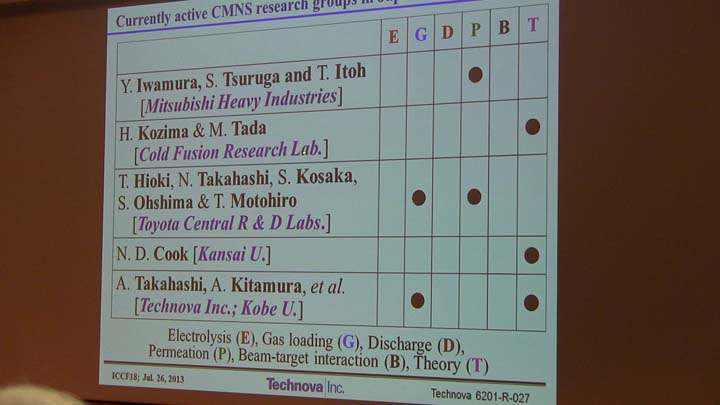
Akira Kitamura began by claiming the number of researchers in the field is decreasing rapidly. In Japan, there are about 10 groups exchanging information on the topic using a variety of methods.

ICCF-18m

ICCF-18n

He noted that the phenomenon of excess heat is documented with much data showing the effect is nuclear, despite the lack of an agreed upon theory to explain it.

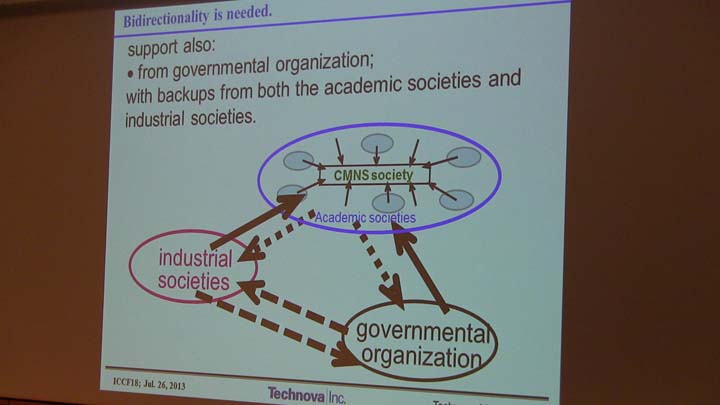
To move forward, Kitamura says that support is needed from professional researchers in other fields. He wants reliable, repeatable and concrete results as opposed to assertions or arguments. Industry has a large role to play as well as governmental organizations. All of these elements, he says, would yield “positive feedback”, and advance the science.

ICCF-18o

Sharing information of materials, methods, recipes, measurement methods are all crucial to advancing technology.

Kitamura finds that young researchers are apt to choose nonpioneering research subjects in nonventurous fields, just to supply a steady stream of papers for publication, and to remain employed.

ICCF-18-Eli-FridayACXing Zhong Li looked back to determine the way forward. What was done right? He felt gas-loading experiments were a success, and the theory incorporating resonance, understanding that anomalous heat occurs without neutrons and gammas.

Li was previously a hot fusionist, and it was a leap for him to jump into cold fusion. After working on resonant tunneling theory on cold fusion, it turns out that his ideas there were confirmed by hot fusion science, and published officially. “Now I am safe!”

New inspirations in today’s work are Energetic Technologies, Rossi and Focardi, Defkalion and National Instruments, and Kitamura and Takahashi, all collaborations between academia and industry.

ICCF-18-Eli-FridayAFLi says the most important elements to pursue now are industry involvement and young students and he showed some pictures of his students at Tsinghua University that are interested getting into the field or a supporting industry. One of his students was in attendance here at the conference, and one of his students working at SKINR.

He ended by exclaiming “I feel good about saying, Go ahead young people, that’s the right way to go!”

Vittorio Violante came up next, reminding the crowd that it was Francesco Scaramuzzi, his old boss at ENEA, that encouraged the lab to investigate the claims just after the announcement in 1989. Two groups began experiments, and a strong program continues there today.

In Italy, several entities, both universities and agencies, are continuing to advance the field, in particular, ENEA and INFN. He knows that cooperation with industry is very important to getting good results, because a wider input allows efficiency in development.

He noted collaborations with SRI and the Naval Research Laboratory were very important to their success at ENEA. Despite all this work, they don’t have significant financial support in Italy, and need to strengthen commitments to do that.

ICCF-18-Eli-FridayAISunwon Park, one of the organizers of last year’s conference ICCF-17, then gave an inspiring talk about why it was so important to work through the difficulties faced by the cold fusion community.

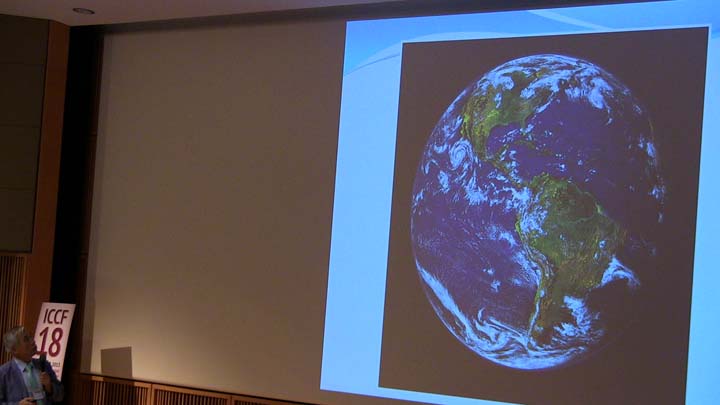
He showed a picture of Earth from space saying

“This is the planet Earth, a beautiful place, and the only one in the universe. We want to keep it that way.”
ICCF-18p

He noted the technological developments of digital communications that make our life better, but that we are also causing huge environmental problems.

“We have to find some way to take care of all this,” says Park. “I want to pass on this beautiful environment to my grandchildren.”

“Right now, we have to understand what is going on. Energy is fundamental to our way of life, and energy demand is increasing due to expanding population, economic growth, and technological change. We need to move to cleaner fuels, while increasing supply for energy demand. In 30 years, Earth’s population could grow to 9 billion.”

ICCF-18-Eli-FridayAK

“At ICCF-17, there was a live demo by Francesco Celani, they invited leading “LENR” companies, and there was a panel session on commercialization and worldwide impact.”

“At ICCF-18, there was a demo by Defkalion, and many more companies are showing up.”

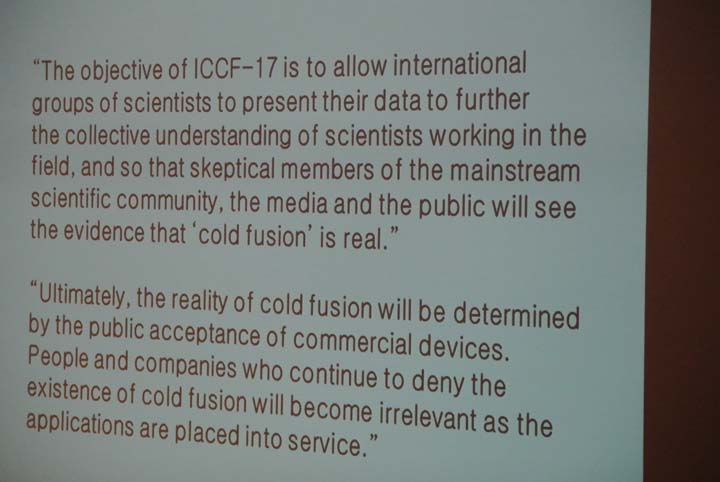
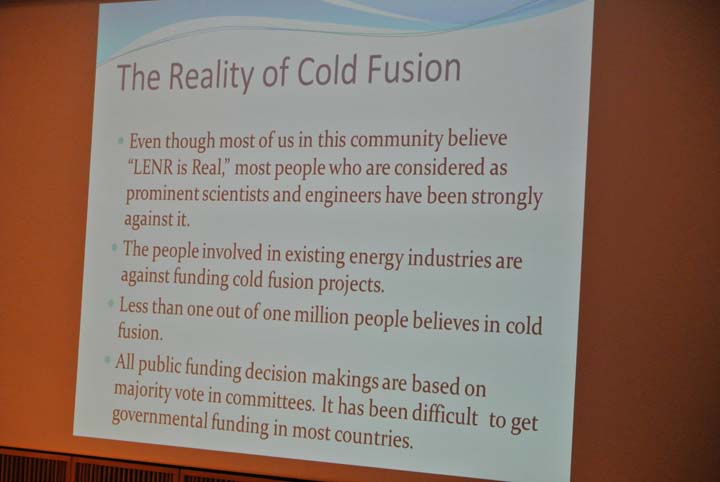
Still, Park estimates “less than one out of one-million people believe cold fusion exists, which makes public funding challenging, since it moves more by majority vote in committee.”

ICCF-18-Eli-FridayAM

He relayed a story about wanting to look into cold fusion himself a few years back, but colleagues in South Korea claimed it was a pseudoscience. After the CBS 60 Minutes piece aired in 2009, there finally was interest, and he was tasked with finding out more about what was happening.

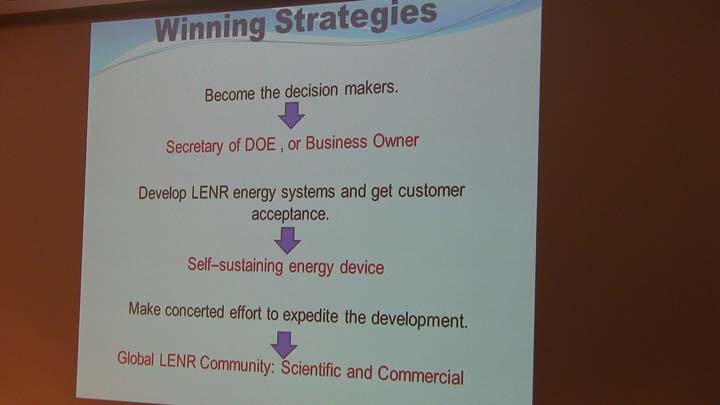
Here’re Park’s Winning Strategies.

ICCF-18r

“One day, if cold fusion is realized, I think I will be able to fly like a bird”

“Cold fusion is the best way to save planet Earth and human civilization. It’s the most exciting investment opportunity at the verge of the energy revolution. If we work together, we will prevail.”

Michael McKubre was asked to speak specifically on what will move this forward. He says two things necessary to move this science forward are, a need, and an independently-minded nation.

Who fits the bill? Italy.

“Italy is performing very well in this area,” says McKubre. “The next conference will be held in Venice, a rich city. Why is Venice a rich city? It is the industrial center of the region and it’s on the backs of industry that this field will move forward.”

“To move in ever diminishing circles doing the same thing others have done before won’t get us where we want to be.”

SKINR’s objective, as tasked by philanthropist Sidney Kimmel, is “a practical technology in his lifetime.” We owe it to all of us to move this field forward to a useful technological objective.”

And he handed the microphone off.

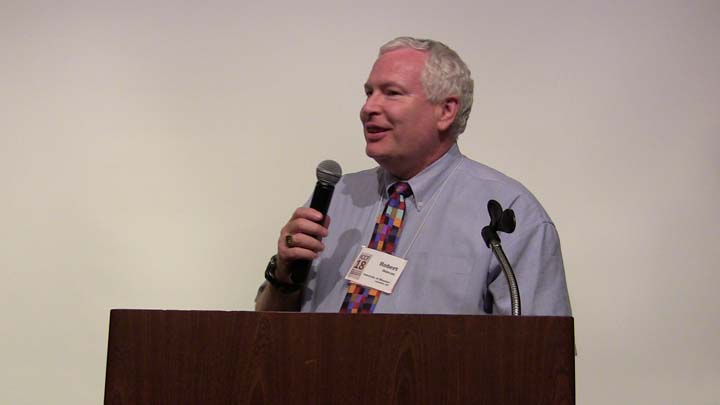
ICCF-18tRobert Duncan closed the session by claiming “diversity in opinions is extremely important.”

He also said the work has to be ready to withstand harsh scrutiny. “I hope we all will be as careful when we roll-out a new product as National Instruments is when they roll-out a new product.”

For any community, “the best advocacy is objectivity.”

“It’s been exciting to hear the different views and thoughts, but it’s going to require that we place that bar high; always disclose what is uncertain.”

Duncan then paraphrased a quote by Nickolai Machiavelli translated into English as “Get real!”

ICCF-18vOpening the floor, many comments from the crowd were genuinely genius, the caliber of attendees was so high, but the conference had to close by Noon (when we’d be kicked out of the room), so the passion was quenched, and the final presentation by Annie Sobel, a co-organizer of the ICCF-18 event, began on ICCF-18 Statistics.

21 countries came together to meet.
The youngest attendee was a high school senior, and the oldest was John Fischer at age 93.
2 Keynotes
83 oral presenters
40 poster sessions
5 Labs toured
5 Technical Panels
5 Exhibits
Career opportunities session
Defkalion and University of Texas demos (Note: I did not see the U of T demo.)
ENEA Workshop
MFMP Update

In closing, papers and materials from the proceedings will be available, as authors give their permission, on this website: https://mospace.umsystem.edu/

ICCF-18-Eli-FridayAQICCF-Pics004

The half-day of discussion was over. Our heads swimming, Eli and I interviewed Robert Duncan and Edmund Storms for the doc, went to grab a bite to eat, and then captured Peter Hagelstein as he was interviewed.

And so the event was closed. The 18th conference that brought together the major scientists in the world on the energy of our future.

Researchers were conferring with each other, engaged in sharing information and forming partnerships for collaboration. There was more industry curiosity. Small investment companies were represented. Hope for commercial success from Defkalion, Leonardo, and Brillouin remains strong. Authors of the disparate theoretical models have verbalized a desire for consensus. And the Martin Fleischmann Memorial Project got the People’s Choice Award for their open-source science project that is attracting a new generation of young people to experiment.

The lack of media attention was appalling. However, CBS was there for one day, as well as an AP reporter. Will we hear anything soon from them? Probably not.

This was heavy science and they are looking for the big breakthrough on which to report.

Duncan observed 18 years is the “adult” age in the U.S., the age when you graduate high school, and go off to the next phase of life. To apply the analogy to the 18th International Conference on Cold Fusion, he said that perhaps the field is now moving forward into its own “grown-up” stage, where further validations will occur, higher visibility will take place, and the respect that this science deserves will finally become the reality.

The next ICCF-19 will take place on March 15-21, 2015 in Venice Italy.

ICCF-18h

ICCF-18i

ICCF-18-Eli-FridayB

ICCF-18-Eli-FridayC

ICCF-18-Eli-FridayG

ICCF-18-Eli-FridayH

ICCF-18-Eli-FridayI

ICCF-18-Eli-FridayJ

ICCF-18-Eli-FridayK

ICCF-18-Eli-FridayL

IMG_0256

IMG_0277

IMG_0279

IMG_0281

Top