New E-Cat Report Positive, 1400C+ and Isotopic Changes in Ni+Li

New E-Cat Report Download Here

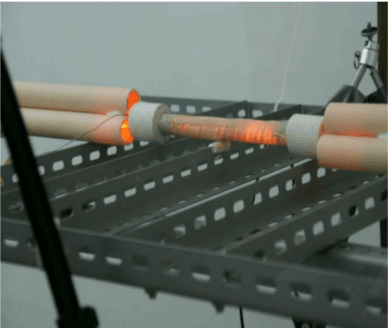
Observation of abundant heat production from a reactor device
and of isotopic changes in the fuel

This test was performed by the same group as the previous test with the following names on the paper:

Giuseppe Levi
Bologna University, Bologna, Italy
Evelyn Foschi
Bologna, Italy
Bo Höistad, Roland Pettersson and Lars Tegnér
Uppsala University, Uppsala, Sweden
Hanno Essén
Royal Institute of Technology, Stockholm, Sweden

This 760 hour test is the longest running example of controllable LENR/Cold Fusion and at an excess of 5825MJ it is also the most powerful.

The Temperature peaked at above 1400C, hot enough to be extremely practical as an energy source.  The measured COP was between 3.2 and 3.6 with the authors hinting they could have pushed the device further but were cautious due to the huge energy gains when they initially turned it up a bit.

The fuel was analyzed before and after the test and showed significant changes in the elemental profile including shifts to Ni62 and depletion of other Ni isotopes as well as a shift in Lithium isotopes.

Listen to Andrea Rossi discuss the results with John Maguire here.


Dr. Melvin Miles on Helium-4, Excess Heat, & Peer Review — New Interview

Dr. Mel Miles is an electrochemist and college professor who spent much of his career at the China Lake Naval Research Laboratory, and is probably best known for systematically detecting the presence of helium ash in Palladium-Deuterium cold fusion cells between the years 1989 and 1995. Many experts in the field believe that Dr. Miles’ findings constitute some of the best evidence in favor of the “cold fusion” hypothesis.

For the first part of the interview Mel and I discuss some of the finer points of his pioneering experiments as well as the link between excess heat & helium-4 production. Dr. Miles then retells some of his first-hand experiences during the tumultuous year of 1989. We also discuss Mel’s peer reviewed critiques of the allegedly “negative” results produced by both MIT & Cal Tech. Not only were their lab procedures and reports fraught with basic/fundamental errors, but in parallel they seemed to abandon the scientific method by engaging in ridicule & grandstanding only months after the discovery. In closing we touch on Dr. Miles’ new book that will compile years of personal correspondences from Martin Fleischman himself.

An overview/summary of Dr. Miles’ experiments, written by Jed Rothwell, can be read here. Other LENR/Cold Fusion related interviews/essays can be found at my blog Q-Niverse.

Chase Peterson, Former President of University of Utah, Dies

This article was originally published in Infinite Energy Magazine here.


CHASE PETERSON, FORMER PRESIDENT OF UNIVERSITY OF UTAH, DIES

by Marianne Macy

Chase Nebeker Peterson, former President of University of Utah, died on September 14, 2014 from complications of pneumonia. His life story was traced in his 2012 autobiography, The Guardian Poplar: A Memoir of Deep Roots, Journey, and Rediscovery. The concept of roots were important to Chase Peterson. He never forgot his own from a family of Mormon pioneers, despite a life that would take him from his birthplace of Logan, Utah to elite eastern prep schools and Harvard University, from which he was an undergraduate and graduate of the medical school. In 2006, Peterson received the Harvard Medal, awarded at commencement by the Alumni Association for a “lifetime contribution to Harvard.” He had three official careers—Vice President of Harvard University, Vice President for Health Services at the University of Utah, and President of the University of Utah. He also practiced medicine and taught his last class in July of 2014. He was a public spokesperson for innovation at the institutions he was associated with, an innovator, administrator who instituted an open door policy with students, doctor, writer, and visionary.

Cornel West, philosopher, best-selling author, civil rights activist, saluted Chase Peterson for “his prophetic witness at Harvard in the turbulent 60s and 70s, his promotion of black priesthood in the Mormon church, his support of anti-apartheid protest in the 1980s, and his steadfast defense of academic freedom during the cold fusion controversy in the early 90s—all expressed his quiet and humble effort to be true to himself.”

MSNBC’s Lawrence O’Donnell, Jr. heard that Dr. Chase Peterson had died and put a moving tribute on air that saluted Peterson for his historically important actions at Harvard which included hiring the first African-American admissions staff member, instituting an enrollment strategy to embrace students less privileged than the typical Ivy League undergraduate—which, as it turned out, included O’Donnell himself, whose admissions entry interview was with Chase Peterson. The United States Supreme Court cited the measures Chase Peterson instituted as exemplary.

In 1978 Peterson had returned from Harvard to the University of Utah as Vice President in charge of health sciences and the university hospital program. There he found “a unique culture.” The University of Utah, he wrote, offered “an unfettered opportunity to restless young faculty members” who would not face the restraints imposed by more settled places. “Ambitious people—often mavericks held back by practices at other institutions—found comfort and support at the University of Utah.” In his book, Peterson mentioned Max Wintrobe, who in the 1940s was the leading hemotologist, texbook author and junior professor at John Hopkins, where he felt at the time he hit a glass ceiling of anti-Semitism at the otherwise excellent institution. Wintrobe, Peterson wrote, felt Utah, while lacking the research budgets of the institutions in the east, “nevertheless presented unlimited opportunity—a new Zion as it were—open to a Jew or anyone else smart and hard-working enough to take advantage of possibilities. As chief of the Department of Internal Medicine, he brought with him a critical mass of respected young medical investigators. Even more importantly, he brought a personal level of excellence that was infectious and launched Utah toward the upper ranks of medical schools and centers.” Peterson also pointed out that this receptive climate was historically illustrated in 1916, when Utah elected the second Jewish governor in the United States, Simon Bamberger, who was widely admired. He added that Bamberger had called the Utah Legislature into special session to ratify the national woman’s suffrage amendment.

Salt Lake City’s University of Utah is the “economic engine for the state,” a phrase coined by former University President David Gardner. Chase Peterson throughout his career valued his home state for its pioneering spirit and what to him was the epitome of American opportunity. Peterson worked to establish a nationally recognized center of medical research, with special contributions in genetic research and the high profile recognition for being the site of the first human heart implant based on research done by Dr. Willem Kolff. In 1982 Kolff’s results were approved by the FDA. In December 1982 the chief surgeon, Dr. William DeVries, operated on Barney Clark and implanted the artificial heart. Chase Peterson was the face of the University, giving twice a day reports to the assembled international media. In his memoir, Dr. Chase Peterson discussed the extraordinary events, but in a narrative twist completely his own finished his in-depth account of the medical breakthrough with the sort of question that Peterson attributed to the extraordinary world fascination with the story. Chase Peterson wrote that Barney Clark’s wife had told Chase right before surgery Barney had asked, “I wonder if I will still love you when I lose my heart?” Peterson wrote, “He answered that question a few days post-op when—still reduced whispering around a tracheotomy tube—he gestured to his wife and mouthed the words, ‘I love you.’ The scalpel had met its match. Love required a functional pump, but its home was elsewhere.”

Chase Peterson’s tenure and tributes are marked with mentions of his leadership, enthusiasm and generosity. Others remarked on his courage and support of academic freedom, freedom of inquiry and pursuit of ideas. To Peterson, this was a sacred trust he felt was his mission to uphold. His obituaries mentioned controversies of his tenure as University President, what he wrote of as the “perfect storm” on conflicting interests and opinions over Martin Fleischmann and Stanley Pons’ discovery and work on cold fusion at the University of Utah. The variety of descriptions reflected on the field now in Peterson’s obituary accounts illustrate the spectrum of those perspectives. Chase Peterson never stopped believing it was his job and responsibility to support the freedom of research, no matter the personal cost to himself and his family, no matter the warnings of no less an advisor than Nobel laureate Hans Bethe, who told him ahead of time, “They will only laugh at you.”

Peterson wrote in his memoir: “No president, dean or department chair at any research university can arbitrarily influence the publication or suppression of something against a faculty member’s will, whether that something is a chemical process, a better can opener, a concerto, a play, a piece of writing, or anything else. Neither can a faculty member’s right to publish or circulate something be prevented. Such action violates academic freedom in its most basic sense.”

If cold fusion could work, Chase Peterson said, it would be as important as the discovery of fire. The local NPR station in Salt Lake City rebroadcast a program on Peterson’s book this week that quoted him as saying this. More important was the right to pursue cold fusion, or any idea. Chase Peterson’s support of cold fusion was instrumental in costing him the presidency of the University of Utah. He often stated that he would do it all over again. Patrick Shea, who had served as counsel to Fleischmann and Pons, this week reflecting on Chase Peterson’s death commented, “No University of Utah president has ever done as much to support his faculty and their academic freedom.”

Chase Peterson is survived by his wife Grethe Ballif Peterson, his children Stuart and Edward Peterson, Erika Munson, and thirteen grandchildren. His memorial service will be held on September 27th at 10:00 am in the Church of Jesus Christ of Latter-day Saints Monument Park North Stake.

Marianne Macy has been doing oral histories relating to the history of cold fusion since 2007 and is writing a book on cold fusion’s start to the present day. An excerpt from the book will run in Issue 118 of Infinite Energy.

Related Links

The Guardian Poplar: A Memoir of Deep Roots, Journey, and Rediscover by Chase Nebeker Peterson

Cold Fusion Now Cross-Country Tour Ruby Carat visits the University of Utah campus.
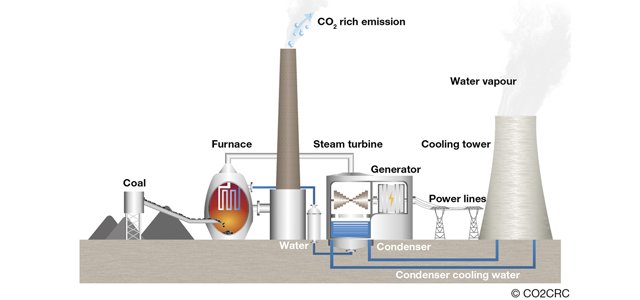
How could cold fusion reactors replace coal-fired steam power plants?

Graphic: copyright CO2CRC

Because the grade of heat generated [and recoverable] from the cold fusion processes [as of now] is modest in relation to furnace temperatures of conventional power plant [ which are in the range of 2500- 3500 deg.F (1400C-1900C)], it is not obvious to me how the existing furnace/ boiler plant can be efficiently utilized for the cold fusion processes.

However, if the CF energy cell is used directly to generate saturated steam at pressures in the range of 500-3000 psig. (pounds per square inch gauge) where boiling temperatures would be in the range of 470-700 deg.F (240C-370C) [respectively for the pressure range] and then, a separate CF energy cell is used to directly superheat that steam to 750 deg.F (400C) for a 500 psig. and to say 1000 deg.F (540C) for the 3000 psig. boiler, then that superheated steam [for what ever steam pressure system is used] could be routed to an existing steam turbine plant [with the return treated and de-aerated condensate returned as feed to the new CF fired boiler.

In summary, the existing fossil-fired boiler plant [including all fuel/ combustion air/ furnace/boiler/ash systems/flue gas systems, are all deactivated and preferably removed, and the new cold fusion powered boiler together with the cold fusion powered superheater would be integrated into the existing steam turbine generating plant [including the steam condensing plant and, of course, a modified control room].

This whole project would certainly drastically reduce emmissions to zero, but would be very costly, I suspect, because of labour costs of dismantling the majority of the power station.

It may be a better option to build new power station using the new CF boiler and superheater plant with a custom designed and compact steam turbine/ generator plant in a small modern compact building.

With the most appropriate and efficient small 25MW cold fusion powered station I would suggest the following :

Boiler outlet conditions : 500 psig. sat. steam [at 470 deg. F (240C)]
Superheater outlet conditions : 470 psig. steam at 750 deg. F (400C)
Steam Turbine outlet conditions [to steam condenser] : 1 psia. @ 10% wetness.

The practical steamrate for generating electrical power with this relatively simple, small and compact station is about 9 lbs/ kwhour so the total steamrate from the small boilers serving a single multi-stage steam turbine/generator system which exhausts to a steam condenser is 225,000 lbs/hour.

Scientists would decide how much steam capacity each boiler/superheater combo would have and that would determine how many units would be required to meet the total steam demand.

Note: The use of steam for electric power generation [via boiler and steam turbine as presently done] is really 20th. century technology and all forms of cold and hot fusion should seek to find DIRECT electrical generation processes that harness ion transfer in conjunction with an external excitation field.

The use of steam at high pressure as an electrolyte, may however make use of an abundant commodity that facilitates extreme process efficiency, and this applies to the pressurized CIHT unit where high pressure steam is extremely efficient as an electrical conductor [the electrolyte] permeating the catalyst fill [consisting of back to back catalyst discs] through micro gaps in the catalyst structure. Further the basis of direct electric power is when a stream of ions or electrons flowing and driven by an existing voltage potential, will interact with an external excitation field thus creating export electric power.

Addendum:

This proposed and detailed [perhaps speculative] bold upgrade to the original BLP – CIHT unit could be a blockbuster in that a compact direct energy CIHT based system, offered in a wide range of sizes and used in multi-module applications for the power generation industry, but more importantly, for the shipping industries [from private and recreational craft to commercial shipping and naval shipping including surface vessels and submarines].

This conceptual unit [or units] could be installed in the ships engine room and bypass the existing electric generating plant with out the costly removal of that plant [or in the case of nuclear powered vessels deactivate and bypass the entire systems of the existing reactor compartment].

See details on The PRESSURIZED CIHT Unit [.pdf]

“One of the greatest contributions made to science”

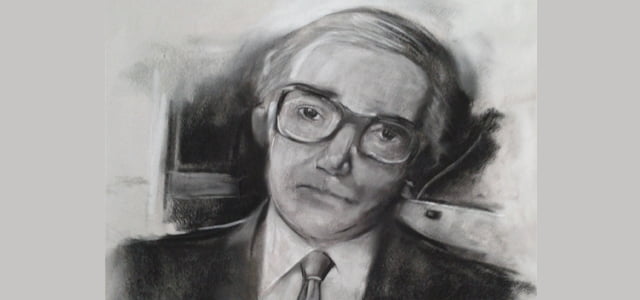
Portrait of Martin Fleischmann by Winston August 2012

Infinite Energy Magazine Issue #117 highlights the new book Developments in Electrochemistry Science Inspired by Martin Fleischmann with the chapter on cold fusion written by veteran Navy scientist Melvin Miles and Michael McKubre, Director Energy Research Lab at SRI International, both of whom collaborated with Martin Fleischmann on cold fusion research for over a decade.

Read the original article here.

Science-Inspired-200x287New Book Honors Scientific Legacy of Fleischmann
by Christy L. Frazier

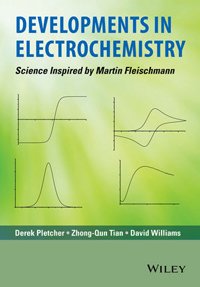
A new book honoring the scientific legacy of the late Prof. Martin Fleischmann has just been published by John Wiley & Sons. Developments in Electrochemistry: Science Inspired by Martin Fleischmann is edited by Derek Pletcher, Zhong-Qun Tian and David E. Williams, with 19 chapters (including the Introduction) about electrochemistry-related science written by electrochemists. Infinite Energy readers will be particularly interested in the chapter written by Melvin Miles and Michael McKubre, “Cold Fusion After a Quarter-Century: The Pd/D System.” Miles notes that he was picked as the cold fusion author and asked McKubre to assist him. He said he may have been chosen because he is “the only one other than Stan Pons who has written papers with Martin Fleischmann about calorimetry and the palladium-deuterium system.” Miles co-authored a number of papers during the last part of Fleischmann’s career.

Wiley’s website describes the book as “neither a biography nor a history” of Fleischmann’s contributions but rather a “series of critical reviews of topics in electrochemical science associated with Martin Fleischmann but remaining important today.” The chapters begin with an outline of Fleischmann’s contribution to the topic, followed by examples of research, established applications and prospects for future developments.

Editor Derek Pletcher worked with Fleischmann for 15 years at the University of Southampton. The book project was initiated because, “We believe Martin to have been a leading international scientist with very broad interests and a very warm personality and that we had benefitted greatly from our association with him (this includes some who were/are strongly anti cold fusion). We were therefore seeking a way to honor his memory and this became the book.”

The editors’ introduction, “Martin Fleischmann: The Scientist and the Person,” highlights great respect for Fleischmann’s approach to science and forward-thinking skill. They write: “Often his ideas were ahead of the ability of equipment to carry out the experiments, and it was only a few years later that the ideas came to fruition and it became possible to obtain high-quality experimental data.”

One of the editors, David Williams, was on the team at Harwell Atomic Energy Laboratory that purported to have negative results in replicating the cold fusion effect in 1989. Yet, in the Introduction the basic story of cold fusion is laid out and Fleischmann’s willingness to the end of his life in August 2012 to “defend the underlying concepts as well as his experiments” is recorded. They conclude, “It is inevitable and appropriate that this book contains a chapter on cold fusion that takes a positive view.”

McKubre appreciates the editors’ willingness to include what became a major part of Fleischmann’s scientific legacy. He said of the book, “This was a first class endeavor. I am very happy that it was done, and that cold fusion was included. At the end of Julian Schwinger’s life they rewrote his biography and reedited his bibliography to exclude mention of cold fusion. It is great to see that the electrochemistry community is not as narrowminded as the nuclear physics community seemed to be.”

The cold fusion chapter by Miles and McKubre focuses on “the multithreshold materials constraints that prevented easy reproducibility” of the Fleischmann-Pons (F-P) heat effect and the “brilliant, but largely not understood, implementation” of the F-P calorimeter. They note that some will believe that cold fusion “represents Martin Fleischmann’s greatest scientific failure.” They argue that the work may instead be one of the greatest contributions that Fleischmann made to science, noting that “few would have had the vision to see such a possibility, the courage to pursue it and the skill to test it” and that the F-P heat effect “is the sort of invention that only a man of Fleischmann’s knowledge, genius, confidence and courage was capable of making.”

Miles and McKubre conclude that “the future of Fleischmann’s dream must be practical, and therefore the heat effects must be cheaper, easier and of much larger scale and gain.” Future experiments are likely to utilize small-dimension materials including metals other than palladium in high-temperature.

Other chapters in the book include: A Critical Review of the Methods Available for Quantitative Evaluation of Electrode Kinetics at Stationary Macrodisk Electrodes; Electrocrystallization: Modeling and Its Application; Nucleation and Growth of New Phases on Electrode Surfaces; Organic Electrosynthesis; Electrochemical Engineering and Cell Design; Electrochemical Surface-Enhanced Raman Spectroscopy; Applications of Electrochemical Surface-Enhanced Raman Spectroscopy; In-Situ Scanning Probe Microscopies; In-Situ Infrared Spectroelectrochemical Studies of the Hydrogen Evolution Reaction; Electrochemical Noise: A Powerful General Tool; From Microelectrodes to Scanning Electrochemical Microscopy; In-Situ X-Ray Diffraction of Electrode Surface Structure; Tribocorrosion; Hard Science at Soft Interfaces; Electrochemistry in Unusual Fluids; Aspects of Light-Driven Water Splitting; Electrochemical Impedance Spectroscopy.

Developments in Electrochemistry: Science Inspired by Martin Fleischmann is available in hardcover ($115) and e-book format ($92.99) from the publisher at http://www.wiley.com/WileyCDA/WileyTitle/productCd-1118694430.html, and is also available on Amazon. According to editor Derek Pletcher, proceeds from sales will be used to fund a Biannual Fleischmann Lecture at the Annual Conference of the Electrochemistry Group of the Royal Society of Chemistry.

Related Links

“Science Inspired by Martin Fleischmann”

Martin Fleischmann in 10 minutes

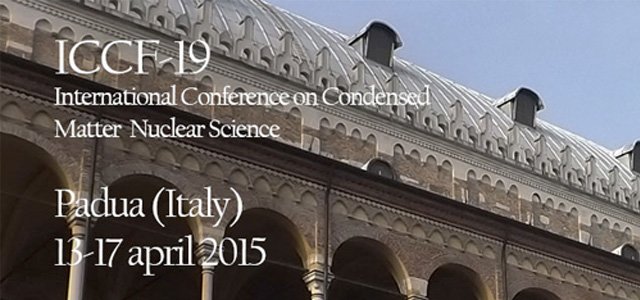
New dates announced for ICCF-19

The 19th International Conference on Condensed Matter Nuclear Science (ICCF-19) will be held on new dates April 13-17, 2015 in Padua, Italy.

A website iccf19.com is now under construction.


New! A Brief History and Introduction to the International Conference Series
First part – From ICCF1 to ICCF3
by Michael McKubre


At this time, you can sign-up for the newsletter to receive information as it happens. According to the timeline, special rates for hotels must be booked by March 13, 2015.

ICCF-19 “New approach on Material Investigations“ is organized by TSEM SpA, an Italian company involved in “the research, design and manufacture of innovative technologies in the areas of Healthcare, Energy and Security.” Support is also provided by Confindustria Padova, “which represents Italian manufacturing and services companies…”

A message from conference chair Antonio LaGatta, a TSEM Founder and Engineer, welcomes participants:

It is my pleasure to welcome you to the 19th edition of the International Conference on Condensed Matter Nuclear Science: ICCF-19.

TSEM is the first private company to independently host ICCF and, as Founder and President, I’m proud to be part of a science and organization that will certainly have significant impact both in the short and long term on everyday life.

This conference looks to continue the evolutive tradition that has been the hallmark of past conferences. Results achieved during previous years have been phenomenal and ICCF-19 presents an opportunity to not only reemphasize the importance of this scientific field, but also to generate and encourage fresh perspectives that reflect how CMNS can change the world.

The purpose of ICCF-19 will be to discuss recent scientific findings as well as to encourage a more general public interest, encouraging a better understanding of the significance of this research and how it will impact society. We will move to accomplish this in part by utilizing the Italian Media and international press, both in science and non-academic media outlets.

Another innovation within ICCF-19 is the establishment of a new committee: The Engineering Applications Committee. The EAC appointees are engineers and investors whose goal is to form a bridge between academia and industry thereby encouraging the generation of products derived from years of scientific research.

Researchers will meet companies seeking to form cooperative partnerships to encourage technological development and industry formation. Research is critical and it is now time to look towards market readiness for CMNS and all its related technologies.

As we near the conference dates, continue to browse the ICCF-19 website for updates on the homepage and please follow our newsletter.

Thank you for your interest and I look forward to welcoming each of you in Padua, Italy, for what will certainly be a revolutionary ICCF-19.

Antonio La Gatta
General Chair, ICCF-19
Engineer and Professor
TSEM Founder

A link to the Padua Visitor’s and Convention Bureau is also provided.

See you there!

Top