Live Open Science Project Dog Bone tests E-cat model online

The World Wide Web now traffics a new model of scientific collaboration as a group of young researchers tested a revolutionary energy technology live online today.

The Martin Fleischmann Memorial Project at quantumheat.org formed in 2012 at ICCF-17 in Daejon, Korea, to find a reproducible cold fusion experiment, a task that no leading science institution had the sense or courage to try. The collective has tested replications of energy cells designed by Francesco Celani, Tadahiko Mizuno, as well as designs of their own.

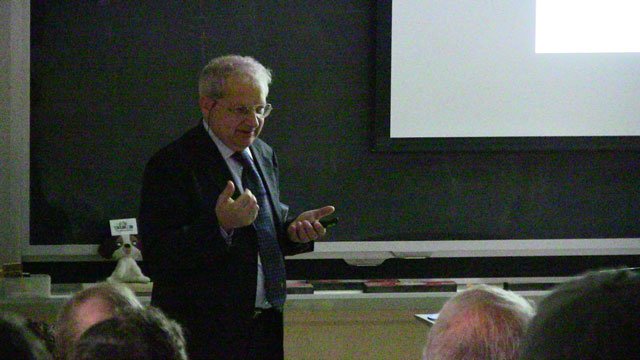
Mathieu Valat (L) of MFMP and Francesco Piantelli (R) of Nichenergy discuss partnership.
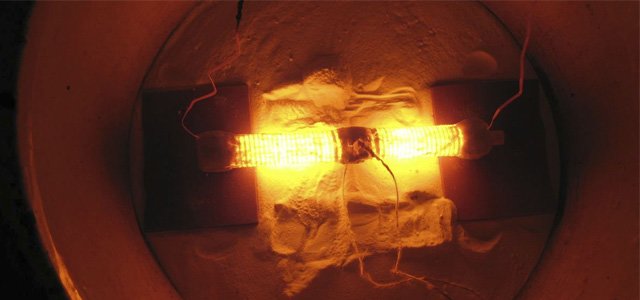
They are now focused on working with Francesco Piantelli, one of the first to explore excess energy from nickel-light-hydrogen systems, and, the “dog bone” model E-Cat, so named for the reactor’s appearance in the test report Observation of abundant heat production from a reactor device and of isotopic changes in the fuel [.pdf]

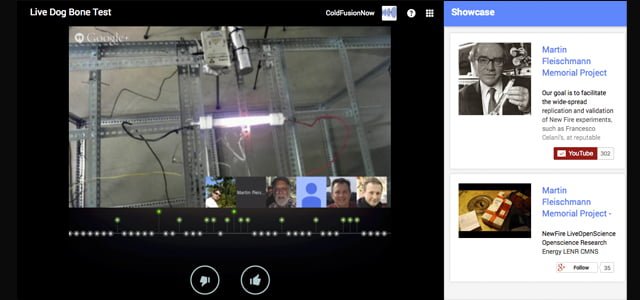
Andrea Rossi’s E-Cat was repeatedly demonstrated producing excess heat. Now owned by Industrial Heat, the technology appears to have been reproduced by well-respected Russian scientist Alexander Parkhomov [.pdf]. MFMP began to organize Project Dog Bone in October, and the group is now working with Parkhomov to reproduce his set-up. Today, a calibration test took place live on Youtube and Google hangouts, the online venues all the participation Silicon Valley can muster for this field.

Where are visioneers?

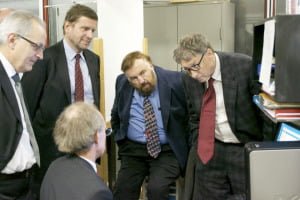
Bill Gates (far left) listens to Dr. Vittorio Violante at ENEA.
Bill Gates (far right) listens to Dr. Vittorio Violante at ENEA.
Bill Gates‘ visit to ENEA labs, one of the leading institutions in the world on LENR materials science, was investigatory. How much he was told, we do not know. No further information was forthcoming from ENEA.

Nevertheless, the creators of this reality are keeping tabs on the field, but have not made funding available. Why would Bill Gates, who seeks solutions to energy problems, not see the solution cold fusion offers?

Why haven’t the daring entrepreneurs of Silicon Valley jumped on what Gerald Celente calls “the greatest investment opportunity of the 21st century”: an ultra-clean energy source that could power their technological fantasies for millenia?

David Niebauer, a lawyer who represents technology firms in California says Silicon Valley is not ignoring the field, but taking a “wait and see” attitude.

“VCs do not invest in research; they are looking for commercialization and sound go-to market strategies,” he says. “Until LENR has a viable commercial product, they will remain on the sidelines. I know a number of VCs and Silicon Valley tech companies that are watching the field with interest. Some small investments are also trickling in in the form of angel investments from individuals inside these institutions.”

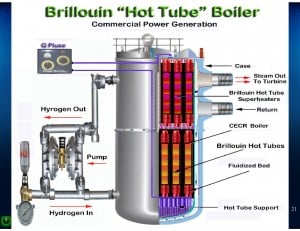
brillouinppttechnical3-27-12-120815120338-phpapp0216Robert Godes, President and Chief Technology Officer of Brillouin Energy Corporation (BEC), a commercially-minded company based in Berkeley, California developing their own Brillouin Hot Tube reactor has met with difficulty convincing Silicon Valley capital to migrate across the bay. When asked if the Digerati were stepping up to fund new work, the answer was a flat, “No! – but we’re doing OK.”

Brillouin captured around $2 million in funding over the last couple years, money spent on hiring engineers and lab staff, and funding a collaboration with SRI International in Menlo Park, California to test their technology. They’re getting a lot of science on the way to a product.

“We have gotten results back on 3 of 5 electrolyte samples we sent out for analysis”, says Godes, “and I am hoping to get the last two soon. We can reliably produce Tritium which is a step in the process. At the same time we are also using T so that it does not build up in the system to the point where it becomes a concern for users of the technology.”

Says Godes, “We need to sell less of the company to obtain the capital required. We are close to completion of a new manufacturing process that will allow us replicate the demonstration we ran for Mike McKubre [the director of the Energy Research Lab at SRI]. That will provide another big boost to the valuation of BEC.”

A little support could make a big impact

Companies like Industrial Heat and Brillouin Energy Corporation (and there are more) represent the small independent start-ups in the new energy field, and a handful of staff is all most of these companies have. Even ENEA, the institute Bill Gates visited in Italy, is a company with perhaps less than 500 employees. How would an investment from the Gates Foundation effect their research?

Terra Power wants next generation nuclear technology.
Gates and Khosla both support Terra Power for next-generation nuclear technology.
“We do know that Gates often invests along side his friend Vinod Khosla, one of the wealthiest and most successful VCs in the world”, says Niebauer. “Khosla is famous for his “Black Swan” theory of investing and if ever there was a “Black Swan” it is LENR.”

“If Gates and Khosla took an interest and investment position in the field, it would be huge. What we need is more investment to speed up and expand the research being conducted on a shoestring by a handful of private companies. Also, not to be underestimated is the simple acceptance [of LENR] as a valid field of research. More physics and engineering students need to be encouraged to study the field – a Gates/Khosla bet would spur research and development on many levels.”

Still, some researchers in the field say too much is still unknown to engineer a product and money is better spent on an all-out science lab where experiments would reveal nature of the reaction. Former Los Alamos National Lab nuclear chemist and author of The Explanation of LENR Edmund Storms would like to see funding for lab that would have tens of experiments going at once to “breakdown each parameter space.”

“Theory guides the optimal engineering of LENR,” says Storms.

Figure emerges from ground

Cold Fusion is the Mystery Landscape that Bob Dobbs described in his model of cultural evolution. A usable technology is not yet publicly available, but the ground is forming to support it, and MFMP Live Open Science is a vital component.

While the bulk of Silicon Valley intelligence, creativity, and capital is focused on developing the next phone app, the new pioneers of technology are utilizing the network for a collaboration of global scale, and doing it on fly specks. The Martin Fleischmann Memorial Project is making our clean energy future a reality, and inviting you to participate.

Follow the action:

First calibration test presented live on Youtube is available for viewing.

Data was available in near-real-time here: http://data.hugnetlab.com/

Donate to Live Open Source Science with MFMP

Says Michael McKubre, “It would not take much to turn the LENR/CMNS field from resource-limited to talent-limited. I am looking forward to a very exciting 2015.”


**********************
Related Links

Martin Fleischmann Memorial Project

Russian scientist replicates Hot Cat test: “produces more energy than it consumes”

Andrea Rossi on 3rd-Party Report, Industrial Heat, & 1MW Plant — New Interview with John Maguire

David Niebauer

Brillouin Energy Corporation

The Explanation of LENR

David J. Nagel on CASHFLOW describes a reasoned approach to funding

David J. Nagel Scientific and Commercial Overview of LENR [.pdf] published in Infinite Energy #112 (2013)

Russian scientist replicates Hot Cat test: “produces more energy than it consumes”

E-Cat World has obtained an English translation of the report by Professor Alexander Parkhomov originally published in Russian detailing his replication of Andrea Rossi’s E-Cat generator.

Download the report here:
http://www.e-catworld.com/wp-content/uploads/2014/12/Lugano-Confirmed.pdf

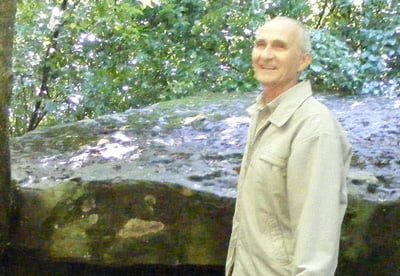
Alexander Parkhomov has confirmed the Hot Cat experiment.
Photo: Alexander Parkhomov courtesy F. David.
Parkhomov, a disciple and colleague of Nobel prize winner Andrei Sakharov, attempted to replicate the Hot Cat experimental set-up reported in the recent paper Observation of abundant heat production from a reactor device and of isotopic changes in the fuel [.pdf] authored by a group of Italian and Swedish scientists testing Rossi’s technology.

Parkhomov writes that “the reactor is capable of generating a lot of heat in excess of electric heating”. With the E-Cat replica testing at temperatures between 1200C-1300C, the unit provided a COP of about 2.6.

However, Fig.6 of the report shows a so-called heat-after-death effect, whereby after the heating input is turned off, the reactor continues to maintain its temperature for approx. 8 minutes before dropping lower. This unique effect, when utilized fully, will allow infinite COP as there is zero input power while output power stays strong.

Fig.5 shows that no radiation beyond the normal background radiation was detected.

The English-version of Parkhomov’s report is reproduced below:

BEGIN REPORT ***************************************************************

1. The design of the reactor.

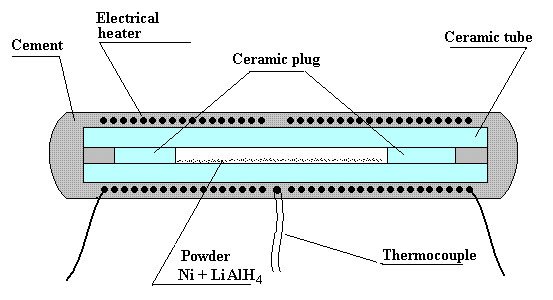
For the manufacture of reactor Al2O3 ceramics tube length of 120 mm, an outer diameter of 10 mm and an inner diameter of 5 mm is used. The tube is rounded by electric heater. Inside the tube it is 1 g Powder Ni + 10% Li [Al H4]. The thermocouple contacts to outer surface of the tube. The ends of the tube are sealed heat-resistant cement. Likewise the entire surface of the reactor is coated by heat-resistant cement.

Fig. 1 Design of the reactor.
Fig. 2 Reactor prepared for experiment.


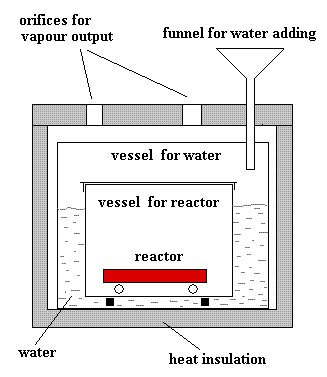
Used by experts at verification Rossi reactor technique based on thermovision camera observation is too complex. In this experiment a methodology based on the amount of water boiled out is used. This technique is repeatedly checked. In this experiment the reactor is inside of closed metal vessel. This vessel immersed in the water. When the water boils, part of it is removed as a vapor. By measuring the decrease of water, it is easy to calculate the separated heat because the value of the evaporations heat is well-known. Correction for heat loss through the insulation can be calculated as cooling rate after shutdown reactor.

Fig. 3. Design of the calorimeter
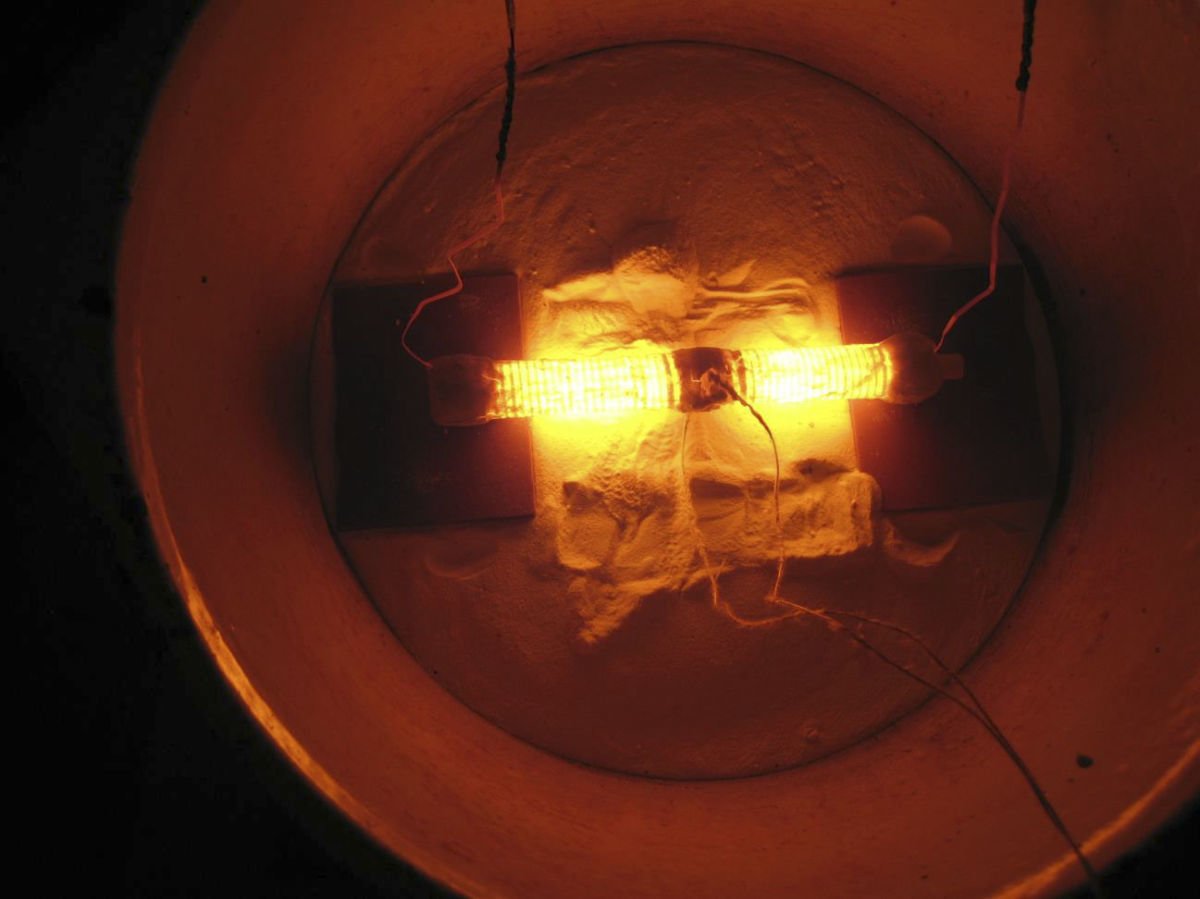
 Fig. 4. The reactor in operating time. The covers from a thermal insulation and vessel with the reactor are removed

Fig. 4. The reactor in operating time. The covers from a thermal insulation and vessel with the reactor are removed


2. Outcomes of the experiment

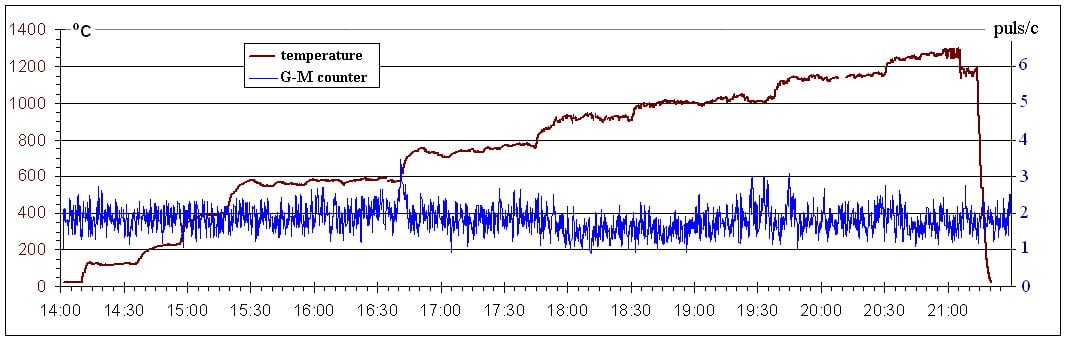
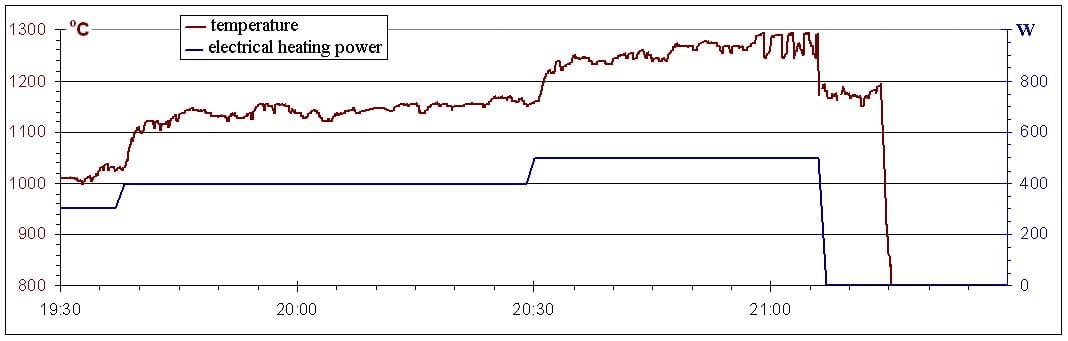
Fig. 5. Temperature changes in the heating process

The power supplied to the heater stepwise varied from 25 to 500 watts. Level of 1000°C was overcome after 5 hours of heating. On the same diagram shows the count rate Geiger counter SI-8B. This counter responsive to alpha, beta, gamma and X-rays. It is seen that all during heating, the radiation situation is not very different from the background. A slight increase in temperature is noticeable only about 600°C to 1000°C. Further studies have shown that this chance or regularity. Dosimeter DK-02 is not found during the experiment set dose within the measurement error (5 mP)

Fig. 6. Temperature changes in the heating process. Area of high temperatures

Here is shown in more detail the temperature change of the heating power 300, 400 and 500 watts. It can be noted that for the same heat output there is a gradual increase in temperature, particularly strong in the last site. At the end of the site with the highest temperature there are the temperature oscillations. This section ends with the termination of electric heating as a result of heater burnout. Thereafter, at the temperature for 8 minutes kept at nearly 1,200°C, and then begins to fall sharply. It is indicates that in the reactor at this time heat is produced at kilowatt without any electric heating. Thus, from the already seen that the reactor is capable of generating a lot of heat in excess of electric heating.

Table. Determination of the extracted heat and coefficient of thermal. Calculations are made for three modes of operation with a temperature of about 1000 °C, about 1150 °C and 1200 – 1300 °C.
Table. Determination of the extracted heat and coefficient of thermal. Calculations are made for three modes of operation with a temperature of about 1000°C, about 1150°C and 1200 – 1300°C.

At temperatures 1150°С and 1200°C – 1300°C, the heat release of the reactor considerably exceeds consumed energy. During activity in these modes (90 minutes) over the consumed electrical energy about 3 МДж or 830 Wh is produced. Output Experiments with analogue of high-temperature Rossi heat source, loaded with a mixture of nickel and lithium aluminum hydride, showed that at temperatures of about 1100°C or higher this device produce more energy than it consumes.

END REPORT*****************************************

Related Links

Interview with Andrea Rossi on the new Hot Cat test report with John Maguire

The Ultimate Hot Tub

A.G.Parkhomov on ResearchGate.com

Patenting Cold Fusion Inventions before the US Patent & Trademark Office – Part 2

The following is Part 2 of a paper prepared By David J French in support of a Poster Presentation at ICCF-18, the 18th International Conference on Cold Fusion held in Columbia, Missouri over July 21 – 27, 2013. Part 1 is available at ColdFusionNow here. Part 2 now follows.

Patenting Cold Fusion Inventions before the US Patent and Trademark Office

. Part 2

Treatment of Cold Fusion Inventions before the USPTO

With the USPTO receiving over one half million applications a year, Examiners do not customarily require applicants to file proof that their alleged invention will work as represented. However, the USPTO has classified Cold Fusion and LENR technology in the same category as “perpetual motion”, anti-gravity, time travel, universal Cancer cures and guaranteed cures for baldness. These are considered to be cases where there is doubt that the alleged invention will work. In these fields Examiners are expected to require applicants to demonstrate that the alleged invention actually works. To impose this requirement the Examiner must establish a basis for a legitimate doubt in a communication to the applicant before requiring the applicant to provide proof of operability. Unfortunately, Examiners faced with Cold Fusion applications have in many instances used excessively negative and inflammatory language regarding the history of Cold Fusion science in attempting to place such a doubt on record.

Persons filing patent applications in this field have to be prepared to face a prove-it-works requirement. They do not have to prove that Cold Fusion works per se; they only have to prove that what they represent in their application is true. The disclosure accompanying their patent application must be sufficient to enable ordinary but knowledgeable workers in the field to reproduce what is promised in the patent application. This is not an area where a patent can be obtained on the basis of a prediction or prophetic insight.

Responding to a Prove-it Challenge

The best procedure to follow in answering such a requirement from a US Examiner is to place the original patent disclosure in the hands of an independent agency that will follow the instructions in that document and report-back, hopefully, that they obtained the results as predicted in the patent filing. Such evidence may not rely on after-developed understandings or procedures but must be based on the original document as filed, together with publicly available knowledge existing as of that date.

Relevant message: Make sure your Disclosure is complete when you make your formal patent filing. Be sure the invention works. Don’t promise too much. You may have to prove it!

Example that failed

James H Cook, a retired 80 year old engineer residing in Simi-Valley, California filed an application on August 19, 2009 before the US Patent Office for an invention entitled: “Energy Generation by Nuclear Acoustic Resonance”
This application became abandoned on March 9, 2013 for failure to respond to the US Patent Office Examiner’s first office action of September 9, 2012. Before addressing the reasons for the abandonment the nature of the invention and the filing will be explored. Here is an extract from the Abstract:

“(This invention) solves the problems of reliably initiating a low energy fusion reaction by loading deuterium into palladium metal via the process of electrolysis and by initiating the fusion reaction via the application of nuclear acoustic resonance. Affixed on each side of an electrolysis cell are piezoelectric transducers driven by corresponding frequency synthesizers. Surrounding the cell is a magnetic field produced by a magnetic field generator. The application of nuclear acoustic resonance, i.e. the combined application of an alternating magnetic field and of high frequency acoustic waves causes the deuterium atoms resident in the closely packed palladium metallic lattice to fuse into helium atoms with the consequent release of energy that is inherent to the fusion process.”

This is an example of a Prophetic invention: it is based on a prediction that something will happen rather than on actual tests. No data was given reporting test results. Instead the disclosure stated that this idea arose when the inventor heard about a reported melt-down in a Fleischman and Pons’s original pre-1989 experiment. He surmised that this was due to:

• “a low-level alternating magnetic field in the vicinity of the experiment caused by a transformer (presumably 60 Hz.) on the opposite side of the wall against which the fume hood containing the experiment was mounted”
• “An unrelated experiment in another part of the room was generating ultrasonic acoustic waves in the Megahertz range. It is believed that two frequencies, differing only slightly from each other, are necessary. (See the article, The Truth About DNA, subheading “A past experiment that was incomplete,” published on the Internet at www.kryon.com/k chanelDNA04.html.)”
• “This application of high frequency acoustic waves causes the hydrogen atoms packed within the crystal lattice of the palladium cathode to undergo spin transitions. Upon reaching the Larmor frequency of the hydrogen atoms and achieving resonance, transitions between spin energy levels are generated. This produces a resonance scan. (See Inventor’s Theory of Operation, infra.) It is believed that for reliable initiation of the low energy fusion reaction, the first and second acoustic wave generators (17, 21) must operate at different frequencies. The specific frequencies required remain to be determined by experimentation.”
Note the frank statement that the “specific frequencies required remain to be determined by experimentation”. This was fatal.

The Examiner’s objections

Here is what the Examiner said about this application:

• “…..this “ColdFusion concept is still no more than just an unproven concept or theory.”
• “The general consensus by those skilled in the art and working at these various laboratories is that the fusion conclusion made by Fleischman and Pons was based on experimental error”
• “The general consensus by those skilled in the art is that there is no reputable evidence to support the claims of excess heat production, or the production of fusion by-products such as neutrons, gamma rays, tritium, or helium.”
• (this is) “a field that the general scientific community considers fraudulent.”
• “Since Fleischman and Pons’ 1989 announcement, there has been a continuing stream of publications demonstrating that virtually none of the ’Cold Fusion’ claims are valid.”

The Examiner summed up by reciting that he had provided a reasonable and sufficient basis for challenging the adequacy of the disclosure, concluding that the specification failed to meet the requirements of the Patent Act in terms of enabling workmen to implement the invention as promised.

The Applicant`s dilemma

The requirements for sufficient disclosure allow that it is OK to impose some modest degree of experimentation on future workmen if such experimentation will inevitably produce the right answer without undue effort on the part of an ordinary workman. However in this case, the existence of the specific frequencies that make the invention work is critical: the admission that such parameters remain to be established placed this invention in the category of an “unfinished work”. As well as imposing a prove-it requirement the Examiner rejected this filing for having an insufficient disclosure.

The applicant was given an opportunity to reply. He then decided to abandon his application. Ironically he might have been right. But his application did not meet the required standards and it could not be amended
An inventor can make an invention based upon a prediction, but

• the prediction has to be true
• the prediction has to be supported by instructions on how the benefits of the invention can be delivered reliably by others, once the patent comes to an end.
• Patents do not, however, issue for proposals which are, essentially, a suggestion that others pursue a specific line of research.

Relevance of Examiner`s condemnation of Fleischmann & Pons

The Examiner`s comments regarding Fleischmann & Pons are not relevant in the sense of requiring a response. The Examiner’s criticisms were only presented to justify his requirement that the applicant prove that the invention as described works and that the description of how to make it work was sufficient.
Filing evidence that the invention really works and that the disclosure is enabling would have resulted in an Allowance (so long as the Claims were worded to avoid the Prior Art). Unfortunately the disclosure was irreparably inadequate: it failed to teach the special acoustic frequencies that would initiate the Cold Fusion effect.

Conclusion

It’s very easy to obtain a US patent for Cold Fusion. Just file an application:

For a useful idea that works,

that includes a description on how to make it happen, and which

specifies a feature that is new (done in one or more “claims”).

Easily said, but challenging to fully understand.

David French is a retired patent attorney and the principal and CEO of Second Counsel Services. Second Counsel provides guidance for companies that wish to improve their management of Intellectual Property. For more information visit: www.SecondCounsel.com.

Patenting Cold Fusion Inventions before the US Patent & Trademark Office – Part 1

The following is a paper prepared by David J French in support of a Poster Presentation at ICCF-18, the 18th International Conference on Cold Fusion held in Columbia, Missouri over July 21 – 27, 2013. The paper as reproduced on ColdFusionNow is divided into two parts. Part 2 is available here. Part 1 now follows.

Patenting Cold Fusion Inventions before the US Patent and Trademark Office – USPTO

Part 1

This paper is about the challenge of obtaining a patent before the United States Patent and Trademark Office – USPTO. The USPTO has developed a reputation for refusing applications directed to “Cold Fusion” technology. There is a general belief amongst the Cold Fusion community that some staff members at the USPTO have been hostile to granting patents in this field. In fact, the experience of almost every applicant in this field is that Examiners have a strong prejudice against granting patents for Cold Fusion inventions.

However I had some personal exchanges with the USPTO in the fall of 2012 that ended with a declaration that the USPTO will issue properly drafted patents which are directed to new technology in the field of Cold Fusion/generation-of-unexplained-excess-energy if accompanied by a proper disclosure and a demonstration that the asserted procedures will work as represented. The communication from the USPTO stated:

“As you noted in the email, Cold Fusion or Low Energy Nuclear Reactions (LENR) is the subject of intense study and interest of many. Clearly, further investigation into this area could be useful and will hopefully one day will provide a major source of energy.

“You note that the USPTO can require patent applicants to provide evidence that the invention works and that the disclosure is sufficient to enable others to make and or use the invention. The United States Code requires as much, and defines the requirements for patentability in 35 U.S.C sections 101, 102, 103 and 112. Particularly, the enablement requirement, which refers to the requirement of 35 U.S.C. 112, first paragraph that states the specification, must describe how to make and how to use the invention. The invention that is defined by the claim(s) of the particular application is the invention that one skilled in the art must be enabled to make and or use. (See MPEP 2164) This is the requirement of law in order to obtain a valid patent. These requirements are applied to all inventions whether they are ground breaking technology or incremental improvements.

“We also thank you for your suggestion to have a message that “The USPTO is open for business in the field of Cold Fusion for properly prepared patent filings” before the Cold Fusion revolution arrives. This is already the case. Any non-provisional application, including those in the area of Cold Fusion, is eligible for patenting also long as it meets the requirements of 35 U.S.C. Sections 101, 102, 103 and 112.” [end quote]

The basic requirements for the granting of a patent as referenced are that an application must address:

1. Proper subject matter for patenting,
2. A technology that works in the sense of being useful for humanity in some way,
3. A disclosure that will enable knowledgeable but uninventive workers to reproduce the invention, and
4. A stipulation (in the form of one or more Claims) as to what will be controlled by the exclusive rights to be granted, rights that must apply only to things that are new.

Many patent attorneys add a further requirement namely that the patent must be directed to something which is inventive, or in the terms of the statute, a feature that is “not obvious”. Non-obviousness is judged in view of what has been known previously. I like to include that requirement as really being a sub-characteristic of being “new”.

New US Law from March 16, 2013

As from March 16, 2013 the requirement for being “new” under US patent law is that the thing being patented must not have been “previously available to the public”. This means previously available anywhere in the World, at any time, in any manner whatsoever. The United States has finally joined Europe and the rest of the world in defining patent entitlement in this manner. If you think about these words, you will probably agree that this means that your invention must be “pristine on the planet Earth”! Never having been made available to the public anywhere not only requires that your applied technology be new, but it also must not be obvious in view of what was previously known. That is how inventive character or non-obviousness can be included under this new definition and requirement for patent novelty.

Patent novelty item 4 above, is a big issue. It cannot be addressed in this paper. But the remaining numbered items are relevant to “cold fusion” inventions and will now be addressed.

Subject matter for patenting – Science vs Technology

Patents are about technology rather than scientific discovery. In Europe under the European Patent Convention (EPC Article 52) and under the international Patent Cooperation Treaty – PCT inventions must be “susceptible of industrial application” in order to be patentable. This expression is further defined in EPC Article 57 which provides: “An invention shall be considered as susceptible of industrial application if it can be made or used in any kind of industry, including agriculture.” This emphasizes that patents are not about theories. Patents are about technology. The difference between science and technology is that science delivers understanding – from the Latin scienter, “to know”, and technology delivers something that is useful for human beings. Often, technology is the application of science.

In the past, it has been thought in the United States that there must be something tangible or mechanical about an invention. However, the US definition for something which is patentable, called “patentable subject matter” is: “any new and useful process, machine, manufacture, or composition of matter, or any new and useful improvement”(35USC101). In the last 20 years we have seen an explosion of patents in the world of business activities and relating to human behavior in general. These patents have issued on the premise that inventions in these fields can be characterized as “processes”, now often called “methods”. The argument is still ongoing as to whether this opening-up of patenting to non-tangible arrangements that focus on human behavior, eg “business methods”, fits within the patentability requirements of the US statute. But for purposes of the Cold Fusion community, patenting has to focus on a technical, that is a mechanical or chemical, arrangement or procedure that is useful and reproducible.

The next two issues address why Cold Fusion patents have been encountering serious difficulties at the USPTO.

Utility and Disclosure Requirements

For an invention to be useful, it must “work”. This means that it has to deliver a useful result.

Not only does the invention have to work but the application has to describe how others can build something useful that works. The written document accompanying a patent filing must include a description that will “enable” competent workmen, after the patent expires, to carry out the instructions and obtain the promised useful result. The disclosure must “enable” others to obtain the benefits of the invention. The disclosure must provide a “recipe” that is complete.

If the instructions are inadequate, then a patent application will be refused. If the patent slips through it can still be canceled before a Court on the grounds that it should not have been issued in the first place.

You must write the Specification so that your invention may be practiced by a Person Having Ordinary Skill in the Art (POSITA) without undue experimentation. This individual is assumed to be knowledgeable, but he/she is not inventive. If the invention either intrinsically does not work, or the instructions to create it are inadequate, then a patent application will be refused.

What are the lessons to be learned from these points? One lesson is that it is a false triumph to slip something past the Patent Office. Any oversights of an Examiner can be addressed by a Court. The test of litigation is a very hot furnace. Only the sturdiest steel can take the heat. So you want to obtain your patent on a legitimate basis and do it right at the very beginning. Consequently, if you assert that you have a method for delivering unexplained excess heat based on what you believe to be a “Cold Fusion effect”, you must be absolutely certain that you are achieving this result. Furthermore, you have to provide a description that will reliably allow others to achieve the same result.

Warning: there is a deadline to get the “story” right in the Disclosure. Once a final patent application has been filed, the “story” contained in the disclosure cannot be changed. You can change your claims as long as they are restricted to things already described in the original filing. But you cannot make changes to the text in order to upgrade your description, your “recipe”, for making the invention work.

Reproducibility

The history of ColdFusion is shot through with examples of intermittent replication right from the very beginning, starting with Fleischmann & Pons. I am not focusing on the failure of various illustrious institutions to duplicate the Fleischmann and Pons test results. Martin Fleischmann and Stanley Pons had trouble duplicating their experimental demonstrations themselves. James Patterson in the 1990’s until his death in 2008 represented that he produced remarkable results from plastic, glass or ceramic micro-spheres coated with various layers of hydrogen-saturated metal, including both nickel and palladium. That was with his first batch of spheres. But when he subsequently prepared further batches he did not get the results he got before. Patterson obtained patents anyway, several in the US including No US 5,607,563 entitled “System for Electrolysis” issued on March 4, 1997, now expired. Other Patterson patents can be located through the hyperlinks in this reference. But these were never tested in Court. Shaky results have arisen in laboratory results around the world over the last 23 years. They are still happening today. This is part of the part of the mystery of this science. How does this affect patenting?

It is pretty clear that the USPTO should not be issuing patents for things that do not work. A little thought is required as to whether they should issue patents for things that work only some of the time. There are many technologies that might fall into this latter category. When you strike a flint on a bar of iron to create a spark and start a fire, it does not work with every blow. But the invention is profoundly useful. Similarly, in the field of pharmaceuticals medicines may exist that only work some of the time, but are well worth administering when there are no other alternatives and there is a real prospect that they may work in an individual case. Vaccines fall into this category.

On the other hand, I would not consider a heart valve to be useful if it has any substantial incidence of failure once installed in a patient. I am referring to failure due to a design fault such as accumulating scar tissue. Still, patents have issued for mechanical hearts that have kept Patients alive for only a limited period of time. In truth, the utility of an invention covered by a patent is highly dependent upon the representations made in the patent disclosure document as to what the invention will achieve.

This is leads to a big message. The utility requirement under patent law does not require that an invention be better or superior. It does not require that it deliver high-value. Anything that is “useful” to some degree will pass the utility requirement. But if an inventor extols the benefits of their invention, they are creating potentially serious problems for the validity of their patent. If you represent that your invention delivers a certain result claiming exclusive rights in such an outcome, and it does not indeed deliver that result, then such claims might possibly be invalidated for failing to meet the utility standard. At a minimum such defaults will be emphasized before a jury. You set the standard yourself in claiming rights over something that you say you can deliver. The conclusion is: Do not try to claim rights in more than your invention will deliver! In fact, as a general policy it is preferable to avoid making any more representations than the minimum needed to obtain a patent grant.

The utility requirement for an invention is met if you simply state an instance where it can be used to produce a useful result of even modest value. Do that, but go no further.

Example of Success

It is time for an example. Assume you have an experimental setup that produces unexplained excess heat. Rather than representing the technology as a solution to mankind’s energy requirements, it is sufficient to describe your invention as an assembly of hardware which demonstrates how excess heat can be produced from an artful combination of Palladium and deuterium. Just because you have described your invention as a demonstration apparatus does not mean that your patent claims cannot cover the use of the same apparatus to supply heat for your house indefinitely in the winter or heat for your air-conditioning system indefinitely in the summer, so long as the same principles are being used in the scaled-up system. But do not promise house heating and air-conditioning unless you also disclose how to build what is needed to do the job.

Here is an example of a successful patent granted on an invention for which Melvin Miles was a co-inventor:

United States Patent 7,381,368 issued June 3, 2008

Title: Palladium-boron alloys and methods for making and using such alloys

Inventors: Miles; Melvin H. (Ridgecrest, CA), Imam; M. Ashraf (Great Falls, VA)

Assignee: The United States of America as represented by the Secretary of the Navy (Washington, DC)

And here are the key claims:

Claims:

1. An alloy comprising palladium and boron;

wherein at room temperature the alloy has a two-phase structure, comprising crystallites of a first phase and crystallites of a second phase;

wherein both the first phase and the second phase are solid solutions of palladium and boron;

wherein the crystallites of the first phase and the crystallites of the second phase are free of hydrogen;

wherein the first phase and the second phase have the same crystal structure;

wherein the first phase and the second phase have different lattice parameters;

wherein the alloy is free of palladium-boron intermetallic compounds; and

wherein the alloy is free of hydride compounds.

11. The alloy of claim 1, wherein said alloy is in the form of a membrane.

12. A method of hydrogen purification comprising the steps of: providing the membrane of claim 11, providing a gaseous sample comprising hydrogen on one side of the membrane, providing a vacuum on the other side of the membrane, and allowing the hydrogen to pass through the membrane.

13. The alloy of claim 1, wherein said alloy is in the form of an electrode.

14. A method of generating energy comprising the steps of: providing the electrode of claim 13, connecting the electrode to a cathode, immersing the electrode and the cathode in water containing deuterium, and applying a current to the electrode and the cathode.

Based on the above claims, anybody who has possession of the alloy described by claim 1 and uses it for any industrial purpose will violate the claim. There are multiple uses for this alloy. Claim 12 addresses using the alloy as a hydrogen-pass filter to permit hydrogen to enter a vacuum. Claim 14 addresses a clear example of generating energy by carrying out a Fleischmann & Pons type of procedure.

Note that there is no theory of operation included in the claims. If fact there is no theory of operation included in the patent. Why would you want to include theory that might not be right? And including the theory in the claims creates a terrible problem: to enforce the claim you would have to prove that the process being carried-out by an infringer complies with the theory. These are good crisp claims, directed to what they should be: a description of assembled hardware or processes for manipulating tangible substances. If you have described something that works, you do not have to explain why.

How did this application get through?

In the course of the prosecution of this application the Examiner never challenged the application on the basis that it is addresses a Cold Fusion invention. This may be for several reasons. One reason may be that the Examiner was working in an art where he was not accustomed to receiving Cold Fusion inventions. A further possibility is that the application focused on other uses for the alloy, mentioning the generation of energy as a collateral utility. In the case of a new compound, if it has an acceptable utility, the fact that the inventor believes it might also be the useful for other purposes, e.g. cold fusion, is not a bar to patentability. Once you patent an article or compound for one purpose, an article or compound that is new, then you are entitled to control its circulation in commerce no matter how it is used. A further possible reason for the easy treatment of this application is that it was filed on behalf of the Department of the Navy. And the last possible reason is that the application was generally well drafted, without making any extravagant claims or assertions of extraordinary benefits. This last possibility is to be contrasted with how many other applications directed to Cold Fusion innovations are drafted by attorneys, with the cooperation of or under pressure from the inventors.

This ends Part 1 of a paper prepared in support of a Poster Presentation at ICCF-18, the 18th International Conference on Cold Fusion held in Columbia, Missouri over July 21 – 27, 2013. Part 2 follow as a subsequent posting on ColdFusionNow.org here.
Francesco Celani continues Live Open Science with Open Power Association

The following is a google-translated and slightly modified Press Release from Open Power Association at hydrobetatron.org. The original in Italian is here.

*************************************
We are honored to be able to announce that Prof. Francesco Celani officially will collaborate with Open Power!

10-Francesco-Celani-IMG_0729Francesco Celani, besides being always our friend as well as an esteemed scientist, is an honorary member of “Open Power” from the foundation of the Association itself.

On Thursday, December 11, 2014, Francesco Celani visited our new laboratory in Rome where he met with Ugo Abundo, our President and Scientific Director of the Open Power Association, for a scientific debate on issues of common interest. On this occasion, the relationship of scientific collaboration that will occur between us and Francesco Celani was made official.

Interviewed by Luciano Saporito, his words filled us with pride about our commitment in the field of new energy. Francesco Celani claimed that “the Open Power laboratory is well structured and the enthusiasm of the researchers involved is strong. The research ranges in different, complementary directions, is carried out in specific work islands; procedures are scientifically confirmable, and the equipment well-built and well-engineered; the fields of investigation are integrated and promising, and the proposed solutions innovative and desirable to make optimal maximum effort in running the designed projects.”

Francesco Celani also explained, in some detail, to Ugo Abundo the NEW discovery (June 25 2014) an electrical phenomenon, apparently not due to known phenomena, due to the interaction of Hydrogen gas with long (100cm ) fine wire (diameter 100 microns and 200-meter) of Constantan (alloy Cu_55%, Ni_44%, Mn_1% with traces of iron from 0 to 0.5%) having the surface covered by the same Constantan with reduced dimensionality (measured between 50 and 5000 nm with SEM) as a methodology developed by the LNF even with help, at various levels of external colleagues.


The whole is measured, at a macroscopic level, when such INDIVIDUAL wires, electrically isolated from each other, with sheaths made of borosilicate glass, placed inside a reactor also having the hydrogen gas, have an internal temperature of about 150° C and external next environment.

In other words, it is as if you were in the presence of a new form / method (apart from the well-known Seebeck effect and / or Thompson) DIRECT CONVERSION from Heat to Electricity. From the point of view of scientific speculation, the role of Hydrogen understood as mono-atomic and / or even proton is a truly challenging idea. Obviously we’re just starting, though recent (December 15, 15:00) results show that the ignition temperature is not 150° C but only (about) 55° C. Some suggestions on the issue of “abnormal current” were provided to Francesco Celani also by some researchers, collaborators Open Power.

Francesco Celani is Senior Researcher of the National Institute of Nuclear Physics in Frascati (INFN), and Vice President of the International Society of Nuclear Science and Condensed Matter (ISCMNS). Francesco Celani came to the study of “Cold Fusion”, now called LENR, out of “suspicion”, as he himself tells us. Indeed, he has always operated by the “methodological skepticism” of Descartes, always inspired by the desire for “truth”. As Franklin Eugene Mallove denounced the falsifying of data in a report on “Cold Fusion” experiments by the MIT (due to the interests of the establishment and related to funds for research on nuclear fission which they already enjoyed), Francesco Celani has courageously instigated the diffusion of two internal documents he himself accidentally discovered on two NASA research efforts on “Cold Fusion”, (that of Martin Fleischmann and Stanley Pons), which validated results from years ago.

Francesco Celani in his decades-long work as an Experimental Physicist, was always animated by a spirit truly Scientific, (also a worthy interpreter of the tradition of the experimental method of Galileo Galilei). He is also a proponent of a vision given to the needs of humanity in general, and to the Italian people in particular, that is, as far as possible, having real evidence in the daily life of the” Citizens Whatever, and now open source, the science itself.

His previous participation in the methodology of Live Open Science (LOS), founded by the working group “Martin Fleischmann Memorial Project” in 2012, continues, and is further strengthened. Both collaborations, with MFMP and Open Power, share the same goals in the same fields of human knowledge: one at International level and the other National.

francescocelanienergy.org
hydrobetatron.org
contatti@hydrobetatron.org

********************* END

Related Links

Live Open Science Methodology .[pdf] presented by Francesco Celani (in Italian)

Martin Fleischmann Memorial Project

GlobalBEM PULSE #3: “We ourselves are the biggest obstacle to breakthrough”

PULSE-3-coverThe Global Breakthrough Energy Movement is a collective of artists, activists, and technologists creating events and forums for new energy researchers in order to power a revolution in human living arrangements, and they have published another edition of their flagship magazine.

PULSE presents science and technology in the field of breakthrough energy. The gorgeous PULSE #3 is a sensory banquet of full-page, beautifully-printed art, and has articles on topics such as The Agonizingly Long Wait for Breakthrough of Breakthrough Energy by Fred Teunisson, who laments the lack of progress in commercial development of new energy technology, and ultimately takes a hard look in the mirror for why.

This issue also features an article on The Explanation of Low Energy Nuclear Reaction by Dr. Edmund Storms, a book that compares the observational data from cold fusion experiments with the many theories of LENR. Cold Fusion Now’s Ruby Carat was one of the editors of the book and designed the front cover hydroton.

Subscribe to PULSE and support the work of GlobalBEM.

Read articles in PULSE #3 like:

Two possible propellantless or reactionless (space) drives … or not? … page 6

The agonizingly long wait for the breakthrough of Breakthrough Energy … page 12

Scientific proof of a potential alternative energy source dating back 2,5000 years … page 15

Truth and reality in the 21st century – or why GlobalBEM should create her own reality … page 10

Thunderclap Campaign – Energy Revolution! … page 21

An interview with New Earth Nation founder Sacha Stone … page 24

The Secret Space Programme 2014 … page 34
Secret Space Program and Breakaway Civilization Conference 2014 Review … page 36
Secret Space Program Conference and Laura Eisenhower … page 38

New book in German discusses zero-point energy.
Free energy for all humans … page 40

Hemp, the controversial plant – hemp, the graphene contender … page 42

See a free peek inside PULSE #3 online!

Or, help to make forums and conferences for breakthrough energy science and technology researchers.

Subscribe to PULSE!

It just might be that the discovery of vacuum energy as a limitless energy source, is to be synchronized with a spiritual renaissance for all of humanity
Moray B. King from PULSE #3

Top