Fusion in All Its Forms Cold Fusion, ITER, Alchemy, Biological Transmutations now in English

La Fusion dans Tous ses États: Fusion Froide, ITER, Alchimie, Transmutations Biologiques by Jean-Paul Biberian has been translated into English.

Fusion-in-all-its-forms-EnglishFusion in All Its Forms Cold Fusion, ITER, Alchemy, Biological Transmutations is now available on Infinite Energy Press.

From the website:

In 1989, when the announcement of the discovery of cold fusion was made, Jean-Paul Biberian embarked on an extraordinary, promising adventure. Would it be possible to produce unlimited energy at low cost?

Many laboratories and scientists throughout the world tried to reproduce the Fleischmann-Pons experiment. But cold fusion did not happen in one day. This is Biberian’s personal story working in the cold fusion field, set in the context of the greater human and scientific story of cold fusion.

Dr. Jean-Paul Biberian is the Editor-in-Chief of the Journal of Condensed Matter Nuclear Science. He worked as a Physics Professor at the University of Marseilles Luminy and organized ICCF-11 in Marseilles, France. Biberian began to work seriously on cold fusion in 1993 and became a friend and colleague of Stanley Pons after Dr. Pons left the United States in 1991 to work in the IMRA lab in France.

Dr. Stanley Pons wrote the Preface to the book originally published in French and Infinite Energy Magazine obtained an exclusive English translation of that Preface still available here [.pdf].

Get a copy of this new English-version Fusion in All Its Forms by Jean-Paul Biberian from Infinite Energy Press.

Open Power Newsletter and Report #12 Spring, the first day

The Open Power Association’s Ugo Abundo will be presenting at ICCF-19 on experiments with the Hydrobetatron.

Report #12 Spring, the first day [.pdf] describes recent results:

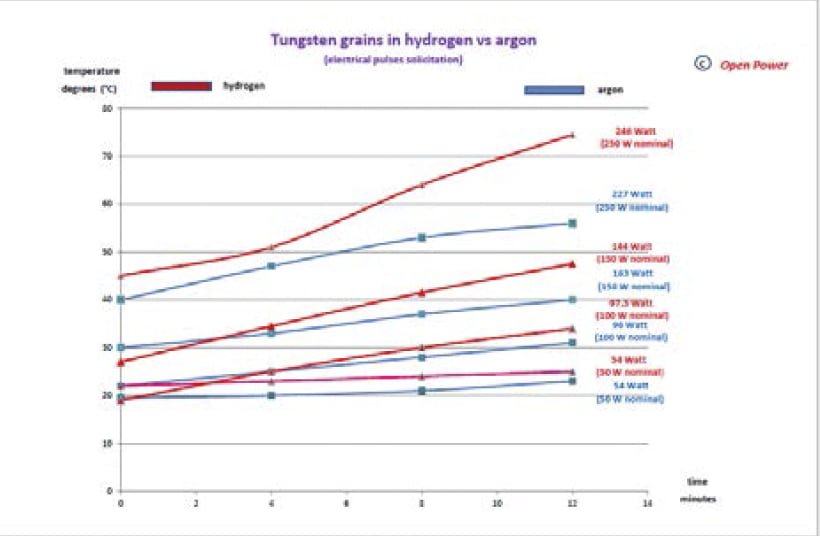
Hydrobetatron preliminarily performs up to 2.26 ratio in hydrogen vs reference run in argon, with electrically pulsed powders at Open Power Lab.

The contribution of involved heat transfer phenomena is under analysis.

The complete set of runs will be discussed at ICCF19.

Watch video of Open Power Lab action with Pulse generator and Hydrobetatron at hydrobetatron.org.

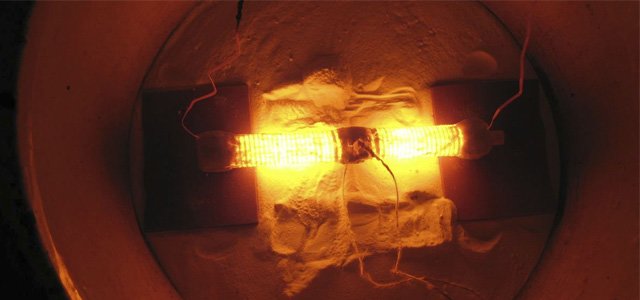
Tungsten grains in Hydrogen vs. Argon

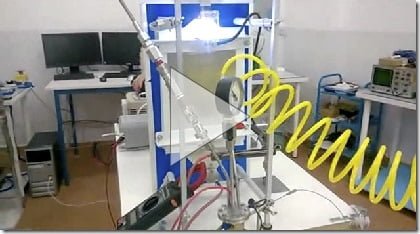
Hydrobetatron

The Hydrobetatron
The Hydrobetatron

The Hydrobetatron
The Hydrobetatron

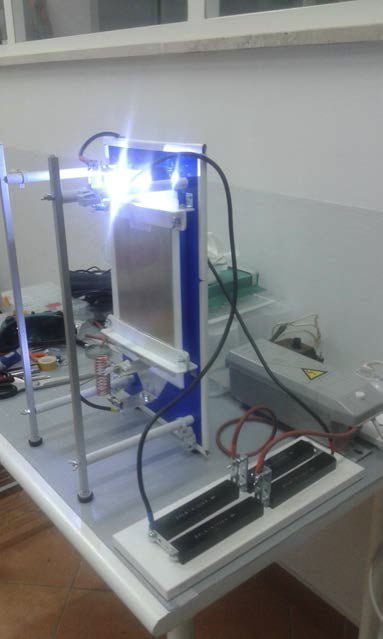
Pulse generator

Pulse generator
Pulse generator

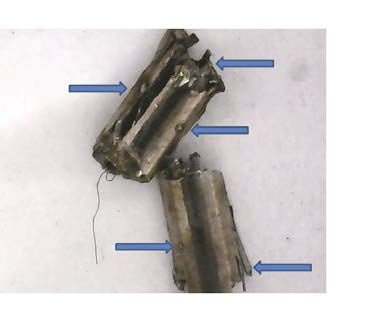
Tungsten cylinders after reaction, with craters and cracks
tungsten-cylinders-after


Also published is Open Power Association Newsletter No. 019 for March 2015.
Read [the original report in Italian here]

Selected topics are google-translated and reproduced below.

Newsletter No. 019 – March 2015

Dear Friends,
The experiments planned with the reactor ITAbetatron pulsed with nanoscale powders, etc. Proceed in the best way! We all hope to succeed fully in this wonderful company! In this case we will finally have a new source of energy: clean, inexhaustible and economic, that creates the conditions for the welfare and prosperity of the peoples of the Earth, and at the same time to combat global warming, and therefore the dangerous climate changes, thus also saving the planet Earth.

PUBLISHED ON HYDROBETATRON.ORG THE REPORT No. 012
TO VIEW THE VIDEO CLICK HERE:

“Spring, the first day”:
Hydrobetatron preliminarily performs up to 2:26 ratio in hydrogen vs reference run in argon, with electrically pulsed powders at Open Power Lab.
The contribution of Involved heat transfer phenomena is under analysis.
The complete set of runs will be discussed at ICCF19.
FULL REPORT IN PDF:
http://www.hydrobetatron.org/-012-report_ultimo-report.html

“OPEN POWER” will attend the conference ICCF19 to be held in Padova from 13 to 17 April 2015

Published in the post of hydrobetatron.org The “Technical Report of experiments conducted on: prototype LENR” of: Quirino Puppies
TO READ THE FULL REPORT IN PDF:
CLICK HERE
http://www.hydrobetatron.org/blog/index.php

TALK ABOUT US:
http://22passi.blogspot.it/2015/03/si-prevede-una-primavera-eccessivamente.html

http://www.e-catworld.com/2015/03/20/open-power-association-preliminary-report-on-reactors-with-tungsten-powder-cop-of-2-26-measured/

https://itit.facebook.com/Rossi.Focardi.FUSIONE.FREDDA

http://www.scoop.it/t/lenr-revolution-in-process-cold-fusion
http://www.lenr-forum.com/forum/index.php/Thread/1137-OpenPower-Ugo-Abundo-Progettazione-di-repliche-e-modifiche-del-reattore-di-A-Par/

https://coldfusionnow.org/

Are you an ‘entrepreneur-minded?
Then you may want to consider the possibility of investing on our promising research to find a new source of energy: clean, inexhaustible and economic.
Seize this opportunity now!
Send us an e-mail with your introduction at: contatti@hydrobetatron.org
We will evaluate and, if necessary, we will fix an appointment to know us better and learn the details of the collaboration.

How much will we have to wait for Andrea Rossi to receive the apology from the Italian State? This is the story of Emilio Spaziante, General of the Guardia di Finanza in the 90s, and Andrea Rossi, in prison for crimes he did not commit: confiscated 4 million to Spaziante.
“He used the official GDF as nominee”
TO READ THE ‘COMPLETE ARTICLE CLICK HERE:
http://22passi.blogspot.it/2015/02/quanto-dovra-ancora-aspettare-andrea.html
AND HERE:
http://www.ilfattoquotidiano.it/2015/02/28/confiscati-4-milioni-spaziante-usava-ufficiali-gdf-come-prestanome/1463319/
AND HERE:
http://it.wikipedia.org/wiki/Petroldragon


Read the entire Newsletter #019 on Hydrobetatron.org here.

Live Long and Prosper – Cold Fusion Now!

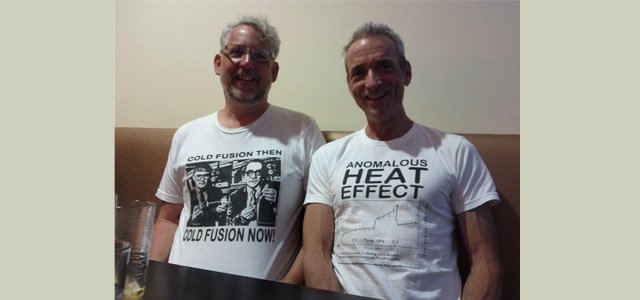
Title graphic: Cold Fusion Then – Cold Fusion Now!.

It was twenty-six years ago today that the world learned of a new form of energy that promised a green technological future for all life on Earth.

Twenty-six years later, we can’t yet buy a reactor in Home Depot, but prototypes are multiplying in independent labs.

We don’t yet have university labs training a new generation of scientists, but young entrepreneurs are self-organizing around open-science principles.

The ground is formed, and a figure emerging. A critical mass of awareness has occurred.

Could a man like Bill Gates ignore what he was told one day last fall?

And where would the most powerful man in the world go to get the real deal on the scientific question of our time?

The Department of Energy? Oh do not be cruel.

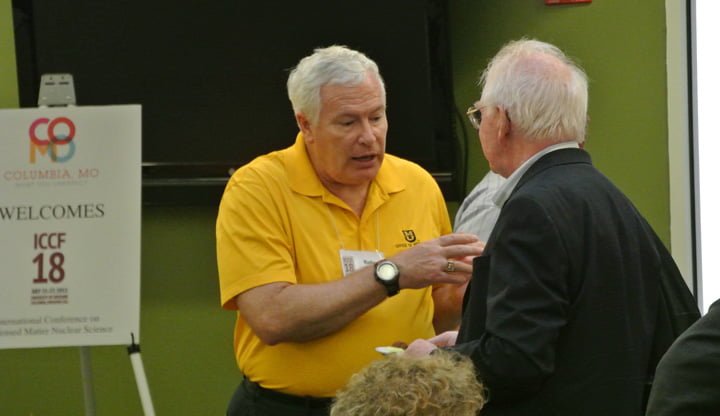
Dr. Robert Duncan at ICCF-18.
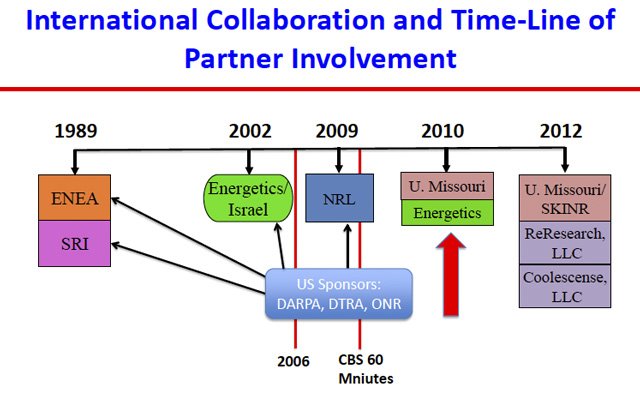
Dr. Robert Duncan, former Vice Chancellor of Research at University of Missouri, was key in creating the Sidney Kimmel Institute of Nuclear Renaissance (SKINR), now directed by Dr. Graham Hubler, formerly of Naval Research Lab.

Watch Graham Hubler’s SKINR Overview from ICCF-18.

Slide from Graham Hubler's SKINR Overview at ICCF-18
Slide from Graham Hubler’s SKINR Overview at ICCF-18

Now Dr. Duncan is at Texas Tech University as Senior Vice President for Research, where he is Founder and Director for the Center for Emerging Energy Sciences (CEES). From the Texas Tech University Board of Regents Agenda Book for the meeting December 11-12, 2014 [.pdf], CEES will study the Anomalous Heat Effect (AHE), one of the many names for cold fusion that emphasizes the mysterious and as-yet-unknown reaction that creates fusion-sized heat from small, table-top reactors.

According to Texas Tech, total research expenditures topped $140 million in 2012. What portion will go to CEES? Even 1% would be a welcome change, but not enough to do what CEES wants: to discover the nature of the reaction, and engineer a technology.

They will partner with ENEA, the Italian National Agency for New Technologies, Energy and Sustainable Economic Development and contract with a scientist “soon to retire” from SRI International. These two institutions are experienced in the field of condensed matter nuclear science, publishing major results over twenty-six years of research.

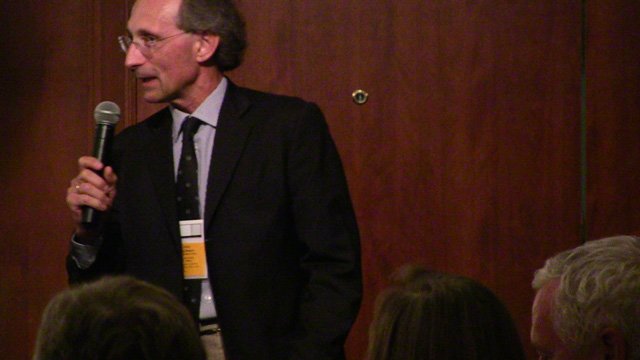
Dr. Vittorio Violanted at ICCF-18
Dr. Vittorio Violante of ENEA at ICCF-18
Director of Energy Research at SRI International is Dr. Michael McKubre, whose lab dream team has reproduced results such as the correlation of excess heat from cells that use a fuel of deuterium with the amount of helium produced. ENEA’s early experiments probed the properties of materials. Led by Dr. Vittorio Violante, the lab has worked the SRI regularly for the past two-and-a-half decades to produce unique metallic hydrides used in the numerous ground-breaking experiments. He briefed Bill Gates and friends last November.

The complete service environment for a new energy technology is now in place. We have the metal, we have the water, and we have a desperately broken global economy ready for re-tooling.

Alliances are forming. How will the LENR community respond?

Cold fusion scientists, so used to being ignored, now expect to be ignored. They are as ill-prepared today for the onslaught of attention as Drs. Martin Fleischmann and Stanley Pons were twenty-six years ago when the two quiet researchers emerged from their basement lab to tell what they had found, and were crushed by the satellite environment invading their every beaker.

Since then, the International Society for Condensed Matter Nuclear Science should have had CNN covering their conferences, but most of the time, they had NO ONE. When someone was there, it wasn’t Anderson Cooper, it was Infinite Energy Magazine, and sometimes, those scalawags from Cold Fusion Now.

When the Gates Foundation does makes their move (and how could they not?), will the second tier of capitalists start jumping in? Will CNBC start sending professional crews for sit-downs with real video equipment – and lights?! You betcha!

And where will the press go to for clear information? How do you start to investigate a story that has been hiding in plain sight for two-and-a-half-decades?

Well, er, I am available as of this morning to design and manage any public relations campaign, so please do call.

What will you get?

Hmmm…

UPDATE on Cold Fusion Now Actions

I have little time to blog anymore.
The poor Cold Fusion Now website is neglected and in disarray. (Wanna help re-design? Email me!)
My activity hasn’t stopped…

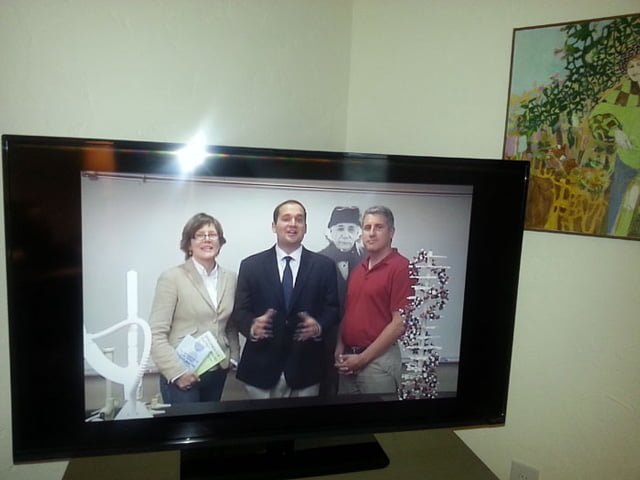
Last fall, I was on our local TV news surreptitiously holding two cold fusion books, Developments in Electrochemistry Science Inspired by Martin Fleischmann and The Explanation of Low Energy Nuclear Reaction, as I talked about the upcoming Science Night at our community college.

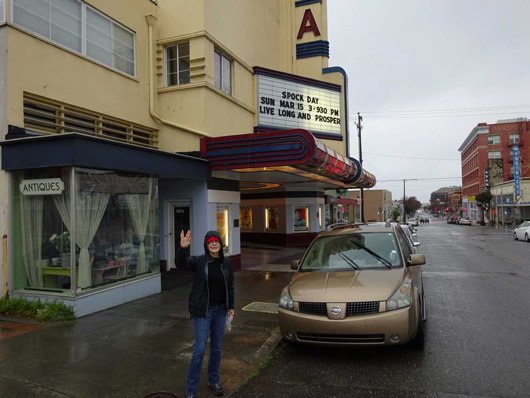
More recently, our little town’s tribute to Leonard Nimoy, simply called Spock Day, brought the news cameras out, and they caught a little promo I always bring with me. Notice the Cold Fusion Now sticker in the corner?! How about the new Hydrogen coasters on the bar? Check out these photos snapped off the TV:

Geek girl Ruby Carat with KIEM News' Steve King, and Astronomer John Pedicino.
Geek girl Ruby Carat, KIEM News Steve King, and Astronomer John Pedicino.
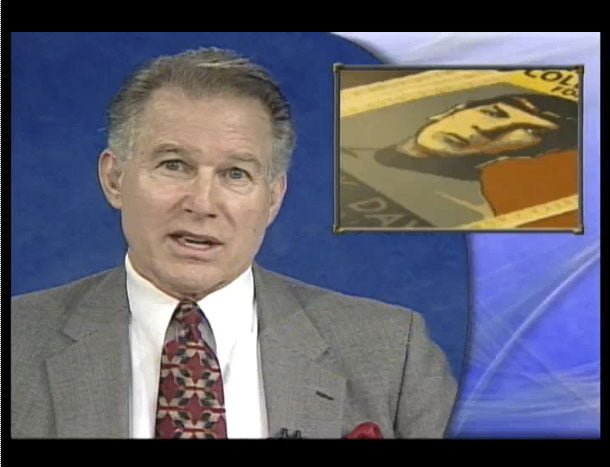
KIEM-TV's Brad Curtis with partial CFN sticker
KIEM-TV’s Brad Curtis photographed on TV with partial CFN sticker


Hydrogen atom coasters on the bar at Spock Day
Hydrogen atom coasters on the bar at Spock Day courtesy Cold Fusion Now!
Spock and CFN on TV together!


All lots of fun, but is it really making a difference?

YES!

While cartoons of hydrogen atoms, and running around leaving coasters on bars may seem like a joke to the serious-minded, (and I’ve gotten the “disgruntled” mail to prove it!) I believe that every act of advocacy is worthwhile, and has the potential to change one life, or a billion lives.

Any moment, a teaching moment!

In a recent algebra class, I was demonstrating properties of polynomial functions. I brought up Making Sense of Alumina Spectral Emissivity, a new paper by Bob Higgins on his deep-dive into the thermal imaging of the nickel-hydrogen “dog-bone” reactors. It is an excellent introductory article to the sticky issues in thermal measurement. In the paper is the equation for radiant power emitted from a blackbody as proportional to the temperature of the body to the fourth power, M = εσ T4.

As I started to talk about how coefficients scale a function, and in particular how the emissivity effects the radiant power in this equation, several students brought up Andrea Rossi and the E-Cat – more than ever before! I was able to answer some questions, putting people on the path to reason, instead of reaction. Who knows what that will be inspired in the minds of creative youth?

Dr. Melvin Miles at SPAWAR
New movie finished; waiting for release!

Even more fun was the trip to San Diego this past January to interview Navy scientists on their work in cold fusion research.

Altogether, I filmed a total of five hours video interviews with Dr. Stanislaw Szpak, Dr. Frank Gordon, both from the SPAWAR lab, and Dr. Melvin Miles, from the China Lake Research lab. I have finished editing a first movie from those interviews, and I’ve already started on a second.

It’s important to have these scientists who’ve worked so long alone to tell their own story. Cold fusion has a complicated history, with a complicated science, and complicated people. As it moves to the mainstream, and information begins to dissipate through the feeds, a need for simplicity will distort the truth of the real events as they happened.

If the people who lived it don’t tell their story, someone else will. The LENR community must shape the story of what happened when one of the greatest discoveries of all time was kept from the world. It is important for the integrity of those who suffered the consequences; the intrepid researchers must be recognized, and the rest of us deserve a clean-energy future.

Hep the elite to what’s going down!

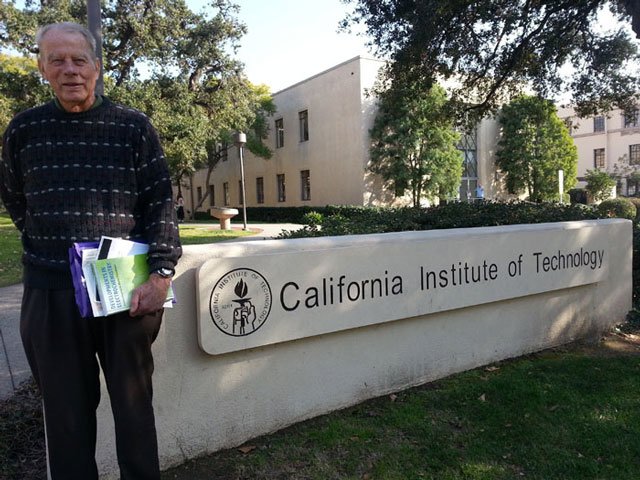
Dr. Melvin Miles visiting Caltech January 2015.
I had picked up Dr. Miles for the trip to San Diego, and on the way back, we stopped in Pasadena, California at the campus of Caltech for a little advocacy. Dr. Miles and I dropped off copies of the chapter on cold fusion from Developments in Electrochemistry Science Inspired by Martin Fleischmann to a few key Caltech faculty. Written by Dr. Miles and Dr. Michael McKubre of SRI International, the chapters were distributed in mailboxes to such luminaries as David Goodstein and Nate Lewis. We were able to hand one personally to Dr. Harry Gray, an eminent researcher who Miles had met years ago at another college.

Walking into Dr. Gray’s office, he was open to meeting us, and surprised at the activity in the LENR field. He remarked, “I’ve got a lot of catching up to do.”

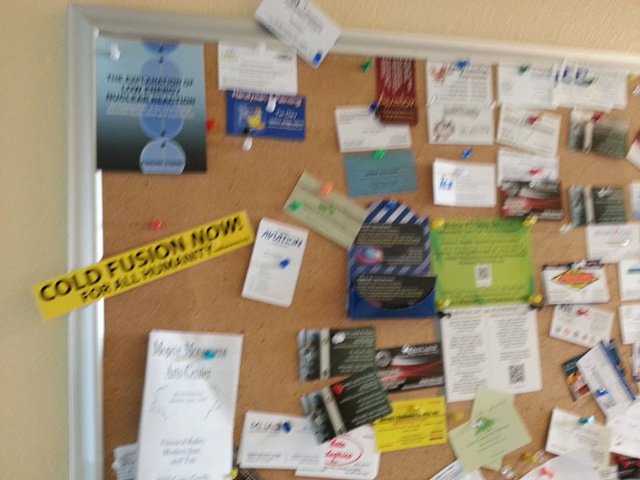
Postcard for LENR book on Caltech bulletin board.
I also put Cold Fusion Now stickers and postcards for Dr. Edmund StormsThe Explanation of Low Energy Nuclear Reaction on lots of Caltech bulletin boards, knowing many students will see them, and not be as closed-minded as their professors.


Rocket scientists always get the latest

Postcards, stickers, and magnets were left at Voyager Airport Restaraunt.
Postcards, stickers, and magnets were left at Voyager Airport Restaurant.
Always a stop on my travels, the Mojave Spaceport got another dose of news when I dropped off stickers, postcards, and calendar magnets to Virgin Galactic‘s office there and the cafe where all the rocket scientists eat lunch.

I left a serious wad of materials on the way down to San Diego (I asked permission, and the gal said “Oh yeah, we’re always happy to have more stuff to look at”), and when I came back through a week later, they were all gone, so I laid more down.

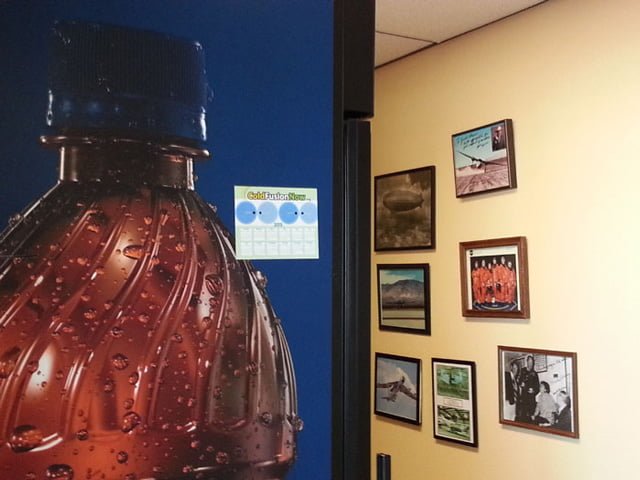
The Cold Fusion Now calendar magnet was still on the soda machine. Yah!

Cold Fusion Now calendar magnet sits at Mojave Spaceport soda machine!

Got a ticket for the ride of your life?

We have only to look back at the early publications of Infinite Energy Magazine, started by Eugene Mallove and Jed Rothwell, to see what lies ahead: an explosion of interest, and businesses popping up like clover. I get dizzy thinking about the speed at which this nascent technology will sweep the planet – and I can’t wait!

For twenty-six years, the world has been moments away from breakthrough. We don’t have to wait much longer. We will have a second chance at designing living arrangements for all the life on our planet – and we can begin now!

All in all, the lack of activity on the Cold Fusion Now website is only because we are taking our activism to a new level. I do want to sincerely apologize to everyone I have not written back this past year. Your messages are important to me, and give me a boost when I really need it. I thank you and am grateful for your support. With two p-t jobs and a mortgage, I haven’t been able to respond in a timely manner. I will do better.

There is much more activity going on, but it’s still premature to tell the details.
Like, did I ever tell you about the time …

MM-Mexico-640x360

..Aiy yai yai!

LIVE LONG AND PROSPER!

Ruby at Spock Day: "The good of the many outweighs the good of the few!"
Ruby at Spock Day: “The good of the many outweighs the good of the few!”

COLD FUSION NOW!

The Peak Oil Crisis: The Mother of All Black Swans

Title graphic: M. King Hubbert’s graph of the fossil fuel age and it’s successor nuclear power in geologic time.

This is a re-post of an article written by Tom Whipple of the Falls Church News Press.
The original article is here.


Even Saudi Arabia’s oil minister is starting to talk about the advent of a “black swan.” These are defined as completely unexpected developments which cause lots of unexpected change. I believe we are going to be seeing a major black swan event in the not too distant future.

It should be clear to everyone that the earth’s climate is becoming so laden with carbon emissions that civilization as we know it on this planet is unlikely to make it through the next few centuries. Fortunately, however, the combustion of carbon-based fuels will be slowly on its way down as most of the oil that is left is becoming too costly to extract, and in the case of coal, is killing too many people from unhealthy air. Even the Chinese seem to have gotten the message and are cutting back on coal burning as fast as they can without collapsing their economy and getting the government overthrown. However, running out of cheap oil, killing ourselves off from dirty air, or devastating climate change induced weather events are not black swans as these developments are already well anticipated. What is desperately needed is a way for the world to stop burning carbon as quickly as possible without creating economic turmoil. There just may be an answer.

Coming down the road are a pair of technologies that will produce nearly unlimited amounts of cheap, pollution-free energy, and have the potential to change life-as-we-know-it.

I am talking about the twin technologies of cold fusion and hydrinos, each of which, when widely deployed, will constitute a revolution in the history of mankind fully equivalent to the discovery of fire, the wheel, the agricultural revolution, or the industrial revolution. Both of these technologies are based on turning the hydrogen found in water into virtually unlimited amounts of energy at very low cost and without any harmful pollution. Recent developments suggest that either or both of these technologies could become available for commercial applications in the next few years. In recent years, new technologies such as cell phones have spread across the globe in a few decades.

So where are these technologies and when can we expect to hear and read about them in the mainstream media, especially if they are getting close to becoming commercial products? The answer to this is simple. Both these technologies are based on science that is beyond that generally accepted by scientific community, especially those who have never looked into the results of the experiments. While those few scientists who have tested and are familiar with the details of these technologies tell us that they are for real, the bulk are waiting for irrefutable proof that they actually produce large amounts of cheap energy before they are willing to accept that our knowledge of nature may not be as complete as we like to think and that some scientific theories may be wrong.

The hydrino theory holds that there exists in nature a stable, compact form of hydrogen which does not absorb or emit light, making it very hard to detect. Under the proper conditions, normal hydrogen atoms such as those found in water can be transformed into hydrinos accompanied by a massive release of energy. This theory is the brainchild of one man, Randall Mills of BlackLight Power in New Jersey, who has been working on the development of the theory and a practical way to release energy for nearly 30 years. The reason the theory has received little attention is that it appears to violate fundamental principles of atomic science which would have to be rethought if it fact there is such a thing as a hydrino.

Last summer Mills reported in a fascinating video on his website, blacklightpower.com, that he has recently made significant breakthroughs in developing the technology. Last month he reported that all of the subsystems of his prototype “SunCell” now are working and that the first prototype of a commercial device is now being integrated. He also says that a business relationship for distribution of commercial products is being established. If the prototype devices work as advertised and can be tested by independent laboratories, the arguments over the existence of a hydrino should end fairly quickly unless some other explanation can be found. If the subsystems work as claimed, I would be surprised if we did not see the first prototype in operation before the end of the year.

The second of our black swan technologies is our old friend “cold fusion,” which now goes by several other names, largely to assuage the feelings of those scientists who claim there can be no such thing as cold fusion. There now is no question that the nuclear reactions are for real and that commercial quantities of heat can be produced under proper conditions by heating hydrogen in the presence of nickel and other elements. As far as we know, the Italian entrepreneur Andrea Rossi still seems to be the furthest ahead in the race to build and market commercial-scale devices although numerous people around the world are producing heat from laboratory scale devices.

Unlike Mill’s hydrino device, cold fusion is far more difficult to control and many experiments are producing so much heat that they melt down their test apparatuses. Only Rossi, who is now working from a US company, Industrial Heat, down in North Carolina, says he has developed the techniques to keep a commercially viable heat generating device under control. For several months now he has had a commercial sized 1-megawatt prototype device, which has been installed in a factory at an unrevealed location in the U.S., undergoing a year’s acceptance test. If this test is successful, and we won’t know until early next year, Industrial Heat will at some point likely begin publicizing and marketing commercial cold fusion devices.

If either of these endeavors meets their developers’ expectations, we should be seeing the biggest black swan in centuries land in our midst fairly soon.

A New Kind of Nuclear Reactor?

A New Kind of Nuclear Reactor? by Guest Author Dr. Ludwik Kowalski, Montclair State University, in which Dr. Kowalski dives into the Parhomov experiment and makes sense of the particulars for the general reader.

Read the original article posted here on Dr. Kowalski’s cold fusion archive.


Abstract

Consider a short sealed porcelain tube, containing about one gram of white powdered LiAlH4 fuel mixed with ten grams of powdered nickel. Professor Alexander G. Parkhomov, who designed and tested it, calls this small device a nuclear reactor, in a published report. The purpose of this short article is to briefly summarize Parkhomov’s discovery, in as simple a way as possible, and to make some general comments. Such setup, even if scaled up, would not be useful in an industrial electric power generating plant, due to well-known conversion efficiency limit. The expected readers are scientists and educated laymen.

Section 1 Introduction

Consider a sealed porcelain tube 20 cm long, containing about one gram of white powdered fuel mixed with ten grams of powered nickel. Professor Alexander G. Parkhomov, who designed and tested it, calls this small device a nuclear reactor, in a published report (1). The purpose of this short article is to briefly summarize Parkhomov’s discovery, in as simple a way as possible, and to make some general comments. The expected readers are scientists and educated laymen. Hopefully, this article will prepare them to understand Parkhomov’s report, and similar technical publications on the same topic.

The author, a retired nuclear physicist educated in the USSR, Poland, France and the USA, has dedicated this article to his father who died in a Gulag camp, and to his famous mentor Frederic Joliot-Curie. Who is Alexander Parkhomov? He is a Russian scientist and engineer, the author of over one hundred publications. The photo shown below was taken in 1990. Electronic equipment on the table is probably not very different from what he used to measure thermal energy released in the reactor.

Parkhomov in his lab

Section 2 Describing the Reactor

The title of Parkhomov’s recent report is “A Study of an Analog of Rossi’s High Temperature Generator.” Is the word “reactor,” in the title of this section, appropriate? Yes, it is. A totally unexplained reaction, releasing an extraordinary amount of heat, must be responsible for what is described in Sections 3. Is this reaction nuclear? Parkhomov certainly thinks so; otherwise he would not use instruments designed to detect nuclear radiations. His powdered fuel was 90% natural Ni; the rest was a LiAlH4 compound.

The controversial field of science and technology (2,3), in which Rossi (4) and Parkhomov are active, is Cold Fusion CF), also known under different names, such as CMNS, LENR, etc. Reference to Andrea Rossi in the title of the report is puzzling. Yes, Rossi also thought that thermal energy released in his device was nuclear, rather than chemical. But that is where the similarities end; the two reactors differ in many ways. For example, Rossi’s fuel was hydrogen gas, delivered from an outside bottle.

The illustration below is a simplified diagram of Parkhomov’s setup. The diagram does not show that the porcelain tube (red in the diagram) was closely wrapped by a heating wire. The electric energy delivered to the heater, in each experiment, was measured using several instruments; one of them was a standard kWh meter, similar to those used by electric companies. Heating of the fuel was necessary to keep the fuel temperature very high; the required temperature had to be between 1000 C and 1400 C.

Simplified diagram of Parkhomov’s setup

The reactor container (a covered box) was immersed in an aquarium-like vessel, filled with boiling and steaming water. To keep the water level constant during the experiment, a small amount of hot water (probably 90 grams) was added through a funnel, every three minutes or so. The mass of the escaped steam, turned into liquid water, was measured outside of the setup. Knowing the mass of the steam that escaped during an experiment one can calculate the amount of thermal energy escaping from the aquarium. Parkhomov’s method of measuring excess heat was not very different from that used by the leader of Russian Cold Fusion researchers, Yuri Nikolaevich Bazhutov (5).

Section 3 A Surprising Energy Result

Here is a description of results from one of three experiments performed by Parkhomov in December 2014. The porcelain tube with the powdered fuel was electrically heated at the rate of 500W. Then the state of thermal equilibrium was reached. The water in the aquarium remained in that state for nearly one hour. The constant fuel temperature, measured with a thermocouple (also not shown in the diagram) was 1290 C. The time interval of 40 minutes was selected for analysis of experimental results. The amount of water evaporated during that interval was 1.2 kg. The amount of electric energy the heater delivered to water in the aquarium, during that time, was 1195 kJ. Most of that energy was used to evaporate water. But 372 kJ of heat escaped from water via conduction. That number was determined on the basis of results from preliminary control experiments
Let XH be the amount of heat the aquarium water received from the reactor that is from the porcelain tube containing the fuel.
Thus the net “input” energy was

INPUT = 1195 – 372 + XH = 823 + XH

It represents thermal energy received by water, during the experiment.
Knowing the water’s “heat of evaporation” (2260 kJ/kg), one can calculate the thermal energy lost by water to sustain evaporation. It was:

OUTPUT = 2260*1.2 = 2712 kJ

This is the thermal energy lost by water, during the experiment. According to the law of conservation of energy, the INPUT and the OUTPUT must be equal. This leads to:

XH = 2712 – 823 = 1889 kJ

This is a surprising result. Why surprising? Because it is much larger than what is released when one gram of a familiar fuel is used. Burning one gram of powdered coal, for example, releases about 30 kJ of thermal energy, not 1889 kJ. What is the significance of this? The superficial answer is that “Parkhomov’s fuel is highly unusual, and potentially useful.”

Section 4 Cold Fusion Contoversy

Parkhomov’s box is not the first device that was introduced as a multiplier in which electric energy is turned into heat, and where outputted thermal energy exceeds the electric energy supplied. A conceptually similar device, based on electrolysis, was introduced in 1989, by Fleischmann and Pons (F&P). Their small electrolytic cell also generated more thermal energy than the electric energy supplied to it. Trying to establish priority, under pressure from University of Utah administration, the scientists announced their results at a sensational press conference (March 23, 1989). They wanted to study the CF phenomenon for another year or so but were forced to prematurely announce the discovery (private information)

The unfortunate term “cold fusion” was imposed on them. Why unfortunate? Because it created the unjustified impression that cold fusion is similar to the well known hot fusion, except that it takes place at much lower temperatures. This conflicted with what had already been known–the probability of nuclear fusion of two heavy hydrogen ions is negligible, except at stellar temperatures (6,7).

Suppose the discovery had not been named cold fusion; suppose it had been named “anomalous electrolysis.” Such a report would not have led to a sensational press conference; it would have been made in the form of an ordinary peer review publication. Only electrochemists would have been aware of the claim; they would have tried to either confirm or refute it. The issue of “how to explain the heat” would have been addressed later, if the reported phenomenon were recognized as reproducible-on-demand. But that is not what happened. Instead of focusing on experimental data (in the area in which F&P were recognized authorities) most critics focused on the disagreements with the suggested theory. Interpretational mistakes were quickly recognized and this contributed to the skepticism toward the experimental data.

5) Engineering Considerations

The prototype of an industrial nuclear reactor was built in 1942 by Enrico Fermi. It had to be improved and developed in order to “teach us” how to design much larger useful devices. The same would be expected to happen to the tiny Parkhomov’s device.
a) One task would be to develop reactors able to operate reliably for at least 40 months, instead of only 40 minutes. This would call for developing new heat-resisting materials. Another task would be to replace the presently used (LiAlH4 + Ni) powder by a fuel in which energy multiplication would take place at temperatures significantly lower than today’s minimum, which is close to 1000 C .

b) The third task would be to scale up the setup, for example, by placing one hundred tubes, instead of only one, into a larger aquarium-like container. This would indeed increase the amount of released thermal energy by two orders of magnitude. Scaling up, however, would not increase the multiplication factor. The only conceivable way to increase the MF would be to find a more effective fuel.

c) A typical nuclear power plant is a setup in which a nuclear energy multiplier (a uranium-based reactor) feeds thermal energy into a traditional heat-into-electricity convertor. Such multipliers are workhorses of modern industry. Note that MF of an industrial nuclear reactor must be larger than three; otherwise it would not be economically justifiable. This is a well-known fact, related to the limited efficiency of heat engines.

d) Uranium and thorium seem to be the only suitable fuels, in any kind of energy multiplier. Why is it so? Because fission is the only known process in which more than 100 MeV of nuclear energy is released, per event. This number is about four times higher than what is released when two deuterons fuse, producing helium. Will more efficient fuels be found? If not then chances for replacing coal, oil, and gas by a Parkhomov-like fuels are minimal.

6) Scientific Considerations

Science is at the base of all modern engineering applications. But the main preoccupation of most scientists is to understand laws of nature, not to build practically useful gadgets. Confirmation of claims made by Parkhomov is likely to trigger an avalanche of scientific investigations, both theoretical and experimental, even if the energy multiplication factor remains low.

a) Suppose that Parkhomov’s energy multiplier, described in this article, is already recognized as reproducible on demand, at relatively low cost. Suppose that the “what’s next?” question is asked again, after two or three years of organized investigations. Scientists would want to successfully identify a “mystery process” taking place in the white powder, inside the porcelain tube. Is it chemical, magnetic, pyrometallurgic, biological, nuclear, or something else? Answering such questions, they would say, is our primary obligation, both to us and to society.

b) Parkhomov certainly believes that a nuclear process is responsible for XH, in his multiplier. Otherwise he would not use instruments designed to monitor neutrons and gamma rays. But, unlike Fleischmann and Pons, he does not speculate on what nuclear reaction it might be. He is certainly aware of tragic consequences of premature speculations of that kind.

7) Social Considerations

The social aspect of Cold Fusion was also debated on an Internet forum for CMNR researchers. Referring to the ongoing CF controversy, X1 wrote: “The long-lasting CF episode is a social situation in which the self-correcting process of scientific development did not work in the expected way. To what extent was this due to extreme difficulties in making progress in the new area, rather than to negative effects of competition, greed, jealousy, and other ‘human nature’ factors? “A future historian of science may well ask “how is it that the controversy ignited in 1989 remained unresolved for so many decades? –who was mainly responsible for this scientific tragedy of the century, scientists or political leaders of scientific establishment, and govrnment agenies, such as NSF and DOE? Discrimination against CF was not based on highly reproducible eperimental data; it was based on the fact that no acceptbal theory was found to explain unextected experimental facts, reported by CF researchers.

Parkhomov’s experimental results will most likely be examined in many laboratories. Are they reproducible? A clear yes-or-no answer to this question is urgently needed, for the benefit of all. What would be the most effective way to speed up the process of getting the answer, after a very detailed description of the reactor (and measurements performed) is released by Parkhomov? The first step, ideally, would be to encourage qualified scientists to examine that description, and to ask questions. The next step would be to agree on the protocol (step-by-step instructions) for potential replicators. Agencies whose responsibility is to use tax money wisely, such as DOE in the USA, and CERN in Europe, should organize and support replications. Replicators would make their results available to all who are interested, via existing channels of communication, such as journals, conferences, etc. A well-organized approach would probably yield the answer in five years, or sooner.

References

(1) A.K. Parkhomov, “A Study of an Analog of Rossi’s High Temperature Generator” http://csam.montclair.edu~kowalski/cf/parkh1.pdf

(2) L. Kowalski, “Social and Philosophical Aspects of a Scientific Controversy;” IVe Congres de la Societe de Philosophy des Sciences (SPS); 1-3 Juin 2012, Montreal (Canada). Available online at:
http://www.ptep-online.com/index_files/2012/PP-29-L2.PDF

(3) Ludwik Kowalski, http://pages.csam.montclair.edu/~kowalski/cf/413montreal.html

(4) Ludwik Kowalski, ” Andrea Rossi’s Unbelievable Claims.” a blog entry: http://pages.csam.montclair.edu/~kowalski/cf/403memoir.html#chapt24

(5) Peter Gluck interviews Bazhutov:
https://coldfusionnow.org/interview-with-yuri-bazhutov-by-peter-gluck/

(6) John R. Huizenga, “Cold Fusion, The Scientific Fiasco of the Century.”
Oxford University Press, 1993, 2nd ed. (available at amazon.com)

(7) Edmund Storms, “The Explanation of Low Energy Nuclear Reaction,” Infinite Energy Press, 2014. (also available at amazon.com)

Find more on Ludwik Kowalski’s cold fusion archive.

Related Links

Russian scientist replicates Hot Cat test: “produces more energy than it consumes”

Q&A with Jack Cole on new Hot Cat replication, experiment completion

A Russian Experiment: High Temperature, Nickel, Natural Hydrogen by Michael C.H. McKubre

Current Science stimulates Indian interest in LENR

Director P.K.Iyengar initiated cold fusion program at BARC
Under the direction of P.K.Iyengar, the Bhaba Atomic Research Centre (BARC) began cold fusion experiments early in the field’s history, finding excess heat, neutron bursts and tritium, among other results, from multiple types of cells.

Dr. Mahadeva Srinivasan, the head of BARC’s Neutron Physics Division and an Associate Director of the Physics Group, performed many of these experiments, and reported on the research in journals and conferences. A survey of the BARC experiments is archived here.

Though successful, the program ended with the retirement of Director Iyengar and Dr. Srinivasan. In a 1994 interview with Russ George, Srinivasan said,

“Dr. Iyengar, who was the moving spirit behind the initial cold fusion program at BARC, moved on to become the chairman of the Indian Atomic Energy Commission. That has had an impact on the other groups involved in cold fusion experiments, though it didn’t bother me. Many of the other groups did not want to risk their careers, and so many of the groups wound down their work. So in terms of numbers of people, we have come down from a level of 50 scientists actively engaged in cold fusion to about 15.”

After that, skeptics managed to end the remaining experiments, until nothing remained. That may be changing now.

The 25 February 2015 issue of the journal Current Science Volume 108 Issue 4 contains a special section on LENR, with a variety of papers from cold fusion researchers around the world. The recognition by the mainstream Indian science journal for the emerging field of new energy marks a turning point for LENR research in India. Mahadeva Srinivasan was a Guest Editor along with LENR theorist Andrew Meulenberg.

Mahadeva Srinivasan says, “I give full credit for the Special Section to Prof. R. Srinivasan, the Editor of Current Science, for it was he who sprung a surprise and asked us whether we would like to guest edit a Special Section!”

Though no comments have been received from mainstream Indian scientists in response to the publication, Dr. Srinivasan believes “there is every reason to be very happy with the outcome.”

“A high level Group has been formed to look into CF/LENR. The first meeting of this group is to be held on 8th April, the day before I leave for Venice [ICCF-19]. The cost of holding this meeting will be borne by a federal Ministry”.

Read Infinite Energy‘s story on the Current Science issue along with an interview with Mahadeva Srinivasan by IE Managing Editor Christy Frazier.

Related Links

BARC Studies in Cold Fusion from lenr-canr.org

ICCF-16 Chennai, India Home

Top