The Experimental Investigation of the E-Cat HT, and Heuristics

Heuristic: relating to the general strategies or methods for solving problems

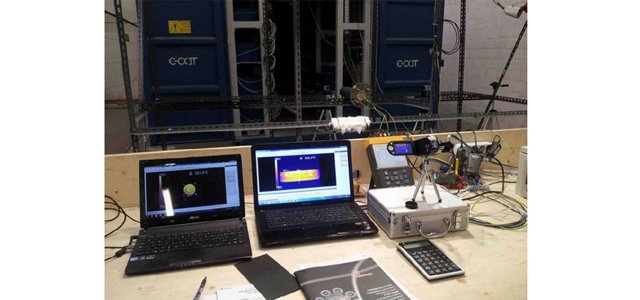
Recently an experimental investigation of possible anomalous heat production in a special type of reactor tube named E-Cat HT was carried out and published (“Indication of anomalous heat production in a reactor device containing hydrogen loaded nickel powder,” http://arxiv.org/abs/1305.3913 ).

Data was collected in two experimental runs lasting 96 and 116 hours respectively, and anomalous heat production was indicated in both experiments. Computed volumetric and gravimetric energy densities were found to be far above those of known any chemical source. Even by the most conservative assumptions as to the errors in the measurements, the result is still one order of magnitude greater than conventional energy sources.

Pretty strong words, this “sanity test” seems to have pretty conclusively proven that the E-Cat HT is everything Rossi has claimed. On the other hand, looking at the comments on various web articles on the subject, it hasn’t seemed to convince the “skeptics.” Why?

Apparently, the strongest criticism is that the tests were not independent, that the reactor was built by, controlled, and was ran in Rossi’s lab. Furthermore, since Rossi has told lies in the past, according to some critics, he can’t be trusted now. Finally, big claims need overwhelming evidence, which this investigation didn’t provide.

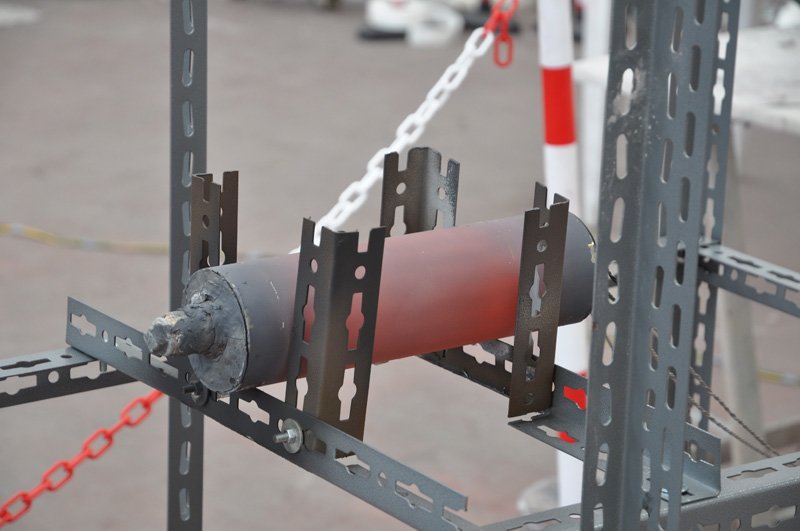
Hot Cat reactor coreIn the first of the two runs, a energy density of around 5 orders of magnitude was calculated, as well as a COP of nearly 6, which would make this tested device revolutionary. Many well respected scientists participated in this investigation. The methodology was straightforward, and even the second run demonstrated results far above those of any chemical reaction. Again, why aren’t the “skeptics” convinced?

A heuristic is a mental shortcut that allows people to solve problems and make judgments quickly and efficiently. These rule-of-thumb strategies shorten decision-making time and allow people to function without constantly stopping to think about the next course of action. While heuristics are helpful in many situations, they can also lead to biases.

Examples of faulty heuristics are “mental filter” (focusing on the negative detail and ignoring the big picture), “confirmation bias” (accepting only information that agrees with our conclusion), “emotional reasoning” (believing something because it feels true, ignoring contradictory evidence),“disqualifying the positive” (looking at only the negative information we have), “over-generalization” (drawing huge conclusions that don’t fit the evidence), “all-or-nothing” (seeing only the extremes in a situation), and “tunnel vision” (failing to see any positives in a situation).

Distorted thinking is recognized by its characteristics: narrow, resistant to change, biased toward negativity, and often irrational.

It is my premise that those “skeptics” that continue to believe that Rossi is a fraud, and discount the above investigative report, suffer from distorted thinking caused by faulty heuristics. I referred earlier to the investigative report as a “sanity test.” What I mean is that the experimental investigation was aimed at only confirming or denying if anomalous heat was produced by the E-Cat HT.

When “skeptics” claim that the tests weren’t independent, I believe they were using the mental filter faulty heuristic by focusing on the negative detail, and ignoring the big picture. No doubt the experimental investigation could have been more independent, but short of outright blatant fraud, the results prove that anomalous heat could not be explained by simply a chemical exothermic reaction.

Furthermore, if the “skeptics” are claiming outright fraud, especially given the credibility of the scientists participating in the experimental investigation, then I believe they are using the confirmation bias, and emotional reasoning faulty heuristics of accepting only information that agrees with their conclusion, and believing something is false because it feels false and ignoring the contradictory evidence.

When some “skeptics” say that Rossi has told lies in the past and therefore can’t be trusted now, so we ought not trust the experimental investigation, I believe they are using the disqualifying the positive, and over generalization faulty heuristics of looking only at the negative information that we have, and drawing huge conclusions that aren’t justified by the evidence.

Finally, when some “skeptics” say that big claims need overwhelming evidence which this investigation didn’t provide, I believe that they are using the all-or-nothing, and tunnel vision faulty heuristics of seeing only the extremes, and failing to see any positives in the situation.

In other words, I see those “skeptics” as having distorted thinking. In other words, their demonstrated skepticism is irrational. That is not to say that skepticism in general is irrational, quite the contrary. Skepticism is healthy, but is often cited to justify undue skepticism, which is distorted, narrow, and biased toward negativity.

To summarize, the recent experimental investigation of the E-Cat HT pretty conclusively proved that anomalous heat was produced that can’t be explained by any conventional energy source. Furthermore, this report didn’t satisfy the “skeptics.” My belief is that the reason those “skeptics” were swayed is that they are using faulty heuristics resulting in bias against the clearly logical conclusion that the E-Cat HT is everything that Rossi said it was. It is certainly true that those “skeptics” will view my paper as indulging in name calling, and my criticism of their heuristics as faulty. We’ll just have to agree to disagree. As Rossi has said, the time for talk is over, and the market will be the final arbitrator.

That is why this experimental investigation is so significant: it wasn’t conducted on some experimental device, it was validating a product that Leonardo Corporation will be selling in the very near future.

Wikipedia Beyond Cold Fusion: A Journey Into the Depths of Wiki Science

It has been noted by many that the Wikipedia Cold Fusion article is not a good source for those seeking information on the art of this science. The Wiki article quibbles as to whether cold fusion research is actually science. The Wiki article also does not recognize the peer review process of LENR-CANR.org or other cold fusion science journals; seeing them as publications by a group of self promoting crackpot scientists, deluding us and each other with dreams of infinite energy akin to perpetual motion, i.e. pseudoscience. This limits valid source material, turning Wiki Cold Fusion into a battle ground and a poor encyclopedic science article with a very low Wiki rating.

To get to the heart of this matter, we will go beyond the surface of the field of battle at the Wiki cold fusion article and find, there in the depths of Wikipedia, the workings of the science behind the clean low energy nuclear reaction environment; now emerging into the marketplace as popular ‘cold fusion’ LENR energy.

It is heartening to find, in Wikipedia, science that challenges known theory; and which confirms the science and the physics surrounding the low energy nuclear reaction. Here we have proof that the coverage of cutting edge cold fusion research has been sorely mistreated by the senior Wiki editors who ride that post. Explore the depths of  Wiki science and find that nowhere else is cutting edge research which challenges known theory thrown into such a battleground of contention, as is found at the Wikipedia article about Cold Fusion… Now, why with recent developments is this so?


Explore Key Words at Wiki From This Cold Fusion (LENR) Patent

“Method for Producing Heavy Electrons”, NASA LENR Patent (USPTO link)

Surface plasmons (SPs), Surface plasmon polaritons (SPPs), Resonant frequency, Heavy electrons, Metal hydride, Fractal geometry, Energy, Unconventional superconductivity, Weak antiferromagnetism, Pseudo metamagnetism, Hydrogenated/deuterated molecular structures such as graphane and its nanotube variants, Quasi-crystalline arrays, Metamaterials, Dusty plasmas

Surface plasmons (SPs) are coherent electron oscillations that exist at the interface between any two materials where the real part of the dielectric function changes sign across the interface (e.g. a metal-dielectric interface, such as a metal sheet in air). SPs have lower energy than bulk (or volume) plasmons which quantise the longitudinal electron oscillations about positive ion cores within the bulk of an electron gas (or plasma). The existence of surface plasmons was first predicted in 1957 by Rufus Ritchie. In the following two decades, surface plasmons were extensively studied by many scientists, the foremost of whom were T. Turbadar in the 1950s and 1960s, and Heinz Raether, E. Kretschmann, and A. Otto in the 1960s and 1970s. Information transfer in nanoscale structures, similar to photonics, by means of surface plasmons, is referred to as plasmonics. Surface plasmons can be excited by both electrons and photons. (Wiki)

Surface plasmon polaritons (SPPs), are infrared or visible frequency electromagnetic waves trapped at or guided along metal-dielectric interfaces. These are shorter in wavelength than the incident light (photons). Hence, SPPs can provide a significant reduction in effective wavelength and a corresponding significant increase in spatial confinement and local field intensity. Collective charge oscillations at the boundary between an insulating dielectric medium (such as air or glass) and a metal (such as gold, silver or copper) are able to sustain the propagation of infrared or visible frequency electromagnetic waves known as surface plasmon-polaritons (SPP). SPPs are guided along metal-dielectric interfaces much in the same way light can be guided by an optical fiber, with the unique characteristic of subwavelength-scale confinement perpendicular to the interface. Surface plasmons (not SPPs), occur as light induced packets of electrical charges collectively oscillate at the surfaces of metals at optical frequencies.

Under specific conditions, the light that radiates the object (incident light) couples with the surface plasmons to create self-sustaining, propagating electromagnetic waves known as surface plasmon polaritons (SPPs). Once launched, the SPPs ripple along the metal-dielectric interface and do not stray from this narrow path. Compared with the incident light that triggered the transformation, the SPPs can be much shorter in wavelength. In other words, when SPs couple with a photon, the resulting hybridised excitation is called a surface plasmon polariton (SPP). This SPP can propagate along the surface of a metal until energy is lost either via absorption in the metal or radiation into free-space. (Wiki)

Resonant frequencies In physics, resonance is the tendency of a system to oscillate with greater amplitude at some frequencies than at others. Frequencies at which the response amplitude is a relative maximum are known as the system’s resonant frequencies, or resonance frequencies. At these frequencies, even small periodic driving forces can produce large amplitude oscillations, because the system stores vibrational energy. Resonance occurs when a system is able to store and easily transfer energy between two or more different storage modes (such as kinetic energy and potential energy in the case of a pendulum). Resonance phenomena occur with all types of vibrations or waves: there is mechanical resonance, acoustic resonance, electromagnetic resonance, nuclear magnetic resonance (NMR), electron spin resonance (ESR), and resonance of quantum wave functions. (Wiki)

Muons (mu mesons aka heavy electrons) Muons are denoted by μ− and antimuons by μ+. Muons were previously called mu mesons, but are not classified as mesons by modern particle physicists (see History). Muons have a mass of 105.7 MeV/c2, which is about 200 times the mass of an electron. Since the muon’s interactions are very similar to those of the electron, a muon can be thought of as a much heavier version of the electron. The eventual recognition of the “mu meson” muon as a simple “heavy electron” with no role at all in the nuclear interaction, seemed so incongruous and surprising at the time, that Nobel laureate I. I. Rabi famously quipped, “Who ordered that?” Muonic helium is created by substituting a muon for one of the electrons in helium-4. The muon orbits much closer to the nucleus, so muonic helium can therefore be regarded like an isotope of hydrogen whose nucleus consists of two neutrons, two protons and a muon, with a single electron outside. Colloquially, it could be called “hydrogen 4.1”, since the mass of the muon is roughly 0.1 au. Chemically, muonic helium, possessing an unpaired valence electron, can bond with other atoms, and behaves more like a hydrogen atom than an inert helium atom. A positive muon, when stopped in ordinary matter, can also bind an electron and form an exotic atom known as muonium (Mu) atom, in which the muon acts as the nucleus. The positive muon, in this context, can be considered a pseudo-isotope of hydrogen with one ninth of the mass of the proton. Because the reduced mass of muonium, and hence its Bohr radius, is very close to that of hydrogen, this short-lived “atom” behaves chemically — to a first approximation — like hydrogen, deuterium and tritium. Since the production of muons requires an available center of momentum frame energy of 105.7 MeV, neither ordinary radioactive decay events nor nuclear fission and fusion events (such as those occurring in nuclear reactors and nuclear weapons) are energetic enough to produce muons. Only nuclear fission produces single-nuclear-event energies in this range, but does not produce muons as the production of a single muon is possible only through the weak interaction, which does not take part in a nuclear fission. (Wiki)

Metal hydrides Complex metal hydrides are salts wherein the anions contain hydrides. In the older chemical literature as well as contemporary materials science textbooks, a “metal hydride” is assumed to be nonmolecular, i.e. three-dimensional lattices of atomic ions. In such systems, hydrides are often interstitial and nonstoichiometric, and the bonding between the metal and hydrogen atoms is significantly ionic. In contrast, complex metal hydrides typically contain more than one type of metal or metalloid and may be soluble but invariably react with water. (Wiki)

Fractal Geometry One often cited description that Mandelbrot published to describe geometric fractals is “a rough or fragmented geometric shape that can be split into parts, each of which is (at least approximately) a reduced-size copy of the whole”; this is generally helpful but limited. Authorities disagree on the exact definition of fractal, but most usually elaborate on the basic ideas of self-similarity and an unusual relationship with the space a fractal is embedded in. One point agreed on is that fractal patterns are characterized by fractal dimensions, but whereas these numbers quantify complexity (i.e., changing detail with changing scale), they neither uniquely describe nor specify details of how to construct particular fractal patterns. Multifractal scaling: characterized by more than one fractal dimension or scaling rule. Fine or detailed structure at arbitrarily small scales. A consequence of this structure is fractals may have emergent properties; irregularity locally and globally that is not easily described in traditional Euclidean geometric language. (Wiki)

Energy In physics, energy is an indirectly observed quantity which comes in many forms, such as kinetic energy, potential energy, radiant energy, and many others; which are listed in this summary article. This is a major topic in science and technology and this article gives an overview of its major aspects, and provides links to the many specific articles about energy in its different forms and contexts. The question “what is energy?” is difficult to answer in a simple, intuitive way, although energy can be rigorously defined in theoretical physics. In the words of Richard Feynman, “It is important to realize that in physics today, we have no knowledge what energy is. We do not have a picture that energy comes in little blobs of a definite amount.”   Whenever physical scientists discover that a certain phenomenon appears to violate the law of energy conservation, new forms may be added, as is the case with dark energy, a hypothetical form of energy that permeates all of space and tends to increase the rate of expansion of the universe. (Wiki)

Unconventional Superconductors are materials that display superconductivity which does not conform to either the conventional BCS theory or the Nikolay Bogolyubov’s theory or its extensions. After more than twenty years of intensive research the origin of high-temperature superconductivity is still not clear, but it seems that instead of electron-phonon attraction mechanisms, as in conventional superconductivity, one is dealing with genuine electronic mechanisms (e.g. by antiferromagnetic correlations), and instead of s-wave pairing, d-waves are substantial. One goal of all this research is room-temperature superconductivity . A room-temperature superconductor is a hypothetical material which would be capable of exhibiting superconductivity at operating temperatures above 0° C (273.15 K). While this is not strictly “room temperature” (which would be approx. 20–25 °C), it is the temperature at which ice forms and can be reached and maintained easily in an everyday environment. At present, the highest temperature superconducting materials are the cuprates, which have demonstrated superconductivity at atmospheric pressure at temperatures as high as -135 °C (138 K). It is unknown whether any material exhibiting room-temperature superconductivity exists. The interest in its discovery arises from the repeated discovery of superconductivity at temperatures previously unexpected or held to be impossible. The potential benefits for society and science if such a material did exist are profound. (Wiki)

Weak antiferromagnetism One of the fundamental properties of an electron (besides that it carries charge) is that it has a dipole moment, i.e., it behaves itself as a tiny magnet. This dipole moment comes from the more fundamental property of the electron that it has quantum mechanical spin. The quantum mechanical nature of this spin causes the electron to only be able to be in two states, with the magnetic field either pointing “up” or “down” (for any choice of up and down). The spin of the electrons in atoms is the main source of ferromagnetism, although there is also a contribution from the orbital angular momentum of the electron about the nucleus. When these tiny magnetic dipoles are aligned in the same direction, their individual magnetic fields add together to create a measurable macroscopic field. However, in materials with a filled electron shell, the total dipole moment of the electrons is zero because the spins are in up/down pairs. Only atoms with partially filled shells (i.e., unpaired spins) can have a net magnetic moment, so ferromagnetism only occurs in materials with partially filled shells. Because of Hund’s rules, the first few electrons in a shell tend to have the same spin, thereby increasing the total dipole moment. These unpaired dipoles (often called simply “spins” even though they also generally include angular momentum) tend to align in parallel to an external magnetic field, an effect called paramagnetism. Ferromagnetism involves an additional phenomenon, however: The dipoles tend to align spontaneously, giving rise to a spontaneous magnetization, even when there is no applied field. Diamagnetism Diamagnetism is a magnetic response shared by all substances. In response to an applied magnetic field, electrons precess (see Larmor precession), and by Lenz’s law they act to shield the interior of a body from themagnetic field. Thus, the moment produced is in the opposite direction to the field and the susceptibility is negative. This effect is weak but independent of temperature. A substance whose only magnetic response is diamagnetism is called a diamagnet. Paramagnetism Paramagnetism is a weak positive response to a magnetic field due to rotation of electron spins. Paramagnetism occurs in certain kinds of iron-bearing minerals because the iron contains an unpaired electron in one of their shells (see Hund’s rules). Some are paramagnetic down to absolute zero and their susceptibility is inversely proportional to the temperature (see Curie’s law); others are magnetically ordered below a critical temperature and the susceptibility increases as it approaches that temperature (see Curie-Weiss law). Ferromagnetism Collectively, strongly magnetic materials are often referred to as ferromagnets. However, this magnetism can arise as the result of more than one kind of magnetic order. In the strict sense, ferromagnetism refers to magnetic ordering where neighboring electron spins are aligned by the exchange interaction. Below a critical temperature called the Curie temperature, ferromagnets have a spontaneous magnetization and there is hysteresis in their response to a changing magnetic field. Most importantly for rock magnetism, they have remanence, so they can record the Earth’s field. Iron does not occur widely in its pure form. It is usually incorporated into iron oxides, oxyhydroxides and sulfides. In these compounds, the iron atoms are not close enough for direct exchange, so they are coupled by indirect exchange or superexchange. The result is that the crystal lattice is divided into two or more sublattices with different moments. Ferrimagetism Ferrimagnets have two sublattices with opposing moments. One sublattice has a larger moment, so there is a net unbalance. Ferrimagnets often behave like ferromagnets, but the temperature dependence of their spontaneous magnetization can be quite different. Louis Néel identified four types of temperature dependence, one of which involves a reversal of the magnetization. This phenomenon played a role in controversies over marine magnetic anomalies. Antiferromagnetism Antiferromagnets, like ferrimagnets, have two sublattices with opposing moments, but now the moments are equal in magnitude. If the moments are exactly opposed, the magnet has no remanence. However, the moments can be tilted (spin canting), resulting in a moment nearly at right angles to the moments of the sublattices. (Wiki)

Metamagnetism is a blanket term used loosely in physics to describe a sudden (often, dramatic) increase in the magnetization of a material with a small change in an externally applied magnetic field. The metamagnetic behavior may have quite different physical causes for different types of metamagnets. Some examples of physical mechanisms leading to metamagnetic behavior are: Itinerant Metamagnetism – Exchange splitting of the Fermi surface in a paramagnetic system of itinerant electrons causes an energetically favorable transition to bulk magnetization near the transition to a ferromagnet or other magnetically ordered state.  Antiferromagnetic Transition – Field-induced spin flips in antiferromagnets cascade at a critical energy determined by the applied magnetic field. Depending on the material and experimental conditions, metamagnetism may be associated with a first-order phase transition, a continuous phase transition at a critical point(classical or quantum), or crossovers beyond a critical point that do not involve a phase transition at all. These wildly different physical explanations sometimes lead to confusion as to what the term “metamagnetic” is referring in specific cases. (Wiki)

Graphane is a two-dimensional polymer of carbon and hydrogen with the formula unit (CH)n where n is large. Graphane should not be confused with graphene, a two-dimensional form of carbon alone. Graphane is a form of hydrogenated graphene. Graphane’s carbon bonds are in sp3 configuration, as opposed to graphene’s sp2 bond configuration, thus graphane is a two-dimensional analog of cubic diamond. The first theoretical description of graphane was reported in 2003 and its preparation was reported in 2009. Full hydrogenation from both sides of a graphene sheet results in graphane, but partial hydrogenation leads to hydrogenated graphene. If graphene rests on a silica surface, hydrogenation on only one side of graphene preserves the hexagonal symmetry in graphane. One-sided hydrogenation of graphene becomes possible due to the existence of ripplings. Because the latter are distributed randomly, obtained graphane is expected to be disordered material in contrast to two-sided graphane. If Annealing allows the hydrogen to disperse, reverting to graphene. Note: p-doped graphane is postulated to be a high-temperature BCS theory superconductor with a Tc above 90 K. (Wiki)

Surface Layering (quasi-crystalline arrays) Surface layering is a quasi-crystalline structure at the surfaces of otherwise disordered liquids, where atoms or molecules of even the simplest liquid are stratified into well-defined layers parallel to the surface. While in crystalline solids such atomic layers can extend periodically throughout the entire dimension of a crystal, surface layering decays rapidly away from the surface and is limited to just a few near-surface region layers. Another difference between surface layering and crystalline structure is that atoms or molecules of surface-layered liquids are not ordered in-plane, while in crystalline solids they are. Surface layering was predicted theoretically by Stuart Rice at the University of Chicago in 1983 and has been experimentally discovered by Peter Pershan (Harvard) and his group, working in collaboration with Ben Ocko (Brookhaven) and Moshe Deutsch (Bar-Ilan) in 1995 in elemental liquid mercury and liquid gallium using x-ray reflectivity techniques. More recently layering has been shown to arise from electronic properties of metallic liquids, rather than thermodynamic variables such as surface tension, since surfaces of low-surface tension metallic liquids such as liquid potassium are layered, while those of dielectric liquids such as water, are not. (Wiki)

Metamaterials are artificial materials engineered to have properties that may not be found in nature. They are assemblies of multiple individual elements fashioned from conventional microscopic materials such as metals or plastics, but the materials are usually arranged in periodic patterns. Metamaterials gain their properties not from their composition, but from their exactingly-designed structures. Their precise shape, geometry, size, orientation and arrangement can affect the waves of light or sound in an unconventional manner, creating material properties which are unachievable with conventional materials.  These metamaterials achieve desired effects by incorporating structural elements of sub-wavelength sizes, i.e. features that are actually smaller than the wavelength of the waves they affect. (Wiki)

Plasmonic metamaterials are metamaterials that exploit surface plasmons, which are produced from the interaction of light with metal-dielectric materials. Under specific conditions, the incident light couples with the surface plasmons to create self-sustaining, propagating electromagnetic waves known as surface plasmon polaritons (SPPs). Once launched, the SPPs ripple along the metal-dielectric interface and do not stray from this narrow path. Compared with the incident light that triggered the transformation, the SPPs can be much shorter in wavelength. By fabricating such metamaterials fundamental limits tied to the wavelength of light are overcome. Light hitting a metamaterial is transformed into electromagnetic waves of a different variety—surface plasmon polaritons, which are shorter in wavelength than the incident light. This transformation leads to unusual and counterintuitive properties that might be harnessed for practical use. Moreover, new approaches that simplify the fabrication process of metamaterials are under development. This work also includes making new structures specifically designed to enable measurements of the materials novel properties. Furthermore, nanotechnology applications of these nanostructures are currently being researched, including microscopy beyond the diffraction limit. (Wiki)

Dusty Plasmas A dusty plasma is a plasma containing millimeter (10−3) to nanometer (10−9) sized particles suspended in it. Dust particles are charged and the plasma and particles behave as a plasma. Dust particles may form larger particles resulting in “grain plasmas”. Due to the additional complexity of studying plasmas with charged dust particles, dusty plasmas are also known as Complex Plasmas. Dusty plasmas are interesting because the presence of particles significantly alters the charged particle equilibrium leading to different phenomena. It is a field of current research. Electrostatic coupling between the grains can vary over a wide range so that the states of the dusty plasma can change from weakly coupled (gaseous) to crystalline. Such plasmas are of interest as a non-Hamiltonian system of interacting particles and as a means to study generic fundamental physics of self-organization, pattern formation, phase transitions, and scaling. (Wiki)

This brings us to the end of our exploration for now (there will be more of this Wiki series in the near future)

I hope you have enjoyed the trip. When reading the NASA LENR – Cold Fusion Patent after completing this journey,  you may be surprised at the depth of your new insight. Also, please remember, when informing others about LENR – Cold Fusion Energy be sure to tell them… “Explore beyond the surface of ‘Wikipedia Cold Fusion’ and take a journey into the depths of Wiki science.”

Thanks,

Greg Goble


HEY! Visit http://lenr-canr.org/ This site features a library of papers on LENR, Low Energy Nuclear Reactions, also known as Cold Fusion. (CANR, Chemically Assisted Nuclear Reactions is another term for this phenomenon.) The library includes more than 1,000 original scientific papers reprinted with permission from the authors and publishers. The papers are linked to a bibliography of over 3,500 journal papers, news articles, and books (they even have  few quality encyclopedia articles) about LENR Science and Engineering… Popularly known as ‘cold fusion’ now… Forever historically speaking that is.


NEXT

LENR Sister Field – Thermoelectric Energy

Soon I will take us back in time to the field of invention of Harold Aspden, the father of efficient thermoelectric energy devices; the likes of which power NASA deep space probes. Key words in his breakthrough patent are worth noting as they are common to the science and the environment of cold fusion phenomenon. Harold Aspden was fascinated by cold fusion as well as the biological transmutation of elements, seeing them as relevant to his field… the science of thermoelectric energy conversion.

 

“Responsibly imaginable” LENR solutions from NASA

Chief Scientist at NASA Langley Research Center Dr. Dennis Bushnell has authored a new report Advanced-to-Revolutionary Space Technology Options The Responsibly Imaginable which includes low-energy nuclear reactions (LENR).

This particular report focuses on how humans might visit Mars. “In general revolutionary goals [such as Mars-Humans] require revolutionary technology,” writes Bushnell, and LENR is part of NASA Langley’s portfolio of solutions.

In this case, “responsibly imaginable” means that “Nominal and usual enabling timescales for such technologies are the order of 12-to-15 years for research and triage, and another 12-15 years for development.”

marsFor humans to visit Mars, a large infrastructure must be launched from Earth orbit. This “up-mass” consists of all the elements to keep humans alive and safe, what NASA describes as “pink and warm”. Long-term space exploration has so far been powered by radioisotope generators (RTGs), which use radioactive plutonium to make heat that is turned into electricity using thermoelectric converters. Plutonium, aside from being dangerous and dirty, is in short supply these days, and recent Mars robotic rover missions have utilized most of the last store of material.

One thing about LENR, it can make heat. Dr. George Miley, Professor Emeritus at the University of Illinois Urbana-Champagne and head of start-up LENUCO, proposed replacing RTGs with LENR devices at the NETS conference a year ago, and has since speculated how these devices could power domestic needs as well.

Bushnell’s report also seeks to refute a statement made at a recent USAF workshop that claimed, according to Bushnell, “Space is a Mature and Declining field of Endeavour in the U.S.”

To do so, he first lists the experimental and commercial efforts with which NASA has been engaged over the decades to develop new useful technologies but that have not succeeded. Then he explains why, writing “Essentially, Space Commercialization going forward is hostage to far lower space access/launch costs.”

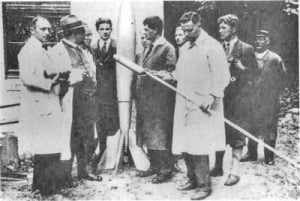
Rudolf Nebel, left, is pictured with German rocketeers including (second from right) Wernher von Braun, 19 at the time, and Professor Hermann Oberth (to the right of the rocket). - Image credit: NMMSH Archives
Rudolf Nebel, left, is pictured with German rocketeers including (second from right) Wernher von Braun, 19 at the time, and Professor Hermann Oberth (to the right of the rocket). – Image credit: NMMSH Archives
Tracing current space technology from World War II-era ballistics, Bushnell says that efforts to improve the current chemical fuel technology have been unprofitable within business models because “the current cost of access to space is in the range of thousands-of dollars per pound-of-payload.”

“We have, throughout the “Space Age” starting in the 1950’s, been in thrall to Chemical Propulsion. Breakthroughs in energetics and propulsion beyond Chemical appear to be required going forward.”

Fortunately, Bushnell believes that “The relatively straight forward applications of the ongoing civilian and military worldwide technology investments will greatly reduce mission cost and enhance safety going forward.”

Advances in materials science, information- and nano-technology have reduced the mass of spacecraft and thus the cost, but as Bushnell notes, “humans are not shrinking”, thus lower-cost lift, propulsion and power systems are required. That’s where LENR comes in, for high-thrust in-space propulsion.

“The LENR situation is in a major state of flux with recent apparently successful theoretical efforts and indications of much higher yields,” writes Bushnell, adding “if proven technologically viable, (LENR) would also be candidates for in space and on planet power.”

While the report inventories an array of possible technologies, here’s the portion devoted to LENR:

Low Energy Nuclear Reactions, the Realism and the Outlook
LENR could, by itself, COMPLETELY Revolutionize Space access and utilization. Although there is a quite long history of “anomalous” observations including transmutations the “recent” consideration of Low Energy Nuclear Reactions begins with the Pons/ Fleishman late 80’s observations and assertions regarding what they termed “Cold Fusion”. Subsequent difficulties with experimental replication and an utter lack of convincing theoretical explication forced research in this arena “underground” with minimal financial support.”

“The current situation is that we now have over two decades of hundreds of experiments indicating heat and transmutations with minimal radiation and low energy input. By any rational measure this evidence indicates something real is occurring.”

“So, is LENR “Real”? Evidently, from the now long standing and diverse experimental evidence – yes – With effects occurring using diverse materials, methods of energy addition etc. This is FAR from a “Narrow Band”/episodic set of physical phenomena.”

“The next consideration is “WHAT IS REAL? WHAT IS Happening? For NASA Langley the epiphany moment on LENR was the publication of the Widom-Larsen weak interaction LENR Theory. This theory is currently under study and experimental verification [or not] at NASA LaRC. The theory appears to explain nearly all the various and often variegated experimental observations and shifted the LENR Theoretical focus from some way of “fooling” Particle Nuclear Physics/The Strong Force to Condensed Matter Nuclear Physics, Collective Effects, The Weak Force and “Heavy Electrons”. The Strong Force Particle Physicists have of course evidently been correct all along, “Cold Fusion” is not possible. HOWEVER, via collective effects/condensed matter quantum nuclear physics LENR is allowable without any “Miracles”. The theory states that once load surfaces with hydrogen/protons and add some energy IF the surface morphology enables high localized voltage gradients then “heavy electrons leading to ultra low energy neutrons will form, neutrons that never leave the surface. The neutrons set up isotope cascades that results in beta decay and heat and transmutations with the heavy electrons converting the gamma from the beta decay into heat.”

“The theory indicates several key issues/circumstances are required to enable-to-optimize
LENR and explains the various experimental observations, including the often long initiation times required in some experiments. If the theory is experimentally validated in detail it provides the understanding to shift LENR research from discovery into engineering development. The theory indicates energy densities some million times chemical, the current experiments are in the 10’s to hundreds range. However, several labs have blown up studying LENR and windows have melted, indicating when the conditions are “right” prodigious amounts of energy can be released/produced. There are some 6 or so groups claiming device outputs in the 100 watt range and 3 others claiming kilowatts. Efforts are ongoing within NASA and other organizations to validate, or not, these claims. It should be noted that these devices are essentially “Edisonian,” the result of attempts at experimental “discovery” vice ab-initio design from the weak interaction theories per se.”

“The LENR situation and outlook is therefore the following: Something real is happening,
the weak interaction theories suggest what the physics might be, there are efforts ongoing to explore the validity of the theories, there are continuing Edisonian efforts to produce “devices,” mainly for heat or in some cases Transmutations. There are efforts to “certify” such devices. We are still FAR from the theoretical limits of the weak interaction physics and are in fact inventing in real time the requisite Engineering, along with verifying the physics. When we concentrated upon Nuclear Engineering beginning in the 1940’s we went, “jumped” to the strong force/particle physics and leapt over the weak force, condensed matter nuclear physics. We are going “back” now to study and hopefully develop this arena.”

“The “Precautionary Principle” demands that we core down and determine realism for this arena, given the truly massive-to-mind boggling benefits – Solutions to climate, energy and the limitations that restrict the NASA Mission areas, all of them. The KEY to Space Exploration is Energetics. Some examples of what LENR might/ could enable in a resultant “Energy Rich” Exploration context include:

– Refrigeration for Zero Boiloff cryo storage
– Active Radiation protection
– High Thrust Vasimir/MHD Propulsion
– Energy Beaming
– Separation of propulsive mass and energy/ energetics to establish the requisite
conductivity for most “harvested” propulsive mass including regolith
– Planetary Terraforming
– Ubiquitous in space and on-planet sensors and robotics
– LEO propulsion
– On planet power and energy
– EDL retro via heating of ingested mass”

“Also, The Key to SST’s and neighbor-friendly personal fly/drive air vehicles is Energetics, as simplex examples of the potential implications of this area of research. There are estimates using just the performance of some of the devices under study that one percent of the nickel mined on the planet each year could produce the world’s energy requirements at the order of 25 percent the cost of coal. No promises but something[s] seriously “strange” are going on, which we may be closer to understanding and if we can optimize/engineer such the world changes. Worldwide, worth far more resources than are currently being devoted to this research arena. Need to core down and determine “Truth”. If useful, need to engineer/apply.” —Dr. Dennis Bushnell Advanced-to-Revolutionary Space Technology Options The Responsibly Imaginable

They won’t call it cold fusion, but NASA is keeping an open-mind to new energy technology through experimentation and testing a LENR theory. Bushnell knows the importance of “not picking the winner” too early on. It isn’t easy, even for a national Chief Scientist.

In the report, Bushnell quotes Ivan Bekey from his Chapter 9 Long Term Outlook for Commercial Space in the book “Toward a Theory of Space Power”:

“The Nation’s space programs are in a horrible mess and appear to be locked in a
downward spiral. Almost all defense and civil government space programs suffer from
similar symptoms:

 no toleration of or planning for failures
 avoidance of risk
 lack of funding for new technologies
 inability of industry to afford research or to develop technologies alone
 suppression of disruptive technologies
 disappearance of the concept of experimental systems in space.
As a result of these symptoms, the following conditions are now the norm:
 absence of innovation
 long timelines for even modestly new developments
 billion-dollar price tags for major systems
 major overruns and schedule slips
 need for long on-orbit life to amortize the investment
 obsolescence of systems upon launch or soon thereafter.”

Bushnell sums it up with:

Overall – As mentioned in the Bekey comments cited herein, the pursuit of Revolutionary Space Technologies has over the years been akin to a battle, with the forces of conservatism/evolution consistently winning over those advocating risky/huge payoff REAL “Game-Changing” approaches. The Space Community has simply been unwilling to make the investment of time and treasure to ideate and triage/develop Revolutionary Technologies, resulting in Space being largely and still a high capital investment evolutionary at best Industrial Age Endeavour in the IT age heading rapidly to the Virtual Age.

and ends with this quote of Ivan Bekey:

The battle is within. It is a cultural one: between glorifying the past or
marching toward the future, between protecting successes or cannibalizing them,
between averting risk or embracing it. The battle is for the soul of the of the Industry [and the Future of Humankind in Space]

… and we’ll add ‘on Earth too’!

Cold Fusion Now!

Related Links

Review of NASA/Zawodny US Patent application David J. French

Aneutronic Fusion Spacecraft Architecture – LENR Cold Fusion Gregory Goble

NASA LENR series Gregory Goble

NASA Technology Gateway – Spinoff – LENR Cold Fusion


The Technology Gateway and Spinoff Magazine by NASA

Congress mandates that NASA offer licensing of patented technologies to U.S. industry. NASA meets this requirement through the NASA Technology Gateway where LENR patent licensing opportunities are offered. NASA publishes Spinoff magazine annually, showcasing the technologies from previous years’ licensing process, and their benefits to industry.

The Technology Transfer and Partnership Program

 A place to purchase LENR technology

Why is it important for Langley Research Center (LaRC) to transfer its technology?
“The U.S. Congress and the NASA Administrator are putting great emphasis on transferring NASA-developed technology and expertise to U.S. industry to increase U.S. industrial competitiveness, create jobs, and improve the balance of trade. In addition, there is an emphasis on bringing technologies and expertise into NASA that can facilitate achievement of space program goals.”

To purchase licensing agreements for LENR, go to the  NASA Technology Gateway – link .

NASA Technologies Benefiting Society (Spinoff 2012-pdf pg 34)

Since its founding, NASA has been charged, not only with expanding humanity’s reach into space and its knowledge of the universe, but also with finding ways for the technology it develops to benefit the Nation and world. NASA research and development has tangible, secondary benefits beyond supporting mission needs—creating jobs, generating revenue for businesses large and small, reducing costs, and saving lives. Through software innovations, fuel-saving capabilities for small aircraft, healthy beverages at your local grocery store, and more—NASA spin-offs are improving daily life in your hometown and beyond.


The NASA Technology Gateway is for technologies in the applied engineering research phase entering the marketplace.

What patented LENR energy technology does NASA have to offer for licensing purchase?

Who is purchasing LENR technology at the Technology Gateway?

NASA and LENR Applied Engineering

Has LENR advanced to the applied engineering and product development phase? Yes.

At the Technology Gateway, NASA is promoting LENR power technology.

Langley’s Low-Energy Nuclear Reaction (LENR) Technology AvailableNASA

“Check out our latest video on our homepage featuring a novel, clean energy technology.”

View the Promotional Video

Method for Enhancement of Surface Plasmon Polaritons to Initiate and Sustain LENR in MHS

(Metal Hydride Systems) – NASA

A quote from the end of the video: “NASA’s method for enhancement of surface plasmon polaritons to initiate and sustain low energy nuclear reactions in metal hydride systems, a clean nuclear energy for your power operated technology.”

MORE

These also provide evidence that LENR has advanced to applied engineering and product development.

  • In the document “Low Energy Nuclear Reaction: The Realism and Outlook”—NASA links—Dennis Bushnell Chief Scientist at NASA Langley Research Center states that “We are still far from the theoretical limits of the weak interaction physics for LENR performance and are in fact inventing (in real time) the requisite engineering, along with verifying the physics.
  • In this NASA contract, pdf- “Subsonic Ultra Green Aircraft Research – Phase II” – N+4 Advanced Concept – NASA Contract NNL08AA16B – NNL11AA00T, the Working Group report from May 2012 states:

    Even though we do not know the specific cost of the LENR itself, we assumed a cost of jet fuel at $4/gallon and weight based aircraft cost. We were able to calculate cost per mile for the LENR equipped aircraft compared to a conventional aircraft (Figure 3.2). Looking at the plots, one could select a point where the projected cost per mile is 33% less than a conventionally powered aircraft.”… pg 24.

  • LENR Requirements Analysis… pg 24. View Figure 3.1

  • Potential Heat Engines for LENR Systems… pg 25. View Figure 3.2

  • Parametric LENR and Heat Engine Performance Parameters… pg 25. View Figure 6.2

  • Low Energy Nuclear Reactor Technologies …pg 82.

  • LENR Technologies Success Criteria …pg 86.

  • Also LENR at pgs 15, 18, 19, 20, and 21.

  • The NASA Working Group Report also makes public the following list of organizations and individuals working on the advanced concept contract: Bradley (Boeing) * Daggett (Boeing) * Droney (Boeing) * Hoisington (Boeing) * Kirby (GT) * Murrow (GE) * Ran (GT) * Nam (GT) * Tai, (GT) * Hammel (GE) * Perullo (GT) * Guynn (NASA) * Olson (NASA) * Leavitt (NASA) * Allen (Boeing) * Cotes (Boeing) * Guo  (Boeing) * Foist (Boeing) * Rawdon (Boeing) * Wakayama (Boeing) * Dallara (Boeing) * Kowalski (Boeing) * Wat (Boeing) * Robbana (Boeing) * Barmichev (Boeing) * Fink (Boeing) * Sankrithi (Boeing) * White (Boeing) * Gowda (GE) * Brown (NASA) * Wahls (NASA) * Wells  (NASA) * Jeffries (FAA) * Felder (NASA) * Schetz (VT) * Burley (NASA) * Sequiera (FAA) * Martin (NASA) * Kapania (VT)

Thank you NASA, and a thank you to all of the people and organizations who worked on developing the NASA, “LENR equipped aircraft” – Advanced Concepts Working Group Report. Each of them are aware of the opportunities offered by patented LENR energy technology from NASA.

How much money might NASA make through the licensing of LENR technology?

THE NASA LENR ENERGY PATENT

The NASA LENR patent is for a device to produce heavy electrons thereby sustaining LENR and ensuing energy generation. In  this slideshow, a Widom Larson theorist reviews the NASA patent. “NASA files USPTO patent application on LENRs” slideshow – by Lewis B. Larson.

View and research at Google Patent Search: Titled, “Method for Creating Heavy Electrons” or download the (pdf at lenr-canr.org)

Method For Creating Heavy Electrons – NASA LENR Patent

STATEMENT REGARDING FEDERALLY SPONSORED RESEARCH OR DEVELOPMENT [0002] The invention was made by an employee of the United States Government and may be manufactured and used by or for the Government of the United States of America for governmental purposes without the payment of any royalties thereon or therefor.

  • BACKGROUND OF THE INVENTION [0003] 1. Field of the Invention [0004] This invention relates to the production of heavy electrons. More specifically, the invention is a method of making a device, the device itself a device, and a system using the device to produce heavy electrons via the sustained propagation of surface plasmon polaritons at a selected frequency.
  • ABSTRACT A method for producing heavy electrons is based on a material system that includes an electrically-conductive material is selected. The material system has a resonant frequency associated therewith for a given operational environment. A structure is formed that includes a non-electrically-conductive material  and the material system. The structure incorporates the electrically-conductive material at least at a surface thereof. The geometry of the structure supports propagation of surface plasmon polaritons at a selected frequency that is approximately equal to the resonant frequency of the material system. As a result, heavy electrons are produced at the electrically-conductive material as the surface plasmon polaritons propagate along the structure.
  • [0019] A method for selective enhancement of surface plasmon polaritons to initiate and sustain low energy reaction in material systems, comprising the steps of: providing a material system comprising an electrically-conductive material, said material system having a resonant frequency associated therewith for a given operational environment; and forming a structure having a surface, said structure comprising a non-electrically-conductive material and said material system, said structure incorporating said electrically-conductive material at least at said surface of said structure, wherein a geometry of said structure supports propagation of surface plasmon polaritons at a selected frequency that is approximately equal to said resonant frequency of said material system, and applying energy to a portion of said structure to induce propagation of said surface plasmon polaritons at said portion, wherein heavy electrons are produced at said material system as said surface plasmon polaritons propagate along said structure.
  • [0028] The above-described tuned structure -14- incorporating material system -12- can exist as particles, in two-dimensional geometries, three-dimensional geometries, and even fractal geometries. Several non-limiting examples will be discussed below.
  • [0029] Individual particles, by themselves, are the simplest embodiment of a material system used by the present invention. Spherical or nearly spherical particles naturally resonate at a frequency where the particle circumference is equal to a multiple of the SPP wavelength. Similarly, long and thin, needle-like particles or whiskers can resonate in modes analogous to small antenna when the length of the particle is an integer multiple of one-half the SPP wavelength.
  • [0030] Two-dimensional embodiments are comprised of periodic textures or arrayed structures that, by design, resonate at specific SPP frequencies. Examples include triangular, rectangular, or hexagonal arrays of posts (e.g., cylinders, truncated cones, or derivatives of these with more complex, non-circular bases) where the array of objects creates and reinforces a natural SPP resonance at the desired frequency either in the array elements themselves or on the surface in the voids between array elements.
  • 0032] The advantages of the present invention are numerous. Devices/systems made in accordance with the present invention control the frequency of the SPP resonance and its uniformity over large surface or volume regions.
  • This will allow an entire device to participate in heavy electron production and ensuing energy generation.
  • The present invention is adaptable to a variety of physical states/geometries and is scalable in size…
  • …thereby making it available for energy production in a wide variety of applications (e.g., hand-held and large scale electronics, automobiles, aircraft, surface ships, electric power generation, rockets, etc.)


In the Next Year or So, a NASA Spinoff LENR Report?

So, who is purchasing LENR technology from NASA at the Technology Gateway?

Spinoff Magazine will, at some time, report the LENR licensing agreements that are taking place.

When? Perhaps in next years’ edition, or so.

NASA… Spinoff… LENR…

Cold Fusion Now!


METHOD  of  SCIENTIFIC

Straighten…. untangling

Concept… bound

Better… yet

Always… found

Still.. questing


LENR the topic of Patrick Timpone’s radio show

http://oneradionetwork.com/environment/brad-arnold-saying-no-to-dirty-hydrocarbon-fuels-and-yes-to-cold-fusion-march-25-2013/

THE MORNING SHOW
with
Patrick Timpone

Brad Arnold

Cold Fusion NOW!

 
Cold Fusion Now says no to dirty hydrocarbon fuels and their environmental pollution; no to today’s dangerous nuclear power plants creating radioactive waste with no disposal plan.
Cold fusion technology is the viable alternative energy that could power a new generation of technology for humankind. Safe clean, and abundant, new energy offers an opportunity for a technological future on Earth. We are committed to an ultra-clean, next-generation nuclear power from the hydrogen in water.

Show Highlights:

-What is Cold Fusion Technology?

-Low Energy Nuclear Reactors

-Who exactly are the players?

Websites:

Cold Fusion Now

http://lenr-canr.org/

ecatnow!.com

Is it finally happening?? Supporting evidence for a big shift in the energy market caused by LENR!!

The following is a rebuttal comment made by Walkerig1 ( http://news.cnet.com/8618-17938_105-57562092.html?assetTypeId=12&messageId=13482599 ). It contains some pretty powerful analysis and links that (in my opinion) provide strong evidence of that big shift in the energy market linked to the imminent emergence of LENR onto the energy market.

“I could literally fill this post with links, it is well known in the Oil industry that the major players are on a divestment and diversification strategy. Many are giving various excuses, but when you check them they do not pan out. We are shifting to US based fields is a common one, but when you look they have bought options to consider buying or leases rather than the asset.

That is key no buying only renting. You rent assets when the asset value is about to take a hit.

Shell has been on a massive divestment strategy on its oil field assets, from Africa to the Far East for the last 12 months, or since Rossi did his first demonstration this time last year.
http://www.hydrocarbons-technology.com/news/newsshell-divests-stake-nigerian-oil-asset

Other Fossil Fuel companies on a divestment strategy are BP who are selling their stakes in fields in the North Sea, Russia, the Arctic and the Gulf to name but a few and not even batting an eyelid about being refused license to buy future assets in the Gulf.
http://www.bbc.co.uk/news/business-20527045

http://www.bp.com/genericarticle.do?categoryId=2012968&contentId=7081129

http://www.bp.com/genericarticle.do?categoryId=2012968&contentId=7080956

http://indrus.in/articles/2012/11/29/rosneft_and_bp_to_develop_new_arctic_oil_fields_19411.html

Connoco
http://www.nasdaq.com/article/conocophillips-to-sell-5-bln-stake-off-kazakhstan-to-incur-400-mln-q4-charge-20121126-00448

Exxon
http://www.foxnews.com/world/2012/11/09/iraqi-official-says-exxon-mobil-is-trying-to-sell-stake-in-major-oil-field-by/

http://www.newsystocks.com/News/4108444/Weak-Demand-Outlook-Forces-Exxon-Mobil–XOM–to-Sell-Its-Japanese-Unit

http://www.reuters.com/article/2012/11/07/us-iraq-exxon-idUSBRE8A60Y420121107

Even the pipeline parts and refinery companies are joining the rush to divest the fossil fuel business.
http://dcnonl.com/nw/32627/cb

http://online.wsj.com/article/SB10001424127887323830404578145611979409082.html?mod=googlenews_wsj

Do a Google search for any oil company and the phrase “Oil field” and the words divest or sell.

http://www.digitaljournal.com/pr/536428

Some are trying to cover their strategy and the risk by divesting half of the asset others are just cashing in their chips.

http://in.reuters.com/article/2010/03/25/us-conoco-lukoil-idINTRE62N43M20100325

This year has been an Oil Field Night of the Long Knives as all the major players have been dumping these soon to be seriously downgraded assets.

The price per barrel dropped 20+ dollars since May.

I expect the real drop to be when the 60 day and 30 Day options on the price per barrel get shorted when the Rossi announcement is about to be made. I expect the price per barrel will drop below 70. Then it will resurge as people realize LENR will not happen overnight. Then Oil and other fossil fuels will go into a long decline with investors on a business decline strategy making money out of the asset stripping and running the oil fields into the ground. Natural Gas will be the longest lived of the Fossil Fuel assets.

Coal might die out out in as little a year and a half as converting coal power plants to use Rossi’s Hot Cat or other LENR tech will be very easy. Oil will be next. Converting all power plants could take a 5 to 7 years but the fact that President Obama changed the Law to allow Combined Heat and Power means that many plants will end up being scrapped before they can convert, as faster cheaper more nimble competitors will create power plants on customers door steps, that provide power at a tenth but theoretically at up to one thousandth of the cost.

Buckle in people it is about to get real bumpy!”

The most common alternative explanation of the big shift in the energy market (that I hope you accept as happening) is fracking and the abundance of natural gas.  It is common to explain any know phenomena using a known and accepted narrative (for instance explaining a recent downturn in the stock market as being because of the “fiscal cliff debate”).  Yet, when I watch the news I don’t see upward movement of the stock market ever being cited as counter-evidence of that explanation.  What I am trying to say is that the known big shift in the energy market can (in my opinion) be more easily and completely explained as the imminent emergence of LENR, than for any other explanation (like “shifting to US based fields”).

Top