The MFMP has been offered something no one knew existed, something priceless and which could reveal critical secrets many in the LENR field have been seeking for over a quarter century.
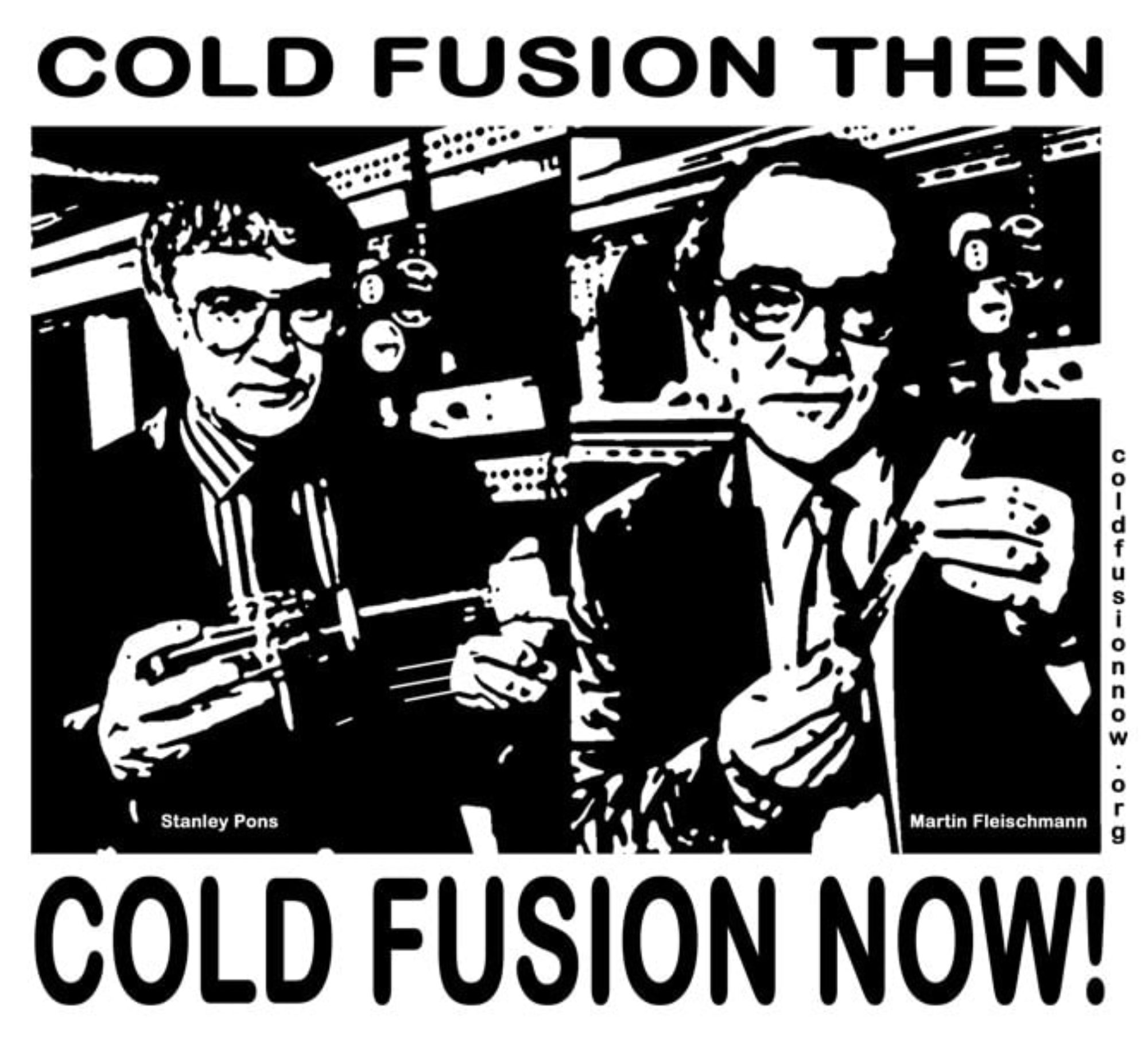
Before Martin Fleischmann left the US, he personally gave a trusted friend an original pre-1989 Johnson Matthey palladium wire – the very same as used in experiments that led to that fateful announcement of a new primary energy source that came to be known as cold fusion.
He has held this secret all these years until now. We checked today with Mike McKubre, Vitorio Violante and Melvin Miles if there was any known public metallurgical and elemental / isotopic characterisation of this material, the answer was a resounding no.
It is known that the early attempts to replicate the Pons and Fleischmann effect mostly failed due to the purity and processing of ‘palladium’ used. In fact ENEA has been trying to establish what additives and structures are critical to creating the effect for more than 2 decades. Many of the principal research labs working in the field are trying to establish the correct crystal shapes, sizes, orientation etc. and chemistry.
In our own nickel powder / hydrogen research, we have tried to get the purest nickel possible – but have failed to see any excess heat. Now we know from our recent isotopic analysis of Dr. Parkhomov’s Nickel, that there is high concentrations of Carbon and Oxygen on the surface, elements also found in Rossi’s fuels.
The unique opportunity we have been honoured with is profoundly important, and there is not a person we asked at the conference that were not falling over themselves to help in what ever way they could. Ultimately it is down to the current owner to decide exactly what happens but from the available piece, which is about the thickness of a toothpick and between 7 and 8 cm long, the current plan is to
1. Use 3 X 2mm samples to characterise structure, isotopic constitution etc.
2. Run at least two 2cm segments in Pons and Fleischmann cells, copied from the original and/or use the original cell.
3. Reserve remainder
We will auction the ownership rights of the post run, post analysis 2cm segments in a one of a kind, never to be repeated auction. This is an unrepeatable opportunity to own the only known samples of this historic precious metal.
This auction, along with the auction of the donated 1 ounce Pd 1989 “Cold Fusion” coins is design to raise enough money the help ensure a fully faithful replication that will be conducted by someone who is not currently a member of the MFMP and who is a very experienced experimentalist. The work will be conducted in France with the help of Jean-Paul Biberian and all data will public.
We must work with the best resources on the planet to ensure that this materials secrets are revealed for all. It is wonderful to be a part of something that will yield critical data for advancement of the field.
More information to be published about the Vindication program.
The name of the current owner and how he came to be entrusted with the electrode will be revealed in time, right now, given the incredible importance to maintain security, we have been asked to hold off on publishing that information.
We want to take this opportunity however, to publicly thank the donor and curator of this material for coming forward.
—Vindication MFMP
ICCF-19 Program for Tuesday
Also from the MFMP Facebook page, that “Carl Page is in Padua, as is Bill Gates – apparently…”
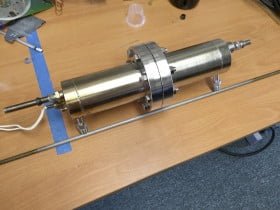
Brillioun reactor coreDavid Nygren obtained a photo earlier in the day from Robert Godes, who was presenting at poster session. Godes described the photo, “That is a 3rd generation Brillouin Energy HHT reactor system…. we are now on gen 4. The Nickel rod fits inside the tube that goes all the way through the vessel with the bolted ring. We flow inert gas through the largest tube with the bolted ring and fill the second tube with H2 gas. We then pass high current pulses through the Ni rod. This system has produced 4X more thermal energy out than Q -pulse energy deposited in the core. We have performed this with the same core in both our lab in Berkeley, CA and at SRI.”
Patent lawyer David French said “It was a great first day. Started at 9:30AM with a one hour concert by a 25 piece orchestra.”
Cold Fusion Dog Dr. Bob estimates approx 300-400 in attendance and, “I would definitely not go so far to say that there was a lot of [media] coverage of this event.”
Klee Irwin, lead investigator at Quantum Gravity Research sent this photo of the musicians and the beautiful setting for the presentation of research and reports of progress in the field of Condensed Matter Nuclear Science, both scientific and commercial.
Cold Fusion Now! is not in attendance, but our associates Cold Fusion Dog Dr. Bob, and Alain Coetmeur of LENR-Forum are reporting in through Twitter. E-Cat World has a live thread here with video of Tom Darden of Industrial Heat from Cold Fusion Dog Bob.
A loose transcript of the address by Tom Darden was posted on E-Cat World. We reproduce it here:
What an honor it is to be here today to address those of you who have done so much to change the way we address our energy needs and our environmental needs, to change science. I’m the founder of Cherokee, and I’ve been asked to tell you we are the body that created Industrial Heat as a funding source for LENR inventors. Unike many of you, I’m not a scientist, I’m an entrepreneur. We share the common bond of innovation . . . Entrepreneurship sees the major task in society as doing something different, rather than doing something better than is already being done. Doing better something that is already being done is like making coal power plants more efficient — you are working to make them unneccessary. Thank God there are some, like many of you, who have the courage to disrupt. In 1921, experts determined that the limits of flight had been reached already. In 1932 it was determined that nuclear fission was unlikely ever to be feasible. And in the 1950’s, when I was born, it was widely believed that pollution was a necessary part of economic development. Paradigm shifts do not come easily, especially in science — it is not a smooth road in the nature of scientific revolutions. Usually they are born out of the crises of our time. If you are on the leading edge of a paradigm shift, you will be attacked by your peers, and you will be attacked by the institutions of the status quo. We feel called to upset two core business paradigms. First, the traditional ethos of environmentalism is that we should strive to be ‘less bad.’ But as America’s leading environmental philosopher puts it in his book Cradle to Cradle, being ‘less bad’ is not being good, it’s still being bad, just a little bit less so. If you are driving a car towards a cliff, it doesn’t help you to slow down — you need to turn around and go in a different direction.
We need solutions that don’t create pollution in the first place, not solutions that only reduce pollution. Second, let’s challenge the assumption of scarcity, at least with respect to energy. Sadly, due to society’s ineffectiveness to date, the world struggles with energy scarcity. What we burn from petroleum or coal, which unlocks only a tiny fraction of the true energy inside, when we do this we release almost all the mass of coal into the air as stack emissions. We scatter this mass around the planet. Carbon and heavy metals can be highly beneficial — they’re not necessarily pollutants — but they are if they’re in the wrong place. C02 in the air is a pollutant; carbon in a tree is not. Heavy metals can be highly beneficial unless they’re in the wrong place like farmlands in China, or in our oceans.
We need an entirely new paradigm. This hopeful vision was the genesis of our work at Industrial Heat. When I entered school, the United States was in the midst of an environmental crisis. Most people have forgotten about this, or perhaps never even new of it, but when I was young periodically industrial rivers in our cities would burst into flame due to pollution, and sometimes in our worst polluted cities, people drove with their headlights on during the day. Our air pollution was as bad as in China in some cities. This was America when I began to think of my place in the world. I was worried when I saw that photo, the first photo of our living planet from space. Many of you will remember that — we had never seen the earth, which is ironic because we live on it. We could see that it was a living planet. I felt compelled to do something about it. Later at university I wrote my master’s thesis on acid rain, air pollution and coal plants. My first job was at the Korean Institute of Science and Technology in Seoul, where I worked on pollution, converting coal which was used for cooking. I saw pollution throughout East Asia. I returned, and went to Yale, to become an environmental lawyer, but in the US, practicing law, some people think it’s somewhat [draining?]. I fell in that category and thankfully I got a job at Bain and Co. working in steel plants, on energy efficiency. In 1984 I converted brick plants from burning fossil fuels into burning biogas which was being dumped into landfills where it turned into methane gas . . .
. . . We were mostly carbon neutral, except for our electricity use, and I obsessed on finding ways that we could make carbon free electricity. I was never successful. In 1985, I discovered soil pollution at on of our brick plant sites, from decades of petroleum use. I found some professors at Virginia Tech University, which is not far away, professors who dealt with soil bacteria, so we began to grow bacteria which would consume pollution in the ground. I funded their business via systems technology and we created Cherokee Environmental to clean up contaminated soil all over the east coast and over the years we’ve cleaned up over 15 million tons of dirt. That would be enough, that if you stacked it all up under a golf course, it would raise the level of that golf course about 400 feet or 130 meters. We bagan to buy contaminated property to clean up. We raised over $2 billion for this, buying and remediating land. We’ve owned 550 properties in the US, Canada and Europe, including a refinery site not too far from here (Trieste).
Some people think Cherokee is a real estate company because it owns a lot of property, but our property work is driven by our pollution focus. I saw that we could affect pollution by working with smart scientists at Virginia Tech. We don’t internally have the capacity for scientific innovation — we’re business people, not scientists — but we realized we could find scientists who had ideas. So we branched out. We kept doing this with other professors at other universities. Between 1985 and the present we’ve invested in over 100 venture or startup companies. These addressed water or air pollution, or grid management; almost none of these were our own ideas, these were others’ ideas. My primary goal is to reduce pollution so for years we’ve been going abroad to transfer technology because that’s where most of the pollution is. I go to China regularly to advise officials and business leaders on methods and processes addressing pollution. They’ve declared 19 percent of their land too contaminated for agricultural use. This is mostly due to air pollution — air pollution dropping contaminants on the land. Obviously this is a huge social issue. I began to do this in the former Soviet Union in the 1990s, and we’ve also explored similar paths in the Middle East, India, and Indonesia, focusing on areas of most population. In order to address the globe’s environmental problems, the solutions must be ubiquitious — they cannot exist only in Europe or the United States.
In the early part of this decade Cherokee had entered a relatively stable part of its history. The next generation of leaders was being prepared to carry our guides and processes forward, and existing projects were operating smoothly. My children were in their 20s and 30s and I was spending time with them and with my wife for the first time in nearly 35 years. I had rebuilt my experimental airplane, and I was installing a parachute in it, looking forward to using it more . . .
One day I received a random call about cold fusion. I didn’t give it much credence because I remembered in detail the disclosure about Fleischmann and Pons years before, and I believed the subject was dead. Then thirty days later I received another related inquiry from a different group, so we began to do some research, and then thirty days later, I received a call from another group. We had invested in 100 startup companies and I had never gotten an inquiry about fusion or about LENR: three in 30 day intervals. We funded two of these groups, and then later, as many of you know, we licensed Andrea Rossi’s technology. Since then we’ve made grants to university groups doing research in this space, and we continue to fund additional teams. We envision an ecosystem of collaboration with great scientists who work together to develop the many systems and technologies society will need to shift away from polluting fossil fuels. Our goal is to bring non-polluting energy to those who need it most, especially in the developing world. We also don’t believe there is one solution, we believe there are many solutions to these problems. To implement this vision, we determined that a business-based approach would be the most effective strategy; we looked at many others.
I know that some of you have felt that business are, and have been adversarial to [??] I understand that. But recall that commerce has long proven to be primary agent of change in every technical endeavor. We engage with large companies and we all need them to achieve ubiquity for your ideas. We want to work in a collaborative way with many more [challenges, charities?], and we want to help others do that. We started Industrial Heat because we thought that LENR technology was worth pursuing, even if we were unsuccessful. We were willing to be wrong, we were willing to invest time and resources to see if this might be an area of useful research in our quest to eliminate pollution. At the time we were not especially optimistic, but the global benefits were compelling.
We’ve had some success, and we’re expanding our work. We’re collaborating with and investing alongside fellow researchers and developers. Scientists compete to be the first, and they count on potent sharing of what has been discovered to advance the process. They want to be able to be able to share their work in an environment where why they do what they do, truly matters . . . they want to know that their work will be funded and their ideas will be merit tested, and advances merited, and they will be rewarded fairly. We’re privileged to be creating that kind of environment at Industrial Heat. We believe we may be at last on the verge of a new paradigm shift — one that will create new opportunity for innovation and entrepreneurship to advance the cause of abundance in the face of scarcity, and the continuing calls to be less bad. When I look around this room, I’m filled with two strong sentiments . . .
You’ve given your lives to your research . . . you’ve made a great difference to the world. Thank you for your years of hard work and progress. Every day I think of you and I am inspired.
At the same time, I would like to say how truly sorry I am that society has attacked you for the last three decades. The treatment of Fleischmann and Pons, and the treatment of any of you by mainstream institutions and the media will go down in history as one of the great examples of scientific infanticide . . . this seems to be a dark component of human nature . . . but notwithstanding this longsuffering, you remain faithful to your work. Thank you for your intense focus and contributions in the face of challenges. We [notice] all of your good faith, good will, good intentions and honesty, driven by the better angels of our nature, not appearing to be constrained by the behavior of others. We also need not be constrained by our own minds; ironically the expert who proclaimed that flight had achieved its limits in 1921 was Orville Wright, and the expert who declared that fission was not likely was Einstein . . . your time is come; for instance fear gripping China and India reporting air pollution and water pollution creating an enormous demand for new ideas, less constrained by the past. Second, the increasing reports of success by many of you continue to offset the presumptions of skeptics. But it does not benefit any of us nor does it benefit society, if we achieve success but lose our battles. Let’s encourage each other to put the needs of society and the needs of other first as we contemplate how to achieve victory.
As provocative as it may sound, we’ve reached a tipping point. The potential of your work is so great. The signs of progress are now so significant. This is our simple manifesto: to pass on a world that is better than the one we received. Abundant non-polluting energy, widely available can make the greatest contribution to this goal. That’s a manifesto pledge for us to keep. It’s a promise to you, to those who went before you, to our children, and their children’s children. Thank you(Applause)
Questions for Tom Darden:
What is your timeframe?
TD: What is our timeline? I have found throughout our work that patience is a virtue, patience is important. And any people in business, and especially in the venture capital world, I hate to think we might be in the venture capital world, but I guess that’s what we do) want to move very quickly — we would like to move very quickly as well — but they tend to stop before success is achieve, and I think they tend to stop too quickly, and many instances we’ve stayed with technologies for fifteen or twenty years, and continued when we’ve seen promising results. For the most part we use our own money, so we’re not worried about investor returns as would be with some of the venture funds, but we don’t really have a distinct time frame. Sooner is better than later, but we are willing to stay for a long time, and I don’t want to move so quickly that we miss something. So I guess I would have to say we don’t really have a timeframe, and we don’t intend to give up. (Applause)
Follow this link for further updates at this historic conference.
In his post ICCF-19 Day 1, Dr. Bob reports that “McKubre spoke in his opening statements about the past, the now, and the future. He mentioned that for Cold Fusion the situation has always been a lack of funding, but now, we will see an abundance of funding, but lack of talent.”
A problem indeed, but one that can be fixed – with adequate funding.
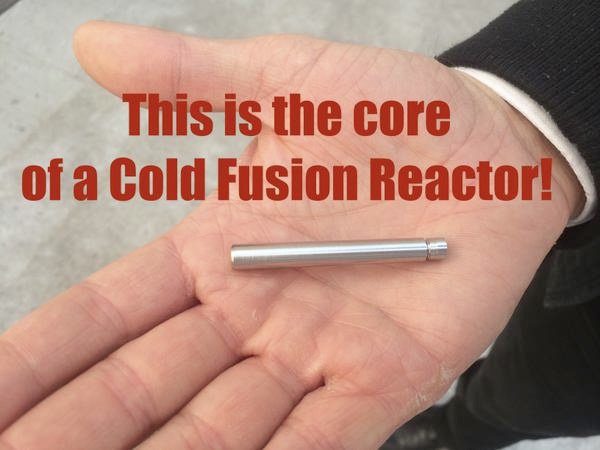
During the afternoon, Bob tweeted this photo of Nicholas Chauvin’s core reactor! Slimline! Nicolas Chauvin of LENR Cars and MFMP displays tiny reactor core.
Of the sleek design, Bob remarked, “I did not speak to him yet, but Nicolas Chauvin from LENR Cars / MFMP showed me one of Parkhomov`s Dog Bone Cores.”
“Think about it – he is holding the most powerful and valuable technology, in the palm of his hand. It might now have lots of flashing lights or lasers, but the simplicity is in itself beautiful.”
“People actually walk around carrying these things in their pockets.”
“I imagine that If Apple created a (new) Cold Fusion Device – it would look just like that.”
Martin Fleischmann Memorial Project posted on their Facebook page this announcement:
Vindication
The MFMP is going to announce something very special, something everyone has wanted to know for years but that no one could expect to ever know.
Related to this announcement, we have been graciously donated, not 1, but 2 extremely rare 1989 minted “Cold Fusion” one ounce coins. These will soon be auctioned with the aim of part funding the path to new clarity that this special thing or things will deliver.
Cold Fusion Coins to MFMP from Anonymous donor.The last time one of these coins was sold – it went for around $5000. The anonymous donor once offered these very same coins to Martin Fleischmann, after holding them in his hands for a while pondering, he handed them back to their owner saying “no, you better keep them, one day you may be able to do something useful with them”
The MFMP and the coins current owners believe that time is upon us. Keep a look out for the link to the E-bay auction and other related vindication posts.
Two public talks on the topic of LENR will be given by members of the Energy 2.0 Society in April.
On Wednesday April 15, Gary Scott, electrical engineer and one of the founding board members of the Energy 2.0 Society will address the Madison, Wisconsin chapter of the IEEE (Institute of Electrical and Electronics Engineers) on the subject of: “LENR: Energy 2.0”.
The meeting will include a lecture by Gary Scott, along with pizza, salad and a beverage held at Engineering Hall Room 1800, 1415 Engineering Drive, Madison, WI 53706 at 5:00 p.m. on April 15th. Cost is $5 for IEEE chapter members, free for IEEE student members, and $10 for all others.
Electrical engineer Scott does not care for the “cold fusion” name, calling it “incorrect”. We strongly disagree, nevertheless, his enthusiasm for LENR gains our support.
Talk: At the moment the most promising forms of LENR (Low Energy Nuclear Reactions some times incorrectly referred to as Cold Fusion) are those that are able to operate using nickel and hydrogen — both plentiful and inexpensive natural resources. In LENR reactions no pollutants or emissions are produced, neither are harmful radiation or radioactive waste. This makes LENR a clean and sustainable form of energy. We are in the very early days of research and development in this field, and much about this phenomenon is poorly understood. There are competing theories proposed that try to describe the exact mechanism by which this anomalous heat is generated, but none has as yet been accepted as authoritative. There are many researchers and companies studying LENR at the moment, and it appears that we are on the verge of seeing commercial-grade LENR reactors appear in the marketplace. Ultimately LENR has the potential to revolutionize the way that energy is produced — cleanly and less expensively than current energy sources, and from elements that are cheap and abundant — making it a truly ‘2.0’ technology that we feel should be promoted for the benefit of humanity.
On Sunday April 26, Tom Wind, president of Wind Utility Consulting in Jamaica, Iowa, and president and founding board member of the Energy 2.0 Society will speak at the EarthFest EcoFair at the Mayo Civic Center in Rochester, Minnesota. Tom Will be speaking at 2:00 p.m. on the subject of “The Advance of LENR Technology”. Admission is free. For more information about the event visit http://www.earthfestrochestermn.org/
The Energy 2.0 Society is registered 501(c)(3) nonprofit organization based in Iowa, USA. The society was formed to increase awareness about LENR technology and to promote its use with the purpose of improving quality of life for people everywhere. For more information please visit http://www.energy2point0.org
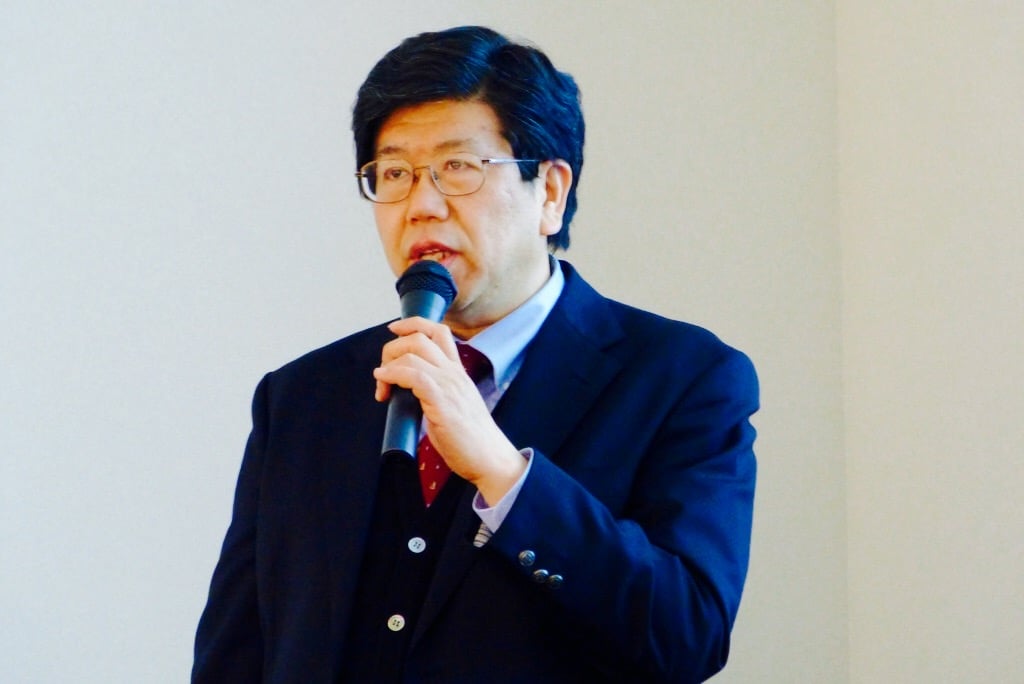
Title Photo: Professor Hiroyuki Hama of Tohoku University giving speech at Opening Ceremony
Photo: Research Center for Electron Photon Science at Tohoku University
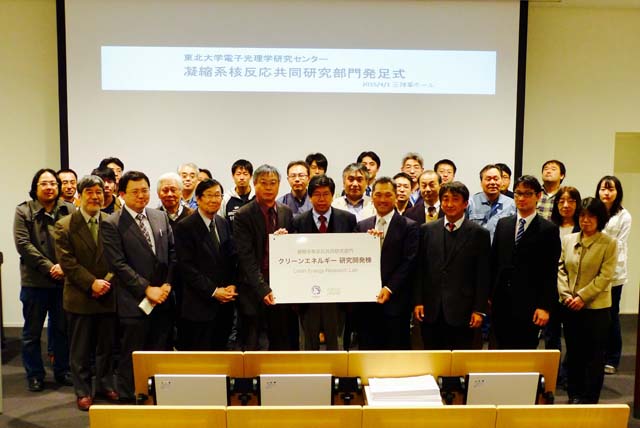
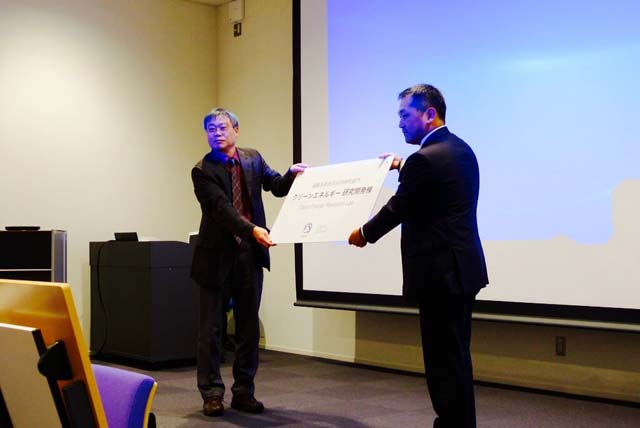
The opening ceremony of Tohoku University Clean Energy Research Lab was held on 1st April 2015 at Mikamine Hall in the Research Center for Electron Photon Science of Tohoku University.
Hideki Yoshino of Clean Planet, Inc, one of the groups involved in the cooperative effort, says, “We still have not finished setting up the lab, it is about 90% completed. So, we don’t have photos of the new lab. However, we have some good photos from the opening ceremony.”
Masanao Hattori, from Clean Planet, presented a new sign for the Lab to Professor Hiroyuki Hama. Hiroyuki Hama is Chair of The Research Center for Electron Photon Science of Tohoku University. He made an inspiring speech there.
Masanao Hattori (with a green background), Profesor Jirota Kasagi (with a pen), Dr. Yasuhiro Iwamura, and Takehiko Itoh each made a speech to share their commitment for a realization of the project with other members.
Iwamura made a presentation updating everyone on the current status of research and to affirm the shared goal with members of The Research Center for Electron Photon Science of Tohoku University. Iwamura is one of the new lab’s leaders on the transmutation of radioactive materials.
Clean Planet’s Yoshino says, “We feel that it is our mission to find ways to transmute nuclear waste as well as to develop practical applications for clean energy using LENR for the global community.”
“The new research center is located near Sendai which is in the area where the huge earthquake and the following Tsunami hit 4 years ago; Fukushima Nuclear Fission Power Plants are only 111 km away, about a 2-hr drive. So, we feel it is what really needs to be done for the global community and we are determined to make it happen!!”
Director P.K.Iyengar initiated cold fusion program at BARCUnder the direction of P.K.Iyengar, the Bhaba Atomic Research Centre (BARC) began cold fusion experiments early in the field’s history, finding excess heat, neutron bursts and tritium, among other results, from multiple types of cells.
Dr. Mahadeva Srinivasan, the head of BARC’s Neutron Physics Division and an Associate Director of the Physics Group, performed many of these experiments, and reported on the research in journals and conferences. A survey of the BARC experiments is archived here.
Though successful, the program ended with the retirement of Director Iyengar and Dr. Srinivasan. In a 1994 interview with Russ George, Srinivasan said,
“Dr. Iyengar, who was the moving spirit behind the initial cold fusion program at BARC, moved on to become the chairman of the Indian Atomic Energy Commission. That has had an impact on the other groups involved in cold fusion experiments, though it didn’t bother me. Many of the other groups did not want to risk their careers, and so many of the groups wound down their work. So in terms of numbers of people, we have come down from a level of 50 scientists actively engaged in cold fusion to about 15.”
After that, skeptics managed to end the remaining experiments, until nothing remained. That may be changing now.
The 25 February 2015 issue of the journal Current Science Volume 108 Issue 4 contains a special section on LENR, with a variety of papers from cold fusion researchers around the world. The recognition by the mainstream Indian science journal for the emerging field of new energy marks a turning point for LENR research in India. Mahadeva Srinivasan was a Guest Editor along with LENR theorist Andrew Meulenberg.
Mahadeva Srinivasan says, “I give full credit for the Special Section to Prof. R. Srinivasan, the Editor of Current Science, for it was he who sprung a surprise and asked us whether we would like to guest edit a Special Section!”
Though no comments have been received from mainstream Indian scientists in response to the publication, Dr. Srinivasan believes “there is every reason to be very happy with the outcome.”
“A high level Group has been formed to look into CF/LENR. The first meeting of this group is to be held on 8th April, the day before I leave for Venice [ICCF-19]. The cost of holding this meeting will be borne by a federal Ministry”.
 From the Martin Fleischmann Memorial Project Facebook page: