In the past week the latest news with Leonardo Corporation/Andrea Rossi has been centered around the brief announcement of a February 2013 1 MW plant going into operation in the U.S. with public viewing after it operates for a certain time period.
“Yes, Leonardo Corp is very much powerful now. I can already say that the first 1 MW hot cat will go in operation within February 2013. It will not be a military application, therefore selected persons will be allowed to visit it. It will be installed in a big power production and distribution plant. This is the new. The plant is made in the USA. An extremely important agreement has been signed after the tests of the Hot Cat, which are going on since June in the USA and in Italy. The details will be communicated only after the plant will have been working for enough time to be visitable, also to avoid clubs in the wheels. That’s all I can say right now.”
Today this news is elaborated on a bit more in Andrea Rossi’s Journal, in which he also touches on the announced deadlines which he repeatedly makes and the expected delays which occur.
The first update a week ago stressed the plant was non-military related, and today he mentions “a major world holding” is behind the agreement.
We also hear the announcement of a projected public 1 MW plant viewing around May/June 2013, a month or so before the big ICCF 18 conference taking place this time around in the US, making for a lot of revision and last minute speech editing if everything goes as scheduled time wise, and the plant is operational and viewable to the selected public (i.e. likely many attending the conference).
Anyway, this is just an update on the projected plans which Rossi has announced. Many have become impatient, and perhaps more skeptical with the recent print media mainstream exposure. The usual knee jerk responses are expected, but feel free to give thoughts and discussion, if any, in the comment section.
Rossi’s comments today came in response to one of the, as mentioned, everyday impatient readers, who posted the following remark:
Marco Serra
November 8th, 2012 at 10:03 AM
“Dear Ing. Rossi,
I read your Journal every day for more than a year now to monitor the advances of your wonderfull discovery. You make us followers sometime enthusiastic but often impatient with your (understandable) reserve in showing what’s happening in your secret lab.
At the time of Pordenone, few weeks ago, you stated that you got the HotCat under full control but it was just a “free” device, that is, without any loading (water to be heated). Then you said that “Tesla dream is close”. And now … BOOOOOM ….. the first 1MW HotCat will be ready in 3 months, and it will be used by a third party in a power plant.
Please tell me what the HotCat will do in the power plant, I mean what its role will be ?
Will it produce electricity or pre-heated fluid ?
If yes will it use a turbine or an unusual heat-electricity converter ?
And, the most important question, does HotCat still need external energy or you get it to self produce its needed energy ?
Please Ing. Rossi don’t answer that these info are confidential. I did not ask anything about the inner behaviour of the HotCat.
I’M and WE ARE SIMPLY SOOOOOO IMPATIENTS…
Best Regards
Marco”
Andrea Rossi’s reply:
Andrea Rossi
November 8th, 2012 at 12:30 PM
“Dear Marco:
I appreciate wholeheartedly the enthusiasm of our supporters, but sometime I have the impression that the difficulties we are fighting against are strongly underevaluated, just like to make a LENR industrial apparatus should be a normal thing. If I say that we will make a thing betwen October and November, this does not mean October 1st, could also mean Nov. 30st.
Can also happen that new difficulties raise, so a delay comes up. The NUCLEAR FUSION ( ITER and the likewise) scientists had foreseen to put their plant in operation 20 years ago. After 100 billions of (taxpayer’s) money, they today foresee that perhaps they will have a plant in operation in the next 50 years, after further hundreds of billion dollars, and the scientific context is comfortable with this. Their present target is COP 1.1; we published our work in 2009 ( see Focardi-Rossi paper on this Journal). After 3 years and few millions ( of our private company, no public funding requested, no taxpayer money spent) we are manufacturing ( completely at our risks) plants of 1 MW, one of which will go in operation within February 2013 and will be exposed to the public after a period of operation ( 2-3 months).
The plant will be put in the concern of a major world holding, which has signed with us an extremely important contract. The plant will heat a fluid. No electricity will be produced in the first plant, because the Customer wants to make thermal energy with the forst application,but obviously, due to the high temperature we are now able to reach, the coupling with turbines in a Carnot cycle is possible and will surely be made by the same Customer in the next plants. We still guarantee COP 6, even if the supposition that the COP can be increased is not groundless.
The self sustained mode happens for approximatively the 50% of the operational time, regulated by a new concept remotely governed control system. Well, after all this, somebody talks of infinite delays…well, allow me to say that some scientific context sometimes gives the impression not to be very scientific. We don’t bother, anyway, just work.
As you can see, the answers are not confidential.
As has been pointed out previously, as developments regarding LENR continue to occur at an increasing pace, and from a growing number of individuals and companies, it is sometimes difficult to keep track of relevant news. In the last article, I tried to bring everybody up-to-date with news regarding Defkalion as they transitioned from Greece to Canada. Now I would like to take a closer look at Brillouin Energy Corporation.
For those who have been following the story closely, there is nothing new to report per se. Many are already aware that Brillouin, as reported first here on Cold Fusion Now, has received a patent for their technology from the Chinese government. They have also entered into a formal agreement with SRI International to further develop and scale up their NHB (New Hydrogen Boiler) technology as the next step towards commercialization. BEC has also negotiated with Sunrise Securities of New York, NY, for a “second stage” $20 million conditional investment agreement. If Brillouin meets the conditions set out in the agreement, which includes making a preliminary agreement to retrofit a small (5-10 MW) conventional power plant, the $20 million investment from Sunset Securities will make Brillouin the most robustly capitalized company in the LENR field.
In this article I would like to bring attention to two presentations given by Brillouin in the last few months. The first is a document the company presented at ICCF-17. Most readers of this site were unable to attend the conference in South Korea and may have missed Brillouin’s disclosure of recent experiments done with Michael McKubre of SRI International. Many have heard of this collaboration but have been unable to look at the data. A PDF of this presentation has been available on-line but many are not aware of it or have not had the access or inclination to view it. With the permission of Robert Godes, CTO and president of Brillouin, I have reformatted the PDF to fit on this web site in order to provide access to a greater number of people. Secondly, at the bottom of the page, I have included a slide show presentation released by Brillouin that outlines the technology and gives an overview of their plans for commercialization. This presentation also includes details of their agreement with Sunrise Securities (see slide #14).
I hope readers find this information enlightening and that it will foster a better understanding of the important and careful work being done by BEC. I hope you will refer interested friends and colleagues to this article for that same purpose.
Controlled Electron Capture and the Path Toward Commercialization
Robert Godes[1], Robert George[1], Francis Tanzella[2], and Michael McKubre2 [1] Brillouin Energy Corp., United States, reg@brillouinenergy.com [2] SRI International, United States
Abstract
We have run over 150 experiments using two different cell/calorimeter designs. Excess power has always been seen using Q pulses tuned to the resonance of palladium and nickel hydrides in pressurized vessels. Excess energies of up to 100% have been seen using this excitation method.
Index Terms– Cold Neutrons, Electrolysis, Electron Capture, Excess Heat.
I. BACKGROUND
We started with the hypothesis that metal hydrides stimulated at frequencies related to the lattice phonon resonance would cause protons or deuterons to undergo controlled electron capture. If this hypothesis is true then less hydride material would be needed to produce excess power. Also, this should lead to excess power (1) on demand, (2) from light H2O electrolysis, and (3) from the hydrides of Pd, Ni, or any matrix able to provide the necessary confinement of hydrogen and obtain a Hamiltonian value greater than 782KeV. Also, the excess power effect would be enhanced at high temperatures and pressures.
Brillouin’s lattice stimulation reverses the natural decay of neutrons to protons and Beta particles, catalyzing this endothermic step. Constraining a proton spatially in a lattice causes the lattice energy to be highly uncertain. With the Hamiltonian of the system reaching 782KeV for a proton or 3MeV for a deuteron the system may be capable of capturing an electron, forming an ultra-cold neutron or di-neutron system. The almost stationary ultra-cold neutron(s) occupies a position in the metal lattice where another dissolved hydrogen is most likely to tunnel in less than a nanosecond, forming a deuteron / triton / quadrium by capturing the cold neutron and releasing binding energy.
This would lead to helium through a Beta decay. The expected half-life of the beta decay: if J_(4H)=0−, 1−, 2−, τ1/2 ≥ 10 min; if J_(4H)=0+, 1+, τ1/2 ≥ 0.03 sec[1]. Personal correspondence with Dr. D. R. Tilley confirmed that the result of such a reaction would be β¯ decay to 4He.
Early Pd/H2O electrolysis experiments used a well-mixed, open electrolysis cell in a controlled flowing air enclosure. The temperature probes were verified to +/- 0.1°C at 70°C and +/- 0.3°C at 100°C. We simultaneously ran live and blank (resistive heater) cells, maintaining identical constant input power in both cells. High-voltage, bipolar, narrow pulses were sent through the cathode and separately pulse-width modulated (PWM) electrolysis through the cell (between the anode and cathode). Input power was measured using meters designed to measure power high frequency (HF) PWM systems. NaOH solutions were used for high conductivity. Differential thermometry suggested excess power up to 42% and 9W (Fig. 4[2]).
II. EXPERIMENTAL METHODS
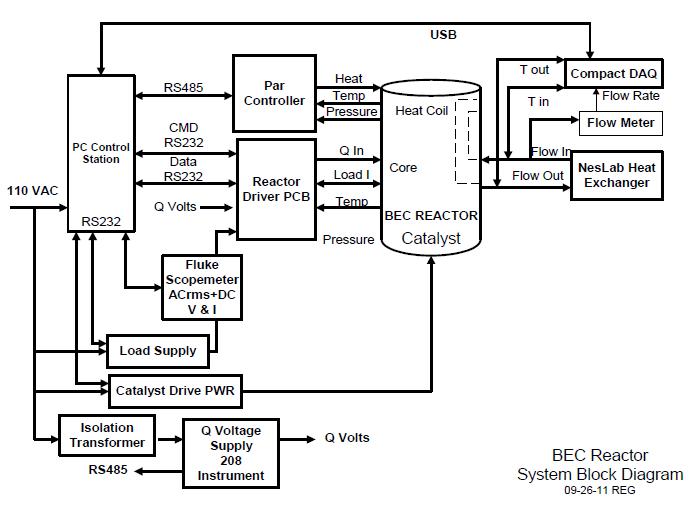
Fig. 1 Components of the Brillouin Wet Boiler
Our recent test data were generated autonomously through the use of a fully instrumented pressurized test vessel that permits much greater control over experiments than was possible using the “open container” test cells from Phase One experiments.
A. Reactor Components
The components of the most recent closed-cell Wet Boiler are shown in Fig. 1.
Those components include:
• A 130bar pressure vessel with a band heater
• A 28AWG (.31mm) Ni 270 cathode
• Ni 270 wire mesh anode
• 0.5 liter of 0.15 to .5M NaOH solution
• Thermal transfer oil coolant loop with a heat exchanger. MobilTherm 603
• Platinum resistive temperature detector’s (RTD’s) measuring input and output coolant temperatures.
• Mass Flow meter in the coolant line.
• An catalytic recombiner , used for safety.
• Resistance heater for calorimetric calibration
B. Power Measurements
We performed conservative measurement of the input power into the reaction chamber and the control board. All inputs, including inductive and logic circuits losses, are counted as power applied to the system All power used for stimulation and control of the cell is measured. The power delivered to the band heater is provided by a Chroma 61602 programmable AC source.
A 100 MHz Fluke 196C oscilloscope meter, operating in “AC (rms) + DC” mode, was used to measure the all input cell power applied to the primary control system. Output power is calculated from the heat removed from the inside of the test cell by pumping an organic fluid (MobileTherm 603) through a heat exchanger immersed in the electrolyte inside the cell. The electrolyte is heated by the stimulation of the electrodes. An external heat exchanger extracts heat from the circulating organic fluid. The net heat in and out is carefully measured and the difference is tabulated. The flow rate is measured by a positive displacement flow sensor (Kytola 2950-2-AKTN). 100Ω platinum RTD’s are used to measure the cooling fluid’s inlet and outlet temperatures, placed just before and just after the cooling loop, respectively. Room temperature in the immediate environment of the test cell is also measured using a 100Ω platinum RTD.
Heat also escapes from the test cell via conductive and radiative loses. Heat flows out of the test cell through the top of the test cell, its supporting brackets to a shelf, and through its insulation. This is accounted for in the software, following extensive calibrations of the cell running with out stimulation pulses (Q).
The bias of the measurement scheme is to under-report thermal output. The electrolysis recombination activity in the headspace of the vessel increases the amount of the conduction and radiative losses at the top of the cell as it heats up and conducts more thermal energy through its mechanical supports. These losses become less significant at higher operation rates as the recombination heat layer moves down to the point where the heat exchange can begin to pick up more of that recombination energy.
C. Cell Calibration and Operation
This system recovers 98% of the heat input by the control band heater alone. The circulating oil is not able to remove all of the recombination energy in the test cell. A significant amount of the recombination energy escapes by conduction through the brackets that secure the cell to the shelf that holds it in place. The method chosen to measure these parasitic heat losses is simple and accurate. The test cell has an electric resistance heating unit called the band heater. The band heater uses a known quantity of watts to heat the entire system to a selected temperature: 70, 80 or 100 degrees C. It takes 132 watts from the band heater to heat and hold the vessel to 70 degrees C with the cooling oil circulating in the cooling circuit. Measurements of the circulating oil show that the oil continuously removes 90 watts at this set point. The difference (delta) is 42 watts and this is the amount heat is “lost” from the vessel by thermal conduction and radiated heat. At 80 degrees C, the calculated parasitic loss figure is 45 watts and at 100 degrees C the parasitic loss is 47 watts.
Using this simple technique, at these three set points the amount of heat leaves the system in excess of that removed by the circulating oil is quantified to calibrate the measurements. This information is used in the data shown in the following slides. Table 1 shows the parasitic heat losses at 70, 80 and 100°C.
Table of Calibration Power Loss Terms
The cell/calorimeter is designed to operate at up to 200°C and up to 130bar. The pressurized cell is controlled using LabView® software (National Instruments, Austin, TX, USA) that continuously and automatically collects information about energy flow in and out of the test cell. All experimental data are methodically and systematically archived and recorded to disk. The thermal load due to radiative and conductive losses, in addition to that collected by the heat exchanger, are approximately 400 watts at a vessel temperature of 100°C but can achieve more than 2000 watts at 200°C. The working fluid’s inlet temperature is maintained using a re-circulating chiller (Neslab RTE111).
During operation we have applied up to 800 total watts. The only input to the system is electric power and the only output from the system is heat.
The AC stimulation consists of alternating high voltage positive and negative pulses, approximately 100ns wide, of duty cycles up to 1% or repetition rates of up to 100 KHz
III. RESULTS
Representative results of experiments operated in our pressurized cell/calorimeter are described below. Excess power is defined as the number of watts generated in the cell exceeding that supplied to the cell. The ratio of output to input power is often plotted as percentage.
When the output, for example, is twice that of the input, the amount of excess power is 100%.
The following experiments described herein were designed to measure excess power produced using proprietary electrical stimulation of nickel containing dissolved hydrogen.
A. Experiment 1
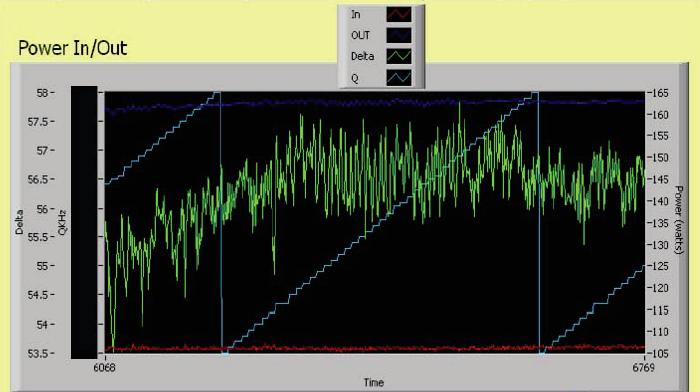
Experiment 1 yielded excess power of over 50% for approximately 2 days. Fig. 2 shows the calorimetric results and effect of stimulation frequency soon after 50% excess power was measured in the cell.
Fig. 2. Calorimetric results from experiment 1
The amount of excess power shown on the screen is approximately 59 %. During this time period there was 107 watts in, 170 watts out, yielding 63 watts excess power, with the cell temperature at 76°C and pressure of 84bar. Approximately 32 watts power was applied to the catalyst and is included in the 107W total input power.
B. Experiment 2
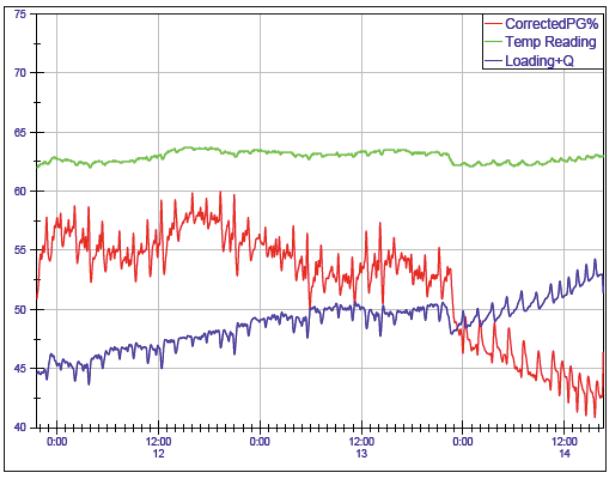
Fig. 3 plots the power and temperature recorded during a complete 66-hour Ni/H2O electrolysis experiment.
Fig. 3. Plot of power and temperature versus time for Experiment 1
Excess power of over 50% was recorded for much of this experiment. We repetitively swept Q repetition rate while stepping up Q amplitude and then a third parameter affecting Q shape to examine the effects and interplay among them.
The excess heat produced during this run shown in Figure 3 declined as additional power was applied. The red line plots the percentage of excess power, blue the sum of the electrical inputs, and green the temperature of the test cell. The repetitive spikes in the data are due to the cycling of Q repetition rate and the downward sloping trend indicates the increase in power to a change in the shape of the Q pulses. This slide indicates that the level of the production of excess power does not rely exclusively on input power since increasing input power reduced absolute amount of excess power. The automated test system now has the ability to automatically sequence 4 separate input variables. When the Q pulse shape stepped out of an optimal operating point the red and blue plots crossed.
C. Experiment 3
Fig. 4 plots the calorimetric and temperature data for a subsequent Ni/H2O electrolysis experiment.
Fig. 4. Calorimetric data for Experiment 3
In this experiment we examined the effect of changing specific input parameters. This plot shows a thermal output 50% greater than input for 14 hours. A gradual increase in temperature tracks small incremental increases in both the DC and AC currents. This continued for 12 hours past the end of this plot as seen in Fig. 5., which shows the sharp response of the system to input power while everything else was held constant.
Fig. 5. Calorimetric results from Experiment 3 continued
A jump in excess heat from less than 55% to almost 70% was produced using the settings input during the second half of the experiment on February 15th. Learning from this data, we modified electric inputs to exceed these results.
D. Experiment 4
Fig. 6 plots the calorimetric and temperature data for part of a Ni/H2O electrolysis experiment. While holding total input power constant Q pulse shape was changed, which yielded excess power production in excess of 75% for approximately 11 hours.
Fig. 6. Calorimetric results from Experiment 4
After achieving a thermal steady state, the system performed well for the duration of the test. Subsequently a new set of input parameters were utilized in this experiment, after which the excess power peaked at approximately 85% and was above 80% for more than seven hours.E. Experiment 5
Fig. 7 plots the calorimetric and temperature data for part of a Ni/H2O electrolysis experiment.
Fig. 7. Calorimetric results from Experiment 5
This was the first time the excess power exceeded 100%, meaning the “watts out” were twice the “watts in.” Certain electrical inputs to the cell were changed deliberately in a proprietary manner effecting Q frequency content.
This experiment is important because it shows both our upward discovery trend and because it exceeded the important 100% milestone. These set of representative experiments showed that we have progressed well beyond the results with the open-cell experiments described in the Background section.
F. Experiment 6
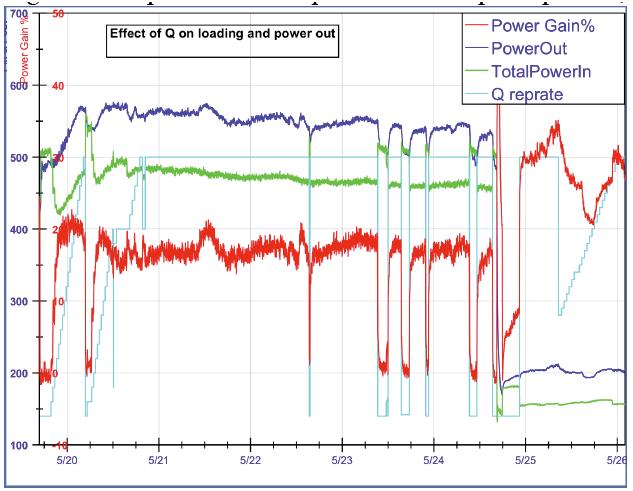
Experiment 6 shows the effect of changing the repetition rate of the high voltage stimulation pulses. Figure 8 plots the input and output powers, percent excess power, and the Q pulse repetition rate. Output power is shown in blue, input power is shown in green, and excess is shown in red as a percentage. The proprietary repetition rate of the pulses is plotted without scale in turquoise.
Fig. 8 Effect of Repetition Rate on Excess Power
For five days, excess power from the induced thermal reaction in nickel hydride averaged approximately 20% during times when the wave form at a given repetition rate was applied to the nickel hydride. Total applied power was above 450 watts. When the repetition rate was reduced excess power fell significantly, even though the input power rose. On seven different occasions when total applied power to the system was above 450 watts, and the repetition rate was reduced, excess power dropped from approximately 20% to close essentially 0%. Excess power returned quickly to approximately 20% when the repetition rate was restored to its original value.
This plot demonstrates a cause and effect relationship exists between the frequency of the applied waveform pulses (Q) and the amount of excess power produced in the test cell.
IV. CONCLUSIONS
We have demonstrated that the nickel-light-water system is able to achieve more than 100% excess heat production (“2X”). Recent data shows that excess heat production was in the range of 110% for 2 hours.
We ran over 150 experiments using two different cell/calorimeter designs. Excess heat was always seen[3] in experiments where Q pulses, which have been tuned to the resonance of the hydride conductors (“core”), are present. Using our open cell design it is now possible to get excess heat on demand using light water and hydrided nickel and palladium.
Pulsed power in the cathode is the preferred method to raise the energy of the Brillouin zones confining hydrogen nuclei in the metal lattice[1]. We postulate that conversion of this energy to mass, results in the production of cold to ultra-cold neutrons. The removal of charge from the system by absorption of an electron by a proton makes a current pulse the preferred source of pulsed power because it provides electrons for capture.
In all cases, the application of a suitable Quantum Compression waveform enables active hydrided materials to produce excess power on demand without regard to the grain structure. While it is common for “gross loading” systems to work with some pieces of material and not others from the same batch. We believe that the Quantum Reactor technology caused every centimeter in all 15 meters of Pd wire to immediately produce excess heat while exposed to properly pulsed currents in light water. Quantum Reactor technology also allows for significant modulation of the power out of the cell.
Leveraging the results of the open cell experiments, the proprietary circuitry was attached to hydrided conductors in high-pressure, high-temperature systems for the sealed cell experiments[2].
The data taken from nickel-hydrogen system that was stimulated by our proprietary electronic inputs show that the thermal output is statistically significantly greater than the electrical input. Measurable and repeatable surplus thermal output is found in the nickel-hydrogen system when all other inputs to the cells remain constant. We have shown 100% excess energy and hope to achieve 200%, which would make the technology industrially useful. We also believe that the moderately elevated pressure and temperature environment of the pressurized cell may increase the probability for proton-electron captures, than the conditions at ambient temperature and pressure, because the electrolyte can be heated to over the boiling point of the electrolyte at atmospheric pressure. In addition to elevated temperature and pressure, the dimensions of the metal cathode inside the test cell, is much larger than what was used in the “open container”, first- round experiments.
We conclude that the reaction producing excess power in the nickel hydride is related to and very dependent upon the frequency of the Q pulses applied. We have thus demonstrated that there is a repeatable and measurable relationship between excess heat production from the stimulated nickel hydride in the test cell and the repetition rate of the applied electronic pulses. When the repetition rate is changed from the optimum frequency, excess power production ceases in the nickel hydride lattice. When that repetition rate is restored, significant excess power production resumes.
V. FUTURE WORK
We are looking closely at the experimental data from Experiment 5 and will use it to attempt to break through the next threshold 200% (“3X”) hopefully soon.
We have started to perform experiments in a third cell/calorimeter design in collaboration with SRI International that we believe will lead to more useful heat by operating at higher temperatures. We feel that the first commercial applications expected will be hydronic heating systems that require grid power and produce lower quality heat as well as higher quality heat systems that will be used to re-power existing dirty generation assets.
In addition to Pd and Ni, the Q-pulse reactor system should work with other transition metals that confine hydrogen nuclei sufficiently in a lattice to effect electron capture events.
APPENDIX
A. Controlled Energy Capture Hypothesis
p + ~782KeV + e- » n + νe
(using energy for ultra-cold neutrons)
p + n » d + 2.2MeV
(making ultra-cold deuterons and energy)
d + (up to 3MeV) + e- » 2n + νe
(using energy to make di-neutron system)
d + n » T + 6.3MeV
(making tritum and energy)
2n + d » 4H + (?MeV)
3n + p » 4H + (?MeV)
(making short lived 4H nuclei and energy.)
4H » 4He + β¯+ νe + (17.06 to 20.6)MeV
(making helium and lots of energy)
“Economics of Cold Fusion LENR Power” is a daunting subject for a series of articles, so complex. The savings an Ecat can bring to a homes’ budget was simple enough. I did that before I ordered one. It seemed logical to next take a look at a couple of the largest budgets in the United States of America.
An outline for a series of articles took shape.
1) The energy demands of humanity are inexorable.
Definition of INEXORABLE : not to be persuaded, moved, or stopped : relentless. Example of inexorable: ‘The inexorable rise of the free energy movement.’
2) The Department of Energy is burdened ensuring an ability to meet our day-to-day energy demands.
3) The Department of Defense is burdened ensuring an ability to ‘Energize the Warfighter’. (pdf)
Energy for the Warfighter “Operational energy equates exactly to operational capability.” – General John Allen, Commander, International Security Assistance Force/United States Forces-Afghanistan (link)
4) The DOE and the DOD are inextricably intertwined.
Definition of INEXTRICABLE : forming a maze or tangle from which it is impossible to get free : incapable of being disentangled or untied : not capable of being solved. Example of inextricable: ‘There is an inextricable link between dirty energy and poor health.’
Definition of INTERTWINE : to unite by twining one with another : to twine about one another; also : to become mutually involved.
5) All nuclear weapons deployed by the Department of Defense are on loan from the Department of Energy, which has federal responsibility for the design, testing and production of all nuclear weapons.
The Department of Energy (DOE) budget provided a good starting place, simple and concise, with programs made superfulous with the advent of nearly free and unlimited energy of cold fusion LENR power. (article)
U. S. of A. Department of Defense
The US Department of Defense (DOD) budget proves to be more complex. Do to the importance of national energy needs being met, the existing geopolitics of energy market investment and expectations, vulnerability of production and supply, as well as the military prerogatives of energy operational security, DOD expenses related to energy comprise a large portion of their budget. The nearly free and unlimited energy of LENR will change that.
The Defense Intelligence Agency of the U.S. Federal government states, “Because (cold) nuclear fusion releases 10 million times more energy per unit mass than does liquid transportation fuel, the military potential of such high-energy-density power sources is enormous” and “LENR power sources could produce the greatest transformation of the battlefield for U.S. forces since the transition from horsepower to gasoline power.” (pdf)
Environmental Defense Fund Reception (Energy, Security, and the Environment) As Delivered by Secretary of Defense Leon E. Panetta, Renwick Gallery, Washington D.C., Wednesday, May 02, 2012
“As Secretary of Defense, I am honored that the Environmental Defense Fund would honor the Department of Defense. The U.S. military has a long and a very proud record when it comes to helping conserve our nation’s natural heritage.
Our mission at the Department is to secure this nation against threats to our homeland and to our people. In the 21st Century, the reality is that there are environmental threats which constitute threats to our national security. For example, the area of climate change has a dramatic impact on national security: rising sea levels, to severe droughts, to the melting of the polar caps, to more frequent and devastating natural disasters all raise demand for humanitarian assistance and disaster relief.
I was pointing out the other day that with the polar cap melting, we now have problems with regard to who claims the area in the polar region. And very frankly, one of the things I hope we get a chance to work on is to finally get the United States of America to approve the Law of the Seas treaty, which has been hanging out there for so long. We are the only industrialized nation that has not approved that treaty. It’s time that we did that.
The quest for energy is another area that continues to shape and reshape the strategic environment – from the destabilizing consequences of resource competition to the efforts of potential adversaries to block the free flow of energy.
Let me assure you that DoD is helping to lead this nation when it comes to preserving our environment and building a more sustainable and secure energy future. I know you’ll have the opportunity tonight to hear from Navy Secretary Ray Mabus on the Navy’s innovative efforts on clean energy and the environment. Through these and other visionary initiatives, I believe we are making the country more secure and protecting our national resources.
And in many ways it’s the mission we have at the Department of Defense, which is to give our children a better life. That mission, working with you, working with this group, working with so many others, is that we have to develop a partnership that forges a better, cleaner, and safer world for the future, in order to ensure that our children have that better life.” (link)
Not so far in the near distant future…
“The world has completed converting to the clean, nearly free and unlimited, energy of the nuclear reactive environment of cold fusion. The race to conversion occurred at a breakneck speed never before seen in the adoption of a new technology. Fueled by both environmental and economic imperatives, this rapid conversion has changed the landscape of national and international economics.
The Department of Defense reflects this change. The 2040 DOD budget has changed considerably with the advent of low cost LENR power. The savings in energy costs, ($17.9 billion) are minor compared to the savings (in both money and casualties) from eliminated fuel supply lines, fuel depots, and a decrease in operational demands for protecting oil shipments ($50 billion).” -US News 2040
Now
We take look at the 2013 Department of Defense Budget and changes that may take place, by 2040, after the worlds’ conversion to LENR power. The DOD budget has fuel and energy expenses that will be reduced by utilizing the technology of cold fusion.
Fiscal Year 2013 Operational Energy Budget Certification Report “Last year, the Department consumed 116.8 million barrels (mbbls) of fuel at a cost of $17.2B ($3.51/gallon). For FY 2013, the Department budgeted approximately $16.3B for 104 mbbls of fuel and approximately $1.6B for operational energy initiatives.”(pdf)
“According to Deputy Secretary of Energy Poneman, that translates, with every $10 rise in the price of a barrel of oil, to more than $1.3 billion in additional costs the Department of Defense shells out for energy. Deputy Secretary Poneman also pointed out that a gallon of fuel can cost $40 or more in theater.” (link)
One of the greatest logistical problems facing today’s military is energy. It is a military prerogative to protect oil shipping lanes and secure military energy resources and supply lines throughout the world. This is costly and incurs loss of life.
According to a Wall Street Journal (piece) published on June 27, the Brookings Institute reports that the U.S. spends $50 billion a year protecting oil shipments. 89% of all oil is tranported by sea.
Remarks at the U.S.A.F. and U.S. Army Energy Forum As Delivered by Deputy Secretary of Defense William J. Lynn, III, Crystal City, Virginia, Tuesday, July 19, 2011, “Our forces in Afghanistan and Iraq have a long logistical tail. A majority of convoys in Afghanistan are used for fuel. We haul these supplies on roads laced with IEDs and prone to ambush. More than 3,000 troops and contractors have been killed or wounded protecting those convoys. Advances in energy technology may allow us to reduce our vulnerabilities to this type of asymmetric attack.” (link)
“Resupply casualties have been significant in Iraq and Afghanistan. According to CALL, they have historically accounted for about 10-12% of total Army casualties – the majority related to fuel and water transport.“(report)
DOD Office for Operational Energy Plans and Programs
Statement by: Ms. Sharon Burke ‘Assistant Secretary of Defense for Operational Energy Plans and Programs’ -Submitted to the ‘Subcommittee on Readiness – House Armed Services Committee’, United States House of Representatives, March 29th, 2012
INTRODUCTION
Chairman Forbes, Representative Bordallo, and distinguished members of the Subcommittee: thank you for the opportunity to discuss the President’s Fiscal Year (FY) 2013 budget request for the Department of Defense (DoD) programs to support the Office of the Assistant Secretary of Defense for Operational Energy Plans and Programs (OEPP).
For FY13, DoD anticipates spending over $16 billion on energy for military operations, which will provide more than 4 billion gallons of fuel for military operations and exercises. DoD will also invest $1.4 billion on initiatives to improve operational energy security, about 90% of which are aimed at reducing DoD’s demand for operational energy.
President Obama initiated the OEPP in June 2010, both to reflect his commitment to national and energy security and to honor the intent of Congress in calling for the establishment of an operational energy office at DoD. By statute, the purpose of the office is to transform the way DoD uses energy through guidance, policy, oversight, and coordination, as well as to serve as the primary advisor to the Secretary and Deputy Secretary of Defense on operational energy.
The mission of OEPP is to improve military effectiveness while lowering risks and costs to warfighters. In its first two years of operation, OEPP has achieved considerable progress by:
· Promoting institutional change within DoD.
· Supporting current operations with energy innovations.
· Building operational energy considerations into the future force.
For FY13, the office will continue to focus on these priorities. In doing so, OEPP has the opportunity to help transform DoD’s energy use from a vulnerability to a strategic advantage. By reducing the Armed Forces’ reliance on fuel, we aim to improve warfighting capabilities, such as range, endurance, signature, and loiter time. We aim to reduce the risk to fielded forces as they move fuel through contested territory. In the process, we believe we will lower costs for the taxpayer, promote good stewardship of natural resources, and contribute to national energy goals.
THE DEFENSE ENERGY CHALLENGE
DoD is the single largest consumer of energy in the nation, accounting for approximately 1% of national demand. In FY11, that added up to a $20 billion bill, with 75% (approximately $15 billion) going to support military operations. Indeed, a steady and reliable supply of energy is essential to every military capability and every mission, and for today’s U.S. forces, that means a steady and reliable supply of petroleum fuels. Petroleum is the fuel of choice for military operations because of its high energy density, fungibility, and global availability. At the same time, DoD’s high demand for petroleum, given its volume, weight, and geostrategic constraints, is raising costs and risks for U.S. forces.
Until the FY 2009 National Defense Authorization Act (NDAA), which called on DoD to establish the OEPP, “operational energy” was not a commonly used term at DoD. The Act defined operational energy as the energy required to train, move, and sustain military operations.
The 2010 Quadrennial Defense Review and FY 2011 NDAA augmented this definition, noting that defense energy security means having “assured access to reliable supplies of energy and the ability to protect and deliver sufficient energy to meet operational needs.”
While the term “operational energy” may be new to U.S. armed forces, the concept is not new. From the extraordinary WWII-era Red Hill fuel storage facility in Hawaii to today’s Northern Distribution Network in Central Asia, energy security has long been a priority for American military operations. Today’s conflicts have brought new challenges to military energy security given our distributed operations and increased energy demand – mostly for liquid fuel, but also for batteries.
Today, U.S. forces in Afghanistan are consuming about 1.8 million gallons of fuel every day, which is conveyed over poor and sometimes contested roads. The Army and Marine Corps have documented thousands of casualties related to fuel movements in Afghanistan and Iraq, with U.S. Transportation Command tracking a thousand attacks on logistics convoys in Afghanistan alone last year. U.S. forces are fully capable of protecting these supply lines, but the opportunity cost in lives, resources, and diverted combat force at the tactical level is higher than it should be.
Going forward, the 2012 Department of Defense Strategic Guidance calls for a military force that is “agile, flexible, and ready for the full range of contingencies,” one that is prepared and postured for a complex, global security environment. This will require new and diverse capabilities and with the current trends in major acquisitions–a large and growing supply of fuel. In an era of precision weapons, asymmetric threats, and area denial strategies, the volume of that energy requirement will continue to impose tactical, operational, and strategic challenges.
At the same time, there will be geostrategic challenges for DoD’s energy supplies, particularly when it comes to petroleum. Worldwide demand for petroleum continues to rise, even as supplies are concentrating into fewer nations. As long as the United States depends on oil, the price we all pay at the pump will be driven by a volatile global market. For DoD, that means unpredictable fuel bills that crowd out other investment – every dollar hike in the price of oil per barrel raises our bill by $130 million.
More to the point, DoD must take into account the destabilizing effects of global energy wealth and poverty, the resource competition resulting from rising demand in growing economies, and with 89% of oil exports moving by sea, the need to secure the global commons. The President’s Blueprint for a Secure Energy Future seeks to change that calculus by taking steps to stabilize today’s energy economy while investing in the innovation that will allow us to displace the primacy of oil in our national and military energy security.
CONCLUSION
In June of 2011, General Petraeus released a memo to U.S. Forces in Afghanistan calling for better management of operational energy, which he called the “lifeblood” of warfighting capabilities.
In December of 2011, General Allen renewed General Petraeus’s call for action, equating operational energy to operational capability in a follow-up memo. General Allen’s memo highlighted the nature of the challenge, noting: “Operational Energy in the battlespace is about improving combat effectiveness. It’s about increasing our forces’ endurance, being more lethal, and reducing the number of men and women risking their lives moving fuel.
OEPP is committed to achieving the vision of these leaders. We have made good progress this past year and have aggressive goals for the way ahead. Ultimately, our intention is to successfully integrate operational energy considerations into existing policies, plans, programs and processes. This type of large-scale institutional change will require considerable time, effort, and persistence, so I deeply appreciate the Congress’s continued support for the mission and the Office of Operational Energy Plans and Programs.” (pdf)
Annual Aviation Inventory and Funding Plan
Fiscal Years (FY) 2013-2042 Report date March 2012
Air Refueling Inventories & Funding FY 2013-2022 (This will be phased out with LENR – $9 Billion)
2012 Air Refueling Aviation Inventory
Air Force – 438 Aircraft (KC-10, KC-135, KC-46)
Navy – 78 Aircraft (KC-130)
The chart (on page 19) depicts air refueling aviation inventory and funding projections over FY2013 – 2022 broken out by military department. In aggregate, the Air Refueling inventory will increase by one percent over the FY2013 – 2022 period.
(ed. note: $9 billion is allocated over a period of 9 yearsin order to maintain this fleet level.)
Details on Air Force and DoN Air Refueling aviation plans are outlined in the following paragraphs.
Department of the Air Force. As the DoD places greater emphasis on operations in other theaters like the Asia-Pacific, Air Force refueling aircraft continue their vital, daily role of extending the range and persistence of almost all other aircraft of the Joint force. The Air Force remains committed to fully funding the acquisition of the new KC-46 tanker, while also resourcing critical modernization programs for the legacy KC-10 and KC-135 fleets, assuring crucial air refueling capacity and capability for decades to come. The aerial refueling fleet is sized to meet the Combatant Commander requirements and revised demands of the strategic guidance. The Air Force will retire 20 KC-135 aircraft over the FYDP. As the Air Force’s fleet of tanker aircraft ages, new tankers will be needed to provide in-flight refueling support.
The Air Force has begun recapitalizing the tanker fleet with fully funded plans to develop and procure 83 KC-46A tankers by 2022. The KC-46A fleet will reach its planned size of 179 aircraft in 2029; later tanker procurement will be the result of a future contract award. The KC-46A will be able to refuel aircraft in flight and can be air refueled by other aircraft to allow continuous overhead fuel management across the battlespace. Additionally, the capability to transfer fuel to either receptacle or probe-equipped receivers without reconfiguration will enhance the capability and flexibility of the tanker fleet.
Department of the Navy. The Marine Corps will continue procuring the KC-130J in the near term, expanding its inventory of this aircraft, which has proven its combat effectiveness and reliability in both Iraq and Afghanistan. Capable of employment in intratheater lift, assault support, persistent ISR, and aerial refueling missions, the KC-130J will replace aging KC-130T models. The Navy will incorporate carrier based organic tanking capability requirements into future aircraft studies, and will consider multiple options for future carrier-based tanker assets. (pdf)
Military Sealift Command – Combat Logistics Force
Fifteen fleet replenishment oilers, the largest subset of Combat Logistics Force ships, provide fuel to deployed Navy ships at sea, as well as to their assigned aircraft. Oilers and the ships they refuel sail side by side as fuel hoses are extended across guide wires. Underway replenishment of fuel dramatically extends the time a Navy battle group can remain at sea. MSC has an annual operating budget of approximately $3 billion. (link)
(Up to $1.5 billion of the operating budget for Combat Logistics Force may be eliminated by LENR power.)
An Analysis of the Navy’s Fiscal Year 2013 Shipbuilding Plan
Combat Logistics and Support Ships (Oilers) In its 2013 plan, the Navy envisions buying 46 logistics and support ships in the next three decades—19 fewer than in the 2012 plan, or a decrease of about 30 percent. Those planned purchases include 1 joint high-speed vessel in 2013, 10 replacement JHSVs in the 2030s, and 17 new oilers (See page 5) over the 30-year period (the latter provide fuel and a few other supplies to ships at sea). Oilers cost .5 to .7 billion dollars per ship. (page 17- table 3) (pdf)
($11.9 billionin shipbuilding expenses eliminated by LENR power.)
The long cold fusion summer is winding down and the race to LENR engineering is heating up. With mainstream news and science entering the fray (US News) and (European Union-Directorate-General for Research and Innovation) the likely-hood of an October Surprise becomes imminent. Hundreds of political, energy industry, and environmental organizations have been contacted by Cold Fusion Now activists in the past months. The subject of cold fusion LENR power may enter the presidential debate through Peace and Freedom Party presidential candidate Rosanne Barr. (article)
Presidential candidates are advised to be prepared.
Here we provide a framework for future analysis of how the worlds’ economics will be affected by the advent of cold fusion. In this article we explore the Department of Energy 2013 budget looking to possible changes that will take place, by 2040, due to the engineered technology of cold fusion/LENR power. Other budgets will be analyzed in upcoming articles.
Economy
Economy can be experienced as the words’ Ancient Greek roots imply:
Oἰκονομία (oikonomia, “management of a household, administration”) from οἶκος (oikos, “house”)
+ νόμος (nomos, “custom” or “law”), hence “rules of the house(hold)”
Economy experienced as care and management of a home; money, energy, and love are essential.
The home of humanity is the Earth. A healthy home is what we all need. We now know that healthy habitats for the diversity of all life are required for our home to be healthy. Our heritage and our destiny may be the same in this regard… a healthy vibrant earth, teeming with life.
This encompasses the hopes and dreams of millions of people today.
Not so far in the near distant future…
“The world has completed converting to the clean, nearly free and unlimited, energy of the nuclear reactive environment of cold fusion. The race to conversion occurred at a breakneck speed never before seen in the adoption of a new technology. Fueled by both environmental and economic imperatives, this rapid conversion has changed the landscape of national and international economics.
The Department of Energy reflects this change. The 2040 DOE budget has increased funding for what was once a small part of their budget. Now among the highest priorities of the DOE are; reducing nuclear dangers, ensuring the environmental cleanup of national nuclear weapons complexes and power generating sites, and abandoned oil wells, refineries, and pipelines, and coal mine clean up.
The funding in the DOE 2040 budget ($9 billion) for these programs comes from monies made available within the DOE budget from programs cut as we exited the carbon and uranium energy era. ” -US News 2040
Now
The world economic scenario that we face today is full of monetary surplus when energy costs are replaced by energy that has little monetary value. This monetary surplus, unleashed and redirected, will be used to meet needs that are presently left unfulfilled.
Monies made available from budgets adjusted by cold fusion LENR power are staggering. To categorize these monies begins the process of imagining and creating the new economic landscape of cold fusion LENR power. To use even a portion of these monies wisely holds the potential of empowering a new renaissance of humanity and stewardship of Earth.
Energy and the DOE
Here is the history of the DOE and EIA. These organizations help us take a look at the economics of energy in the US of A today.
The 1973 oil crisis called attention to the need to consolidate energy policy. On August 4, 1977, President Jimmy Carter signed into law The Department of Energy Organization Act of 1977 (Pub.L. 95-91, 91 Stat. 565, enacted August 4, 1977), which created the Department of Energy.
The U.S. Energy Information Administration (EIA) is the statistical and analytical agency within the U.S. Department of Energy. The Department of Energy Organization Act of 1977 established EIA as the primary federal government authority on energy statistics and analysis. EIA programs cover data on coal, petroleum, natural gas, electric, renewable and nuclear energy.
EIA’s Fiscal Year 2013 budget is $116,365,000 and is an example of an office of the DOE that will be discontinued with the advent of LENR power.
Using these EIA tables (and a cost for subsidies) we estimate the amount paid for energy annually in the US.
Table 1.5 Energy Consumption, Expenditures, and Emissions (page 13) Expenditures for energy (by end user sector) in the U.S. for 2010 are estimated by the DOE to be…
$1,204,827,000,000
Table 3.4 Consumer Price Estimates for Energy by End-Use Sector (page 75) Lists 2010 end use sector energy costs an estimated average of $22 per million Btu.
Table 1.11 U.S. Government Energy Consumption by Agency (page 25) All federal government energy consumption for 2010 is around – 1,112,000,000 million Btu.” The U.S federal government probably pays less for energy than the end use sector. No data is available, we place the price at a low cost average of $15 per million Btu.
$16,668,000,000
It is estimated the US spends up to $52 billion annually helping the oil industry with $10 billion in subsidies and $42 billion in security to protect access. True costs of aid and subsidies may be much higher.
Annual Oil Subsidies and Support by U.S. are estimated to be… “$10 to $52 Billion” (Price of Oil .org)
History of U.S. Oil Subsidies Go Back Nearly a Century (Yahoo News)“When the study adjusted for inflation to 2009 dollars, the oil and gas industry received subsidies amounting to $1.8 billion per year in the first 15 years of the fledgling industry. The American Coalition for Ethanol estimates that when combined with state and local government aid to large oil companies, subsidies amount to anywhere from $133.8 billion to $280.8 billion annually from all sources of taxpayer aid that goes to the oil and gas industry.”
$52,000,000,000
$1,273,495,000,000 total – Estimated annual US energy expenditures
Other Defense Activities………………..……………………..$735,702,000
Total, Environmental & Other Defense Activities……..$6,207,703,000
Total, Atomic Energy Defense Activities………………$17,743,589,000
Southwestern Power Administration…………….…………..$11,892,000
Western Area Power Administration…………….…………..$96,130,000
Falcon & Amistad Operating & Maintenance Fund …………..$220,000
Colorado River Basins…………………………………………………..n/a
Total, Power Marketing Administrations……………………..$85,242,000
Subtotal, Energy, Water Development and Related Agencies…$28,004,562,000
Uranium Enrichment D&D Fund Discretionary Payments….$463,000,000
Excess Fees and Recoveries, FERC ……………………………………n/a
Rescission of Balances………………………………………………………..n/a
Total, Discretionary Funding by Appropriation………………….$27,155,072,000
Monies from programs discontinued with the
advent of cold fusion LENR power
$9,396,234,000
33% of the 2013 Department of Energy budget
Government Revenue and Taxes
Every energy transaction is taxed, every step of a fuel extraction process is licensed and permitted, and untold thousands of retailers barter in energy.
Every government depends on income from taxes on energy and revenue from the licensing and permitting of energy purveyors.
Economies will adapt and fund lost government income using money left over when we pay a fraction of the money for the energy that now costs us one trillion two hundred seventy-three billion four hundred ninety-five million dollars a year.
This letter was sent to the DOE and ARPA – E
To whom it concerns,
Please contact the DIA, Navy, and NASA for information regarding LENR power technology that is (quote NASA) “being engineered in real time” (end quote).
As mandated you are to develop, protect, and secure our energy resources. From the 2013 DOE budget, “The Budget includes funding to maintain and expand the deployment of new models of energy research pioneered in the last several years, including $350 million for the Advanced Research Projects Agency–Energy (ARPA-E), a program that seeks to fund transformative energy research.”
Your Agency is charged with transformative energy research, technological commercialization/industrialization, and “outside the box” energetic breakthroughs.
What I do not understanding is… Why is there no mention of LENR science on your website? Leaders in this art are within your sister agencies. Thousands of people are informed, reading the following articles each week; yet it seems you aren’t aware of LENR power technology within the U.S. administration.
Aligning the Civil Space Program with National Need
by the ‘Committee on the Rationale and Goals of the U.S. Civil Space Program’
of the ‘National Research Council’ (book) Free on-line book.
“The national priorities that informed the committee’s thinking include ensuring national security, providing clean and affordable energy, protecting the environment now and for future generations, educating an engaged citizenry and a capable workforce for the 21st century, sustaining global economic competitiveness, and working internationally to build a safer, more sustainable world.”
Apply Space Research and Technology to Stewardship of Earth
“Earth has a dynamic and fragile ecosphere. And it is home to life as we know it now and in the foreseeable future. However, humankind, by virtue of its numbers and its use of energy, now threatens the planet that supports its very existence: for example, by affecting climate and exhausting resources. Proper stewardship of Earth is thus an urgent responsibility of all people.”
“While everyone, from individuals to countries, must be better stewards of planet Earth, the committee believes that the United States, as a global leader, bears a special responsibility to share its expertise and the knowledge and understanding it develops on how best to care for the planet. Americans must accept a global responsibility, or risk abandoning this important moral high ground to others.”
Innovation for America’s Economy, America’s Energy, and American Skills
The FY 2013 Science and Technology R&D Budget (link)
“Reflecting the Obama Administration’s continued recognition that science, technology, education, and innovation are central to America’s ongoing economic recovery and essential to the Nation’s future prosperity, the President’s Fiscal year (FY) 2013 Budget calls for strategic increases in the U.S. research and development (R&D) enterprise and a strong focus on science, technology, engineering, and mathematics (STEM) education. The President’s 2013 Budget achieves these important investments by identifying comparable offsets in other areas, resulting in a deficit-reducing discretionary budget that is frozen at 2011 levels for the second year in a row in compliance with the spending caps imposed by the Budget Control Act of 2011. The President’s 2013 Budget sustains the Administration’s commitment to building and fueling America’s engines of discovery in order to expand the frontiers of human knowledge; promote sustainable economic growth with a focus on advancing American manufacturing; cultivate a home-grown, clean-energy future; improve healthcare outcomes for all Americans at lower cost; address the mounting challenges of global climate change; manage competing demands on environmental resources; and reinforce national and homeland security.”
Other R&D highlights in the President’s 2013 Budget (compared to FY 2012 enacted) include:
$11.9 billion (up 8%) for DOE R&D, with $5 billion for its Office of Science (up 2.6%)
$9.6 billion (up 2.2%) for National Aeronautics and Space Administration R&D
$7.4 billion (up 4.8%) for NSF
$2.6 billion (up 5.6%) for the U.S. Global Change Research Program
$1.8 billion (up 4.1%) for the National Nanotechnology Initiative
$729 million (up 26.3%) for Department of Homeland Security R&D
$718 million (up 6.4%) for U.S. Geological Survey R&D
$708 million (up 13.8%) for NIST’s intramural laboratories
$580 million (up 2.1%) for Environmental Protection Agency R&D
$35,740,000,000 total
$1,273,495,000,000 U.S. 2010 energy expenditures are almost 40 times the science budget.
THANKS!
The photo at the head of this article was gleaned off the web from an article by…
“The Kennesaw Watch: Creating Accountability and Transparency in City Government”
Titled – “Where is the Youth Money Tree?” April 25, 2012 (article)
I love the picture and the meaning it imparts. Viewing it you get the impression the money coming off that tree will be put to good use… the care of a home. – gbgoble
Several months ago, I posted an article asking the question Can Defkalion Survive the Greek Crisis? To summarize, I explored the obstacles that Defkalion Green Technologies faced starting a commercial enterprise in a country in the midst of economic turmoil and rising social unrest. This would certainly be problematic for any new enterprise, but especially so for a company seeking to commercialize an entirely new technology. Aside from the technical and logistical challenges, I also raised the question of whether Defkalion would be able to attract sufficient investment in a chaotic economic, social and political environment. If investors are fond anything, aside from making a profit, it is stability. Investment involves enough risk in and of itself, and this risk need not be exacerbated by economic and social turmoil.
Apparently this line of thought was also contemplated by Defkalion management, as on July 18, 2012 company representative George Xanthoula sent out an e-mail outlining Defkalion’s plans to leave Greece and set up operations elsewhere. The reasons given for this move were very similar to those mentioned above. Australia, Canada and Switzerland were mentioned as possible sites of relocation.
At the National Instruments-sponsored NIWeek in August, Defkalion CEO Alexander Xanthoulis announced that there would be offices in both Vancouver, British Columbia, Canada and Zurich, Switzerland, with the Vancouver office serving as the primary base of operations. It was not made clear why Canada was chosen as Defkalion’s new base of operations, but Mr. Xanthoulis is described in company literature as being a Greek-Canadian, so his roots in that country may have been a factor. In August, a company representative stated the Vancouver office would be open this month, although no specific date was given.
While waiting for official commencement of operations in Canada, Defkalion has continued to do testing in Greece on their Hyperion cold fusion reactor. In a message on the Defkalion discussion forum, the company announced it had conducted two official test runs on its reactor from September 5th to September 14th. These tests were reportedly conducted in Greece on its R5 prototype, and testing is scheduled to begin soon on its R6 pre-industrial reactor at the Vancouver facility. In that same message, a Defkalion represented wrote: “An official announcement from our company within the next weeks will inform you of the peer-reviewed journals where the results of all these tests so far will be published by the independent testers.”
Vancouver, British Columbia, Canada
If indeed Defkalion testing has been submitted for peer-review, and these results will soon appear in peer-reviewed journals, this would be a very positive development. Failure to release independent testing results, after public announcements in February of this year raised expectation of such, led many to question the validity of Defkalion claims about its Hyperion reactor. However, reports that have filtered out about the testing results have served to buoy confidence in the Hyperion in some quarters. Those who are privy to information that most of us are not, have much less doubt about the Hyperion and Defkalion’s claims regarding it. Although, even among this group, there remain some questions regarding the device’s stability. The company gave presentations at both NIWeek and ICCF-17 but they did not provide any new information, save for the location where their base of operations was being moved. Hopefully, the coming weeks and publication of independent testing results in peer-reviewed literature will answer many lingering questions.
Yet, as Defkalion settles into its new surroundings, they have more to be concerned about than providing definitive proof to the faithful and silencing critics and detractors. Certainly they have escaped the chaos in Greece but Canada has its own native dangers with witch company officials need to contend. First of all, Western Canada is home to one of the fiercest predators in the wild, the grizzly bear. Company employees would be advised to keep trash can lids firmly secured and their facilities locked at night. Vancouver may be a bustling metropolis, but it is an oasis in the midst of a vast wilderness. Grizzly bears do not respect no trespassing signs or city limits. There is a reason the city named its NBA basketball team after them.
Grizzly Bear
The second resident of Western Canada that Defkalion must concern itself with is the powerful and influential Canadian oil industry. Canada is the sixth largest oil producing country in the world, and is the primary source of oil imports into the United States. The bulk of Canadian oil exploration and production is in the Western Canadian provinces of Alberta and British Columbia.
Defkalion may also soon have to contend with Chinese oil interests. CNNOC, a state-owned Chinese oil company, is currently in negotiations with the Canadian government to buy the Canadian oil company Nexen for a reported price of $15.1 billion. If approved by the government, this purchase would be the largest purchase of a Canadian energy asset by a Chinese company, and the largest single purchase by a Chinese company of a foreign asset. This deal is expected to be approved by the Canadian government, despite concerns amongst some Canadians in regard to allowing a state-owned Chinese enterprise to own such a large stake in their domestic oil industry.
A cold fusion optimist might conclude that some in the Canadian government are aware of the arrival of Defkalion on their soil and the promise the Hyperion offers for the future of energy. As a result, officials may be obliged to allow the Chinese to spend billions of dollars on an asset whose value may be greatly diminished in the not too distant future. Many others may simply conclude that this deal is about oil, cold hard cash and maybe even political influence, but not related to cold fusion or Defkalion in any way.
Defkalion may have flown into Canada under the radar because the results of independent testing of the Hyperion have not yet been made public. Perhaps that was part of the rationale for delaying publication. Jed Rothwell, cold fusion historian and administrator of the lenr-canr.org cold fusion library, wrote several months ago that the results of independent testing were being kept under wraps “for good reason.” I think avoiding the scrutiny of the oil industry in Canada, at least for a time, would qualify as a good reason.
If the independent verification of Defkalion claims are soon published in peer-reviewed scientific journals, Defkalion’s warm Vancouver welcome may turn as cold as a Canadian winter. By the same token, if Defkalion continues to make bold claims without the appropriate corroborating evidence, the Canadian government may scrutinize Defkalion a little more closely then the Greek government did while the company was in Greece.
When Defkalion broke with Andrea Rossi in August of last year, they publicly warned Rossi about the perils of “going it alone.” Ironically, a year later, they may be seen as doing just that. They are in a new country, with new laws, sharing a province with a powerful and prosperous industry that could be made irrelevant by their technology. Yet, Defkalion management has already proven adept at navigating difficult waters in the last year. They managed to engineer their own cold fusion cell after their abrupt break with Andrea Rossi left them without the core technology, the loss of their chief scientist as a result of that break, and escape from an imploding nation…and those are just the difficulties that have been made public. If one adds to the above that the Hyperion is reportedly the most robust cold fusion reactor currently being developed, this company has a lot working in its favor…I mean our favor.
I look forward to independent confirmation of Hyperion performance being made available to the public.
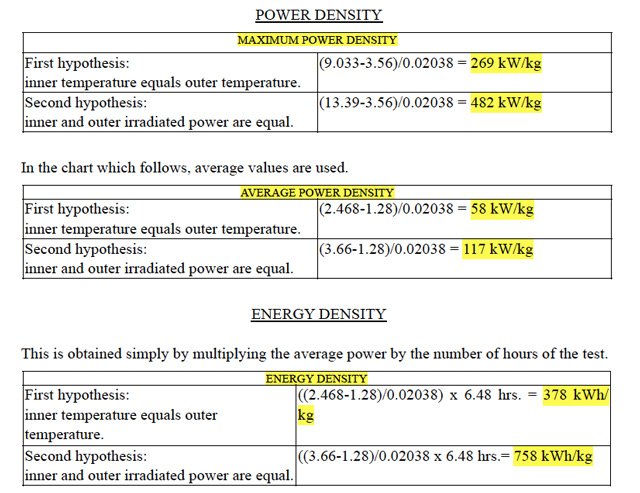
This file documents a test of the Hot Cat by Fabio Penon and David Bianchini: Penon4-1
Some points from Andrea Rossi’s talk on Day 1 are listed. (The list is not comprehensive due to loss of stream):
The E-cat Congress was organized in part by Adolf and Inge Schneider from TransAltec Inc. in Zurich, Switzerland.
Andrea Rossi spoke in the evening and announced that the industrial version of the E-cat has been certified from SGS, limited to the safety features. SGS is a company that provides inspections, testing, certification and training for scientific research and consumer products.
The 10 kilowatt consumer steam generator has been more difficult to certify due to the safety considerations when utilizing a hydrogen tank.
The new Hot Cat reactor can withstand up to 1200 Celsius degrees and a special paint was invented specifically for use in the E-cat. Internal temperature can reach 1250 Celsius degrees while external surface can reach 1050 C.
Inner core has dimensions length 33 cm, outer diameter 9 cm, inner diameter 3 cm made of AISI 310 steel to withstand higher temperatures.
.
David Bianchini, a physicist from the University of Bologna made radiation measurements outside of the reactor that was crucial to the certification. Rossi has said he has been “just a spectator” during those measurements.
.
These measurements are extremely important because of safety, “no radiations should go outside the reactor” says Rossi. Bianchini’s report concludes there is no significant radiation above background, summarized here:
.
One charge of hydrogen fuel is 1 gram for six months of 10 kilowatt power continual operation.
A prototype Hot Cat generator appears to have a minimum COP of 2.5. Planned commercial product has COP of 6.
Energy density measured and calculated by Penon resulted in these values:
.
A full report on Hot Cat specifications will be released in two months time after repeated tests of a similar nature.
.
Day 2 of Ecat Conference had a number of panels. Recorded video posted follows:
Here is a partial transcription of Roger Green’s presentation panel:
Use Ecat to make ethanol, says Roger Green. “Food is for people.”
Green of E-cat Australia and Eco Global Fuels describes the hydroxy method, which takes seawater to make ethanol, and how Ecat can power the process.
“Industrial heat is a commodity to start with. We’re talking about developing it down the line for desalination and transportation.”
“It’s no longer research and development”, Green says of the applications for the Ecat technology. “It’s actually a scale-up.”
“When you run the hydroxy generators, you have iron as a by-product. We know exactly how much, and the iron goes into creating algae. We decided to use a bit of the excess energy to make bio-char.”
“I love solar, but it’s expensive. With the Ecat“, Green says, “we can sequester CO2 and make a renewable fuel.”
William Donavan [contact] who has been investigating various free energy systems and providing consulting services for energy and propulsion for years, is Green’s Chief Technical Advisor. He described how the Ecat can assist in desalination for clean water.
Conventional desalination is energy intensive and requires huge boilers. “The biggest problem is the heat of vaporization and the heat loss to the environment.” Reverse osmosis wastes huge amounts of water, despite being the most popular method of desalination.
“Low-pressure distillation currently uses petroleum to run generators that run 24-7. This is potentially an application for LENR.”
Donavan listed a number of desalination methods with their pros and cons. Energy and Environmental Science issue #10 highlights Capacitive Desalination, which is on the horizon, and researchers at MIT are working on Graphene Desalination.
“Though the global recession has put a dent into the contracted capacity, demand is still outstripping what can be done now.”
He cites statistics from Global Water Intelligence that, in 2012, “the global desal market will add 6.4 million cubic meters per day (1,690 Million Gallons per Day) of capacity valued at $9 billion,” including both “brackish and seawater desal”, and “equipment sales could surpass $18 billion by 2016”.
“They’ve got the equipment; what they haven’t got is the energy to do it, which I think, we can supply that for them,” said Donavan.
The oil industry is also looking for water recycling for fracking operations. They are contaminating the aquifers, and this requires remediation.
The Ecat technology offers a solution for clean-up.
“There are literally millions of square kilometers that are contaminated, and the aquifers are no longer useful.” LENR is “a good fit” to solve these problems, and being green, “it’s acceptable to the environmental community.”
And for business interests, Donavan says, “billions are to made in global profits.”
Sitting in the audience was Andrea Rossi, who had previously considered desalination as an application of Ecat technology himself, but turned away from it due to the cost-effectiveness compared to osmosis, was impressed with Donovan’s ideas. “This is a dramatic game-changer”, he said of the newer technologies.
Rossi asked, “Have you made a comparative economic analysis between the cost of desalination of water made with the Ecat and made with reverse osmosis?”
In answering, Donavan cited “Waste to water: a low-energy water distillation method” [.pdf], a study by Florida Atlantic University researchers led by Brandon Moore, along with two other studies done by and Israeli group and a Russian group, where the average consensus was, “a 40% reduction in energy” use with the Ecat over osmosis, though Roger Green admitted they are still getting benchmarks in the R&D program and “don’t have it down to that number yet – that’s what’s possible.”
Moving into the “heat to electricity” portion of the talk, Donavan began by stating that “Conventional turbine to hydrogen, and then to electricity, is the worst efficiency of all.”
“24% efficiency power generation into 20% efficiency electrolysis yields an overall efficiency of 4.8%”, using a conventional turbine, with “95.2% of heat wasted”.
“Though politically correct, the so-called ‘hydrogen economy’ is uneconomical and environmentally disastrous.”
“Only on-site generation is practical.”
Now a conventional turbine has a 30% efficiency, and with an 80% efficient alternator, the combined efficiency yield is only 24%, leaving 76% of the heat wasted.
This type of system is only feasible when you can use that wasted heat. But this is how conventional power plants operate – using the wasted heat as “environmental heaters”, i.e. heating the environment.
A Tesla turbine has a high efficiency, from 50-80%. Using the lowest efficiency with an 80% efficiency alternator yields an overall efficiency for electrical power of 40%.
This mature technology was proven in 1911!
Thermoelectrics is another robust technology to provide electrical power generation known since the 1950s that provides a comparable efficiency to photovoltaic electricity generation, costing $10 per watt with 200 Watt units costing $1919.00.
Devices available now [visit] are solid state with no parts to wear out, can work by convection, and can be used for co-generation with temperature over 270 degrees Celsius are typical.
These units are highly adaptable to LENR though not as price competitive as the turbine and alternator combination. Thermoelectric generators have been used on for spacecraft power for decades, but the true life expectancy of these devices have yet to be determined. They also need an inverter to turn output into AC as well as high-temperatures to operate, around 1226-1726 degrees Celsius.
Stirling engines, originally designed by Robert Stirling in 1816, can reach efficiencies of 50% if configured correctly, and gas can be looped through a LENR reactor as a primary method of cooling.
On the downside, these types of engines need higher temperatures to be more efficient, between 500-1000 degrees Celsius and the high pressures are more difficult to “seal in” over time. It also has more moving parts than other methods of converting heat to electricity.
Variants of the Stirling engine include the free piston engine design, of which Siemens uses the Alpha (three to six cylinder) version, the Beta configuration, a high-output and stable version, and a new 10-year-old technology called a Quasiturbine Stirling, which may hold the most promise teamed up with LENR.
Research at the NASA Glenn Research Center is being done on a Stirling Radioisotope generator which puts out 12.5 kilowatts per cylinder, a close match for the 10 kilowatt output of the small Ecat.
There are Rotary Stirling system, some of which are even more efficient than the other alpha, beta, or gamma, Stirling designs. This technology was abandoned to pursue “cheaper” engines, but is “begging to be repurposed for LENR.”
For converting heat to electricity, there are several horizon technologies. One is Quantum Well technology. Operating at a relatively low 450 degree Celsius temperature differential, they can run as high as 800 degrees, providing efficiencies as high as 32.5%, and higher in the future. Future efficiency if 50% or more then compete with turboelectric conversion systems.
These high efficiencies utilize capton substrates, as well as other engineered plastics, act as a “heat funnel”.
This technology is being used by military on Abrams tanks as a 5 kW energy conversion system, and we need civilian use!
Efficiencies as high as 92% come from experimental IR (Nano) Antennas, where infrared radiation is directly converted to electricity. First proposed by Steve Elzwick in the 1980s, the development was stymied by the lack of teraherz diodes not fast enough to operate, but they are on the market now, which makes this thermoelectric technology “begging to be developed.”
Applications being researched at the Idaho National Laboratory include solar cells that work at night.
Interestingly, you can cut these types of nanoantennas to 1/4 wavelength of your blackbody temperature. This means that when the infrared radiation (heat) approaches that temperature, the nanoantennas begins to converge and acts like a self-regulating thermostat.
Wrapping up his talk, Donavan listed a number of applications for LENR technology: adsorption type refrigeration and HVAC systems, hybrid cars and trucks, substitutes for diesel-electric locomotives, turbine-driven ships and submarines, replacements for spacecraft power currently using radiothermalisotope generators (RTG), exotic propulsion systems for space planes, and locally-generated power not connected to a grid.
Many of these applications have already been proposed and are actively being pursued. For instance, the Navy is interested in replacing their reactors on their nuclear submarines.
In conclusion, while almost all thermoelectric conversion technologies have merit, when nanoantennas are available, that one will be the most efficient.
Bot Stirling and Tesla turbines are close competitors in cost as well as efficiency to mechanical power conversion, but the only ones that do NOT measure up are the conventional power conversion systems in use now.
Roger Green closed the talk with a business proposal for their R&D efforts at e-Cat Australia. Their research efforts are based in labs located in the south of France and Sydney, Australia. The talk left out two or three proprietary products-in-development.
The company is focusing on two products in particular, a small prototype for the low-pressure desalination unit, as well as the most innovative heat-to-electricity technology, and they are looking for only about $200-300 thousand to do it.
Sourced from global search for talent, Green is thrilled to have William Donavan leading the R&D.