 The following is a further posting in a series of articles by David French, a patent attorney with 35 years experience, which will review patents of interest touching on the field of Cold Fusion.
March 23, 2012 –One would think that the above title should be a headline in the newspapers following a live webcast originating from CERN in Geneva on March 22, 2012. This CERN Colloquium entitled: “Overview of Theoretical and Experimental Progress in Low Energy Nuclear Reactions – LENR” was presented by Drs Francesco Celani and Yogendra Srivastava. Dr Celani is an Italian physicist at the Italian National Institute of Nuclear Physics, Frascati National Laboratories, Italy and the Vice-President of the International Society of Condensed Matter. Dr Srivastava is an emeritus professor of physics at Indiana University in the U.S.
Program: (slides and video at bottom of screen)
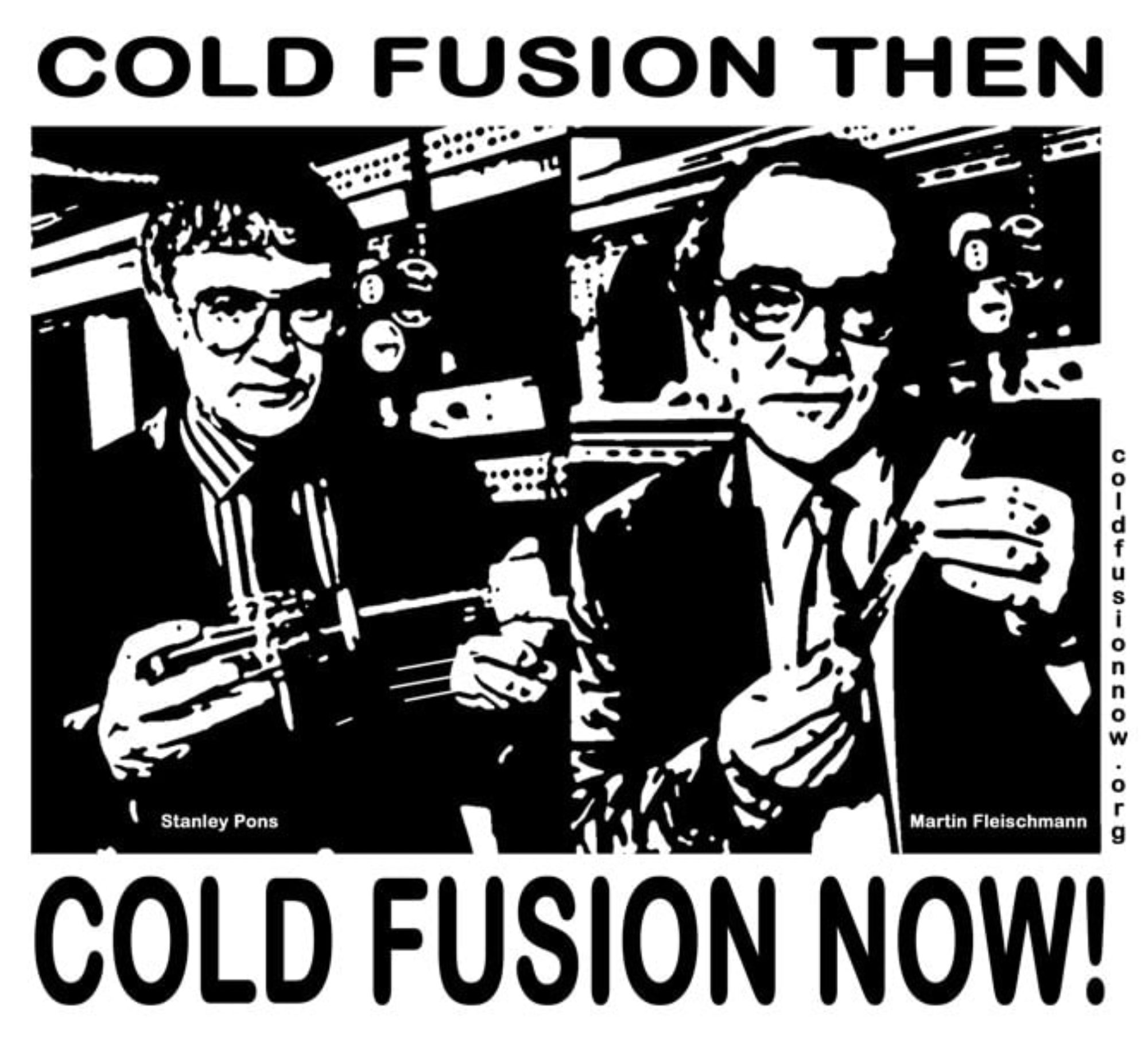
These two scientists have devoted their careers to studying the phenomena originally announced by Pons & Fleischmann in 1989 and discredited in the media and amongst the community of nuclear physicists in the years following. But, as the speakers confirmed, there are still 1000 researchers around the world who have been studying the phenomena of: “unexplained excess heat” and they have produced results that irrefutably indicate that something real is happening.
Professor Srivastava addressed his preferred theory as to the source of the unexplained excess heat. He was clear that it had to be nuclear and argued that it arose from a weak force effect. Essentially, he supported the Widom & Larsen theory that neutrons can be formed in a solid matter matrix by the capture of an electron by a proton:
http://en.wikipedia.org/wiki/Proton
http://en.wikipedia.org/wiki/Electron_capture
http://www.physicsforums.com/showthread.php?t=229479
This presumably requires overcoming a 780 KeV energy barrier based on the mass difference between the neutron and the combined masses of a proton and an electron. But once a neutron is formed, it’s available to carry-out all sorts of nuclear reactions, including transmutations of available background metals in the crystal lattice and the conversion of hydrogen or deuterium nuclei trapped in the crystal lattice into tritium, helium 3 or helium 4. These processes result in the releasing of substantial amounts of heat.
Professor Srivastava did not address the alternate theory, originally proposed by Pons and Fleischmann, that the source of unexplained energy was arising from the fusion of two deuterium nuclei trapped in a metal lattice. The prospect remains that this process may still be occurring.
“D-D fusion produces a 2.45 MeV neutron and helium-3 half of the time, and produces tritium and a proton but no neutron the other half of the time. D-3He fusion produces no neutron.”
http://en.wikipedia.org/wiki/Neutron
Arguing against the proposition that D-D fusion is occurring deep in the host crystal lattice is the evidence that apparently indicates that the low energy nuclear reaction effect – LENR tends to occur on the surfaces of active metals such as Palladium and Nickel.
On the other hand, Professor Peter Hagelstein from MIT, who continues to defend the deuterium fusion concept, has argued, with some effect, that if helium is the resulting material that forms through fusion at critical vacancies in a metal lattice, then the accumulation of helium can choke-back the reaction by plugging the vacancies. However, helium formed near a surface has an opportunity to defuse out of the metal lattice, freeing up the vacancies in the same region to continue the LENR effect. Hence even the deuterium fusion theory can fit with the observed phenomena that high surface area contributes to the production of excess heat.
The original experiments done by Pons and Fleischmann produced excess heat on the order of 10-20%. That is, for every unit of electricity consumed in the electrolysis experiments that they were running, the driving of deuterium onto/into Palladium, an additional 20% of heat was appearing in the system. A problem with results of this nature is that the measurement of an excess heat of only 20% requires careful instrumentation. A great deal of criticism was made of the calorimetric procedures followed by Pons and Fleischmann. However, Professor Celani produced data on experiments in the 20 years following 1989 that show heat gains in excess of 50% to 200% and, on occasion, infinite, in the sense that heat was produced even though no electricity was being run through the reaction vessel.
A lot of the objections to the demonstration of the production of excess heat would necessarily be met if it could be reliably shown that heat gains in excess of 100% are being achieved. Errors in actually measuring the precise amount of excess heat would then be irrelevant.
There are a number of Golden Goals that one would like to see achieved if the LENR effect is to become the gift to humanity that many believers insist is possible. The critical parameters are:
1. Gain. If electricity or another energy source is needed to precipitate an LENR effect, then gain has to be significant. It costs 3 calories of thermal energy to generate 1 calorie of electrical energy. This means that the gain, if electricity must be used, has to be at least 300%. Gain is important.
2. Power. Power is important because if the phenomenon collapses at higher power rates, then this energy generation source will never be of service to mankind. Instead, it will be a curiosity. It is known that a pair of deuterium nuclei can be made to fuse by introducing a Muon in place of an electron in orbit around at least one of a pair of deuterium nuclei. This is called a “muon catalyzed fusion“.
This produces heat by way of fusion. But Muons are extremely difficult to generate and have a very short half-life. The phenomenon is interesting but it’s not likely to be useful to produce power at any relevant level of interest to human society. Test results shown by Professor Celani indicate results, by solid scientific researchers, in which energy is being generated at rates up to on the order of 20-50 W. This is promising. The claims by Andrea Rossi and Defkalion that they are producing energy at the rates in excess of 1 kW are suspect as they are not been scientifically evaluated and proven. But more than trivial power has been produced. Power is important.
3. Temperature. Temperature is important because of the Carnot principle. If you’re going to generate work using thermalized energy, then the Carnot theorem sets a limit on the proportion of thermal energy that can be converted to work. Electricity is equivalent to work energy. The Carnot formula depends on the temperature difference existing between a heat source and a heat sink. Thus the maximum energy, the absolute theoretical maximum, that can be extracted from a heat source at 273°C using ice at 0°C as a sink is 50%.
Typical power generation stations that burn coal, gas or oil rely on temperatures in excess of 800°C and have difficulty achieving efficiencies in excess of 40%. Many of the experimental tests done in the past were carried-out in electrolytic cells that contained water or heavywater. Only modest temperature increases were being measured, and the presence of water set an upper limit on any temperature increase that could be created. More recent experiments in the gas phase have actually been running at 300°C, 400°C and experiments have been attempted by Professor Celani at temperatures as high as 900°C. Achieving high temperatures will be extremely relevant to providing mankind with inexpensive electrical power. Temperature is important.
4. Duration. The duration of the unexplained excess energy effect has been the bane of most researchers. Generally, it has taken a long time to turn-on an LENR effect. And then in most cases the effect has only lasted for a limited period of time, in some cases only minutes. However, more recent tests have demonstrated a heat generation duration of many days, sometimes weeks. To be an effective source of energy the active materials have to be able to continue to produce energy beyond a trivial short interval. Accepting that a nuclear effect is the source of the energy, the prospects for extended periods of heat generation are theoretically possible. The amount of heat that can be provided through nuclear effects is enormous. Technology must resolve the issue of how to sustain an LENR reaction over an extended period of time. Duration is important.
5. Control. From the beginning and even today, the turning-on of an LENR effect has been a sometimes proposition. Apart from the extended delays that are required before the effect appears, it’s not even clear whether the effect is precipitated by:
– electric current passing through a host crystal LENR environment
– the presence of an electric field applied to the LENR environment
– oscillations in such an electric field
– magnetic fields, whether static or oscillating
– thermal energy present in the form of vibrations present in the host atom nuclei forming a crystal matrix; in electrons present in the crystal matrix, possibly in the conduction band or otherwise; or in protium/deuteron nuclei nesting at critical locations in the crystal matrix
All of these effects represent “handles” by which a low energy nuclear reaction might be controllable. Ideally, controls should exist to not only turn-on an LENR event but also to adjust its rate, including preventing runaway, and allowing for shutdown. Control is important.
Professor Celani indicated that in one of the experiments that had been carried-out a heat flux of 1500 W per gram of Palladium was achieved. This compares favorably with the heat flux at the core of the sun:
“At the center of the sun, fusion power is estimated by model to be about 276.5 watts/m3, [2] a power production density which more nearly approximates reptile metabolic heat generation than it does a thermonuclear bomb. [3] Peak power production in the Sun’s center, per volume, has been compared to the volumetric heats generated in an active compost heap.”
http://en.wikipedia.org/wiki/Solar_core
A key comment in the presentation by Professor Celani addressed the effect of loading of the metal lattice. It has been known that as hydrogen is forced into a nickel or palladium lattice, the electrical resistance of the lattice initially rises, but then falls after a loading ratio of approximately 0.7:1 is passed. Thereafter, approaching a loading of approximately 1:1 the resistance can drop by 50% from its peak. Information on the effects of loading beyond this limit is not readily available. But Professor Celani did observe that the observation of the appearance of excess energy appears uniquely associated with loadings in this negative resistance region.
The suggestion is that loading is a critical parameter for these phenomena to occur. Any technology which could generate high loadings and maintain high loadings over time could be key to a practical application of the LENR effect.
Post presentation questions
After the speakers had concluded their remarks, questions were invited from the audience. One particularly persistent questioner insisted repeatedly that the numerous failed attempts by scientists to replicate the ColdFusion effect following the Pons and Fleischmann announcement in 1989 should be given as much weight as the more recent identification of concrete, incontrovertible, excess energy experiments from numerous sources around the world. The relevance of this objection can be compared to the example of announcing to children at a birthday party that there is a special treasure source of gold foil covered chocolates to be found somewhere in the house. The children proceed to effect an exhaustive treasure hunt throughout the house. Many many children come back reporting that no such gold coin chocolates have been found. But a few report that, while they didn’t find the treasure source itself, they did find some sample chocolate coins which they then place on the table.
Would it be appropriate to argue in these circumstances that a treasure source does not exist? Unfortunately, the style of this questioner has predominated in the general physics community since 1989.
Watch Yogendra Srivastava video and slide presentation
Watch Antonio Celani video and slide presentation
 The following is a further posting in a series of articles by David French, a patent attorney with 35 years experience, which will review issues of interest in the field of Cold Fusion.