1973 Nobel laureate Dr. Brian Josephson responded to the April 3 New York Times letter Invitation to a Dialogue: Action on the Climate by Robert W. Fri asking for social scientists to become more engaged in promoting low-cost energy alternatives.
Read 2011 report on the topic: Beyond Technology: Strengthening Energy Policy Through Social Science [.pdf]
Josephson’s letter answered with the solution offered by low-energy nuclear reactions (LENR) and it did not appear with the other responses published in the Sunday Dialogue, so we post it here:
For publication
—————
Robert W. Fri (Apr. 3rd.) asks, in regard to climate change, for ‘steps that will make useful progress at low cost’. I suggest his committee look carefully into so-called cold fusion, a good source for which is the Library at lenr.org. (corrected from lenr.com)
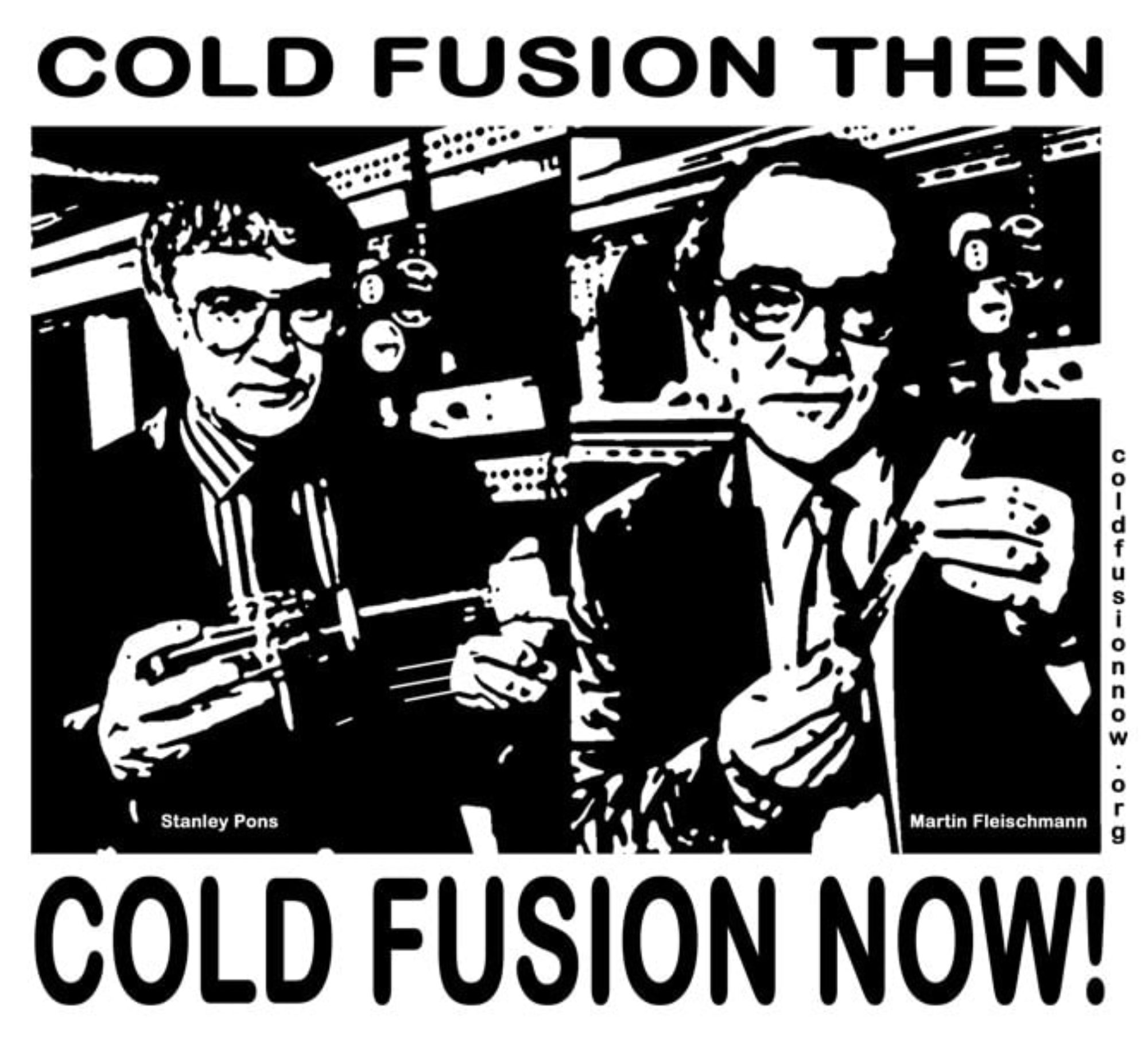
In retrospect the conventional view, that the claims of Fleischmann and Pons in this regard were erroneous, can be seen to have been based on a number of faulty assumptions, some of which were discussed in a lecture by Peter Hagelstein at MIT (see http://www.infinite-energy.com/images/pdfs/VernerIAP2013.pdf). The claim that in such systems heat is generated far in excess of what can be explained in conventional terms has by now been confirmed in very many investigations, though reproducibility on demand has been a problem. The factors determining how much heat will be generated in any given sample are at present poorly understood; thus modest funding to address these issues should pay dividends. Once these factors are understood, there is a real possibility that fusion processes at ordinary temperatures in suitable materials can contribute significantly to energy resources in the future, and thereby help to combat the problem of climate change.
Prof. Brian Josephson
Emeritus Professor of Physics, University of Cambridge
Foreign Honorary Member, American Academy of Arts and Sciences
Cold Fusion Now asks all readers to respond in writing, by phone, or in person, to their local media and political offices whenever alternatives are put forth that ignore the cold fusion solution.
Sterling Allan of the Pure Energy Systems network follows multiple types of new energy technologies, including cold fusion.
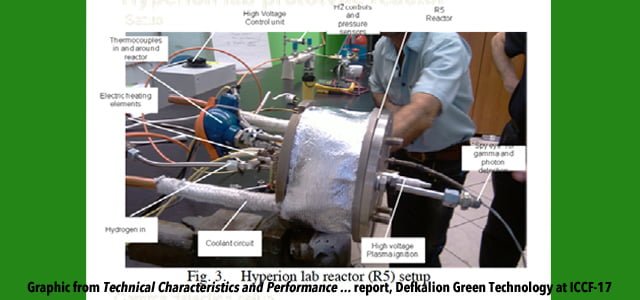
Last year he traveled to Greece to check on the progress of Defkalion Green TechnologiesHyperion steam-generator, a prototype commercial product based on low-energy nuclear reactions (LENR) that utilizes nickel and light hydrogen.
Recently, Allan interviewed Defkalion‘s CEO Alex Xanthoulis and Director of Communication and Business Development Symeon Tsalikoglou on developments since moving their headquarters to Vancouver, B.C.
While the Hyperion domestic unit has been “put on the back burner”, Defkalion has been approached by hundreds of companies wanting to license their technology for various products. The company has narrowed those proposals down to 20 which they will pursue.
“They let the professionals in the industry work out the details of fitting the technology to the myriad of applications out there,” writes Allan.
One of the applications cited is shipping. “A large cargo ship (18,000 to 20,000 tons) can go through $20,000 worth of fuel each day, but with Defkalion’s technology, those costs would go down to $500/day — a 40-fold reduction in price.”
Savings on fuel costs, weight, space, and time (since ships won’t have to stop and refuel as often) are all benefits of this technology. No fossil fuels on board mean no nasty spills either.
Another high-priority project is replacing the dirty and dangerous radioactive fuel rods in today’s nuclear power plants with clean cold fusion steam generators. “The price for a retrofitted nuclear plant will be 12 times lower than what they presently operate at,” producing power at $0.35 per kilowatt-hour.
Eventually, home units will be available, and the energy cost for this off-grid technology “is expected to be less than $300 for six months, for a 550 square meter (6000 ft2) home” with the charge lasting six months.
All licensees for applications are required to test the technology on their own.
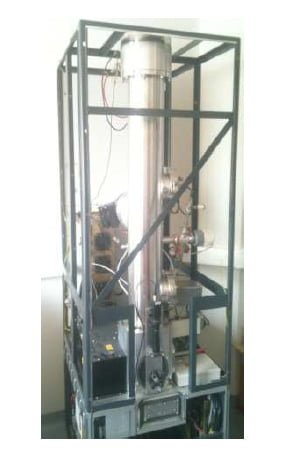
A mass spectrometer surrounds Hyperion reactor.Allan writes, “One US Company tested the Defkalion technology for about six months and reported that there was no harmful radiation emitted whatsoever (they thoroughly tested the full spectrum), and that only some gamma rays are emitted during the reaction — but no more than you get from a household toaster — well within safety limits. And sometimes, it doesn’t even emit any harmless gamma radiation while it is operating — puzzling the scientists who haven’t yet figured that one out, who think that with every transmutation event there should be a gamma emission.”
Currently, their demonstration model generates 5 kilowatts of thermal energy and it is claimed that one unit has been operating for 8 months.
Last August, a Technical Characteristics and Performance report [.pdf] was released at ICCF-17, the International Conference on Cold Fusion where Defkalion presented.
Details of the unit given to Allan recently were:
Excess heat graph from Defkalion nickel-hydrogen system.“Most of the input energy is up front when it is brought up to 180 C, then the input is tapered off until it is just a quick pulse from a spark plug every 10-15 seconds. It takes about 1-2 hours to stabilize. So in the first 24 hours, the COP is 1:5 (five times more energy out than what is put in). But over time it gets so good that Alex doesn’t like to say what it is because it comes across as unbelievable.”
“The output temperatures range from between 350 and 500 degrees Celsius. It once went up to 860 C in just 30 seconds, but that was an accident, and caused damage because the materials are not designed for that, so they cap it at 500 C.”
Seven regional labs around the globe are working on next-generation models, with each lab developing a particular application. The core team is currently engineering R5, a reactor designed specifically for controlling while the next reactor R6 will be for “pure performance”.
One avenue which won’t be pursued is military contracts. Apparently, current business agreements have a clause that says the technology “won’t be used for military purposes”, good news for civilians around the planet. However, the company realizes that after release, these generators will be copied and they won’t have control over it’s purpose.
Defkalion plans a public demonstration of their work at NIWeek 2013 this August at National Instruments in Austin, Texas. Till then, as a business entity, they will follow Alexander the Great’s model, attempting to be first to market. Alexander had “45,000 soldiers compared to the foes 500,000 that were superior in knowledge and skill. He won by being first.”
On the week of Feb 5, the conference of “radiation detectors and their uses” was held in High Energy Accelerator Research Organization in Tsukuba city of Japan. Japanese web site is (here) and Google translated one is (here).
In the conference, there was a very interesting presentation “Experiment and verification of the radioactive cesium decrease effect of nanoscale pure silver (Ag) with supporting material” for LENR watchers. (This title is translated to English by me and may be inaccurate.)
The Japanese abstract (PDF document) was published (here) and p.69 and p.70 are for the presentation.
The author, Dr. Shin Iwasaki, a physicist and ex-professor of Tohoku University of Japan, describes the results of some experiments that the nanoscale Ag supported by bone charcoal and white granite or collagen liquid can decrease the radioactivity of the radioactive cesium in Fukushima prefecture of Japan in the laboratory.
In Fukushima, after the Fukushima Daiichi nuclear disaster of March 11, 2011, the soil and many houses were contaminated by radioactive cesium. To decontaminate, people had to wash roofs and walls by water, and remove the surface-soil containing the radioactive material. The big problem is how to treat the washing water or removed soil, because we have no way to decrease the radioactivity.
Dr. Norio Abe, a biologist and the chief of Itabashi Firefly Ecosystem Center in Tokyo, thought of the idea to use nanoscale silver Ag to decontaminate radioactive soil because he had well-known the capability of nanoscale Ag to keep the environment clean for the firefly.
Surprisingly, the radioactivity of the soil decreased after he had spread nanoscale Ag with collagen liquid.
While the reason or mechanism is unknown, he succeeded to decrease the radioactivity of contaminated water or soil in several fields in Fukushima.
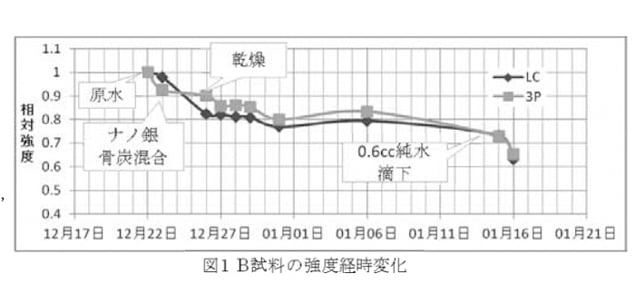
In March 2012, Dr. Shin Iwasaki joined the group with Dr. Norio Abe and started to help verify the strange phenomenon. Then in Nov 2012, after much trial and error, he was able to measure the effect. In the abstract, the main result is shown in Fig. 1.
He made the sample in U9-type container by combining the 4-5 nanometer Ag with bone charcoal and washing with water including Cesium. He measured radioactivity by monitoring the gamma spectrum over a long period using Csl (T1) detector + 512ch MCA. He said that his team payed attention to uniformity of the sample, self shielding, volatilization and location of the measuring instruments.
While the natural half-life of Cs-134 is 2 years, and one of Cs-137 is 30 years, Dr. Iwasaki analysed the experiment and concluded there was a decrease in the “half-life” of radioactivity of these Cesium isotopes to about 1 or 2 months.
The graph of Fig. 1 shows the time series of the relative values of radioactivity to the original sample without nanoscale Ag. For example, “1.0” is the value of the original sample and “0.6” means the value is 60% of the original sample. 3P and LC shows the following values and the background radioactivity is reduced.
3P: sum of 3 peaks including 604keV of Cs-134, 661.6keV of Cs-137 and 795.7keV of Cs-134 and others.
LC: sum of continuous values under the 3 peaks.
This experiment started at Dec 22, 2012 and ended at Jan 16, 2013. In the first few days, the half-life of the radioactivity is equal to about 20 days, He added 0.6 cc pure water to the sample and stirred at Jan 14, 2013 and the value started to decrease again.
This result is very impressive for me because the experimental system is simple and the effect is big. Dr. Shin Iwasaki suggested the phenomenon may be one kind of LENR.
Unfortunately, this project has little budget, and he can not analyze the mix of elements of the used sample. In the abstract, he calls for other scientists to reproduce this experiment. I hope they will too. This phenomenon may help to decontaminate water and soil around the Fukushima Daiichi nuclear plant.
Scientists (enquiring minds) must continually be motivated by the “mother” of all questions: What facets of nature remain undiscovered because what we consider (think) to be theoretical certainties prevent the posing of new challenging questions?
Beverly Rubik IE26 1999
“Healing the Placebo Effect” gbgoble2013
Our conception of the placebo effect needs healing, no one presently understands it. Energy healing may also be misunderstood. On the one hand, actual healing caused by the placebo effect is dismissed; something to be accounted for or avoided in research studies. On the other hand, energy healings’ positive therapeutic results have been dismissed as the result of known psychological mechanisms.
Are the placebo effect and energy healing a con job?
Wiki quote
Energy medicine, energy therapy, or energy healing, a branch of complementary and alternative medicine, holds the belief that a healer can channel healing energy into the person seeking help by different methods: hands-on, hands-off, and distant (or absent) where the patient and healer are in different locations. There are various schools of energy healing. It is known as bio-field energy healing, spiritual healing, contact healing, distant healing, therapeutic touch, Reiki or Qigong. Spiritual healing is largely non-denominational: practitioners do not see traditional religious faith as a prerequisite for effecting a cure. Faith healing, by contrast, takes place within a religious context.
Early reviews of the scientific literature on energy healing were equivocal and recommended further research, but more recent reviews have concluded that there is no evidence supporting clinical efficacy. The theoretical basis of healing has been criticised, research and reviews supportive of energy medicine have been criticised for containing methodological flaws and selection bias and…
…”positive therapeutic results have been dismissed as”
(op.ed. – “…yet positive therapeutic results may effectively”)
…”the result of known psychological mechanisms.”
(op.ed. – “… be caused by unknown physiological (mind/body) mechanisms.”)
Edzard Ernst, lately Professor of Complementary and Alternative Medicine at the University of Exeter, has warned that… “healing continues to be promoted despite the absence of biological plausibility or convincing clinical evidence … that these methods work therapeutically and plenty to demonstrate that they do not.” Some claims of those purveying “energy medicine” devices are known to be fraudulent and their marketing practices have drawn law-enforcement action in the U.S.
-end wiki quote
The real ‘con job’ is promoting that we cannot choose…
Between
Being conned (or conning oneself) into a state of unhappiness and an existence of life void of respect and trust. i.e. despair (disease)
And
Knowing that you can “con” yourself (and hopefully others) into a state of happiness and an existence of life full of, appreciation, inspiration, and most of all, respect and trust. i.e. hope. (wellness)
Continually be motivated by the “mother” of all questions…
Perhaps we should meditate on understanding and utilizing the placebo effect?
US National Intitutes of Health – National Center for Complimentary and Alternative Medicine (NCCAM)
A recent study in the New England Journal of Medicine (NEJM) showed a positive outcome for tai chi in the management of the troubling symptoms of fibromyalgia—a condition with which many patients struggle and for which conventional medicine has little to offer. That is why this study is so provocative—can a CAM modality really affect this condition?
In the meantime, we are also interested in understanding and exploring the many components of the placebo effect: what role does expectation play? How important is the patient-provider interaction in health? What is the mind-body connection and how can it be harnessed to promote health and well being?
As a physician and a researcher, I find these issues intriguing and am excited for us to further explore these important research questions.
William E Stirton Professor Emeritus of Anthropology, University of Michigan-Dearborn
Abstract
The author reviews 10 of his favorite studies which are said to be about the “placebo effect,” but which, instead, show the significance of meaning in a medical context. “Placebos,” he argues, are inert substances which can’t do anything. Yet it’s clear that after the administration of such drugs, things do happen.
The one (and maybe only) clear thing here is that whatever happens is not due to the placebo (that is what “inert” means). But placebos can be of various colors and forms which can convey compelling meaning to patients. They often represent medical treatment in compelling ways; they can be metonymic representations of the entire medical experience.
(a metonym is a representation where a part of something comes to represent it all, as in “counting noses,” where the nose represents the whole person, or a “White House statement” where the White House represents the Executive Branch of the US Government; here, the pill represents the whole medical experience)
More precisely, they can be metonymic simulacra (a simulacrum is a sort of artificial object, like a statue rather than a man, or a placebo rather than an aspirin). Such objects are well known for their powerful abilities to contain and convey meaning; for example, a European cathedral ordinarily is constructed of thousands of metonymic simulacra, from the rose window to the altar.
In this context, a placebo can repeatedly remind the patient of the medical encounter, its shadings and comforts. Placebos can convey the physicians innermost feelings about medication and treatment; and the clinician can by her simple presence enhance the effectiveness of a medical procedure (and a clinician is hardly a placebo, hardly inert).
Alternative medicine remains alternative because it poses serious challenges to the mainstream biomedical paradigm of mechanical reductionism and because it requires a new framework. This paper explores some of the hypotheses and challenges of energy medicine including healer interventions, electromagnetic therapies, and homeopathy. Together with new findings from the bioelectromagnetic field, they spell out the rudiments of a new paradigm for biology and medicine based on information.
Information embraces the complex network of relations in the matter and energy transactions of living systems. It offers a unified view of energy medicine modalities as well as a fresh perspective for biology and medicine and new questions for further research.
>addendum 3/31/13
Friends sent this Gorilla Reunion video after reading the article, and then called to converse.
I was impressed with their reasoning and added this to the article as an experiment for us all.
They said viewing the video can be healing. That one experiences the high level of communication (information exchange) that is taking place. (the whole family is quickly comfortable with this human)
That it helps to heal despair and fear, by deeply affecting the brain through an element which is believed to be partly responsible for the placebo effect and energy healing…
I was asked to watch the video with an observant, absorbing, and open mind: multiple times, for a couple of days, and watch for changes in my level of well-being.
This is a subjective experiment, of course, and is valuable as such in its’ own right. Checking it out…
He doesn’t expect steam from cold fusion to be able to power the vehicle directly, but electricity generated from the steam would “trickle-charge” a battery to operate the vehicle.
Can he do it?
For twenty-four years, Dr. Cravens has been experimenting with the anomalous heat effect (AHE), and in that time, he has focused attention on gathering criteria and methods to initiate and trigger excess power.
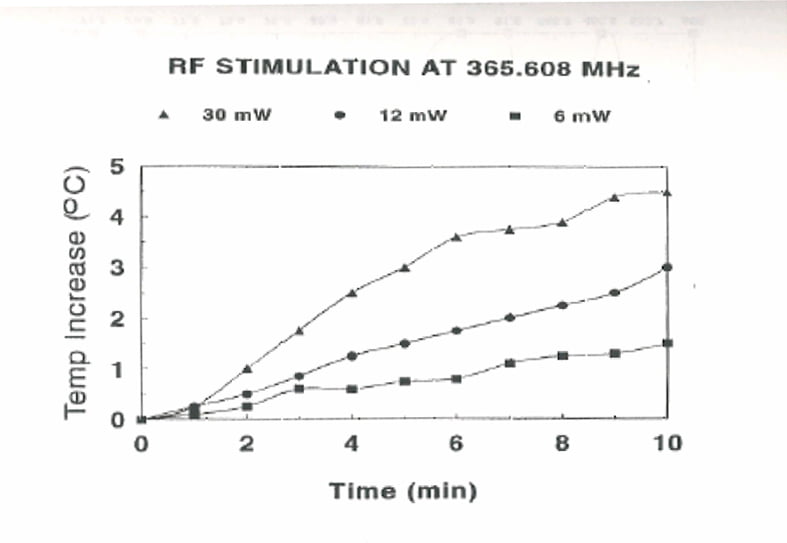
Heat, pressure, current, radio-frequency, chemical, laser, acoustic, magnetic field – all were investigated by Cravens and longtime research partner Dennis Letts.
Cravens presented Factors Affecting The Success Rate of Heat Generation In CF Cells at ICCF-4 in Maui 1993, and together Cravens and Letts presented The Enabling Criteria of Electrochemical Heat: Beyond Reasonable Doubt at ICCF-10 in 2003, both works referring to palladium-deuterium Pd-D systems.
But it was investigating the various triggering methods that the collaborators made a surprising discovery.
Excess heat can be triggered by radio frequency.RF-triggered excess heat experiments had been ongoing since 1992, and Letts’ collaborations with R. Sundaresan, Z. Minevski, and J.O’M. Bockris, the Texas A&M chemistry professor who nearly lost his job because of his research into cold fusion, were presented at ICCF-4.
Radio frequencies stimulated the reaction, but as usual with cold fusion, “it was difficult to reproduce”.
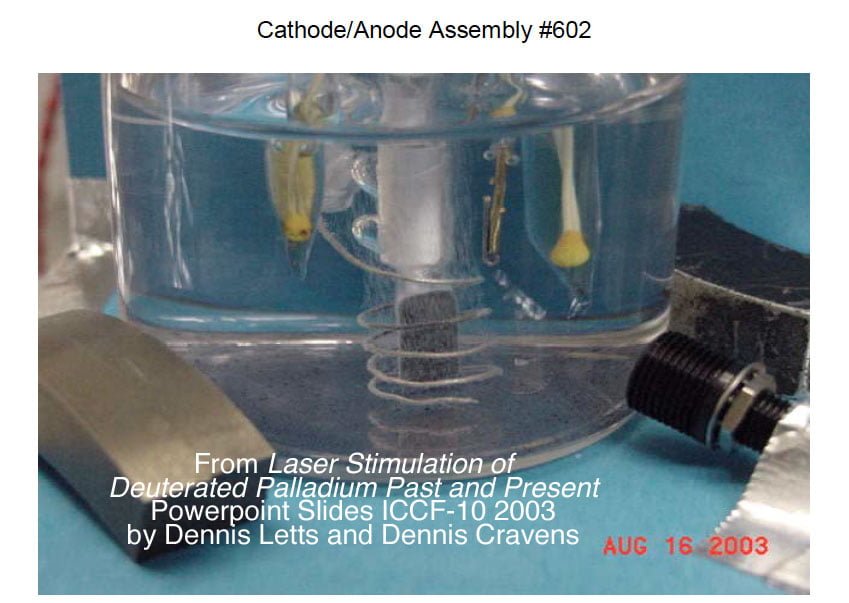
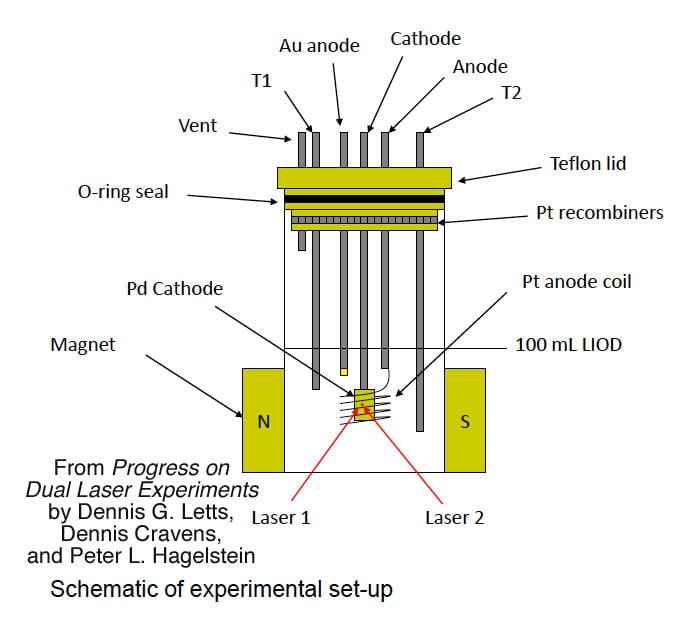
In Letts, D. and Cravens D. Laser Stimulation of Deuterated Palladium: Past And Present, PowerPoint slides presented at ICCF-10 2003, the authors describe one early experiment designed to test the effect of RF radio frequencies on excess power.
A standard palladium-deuterium Pd-D electrolytic cell was modified to use the more-economical gold metal as an anode, instead of platinum.
During electrolysis, the gold dissolved into the solution, settling on the surface of the palladium cathode, and ruining the experiment.
A pocket laser pointer, emitting the familiar red-light at 670 nanometers, was directed at the cathode, just to see what would happen.
The cell temperature of the 75-gram electrolyte “rose several degrees, in a short time”.
In fact, a 3-degree increase in the electrolyte suggested that the 1 milliWatt laser pointer initiated heat in excess of 500 milliWatts.
An afterthought of directing laser-light on the cathode saved an experiment.
Graph annotations by Ruby Carat.
In subsequent experiments, other frequencies were found to initiate a thermal effect, at 681 and 685 nm. “Most of the time this results in triggering a thermal response 10-30 times larger than the thermal output of the laser.” —Laser Stimulation of Deuterated Palladium Past and Present
The keywords there are not “10-30 times laser power”, but “most of the time”. Like RF, the laser triggering method did not guarantee 100% reproducibility.
However, one successful laser-triggered experiment ran live at ICCF-10.
After days of loading, a 681 nm laser irradiated a 1mm spot on the cathode of demo cell #602; excess power jumped immediately. The laser was turned off, and excess power decreased. Power to the cell was 500 mW, and with a 30 mW laser stimulation, 500 mW excess power was generated.
Demo cell 602 excess power graph
Laser stimulation to initiate anomalous heat reflects the criteria that many researchers find critical: dynamic conditions must exist in the chamber. Energetics’ Technologies used Superwaves, Brillouin Energy uses Q-pulses, and even nickel-hydrogen Ni-H systems produce higher thermal power output when the chamber is heated.
Resonance by laser-light was further studied by Cravens and Letts with Peter Hagelstein, when two lasers were operated together to mix optical frequencies, creating beats to stimulate phonons in the Pd-D lattice that would initiate the reaction. Excess heat was associated with beat frequencies at 8.3 and 15.3 THz and 20.4 THz.
In addition, the size of the active regions was also compared to the laser’s region of impact. From their paper, it appears that the Nuclear Active Environment (NAE) is “larger than the laser spot in previous single laser experiments.”
While these undertakings describe basic science research, Cravens is no stranger to commercial efforts.
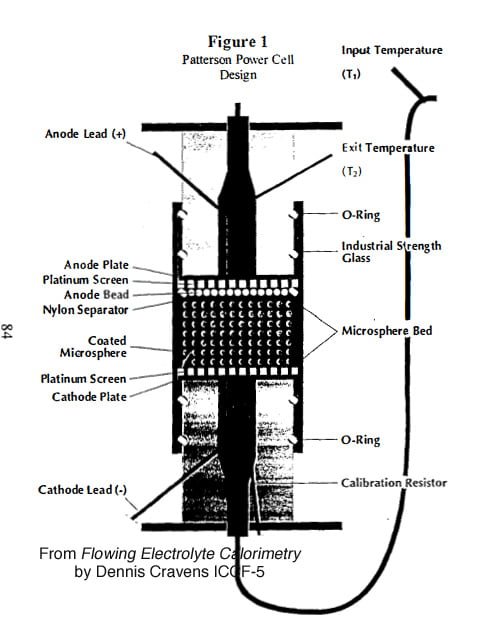
Representing ENECO, an early new-energy company initially formed to develop the Fleischmann-Pons work, Cravens was hired to provide an independent evaluation of the Patterson Power Cell, a proto-type commercial thermal generator designed by James Patterson of Clean Energy Technologies, Inc. (CETI) that utilized “plastic microspheres” layered with transition metals. Cravens reported on this investigation in Flowing Electrolyte Calorimetry at ICCF-5 in 1995.
Attendees at that conference were also treated to a live demonstration of the Patterson Power Cell. Here’s what Hal Fox of the New Energy Institute and publisher of Fusion Facts wrote in April of that year:
BEHIND THE SCENES AT ICCF-5 by Hal Fox
One of the most impressive presentations at the ICCF-5 was
given by Dr. Dennis Cravens and supported by a working
cold fusion cell set up in the foyer by Clean Energy
Technologies, Inc. (CETI) of Dallas Texas. Attendees at the
conference could take their own data, compute the results,
and show that a cold fusion cell was operating at 200 to 400
percent excess thermal power. This cold fusion system
utilized the patented inventions of James A. Patterson. This
invention consists of small plastic beads coated with copper,
nickel, and palladium. These beads provide a uniform large
surface area (of either palladium or nickel) to catalyze the
nuclear processes that are the heart of cold fusion
phenomena. The CETI patents cover both light and heavy
water electrolysis using the metal-coated microspheres.
Patterson’s company, Clean Energy Technologies, Inc. (CETI), got together with Dennis Cravens and brought to the conference a demonstration cell in a flow calorimeter. It worked spectacularly well. Cravens [2] discussed it on the first day. The device output 3 to 5 times input energy, ignoring energy lost to electrolysis gases, and as much as 10 times input if you include various factors such as electrolysis gases and the heat lost from the cell container.
As a demo, the Patterson cell output power was only a few Watts, but the durability was impressive. Rothwell continued:
The CETI demo system is fairly predictable, well controlled, and well-behaved, although it did get a bit quirky in the harsh conditions of the ICCF5 hallway. During breaks, the hotel coffee pots kept tripping the circuit breakers. This sent jolts of power through the transformer, which crashed the experiment. The CF reaction started up again every time, usually in about 10 minutes. The high precision flowmeter unfortunately did not survive the beating; the batteries and power supplies in it burned up. Fortunately, the low-precision flowmeter—a 10-ml laboratory supply graduated glass cylinder plus stopwatch—cannot be affected by power outages and excess voltage. The experiment was subjected to other abuses: the cart holding the experiment was wheeled up to a hotel room every night, carried on elevators, and pushed around. Cravens even lifted the cell from its container to show it to people while it was running! Yet in spite of this, the reaction started up in the morning after 10 or 20 minutes of electrolysis, although on the last day it took about a half hour, and the power was turned up higher than before. The fact that the cell survived this treatment at all demonstrates that this is one of the most robust and practical electrochemical CF systems yet developed.
Unfortunately, when Patterson’s beads ran out, the next batch didn’t work; the mystery of cold fusion had claimed another honest effort.
Yet the work of Dennis Cravens has persisted, and in his latest project, powering a 1928 Model-A with cold fusion, the aesthetic of a longtime researcher in anomalous effects marries the old with the new. Why?
“It is bold. It is daring. It is crazy but I have to try,” he writes.
Want to participate in something truly extraordinary? Go to Dennis Craven‘s Cold Fusion Powered Car Part 2 before April 20 to contribute.
The quote on his page says it best:
You don’t have to see the whole staircase, just take the first step.
—Dr. Martin Luther King
Cold Fusion Now says no to dirty hydrocarbon fuels and their environmental pollution; no to today’s dangerous nuclear power plants creating radioactive waste with no disposal plan.
Cold fusion technology is the viable alternative energy that could power a new generation of technology for humankind. Safe clean, and abundant, new energy offers an opportunity for a technological future on Earth. We are committed to an ultra-clean, next-generation nuclear power from the hydrogen in water.