
Check out the interesting article over at New Energy Times where there is diagrammed speculation of what the E-Cat Energy Catalyzer design might be and the possible secret catalysts that Andrea Rossi is using.
A Buzz Coastin Superwave Mix
Our resident video mix artist Buzz Coastin takes it back, remembering the good ol’ deuterium-palladium days of Cold Fusion, mixing in some Michael McKubre and Irving Dardik audio interviews from May 6, 2009, where they talk about the Superwave Principle.
Dancin and Learnin!
For more on Irving Dardik, here’s an amazon link for a hardcover book – Making Waves: Irving Dardik and His Superwave Principle
I Want To Believe
A Special Report Renewable Energy Resources and Climate Change Mitigation SRREN by the Working Group III of the Intergovernmental Panel on Climate Change IPCC “presents an assessment of the literature on the scientific, technological, environmental, economic and social aspects of the contribution of six renewable energy resources to the mitigation of climate change. It concentrates “on the role that the deployment of RE technologies can play within such a portfolio of mitigation options.”
The assessment produces a best case scenario projection of 77% of of global primary energy from renewable sources by 2050. The Summary for Policymakers presented the numbers of current Renewable Energy RE sources. A graphic shows the total global primary energy supply of 492 Exajoules for 2008 and its distribution of energy by source.
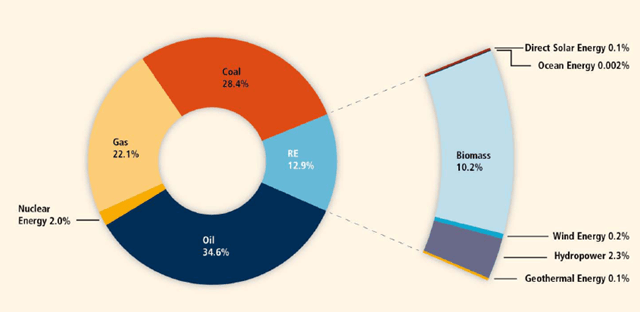
Biomass contributes the largest share of the RE contribution, but 60% of that comes from “traditional” biomass.
“Traditional” biomass generally means the burning of wood is the primary source of energy for billions of people and contributes to deforestation, loss of wildlife habitat, and poor air quality.
On a global basis, it is estimated that RE accounted for 12.9% of the total 492 Exajoules (EJ) [5] of primary energy supply in 2008 (Box SPM.2) (Figure SPM.2).
The largest RE contributor was biomass (10.2%), with the majority (roughly 60%) being traditional biomass used in cooking and heating applications in developing countries but with rapidly increasing use of modern biomass as well.[6]
Hydropower represented 2.3%, whereas other RE sources accounted for 0.4%. [1.1.5]
In 2008, RE contributed approximately 19% of global electricity supply (16% hydropower, 3% other RE) and biofuels contributed 2% of global road transport fuel supply.
Traditional biomass (17%), modern biomass (8%), solar thermal and geothermal energy (2%) together fuelled 27% of the total global demand for heat. — SRREN
Assuming bio-fuel crops like corn, sugar, and palms are within the other portion of the biomass contribution to energy, then doubling the contribution of this renewable source could generate possibly 8% of total primary energy demand.

Hydropower takes second largest share of RE contribution to primary energy supply.
Hydroelectric power generates 2% of the global primary energy. Suppose that doubling the number of dams globally doubled the hydropower contribution to the total primary energy supply to a 4% share. What effects would this have?
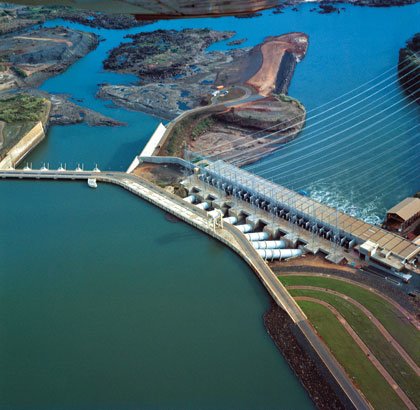
A five-dam project in Chile recently approved will change the Patagonian wilderness landscape by carving roads through wilderness to construct power lines, “drown 14,000 acres, require carving clear-cuts through forests, and eliminate white-water rapids and waterfalls that attract ecotourism.” Here in Northern California, efforts continue to succeed to un-dam the Klamath River, which has decimated salmon populations, though the recent victory by Native peoples, environmentalists, fisherman, and miners has yet to see a timetable for actual de-construction.
A greater percent of RE contributed to electricity alone, with 16% generated by hydropower.
Direct solar energy generated 0.1% of total global primary supply in 2008.
Doubling the contribution of solar energy would produce a 0.2% share, still a miniscule amount of the total. “The technical potential for solar energy is the highest among the resources,” the report stated. Then,
“Factors such as sustainability concerns [9.3], public acceptance [9.5], system integration and infrastructure constraints [8.2], or economic factors [10.3] may also limit deployment of renewable energy technologies.”
All of these choices viable for small scale use. But these traditional RE technologies will need to deeply expand into a finite and sensitive environment disrupting ecosystems and economies with negative effects if they are to provide a primary energy supply.
Renewable energy continues to grow with relatively small gains in total primary energy supply.
Interestingly, nearly half of the new electricity capacity generated from 2008 to 2009 was generated by renewable energies, but it hasn’t made much of a difference in an overall cleaner energy consumption. Primary energy supply is dominated by fossil fuels, and peak oil has changed production and consumption of fossil fuels at all levels.
Renewable energy accounts for just under 13% primary energy supply.
Although, according to the SRREN report, RE capacity continued to grow rapidly in 2009 compared to the cumulative installed capacity from the previous year distributed as:
wind power (32% increase, 38 Gigawatts (GW) added),
hydropower (3%, 31 GW added),
grid-connected photovoltaics (53%, 7.5 GW added),
geothermal power (4%, 0.4 GW added), and
solar hot water/heating (21%, 31 GWth added).
Biofuels accounted for 2% of global road transport fuel demand in 2008 and nearly 3% in 2009.
The annual production of ethanol increased to 1.6 EJ (76 billion litres) by the end of 2009 and biodiesel to 0.6 EJ (17 billion litres) [1.1.5, 2.4, 3.4, 4.4, 5.4, 7.4].
Of the approximate 300 GW of new electricity generating capacity added globally over the two year period from 2008 to 2009, 140 GW came from RE additions.
Bio-fuels increased 50% in one year, but producing this bio-fuel has taken farmland away from food possibly contributing to higher food prices. Yet it’s still only a mere 3% of global transport fuels.
The report states that wind energy, which in 2008 provided 0.2% of total global primary energy, increased capacity globally by 38 Gigawatts, a 32% gain in 2009. Solar power increased by 53%. But when the share is still less than 1% of total power generated, the gains are not so effective overall.
The SRREN summarizes the various scenarios for RE growth.
“A significant increase in the deployment of RE by 2030, 2050 and beyond is indicated in the majority of the 164 scenarios reviewed in this Special Report[11].
In 2008, total RE production was roughly 64 EJ/yr (12.9% of total primary energy supply) with more than 30 EJ/yr of this being traditional biomass.
More than 50% of the scenarios project levels of RE deployment in 2050 of more than 173 EJ/yr reaching up to over 400 EJ/yr in some cases (Figure SPM.9).
Given that traditional biomass use decreases in most scenarios, a corresponding increase in the production level of RE (excluding traditional biomass) anywhere from roughly three-fold to more than ten-fold is projected. The global primary energy supply share of RE differs substantially among the scenarios.
More than half of the scenarios show a contribution from RE in excess of a 17% share of primary energy supply in 2030 rising to more than 27% in 2050. The scenarios with the highest RE shares reach approximately 43% in 2030 and 77% in 2050. [10.2, 10.3]”
We will have to double the power generated by a mix of RE sources many times over to reach the highest projection of 77% of our energy supply from RE, or, drastically reduce what we are currently using. And 27% of primary energy supply coming from RE is too little too late. Scaling up the supply of RE technologies such as biomass, hydro and solar have broad impacts that will inhibit this ability to grow.
Nevertheless, assuming there is no “technical barrier”, then it’s possible to continue to make these gains. Given these gains though, the ease of integrating renewable energy resources into existing systems of fossil fuels “varies” and is generally site specific “depending on region, characteristics specific to the sector and the technology.”
“As infrastructure and energy systems develop, in spite of the complexities, there are few, if any, fundamental technological limits to integrating a portfolio of RE technologies to meet a majority share of total energy demand in locations where suitable RE resources exist or can be supplied. However, the actual rate of integration and the resulting shares of RE will be influenced by factors, such as costs, policies, environmental issues and social aspects. [8.2, 8.3, 9.3, 9.4, 10.2, 10.5]“, the report states.
“Costs associated with RE are expected to go down” according to the report. But it appears that costs given do not take into account several factors.
“The levelized cost of energy represents the cost of an energy generating system over its lifetime; it is calculated as the per-unit price at which energy must be generated from a specific source over its lifetime to break even. It usually includes all private costs that accrue upstream in the value chain, but does not include the downstream cost of delivery to the final customer; the cost of integration; or external environmental or other costs. Subsidies and tax credits are also not included.”
One of those costs is associated with transporting energy throughout a grid as in the transmission of centrally-generated electrical energy.
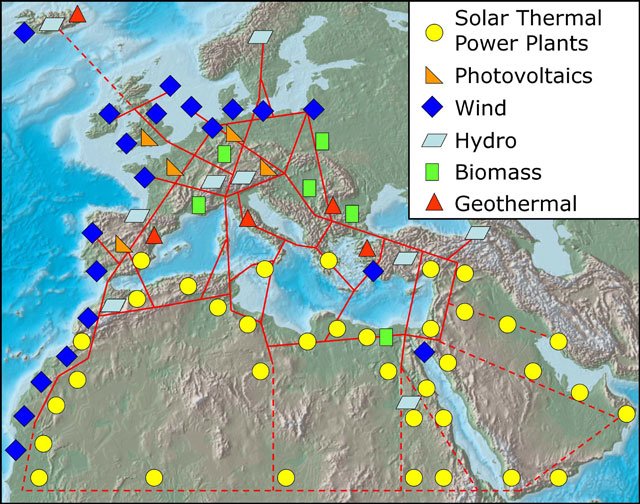
New RE sources require investment in next-generation grid.
Our current infrastructure of power delivery was built by a previous era for a specific technology of hydrocarbons burned at a central location in great quantity to generate electricity that is then carried over long distances to power cities, suburbs, and industrial parks. Neglect, coupled with the patchwork nature of joining technologies together from previous centuries, have left the US electrical grid failing in its attempt to provide over-capacity production.
In “Northwest power surplus may halt wind energy“, the Associated Press’ Tim Fought reports that surging rivers from record rain in the Northwest US have hydroelectric dams at maximum production of electricity that they effectively can’t stop without flooding regions upstream, and apparently cannot sell.
The Bonneville Power Administration has announced “its intentions to curtail wind power until the grid has more capacity, in a move likely to cost the industry millions of dollars.” They have “run out of capability to sell the surplus electricity, store the water or shut down gas, oil, and nuclear plants – leaving wind farms the unfortunate victims.”

Clash of technologies from previous eras impedes deployment of new RE sources.
Many of the wind farms in the Northwest US were built using programs that provide tax credits – only if the operation is producing electricity. Not operating over a three-month period could cost wind farms “as much as $50 million.” If forced, these utilities that use wind farm energy will litigate over “antitrust and market manipulation laws”, the AP report continued. “The action reflects difficulty in integrating the young wind industry into a power grid that dates to the Northwest dam-building campaign that began in the Depression and kicked into high gear after World War II.”
This decision follows a Northwest Power and Conservation Council study that estimates wind power could more than double by 2025, according to another AP report “Northwest wind power could double, cause grid problems“. The council is charged by the President with “developing long-term power plans that balance the region’s energy and environmental needs”.
Wind power in the Pacific Northwest can currently “generate a peak output of about 6,000 Megawatts, or the equivalent of 15 good-size natural gas-fired power plants …… most added in the past five years” and could add “another 5000 to 10,000 Megawatts of wind capacity by 2025.”
I want to believe that renewable energy can be a primary energy source, but rapidly deteriorating world affairs have not yet swayed the biggest consumers to forsake hydrocarbons and adopt renewable energy. Nor has it stopped the developing hardware infrastructure under construction elsewhere. Fossil fuels have a century of history and built a colossal reality of cement and steel. The numbers for RE contributions are low and successive doublings of output from RE seems unlikely.
There is a viable alternative to traditional renewable energy.
Breakthroughs in low-energy nuclear reaction LENR science have achieved a major advance in power generation technology. Clean, energy-dense commercial devices based on LENR are set to enter the market, perhaps within the year.
LENR energy reactors create power using small amounts of hydrogen and metals like nickel, palladium, and others, both plentiful on Earth to create large amounts of energy, much more than burning hydrocarbons. One of the main components in H2O or water, there is enough hydrogen in the oceans to provide global energy for tens of millions of years. Metals are also abundant over the planet. Nickel is the fifth most common element on Earth, including the Earth’s core of iron and nickel.
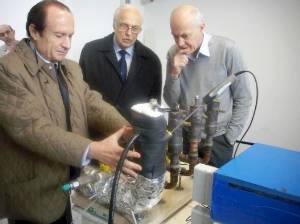
This ultra-clean technology could replace radioactive nuclear fission assemblies one-for-one generating power at a centralized location and delivering at a distance, but a new 1 MW LENR reactor called the Energy Catalyzer “is relatively small, being only 3 x 3 x 2 meters” making the big attraction to LENR reactors the ability to be off-grid, allowing both communities and individuals an independent, sustainable lifestyle with greater local control over their own energy supply.
Currently, there is a non-0% contribution from LENR reactors to global primary energy supply, for somewhere in the world, there are purportedly 97 Energy Catalyzers steaming forth, and there are many more labs around the globe testing LENR reactors of their own.
In the space of twenty years, a digital revolution occurred across the planet. We believe, whenever the first commercial devices are available, that the energy revolution has the potential to transform our world with clean energy in less than half that time, and most certainly well before 2050.
Cold Fusion Now!
Supporting Links:
IPCC publishes Special Report on Renewable Energy Sources and Climate Change Mitigation Special Report on Renewable Energy Sources and Climate Change Mitigation’ (SRREN)
National Geographic blog When is objectivity not enough?
Industrial Fuel and Power blog Brazil in hot water
Between the Poles European Smart Grids Will Require 500 Billion Euro
Bonneville Power Administration Wind Power
Pure Energy Systems News Ampenergo Amps Up Rossi’s Energy Catalyzer in America
E-CAT Gets U.S. Partners, with D.O.E. links
“Because this is huge and we don’t want to just go out there right now and tell the world. We want to be prepared for this.”
A contract has been unveiled between Andrea Rossi and a new U.S. company called “Ampenergo” for manufacture and sales of the E-Cat in America. This newly formed company has ties with the Department of Energy.
FULL ARTICLE – http://www.nyteknik.se/nyheter/energi_miljo/energi/article3179019.ece
U.S. Senator Hopeful – A LENR Enthusiast!
He’s an underdog, but this Navy veteran from Michigan has the most relevant credentials in energy interests, and he’s not afraid to share them even during his run for the U.S. Senate.
Randy Hekman, running for the Michigan U.S Senate seat, is a promoter of LENR, Low Energy Nuclear Reaction technology. And as mentioned, he’s not afraid to talk about it, going so far as to state the massive potential it has for industry.
Check this out from the Detroit Free Press:
“In between, the physics enthusiast has been involved in business ventures trying to unleash LENR — Low Energy Nuclear Reaction — as a commercial power source, something Hekman said holds promise of being “a trillion-dollar industry.”
An offshoot of debunked cold fusion research, Hekman described LENR as “an alchemy sort of thing, but totally consistent with science.”
There you have it. A political candidate publicly coming out and supporting LENR. And not just as “something to look into” which was previously the best we could hope for to come out of a politicians mouth, but instead bluntly stating LENR as a promising “trillion-dollar industry.”
Full article HERE
Science and Storytelling – 10 Questions for the Directors of the Upcoming Cold Fusion Documentary, “THE BELIEVERS”
THE BELIEVERS is the highly anticipated and very timely documentary on Cold Fusion, created by 137 Films, a non profit documentary production company whose mission is to “promote science literacy through storytelling”.
Of course the past dramas and ongoing sagas of Cold Fusion make for the perfect cinematic storytelling exploration. 137 Films tapped into a subject with a fascinating, controversial past, and a future which many believe, will completely change the world.
Since they began the project over 2 years ago, the excitement over Cold Fusion has rapidly grown, especially with the current Andrea Rossi E-Cat news. This makes “The Believers” a very important examination of how this technology arrived from the Pons and Fleischman of yesterday to this new found excitement of today, with all the arguments from supporters and detractors along the way.
If the massive increase in traffic and emails for the www.ColdFusionNow.org website is any indication, then the public’s hunger for wanting to learn more about Cold Fusion is present and rapidly rising. “The Believers” is landing in the right place at the right time. The filmmakers genuine desire, as seen in the interview below, for providing a balanced picture and creating a meaningful story, may make this one of the most relevant and fascinating films of the year.
I asked directors Clayton Brown and Monica Ross from 137 Films 10 questions on their upcoming documentary.
1. When is your new documentary on Cold Fusion, “The Believers”, going to be released? Any film festivals lined up?
We don’t have a release date yet. That depends on how it will be premiered and what deals we make (knock on wood). Our first film, The Atom Smashers, was acquired by the PBS show Independent Lens and we also secured home video, internet, and international distribution through a variety of different organizations. We’ve gotten more interest earlier with The Believers, so we hope we can make a similar deal for broadcast or (fingers crossed) a small theatrical release. We haven’t lined up festivals yet because we’re still working on it; we should start those plans later in the summer. Also depends on sales agents and other not particularly interesting behind-the-scenes machinations.
2. How long did it take to make the film?
We started work on The Believers in January, 2009, so it will take about 2.5 years by the time we’re done. The Atom Smashers took us four years, so we’re getting faster!
3. What inspired or excited you to take on this project? Did the surprising 2009 60 minutes episode on Cold Fusion set off a light bulb at all, perhaps prompting a realization that a feature film should be devoted to this?
We started work on the film before the 60 minutes episode was aired. We were drawn to it through some historical reading we had done. Our initial attraction (and much of what drives us today) was the complicated story of Pons and Fleischman in 1989. We didn’t anticipate when we began working on the film how much attention the pursuit of cold fusion would garner twenty years later. Our interest has always been, both as a company and as the directors of this film, the strange relationship America has with science. This involves the role that media, money, politics, and personal stories play in the pursuit of knowledge. This is a very complicated story with competing interests, opposing viewpoints and personal stakes, so it immediately appealed to us as filmmakers. The 60 Minutes broadcast convinced us that this was not just a historical story but, in fact, a very timely one, with a debate that still was very current.
4. What was the general reaction/response when you told people you were making a film on Cold Fusion?
Many people said “Cold Fusion? I thought that was a hoax/debunked/dead!” We also got a lot of eye-rolling from our physicists friends, although some of them expressed interest and surprise that there are still people pursuing it. Most people believe we are making a film promoting Cold Fusion, so we have to explain to them that our film is neutral, neither promoting nor discounting it, and is in fact a film more about science and the process of science — the collision of science, ideas, the media, greed, pop-culture, and solutions to complicated problems.
5. Was it difficult finding funding or investors (if that’s the route you took for financing) due to the controversial nature of Cold Fusion technology?
We have no investors, since documentaries don’t make a great deal of money. As well, documentaries must remain neutral so we don’t accept investors who might expect a certain story to be told. Funding is always a challenge, and as always we are continually writing grants. The controversial nature of Cold Fusion hasn’t really been an issue because we are not making a documentary that promotes cold fusion, but rather tells a fascinating story that takes place in the world of science. Our mission as a company is to raise science literacy through storytelling, and this film definitely falls within that mission because it raises some complex and compelling questions about science and scientists.
6. Who are a few of the key people interviewed in the film? Where did you travel to?
We have interviewed Martin Fleischmann, Mike McKubre, Ed Storms, George Miley, Robert Parks, George Lubell, Chase Peterson, two graduate students of Stan Pons, Mike Melich, Peter Hagelstein, James Martinez, Irving Dardik, Gary Taubes, and many others, both supporters and detractors of Cold Fusion. We’ve traveled to both coasts, Salt Lake City, the midwest, and to Rome, Italy. We’ve earned some travel miles!
7. How was investigating this topic different from your last film, The Atom Smashers?
The Atom Smashers was largely centered around Fermilab, located just 40 miles from us. We spend hundreds of hours at that facility with several physicists, becoming familiar with their work and their lives. It was a story that unfolded in real time and one which we had very little control over. The Believers has a key component that occurred in the past with quite a bit of historical and archival footage, which is different. As well, the science in The Atom Smashers was very esoteric and within the realm of mainstream science. The science of Cold Fusion, on the other hand, is immediately relevant, but debated by many people. However, both involve the intersection of science, media, and culture and have fascinating characters and high stakes, which we are drawn to.
8. Was filming completed before Andrea Rossi came out with his announcement of the E-Cat device, or did you get a chance to touch on the latest news of his invention due out later this year?
Filming is still not completed, so we are in the midst of trying to integrate that development into the film. It is helpful in that it answers the question many film distributors and broadcasters have: “why this story, and why now?”
9. I’m sure you knew going in the interesting possibilities and potential realities for Cold Fusion, upon completing the film did your feelings/viewpoint change? Did your excitement for the possibilities grow?
As filmmakers telling this story, we have remained neutral as best we can. As I mentioned earlier, our intention with this film is neither to promote nor debunk Cold Fusion. Our feelings about it haven’t changed, because we feel that it is a very important story with lots to say about America’s relationship with science. Anyone who hears about the obvious benefits of Cold Fusion is hopeful about what it would mean for the world. However, as filmmakers and documentary storytellers, our mission is to remain skeptical. So it might be more accurate to say that we knew about the excitement that many people had for cold fusion when we started, but we also knew the resolute certainty many others had about its impossibility. As filmmakers the collision of those two viewpoints interests us very much.
10. You also included James Martinez in the film who studies media and the effects technology has on society. Does The Believers go into this sometimes conflicting, oftentimes infuriating intersection of culture and technology; how this incredible energy discovery’s biggest opponent seems to have been the established cultural memes of media and science?
Yes, we explore that. Ed Storms describes mainstream science as having a certain orthodoxy that is governed in many ways by physicists. Historically, there has always been a rivalry between chemistry and physics. With the announcement of Cold Fusion in 1989, two electro-chemists claimed to have made an incredible discovery in the field of nuclear energy, the arena of physicists. Some people believe the physicists reacted with particular aggression to refute such a discovery because the chemists were playing in the physicists sandbox, to paraphrase one of the subjects in our film. However, physicists to this day strongly believe that what Pons and Fleischman claim was impossible according to the laws of nature. It is telling that most of the physicists we talk to, when they hear that people are still pursuing cold fusion, blink in surprise and say “why? We debunked that 20 years ago.” Needless to say they haven’t paid any attention to more recent developments. One difficulty with this type of research is that, unlike the work we explored in The Atom Smashers, which has no patents or secrecy involved, so it’s difficult to come to a conclusion about the validity of science in the absence of readily available documentation (one of the fundamental complications of the Pons and Fleischman story). However, mainstream science often denies the importance of mavericks who challenge orthodoxy, and that fascinates us too. History is full of them: some Cold Fusion believers point to Galileo as a genius who defied the currently established “laws of nature” with a greater truth. Yet some physicists point to the legion of so-called discoveries that have proven to be mistakes. So, in short, rather than finding that intersection you mention as infuriating, we in fact find it fascinating! We hope our film generates questions and discussions on all sides and gets skeptics and believers talking to each other.
– Clayton Brown and Monica Ross, co-directors of The Believers
Visit www.137films.org
Here’s the trailer for THE BELIEVERS
The Believers trailer from 137 Films on Vimeo.