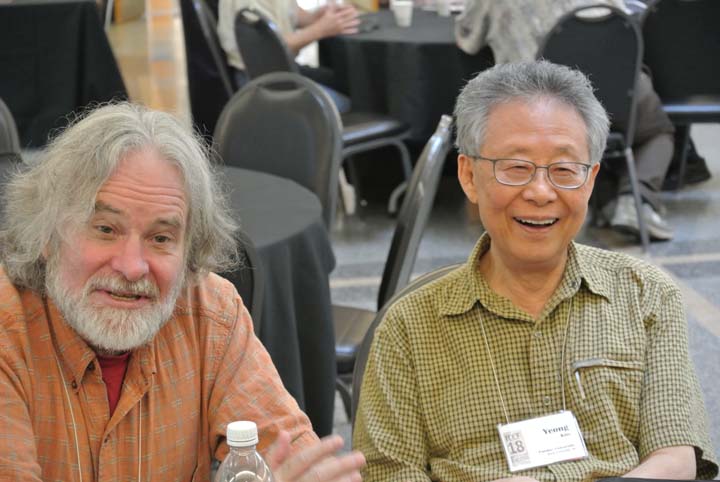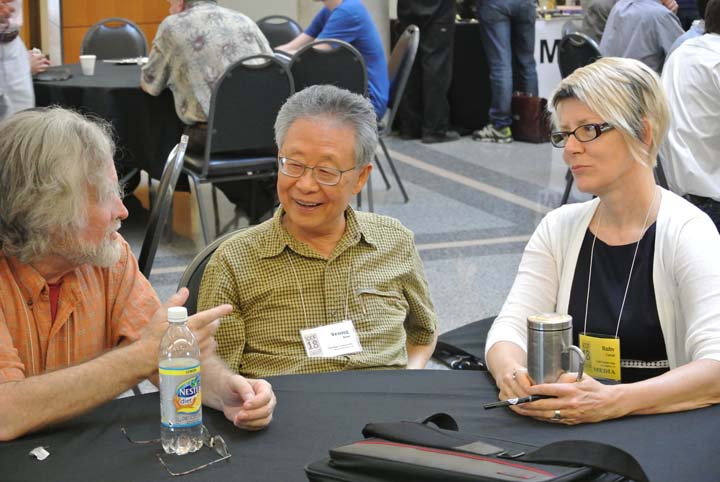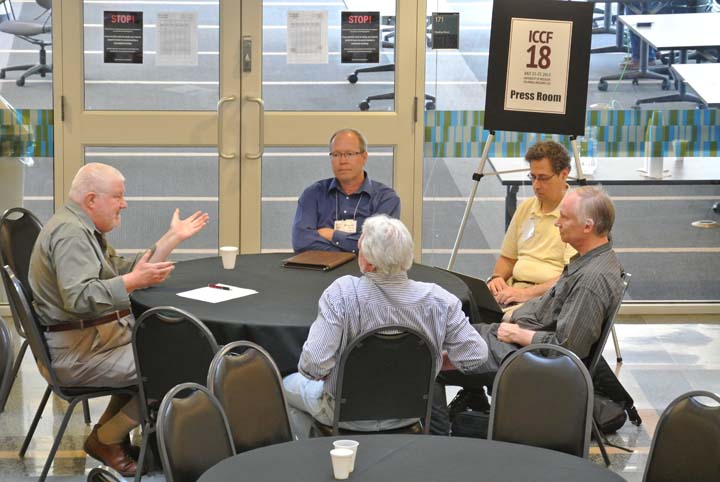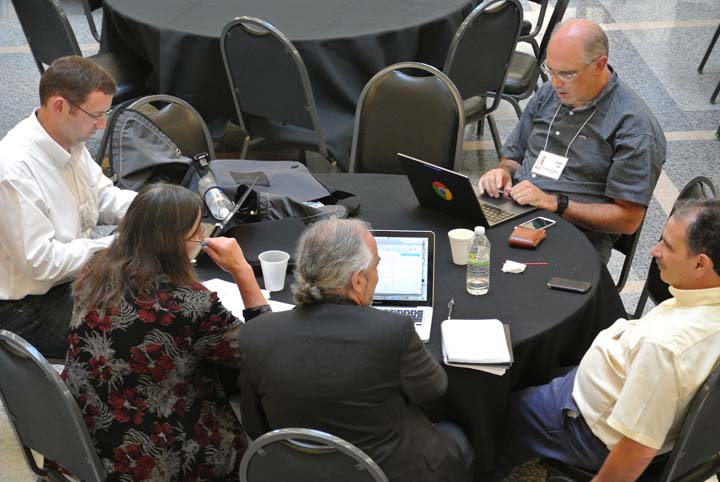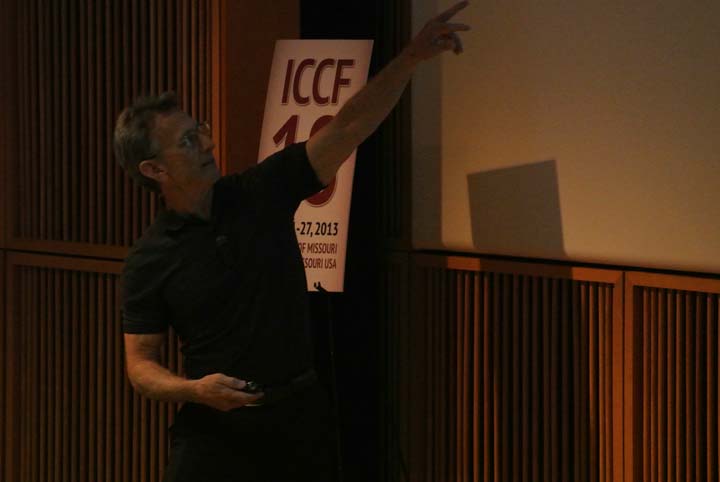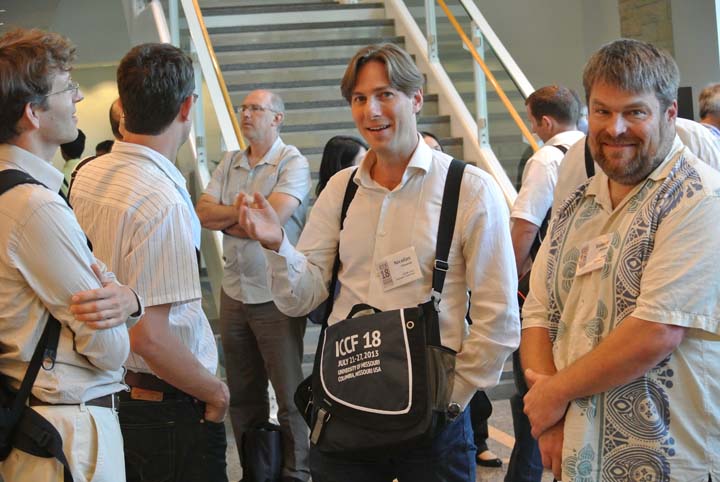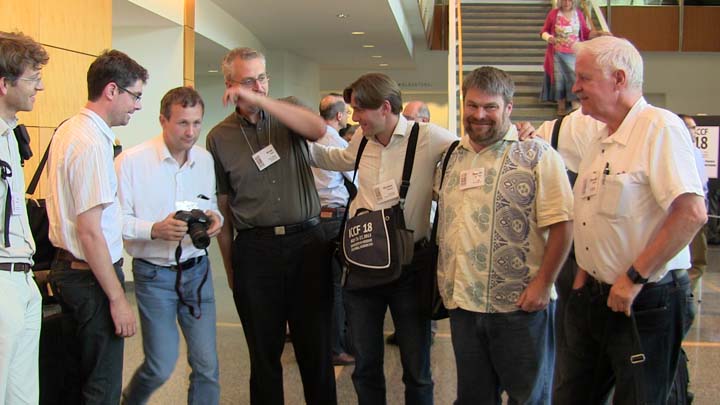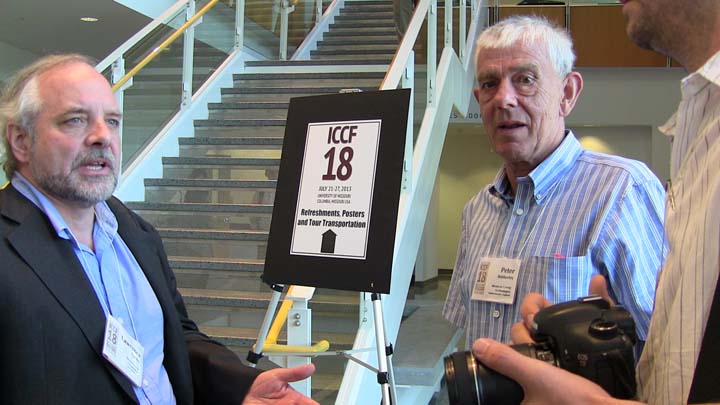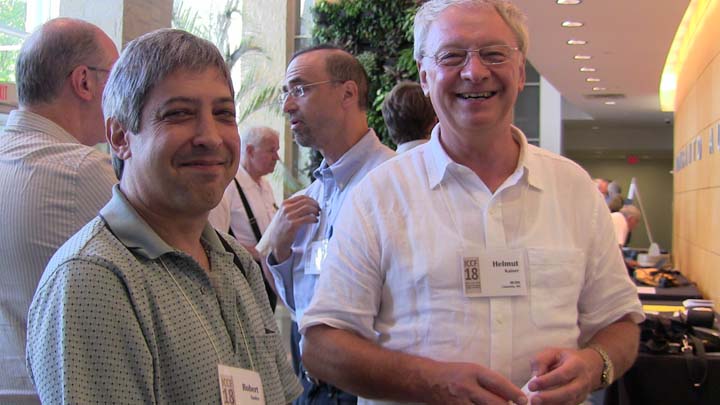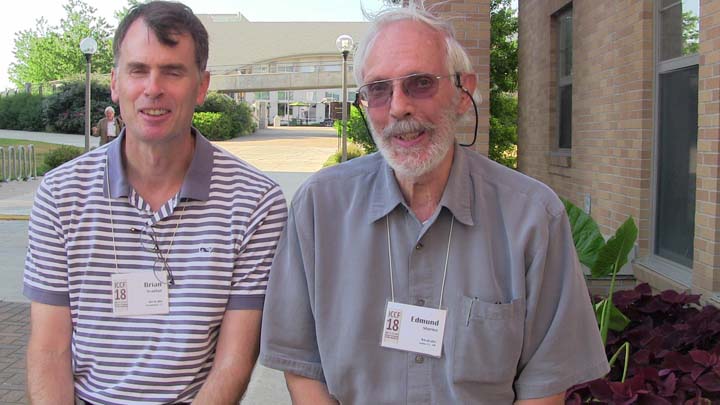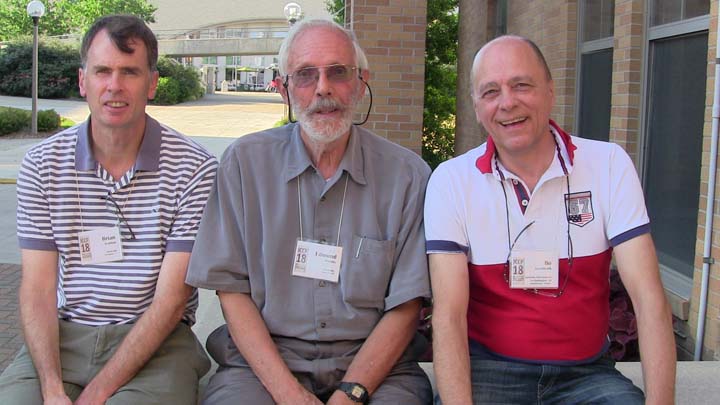
ICCF-18 Day 5: Presentations and Awards

The last full day of ICCF-18’s Blizzard in July!

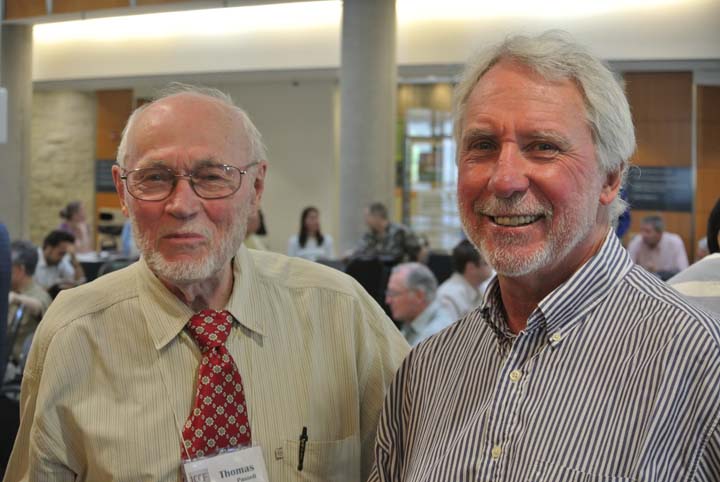
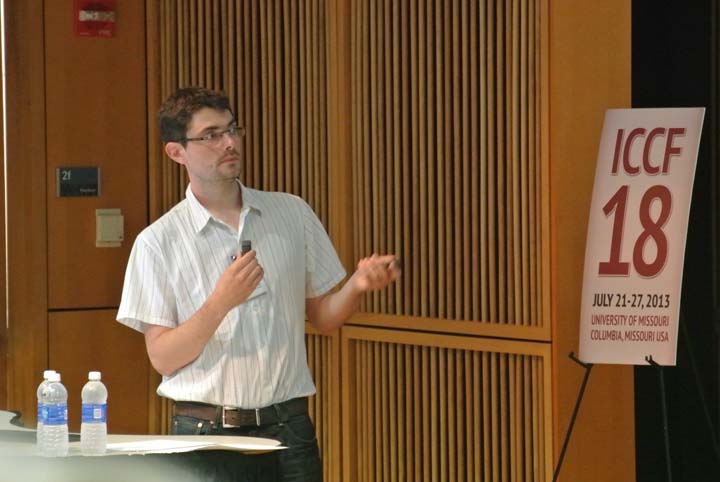
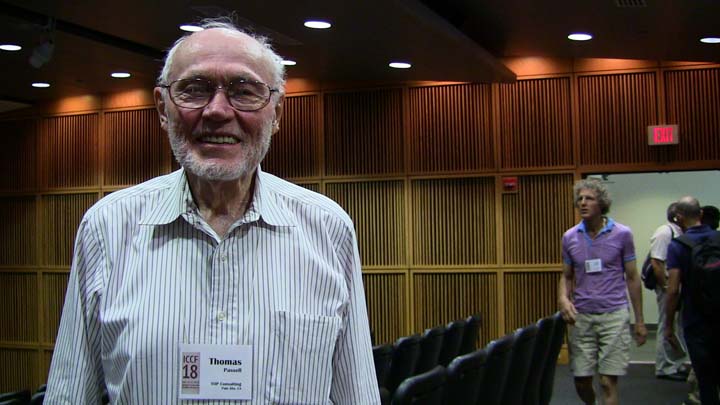
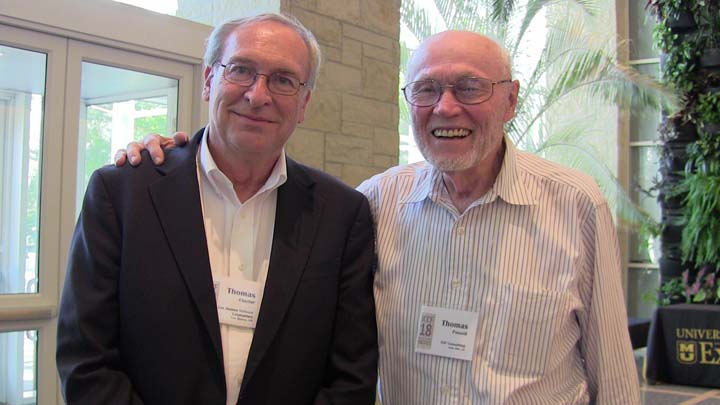
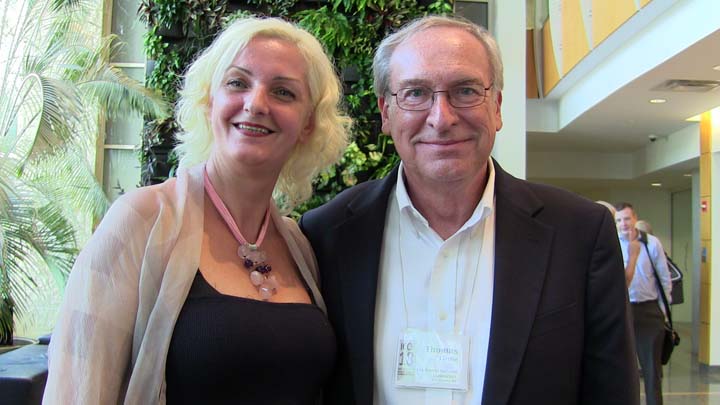
ICCF-18aThomas Passell presented Evidence for Oppenheimer-Phillips Reactions in Deuterated Palladium and Titanium, in this case, about deuteron stripping reactions. Passell was at the Electric Power Research Institute (EPRI) when the announcement came out in 1989, and recommended funding for SRI International to research the phenomenon. EPRI was confused by the rushed 1989 DoE report concluding there was nothing to the Fleischmann-Pons Effect (FPE). When the Bhabha Atomic Research (BARC) published their results of multiple tests by 12 groups showing nuclear effects, EPRI then proceeded with funding, and continued for years.

He claims that deuterons must prefer to react with stationary atoms in the metal host, rather than other moving deuterons, and apparently, “109 and 88 are the magic numbers” for Passell.

A series of theoretical lectures followed.
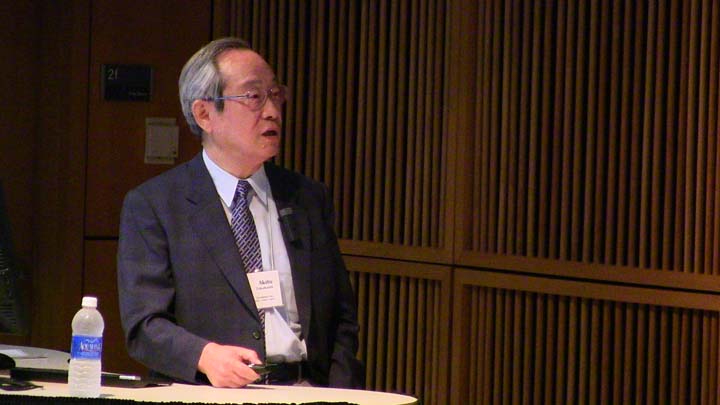
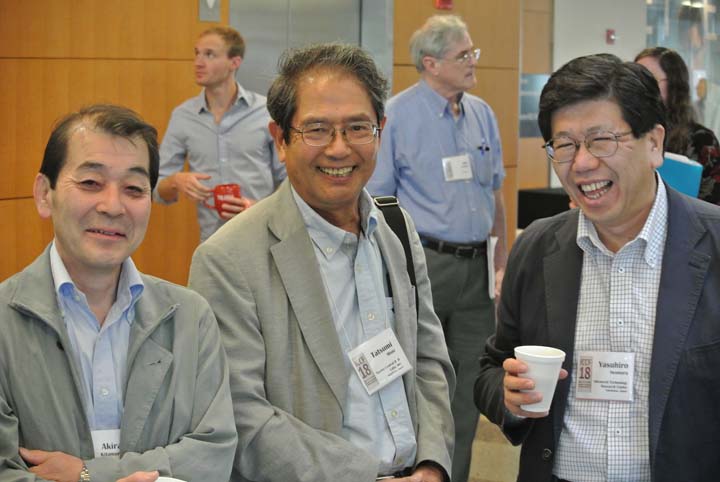
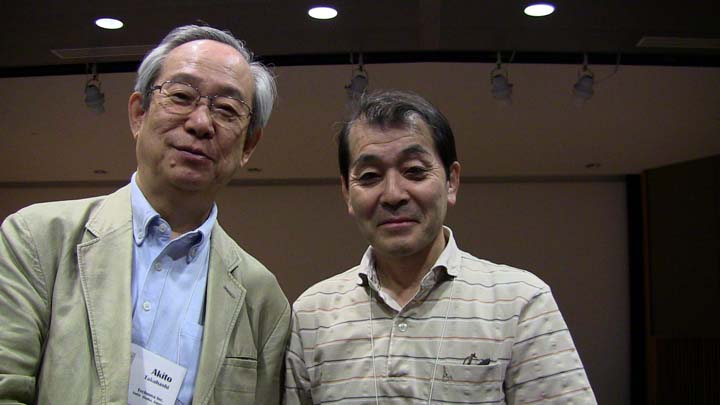
ICCF-18bAkito Takahashi was first with Nuclear Products of Cold Fusion by TSC Theory, work sponsored by Technova, Inc.

He asked first why there is so little radiation from cold fusion? He then compared experimental claims with the predictions of his TSC model.

24 +/-1 MeV/He4 heat, weak alpha peaks, and weak neutrons – all seen in Pd-D systems – were close to what his model predicted. Heat with no neutrons or gammas was close to what he expected theoretically in Ni-H systems. The lack of nuclear ash data is an unknown for this comparison, though.

Takahashi sees three distinct states, an initial state where a unique structure forms, an intermediate virtual state, and a final state interaction. The TSC is the unique formation of a Tetrahedral Symmetric Cluster of four deuterons, which then fuse to Be8 before fissioning to alpha particles.

Takahashi indicated that his TSC model could explain Alexander Karabut‘s data, the very same that Peter Hagelstein explained yesterday with his new idea.
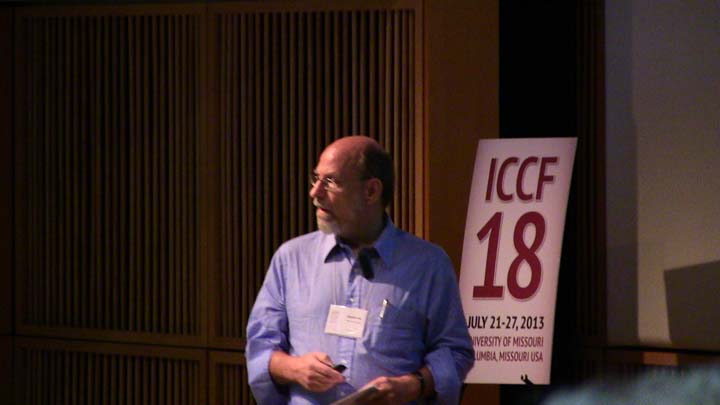
ICCF-18cAnother theoretical model was presented by Andrew Meulenberg with Composite Model for LENR in Linear Defects of a Lattice. Meulenberg summoned Schwinger’s model to begin, acknowledging Edmund Storms’ new model, which has inspired to Meulenberg to think along new lines.

Julian Schwinger spoke about a correlated phonon-induced motion of a D sub-lattice. How does phonon emission alter hydron motion? An increased number of phonons implies more amplitude of motion, and high phonon emission gives local concentration above the norn.

But how do you overcome the D-D Coulomb barrier? Sinha’s model of 1999 speculated that pair up bound electrons, allowing D+ and D- to attract. Electron pairing is well-known phenomenon and pairing in an s-orbit (at multi-eV levels) is stable. M noted that this doesn’t work inside the lattice, but a linear defect allows it.

Linear defects also allow phonons to bring deuterons closer together. Linear defects allow hydrogen ground state to drop deeper down, become important.

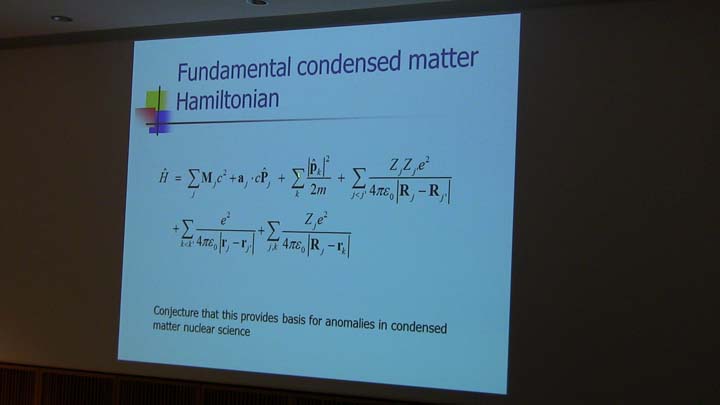
Meulenberg showed Sinha’s Hamiltonian, somewhat similar to Hagelstein’s yesterday.
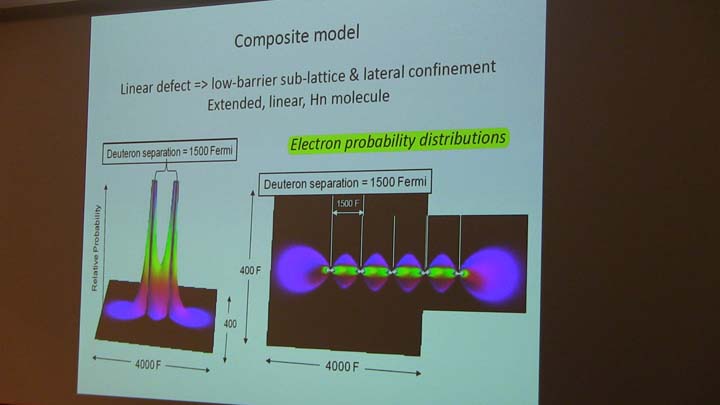
ICCF-18dIf deuteron separation is at 1500 Fermi, dimensions are shrinking to a 1-d situation, and the electron spends more time in between. High electron density can be maintained with a chain of hydrons, forming kilovolt electron wells, building up enough negative charge, creating a way around the Coulomb barrier.

Variable lattice space allow linear space to bring multiple H or D, giving “alot to play with.”

Says Muelenberg, “Different models for CF are converging to a coherent picture; fitting the data without violating any physics and chemistry principles.”

Storms commented during M’s question period, thanking him for putting his idea into context and providing the vocabulary of physics. He then quipped to all his colleagues, “I don’t care if you believe my theory or not, just don’t believe anybody else!”
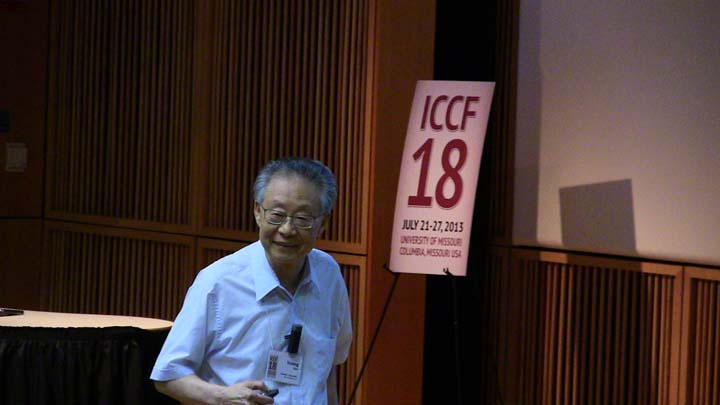
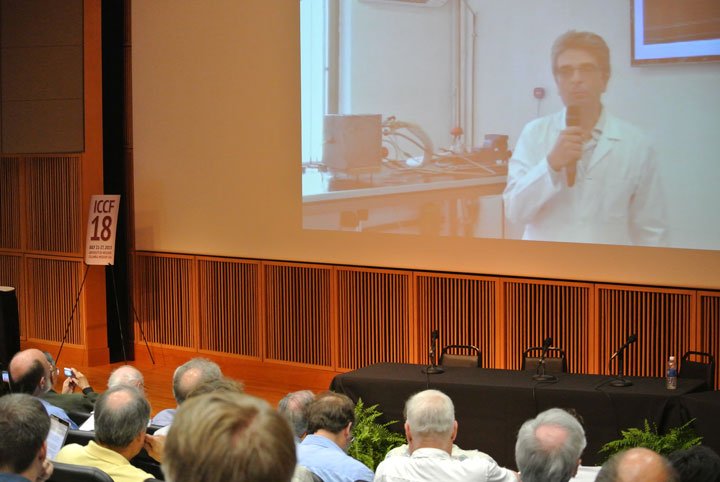
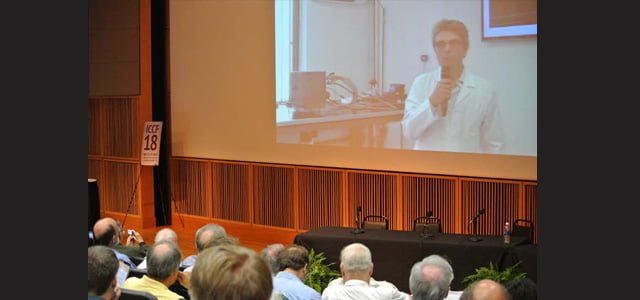
ICCF-18gTheoretical Analysis and Reaction Mechanisms for Experimental Results of Hydrogen-Nickel Systems presented by Yeong Kim was anticipated because of his recent collaboration with Defkalion Green Technologies, who beamed in a video of their demonstration of the R-5 reactor in Milan on Tuesday.

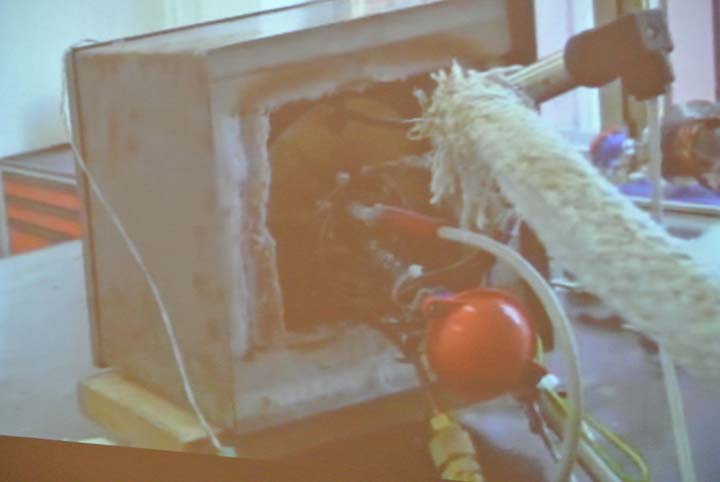
The Hyperion reactor contains a core of nickel metal foam. Heating the system to 180 C – 849 C, the Hyperion is then triggered, after which the magnetic field rose 0.6 to 1.6 Tesla.

Kim says, “This indicates that LENRs are producing very strong electric fields E, currents I, and magnetic fields B.”

ICCF-18fKim reported Defkalion tests produced excess heat only with the even isotopes of Ni (58, 60, 62, and 64), whereas odd isotopes do not produce excess heat (61).

No gammas outside of 50 keV to 300 keV were detected from the Hyperion.

Graphs were shown of an excess heat run, and a control run, where the data showed the power can be cut-off at will, revealing the ability to control the reaction.

Kim then began to describe his theoretical explanation of the data. He speculated that in the Fleischmann-Pons Effect (FPE), two deuterons making a Helium-4 require a symmetric release of energy, to conserve total momentum.

For two-particles exiting the reaction, his model shows lower probability.

“The problem is solved”, says Kim, and he is willing to talk to other theorists to help convince them.

He then described Boson Cluster-State Nuclear Fusion (BCSNF) generalized to include Hydrogen-Metal Systems. While there are still some unknowns, namely the S-factor representing the nuclear force strength, and the probability of the Boson Cluster State (BCS), the predicted reaction rates can be compared with the experimental reaction rates.

Kim speculated that the magnetic fields generated by the triggering could provide magnetic alignments of Nickel atoms, and these could provide localized magnetic trap (LMT) potentials for Boson clusters on the surface of Ni powders, though these traps have short lifetimes.

It is Rydberg atoms that then form the BEC cluster state.

“H and Ni powders triggered by glow discharge created a magnetic field causing Rydberg states allowing nano-scale localized magnetic traps, allowing Hydrogen Boson Cluster States in the LMT on the Ni surfaces. Fusion between these elements create excess heat and locally produced glow discharges.”

Kim writes, “Transmutation reactions involving Ni isotopes may not be dominant reaction mechanism but could be part of much weaker secondary reaction.”

Kim believes that self-sustaining reactions could be improved by increasing the deuterium density, and this will be tested with Hyperion R-6 reactor with the on-line real-time mass spectrometer at Defkalion Lab.

1% of Defkalion revenue will be spent on basic scientific research. Moving forward, Defkalion will be cooperating with National Instruments, as well.

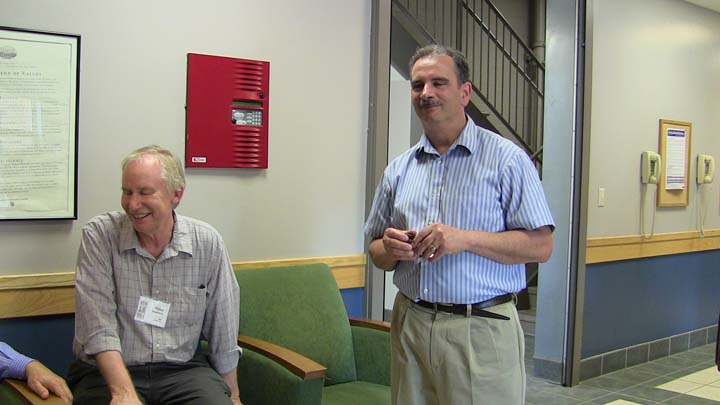
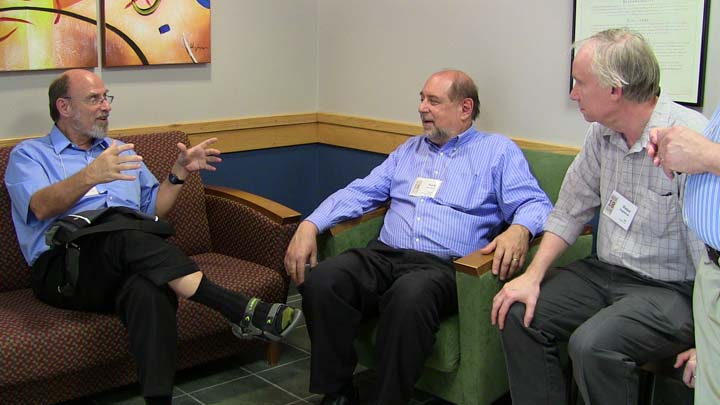
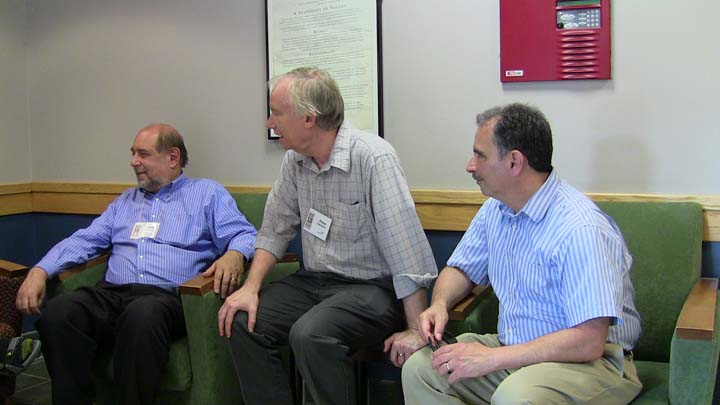
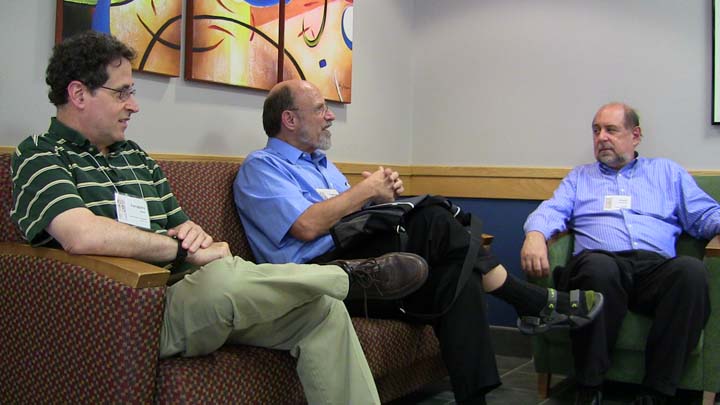
A short break allowed me to take a few photographs, and before I knew it, I heard Vladimir Vysotskii‘s voice echoing through the hall. I knew I was late for the Transmutations in Biological and Chemical Systems Panel

Jean-Paul Biberian, the Chair of the panel had opened up the session, handing it off to Vysotskii, who has done some stunning work in transmutation of elements in a heavy-water solution with added micro-organisms, whereby the culture “absorbs” the element, and then transmutes it to a new element. Vysotskii’s research is attempting to use this process to transmute radioactive Cesium-137 to a benign material, offering a path to ridding the planet of 100,000 tons of spent reactor fuel, a high-level radioactive waste, as well as the 1 million tons of highly active water in the world, and the 10 million tons of low-level radioactive waste.

The method is being tested at the Chernobyl region, and he will be working with engineers at the Fukushima plant to further test the application.
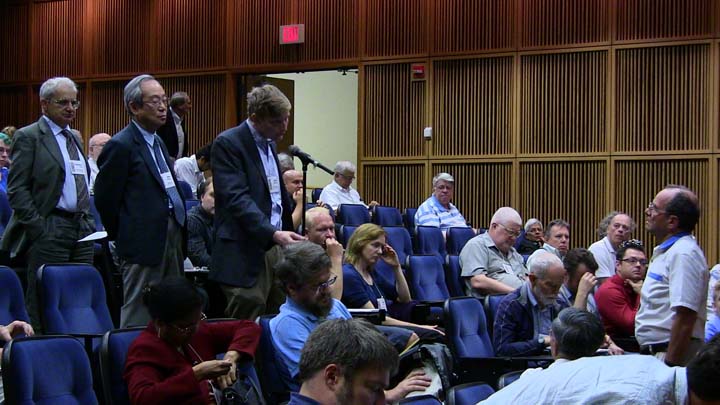
ICCF-18kVysotskii was clear to say that it was not just accelerated decay, but a reduction in the number of active atomic elements – a change of 24% in one run. He noted that in the Chernobyl region, there has been an abnormal accelerated decrease of environmental radioactivity, implying that it may be related to the transmutation of these elements by biological organisms.

Lectures were almost an hour behind schedule now. Vysotskii took a few queries, laughing that no matter what, “I have an answer to every question!”
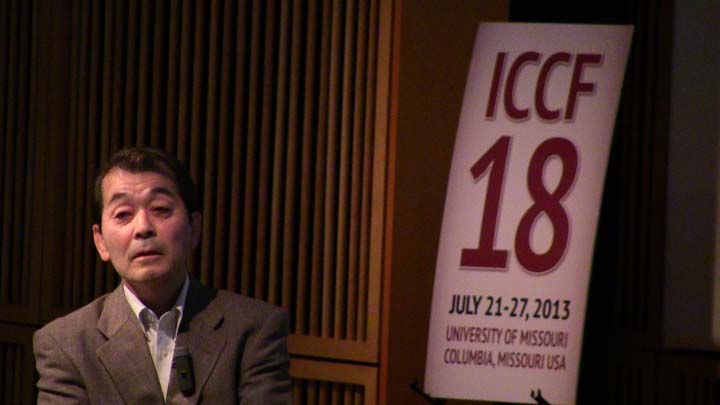
ICCF-18lAkira Kitamura, sponsored by Technova, Inc, began his talk on A Mass-Flow-Calorimetry System for Scaled-up Experiments on Anomalous Heat Evolution at Elevated Temperatures. He described a new cell that uses oil-mass-flow calorimetry and where coolant controls the temperature within 0.1 degree C. Neutron and gamma detectors are situated around the vacuum-chamber, sealed unit.
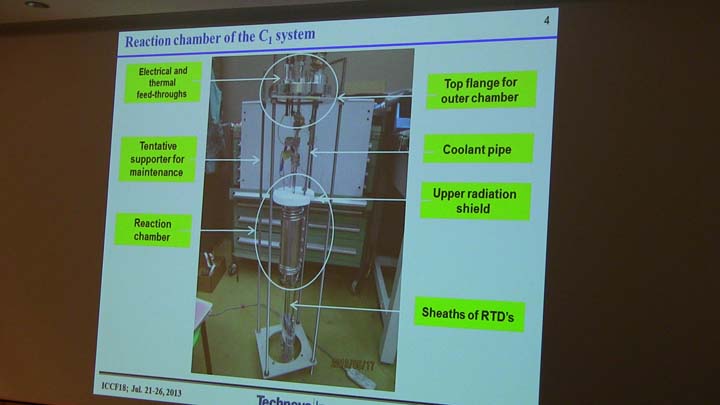
ICCF-18mAl2O3 powder was used as a control to calibrate. Preliminary runs used CNS/Al2O3 sample, where the Silica compound was made with a nickel and copper nano-compound containing 4 grams nickel mixed with 200 grams Al2O3 . Temperature output varies with heat input in both cases.

The coolant oil reached almost 300 degrees C at heater input of 231 W. There was long-term stability. The trial run excess heat appeared to be on the same order as that of the CNZ sample yielding about 2W/g-Ni.

The talk on ENEA Workshop Comments and Next Steps by Vittorio Violante was rescheduled due to time constraints.

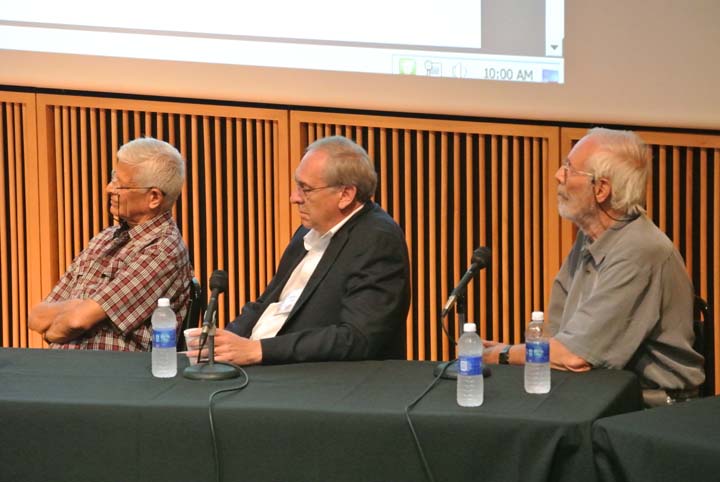
After lunch, it was time for the Neutron and Radiation Production Panel chaired by Xing Zhong Li. John Gahl, Frank Gordon, Graham Hubler, and Thomas Passell were panel members.
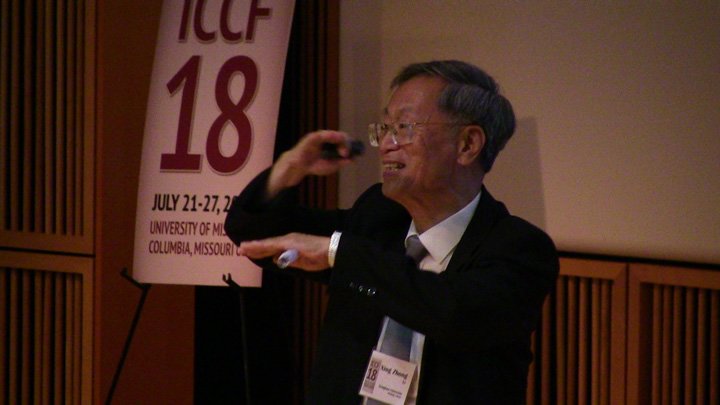
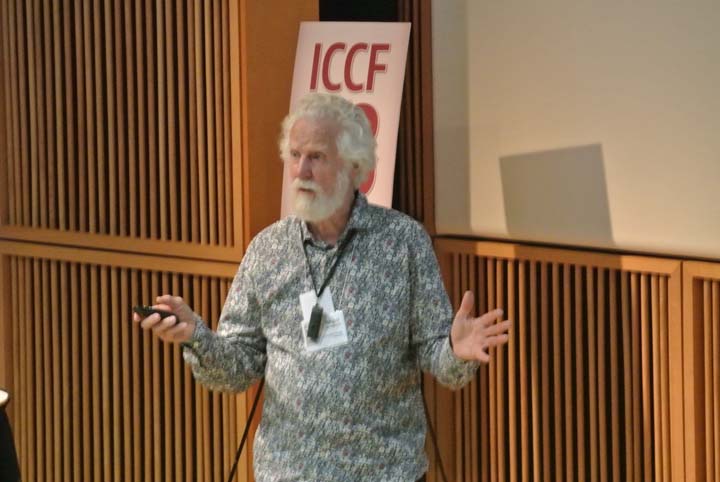
IMG_0276Xing Zhong Li spoke first about an early effort to detect neutrons from inside a neutrino detector in order to test the nuclear origin of the Fleischmann-Pons Effect (FPE), (a big mistake). In any rate, neutrino detectors are no long giant caverns of technology, but smaller 3x3x3 cubic meter units.

Li feels we should be testing cold fusion cells for neutrinos (using one of these smaller units), and asked the auditorium if anyone knows anyone who can help obtain one. And that was all he wanted to say.
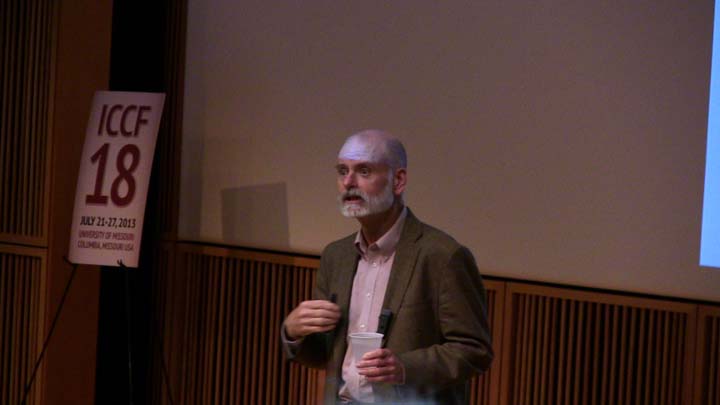
ICCF-18nJohn Gaul uses the MURR cyclotron to shoot 8.4 MeV =/- 2.3% deuterons at deuterium-loaded palladium foil, and found higher levels of Pd109 afterwards, as well as Pd-111 and Ag-111. The foils were hot, too. Experimental cross-sections were much larger than expected.

These were the results of only two experiments, and uncertainties like beam current on the target, will need further runs, which are planned.

ICCF-18oNew SKINR Director Graham Hubler presented Unusual Nuclear Isomer

180Tam

229Thm 7.6 eV nuclear excited state 5 hour lifetime

Hubler asks: Can isomers like this play a role in anomalous heat? Are there any more undiscovered low energy isomers? Nuclear structure theory is too inaccurate to predict others.

Low-energy nuclear work was dropped prior to 1940 until the early 50s. It is just now picking up again. He talked about the nuclear Halo effect, and enhanced low energy cross-sections for d,d and d,p which show anomalies, and 3-d fusion. I can’t say I understand this, so forgive me if I end there.

Hubler ended with, “Not all the nuclear structure is known, and there’s probably more to find.”
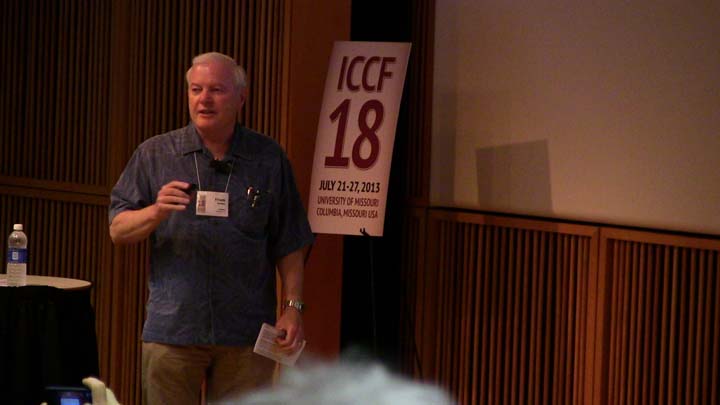
ICCF-18pFrank Gordon began his talk Bottom Line Up Front, and his bottom line? Radiation is produced in LENR experiments, but much, much lower than what is expected by conventional theory. He showed a graph summarizing just some of the reported radiation and how it was measured. His work in San Diego detected triple tracks in CR-39, indicating the presence of energetic (>9.6 MeV) neutrons, though seven orders of magnitude below the expected number expected by conventional theory and hot fusion. “Low flux rates suggest new/unidentified channels including possibly aneutronic reactions exist.”

He showed some pictures of those tracks next to DT neutrons, almost identical. “Experiments provide compelling evidence that nuclear reactions are occurring”, says Gordon, who no longer says “irrefutable evidence”, because “you can refute anything”, and apparently people who do so.

Tom Passell was back with Evidence for Deuteron Stripping in Metals That Absorb Hydrogen to show slides he hadn’t shown before. Passell has a hundred glow-discharge cells running 24-7 at 2 Watts each, all with different metallic cathodes. 40 kHz AC and low power, they live for a months at a time.

That was all I was able to get of this talk.

At 3PM, David French led a seminar on patents. He spoke of the general features a good patent should have to receive approval, focusing on the particulars relating to cold fusion. French is well-versed in the history of technology and uses many examples to illustrate complex issues using easy-to-understand analogies.

He took many questions from audience in rapid-fire, answering general and specific issues that the participants had brought up. French wants to help cold fusion scientists make better patents to get new energy technology officially approved.

ICCF-18aa

ICCF-18ad

Unfortunately, I must apologize for missing Hydrogen Embrittlement and Piezonuclear Reactions in Electrolysis Experiments by Alberto Carpinteri and Piezonuclear Fission Reactions Simulated by the Lattice Model by Diego Veneziano, but Eli got video, so we’ll catch it in the future.

ICCF-18agI also missed an impromptu Q&A with Peter Hagelstein, but luckily Eli got that on video, too.

It was a special session that re-iterated Hagelstein’s excitement with his new model. He answered all questions, explaining further how this model can fit the Karabut data, and appears to correlate with Vysotskii’s, too.

.

One thing I didn’t miss was the Banquet in the evening.

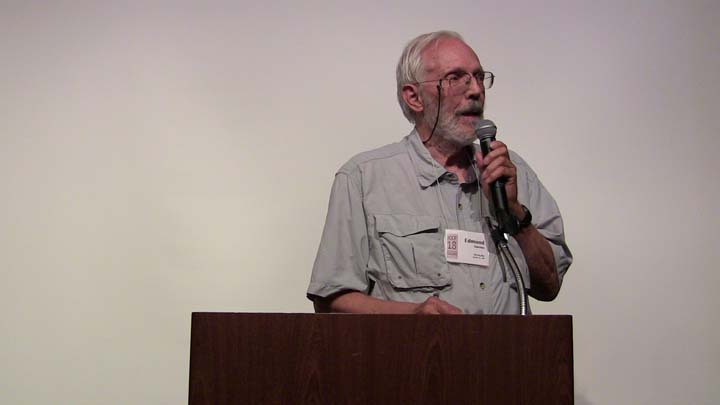
Edmund Storms opened the dinner discussing the ISCMNS, and how easy it was to join, before Jean-Paul Biberian took over as MC.
ICCF-1801ICCF-1802

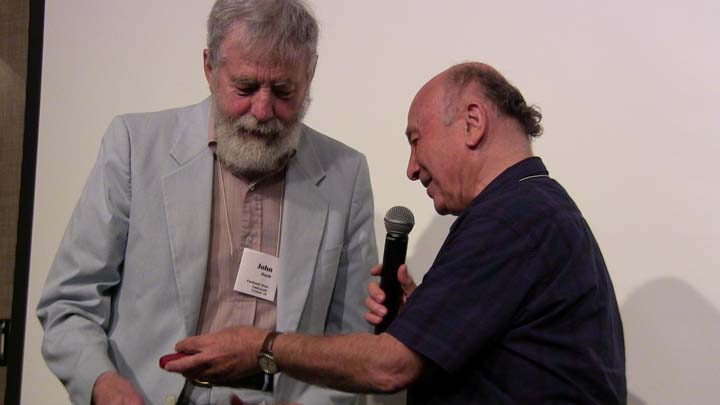
John Dash received the award for Best Poster.
ICCF-1803

Michael McKubre announced that ICCF-19 will be held in Venice, Italy March 15-21, 2015.
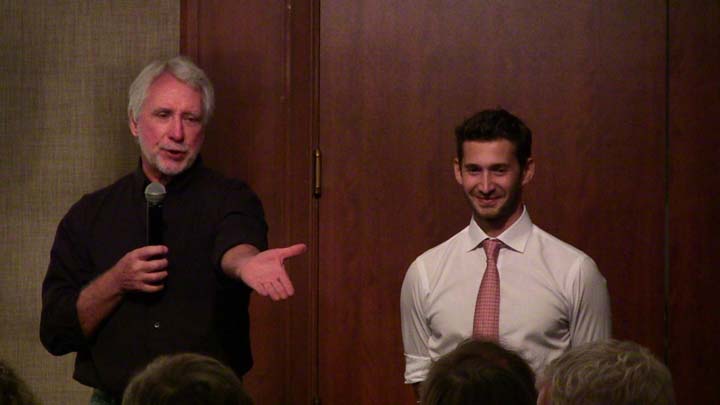
ICCF-1804

Frank Gordon announced the winner of the Preparata Metal.
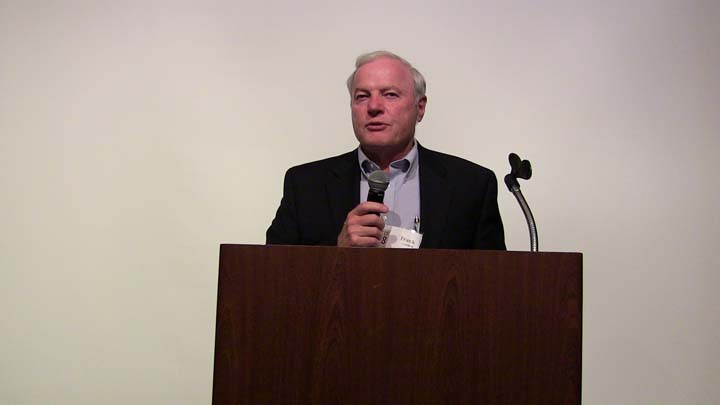
ICCF-1805

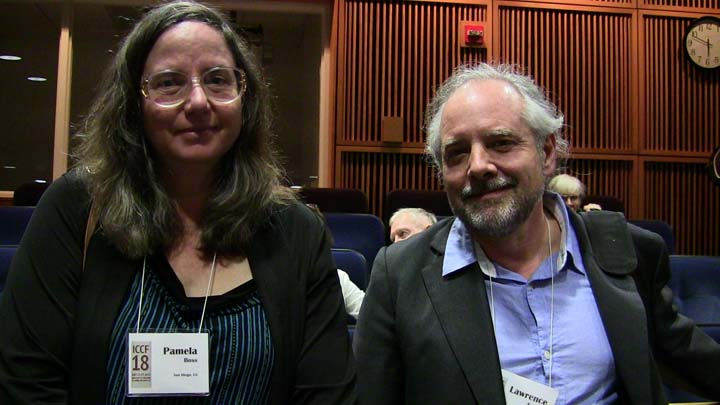
Winner Pam Mosier-Boss accepts the Preparata Metal for her outstanding achievements in science.
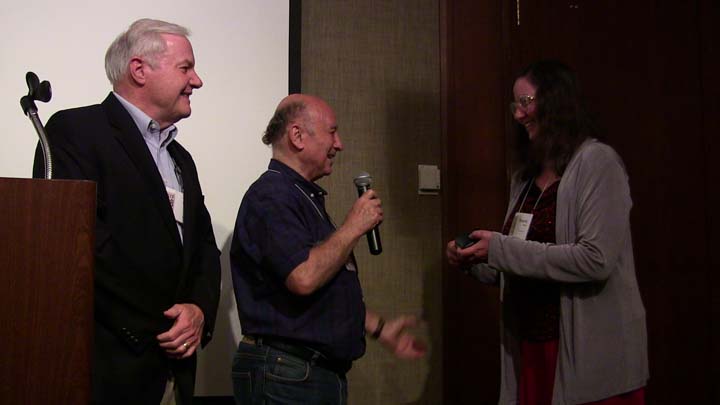
ICCF-1806

The evening continued with ragtime musicians setting a down-home tone, and the available scientists who attended the very first ICCF-1 meeting in Salt Lake City, Utah assembled for a photo. Edmund Storms was there, but somehow disappeared right before the photo was taken.
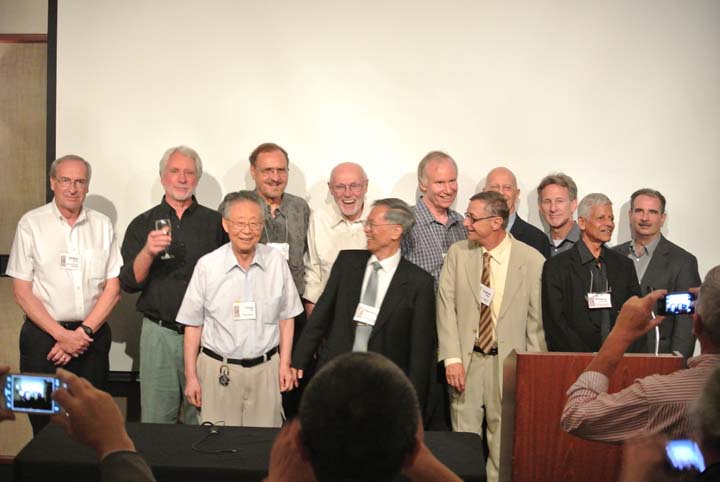
ICCF-18ay

There’s more coverage from the banquet to publish, but it’s been another 16 hour day, so for for now it’s time to say good night. Tomorrow is the final day which will be a half day with more panels and the closing session.

ASME International Conference Radioactive Waste Management – LENR

Google radioactive waste transmutation. See that the Quantum Rabbit Labs “LENR-Induced Transmutation of Nuclear Waste” Infinite Energy publication is the top on the list of 182,000! According to Google, more people are taking a look at the Quantum Rabbit Labs (pdf) than any other source for promising information on this important subject. Many of the people reviewing Quantum Rabbit are about to convene in Belgium.

The science of LENR induced transmutation of nuclear waste is entering the engineering phase. Mechanical engineers with knowledge of handling uranium wastes are needed in the LENR field. The meeting in Belgium is where they are found. You will also find leaders in the nuclear industry and their watchdog agencies in attendance.

The conference is organized by the American Society of Mechanical Engineers.

The ASME has 130,000 members in 150 countries and 147 Student Chapters. ASME has 30,000 student members.

ASME Strategic Priorities

Global Impact

  • ASME seeks to deliver locally relevant engineering resources to advance public safety and quality of life throughout the world.

  • ASME seeks to have a positive impact on the quality of life throughout the world by providing locally relevant standards, certification, technical information, networking, and advocacy for business, government, academia and practicing engineers.

Energy

  • ASME serves as an essential energy technology resource for business, government, academia, practicing engineers and the general public and as a leading energy policy advocate for balanced energy policies in the U.S. and other areas of the world.

Workforce Development

  • ASME is committed to fostering a broader, more competent, and more diverse engineering workforce to improve retention in the profession over all career stages.

  • ASME aims to expand the capacity and effectiveness of the engineering workforce, promote the public good and increase public awareness of the value of the engineering profession.

THE ASME – ICEM2013 15th INTERNATIONAL CONFERENCE

ON ENVIRONMENTAL REMEDIATION AND RADIOACTIVE WASTE MANAGEMENT

  • ICEM  Promotes a broad global exchange of information on technologies, operations, management approaches, economics and public policies in the critical areas of environmental remediation and radioactive waste management. The conference provides a unique opportunity to foster cooperation among specialists from countries with mature environmental management programs and those from countries with emerging programs. Attendees include scientists, engineers, technology developers, equipment suppliers, government officials, utility representatives and owners of environmental problems.

  • ICEM2013  Is the fifteenth in a series of international conferences on environmental remediation and radioactive waste management organized by the ASME in cooperation with others. The first conference was held in Hong Kong in 1987, followed by Kyoto, Japan in 1989; Seoul, Korea, in 1991; Prague, Czech Republic, in 1993; Berlin, Germany, in 1995; Singapore in 1997; Nagoya, Japan in 1999; Bruges, Belgium in 2001 and 2007; Oxford, England in 2003; Glasgow, Scotland in 2005; Liverpool, UK in 2009; Tsukuba, Japan in 2010; and Reims, France in 2011. Over 30 countries generally participate.

Conference Schedule (link) or The Preliminary Program (pdf)

These folks are the fission nuclear reaction waste experts.

These are the engineers trying to figure out how to make U238 nuclear energy safe.

They are burdened with these troublesome, complex, and virtually impossible tasks: 

  • We need to deal with fuel rod production facilities, from mining to processing.

  • We need to plan to handle more and more spent radioactive fuel rods DAILY.

  • We need to make sure that elements within these rods or processing facilities are not stolen.

  • We need to engineer methods to store extremely reactive wastes in ways that contain it: dry cask, glass, Yucca Mt, salt caverns… etc.

  • We are responsible for this containment for hundreds and hundreds of generations.

  • We need to design safe methods for decomissioning reactors and facilities.

  • We need engineer methods to clean up catastrophic nuclear events.

  • Fukushima

  • Three Mile Island

  • Chernobyl

  • Navajo Nation

  • Hanover

  • etc. etc. etc.

LENR Transmutation of Nuclear Waste

A technology that transmutes problematic radioactive elements to benign elements is a blessing for these folks. A technology that transmutes radioactive waste while making energy is the breakthrough we have been waiting for. LENR transmutation of nuclear waste is that breakthrough technology. As these engineers enter the clean energy cold fusion LENR field, designing reactors similar to the Global Energy Corporation GeNie, the problems of the U238 industry will be remedied. The legacy of dirty nuclear power will begin to fade.

  • Their burden will be lifted.

  • My burden. Your burden as well.

  • Thank you Quantum Rabbit Labs for a solution openly shared.

  • LENR researchers are encouraged to attend the conference in Belgium.

  • I hope their next conference will be held in the U.S.A.

Celebrate

  • The transmutation of nuclear wastes through LENR.

  • The work of Quantum Rabbit Labs.

  • Advanced LENR Cold Fusion engineering.

  • SPAWAR LENR offering transmutation technology.

  • The inexpensive popularly known cold fusion LENR GeNie Reactor.

  • The end of dirty U238 nuclear energy.

Related Posts See Navy LENR Patent Granted – Transmutes Nuclear Waste

International and National lobby groups

Promoting this solution are encouraged

Alights

The nest instinct through

True imaginings delight

Leads to what’s right


Color the lining new

Tufts soft and light

Bits shiny bright


Into completion it grew

Winged creatures alight

Home for the night

Alights

1. To come down and settle, as after flight.

2. To come by chance: alight on a happy solution.

3. To dismount from a horse or vehicle.

Word Origin & History

Alight:

“On Fire” Early 15c., apparently from M.E. aliht , pp. of alihton O.E. on-lihtan

“To Light Up” also “To Shine Upon”

From Old English

ālīhtan : ā- , intensive pref. + līhtan , to relieve of a burden, from līht , light

“To relieve an animal mount of weight” or to “Relieve a burden from another”

ICCF-18 Day 4: Presentations and Behind the Scenes

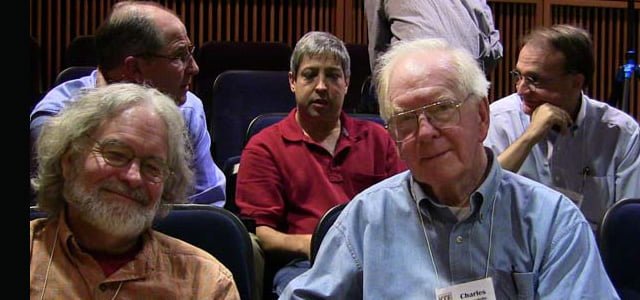
Photo: Front row Abd ul-Rahman Lomax (L) and Charles Beaudette (R) author of Excess Heat: Why Cold Fusion Prevailed.

My apologies for no write-up of yesterday’s events. So much going on here in Columbia! I went to the tour of the Sidney Kimmel Institute for Nuclear Renaissance, and got back late, missing some key lectures (though the tour was tremendous).

Watching Defkalion at ICCF-18
Yesterday, the Defkalion demo was piped in on video, and the timing was somewhat off, as all the lectures here ran late, and it’s hard to stop a scientist on a roll. Alot of people missed the video stream entirely, as they were conferring together on scientific issues, or on one of the several pre-arranged tours.

The last part of the demo didn’t happen, as it was 1AM in Milan, and the Defkalion team was beat from flying from Vancouver, practically staying awake for two days, relayed Michael Melich, so he just announced the communique from Defkalion about the input of somewhere around 1.9 kilowatts, the output roughly 5.2 kilowatts, giving a COP somewhere around 2.5.

Good numbers, though the demo itself was somewhat anti-climactic, due to the time-shifts, late arrival of ICCF to watch, etc. I didn’t notice alot of discussion from scientists here about the demo, though I’m sure opinions were expressed in private.

For the most part, scientists in the CMNS community are not impressed by video, they want data. They want to be able to go and make measurements of key quantities, and only then will they accept any claim, not just from Defkalion, but any entity engaged in product development.

Nevertheless, the feeling was hopeful that all of these commercial ventures would be successful, as success for one, means success for the community. All will benefit when this technology is finally born unto the world.

Industry is here, looking around, and trying to catch up on the latest developments. Several participants in the conference are here at the behest of their employer tasked with writing reports on the field in order to determine whether or not they should get into the area.

Back to the Lectures

ICCF-1801Wednesday morning started with Jirohta Kasagi who presented research on low-energy deuteron beam experiments.

He talked about electron screening and the effect that allows deuterium atoms to get closer together.

.

ICCF-1802

ICCF-1803ICCF-18 host University of Missouri scientist Peter Pfeifer is working from a Department of Energy grant on hydrogen storage in materials, currently using carbon nanotubes. Pfeifer is also associated with the Sidney Kimmel Institute of Nuclear Renaissance (SKINR). He showed data that boron-doped carbon film increases the density of adsorbed hydrogen.

They haven’t seen any excess heat from these high-surface-area carbon films during adsorption, but they are just beginning to experiment. They are also now loading hydrogen into palladium, showing data of 80% loading. They will continue to load the “SKINR palladium” beyond this and they expect to see anomalous heat generated at those levels.

Hanging out during break.

ICCF-1806

ICCF-1808

ICCF-1809

ICCF-1810

ICCF-1811

ICCF-1812

ICCF-1813

ICCF-1814

ICCF-1815

ICCF-1817

ICCF-1836

ICCF-1837

ICCF-1818The ENEA Workshop featured several researchers highlighting the current work by the Italian agency. Research programs at ENEA have international collaborations sponsorship from ENEA, the University of Missouri, the Naval Research Lab, and SRI International.

Vittorio Violante gave an overview of research that has continued for over two-decades, and which has cooperated with the agencies in the U.S. for sixteen years. He is an expert in the materials science of palladium, and at one time, was “the only man in the world who could make palladium that worked”, according to Michael McKubre, who also presented during the two-hour workshop.

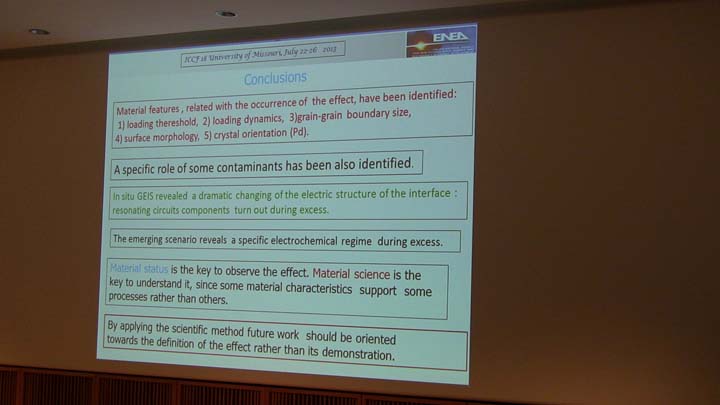
Electrochemical cells using palladium-deuterium elements are claimed to be clearly generating excess heat beyond chemical origin. The palladium needs loading in excess of 80% to produce excess heat.

Contaminants can affect the grain size and the grain boundary, which control stress and mass transfer in the material. Contaminants also can affect crystal orientation and surface morphology, which control kinetics and DL capacitance.

Samples that showed excess heat were revealed to have specific surface morphologies. Doping the palladium with platinum creates a much more varied surface, and these samples produced 50% excess power. Rhodium-doped palladium gave fast, high loading, and gave heat 50% excess over chemical reactions.

Main features associated with the excess heat effect are identified as:

1. loading threshold
2. loading dynamics,
3. grain boundary size,
4. surface morphology
5. crystal orientation (PD)

A specific role of some contaminants has also been identified.

ICCF-1805In short, for these Pd-D systems, materials science is the key to understand this reaction. The probability to succeed is directly proportional to the ability to produce the right material that will host the reaction.

Violante stressed that demonstrating the reality of this reaction has been done, and attention must now focus on defining the reaction itself – and this effort must involve young people!

Violante’s work at ENEA was sponsored in part by National Instruments.

ICCF-1820The Workshop continued with Emanuele Castagna discussing ENEA’s gas diffusion experiments using multi-layer membrane electrodes. Analysis of the membrane’s surface continued to focus on the importance of materials.

ENEA is also doing electrochemical deposition techniques, work sponsored in part by the Italian Ministry of Foreign Affairs.

ICCF-1821Director of SKINR Graham Hubler continued the ENEA Workshop by talking about how to prepare cathodes. Hubler recently retired from the NRL, and palladium metallurgy was a focus when Hubler was there. He asked if impurities could have been responsible for the Fleischmann-Pons Effect (FPE).

Older lots of palladium that appeared to produce substantial heat, likely had only ONE source – Engelhard, and these samples have different impurity profiles than current palladium lots. Older lots appear to have recycled Pd from catalytic converters as rhodium and platinum are present.

Current lots are much purer in these elements, but have zirconium, yttrium, and hafnium present.

The NRL made their own alloys for a while, and Hubler says that SKINR will now start making their own alloys. Systematic studies of samples that produce excess heat and do not produce heat need to be undertaken to determine differences.

ICCF-1807Michael McKubre continued by discussing some of the criteria for working with palladium-deuterium systems.

Flux is a huge component in generating excess heat. Initial loading of deuterium appears to respond to continued flux. However, high flux negates high loading in conventional electrochemistry. Yet the problem was solved by Irving Dardik‘s Superwave concept, and loading above 90% can be achieved accompanied by flux.

McKubre is now going back to earlier data to understand this “looping effect.” These systems are not DC (direct current), but they are coupled oscillators that “breathe”.

However, there are “an awful lot of things” that need to be controlled in these electrochemical systems, and much science to be done to learn how to do that.

ICCF-1827Robert Duncan closed the ENEA Workshop by noting the valuable international cooperation on this topic, and the intellectual basis that is forming.

He speculated on three classes of experiments:
i) cmns and nuclear science is well understood, and investors should be glad to invest in these;
ii) fracto-fusion, and phenomenon like this are more complex;
iii) the excess heat effect is not well-understood at all.

Nuclear physics cannot ignore the condensed matter around it, as is stated in textbooks, when the particles are not in a vacuum; the Mossbauer Effect shows this. A hyperfine interaction is another example.

In strongly interactive systems driven far from equilibrium, there is no conformity to statistically normal modes. New effects from lightning in thunderstorms interests Duncan as an example of this.

Shifting to sociological aspects of this science, Duncan is impressed with the leadership in Europe and India who are now moving to support research.

He mentioned that Thomas Jefferson was big into exploration of the unknown, and he started the University of Virginia to do just that. Duncan sees the University of Missouri as established in that same vain.

Duncan made a special point to thank ENEA for their cooperation and outstanding program in materials science that is advancing the understanding of CMNS.

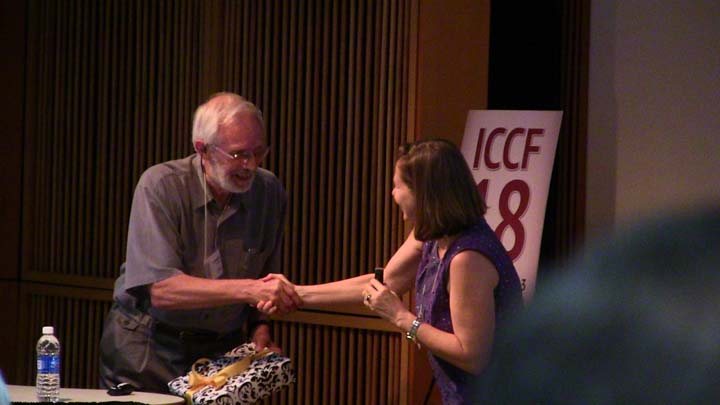
ICCF-1811At that point Edmund Storms received a gift for his achievements, part of the Distinguished Science Award he received yesterday.

He was called up to the podium somewhat abruptly as he was leaving the auditorium, and startled, he muttered “Uh oh, what did I do now?” However, it was a lovely box with a bow that he got.

.

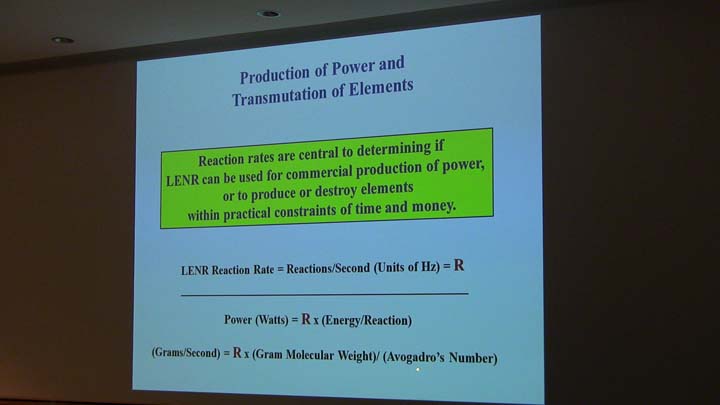
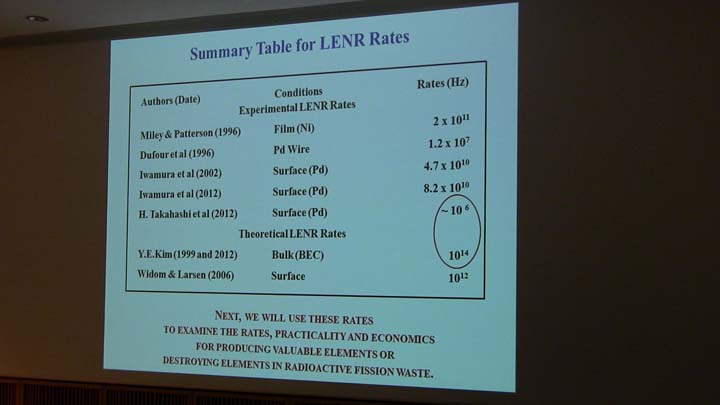
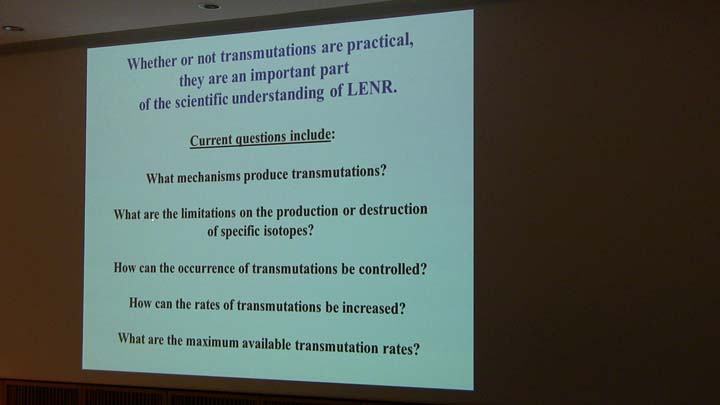
ICCF-1830After lunch, David J. Nagel speculated on a method to link reaction rates to transmutation products in order to support his analysis on whether or not LENR could effectively get rid of nuclear waste by transmutation, at the current level of development. He went through and listed some published experimental the theoretical reaction rates.

Here’s a selection of his slides:

ICCF-1814

ICCF-1823

ICCF-1831

His message: remediating dangerous radioactive waste to a benign material is one of the possible applications of LENT. To do this effectively, there needs to be much higher rates of transmutation than the maximum of what is reported now.

Thomas Barnard ICCF-1831 of Coolescence talked about the High Energy D2 Bond from Feynmann’s Integral Wave Equation.

He seemed to consider a different configuration of the electron bonded in molecular deuterium, a geometry that allows Coulomb barrier penetration, and the Three Miracles.

This was pretty much over my head, so forgive me if I skip that description.

ICCF-1832Simulation of the nuclear Transmutation Effects in LENR was the subject of Norman Cook‘s presentation. Cook indicated that the nucleus of an atom has a lattice-like substructure. Apparently, Andrea Rossi is familiar with Cook’s work saying, “My work has gone well thanks to your book” referring to Models of the Atomic Nucleus. Rossi has his lab personnel read that book, too, says Cook.

Moving to transmutations, he looked at the finite number of hot spots on a cathode surface, and assumed that there was less palladium after the reaction, than before. Then, he showed Tadahiko Mizuno‘s data showing both positive and negative changes in palladium isotopes near those hotspots. Cook was able to simulate that strange data, suggesting that all isotopes of palladium are involved in the reaction.

Doing the same thing for Mizuno’s nickel data, it was found that Nickel 61 does not change in the depletion analysis, indicating the Mizuno and Defkalion’s mono-isotopic experiments are related.

Cook concludes saying don’t just look at depletion of isotopes, but look at the addition of isotopes, too.

ICCF-1833Peter Hagelstein was up next with his talk Lattice-Induced Nuclear Excitation and Coherent Energy Exchange in the Karabut Experiment.

He started out saying, “I’ve had some luck lately, and I’d like to share that with you”, and boy was he beaming.

Hagelstein asks, “Can we up convert from vibrations to nuclear excitation?” To begin to answer, minimize the energy transferred (easier to transfer smaller amounts) and start from a stable nuclear ground state.

He tested this idea using a TeraHertz vibrational source and hit Mercury Hg201 with a directional beam.

Hagelstein remembered that Alexander Karabut showed up at ICCF10 reporting collimated x-rays from his cell experiments. Hagelstein sees diffuse emissions, dependent on voltage, from Karabut’s experiments, as well as collimated beam, associated with super-radiant emission dynamics.

He sees this experimental as an example of vibrational energy converting to nuclear energy. He’s struggled to model this particular experiment since 2012, and after several failures, feels confident he has a model that will work for all the reactions from different systems, and has successfully validated the idea on Karabut’s data.
.
Here it is — Tah Dah!

ICCF-1833

I believe he said that he could take this new model, and derive his old lossy spin model from it (got to check that).

With this model, he can solve the constraints, and obtain self-consistent solutions. More importantly, there is agreement between maximum observed x-ray energy and maximum from model.

ICCF-1823Hagelstein was clearly pleased with the achievement, after 300 previous theoretical attempts “buried in my backyard”, and it was nice to see him smiling. Who wouldn’t be happy, after all this time?

He handed the remainder of his time to Vladimir Vysotskii, whose poster upstairs at the conference discussed collimated x-rays, and gave Hagelstein some confirmation that this model was useful for these experiments.

Still, there remains work to do as he tests it, one-by-one for the plethora of cold fusion effects.

A break ensued, and I was able to interview Michael McKubre, Jed Rothwell, and David French.

ICCF-1835

ICCF-1838

ICCF-1840Back in the auditorium at 6PM, Roger Stringham presented his talk on Conservation of Energy and Momentum, a Cavitation Heat Event.

He uses Megahertz frequencies to create a million cavitation bubbles per cycle, which then collapse, shooting jets that hit palladium foil, creating high heat events.

.

Experimental extrapolated SEM ejecta site survey count at a 1.6 MHz produces 1013 ejecta/second at mc2 gives 60 +/-50 Qx watts.

Calculation of 107 mc2 events per one MHz cycle is 1013 events per second equals 38 Qx watts.

ICCF-18416:30PM was the last talk for the day, and it featured local SKINR post-doc stepping in for John Gaul to present Cross Section Measurements of Deuteron-induced Reactions. This is research involving accelerated deuterons towards a target of multi-layer foils, often titanium and palladium.

This seems closer to hot fusion than cold fusion, but perhaps the data would be useful to the CMNS crew.

The long day of science ended; my brain full, and my mind spinning.

ICCF-1836

ICCF-1837

2013 Global Breakthrough Energy Conference this October

Press Release – Breakthrough Energy Movement Hosting Conference 10th-12th October, Boulder, Colorado, USA

The Global Breakthrough Energy Movement (BEM) is hosting a three day conference with 30 notable scientists, industry insiders, and creative thinkers. The BEM program integrates the science, implications, and future directions for the implementation of Free Energy solutions.

UoC-BoulderThis year’s conference will be held at the University of Colorado in Boulder, where we have reserved three conference rooms for presentations, one room to showcase movies related to BE technology, and another room to display technology and provide information about other organization related to this work. Technologies to be discussed include zero point, magnetic, hydro, plasma, and cold fusion LENR. Panel discussions will allow participants to formulate strategies for the sharing of research, rolling out prototypes, and funding the large scale manufacturing of BE products.

The public is demanding for decentralization of resources such as energy, medicine, food, water, media, and education. Conscious objectors from countries like Greece and Spain have launched public demonstrations in the millions who echo the sentiments of the global occupation movement.

Several speakers will be sharing resources for do-it-yourself BE projects in an open source format. The message of the BEM conference is balanced to empower participants with knowledge.

“I support The BEM Conference and its roster of many of my heroes.” —Foster Gamble, energy activist and producer of ‘Thrive’

For conference tickets and participation visit www.globalbem.com

Transmutation of Nuclear Waste – LENR SPAWAR Navy Patent

THE TRANSMUTATION OF NUCLEAR WASTE

The nuclear waste problem is totally unresolved. There are no sites, no containers and no places on earth which can safely contain radioactive waste materials. No container will outlive the radioactivity of its contents. Areas contaminated with radioactive waste are uninhabitable for the lifetime of their radioactive contents, which can amount to half a million years. Unless a process for transmuting radioactive wastes is developed, the best that we can hope for is above ground disposal sites managed by responsible people with valid monitoring systems. It is impossible to monitor radioactive waste that has been dumped into our rivers or the ocean, buried in the ground or shot into space.

What kind of legacy are we leaving our children and their children?

Is their hope?

INTRODUCTION

This article addresses nuclear waste contamination from ionizing radiation, the kind produced by nuclear plants, nuclear tests, medical procedures, food irradiators, facilities that sterilize via the use of radiation, and research facilities using radioactive isotopes.

There are at least 110 nuclear reactors in the United States. Currently, they generate 3,000 tons of nuclear waste each year. Well over 22,000 tons have already accumulated, according to a May 11, 1993 USA Today article on the nuclear waste crisis. Today (1997), this has increased to 34,000 tons. This waste would fill a football field nine feet deep.

This tonnage does not include low-level wastes – materials that come in contact with radioactive substances. These wastes, such as gloves, filters, tools and clothing, come from nuclear power plants, hospitals and research centers that use radioactive substances. There are 100,000 U.S. facilities that use these materials. They produce 1.6 million cubic feet of low-level wastes each year.

Describing the contamination of earth by radiation as “low-level ionizing radiation” is misleading and implies that it is insignificant. It’s not.

Low-level ionizing radiation means 5-15 rems (similar to a red) or about what we all get each year if we don’t work in a nuclear plant. Dr. John Gofman, a pioneer on the health effects of ionizing radiation, calls this the doubling dose, the dose required to double the cancer rate.

More worrisome is Dr. Abram Petkau’s observation that it takes only 700 millirads of protracted radiation (from external or internal sources) to Iyse (break) the cell membrane. By protracted, I mean over a period of time, instead of all at once. In the absence of antioxidant enzyme protection, such as superoxide dismutase and catalase, a mere 10-20 millirads were required to destroy the cell membrane. P.S., we’re all deficient in antioxidant enzymes because there’s much more radiation-induced free radical damage than nature intended, thanks to the nuclear industry.

There has been no viable solution to the nuclear waste disposal problem. It is the greatest of all disposal problems, and not just because of clean-up costs. Radioactive waste sites are virtually uninhabitable for the lifetime of the radioactive materials contained, which can amount to thousands of years. There are no containers which will last as long as the radioactive materials stored in them, thereby promising leakage of the radioactivity into the water, soil and air.

The U.S. government and the Department of Energy (DOE) are faced with enormous volumes of radioactive waste, with no solution of how to store them.

An April 8, 1992 article in The Arizona Republic reported the results of an eight-month study by the Environmental Protection Agency on radioactive sites in the United States. The EPA designated 45,361 locations, including factories and hospitals, with nuclear waste contamination ranging from slight to severe.

COSTS OF THE NUCLEAR INDUSTRY

Despite a one-half-trillion dollar subsidy to the nuclear power and weapons industry over the last 40 years, nuclear power is a dismal economic failure and a safety nightmare. Here are some examples to illustrate the severity of these problems, both financial and safety.

On July 4, 1990, the DOE estimated costs for nuclear cleanup to be $31 billion over the following five years. This figure represents a 50% increase over 1989 projections. In 1991, DOE revised this estimate to $100 billion.

During the last 10 years the nuclear industry and the federal government have spent $6 billion on a plan to store 77,000 metric tons of radioactive waste in tunnels bored into the granite bedrock of Yucca Mountain, Nevada. The San Jose Mercury News reported on July 14, 1992 that a June earthquake caused $ 1 million in damage to a Department of Energy building six miles from the proposed Yucca Mountain, Nevada Site. (The San Jose Mercury News reported on July 14, 1992 that a June earthquake caused $1 million in damage to a Department of Energy building six miles from the proposed Yucca Mountain site). DOE scientists were rattled to discover that the epicenter of the quake was 12 miles from the proposed dump site.

In 1991, mining experts reported that a deep underground salt chamber in the New Mexico desert designated for the first U.S. tests of permanent radioactive waste disposal would probably collapse years before the tests could be completed. The $800 million DOE nuclear- waste disposal project was already years behind schedule when this ominous proection was made (June 14, 1991, The Arizona Republic).

WHERE DOES THE WASTE GO?

Nuclear waste has been dumped into oceans, rivers and lakes, and into the ground. Leaking containers of radioactive wastes add to this on a daily basis, endangering the earth’s groundwater. There is no permanent storage site that is free from the hazards of radioactive waste.

The following examples are given to indicate the serious and unsolved nature of the nuclear waste crisis.

Port Granby, Canada dump site: Port Granby, east of Oshawa, Canada, is one of three landfills in the Port Hope area storing radioactive waste from a nearby uranium processing plant. Over 40 years, more than half-a-million tons of radioactive waste was buried in 122 14- foot pits in the Port Granby dump. Years of public outcry forced the closing of the dump in 1988. Despite efforts to capture the seepage, radioactive groundwater from this site makes its way down the bluffs, where the current carries it towards Toronto. A greater fear is the cliff sides that are eroding. One day, the bluffs will send chunks of the dump site crashing into the water. Currendy, anti-dump activists debate with nuclear officials over the perilous dump site, with no solution at hand. (New Magazine, Toronto, March 1993).

Russian Dumping: On September 2, 3, and 4, 1992, the Los Angeles Times reported on “The Soviets’ Deadly Nuclear Legacy”. From 1966 to 1991, the Russians dumped nuclear wastes into rivers, lakes and into the ocean. Russia’s deadly atomic legacy is just now coming to light in a report issued in March 1993 by Russian President Boris Yeltsin. From 1949 to 1956, nuclear waste from plutonium refining was dumped into the Techa River, even though radioactivity began showing up 1000 miles downstream in 1953. Today, gamma radiation on the river bank measures 100-times normal levels. Aware of the radioactivity in the Techa, Russian workers began dumping into Lake Karachai. Today, “to stand on its bank, even for a short time, would be deadly,” according to Mira Kosenko, M.D., of the Chelyabinsk Institute of Physics and Biology.

The Russians dumped at least 15 used nuclear reactors including six submarine units containing uranium fuel into the Kara Sea. According to Andrei Zolotkov, a radiation safety engineer, the entire hull section of the obsolete nuclear powered icebreaker V.1. was cut out with blowtorches and sunk. The irradiated mass measured 65 by 65 by 35 feet, or as high as a five-story building. The results of this are now evident. Officials at the Northern Division of the Polar Institute of Fish and Oceanography in Arkhangelsk report that thousands of seals are dying of cancer. This was caused by radioactive pollution of the seabed plus fallout from Russian nuclear tests on Novaya Zemyla, the archipelago where the seals live.

Rocky Flats Nuclear Weapons Plant, Colorado: On March 26,1992, Rockwell Intemational Corporation, operator of the Rocky Flats plant pleaded guilty to criminal violations of hazardous-waste laws and the illegal discharging of radioactive wastes into two streams that feed water supplies serving four Colorado Cities. The government fined Rockwell $20 million and selected EG&G Inc. as the new plant operator (Thursday, March 26, 1992, The Arizona Republic).

The Hanford crisis: A new EPA analysis revealed that Hanford workers dumped millions of gallons of radioactive waste into the ground. Some of the wastes were injected deep into the earth, while others were dumped into open trenches or ponds which were later covered with dirt. These wastes contain two long lived carcinogens, technetium 99 and iodine 129. Technetium 99 has a half-life of 212,000 years and iodine 129 a half-life of 16 million years. Because Hanford is located close to the Columbia River, radioactive isotopes continue to flow into the river.

In addition, storage tanks at Hanford are in danger of exploding due to continuous production of extremely reactive, labile products. This serious situation is described below.

CURRENT LEGAL METHODS OF NUCLEAR WASTE STORAGE

There are two storage methods.

The most common is to store the radioactive waste in wafer pools made of reinforced concrete six feet thick lined with stainless steel. The second method is to store the material in dry casks which are transported by rail, ,truck or barge to outdoor storage sites where they are placed on 3-foot reinforced concrete pads.

CURRENT DUMP SITES

The 1980 plan for waste storage has unraveled. In this plan, the federal government would be responsible for high-level waste and states would take responsibility for low-level wastes. States could build their own waste sites or form compacts with other states to share common repositories. However, states encountered massive opposition when possible locations were chosen. The problem is unsolved.

The only two current disposal sites, in Richland, Washington and Barnwell, South Carolina, are nearing capacity and will have to shut down. Wastes not allowed to go there are piling up in makeshift storage facilities across the United States. Currently, there are more than 100 makeshift sites in 41 states where nuclear waste is being stored in cooling pools. Many of these sites are in developing areas and some are near businesses, residential areas and schools.

The fight over dump sites continues. As of Tuesday, April 1997, the Senate voted (65-34) to establish a temporary central storage facility for the nation’s 33,000 tons of nuclear waste at Yucca Mountain, northwest of Las Vegas. President Clinton is expected to veto it. If he does, the question of what to do with nuclear garbage will remain unanswered.

Opponents emphasize the danger of transporting hazardous nuclear waste through populated areas by rail or highways and believe that a temporary site in Nevada will lead to a permanent facility there.

This temporary site would be above ground but there is a proposed permanent storage location underground in the same area. This proposal is fraught with controversy. The DOE says that four more years of study are needed before making a final decision. Why? An earthquake of 5.9 magnitude on the Richter scale occurred on June 29, 1992 just six miles from the proposed burial site. Since then, federal officials have had major problems convincing people that nothing can go wrong at their proposed nuclear dump sight. Senator Richard Bryan (Democrat Nevada) said of this quake, “Mother Nature delivered a wake-up call to America’s policy-makers. Placing … high-level radioactive nuclear waste in an active earthquake zone defies common sense.” (San Jose Mercury News, Tuesday, July 14, 1992).
Most people are unaware of how grim it is to have 33,000 tons of radioactive garbage which will take from 30 to 480,000 years to decay to a harmless substance. However, the government knows.

That’s why their policy says that radioactive waste must be stored at least 10,000 years, even though this is hardly realistic. Let me explain. The range of half-lives of these materials varies from 24 seconds to nearly 15.9 million years.

The half-life of a radioactive element is the time it takes it to decay to one-half of its mass. The whole lifetime of a radioactive element is its half-life times 20 years. This makes the situation grim. For example, the half-life of Strontium 90 is 28 years. Multiplying this by 20 gives you a life time of 560 years. For Plutonium 239 with its half-life of 24,000 years, has a whole-life of 20 X 24,000 or 480,000 years. Cesium 137 with its half-life of 30 years will hang around for 600 years.

“Do not be surprised if you learn that the nuclear industry makes billions of dollars by being a part of government’s policy of burial of nuclear wastes. It is not in their financial interest to try any other process. They are not idealists. ” Radha R. Roy, Ph.D. Professor Emeritus

WHAT’S WRONG WITH STORING NUCLEAR WASTE ABOVE THE GROUND?

Although above-ground storage has the advantage of access to being monitored, it is still not without unsolved dangers. Nuclear waste is highly unstable and reactive. For exarnple, at Hanford, Washington, radioactive wastes were stored in million-gallon tanks while awaiting a permanent (?) storage site (lots of Luck!). These tanks contain plutonium wastes and organic materials. Chemicals in the tanks break down, producing hydrogen gas, increasing pressure inside the tanks. This lays the conditions for an explosion, which would spread contaminants into the atmosphere, the land and the water, not to mention the people and the animals.

In 1957, similar waste storage tanks exploded at the Russian Mayak plutonium plant and contaminated hundreds of square miles in the southern Ural mountains. According to a Thursday, January 28, 1993 Washington Post article, this explosion released two million curies over a huge territory, leading to the resettlement of 10,700 people. This disaster caused thousands of casualties.

Now it is 1993. In April, several newspapers reported that yet another tank of radioactive waste exploded at a weapons plant in the secret Siberian city of Tomsk-7. This explosion contaminated 2,500 acres and exposed firefighters to dangerous levels of radiation. Tomsk-7 is believed to be about 12 miles outside Tomsk, a city of half-million people. Since Tomsk-7 is secret, it is not on ordinary maps (The Arizona Republic, April 7; The Washington Post, April 8, 14; The Register-Guard, Eugene, Oregon, April 7, 8, 1993).
WHAT’S WRONG WITH STORING NUCLEAR WASTE BELOW THE GROUND?

Only two problems: #1, there is no material that will outlast its radioactive contents; #2, radioactive wastes are so active that their contents continuously produce heat, hydrogen gas and other labile products. Who will monitor this for 10,000 years? How will the contents be stabilized to prevent explosions and leakage of radioactive waste into the groundwater? Who will pay the astronomical costs?

However, during the 1980’s burial became the official government policy, despite the objections of many scientists, and national organizations concerned about dangers to the environment.


The information in this article is plagarized from a dear and respected friend of mine. It was written a number of years ago. LightParty About the Roy Process (unrelated) the nuclear waste information is still pertinent here.

He is one of a concerned group of millionaires in Marin County, California who love and care about me.

I sent him this.

Hi Da Vid,

Sprout Amir from the Gorilla Choir here.

Yes there is hope.

Here is my recent series.

NAVY LENR Patent Granted – Transmutes Radioactive Waste

This U.S. Navy patent transmutes radioactive elements into less harmful elements through a benign “cold fusion” low energy nuclear reaction process. The patent was granted April 16, 2013 for a device and method that shortens the half-life of radioactive materials by increasing their rate of emissions. The process creates high pressure steam for the turbines eliminating the need for any refueling of existing nuclear reactors.

I noticed your earlier interest in this subject. It seems you follow everything.

lightparty.com Energy Transmutation Nuclear Waste

Your article was about the Roy Process. This is new, different, and more promising.

Anyways,

You could fly to Missouri now and attend the last few days, it ends July 27th. Talk to some of these cold fusion scientists. Form a company together. Buy a licence from the SPAWAR technology gateway. Together, (with this new info they have the know how and capability) you and the scientists could build a small “GeNie” type modular reactor that works (10 to 20 spent fuel rods transmuted in each).

Fits in a 40 foot shipping container. Send 50 or a 100 of them to every nuclear power plant in the world. Charge them for the steam. Charge them a fee for each fuel rod transmuted. Retain ownership of each “GeNie” type reactor.

Ruby Carat, my editor is covering the ICCF conference now. Please develop a Light Party funding group and send Cold Fusion Now a chunk. She needs a $10K infusion into the coffers of CFN.Org after utilizing her savings, leaving a high pay field (she holds many degrees), and traveling extensively to produce alot of quality videos and articles advocating this technology.

You know love, love, love, and more love. Sent your way… Always we pray.

Thank you for the loving works you do…. We love you!

Sprout Amir aka Greg Goble

I was in the presidents’ office of the Media Writers Guild Union last week, in San Francisco, showing my recent Navy LENR Patent Series and asking help with getting this news published in mainstream print.

I was told that this Navy patent granted transmuting radioactive waste is the scoop of the decade… It’s probably the scoop of the Century! Now the Guild is contacting writers, helping to fullfill my request.

ICCF-18 Day 3: PHOTOS!

Another jam-packed day of science and technology on Day 3 of the ICCF-18.

There were entrepreneurs giving tips on what VC’s look for in a company, there was the Defkalion demo beamed in from across the world, there was a tour of the Sidney Kimmel Institute for Nuclear Renaissance, lots of Martin Fleischmann Memorial Project technology…. and more!

The incredible talent at this conference is mind-blowing. The following photos from Day 3 hopefully capture the excitement in the air while profiling both the presenters and diverse attendees. Can you feel the vibe of history in the making???

ICCF-1804

Brian Josephson posted this video of Defkalion presenting, which the whole ICCF watched a bit of.

ICCF-1814

ICCF-1846

ICCF-1803

ICCF-1815

ICCF-1816

ICCF-1809

ICCF-1849

ICCF-1851

ICCF-1853

ICCF-1856

ICCF-1806

ICCF-1822

ICCF-1823

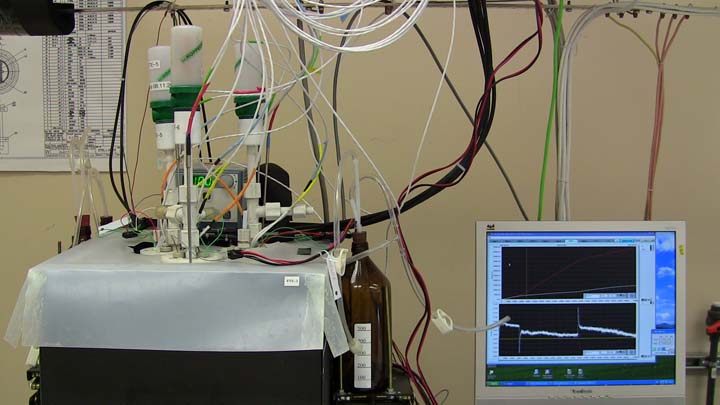
Cells at Sidney Kimmel Institute for Nuclear Renaissance
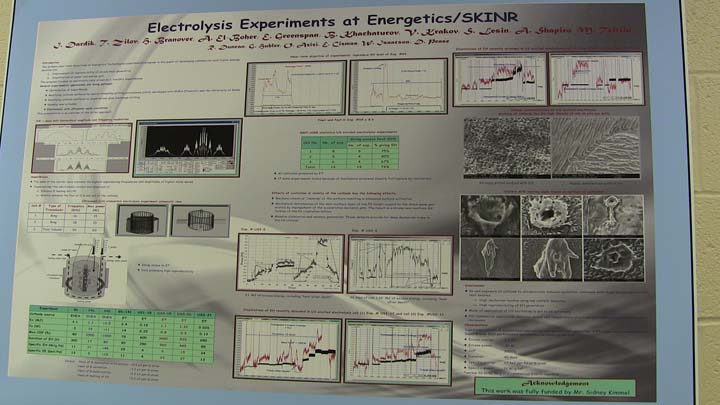
Post on the wall at SKINR lab.
Photo poster of cratered surface on wall at SKINR.

ICCF-1832

ICCF-1827

ICCF-1828

ICCF-1829

ICCF-1831

ICCF-1858

ICCF-1859

ICCF-1820

ICCF-1819

ICCF-1821

ICCF-1857

ICCF-1830

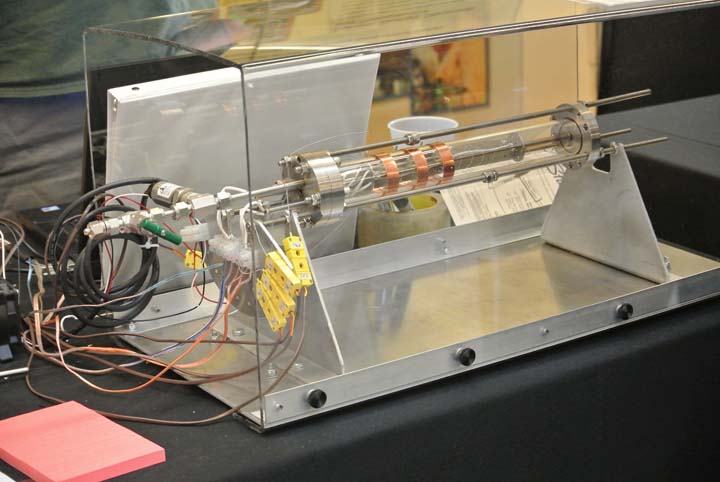
Congratulations MFMP who won the Entrepreneur Panel’s People’s Choice Award for their presentation yesterday!

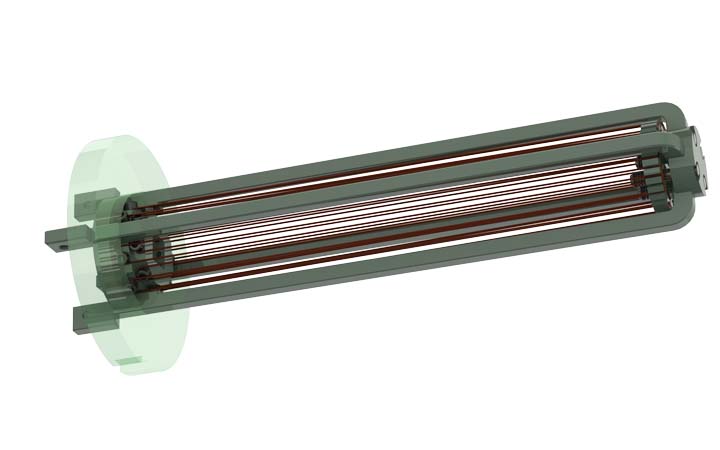
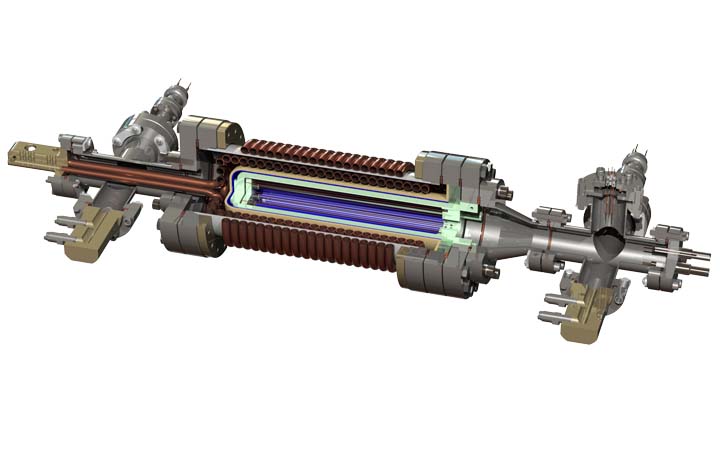
PLUS New Sgv3 Reactor design by Robert Ellefson of Martin Fleischmann Memorial Project.
Sgv3 Core

ICCF-1801

Sgv3 Cutaway
ICCF-1802

Sgv3 Rendering

ICCF-1803

ICCF-1862

ICCF-1863

ICCF-1864

ICCF-1861

ICCF-1866

ICCF-1868

ICCF-1869

ICCF-1872

ICCF-1874

ICCF-1875

ICCF-1876

ICCF-1878

ICCF-1880

ICCF-1882

ICCF-1885

ICCF-1884

ICCF-1886

ICCF-1890

ICCF-1889

ICCF-1891

Top