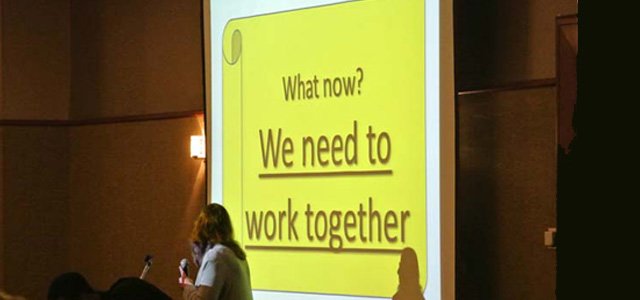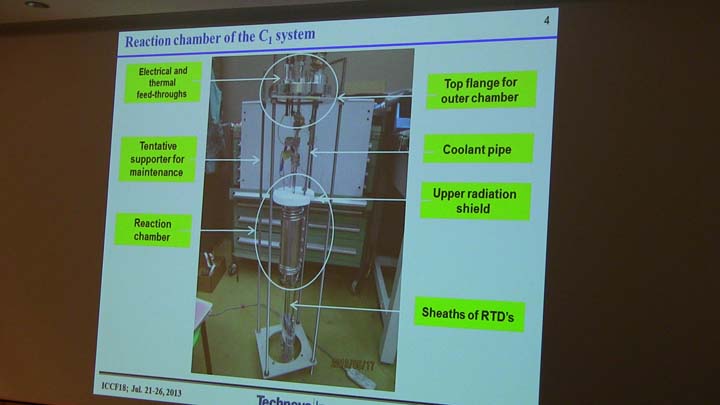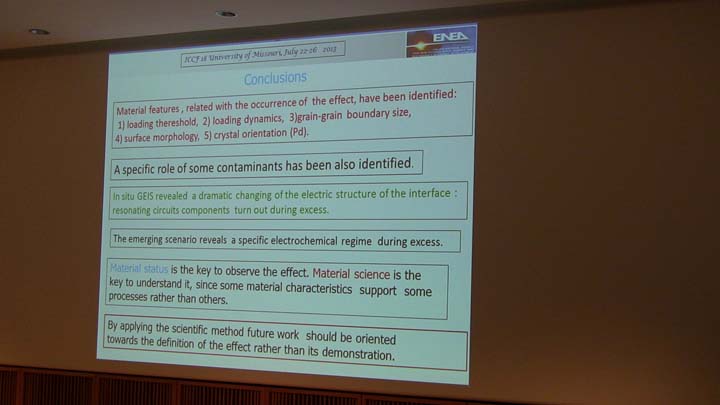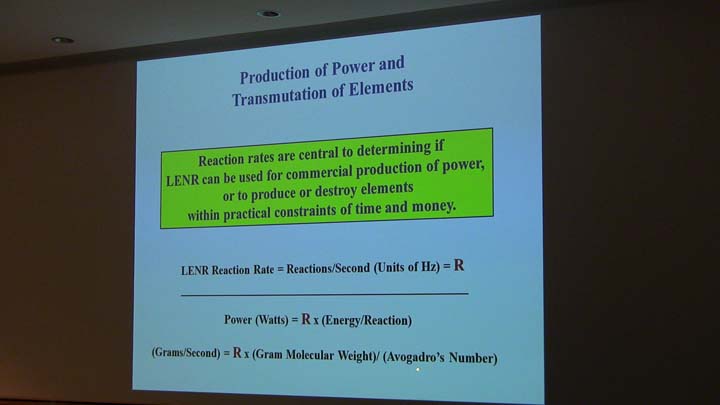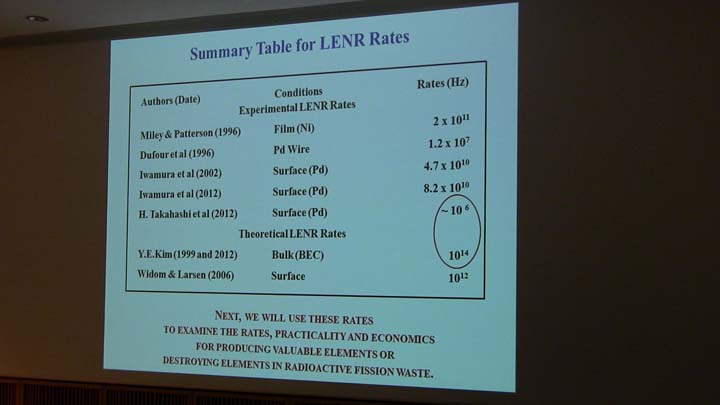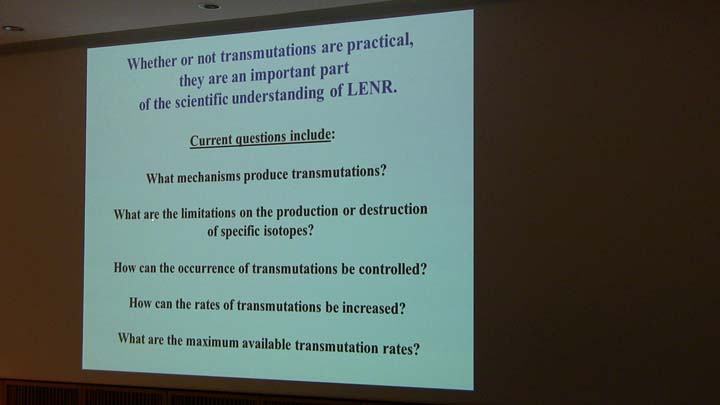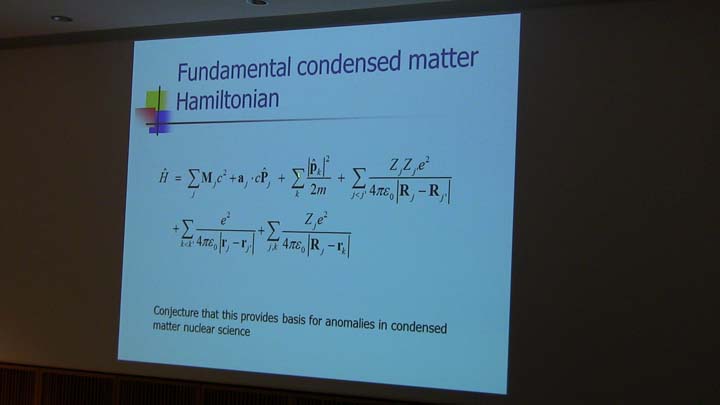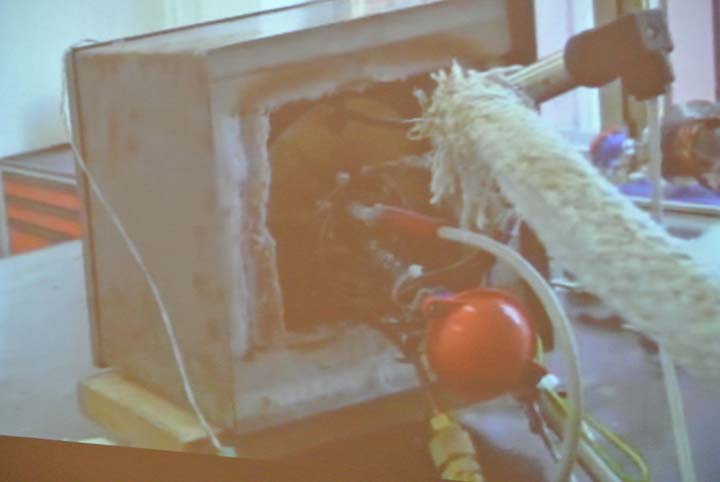
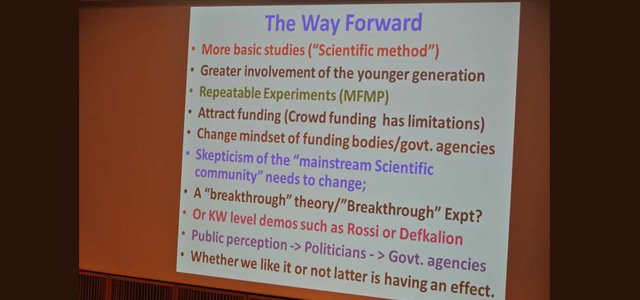
Photo: Slide from Mahadeva Srinivasan‘s presentation The Way Forward
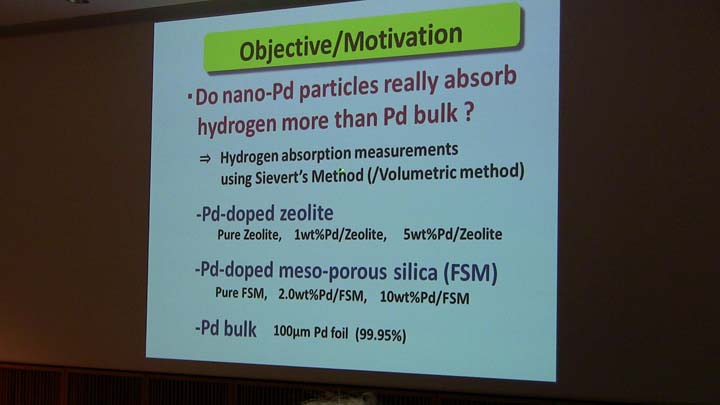
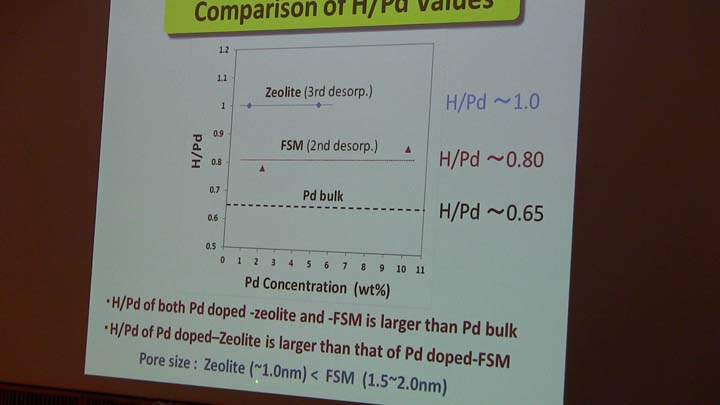
 First up on the last day of ICCF-18 was Tatsumi Hioki with Hydrogen Absorption Property of Pd-Doped Porous Materials. I am really interested in the use of zeolites as a host for metal-hydrides and made a movie about Iraj Parchamazad‘s research in nano-palladium loaded zeolites.
But my brain was foggy this day at 8AM, in lieu of a summary of Hioki’s work, here are a few slides.

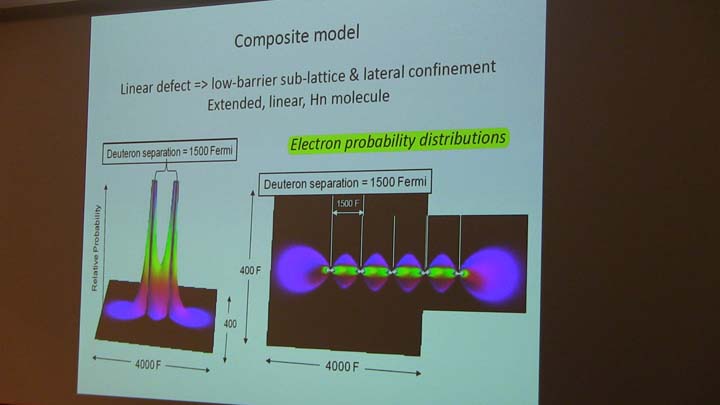
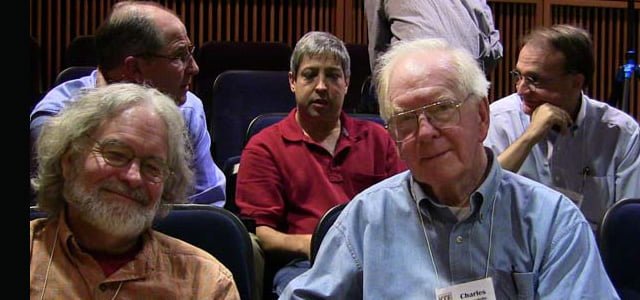
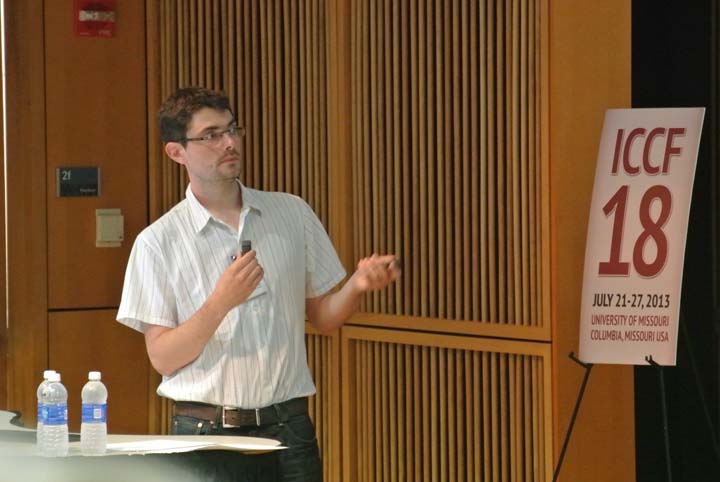
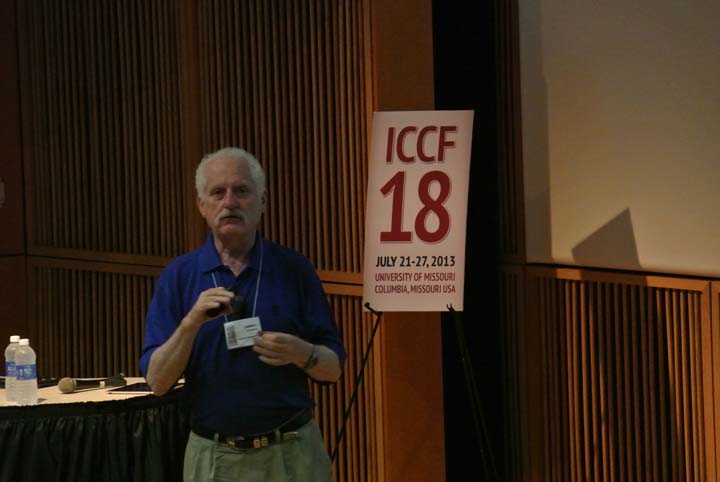
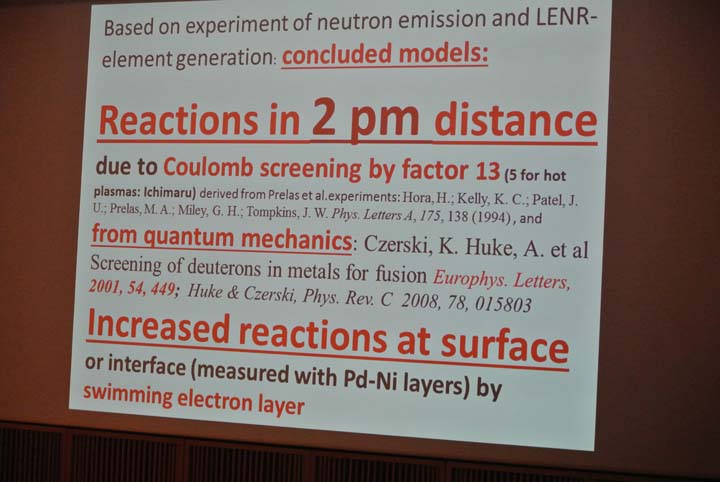
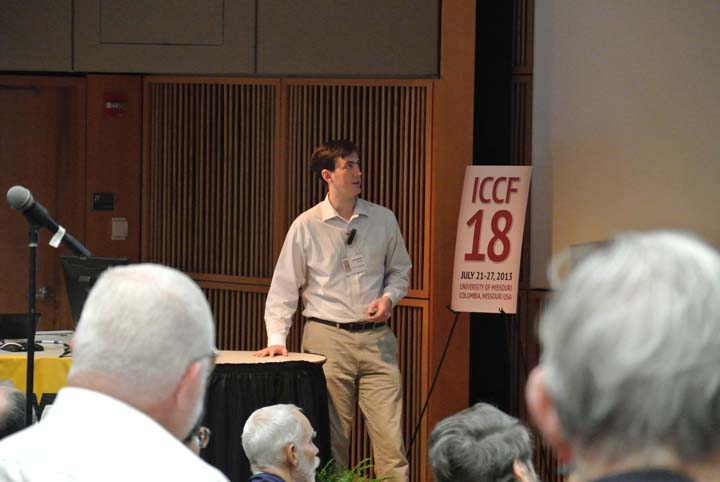 A theoretical Model of Two-Picometer Deuteron Clusters for LENR Supported by Laser Emission of Nuclear Reactions Products by Henrich Hora was presented by substitute Dr. Charles Weaver, as Hora was not feeling well.
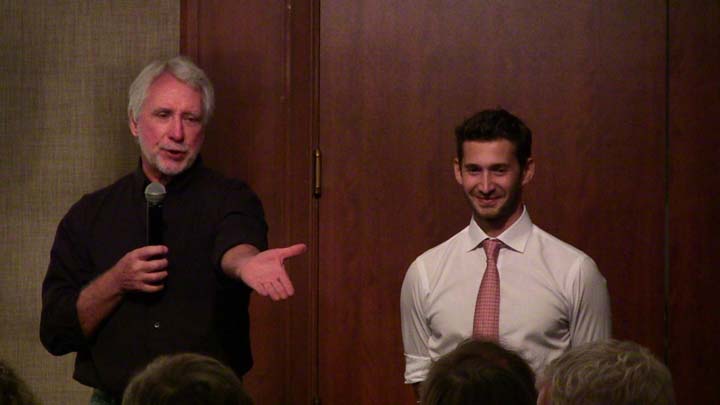
This young man was not only brilliant, but kind too, as he offered to help me carry the heavy load of video equipment I carried with me on Monday. Thank you distinguished sir!
Here’re two graphs from Hora’s slides:

Vladimir Vysottski presented Calorimetric & Nuclear Diagnostic of Anode Plasma Electrolysis instead of Yury Bazhutov. Thankfully this substitution was easily assimilated; Vysottski’s powerful voice is unforgettable.
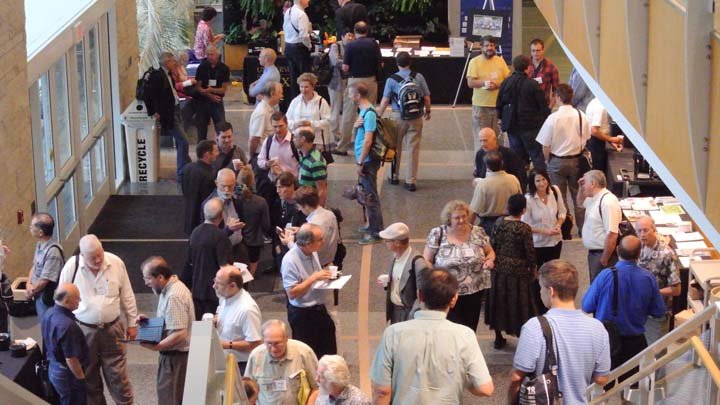
A short break allowed everyone to get a cup of coffee.
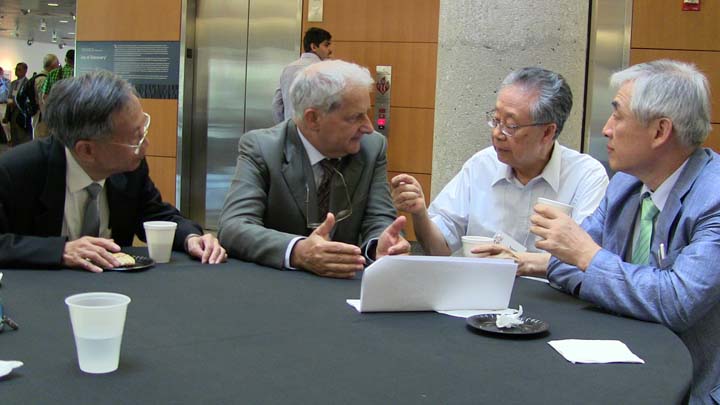
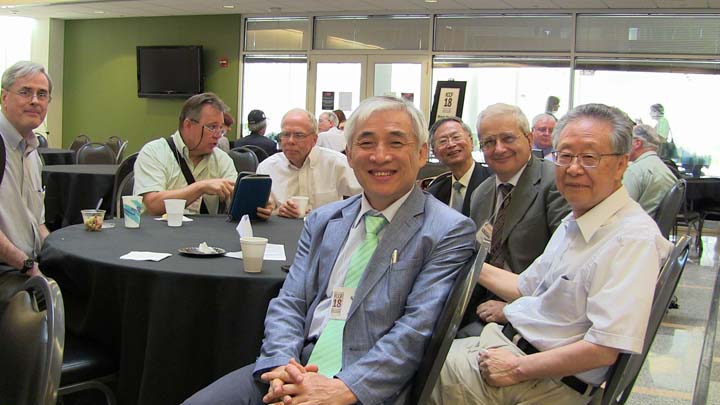
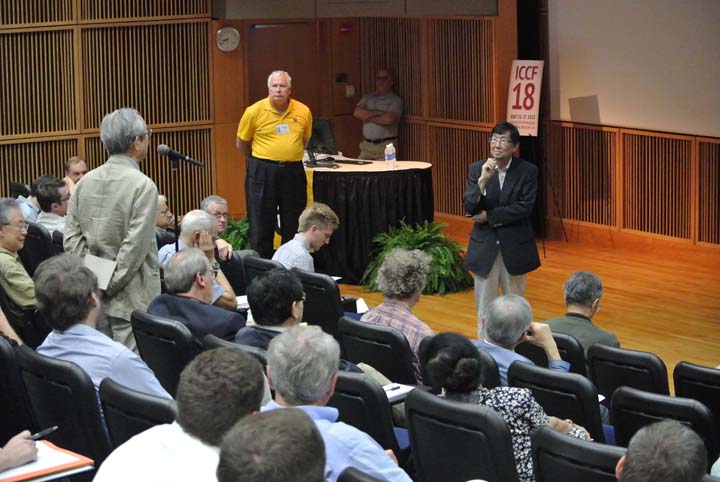
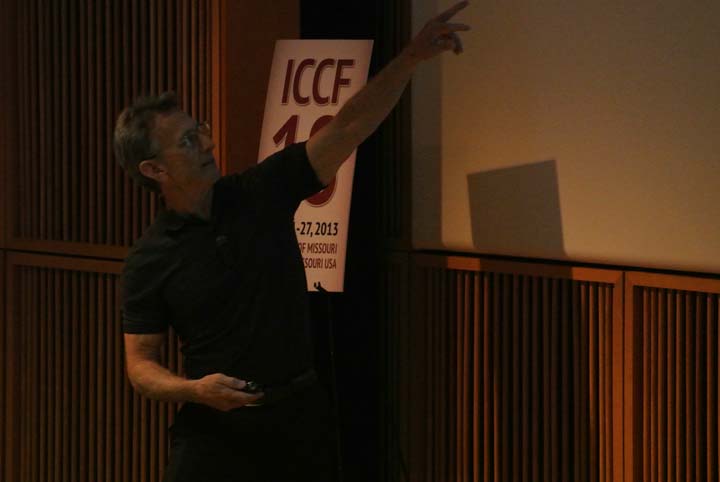
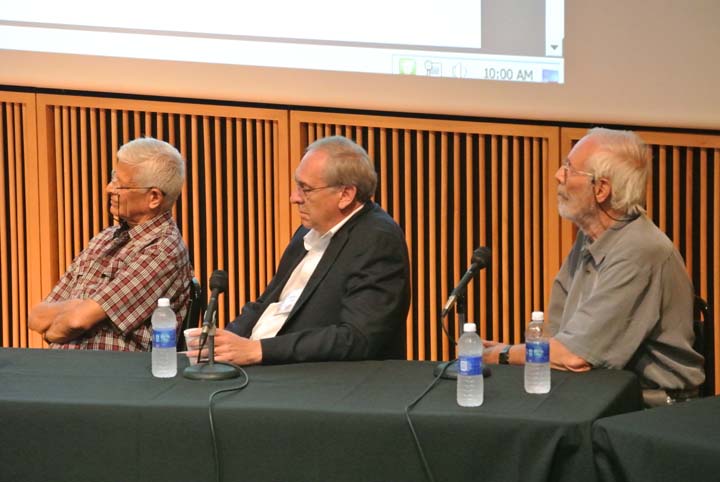
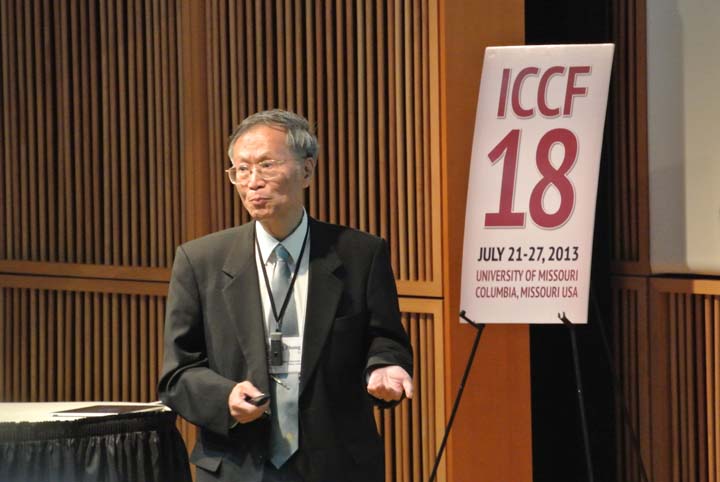
Then it was time for Condensed Matter Nuclear Science – The Way Forward Panel with Mahadeva Srinivasan as Chair included Jean-Paul Biberian, Yury Bazhutov, Akira Kitamura, Xing-Zhong Li, Michael McKubre, Sunwon Park and Vittorio Violante.
 Vittorio Violante began by outlining possible future plans. His thought is to “Find appropriate contexts for continuing the joint research”, and pursuing “very well conceived research projects involving industries.”
In the Q&A following, Paul Breed commented that the perception of the field needs to be altered through outreach in a coordinated fashion. Cold Fusion Now! He felt that the community need not try to convince the mainstream science skeptics, but concentrate on the populace in general, through outreach and events, feeling strongly that it would provide much more return for the effort.
In response to Paul, SKINR Director Graham Hubler set out the criteria needed to satisfy the scientific establishment, namely, reproducibility, and radiation measurements, criteria challenged by Jed Rothwell, who responded, “There is no real radiation!”
Breed then reiterated that it might be better to bring the public on board, even more than the scientific mainstream.
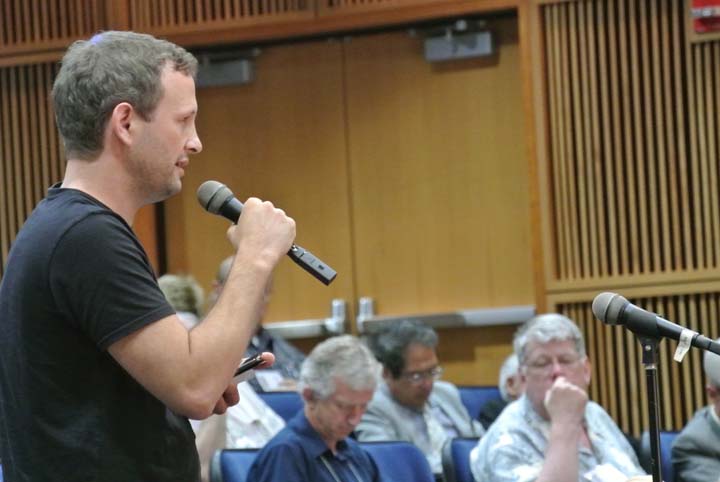
The discussion could have gone on, but was ended so Mahadeva Srinivasan could introduce the distinguished panel.
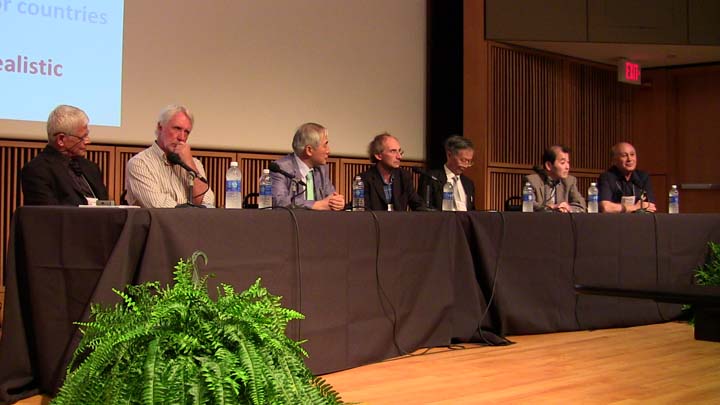
He then listed some of the positive recent developments.
- More young people are becoming involved, as evident by the attendance at the conference.
- The SKINR program, which has young students and excellent equipment to move forward.
- International collaboration, in particular between the U.S. and Italy, is strong.
- More recognition of the role of industry.
- Increasing dialog between academia and commercially-minded start-ups, in particular in Japan and China.
- Private money and venture capitalists are taking note
Patent laws are still a hindrance, and Srinivasan felt that representatives of major countries should weigh in on this.
Again on the negative side, he then relayed a story of his attempt to organize a tutorial session on cold fusion in his home country, and the university faculty boycotted the event, though a small group of students did show up.
He handed off to Jean-Paul Biberian, who listed a number of “black holes” and “glass ceilings” in France, meaning avenues that appear promising for support, but never amount to anything concrete, or are blocked from moving forward. The handful of researchers in France work independently without any official recognition.
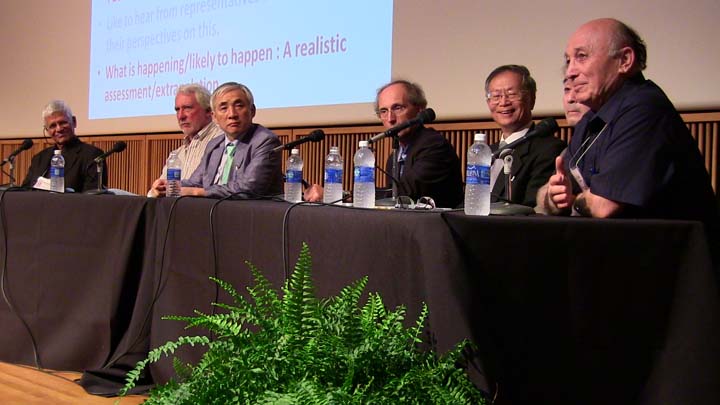
Akira Kitamura began by claiming the number of researchers in the field is decreasing rapidly. In Japan, there are about 10 groups exchanging information on the topic using a variety of methods.
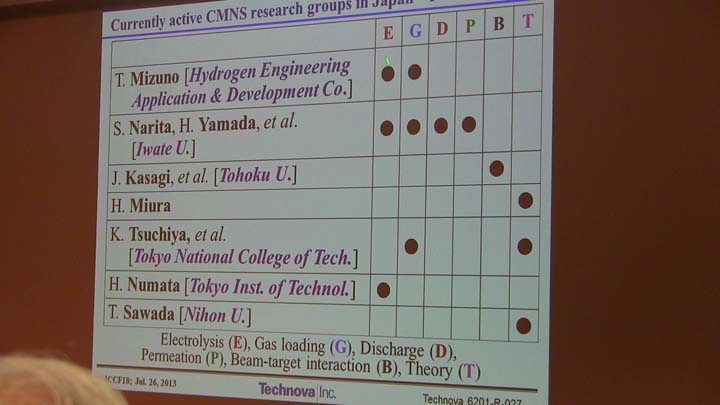
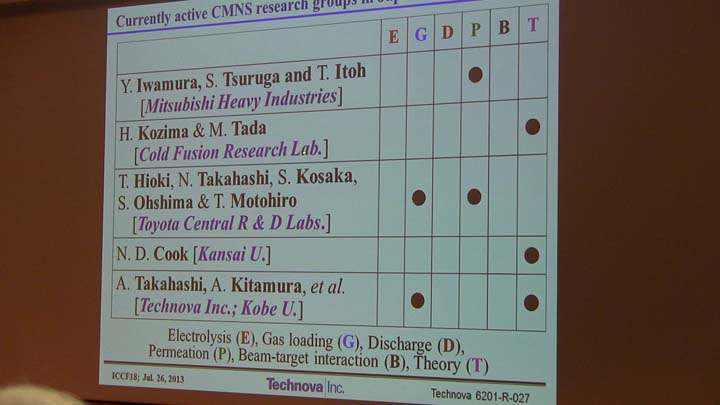
He noted that the phenomenon of excess heat is documented with much data showing the effect is nuclear, despite the lack of an agreed upon theory to explain it.
To move forward, Kitamura says that support is needed from professional researchers in other fields. He wants reliable, repeatable and concrete results as opposed to assertions or arguments. Industry has a large role to play as well as governmental organizations. All of these elements, he says, would yield “positive feedback”, and advance the science.
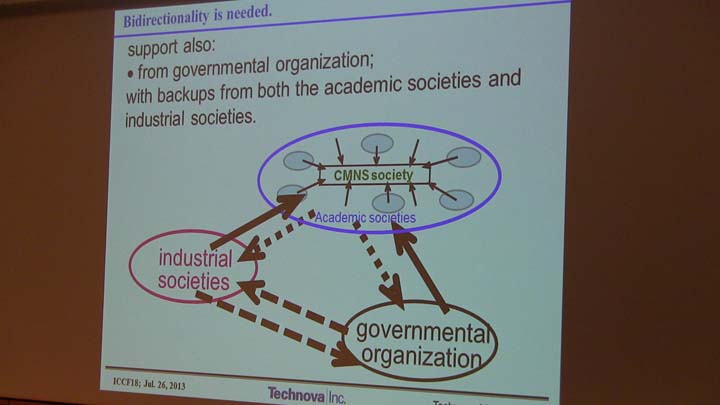
Sharing information of materials, methods, recipes, measurement methods are all crucial to advancing technology.
Kitamura finds that young researchers are apt to choose nonpioneering research subjects in nonventurous fields, just to supply a steady stream of papers for publication, and to remain employed.
 Xing Zhong Li looked back to determine the way forward. What was done right? He felt gas-loading experiments were a success, and the theory incorporating resonance, understanding that anomalous heat occurs without neutrons and gammas.
Li was previously a hot fusionist, and it was a leap for him to jump into cold fusion. After working on resonant tunneling theory on cold fusion, it turns out that his ideas there were confirmed by hot fusion science, and published officially. “Now I am safe!”
New inspirations in today’s work are Energetic Technologies, Rossi and Focardi, Defkalion and National Instruments, and Kitamura and Takahashi, all collaborations between academia and industry.
 Li says the most important elements to pursue now are industry involvement and young students and he showed some pictures of his students at Tsinghua University that are interested getting into the field or a supporting industry. One of his students was in attendance here at the conference, and one of his students working at SKINR.
He ended by exclaiming “I feel good about saying, Go ahead young people, that’s the right way to go!”
Vittorio Violante came up next, reminding the crowd that it was Francesco Scaramuzzi, his old boss at ENEA, that encouraged the lab to investigate the claims just after the announcement in 1989. Two groups began experiments, and a strong program continues there today.
In Italy, several entities, both universities and agencies, are continuing to advance the field, in particular, ENEA and INFN. He knows that cooperation with industry is very important to getting good results, because a wider input allows efficiency in development.
He noted collaborations with SRI and the Naval Research Laboratory were very important to their success at ENEA. Despite all this work, they don’t have significant financial support in Italy, and need to strengthen commitments to do that.
 Sunwon Park, one of the organizers of last year’s conference ICCF-17, then gave an inspiring talk about why it was so important to work through the difficulties faced by the cold fusion community.
He showed a picture of Earth from space saying
“This is the planet Earth, a beautiful place, and the only one in the universe. We want to keep it that way.”
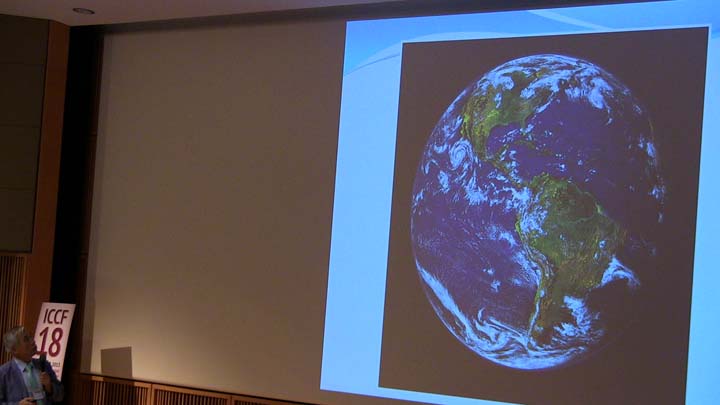
He noted the technological developments of digital communications that make our life better, but that we are also causing huge environmental problems.
“We have to find some way to take care of all this,” says Park. “I want to pass on this beautiful environment to my grandchildren.”
“Right now, we have to understand what is going on. Energy is fundamental to our way of life, and energy demand is increasing due to expanding population, economic growth, and technological change. We need to move to cleaner fuels, while increasing supply for energy demand. In 30 years, Earth’s population could grow to 9 billion.”
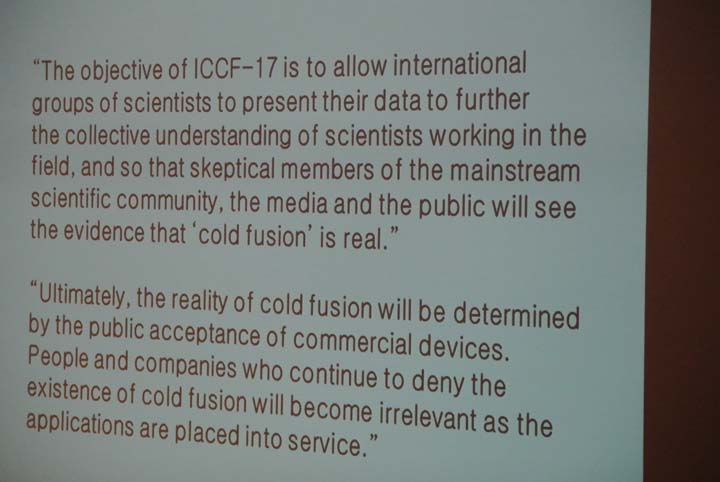
“At ICCF-17, there was a live demo by Francesco Celani, they invited leading “LENR” companies, and there was a panel session on commercialization and worldwide impact.”
“At ICCF-18, there was a demo by Defkalion, and many more companies are showing up.”
Still, Park estimates “less than one out of one-million people believe cold fusion exists, which makes public funding challenging, since it moves more by majority vote in committee.”
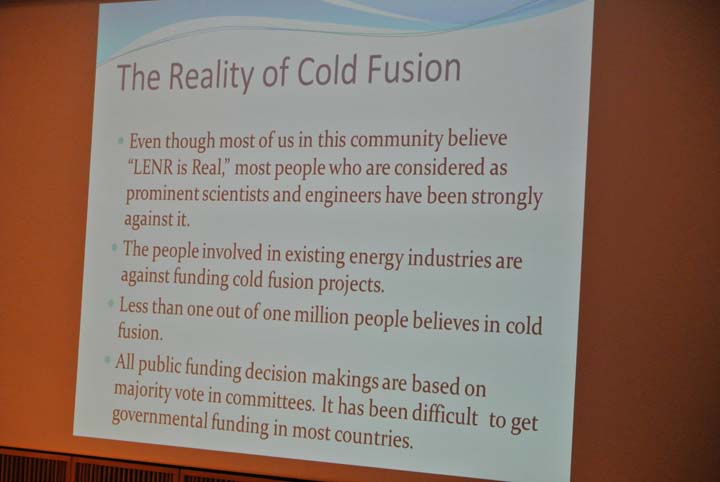
He relayed a story about wanting to look into cold fusion himself a few years back, but colleagues in South Korea claimed it was a pseudoscience. After the CBS 60 Minutes piece aired in 2009, there finally was interest, and he was tasked with finding out more about what was happening.
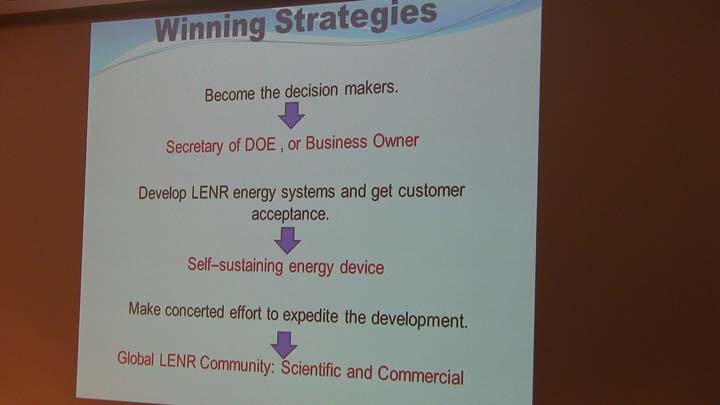
Here’re Park’s Winning Strategies.
“One day, if cold fusion is realized, I think I will be able to fly like a bird”
“Cold fusion is the best way to save planet Earth and human civilization. It’s the most exciting investment opportunity at the verge of the energy revolution. If we work together, we will prevail.”
Michael McKubre was asked to speak specifically on what will move this forward. He says two things necessary to move this science forward are, a need, and an independently-minded nation.
Who fits the bill? Italy.
“Italy is performing very well in this area,” says McKubre. “The next conference will be held in Venice, a rich city. Why is Venice a rich city? It is the industrial center of the region and it’s on the backs of industry that this field will move forward.”
“To move in ever diminishing circles doing the same thing others have done before won’t get us where we want to be.”
SKINR’s objective, as tasked by philanthropist Sidney Kimmel, is “a practical technology in his lifetime.” We owe it to all of us to move this field forward to a useful technological objective.”
And he handed the microphone off.
 Robert Duncan closed the session by claiming “diversity in opinions is extremely important.”
He also said the work has to be ready to withstand harsh scrutiny. “I hope we all will be as careful when we roll-out a new product as National Instruments is when they roll-out a new product.”
For any community, “the best advocacy is objectivity.”
“It’s been exciting to hear the different views and thoughts, but it’s going to require that we place that bar high; always disclose what is uncertain.”
Duncan then paraphrased a quote by Nickolai Machiavelli translated into English as “Get real!”
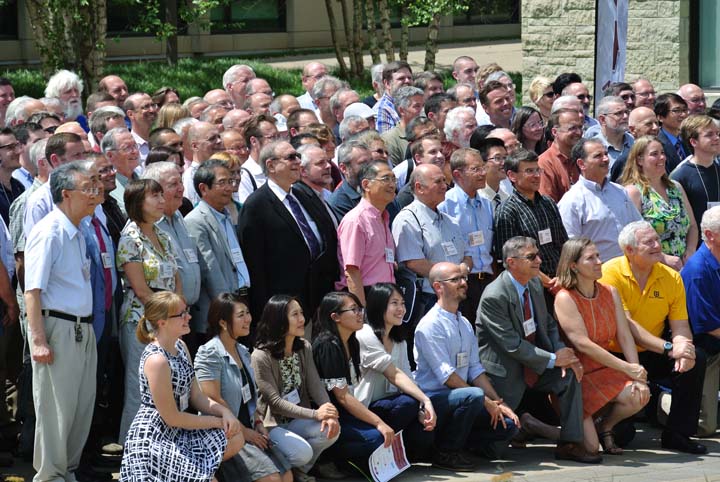
 Opening the floor, many comments from the crowd were genuinely genius, the caliber of attendees was so high, but the conference had to close by Noon (when we’d be kicked out of the room), so the passion was quenched, and the final presentation by Annie Sobel, a co-organizer of the ICCF-18 event, began on ICCF-18 Statistics.
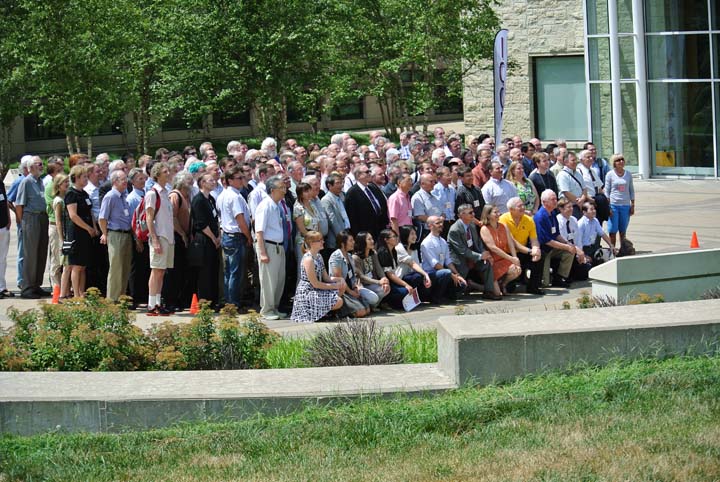
21 countries came together to meet.
The youngest attendee was a high school senior, and the oldest was John Fischer at age 93.
2 Keynotes
83 oral presenters
40 poster sessions
5 Labs toured
5 Technical Panels
5 Exhibits
Career opportunities session
Defkalion and University of Texas demos (Note: I did not see the U of T demo.)
ENEA Workshop
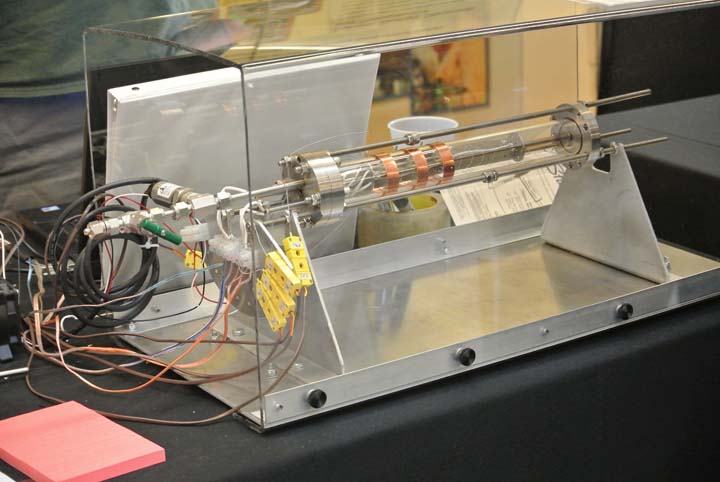
MFMP Update
In closing, papers and materials from the proceedings will be available, as authors give their permission, on this website: https://mospace.umsystem.edu/

The half-day of discussion was over. Our heads swimming, Eli and I interviewed Robert Duncan and Edmund Storms for the doc, went to grab a bite to eat, and then captured Peter Hagelstein as he was interviewed.
And so the event was closed. The 18th conference that brought together the major scientists in the world on the energy of our future.
Researchers were conferring with each other, engaged in sharing information and forming partnerships for collaboration. There was more industry curiosity. Small investment companies were represented. Hope for commercial success from Defkalion, Leonardo, and Brillouin remains strong. Authors of the disparate theoretical models have verbalized a desire for consensus. And the Martin Fleischmann Memorial Project got the People’s Choice Award for their open-source science project that is attracting a new generation of young people to experiment.
The lack of media attention was appalling. However, CBS was there for one day, as well as an AP reporter. Will we hear anything soon from them? Probably not.
This was heavy science and they are looking for the big breakthrough on which to report.
Duncan observed 18 years is the “adult” age in the U.S., the age when you graduate high school, and go off to the next phase of life. To apply the analogy to the 18th International Conference on Cold Fusion, he said that perhaps the field is now moving forward into its own “grown-up” stage, where further validations will occur, higher visibility will take place, and the respect that this science deserves will finally become the reality.
The next ICCF-19 will take place on March 15-21, 2015 in Venice Italy.