A Student’s Guide to Cold Fusion
by Edmund Storms April 2012 download .pdf
Abstract
“Evidence supporting cold fusion (LENR) is summarized and requirements an explanation must take into account are justified. A plausible nuclear-active-environment is identified by ruling out various possibilities and by identifying an environment that is common to all methods used to produce LENR. When this environment is combined with a plausible mechanism, many testable predictions result. These insights and proposals are offered to help clarify understanding of LENR and to suggest future studies.“
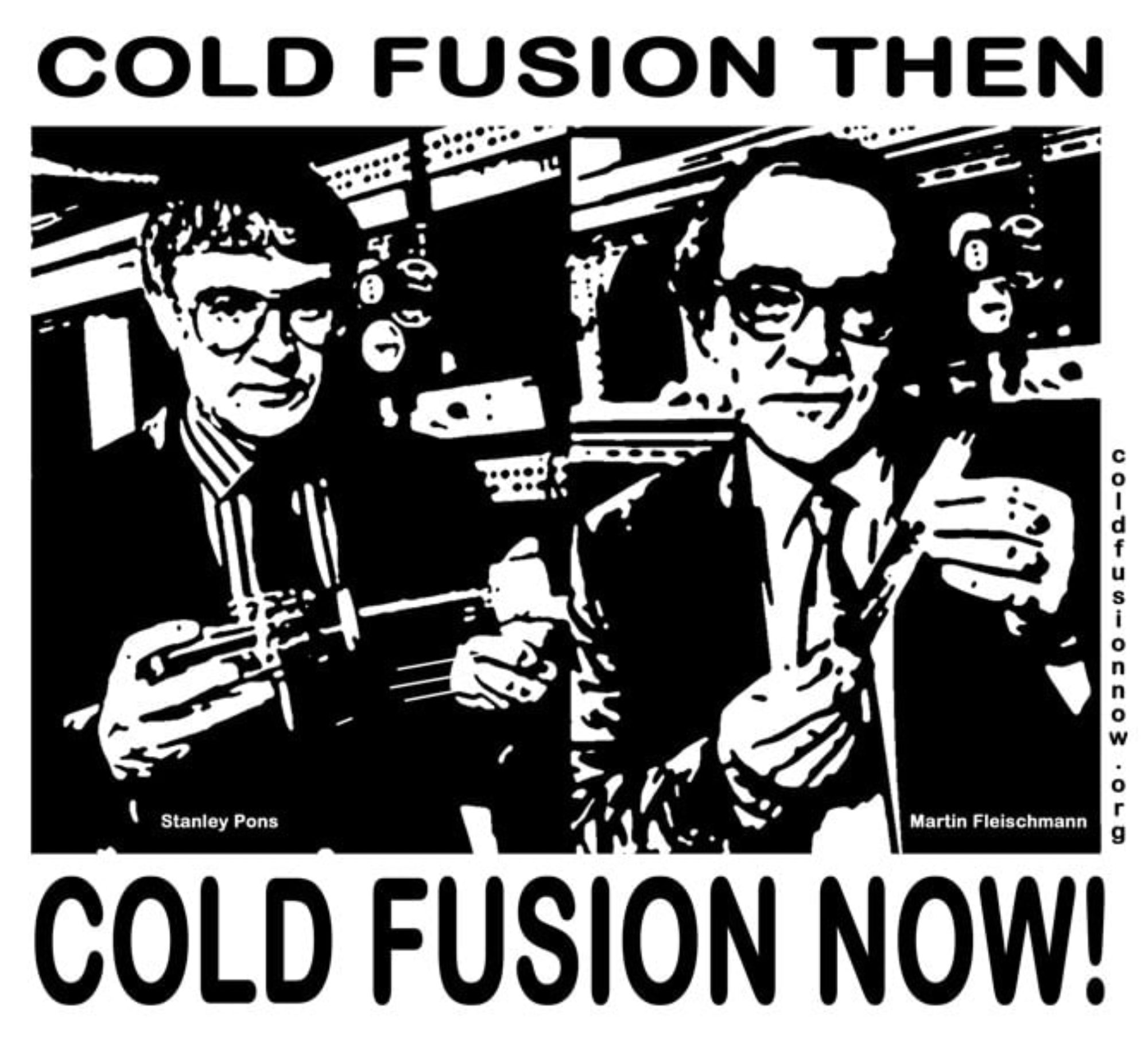
Dr. Edmund Storms is a former Los Alamos National Lab researcher who began his career in cold fusion just after the announcement by Drs. Fleischmann and Pons in 1989. While investigating the claims with team members, including Dr. Carol Talcott, he measured the production of tritium, a form of hydrogen, from active cells thereby confirming that nuclear reactions were taking place in the small table-top device. The investigation of this phenomenon has occupied Dr. Storms’ attention ever since. He is the author of The Science of Low-Energy Nuclear Reaction, a 2007 summary of the field sufficiently detailed for use as a textbook. [visit]
Dr. Storms recently conducted a full survey of the field assimilating the progress made by researchers around the world since the last edition of the Guide. These advances have been added to the new edition, along with fresh insight and analysis.
His recent review of research has also provided him with a hypothesis for the form of the Nuclear Active Environment NAE, those special conditions within a cold fusion cell that allows a reaction to take place. The proposed NAE is outlined at the end of the Guide.
If the hypothesis proves correct, this will hasten development of cell design by providing details of the environment that the cold fusion reaction needs to initiate. Experiments are now being planned at Storms’ Kiva Labs to determine if the proposal is correct.
A Student’s Guide to Cold Fusion is a good introduction to the field of condensed matter nuclear science as it relates to low-energy, or lattice-assisted nuclear reactions. The first part of the Guide is accessible to the non-scientific reader, while the subsequent parts go into more detail, challenging the minds of even professional scientists.
Cold Fusion Now!